D-day for May's Brexit deal
Traders brace for Theresa May's Brexit deal vote on 15 January 2019, with private banks warning of a possible 10% sterling swing either way. Three scenarios range from a 225-vote loss to an unlikely win. The Fed's dovish stance and Chinese stimulus are also moving markets.
Chapters
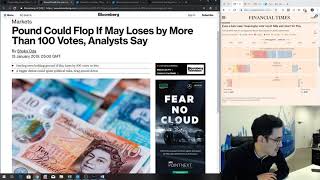
Good morning, Tuesday, 15th of January. Welcome to Brexit D-Day, as being termed by the press this morning. It of course is the meaningful vote of Theresa May's plan, so that's going to dominate really our conversation this morning. But ultimately, as we're going to see with the predefined timeline, we're likely not to get an answer exactly the end outcome until much later on this evening. But certainly a few things to consider that I'm going to talk through in the next 20 minutes or so. Otherwise, some other points are continued Fed rhetoric, all still fitting with the dovish theme, this time from Richard Clarida, who's the vice chairman of the Fed. So we'll recap those comments. And then also we've had some further kind of government intervention-led moves from China overnight. which again are in fitting with what their recent activity has been, but is quite a key component as to stabilize market fears that have been in play recently about global growth slowdown, predominantly led as well by China. So kicking things off, got cable on my chart at the moment. I'm just having a look here on a 30-minute candlestick at the sterling future and just sub the pivot for the moment and sitting just above the 129 handle. So just finding a little bit of near-term support here at the resistance point that we had. This would have been what, Friday's session, late evening before the futures close. One thing to, to keep in mind, I did see a note circulate from Citi's private banking kind of division who've issued a note saying don't trade sterling today, which, uh, the point being here is that they're looking at a potential 10% swing in either direction as the kind of worst-case scenarios at each end of the extremity. But let's not forget that this is their private banking division. These aren't people who can be as agile as we can as intraday participants where actually big moves like that can offer immense opportunity if handled in the right way. So, um, I think right though for, for, for you guys, if you are trading during the day, I think you just need to be very patient. And as I said, as we're going to see in a second, the actual vote in itself, you're probably not going to get it until about 8 PM, uh, a definitive result. And then obviously the ensuing move thereafter is going to be late in the evening I would imagine that most major bank desks will remain manned throughout the evening, so you'll still have a decent bit of volume there as well with the price moves. But ultimately, depending on— and as we're going to discuss shortly— how bad the defeat is, is going to be a defining factor then as to whether or not we're going to get a move tonight, but also could well continue into Wednesday's session and beyond. So yeah, just looking at the near-term price levels in cable before we get into the nitty-gritty part of what it is that we're expecting. On the downside here, um, just looking at the S1 level on the daily pivots, that's that circle here, which is the low point of the futures price movement from yesterday morning. And that also goes back to the, the kind of closing price that we had right at the end of last year. So On the downside, certainly that's probably the most clearly defined areas of support that will likely hold, as leaks and things at the moment are having not too much of an impact due to the fact that there's just so many different outcomes that could happen. Looking at this chart though, one thing you'll notice with cable is that, you know, obviously since the beginning of the year we've actually have risen from about 125 all the way up to nearly 130. So it's been a pretty decent move higher in the currency pair. The probably most pronounced up move was here. That was when we had those, that dovish Fed Powell speech, and we've had an area of consolidation, further weakening of the dollar again, and the kind of government shutdown further fueling that Fed turn or change in tone. And then we're up to where we are at the moment, given the fact that Most people are of the belief that Theresa May's deal will fail, and does this potentially open up other prospects of leading toward a second referendum and so on and so forth, which could be actually a net positive because in the short term we delay Article 50, as we've, we've kind of talked about many times. On the broader picture then, This is what the, the cable chart looks at, looks like. But before we get into that, let's just recap some of the main headlines from this morning. And this is the main kind of context of what the media is saying: May faces the worst government defeat in 95 years in Brexit vote. Don't forget, this is the vote that was delayed from December for the exact reason that she was going to face a hefty defeat at the time. Doesn't seem like a lot has changed despite some slight amendments that have been made to the votes and further commitments about the area of backstop from Europe that we had yesterday doesn't seem to have really changed, um, the balance of powers at all at the moment. This is then what we're looking at, and I did send this out to you earlier this morning, so please do take a look when you get a second. But talking about the pound could flop if May loses by more than 100 votes. Now this is this table here that I've got on the right-hand side, so just above my video feed. What it has here is these little dots which are indicative of all the different MPs, and the colors defining then their political parties, obviously dominated by the red and blue of Labour and Conservative. But this is just based on the public statements that have been made by MPs thus far. And as you can see here, even the FT's analysis suggesting even in a best-case meaningful vote result, May still falls well short of the, the kind of magic number to get a majority, which would be 319. Now let me just have a quick read-through then of some of the, the detail here as to how the FT has kind of got to these numbers, um, and that is that MPs' voting intentions established in the worst-case scenario Theresa May could actually lose by a 225-vote margin. That would be worst-case scenario. Now, if that happened, I would be expecting the pound to come under some pretty severe selling pressure because at a loss of that magnitude, which I would say again, this is just a scenario, not, I would say, the expected value. So this is probably the worst possible case it could be for May. I think at that point she's gonna struggle, uh, to hold on to power. And then we start opening the doors about a potential general election because of the how hefty the defeat is. This opens the prospect then of, you know, what happens then. At the moment, if you were to look at the polls— well, this was quite interesting, this was something that I saw last night. This is the latest YouGov/Times poll. This is for Westminster, which get conducted by all the different pollsters. There's literally a new one out every couple of days, but on the eve of this big vote, of course, it's kind of just more pertinent than ever. And it said that Labour's trailing by 6%. This is though in sharp contrast to the latest Survation poll, which had Labour ahead. So the polls— and you got to take polls, we've learned this through so many inaccurate estimates for recent bygone political events— to, to have a large pinch of salt when it comes to interpreting polls. But the point being here is that they're pretty neck and neck, the major parties. But if Theresa May was to have such a hefty defeat, is that going to sway political, the kind of public perception? I'm not so sure. I don't think that's going to fuel people to then start falling into supporting Jeremy Corbyn's Labour Party. So it's that political uncertainty and that lack of clarity that means that, you know, the whole Brexit situation obviously goes right on the back burner, and, and that kind of raises the prospect of no one's gonna know what in the coming weeks is going to be the outcome of Brexit. So therefore, pound comes under severe selling pressure. I'd imagine even though these are pretty punchy moves, a move back down to the kind of mid-summer 2018 low, 1.2678, is even further down to the yearly low of December, which was around that level of 124.78 in the futures. That takes us back down to the kind of Q1, Q2 prices of 2017. Could definitely be achievable. Uh, going back then to some of the, the other detail here. And I'll keep this up so that you can see this chart here on the right-hand side. So worst-case scenario, a loss by 225-vote margin. Government insiders still hope the PM's deal can be revived if the margin of defeat is contained to a much lower level, around 50 to 80. Now if it's a loss by only 50 to 80 then actually think that we could see some upside initially in cable. So I've got this on a daily continuation so we can see some of the more broader upside areas, and there's a pretty strong area of resistance sitting just above the current price. We've got the 130 handle, you've got that kind of descending trend line from the price activity over Q3-4 of last year. And an area, well, just short 129, uh, kind of 80 to 90 being, uh, the kind of intraday high from yesterday and also the low point that we had back in July. So a couple of interesting points around close to where we are at the moment. But the point being, if it's a defeat of only a smaller margin, i.e., double, not triple digits, then this could mean then we essentially she survives and we go through, she then looks for amendments, further negotiations in Europe, comes back, and potentially the deal could pass at the second hearing or the second vote. And so people would see that more favorably in that we're getting closer towards potentially getting to a point where something can be agreed and we can move into transition. So initial some upside relief in that respect, even though she's lost. Other things are, and this is looking at the actual numbers, this is where the FT draws its analysis from. Since Mrs. May struck her deal in November, at least 79 Conservative MPs have indicated they will vote against her Brexit deal. A further 33 Tories have made more equivocal comments about their opposition to the deal, and that makes a total of 112 Tory MPs who could go into the No lobby. By contrast, at least 128 Conservative MPs have stated they would support the Prime Minister. So this is when I need to flip over my graphic to this one, and this breaks down then— well, let me just move this over and make it a bit bigger so you can see everything I'm talking about. So one second. All right, so that hopefully that's a bit easier to see. So a further 63 Conservative MPs have made statements suggesting they're likely to back Mrs. May, and 13 have made no clear statement either way. But even if all those MPs fall into line behind Mrs. May, the government would remain well short of a majority. And that's the point here. With Sinn Féin's 7 MPs not seated and the Speaker and his 3 deputies not voting—319 votes, remember, is what's needed for a majority in the House of Commons. And you can see here there's 423 MPs anticipated to vote against May's deal, only 198 MPs anticipated to vote for May's deal, given those based on public statements. So these are, you know, it's pretty— you would want to think this is quite accurate, but we are talking about politics. Obviously the whips will be doing their utmost to try and persuade people. You've had cabinet members close to Theresa May, Michael Gove, this morning saying rejection of the plan would mean no deal Brexit or no Brexit at all. You know, so something that was it, Liam Fox was saying recently about the prospects of Brexit not even happening and how this would be absolutely catastrophic for democracy if we didn't follow the vote that was followed. All of this is just absolutely ABC kind of just messaging. I wouldn't read too much into that. That's not going to change some of these MPs' minds, I don't think. So the question then very much so resides with Theresa May is going to lose tonight Obviously, as I've always said with interpreting the news, you should always, always plan for the unexpected. So with that in mind, what if she won? What if she just wins? No one's really talked about that. I don't think that's going to happen, but what would happen to Cable if that did occur? Well, we're on the Cable chart again here. I would say you're going to see a big relief rally. Uh, 132, sure, I think that could be hit. That's a 2-point move, or 2.5 to 3-point move from where we are at the moment. That would take us up to the first kind of area of that, uh, Fib retracement of the, uh, recent multi-year high in cable seen at the beginning of, uh, of last year to the December low. Uh, so I think that's going to be the real test there. A break above there certainly could push even higher because at that point then all this uncertainty is totally eliminated and we just go through then into the kind of legislative period and then just going into transition. So yeah, 132 and the days thereafter, I'd, I would say it continued to punch higher, um, 133, 134. I would say it's definitely under those circumstances within sight. But as I said, that's incredibly low probability. Uh, if I was going to pick a number, and this is a little finger in the air, but just looking at these numbers here, I think maybe then, you know, it's got 198 here that she could lose by. A lot of the press this morning talking about in Sky News she could lose between 100 to 200. I think it's going to be the low 100s personally. That means for me that that's a pretty— technically, that's one of the worst defeats that the government has ever had in British political history in about 100 years. But I don't— guess what? Theresa May still survives. So it's kind of the state of British politics at the moment. Timing, because this is going to be absolutely Pivotal. This is what the agenda looks like in these times in London and via Sky News. So, um, this is what we have. This is supposed to be AM. This is like a typo here. So she is meeting with cabinet ministers this morning. Could there be any leaks, tweets, things of that nature? I can't really see any type of leak that could really meaningfully move markets this morning, unless it was something absolutely radical like Theresa May resigns, which is just not going to happen. Otherwise, going through the, the course of the day, 10:30 to 11:00, amendments to be voted on will be made public. The Brexit debate begins just after midday. That goes through to 7:00. I think Sky News are going to have a running commentary between 6:00 PM to 10 PM live that they will be broadcasting, but the actual meaningful vote is not anticipated to take place until about 8 to 9 PM this evening. So it's going to be a pretty late one potentially. So I guess if you're, if you're in the market this morning, I think you've just got to be sensible because there is no way that you can sit here from 6, 7 AM in the morning and expect yourself to perform physically or mentally, uh, 12, 13 hours later. So at some point, I think it'd be wise if you're gonna be around to tackle that event to, to really give yourself a decent break somewhere in the middle, because the best of the days moves. And just given the variety of outcomes that we could see, there is going to be volatility almost guaranteed for the pound tonight. So if you want a piece of that, I'd say you probably want to balance your day. Maybe when we get into that afternoon period, once you've kind of had the US data and the cash open, maybe stick around for an hour or so and then take a break and then come back for this evening would be my, my kind of best advice. Okay, a few other things to have a look at. One is equity markets. We did have a look at this yesterday, and you know, we issued the weekly strategy report, Sam and I, looking at that. What I've marked up in Sam's favorite color, pink, and that's the area where we're watching. That blue line is the 50 DMA. You've got the, the Fib retracement of the all-time high to the Dec low, which comes in at the 50% level, uh, with that of the, uh, the bottom of the trend channel, which is support turn quite firm resistance that we'd be looking for. And it all kind of comes together at that one singular point, which we, we feel is going to be quite a stern level of resistance around here. So definitely that's something we're still monitoring quite closely if we should move any higher. We did manage to eke out some gains yesterday, but at the moment you can see still finding some resistance at the same level from Friday, uh, as well as, well, Thursday, Friday, and yesterday. That 2600 handle in the futures still providing quite a decent level of resistance, but above there, there's quite a big barrier that we see. We have talked about yesterday quite a lot of the downside risks to US equities that didn't really materialize. Um, US corporate earnings got off with Citigroup, who did actually dip about 2.5%, um, initially when their results came out in pre-market. However, they actually finished the day higher by about the same margin. I believe there were some comments that they were making about forward-looking the environment and conditions that they foresee help kind of lift investor cheer a little bit. Um, we do have other banks coming out, uh, a bit later. Uh, remember, it's the kind of the major investment banks that are reporting as the main kind of feature for this week. Um, the other thing though that's helping, uh, to prop up a little bit of the sentiment is this. If I flip back here, and this is a chart here on the— you're looking at the right-hand side, this is the China CSI 300 index. And Asia Pacific stocks overnight gaining a bit of ground as China announced it would start to implement a package of measures to stimulate the economy, one of which— and this is something that they've mentioned before that they were willing to do— is tax cuts. And this is the response that we've had out of the, the Chinese market of the larger-cap companies, you know, really strong rally that was seen overnight. And certainly when the market has been particularly nervous about the economic performance of China, almost epitomized by the weakness in the trade data yesterday. It's these kinds of measures and the willingness to go this far that I feel will help kind of mitigate any of the, the kind of much more aggressive moves, i.e., a repeat of December occurring. I definitely don't foresee that at the moment. But yeah, at the moment the government shutdown goes on, no real headlines overnight, and that's something which again the market's being fairly calm about. But I would suggest that once this Brexit vote— we know what the, the outcome is— I think then attention will revert back to the government shutdown quite quickly as we get to the second half of this week, and that's when it could be potentially more of a negative drag or headwind. That being said, let's have a look at gold. Now gold is one where, you know, obviously the, the end of last year was a, was a pretty phenomenal run for gold. There's obviously lots of risks that were out there at the time, and but things, as I've said, for the equity market, for those reasons, whether it's the Fed changing commentary or the Chinese measures a little bit of calmness has been restored. But from a technical point of view, gold's been responding quite nicely. We had that break yesterday of the, the trend line from what was the 10th, 11th. You can see there pretty much that, that, uh, the wick on that candle really shows how the market responded to that level, the break of the trend line. And then right down exactly to the tick, testing that, um, that kind of trend line from the 9th going through to the 11th, which was last Friday, uh, to where we were in the overnight session. So, um, quite a lot of people still talking about overall more medium to long term that gold's got plenty more room to rise on the upside. And I think for us, we're kind of looking at that that kind of balance between, uh, kind of risk appetite defined by, uh, the kind of equity move on those macro stories, potentially then the dollar movement as well, to influence some of these commodity prices. With that being said, there is something to update you with the latest Fed comments. I did mention the Vice Chair Clarida did speak last night. He said that the Fed may not raise rates as much as projected He was basically saying that they got to be flexible on the balance sheet. And these, of course, are those infamous dot plots where he said that basically we shouldn't put too much faith in the dots at this point. We don't vote on these dots themselves, was what he was suggesting. So look, here's the, here's the dots and the median projections. And one thing here I know my video feed takes up quite a large portion of this shot, but the green line is the Fed trajectory, the incline of rates over time. So 2018, '19, 2020. And then the white line here is how markets are priced. So there's a big disconnect at the moment, of which, you know, come March, if all things remain equal, the Fed are going to have to make some pretty drastic changes to their, uh, their projections going forward. Okay, quick look at the calendar. Let's just drag this over so you can see, uh, what have we got coming up. Well, this morning things are relatively quiet. Uh, these are final CPI prints coming out from a few European nations. Um, we've got in the afternoon then New York Fed Manufacturing Uh, probably worth keeping an eye on this. It's more of a regional number, but just given the fact that we had the ISM such a weak number shortly after Christmas into the new year— I think it was the new orders component which really saw a lot of people look into this data as a precursor of a slowdown that could well be coming. Given that's kind of more of a forward-looking measure. You've also got some inflation readings in the form of the PPI numbers, you've got the Fed discount minutes, and then that parliamentary vote which is going to be the main feature of the session. Speakers-wise though, you do need to, uh, be mindful of this because you do have ECB's Draghi, the president, participating in an anniversary of the euro area not by definition this type of event is not when he would normally say something particularly new about monetary policy or the European economy. But nonetheless, Draghi is speaking, so I'd keep an eye on that. 10:30 AM, he's speaking again in front of European Parliament and responding to questions. But this is about the ECB's annual report. So, uh, again, base case, not looking for too much here from Draghi. It's about 10:30 AM, 3 PM. And then Fed speakers, Kashkari, um, speaking on the economy at 4:30, Kaplan at 6, and Fed's George, a hawk, speaking also at 6 PM. Earnings-wise, JP Morgan, uh, is the big bank reporting pre-market. That'll be alongside Wells Fargo. UnitedHealth Group is probably one of the other names as well. That might be worth just listening out for. Okay, that is it. I'm gonna let you crack on with things. Good luck. If you're gonna be sticking around a bit later, I'll probably pick that up from home, and I'll be in the Trading Live room and tweeting throughout and watching it live myself. So for those trading that, I'll see you later on this evening. Thank you very much.
More from Anthony


Inside the Biggest Banking Stories You Need to Know This Week (Anthropic, Diageo, Private Credit)


Inside the Biggest M&A Deals You Need to Know This Week (UniCredit, GameStop, eBay, Eli Lilly)







AI Breakthrough or Hype? Anthropic’s Claude Mythos, Tim Cook Steps Down & LIV Golf Collapse