Demystifying Commodities with Lauren Haymond, Global Head of Talent Strategy at CCI
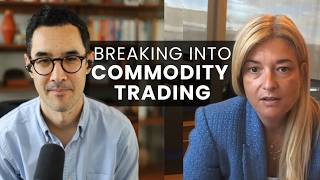
Lauren Haymond, Global Head of Talent Strategy at Castleton Commodities International, explains how commodities trading differs from banking: faster career progression, less siloed work, and room for fresh ideas. She breaks down key terms like fundamentals (supply, weather, geopolitics) and flow (large client trades), and outlines the skill set traders need today: technical ability, data analysis, proactivity, and humility.
Chapters
Commodity trading powers the world, and yet most students have no idea what it actually involves. So we in this episode are aiming to change that. I'm joined by Lauren Haymond, the Global Head of Talent Strategy at Castleton Commodities International, to break down what makes the commodities industry so unique, the range of roles available, and the key skills needed to land them. You can expect practical tips from this conversation, how to interview well, the traits employers look for, and some great resources as well to help you you along the way. So, let's, let's dive in. Lauren, how are you?
Well, Anthony, thank you so much for having me. Appreciate it.
I think the best place to start is like I do with all of our guests, is just for them to get a sense of who you are. So, a little bit of a summary of your background and, and the role you have today would be, would be great.
Absolutely. So, I effectively fell into HR. I started in recruiting as a headhunter, so effectively consulting with firms. To place people into various positions. I think similar to what people experience in consulting, you have an assignment, you complete the assignment, and then you go away and you don't get to see the results of it. So, from there, I went in-house and worked at a big bank and then worked at— within private equity at the Blackstone Group, and then eventually made my way here to Castleton, and it's going to be about 15 years. In another couple weeks.
Wow. Well, yeah, congratulations on 15 years. That, um, so this is why I'm excited about this conversation, because from your description then, there's a whole wealth of experience here. And there's kind of two areas to go into. One is commodities, because I think it's such an underserved area of finance for what kind of finance majors or people interested in finance are thinking. And then the second, some of these practical tips that I mentioned earlier. So perhaps we could start at the beginning. So, what makes working in commodities feel different from other parts of finance when we are talking things like investment banking or trading and asset management, these sorts of things?
Absolutely. Well, typically in investment banking or within asset management, there is this longer path where over time you're given additional responsibilities and you would play a different role on a particular deal. For example, within banking, typically in banking, unless you're at one of the, you know, more boutique banks, But even then, you're working with a very large team, you are siloed into doing a particular function, and you're more insular within your particular group. Within commodities and in most trading houses or even funds, your career growth is more about your business impact, learning about new products, exploring new methods, being able to, if you migrate into trading, being able to assume more capital or deploy more risk over time and continuing to evolve your strategy. So, if you're in the front office here, it is the path where even from a compensation perspective, but even in terms of your mandate, the ceiling is much higher and you can get there much faster. And one of the things I think people appreciate about CCI, and I certainly do, is it doesn't matter how much experience you have. There's a reason why we have campus programs, and I, I wish more companies took advantage of this. Technology is changing. The world is changing really quickly, and some amazing ideas can come with people that don't have prerequisite experience in our markets. And so, you're not pigeonholed into just having a particular function or being exposed to particular work because you are junior in terms of your years of experience. There's always— you know, different things that people need to do at different stages of their career as part of the learning path. But not being pigeonholed and being able to really expand your career faster is what's unique to CCI and typically what would be unique to companies of a particular size within the markets.
Would there— just thinking what you said there, would there ever be a case where someone has worked at one of these traditional banks, like a sell-side institution in trading, and has pivoted to commodities? Because I know obviously they do cover commodities to some extent.
Yeah, absolutely. And it's interesting because in a campus recruiting process, and many of our students are going to experience this, in the US, the recruiting takes place really, really early for interns. So, you can be in your second year in university, and it's the spring semester, and that's when all the big banks with the very large campus recruiting teams are coming on campus. For you to actually take on or secure an internship for the following summer. So the summer after your junior year. And there's a little bit of FOMO, if you will, of many students that are looking around. They're going to great universities. A lot of their, a lot of their other fellow students are interviewing for these companies. They're getting offers and they don't want to miss out. And they also want to be able to go home and tell their parents, I've secured an internship along the path. Now, for us and for most within the alternatives, unless you're very large private equity or maybe some very, very large multi-strat funds, the majority of them are going to adhere to a standard campus recruiting process where you're hiring your interns in the fall of their junior year to start that next summer. We would, we explain to people some of the differences in what the path is within, you know, investment banking, and it's a really challenging path and you can look at any sort of finance memes and go on your Instagram or go on TikTok, and there's a lot to laugh about. And so, it typically is that we would stay in touch with those types of students, and they see the difference. They see how— and I experienced it too. I wanted to grow faster. I knew I was capable of doing more, and you're in a banking structure, and it is what it is. It's you— that is your time to do that particular work, and it really stunts career growth. And so for us, if we're looking to maybe look to hire from a bank, we've hired some analysts and junior traders typically, although we have hired some more senior risk-takers that would come from banks as well. The key differentiation, the more senior you get, the more you're going to get exposure to client flow. And for us as a fundamental shop, we really need to differentiate between what is the proprietary trading versus the flow. The more that you're in the system, the harder it is also to differentiate that from our assessment perspective, but it's also quite challenging when, you know, moving out of having that information flow into a shop where you're not going to have that client flow because we don't have clients.
Can I just jump on two words that you were using there? You were using like flow, for example, and fundamentals.
So, yeah.
What are those? Just for those people who perhaps are from like a, let's say, a STEM background, have never really heard of a lot of the trading terminology.
Sure. And for our shop, I think that's why it's important to at least have some type of exposure to economics. But for us, fundamentals are the supply and demand economics of what's happening. But also some of the fundamentals could be related to weather. Some of the things that shift fundamentals, and this is what makes the commodities market so interesting, is there's also macro factors. So there's macro factors like geopolitical factors. There are several wars that are going on. There's energy policy. There's a huge focus on energy security right now. And there's also event-driven things. There could be something that is stated in the news about a particular change of course. There could be things like a refinery is down, or there could be other factors like weather is a major, major sector. So those are some of the inputs into a model that we would have here from a fundamental perspective. Flow is more like you have a very large client. It could be an insti— let's just assume an institutional client that is putting on a very, very large trade, and you know that that trade is happening, and you're able to trade off of that information within your proprietary book. Knowing that that actually is existing. Whereas if you're sitting in our shop, you wouldn't know that that particular trade is happening because you're not managing that trade from the institutional client.
That's great. That makes complete sense. So, so thank you for that breakdown. And of course, I, I think when we were talking on a previous call, I was really intrigued by whether or not what you look for in candidates had changed in the context of globalization, the rise in data complexity. Some of those things you mentioned, like the weather, can be highly complex in terms of trying to forecast out the future patterns and so forth. So, how has that changed in recent years of when you're looking for new talent?
Over time, there's been significantly more data available, and so, how are you able to manage all of that data and put it into a model and be able to kind of aggregate, report, et cetera? And so, over time, the rise of technical skills across the board, I think with any company for the most part, We need increased technical skills to be able to code, manipulate data, etc. So that's something that's just increased with the significant amount of data that's required or that's available in the market. What hasn't changed are core things that are going to make anybody successful here: being a self-starter, not being afraid to make Mistakes, you know, having humility, meaning none of us know all the information, none of us know all the answers. So having a collaborative approach to understand people's different perspectives and inputting that potentially into your perspectives, being incredibly hardworking and passionate about the markets. The people that are really, really successful here live and breathe. Things happen over the weekend. They're sending updates to their team or to the broader teams. That might even not have, might not have a direct correlation to the trading that the, of the strategy that they're in, but maybe another strategy. They're just living and breathing it every single day.
Yeah, I love that. And definitely I'm going to probe you more for some of those characteristics and how young people can develop those. But maybe before I get to that, one thing that, you know, the conversation naturally, it kind of feels like often people talk about traders and trading But you and I both know that there's way more to a team in terms of different roles, different responsibilities, risk, analytics, so forth. So I wonder if you could just walk me through those different roles and how they all kind of come together within one team.
Yeah, I think Castleton is unique in that no matter what position you're in here, whether you're in a direct revenue-generating position, meaning trading, or we have principal investment activities here as well. Or you're working within talent, what has kept me here for 15 years is being able to be a true partner to the business. So, the more context that you have on what the business objectives are and then domain expertise, the better partner you can be. But typically on a trading desk, it consists of a trading lead or a desk head. You could call that a portfolio manager. There may be other traders at varying levels that would be allocated certain amounts of risk under the portfolio manager, and then there are analysts as well. Risk management, especially here, plays a unique role in partnering with our businesses. So there, the way that we manage, hedge, identify our risks is key to our success, and they are working with each of the trading desks, getting an understanding of their fundamentals, of their positions, making recommendations, So that they work very, very closely. Same thing with data science and technology here. So we have a front office development team, we have a data engineering team that is cleansing and categorizing data and a data science team that's running machine learning models. So it actually— one of the great things, and this is also an evolution in what we would look for, is in the past, a lot of those data science and technology activities existed more on the trading desk within the analyst role. And that actually took a lot of time for the analyst. They could spend 50, 60-plus percent of their time just managing data feeds and making sure that those parts were working. Now it's more, how do I enhance the models? What inputs are missing? Let me analyze what's happening and make some predictions. And it allows for more time or capacity to start thinking about, well, what's the market doing? And hopefully getting to the point where they're starting to think about what's a potential trade idea. And that's been a huge evolution here as well. But all of those functions, along with operations, components of finance, they're all working very, very closely with our trading desk, including, for example, if we were to hire a new trader or a new analyst, we have a team that connects with all of the other teams to be able to bring that person online and onboard them faster.
And so I'm getting this kind of culture of collaboration, and I know that often in other firms they have, and again, perhaps good to explain the different setups because there can be these isolated pod setups rather than a more collaborative team-oriented sharing of intelligence sort of setup. So yeah, how, where does CCI sit up in contrast to its competitors in the way that it supports that talent through their, their journey?
It's an incredibly collaborative culture in that the expectation is that you're working with colleagues that are going to help support each other. From a trading perspective, I mean, there are individual trading businesses, you could call them pods, but in some pod models, those different strategies are not allowed to communicate with each other. Here, it's expected. And so some information can be shared. There could be, you know, as far as direct trading ideas shared, or it could be more like, let's deliberate on the fundamentals of the market.
Okay. So perhaps we could change now, tact, and go a little bit more in towards some of the things I'm sure lots of students are really keen to understand, which is kind of like best practices. And when you started at the beginning and you were saying about your career journey, all the different places you've worked. I think you are a really good person to speak about this type of topic. So, I just wondered, is there any kind of something you see with all the talent you've come across that you just wished that more students followed, that perhaps they're not doing so at this point in time?
Many students or people that are earlier on in their career, sometimes they sit back and they are kind of waiting for people to give them instructions, information, work if they're not at full capacity. And it's those that are proactive, proactive in seeking out work, proactive in seeking out relationships, information, proactive in sharing ideas. That's really key. In addition, I mean, I think you can't teach this. Those that are just hardworking and you can tell that they care, um, individuals that are incredibly detail-oriented and also, um, know the balance between being resourceful and trying to work through problems or a project on their own or within the team versus looking for, um, you know, the answer right away. But the balance between that and waiting too long and heading in the wrong direction. And so those are the types of things that make people successful here in general. From a trading perspective, that makes it a little bit harder. There isn't one background, there isn't one, you know, educational background or direct experiences necessarily. If I look at all of the different successful portfolio managers, traders that we have here, there's a differentiation in educational background and how they got to where they are. Those things that I said earlier are all stated, and I do think a sense of humility, identification of mistakes that they've made and the learnings that happen from that.
It's interesting, I was having a conversation with some students who are really yet to start their career, and I was talking about the importance of honesty and particularly around when you're working in a front office role and, you know, decisions are being made on the information flow you're providing. It's like the integrity accuracy and honesty is of the utmost importance. So yeah, it was really interesting. So proactivity, resourcefulness, hardworking, detail-oriented are all top traits. So you've mentioned to me before as well about the proactiveness, but the other thing I was thinking is the challenge of the emotional burden of working in an industry like this, whether in commodities or any, I guess, front office role in finance. I just wondered whether you had any practical insights on how young people can start building up those muscles, that kind of emotional resiliency, for example, because a lot of them won't have experience or perhaps have had a life experience situation yet that might have naturally brought that. So what could— where could you steer them in order to start harnessing some of these skills around the emotional challenges of trading?
I think it's putting yourself in a position to put an idea— to start with, like, putting an idea out there and, um, being wrong, um, and going through. And most of the— pretty much every student that we hire here has had an incredibly strong educational background, to the point where you're talking to them and they haven't been wrong many times in their life. And going through the emotions of actually being wrong, because as a trader, you're going to be. It's just how wrong are you? How often? How big was the trade? And so that could be, you know, a start of it for us. And I would say if your ambition is to trade, ask the question of what the potential path would look like. There are some shops out there where you might never get an opportunity to trade. There are some market makers, for example, where you'll be trading from the beginning, but are you really taught how to make a sustained career out of it? For us, I almost view it as, and I have a 4-year-old, so bear with me, but as training wheels. And so if somebody starts to demonstrate real interest and aptitude to trading, it's start pitching ideas. Then from there, and that's showing that you're really understanding what's happening in the market. You start pitching ideas to your trader, your portfolio manager. Over time, you may be allocated a small amount of risk under their book, but you're still performing for the most part an analytical role. But that allows for some time to be able to learn and go through the emotions of the highs and lows of what happens day to day or month to month in a particular market without also, especially earlier in your career, feeling like your bonus is at risk. And so that's the time to really focus on your approach, to focus on the emotions, to learn about risk management, which is so key in trading. And then eventually get to the point where you're also building a track record for yourself, knowing that how you've handled particular situations. And I think experience is helpful in that. If you've seen something before and you may have been emotional before, maybe the second time, third time around, you're not. And then eventually getting to the point where you'd have, you know, a full book for yourself, or you're still likely trading under another trader for several years, but you have your own book and your own direct line to it. So it's having that time to do it. The emotional piece is something that everybody struggles with. We've leveraged a coach here where, you know, he also trains, works with Olympians and about their emotions and regulating. It's very similar to, to going in basically every single day and you have one of the biggest contests of your life. So, I certainly wasn't built for that and it takes a unique individual. And so, a lot of people come in thinking that that's what they want to do and that's great and that's one of the objectives of the program that we have here. But analytics and risk management and technology are the key components of how we are successful over time. So, just because you don't end up trading at a CCI, you can still have a fantastic career from just continuing to build your experience and impact, and also just from a compensation perspective. So, I think it's also understanding what you feel comfortable with. Like, are you willing to kind of live with these types of emotions, and are you able to stay even? Do these types of things bother you? or do they not? You know, how do you, are you able to sleep well at night and, and manage and regulate yourself? And, and those are things that can be learned, um, but they also might not be innate in everybody. So you have to decide whether it's okay for you.
So you, you've spoken before about the value, uh, of learning agility. And when you say that, I know what you mean, but I've never really heard that phrase, I don't think, as such. I just wondered then, how do you spot it in students? What are the signals you look for? I mean, like you said, you might be interacting with people who are quite young, quite inexperienced. So what are some of these early signals? Because I think it helps for people to also translate when they're thinking about their future career decisions. A lot of jobs, they don't even know what they are and how they exist. So connecting those dots through some of your signals might be super useful.
How would you answer the question, give me an example of something that you've never had prior exposure to, whether, um, in a new class or in a new area of learning? How did you go about, you know, coming up to speed on that? It's one way to measure, or just looking at their experiences. How diversified is it? A little bit more one note and like they're pursuing the same thing and just building on that, or, um, do they have diversified interests, um, and experiences within their educational background, within their any sort of prior work history, um, in life in general? Um, those are other ways to determine that too, because when you're hiring at the grad level, you're effectively hiring for all those things that we talked about earlier, and you're trying to assess, including technical skill as well. You're also hiring for promise, right? And, and what is the potential? And so, to me, learning agility is aligned with potential. The more that you're able to learn, because markets are ever-changing, significantly changing. And so, the ability to continue to reinvent yourself, reinvent your strategy, your approach to things, make sure that you are aligning with new technology or new approaches that are out there. That's really, really important. So just, you know, having— if you're going through your background, you're preparing for interviews, just that's a question that I would prepare for, and whether it's at CCI or not, because you're able to also translate things that you might not seem to be directly applicable, but the process or some of the skills required is applicable. And so it's trying to make those connections between the two.
Okay. And then one thing I wanted to ask you, just because I saw it on your LinkedIn, if you don't mind, is that you're a New York advisory board member at CareerSpring. And when I looked into this, this was supporting first-generation and low-income students breaking into finance. And so my question then is for those without an existing network, so namely from what I've described, what are some practical ways that they can start to those first few meaningful connections? I know it can be super intimidating. They can feel quite anxious about it. They might not even know how to go about it. So, what would be some of your tips for that kind of community of people?
Well, first off, align yourself with others that may have similar interests to you. So, clubs at universities are incredibly helpful. Usually the clubs may have different companies that are coming in, and so anytime there's an informational session, prepare for that informational session. If it's a company that you're actually interested in, ask interesting questions that demonstrate that you've done the research on that company and stay in touch with those people. Professors are also an amazing resource, especially each university has them. They're the ones that typically are going to align with the outside employers. Especially if you've had professors that have worked in the industries that you're interested in. I don't care if it's finance or any other area. Those are amazing professors to align with. They, they likely have great career advice for you, potentially still connections for you as well. Any time, you know, you have an opportunity to network, try and take advantage of it and create meaningful, sustained relationships you meet somebody, it was a good conversation, follow up with them on LinkedIn, try and follow up over time in your internships. And this is something that I did a training session for students involved with Career Spring last year, and internships are networking opportunities. And so you can't always expect— and certainly the larger programs at CCI, we set up plenty of opportunities for you to get to know others in the program. For you to have cross-exposure to different managers, different areas of the firm, but you can't just rely on that. You have to show that initiative, but again, in a meaningful way. Don't just set up the meetings to set up the meeting. Have a purpose and go into the meeting with intent of what you want to get out of it, but also sincerely, like, information that you want to get out of it as well. So, every opportunity to build a relationship and to learn along the way is really important. As an advisor of CareerSpring, I do have to promote CareerSpring as well because it's an amazing, amazing organization. And if any of you are first-generation students in the US, I encourage you to look into CareerSpring and sign up. There are advisors there that can help you, guide you on resume review and interview prep. They set up plenty of networking sessions for people as well as an advisor. People can ping me and set up a session where they can talk about anything related to career advice or even CCI specifically.
Yeah, I mean, I can speak on this matter from a person who would've been eligible for this sort of thing in my early kind of career. And definitely, you know, I used to not enjoy networking, but I think, yeah, having a place like that, organizing these events, honestly, the more you do it, the more you get involved. You know, the more proactive you are, the more comfortable you get, the more confident you become. And so, yeah, absolutely.
I agree. I don't enjoy large networking events at this point. It's almost like you have to force yourself to do it. Similar to those that don't like speaking in front of large crowds, the more you do it, it's like going to the gym and working out a muscle that you don't really like to work out or doing a workout that you don't enjoy, but those are probably the ones you need the most.
Absolutely. All right. Well, look, something that might be useful for everyone is to close. I just wondered whether there was a book, a podcast, a resource, anything that you could, particularly around this concept of commodities, because I know it's not as kind of talked about, accessible online for things like trading generally and investment banking. So where would you point people?
There are a few books that are interesting. And also, so one is The World for Sale, Javier Blas. And then another book is Energy Investing and Trading, and that covers all facets of the energy industry between physical trading, financial trading, principal investing, which is what we do at CCI. There's also the CME Institute. Which is helpful to look into. And then Menta is another source to look into as well. And they hold different courses that you can investigate covering different products and areas of the market as well. I also have a bunch of students here as they're trying to figure out like different components of the market, literally going on YouTube. And there's a lot of information that's out there as well. So I encourage you guys to look into it. If you are attending a CCI info session or you're interested in the firm or anything, make sure to just be proactive in doing your own research and you're prepared for those discussions, not just so you show up that day and you can differentiate yourself, but as you guys are pursuing your career, like, not only are we interviewing you, but you're interviewing us. Um, and so just make sure it's something that you're interested in and your passion, if you are interested, will come through in the assessment.
And just a question I had here, I was writing a note as you were saying principal investing. Yes. You did mention that earlier, but I'm again conscious that not everyone's going to be completely crystal. And you said CCI is doing principal investing. So what do you mean by that?
It's similar to private equity in that we are investing in assets. So for example, we own battery storage facilities, we own power plants, and so we are making that investment. The difference between us and like a Blackstone, for example, is Blackstone raises funds in like a 5 to 7 year time window, whereas we at CCI have a committed little investment from our investors. And so we can do an acquisition and we can hold it for much longer than that period of time or shorter. And so when it comes to how CCI generates revenue, we have steady revenue from the assets that we own. We can also sell those assets, and that would be a monetization event. And then we have physical trading activities where we're physically moving products within, let's just say, for example, North America. And then we also do financial trading as well. And all of those are areas where they collaborate very, very closely with each other because they're all looking at the energy spectrum. But they're covering and have information on different components of what's happening in the market super near-term and what might be happening in a power plant on a day-to-day basis. But they're also taking a long-term view on investments. Typically physical trading is stuff that's happening within like the next 3 months, and then financial trading can be anywhere between 6 to 18 months out in the curve.
Yeah, I think that explanation is exactly what makes commodities so interesting. How interconnected it is, how wide the kind of breadth of the investment spectrum as well. So yeah, incredible.
Absolutely. And many firms only do small components of it. They'll only have financial trading, or there are private equity firms that have energy as a partial strategy or just are investing in energy. And then there are physical shops that really just focus on physical, and the financial trading they're doing is really just off the back of the physical. It's not really outright paper trading. So Each shop has different advantages and uniqueness to it. For us, taking advantage of having people that look at the market with different skill sets, different perspectives, it's also what makes CCI so interesting because you have all different skills, personalities, perspectives, experiences, and backgrounds. And to me, that's diversity, and that's what makes it really special and, and provides us with an edge.
It's great. It's a great way to finish. All right, Lauren, thank you so much for your time and for sharing so openly your insights. So thank you very much.
Appreciate it.
More from Anthony


Inside the Biggest Banking Stories You Need to Know This Week (Anthropic, Diageo, Private Credit)


Inside the Biggest M&A Deals You Need to Know This Week (UniCredit, GameStop, eBay, Eli Lilly)







AI Breakthrough or Hype? Anthropic’s Claude Mythos, Tim Cook Steps Down & LIV Golf Collapse