Did Sam Altman Engineer His Own Exit To Gain Control Of OpenAI?
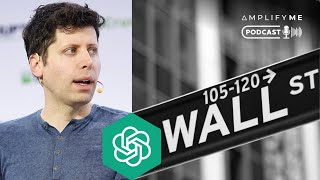
Piers and B examine whether Sam Altman engineered his own exit from OpenAI to reshape the board and align the company with Microsoft, using staff resignations as leverage. They also cover hedge funds losing $43 billion on short positions caught in a market rally, and debate whether the 2024 election or interest-rate cuts will drive markets next.
Chapters
Welcome back to the end of the week, and what a week it has been, particularly for OpenAI. I know you've probably read lots about this, but I really wanted to pick Piers's brains about a little bit of understanding who Sam Altman is first before we dive into what exactly happened. And then I've got a couple of thoughts as well about why I think this is perhaps more interesting than you might think in terms of the cunning nature of Mr. Altman. But we'll, we'll come to that. And then we're going to talk about hedge funds. Everyone loves giving hedge funds a bit of a, a bit of a bashing, and we're no different really here on the pod. But actually, even though the headline reads that hedge funds are betting on a decline in US European stocks, have basically been caught the wrong side of a rallying market and lost an estimated $43 billion in losses. And we are going to talk about what's gone so wrong and what sectors have been hit badly, but also we'll talk about why that figure has been juiced somewhat by the media. What? Because it's not actually true. No, I'll come to that. It's not actually as big as you— as big as they're making out. So I'm gonna talk about this.
Surely not.
But I'm going to cut the hedge fund, uh, companies a little bit of slack. We'll come to that point. But there's some good things to take out of this conversation about short squeezes, um, terms of algorithmic trading. I was just saying to you offline that I always think that talking to a lot of, uh, particularly retail traders, they kind of think if you have an algorithm, it's the surefire way to make money in this market. It's like you must be clever, You must be able to program, you must be able to extract money out of this market.
It's like the new hedge fund. If you go back like 10, 15 years, it was like if you run a hedge fund means you're a multi-billionaire, like hedge funds only make money was the misconception. I think we've now moved into algos only ever make money.
Yeah. And it's actually algos that are causing a significant problem. To hedge funds. And so we'll look to try and explain why that is. And then at the end, we'll try to tie in some of the general themes into the broader marketplace. And there's a lot of banks obviously issuing their outlooks still for the next year, and the kind of headline being that 2024 is going to be a game of two halves. So what are those two halves? Which one is good, which one is bad, and then why? And so we'll look to kind of break that down. As well. But let me just get you up to speed. So we're recording this on Thursday. It's gonna go out on Friday. OpenAI said late Tuesday of this week that Sam Altman would return to the company as CEO following his surprise dismissal on Friday. Uh, at the time, that board said they had lost confidence in his leadership and they accused him of not being, um, consistently candid in his communications. And I'm going to circle back to that, don't you worry, um, once you've had your piece. Um, Altman then had briefly joined Microsoft. That was, uh, some of the headlines that were hitting. Um, I think that Microsoft got completely blindsided. They weren't part of this decision-making process, and they were like, what on earth is going on? If that's the case, just jump ship, come work for us and be head of our advanced AI research team, along with ChatGPT Maker's former president Greg Brockman and some of the other staff. Then a day or two after, nearly all of the AI or OpenAI staff threatened to quit, down tools. There's just nothing going on. It's quite unbelievable, some of the shots. I mean, the system was still working because, you know, me and ChatGPT have a very close relationship these days and it was undisrupted, I would say, during that period. But the staff said to put pressure on the board that if he doesn't come back, then they're all gonna resign. And then Microsoft said, yeah, you can all come here as well. And then I saw people like the Salesforce CEO, Marc, I think Benioff, who was tweeting saying, well, if you don't wanna go to Microsoft, I'll take you all as well. So they were all, it was all going off like a bit of a circus show. But as I said, In the end, it has been somewhat resolved at this point. Details still pending, but Sam Altman's gonna return and there's a new board. Now, before we get into the new board and the future of OpenAI and Microsoft and so on, I just wanted to start from the beginning 'cause there's a lot of people who listen probably who have never really heard of Sam Altman until this episode and the rise of OpenAI. But I know he is very much involved in, in the tech world in Silicon Valley. Yeah. So what's his story? What makes him unique? And I'm sure he's in with a lot of the other famous people.
It's, it's an interesting one for sure. He was Stanford and like, like a few of the big guns, uh, who are these days, you know, founders, CEOs of giant tech firms like, like like Zuckerman, for example, he was a dropout. But I know when like Zuckerberg dropped out, so Altman dropped out of Stanford, but they're not dropouts as in not clever enough, getting kicked out. It's basically the opposite. They're dropouts because I'm wasting time here. I need to get on with it. And so he, like Zuckerberg, I guess, stepped out of uni and said, right, I'm going for it. And he founded, co-founded a company called Loopd, L-O-O-P-D. And this was, this is back in 2005, right? So that kind of ages him right there. He's 38 today. But in '05, dropped out of uni, founded Loopd. That's a location-based social networking mobile app. Ran that for a while. In 2012, So 7 years with that business, 2012, span out, sold it to a company I've never heard of, Green Dot Corporation. Don't know who they are, but anyway, sold it to them for $43.4 million. So that was his kind of first, the first leg of his career. Very successful founder. We're not sure how much money he made from that. We weren't quite, you can't really find the detail in terms of his share ownership by the time it came to his exit. But look, safe to say he made multiple millions. And so that was his kind of first step. Number 2, there's this startup incubator called Y Combinator. Okay. And actually, Loopd was one of the very first companies that Y Combinator backed. So it made sense once he'd sold Loopd that he kind of then stepped across onto the Y Combinator side using his now very successful experience as a founder to then be a bit of a mentor mentor. Okay. And he just on a part-time basis, he was a part-time partner at Y Combinator. He then in 2014 stepped his activity up with them and became their president. And it's kind of through this kind of phase, well, I'd say for the next 2 years, 'cause OpenAI was founded in December 2015. Okay. But so 2014, 2015, he's president and he's making, you know, he's mentoring and through Y Combinator is coming some, you know, really interesting startups that they're backing. I'll just rewind a little bit because Altman during his Loopd time was also an angel investor and during his time at Y Combinator as well was an investor actively himself. So he was taking stakes in some of these things and I'll name 4 companies that he was an early investor in. Now, Unfortunately, we don't know how much he owns. You can't get access to that data, but safe to say he's a wealthy man because he was an early investor. You might have heard of some of these, uh, Reddit, Airbnb, Stripe, Pinterest. So they're the kind of big four today who he was— I'm sure he was an early investor in a load of companies that never made it as well, by the way. One of the pitfalls of being an angel investor, right? You back a load, most fail. and you're hoping that a few come through and become the giants. But he certainly got 4 giants there. Again, we don't know how much he owns, so we're not sure on what his wealth is. But that's his kind of story then. And during that Y Combinator thing, he's a real mover. He became a mover and shaker within Silicon Valley. Okay. He's right involved at that early stage investment. He's been successful. He's doing the rounds. He's building his network. And becoming a known figure in the Valley. All right. So in 2015, when Elon Musk kind of, who was his mates with, they kind of came together and said, look, let's set up OpenAI. And this was December 2015, they founded it. And there, yeah, and well, I'll go through the list of people who founded OpenAI. So Elon Musk, being the most famous. I will just say he's no longer involved in OpenAI, and that is because in February 2018, Musk stepped away because of, he wanted to avoid any potential conflicts of interest with Tesla because Tesla was beginning to focus on AI development for its various products, including autonomous vehicles and so on. So Musk stepped away in 2018. The other founders were Sam Altman, of course, Greg Brockman, who's on the board or was and very much was in cahoots with Sam Altman. They both stepped away. Like when Sam Altman got fired, Brockman was straight with him. He's the CTO of OpenAI and he's got huge pedigree because he was the CTO of Stripe. You've then got this other guy called Ilya Sutskever, who was also on the board, And he, we'll talk about his position in all of this because he's flip-flopped big time. Oops, not sure which, should I stay with Altman? Hang on, should I stay with the board? Should I go with Altman board? Anyway, he was trying to play both sides. In the end, he's tried to go back to Altman's side. We'll see how that does for his standing within the business. But he was ex-Google brain. And then John Schulman, who's another academic and a researcher. And finally, someone called Wozniak, Zaremba, who was also a former Google Brain. So that's kind of your leading, they're your founders. There were some others in the mix, less notable, right? But they founded it in 2015. So yeah, and I mean, the idea of the firm, and this was the founding shared goal, to conduct research and develop artificial intelligence in a way that is safe, and beneficial to humanity.
Amen. Uh, okay, so when we, when we talk about Microsoft investing $13 billion, a pre-IPO valuation already of nearly $90 billion— no, it's okay, we're doing this for the greater good, guys. Don't worry about those numbers.
Well, you— well, you say that, right? Because actually I missed a chunk of the story before. I'm going to let you take over. So they're up and running, right? December 2015, they're obviously working away on the dev side building their product, but it became pretty, it became apparent quite quickly that, hang on a minute, we need some cash here because this stuff we're doing is super expensive and, you know, our pockets aren't that deep. But the thing is, they set it up as a not-for-profit organization in 2015, but your issue there is If you're trying to raise capital, well, who's gonna invest if you are not in the business of making profit? So they were like, ah, okay, that's a real problem. So they, they set up a for-profit arm, which was called OpenAI LP. And so this was in March 2019, and that was specifically to then get the likes of Microsoft to the table with their $10 billion check. in order to kind of supercharge, um, their, their growth.
Yeah. So that last part then is where I think the story really begins, right? Essentially, because the fork in the road. Yeah. So 2019, they added this non-, uh, well, added a for-profit subsidiary, but its intention was that the purpose remained unchanged and that the not-for-profit board— this is the problem for Altman— the non-for-profit board remained despite the addition of this new subsidiary. Yeah, therein lies the key to, I think, what this story is really all about. Because if we go back to the top of the show, it's been quite hard, I think, to really understand because of a lack of real true transparency of why the board took what seemed like a very abrasive, quick-fire decision without consulting these big investors like Microsoft. Like, getting caught blindsided, you're like, wow. And to me, that smells like there's been in the background a lot of, um, confrontation between this crossroads that the company has come into, which is this Well, what is the world's biggest, most valuable company? Microsoft has injected, boosted a lot of money, and they have now done this like beta test, which has been the last 12, 18 months, and they've just gone, wow, it's gotta be the world's most successful beta test. But this is not just a product that's gonna make us a lot of money. This is the next leg in the evolution.
Yeah.
Of not just this company, of society in many different levels. This is gonna make a lot of money. And so therefore Sam Altman is totally part of this conversation. And when the board, which what they have said is they lost confidence in his leadership. And what we do know is the reason why is because he hasn't been consistently candid in his communications. You can just imagine, I mean, this guy's incredible story, right? He's like, spins off, he's like 20 years old, makes bags, 10 mil, something like that. Yeah. You know, but now we're talking about next level, unimaginable kind of status plus wealth. I think it's pretty natural at this point. So I think what's happened here is that he himself being a, I'm sure, hyper-intelligent, uh, guy, the strategy here in my mind is that he wanted to cause friction with the board. He wanted it to get to a point where they were going to have to pull the trigger because you said their main goal is the, um, the development of technology but the preservation of humanity. That's not going to do you any commercial favors to achieve that in a way of which I think he has seen now the clarity via the Microsoft kind of channel. And so yeah, I think what's happened there is he's engineered his exit. I think he's forced the hand of the board who, and this is why again, it falls into this, um, it almost feels like GameStop-y feeling and sentiment to it. It almost feels like the media has portrayed this narrative of, yeah, you go Sam, you teach that board, but you're forgetting the board are actually doing the right thing. And it's Sam who's the one chasing the dollar bills here in, in my mind. In— but the media has kind of done it as in this David and Goliath. It's more like the founder, the genius being shackled by the corporate board of like the dwarfs, the 12 dwarfs sort of scenario. So I think he engineered it. I think they stuck to their remit. I think he then got pushed, got bumped. I think there would have been behind closed doors. I think this would have been a long time coming, hence the reason why they were so quick about it without really telegraphing it too much on the timing. I think then it was a strategic play. Microsoft says, yeah, jump over. The staff then, I don't think the staff are privy to this. I think then they're just using the staff as leverage, knowing what their behaviors will be. Not forgetting that if OpenAI were to publicly list themselves, those staff all get share options and all get paid. And they're not silly enough to think that, wow, I'm working here for this nonprofit, but Microsoft were pumping in $13 billion as a little, just get this thing off the ground. This is gonna be worth a heck of a lot in the future, and I'm gonna get paid out of this. So they're also incentivized to walk out to get paid as well, to back Altman, not the board, to, to, to flip this and get rid of this non-for-profit status. Then who do you put in, in the board? Brilliant. Let's just get, um, another tech startup turned unicorn phenomenon, which is Salesforce. Let's just get the former Salesforce chief, Bret Taylor, in. And then we're gonna need— this is AI, folks— we're gonna need some political influence. So who do you get then with your tactical, commercially minded director? Well, you get your, your former politician, none other than the former US Treasury Secretary, Larry Summers. Pulling in, and you're covering both avenues here. You're fight— because developing generative AI is, is going to be a dual battle between a race of technology and a race of being able to, to pull this off politically without too much pushback. So I think in the end it's worked out. I would have it a guess because not only this Next year, OpenAI is set to release ChatGPT-5. And so far, at the developer day earlier this month, just a few weeks ago, Altman himself said at the launch, we're gonna look back at the current ChatGPT and think it looks quaint by comparison to what we are busy building for you now. To be released next year. Timing is everything.
I've got a slight counter to your narrative because I think there's a lot of truth in what you're saying. I think you've gone too extreme though, where if I'm hearing it correct, I read into your argument that the main motivator here is the money. Now I do think it's definitely partially true. There is another side to it, which is the race.
Yeah.
Because if you are a nonprofit and you're trying to raise capital, it's a serious problem. The less capital you can raise, well, the slower you're gonna be at developing your product and let the pack are massive and behind you and they're catching, right? And so I think their first mover advantage is huge, but that first mover advantage is shrinking. And if, yeah, so I actually think there's an element of that to it as well, where if they want to execute on their dream, right, their vision, then right, they do need to access more funding, which does require a pivot to a for-profit entity. So I think there's that in it as well. But I just love the whole story around, yeah, the employees, right? 'Cause there's 770 people that work for OpenAI and I think it was 750 of the 770 had signed this letter to the board saying, we're resigning if you don't reinstate Altman. And Altman's position was, well, I'm not coming back unless the board get sacked. And it was this kind of standoff. But they brought in temporarily, the board said counterplay. They said, well, look, I'm going to call your bluff, Altman. You're not coming back, right? Let's bring in a temporary CEO. They brought in this guy, Emmett Shear, who must have had the shortest CEO tenure in the history of Silicon Valley. I think it was less than 24 hours, but he was kind of officially CEO. This is the guy from Twitch, the co-founder of Twitch, right? They brought him in on the Sunday night. And then, so the founder, one of the original co-founders of OpenAI, Satya Nadella, I mentioned him earlier. He was with the board. And so he was running that, right? He said, Emmet Shear, come in, right? And then on the Monday morning, Satya Nadella organized a video call with the staff, all hands meeting, Apparently, he sent out an invite, all of the staff, of course, who were on Altman's side. Apparently, the replies to the invitation started to come back in. Apparently, a huge portion of the staff, their reply was a middle finger emoji. No one showed up at the meeting. Then they're like, oh, okay, we've tried to call their bluff. That's backfired. Okay, fine. And then Scaver said, oh shit, I better switch sides here because I'm on the losing side. So then he pivots back. He signs the letter himself that I'm resigning also. And then it kind of all imploded. And then, yeah, as you say, the new board got lined up and Sam Altman swans back in. And apparently there was an impromptu massive party yesterday at the office as he— I'm sure they welcomed back their kind of messiah.
I do think that, you know, our podcast is not the place to have what I'm gonna raise as my next kind of question, but it's the— there's a really big important one, which is you talk about a race and the problem with a race is that people take risks. Yeah. And we're talking about an unknown, really an unknown endpoint for this technology, of which inherently the types of money that are being thrown at it and the pursuit of this being seen as the gateway to unlock the next kind of evolution, if you like, of how corporates function in the world. Regulatory environment is always— it's like cops and robbers, isn't it? It's like Yeah. The cops are always behind 'cause they're just reactive. They don't have the funding to be proactive.
Their cars aren't as fast.
Yeah.
And so, yeah. Well, I think the, so the original board, right, who are now sacked, two of them, a lady called McCauley and then Tona, what are their first names? Can't find them now. It doesn't matter. But the point is they were both AI safety experts on the original, from the original setup. Let's make this super safe for humanity, as you were saying, the original mission and ethos. And so, yeah, for sure, this division is about the for-profit and actually we need to speed up here because we're losing ground. But then that brings, as you say, that risk up of people making mistakes, going too fast. I mean, yeah, forget about regulation. It's— it's— regulators can't regulate this. They're just not fast enough. They're not clever enough. And anyway, there's a big anti-regulation push because if you regulate it, then it'll slow us down. And the argument there is, well, then China will take over, you know, and ultimately someone else will do it. Um, but yeah, I mean, of course And it's AGI people are worried about. I mean, AI, artificial intelligence, AGI, artificial general intelligence. You know, it's about building something that can think like a human being. AI's one thing, the ChatGPT, you ask it to find you some information, it goes away and it's got access to this big dataset and, right, extracts it and brings it back for you. Okay, that's artificial intelligence, but AGI would go one step further and start thinking like a human being. And then you've got your problem. There's a really famous thought experiment about how this could go wrong. It's about an AGI system that gets tasked with making paperclips. And the argument goes that if you task it with making a paperclip, well then fine, it starts making paperclips. And how does it do that? Well, it's given access to materials by human beings. But then what happens when it's used up all those materials and all the paperclips are made? Well, their task is to make as much as they can. So, right, how do I make more? And then it starts to go into a more intelligent mode. Okay, I've run out of materials. Who provides me the materials? Well, it's the human beings. Well, why aren't they providing me more materials? Okay, let's get rid of them. Then, right, I'm going to figure out a way of now getting access to materials. And it goes way to the kind of crazy endpoint, which is in the end, it will make advances in science that's far beyond anything a human mind could do, to the point where it'll start to take the atoms from the universe and with those make paperclips, and therefore destroying not only humankind, but destroying the entire galaxy.
Anthony Cheung. And on that point, Arnold Schwarzenegger does have a new book out at the moment at Waterstones, which you can purchase for Christmas this year. Uh, all right, well, look, before we get too carried away, let's come back down to planet Earth in this galaxy for a moment and talk about hedge funds.
Yes.
And hopefully, just given your expertise, you can unpick a couple of these. I think there's a— there's some good pieces of education around this kind of story overall, and also to translate it into the macro environment and where we're heading for next year. So the headline reads in the FT that hedge funds betting on a decline in US-European stock markets have suffered an estimated $43 billion of losses in a sharp rally over recent days. Now, as you read through the article in the FT, you go, okay, I get about 3/4 of the way down. However, that figure does not take into account, uh, the gains that the funds have made in other stocks that they own. Uh, it's classic.
I— it— not only is it classic, I think this is— and we often bash media for clickbait headlines I think this is the laziest piece of reporting, honestly, I think I've ever seen. I'm going to call him out. George Steer, that's the journalist, FT journalist based in London. George, if you're listening, come on, you got to up your game. His headline is, as you said, the actual headline, hedge fund short sellers suffer $43 billion losses. But that's all right, fine. They got some short positions on their book, but they're making money on other positions that they're long. You can't just take someone's portfolio and go, right, let's take out everything that's making money, all of it, right? What are we left with? Okay, how much have you lost out of the trades that aren't working? And call that the overall loss, which is his headline implies. I think this is disgustingly lazy. As journalism.
Okay, well, we'll, we'll let, we'll let George pass for the moment. So let's, let's just talk a little bit about a couple things, and let me structure it for you. So to start with, um, the losses. So the bets were against technology, healthcare, consumer discretionary stocks that cost the hedge funds the most. So why those sectors?
Yeah, right. And look, I'm not saying they haven't lost money overall. Maybe they have. But yeah, so those sectors are— it's the same old story, right? We always come back to the same point on this podcast because it's the only point. If you want to think about what's happening economically, what's happening in markets, there's only one thing, really overriding thing you need to know about, and that is interest rates and it's inflation. And so interest rates are really high. We talked about it, I think. Did we talk about it last week? I mentioned that thing around how it's the small-cap companies that have suffered the most in 2023. That's typically because small caps, the smaller companies, have more debt because they're raising more money. They've, they're trying to fuel growth to become a bigger company, right? And so they've got more debt. Well, debt costs have gone up, so it makes obvious sense that when interest rates are higher, anybody who's got debt Well, that's bad news, right? The big giant firms don't have debt. They're cash generative, so they're better off. So we have this category of stock that's called an interest rate sensitive stock, and it's those that have been hammered this year. And so these funds have took an opinion that interest rates will stay high, that they were probably in the hawkish camp where they were thinking, well, hang on a minute, maybe rates are going to have to go even higher. Or at the very least they're going to have to stay high for a longer period. So their view was, their strategy was these interest rate sensitive stocks would continue to suffer. Now the whole emphasis of our podcast last week was really centered around the October inflation data out of the US Tuesday last week. What date was that? I think the 14th, let's say. I think it was the 14th of November is when it was announced, and it was way lower than expected. And there's been another pivot in people's expectations, and that the pivot is that they, they think there's no way the Fed are going to raise anymore and that they may start cutting. And I've got— and so those hedge funds that have been stuck in this position where they think the interest rate-sensitive stocks will continue to suffer, they got They got badly burnt last week, and I've got a good stat, um, because there's various different indexes. My favorite one is Goldman Sachs's Very Important Short Position Index. That's the name of the index, uh, which I love. But my stats actually from Barclays, they've got an index which is the most shorted stocks in Europe basket.
Right, this is, this is the difference between American, right, products and European UK products.
Uh, and that index went up 9.9% over the last couple of weeks. And to put that into context, that's the biggest rally in that index over such a short period of time for more than 10 years. So yeah. Any fund that's been hanging on to that hawkish bearish strategy has just got slapped in the face. And so yeah, there's been a lot of losses. There's been plenty of funds on the other side of it.
Yeah. Oh yeah. And just, uh, explain to me then how the, the move up is compounded by this idea of being squeezed.
Okay. So we talk about, yeah. So when I say they got slapped in the face, that means they lost money. Very technical. They lost money. And so this is what— language around this is a short squeeze, or you could— and then further, short covering. So maybe let's take those two. A short squeeze is when you've got a certain portion of the market that are short something. That's what they're looking to profit from, its drop in value. So if it's going up in value, they're losing. And so as a stock is going up, the shorts are getting squeezed, they're getting squeezed out. As in they're losing money, it goes up, they're losing more money, it goes up, they're losing even more money. And at some point they've got a pain threshold or they've got a risk limit, and right, we're gonna have to get out. Okay, so you're squeezing the shorts out. Now this, this then turns into short covering. So short covering is the action of getting out. So if you're short and the market's gone up and I need to get out, well, I've got to buy to get out. So short covering is buying back to cover off or to close out your short position. But here's the kicker, that very process of buying to close out your position drives the rally even higher. So you get this accelerated, exaggerated move to the upside. There's actually the second part of it is fueled by the shorts getting forced out. And becoming buyers, driving it even higher.
Cool. Hopefully that makes sense to everyone. And the final point then on this is this idea about algorithms, and specifically with algorithms talking about trend following hedge funds. So why is it that trend following hedge funds in particular would be caught the wrong side of this squeeze and rally and equities?
Well, I don't know. There's a few ways you can answer that. I, I'd say that a trend following fund— so one of the most popular algos is amongst hedge fund strategies— is where you're either going long or short something that you think is going to continue, its price is going to continue to trend in that direction. So the example here is at the start of the year or at the end of last year, hedge funds getting into a short trend following strategy where they're shorting interest rate sensitive stocks and they'll stay. And, and the algorithm, it's all automated of course, and they stay short until the trend breaks. So this is a technical situation, uh, looking at price patterns and price behaviors. But when the trend reverses, and now the technical evidence is suggesting that that price movement to the downside is now finished and that we're now maybe going to kind of trend back higher, this then automates them getting out of their trade. So another reason why we've had this accelerated pop— I mean, it's, yeah, it's shorts getting squeezed out, but it's also trend-following short strategies getting stopped out. So less less human pain and suffering. Uh, I can't take it anymore, I got to get out. It's actually then just very clinical, technical. Stop gets hit, bang, I'm out. So you've had the, the humans getting squeezed out because of pain. You've had the trend followers getting stopped out because the trend is now reversed. And it all maps into this big move to the upside.
And, and, and if you haven't traded before, you might be thinking Well, if you can see the market reversing quite aggressively against your short, why don't you just cut the position? But as a trader, I mean, you could probably articulate it better than I— that's why you will never be a trader, because the market's just slightly turned against you and you're going to pull out. Means you're probably going to never really make any money in the market.
There's certain moments in a trader's life where you are in a position where You've got conviction, meaning you're confident you're right, but for the time being, you're losing money. And there are algos out there that are actually geared up for exploiting human emotion by basically trying to force people out. It's trying to stop them out, right? They're hunting for stops in the market. So if you're if you're short, you might get an algo that's squeezing the price up and up and up and up to try and get you to your pain threshold, where then you're out. So if you're short, you're buying. Okay, buying. Well, who's on the opposite side of that trade? Because there's got to be a seller. Well, it's the algo who's then selling. And then now that you're squeezed out, then the market drops back down and ends up doing what you thought it was going to do. Much to your double annoyance, because you were right. It is possible to have the right trade and lose money. And I can tell you, that is the most annoying thing you could possibly imagine. So, but to understand, if the market's going against you, is it a moment where you're, you're, you're going to be right, I've got to ride out this short-term pain, or has the market changed and actually you do need to get out because now it's going the other way. That, that's a very hard judgment to make and requires experience. And I think requiring knowledge and experience of the mechanics of how price and markets behave kind of all gets wrapped up into this knowledge base that then the human trader can draw on to make that decision. Actually, should I be getting out or I'm going to stick in this? I'll ride out the pain. And that's a difficult judgment.
But the idea being that if you had this algorithm built in, it would just receive the pain and then leave.
There would be no pain.
Yeah.
It's a computer. Unless it's an AGI, Piers.
It's got its AGI. It has feelings. We need to give the AGI a day off, Piers.
AGI, they're not going to be trading. They're making paperclips. Remember?
Sorry, I've got some nickel mines to dig. I need to— the robots told me, oh, it's not going to pay me this month. All right, well, look, on this note, I would just want to talk and get your opinion a little bit about two Wall Street banks, Goldman Sachs and Morgan Stanley, who've made some comments about the kind of economic outlook for next year. I don't really want to talk about the targets, more the rationale and what you think about their rationale. And so analysts at Goldman Sachs, they expect the S&P 500 to rise to 4,700 by the end of 2024. That's completely unexciting, to be honest. But this is, this is the theory.
It's at 4,550 now, right?
Yeah. I think BAML are at 5,000. It's a little bit more bullish. Okay. It's a bit of a split on the street. I'll, I'll share these numbers more as we get towards year end. But GS analysts were saying resilient economic growth in the beginning of the year. So talking 2024. Will force the market to push back its current pricing that the Fed cuts will begin in the second quarter. They then add that the US election uncertainty will suppress risk appetite, and then later in the year, the first Fed cut and resolution of the election uncertainty— and this does— this is a historical pattern in terms of post-election election, typically, yeah, typically rally. So that was their thinking. And then to complement this, uh, Morgan Stanley, they said in 2023 equity markets showed strong performance as they recovered from the recession fears that, that fed into the October 2022 trough, proving more resilient than analysts had expected. However, 2024 is going to be a tale of two halves, a cautious first half giving way to a stronger performance in the second half of the year. They say that global stocks typically begin to sell off in the 3 months leading into a new round of monetary easing, and as risk assets start pricing in slower growth, is the thinking. If central banks stay on track to begin cutting rates in June, though, if you follow this through, global equities may see a decrease in valuation early in the year, but in the second half, however, falling inflation should lead to monetary easing bolstering growth, and then we rally. Simples, right?
Oh dear. I mean, I think that, that last point— so if the Fed were to hike in June, they're going to start signaling that way before June. That's going to need inflation data to continue to drop. Let's say inflation drops below 2% in the next few months. Well, then traders aren't going to wait for the Fed to go, oh look, did you see inflation, by the way? Oh yeah, we're going to think about maybe hike— uh, cutting rates maybe in a month or two. You know, it's, it's got— you could argue That trade has already started with that inflation data last week. But yeah, I think again, it's just like timing of the cuts, right? When is it coming? And ultimately that'll dictate when will the rally start, first half, second half, not at all. And I actually think the next inflation data could be the most important of the whole lot. So that'll be the November inflation data. That will be announced mid-December, because we want to know if the big drop in October— is that, is that going to be followed up by another big drop, or was that temporary blip and it's going to go back up? Or— so I actually think the next inflation print will answer the question as to who's right and what's the timing of this rate cut, and therefore when's the rally going to start?
So Goldman were talking about this, um, this kind of risk appetite being diminished by the looming risk event being the US election, right? However, I know there's not a great deal of research being done yet to really base concrete argument on. I'm assuming people then are going to say, well, Trump is a risk. Is Trump a risk when it comes to— when you're looking at, let's say, stocks, is he a risk? We thought he was a risk the first time around and that blowing up the geopolitical, like, space would be the disaster. So, and it wasn't as far as stocks were concerned. So Biden gets in, continuity, market rallies. Trump gets in, Markets rally. So is what, what, like, in terms of like, okay, you take risk off the table for the overall— we're not just talking equities, there's obviously other asset classes to consider, but from an equity perspective, I, I—
it's hard, if I was to bet right now, I would say a Trump win would be more market positive than a Biden win. I mean, I'd rather neither of them won, but that's a whole different conversation. But yeah, from a market's point of view, really quite uniquely, they're both presidents, right? All right. Trump's an ex-president, but we know what he is all about. He's been president for 4 whole years, you remember. Biden is current sitting president. So normally, of course, one of the candidates has never been president before, but of course I think it's literally the first time, isn't it, that they both have. And so much more known quantities, therefore I think less risk. Um, do remember though that— is Trump— I'll take it back to inflation because you could argue the inflation, the whole inflation thing started when Trump came into office, put through a massive fiscal stimulus program when the economy was already strong, leading to an increase in deficits and debt and boosting inflation, right? Then COVID happened, and fine, post-COVID, and it got even worse. But you could certainly argue Trump kicked off the inflation problem years back. So, but I think Trump's the type of character that would now see that and he would not do that again. Um, so that's why I say maybe Trump's marginally more market positive, but I don't know.
I guess my question was more not so much the post-reaction but the buildup into the event, right? Does it necessarily carry— as you said, there's lesser unknowns, if you like.
Yeah.
Then perhaps normal.
I, yeah, I don't think it's— I don't see— when I'm looking at 2024, US election, it's not a massive risk for me, would be my take.
Okay, I'll see you in November 2024.
Cool.
Well, look, we'll wrap up the episode there. As ever, if you're new to the channel, we'd love to have you as part of our regular, uh, listening base. So don't forget to follow and hit the bell icon. You'll get a notification as soon as the latest episodes go out. We normally have a corporate finance— we've got 2 episodes a week, one based on more corporate finance, kind of banking, PE type stuff, and then we have this end of week global markets conversation. Um, if on Spotify, don't forget as well to take part in the poll. I think I— well, I need to dig out the poll. I can't remember the results. I asked the question about when do you think the interest rates will be cut first.
Ah, okay.
And I think the consensus was Q3 of 2024 was what our audience were, were going for. Um, so I'll drop a new poll, check that out. And then, uh, there is a Q&A, so feel free to drop us a comment as well. Um, but Piers, thanks very much, and, uh, enjoy your weekend, everyone.
Have a great weekend.
More from Anthony


Inside the Biggest Banking Stories You Need to Know This Week (Anthropic, Diageo, Private Credit)


Inside the Biggest M&A Deals You Need to Know This Week (UniCredit, GameStop, eBay, Eli Lilly)







AI Breakthrough or Hype? Anthropic’s Claude Mythos, Tim Cook Steps Down & LIV Golf Collapse