Ep.109: Why Tesla Shares Could Rally Over 1,000% & Goldman Sachs Feels The Pain
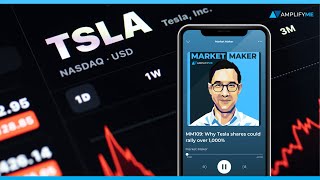
In this Market Maker podcast episode, host Anthony (Speaker A) and guest Piers dissect three main market stories: Tesla’s recent earnings shock and the wildly bullish $2,000‑per‑share price target, the emerging role of large‑language‑model AI (especially ChatGPT) in financial research and trading, and Goldman Sachs’s disappointing Q1 results. The conversation opens with a quick rundown of Tesla’s Q1 numbers – a 10 % share‑price drop, gross‑margin compression from 29.1 % to 19.3 % after steep price cuts, and a 24 % dip in net income. They debate whether the short‑term margin hit is a temporary “ace‑card” sacrifice for market‑share gain, and whether the long‑term upside hinges on the robotaxi business and Tesla’s vertically‑integrated ecosystem (batteries, software, Supercharger network, energy products). Piers critiques Cathie Wood’s ARK $2,000 target as sensationalist but acknowledges Tesla’s unique data advantage for autonomous‑driving AI. The hosts then shift to AI, summarising two recent Federal‑Reserve‑cited papers that fed ChatGPT corporate‑news headlines to predict stock moves. They argue that while LLMs can flag signals, human nuance, multi‑dimensional macro context, and data‑quality issues (e.g., erroneous news feeds) still dominate trading decisions. Piers shares personal trading anecdotes about arbitrage, algorithmic speed races, and the limits of current language models as “co‑pilots.” The final segment reviews Goldman Sachs’s Q1: a 5 % revenue decline, a $470 m loss from the GreenSky consumer‑loan divestiture, a 17 % drop in Fixed‑Income‑Currencies‑Commodities trading revenue, and weaker wealth‑management results. They debate CEO David Solomon’s future, comparing bank leadership changes to football‑manager turnover. The episode closes with a brief UK CPI update (inflation down to 10.1 % but core unchanged) and a political footnote about UK government turmoil. Throughout, the hosts blend data‑driven analysis with market‑sentiment commentary, highlighting the tension between quantitative models and human judgment in today’s volatile environment.
Chapters
Okay, hello and welcome to episode 109 of the Market Maker podcast. And we've got a couple of different things we're going to talk about on this episode. Going to talk about Tesla because there's been a new price target circulating this morning. May I remind you, Tesla currently trades at $162. There's a price target that's come out today that their share price is going to hit $2,000. So we'll delve into the timeline of that and the rationale of that. Piers is going to try and persuade me why I should be buying Tesla shares right now. And then we're going to talk a little bit about, um, AI and ChatGPT in the world of financial markets, because there was a report this week talking about how researchers at the Federal Reserve are using ChatGPT, and also how it's being used for predictive stock movements. So we'll have a look at that. We'll also talk about Goldman Sachs. We've had a number of banks this week, uh, Morgan Stanley, GS, Bank of America, Bank of New York Mellon, but we're going to focus on Goldman's because actually they've been the one that has disappointed the most out of all of the big banks, often seen as the most prestigious. They are facing some serious headwinds at the moment, so we'll look to explore a few of those things. And then finally, UK CPI. But before we begin, Piers Busy week, I hear.
Yeah, what's a busy week here over Amplify HQ? Yeah, busy week just because it's all of the banks are doing their spring, spring insight programs at the moment. So yeah, we've been, we've been helping deliver those with Citigroup and Credit Suisse. And Morgan Stanley. Actually, that one was a couple of weeks ago. But yeah, the big one actually this week was, was in terms of our involvement was Bank of America. So yeah, we spent the whole of Wednesday on site at Bank of America with their, yeah, 120 Spring Insight candidates. Yeah, it's a big one because we were running 3 of our simulations in parallel. Throughout the whole day. So yeah, it was really cool, really cool to, um, to kind of work with these new eager young candidates. Uh, yeah, really super impressive. A couple of shoutouts from my side because I don't know if you, um, you had what I had, but kind of walking around during the day like every now and then, um, and because I spoke at the start of the day to the whole group to kind of introduce the the structure and the simulations. We were running a global market sim, we were running an investment banking M&A sim, and we were running a risk management sim. So I was just explaining it all. And then afterwards, during the day, I had a few people come up and go, oh my God, you're— I listen to your podcast. And I was like, yeah, well, how do you know I'm on the podcast? Like, because people listen to it, they don't look at my face. Well, unless you watch this on YouTube, I guess. And they were saying, yeah, it's your voice. I recognized your voice.
Oh, wow.
So two in particular I want to give shoutouts to Chelsea, Chelsea Okesi-Akwiru, and also Amy Stewart-Box. Those two in particular were talking to me about how they loved the podcast and how they really used it to kind of improve their, well, I guess, commercial awareness and what's going on out there in markets. And they said it really helped them well, to kind of, you know, impress in the application process for these Spring Insight programs. So yeah, really cool to meet, to meet those guys. And yeah, good, big shout out and well done and good luck. Good luck to those two because they've got interviews today.
Yeah, interviews. Yeah. To try and get a return offer for the summer. So right now, as we're recording this, there's going to be a couple of stressed individuals, but I'm sure they're going to smash it.
Absolutely.
Absolutely. Good stuff. Well, for, for those people and everyone else that listens, um, please do share the love. Get it out to as many people as possible. Tell your friends about it. Share it on social if you liked an episode or the actual podcast channel itself, or just drop a rating or a review because it really helps kind of boost up the algorithm on Apple, Spotify, and so on. So yeah, be much appreciated. But look, let's dive in first. Subject. I'm not going to say my favorite or my worst, I'm just going to say Tesla.
It's my favorite.
They finished the session— well, let's start on a positive footing. They finished the session down 10% yesterday. Yeah, yeah. The reason for that was they had their— was a double whammy. They had their earnings and they've kind of slashed prices again. So one of the main things I wanted to talk to you about was um, margins and also economic headwinds at the moment. So gross margins, that was something that investors really latched on to when they were looking and trawling through these numbers. And one of those was that it dropped from 29.1% to 19.3% year over year after the company rolled out a series of recent price cuts. A couple of other numbers before we latch on to that. Area, the EV maker's net income was down 24% from last year, while GAAP earnings were down 23% from a year ago. So that, that's all I'm going to say about the negative numbers so far. We're coming to the earnings call in a moment.
Whether— well, hang on, what about the— any positive numbers?
No, I, I just had a load of numbers.
Coincidentally They're all negative.
Well, okay, I'll finish off on the earnings call because Musk, um, he's now kind of— if you remember, what was it, 12, 18 months ago, he was kind of like, right, I need to start moving away from Tesla, letting it grow up as a company so that it doesn't become so dependent on me, let it find its own feet. Then obviously Tesla got whacked when he started buying Twitter, getting caught up in that saga. He's come back and now he jumps on the earnings calls. And kind of dominates them. So he said a couple of things. He said he emphasized an uncertain macroeconomic environment that could impact people's car shopping plans, adding that he expected 12 months of stormy weather in the economy. And then he went on to blame the Federal Reserve, Jerome Powell. So it's exactly taking a page out of the Donald Trump book. It's, look, it's their fault. And if they keep hiking interest rates, he was saying how that's going to hurt consumers. So yeah, very, very non-political as always.
But, um, well, I was, um, it's interesting with Tesla and, uh, the media's— the media for sure has a bit of a negative agenda against Musk and Tesla, I think, specifically. But, but I think Musk generally was hilarious. That BBC interview, I I don't know if you saw it. That was about Twitter, but where the BBC journalist was grilling him about hate speech basically on your For You page and how it's gone up since he's taken over Twitter. Did you see this interview? And basically, Musk said to the journalist, OK, well, give me one example of what you're talking about. And the interviewer goes, oh, well, yeah, I'm not— I actually haven't been on the For You page for a while, so I can't give you an example. He's like, what? I mean, you've just told me that hate speech is going up on the For You page, and yet you don't go on that page. So how do you know it's going up? And the journalist had no response. He— Musk absolutely destroyed him. But it was a good indication of this, I think, negative bias. My point is, I was reading the FT, like, reading up on the Tesla earnings, and like pretty much what you've just said there, right? It's like, list out all the negatives. I mean, it took me— I, I think it was about three-quarters of the way down the article because I was going, well, okay, I get, I get this. The— we'll talk about gross margins in a minute and how that's gone down and profitability down, and obviously that's linked, but But then what's happened to revenue? I mean, do you know? Was their revenue up or down or year on year? Any idea?
I'm not going to do what the BBC journalist did and try to pretend that I'd gone on the site and read that.
Yeah, so I guess this is my point in that it literally was about 3/4 of the way down the article. That I finally found the revenue figure. And revenues, yeah, revenues are up and they're up quite strongly, but year on year, I can't, now that I'm speaking, I actually, I've lost the figure. I think it was like 20% up or something. So, so fine. But look, yeah, generally speaking, the earnings numbers are worse than expected. Of course, the share price is down 10% today. To reflect that. I mean, I will just caveat that it was— the share price was up 65% on the year, like since January, um, but for sure off 10%. Let's talk about this gross profit margin thing first. That's definitely the big one, uh, the big story of these earnings. And so, and this is a key kind of metric for the, you know, measuring the competitiveness of each company within the automotive sector. Because building cars is super labor-intensive. This is a very— there's a, there's a very high cost of production. And that's why when we're looking at an automotive business and trying to judge its success against its peers, we always look at the profit margin. So the gross profit margins are probably the, the most important metric when you're analyzing the automotive sector. Historically, Tesla had an incredibly high gross profit margins. So this is obviously a good thing, like best in class by a country mile.
Well, when your car is the worst in class for reliability and quality, that makes a lot of sense, right?
Uh, well, there are other reasons why they've got a high, relatively high gross profit margin, which I'll come on to in my bullish case, uh, in a minute. But for sure, take the bearish situation. Their gross profit margin has dramatically dropped in the last year. It's gone, as you said, from 29% down to 19.3%. Okay, huge drop. A lot of that is because of the big price cuts, deep price cuts that, um, Tesla have been pushing through to try and just, well, increase sales, obviously, to try and, you know, get, get some money coming in to shift some stock. So they've had like for example, price cuts of up to 20% on some of the Model 3 and Model Y, uh, vehicles. They're the kind of two best sellers, right? So 20% price cuts is obviously— stinks a little bit of panic with regards to, you know, I guess the challenge Tesla has, which is that now the entirety of the automotive sector is now in this kind of peloton behind them trying to now catch up. It's all EV, everyone's EV everywhere. And so finally now everyone's chasing and hunting Tesla down, who were, you know, the pioneers in this space, of course. But, um, but 19.3% gross margin, right? But that is still higher than all the others. It's just that the gap has dramatically shrunk. For example, um, Volkswagen, um, their gross profit margin is 18.84%. Okay, now actually that's been quite stable. So in the— so Volkswagen's gross profit margin is lower than Tesla's. However, the gap has gone from being about 11% difference for now, 1% difference. Um, Toyota's gross profit margin, 17%. BMW's in around there as well, about 17%. So they're still best in class, but their massive advantage in this area has almost entirely vanished. So Musk's point is, look, we have this amazing gross profit margin, so let's sacrifice a bit of that to win market share. So he's cut prices, which obviously immediately drops down onto that gross profit margin line in order to win market share. That's his strategy. Um, so that's why the numbers were a little bit shocking and why the share price is, is kind of down 10%. And then obviously his macro view, he's setting us up for weak demand for the next 12 months.
Um, so what happens over that next 12 months then? Let's say the situation— we do go into a US recession and more of the kind of bearish economic situation unfolds. His margin is now— has shrunk. He's still got space, obviously, even though he dropped within to the peloton. Yes, you said What, what's the next play after that? Because there's no new major XY models coming out, is there, that's going to like reignite new enthusiasts' demand for a new model?
So when you look near term, next 12 months, he's played his ace card already. That's done. He's used all of his gross profit margin advantage, almost all of it. That card is on the table, played. Okay. But if you're thinking of— so I agree, in the next 12 months, yeah, it's probably going to be maybe a bit challenging. And obviously entirely comes down to what is still a big unknown. And the big debate on the street is, is there going to be a US recession? When will it start? And how deep will it be? You know, ultimately it doesn't matter what you're investing in, Tesla or any other sector anywhere. Ultimately that's the big conversation, and there's a lot of uncertainty around it. It's really, really hard to predict that. But, you know, in Musk's words, you know, obviously he's blaming the Fed because ultimately the very sharp rate hiking cycle is going to cause damage. So yeah, I think in the near term you're right, but I think with Tesla, the bull case So what were you saying? Cathie Wood's ARK.
So let's talk about that. ARK's updated open-source Tesla model yields an expected value per share of $2,000 by 2027. Tesla's prospective robotaxi business line is the key driver, they said, and that's going to contribute to about 58% of expected enterprise value. And 45% of expected EBITDA in 2027. Okay, so is that, is that, is that the game plan then as a business strategy? It's not so much— you kind of, you continue selling cars, continue trying to grow that business, but what they're saying, half of the business is going to come from this new TAS model.
So long term, look, I don't get me wrong, Cathie Wood $2,000 price target in 4 years. I mean, I personally think it's laughable. I mean, that's just— it's probably fantasy land, right? And she's obviously talking massively, talking up her own book. Tesla's her biggest holding, right, in her ARK fund. So yeah, very sensationalist, very, you know, clickbait, call it whatever you want. I think it's a bit crazy. But I will say there is a bullish argument for Tesla, not near term. As I said, they played that ace card, short-term ace card, but they've got a lot of long, medium to long-term ace cards which sets them out, uh, sets them apart from the rest of the sector pretty much by and large. So here's, here's a few examples. Um, so Yeah, Cathie Wood's main point is around their technology, right, and their innovative technology. Um, so they've got— and this is the thing, Tesla is built from the ground up, right? They don't, they don't outsource anything. They've lit— they've literally created Tesla, really. Whilst we see it as a car kind of driving along the road, it's really like 6 or 7 different businesses. In that they have created from the ground up every single product that goes into that vehicle, including all the kind of machine learning and AI around driverless vehicles and so on, which is why the robo-taxi thing which Cathie Wood is talking about— yes, Tesla do have ultimately a huge advantage against all other automotives. Because they've got their own data center and they've got their own AI model to kind of build out and be the leader, you know, in a race. Don't get me wrong, there is a, you know, there's multiple players in this race, like the big guns. We've talked about this in the past, like Google and the rest of them. They're all trying to crack this driverless vehicle thing, right? But Tesla are in the lead because they've got the data, because they've got hundreds of thousands of cars, millions of cars on the road right now driven by humans, right? But all the data they're getting is pouring back into their own, built from the scratch, from ground up, their own AI machine learning model that's then feeding into an ever-improved system. So yeah, I think they do have the advantage there. But look, they've got advanced, yeah, electric powertrains. They've got their own battery technology. They've got their own software systems. You know, and this is all— then, as I've said, that Autopilot, currently semi-autonomous driving system, you know, they've got it all and it's— they've outsourced none of it. Okay, um, the other things that's quite interesting about them, and because of that, right, they've got what you might describe as a vertically integrated business model. So they've got a control over the majority of its supply chains. So when it comes to let's say, the geopolitical direction of travel, where you've got the superpowers of China and the US very much kind of, you know, moving in opposite directions, and that sort of globalization in reverse, then, you know, supply chain, um, risk, if you want to call it that, is definitely up there. And I'd say that Tesla are a better place to deal with that than other automotive. The other, the other things are like, they've got a direct sales model. So Tesla use direct-to-consumer sales, okay? So they bypass traditional, the traditional dealership kind of networks, which is good for their margins. Um, the Supercharger network, I mean, their charging network is obviously best in class globally, which gives them a big advantage as this EV revolution you know, continues to rev up. And then they, by the way, they don't just build cars either. I mean, well, we've got maybe a truck coming along, but it's not just vehicles. Did you know that they also, they're an energy company? They produce solar panels, they produce, um, solar roofs, energy storage solutions, you know. So they have, they have got diversification within their product mix outside of vehicles as well, which might be something that know, in time, you know, helps to diversify them out, and, and that's a positive for the medium to long term.
So in terms of valuing them as a business then, isn't it not unfair that they're in this category of automotives, which are very— let's face it— dull businesses in terms of their competitors? Is it not more fair to put them in some of these more high-growth related peers, which then make them a less favorable looking company when basically putting them in a sector that's not really appropriate.
Well, I think this is the thing, right? When you sit down and go, right, let's start a company and our product is going to be to start with a car, but let's not outsource anything. Let's literally start from— build it from the ground up in every single aspect. Then the thing is, it takes a huge amount of time. And a huge amount of investment because you're starting from scratch with everything. So right now, today, this huge amount of time, this, this product evolution, if you like, is still just a car that's driving on the road. So right now, that's their revenue. Their revenue is coming from selling cars that get driven on the road by human beings. Their key advantage is still to come in the future of the evolution of their, their kind of product. And so all of the groundwork is laid, but I think the benefits from most of that work and investment and efforts probably still lies in the future, I would say, which is what Cathie Wood's argument is. I think you saw a flavor of that with Tesla's share price like in 2021, but that was more caught up in the tech, tech share price bubble, to be honest. And then it all kind of came crashing down. But I think we've had the bubble and it's burst. So I think now with Tesla, it's okay, you know, maybe we can get back to $1,000, right? But it might take years, um, but it could be that we get there if I'm right in saying that the big value in all the work that's been done, most of it still lies in the future.
Question, and I don't want this to sound too morbid, but this is something that you would do, right, as a trader. You'd think about lots of different outcomes of certain scenarios when you're taking a position of risk. Um, you think about the base, but you'd also think about fringe cases which could happen. What would I do in that situation? If something happened to Elon Musk and he's not around anymore, what's the value of that business?
Uh, I, I, I think it's now— I think you'd get a short-term kind of negative shock impact to the share price. I don't think the business medium to long term suffers. I think the best examples are, look, Steve Jobs, right? When he left Apple, it was like, oh, well then that's Apple gone. Like, in terms of its innovative roots that has changed people's lives, well, that, that's, that's gone. There's no more upside. And of course, that was proven entirely incorrect. So yeah, it would be a significant moment, but I don't think it would alter it's too mature now. I don't think it would alter Tesla's trajectory over the medium to long term as a business. Okay, why are you, uh, are you looking to knock him off? I mean, I know you dislike the man, but I didn't realize your hatred was, was quite that extreme.
Well, we'll see when, um, I'll just keep an eye on the, um, when Elon starts offloading some more shares, then All right, well, let's, let's move on and let's talk about another technology piece actually as a kind of segue into what we've just discussed. So, um, first wave of academic research has come out this week applying to ChatGPT and finance, and it was talking about two, again, academic papers. And actually, I think these were citing the Federal Reserve, because actually, if you think about Federal Reserve as, let's say, a company They have thousands of employees, and yet the ones that we focus on is just a very small, tiny portion, which is the, the policy committee that make interest rate decisions, for example. But actually there are thousands upon thousands of researchers, people who work in research, regulation, supervision. That generally is what makes up a workforce at a central bank. But they've come out, there's a couple of pieces they've been since this technology has kind of gone viral, they've been doing a couple of studies. So the first one is, um, can ChatGPT forecast stock price movements? Return predictability and large language models. The study prompted ChatGPT to pretend to be a financial expert and interpret corporate news headlines. They used the news after late 2021, so a period that's not covered in the chatbot's training data. As to just see what the outcomes would be. And the study found that answers given showed a statistical link to the stock's subsequent movement. And I'll give you an example and see what you think, Piers. So the example they had, uh, that Bloomberg picked out was the headline that, uh, Rimini Street fined $630,000 in a case against Oracle. Oracle, who you'll know, the software company in the US. Um, was good or bad for Oracle? That was the question. ChatGPT explained, this is positive because the penalty could potentially boost investor confidence in Oracle's ability to protect its IP and increase demand for its products and services. And so for me, when I was reading that, I was like, that's seriously flawed. Yeah, because that's a very one-dimensional view of ascertaining how that's gonna react. Now, I can imagine what ChatGPT would have done. It would have gone back through its huge data set and gone, okay, was there something similar that's happened like this before, and what was the subsequent price reaction? And just average that out. What does that kind of look like? Yeah, but the problem with interpretation of news is, you and I know all too well, is that how it is impacted one day can be significantly different the next because of what's discounted into the price of the product you're trading, but also in the context of the broader asset class, the macro environment. There's multiple variables that you would need to run in order to determine that. And so just looking at history, if that's not applying the current price data of news information flow of right that moment, then I can't see how that could be anything other than just a system that you would deploy in order to basically cover your back. And if something happens, oh, there's a little trigger alert, that's something I should investigate. And that's how we used to use it on the desk I used to work on, similar types of methods that we'd set up where keywords would get highlighted or flagged. Or if a price movement breached, or an average options volume breached a certain 5-day average, you would get flagged. You had no idea what the news was. All you knew that there was something going on, and then you investigate. So do you see that similar in this scenario, or do you see it—
well, I think so. With, um, You know, algorithmic trading systems have been in the business of trying to, uh, let's say, interpret news and place a trade based on that information as fast as they possibly can. So this has made the efficiency around how price reacts to breaking news, the efficiency has been driven ever higher and higher and higher. I know this firsthand because I used to trade as a human manually. Our job, our edge, our strategy was really to trade the inefficiency that there was between prices of assets reacting to certain scenarios. So this is like pre-fund— like, I started trading in 2002, right? 2002, '03, '04, '05. Okay, those years were great years where there was huge inefficiency. It was arbitrage trading. Okay, and you— we would trade— I don't want to get into too much detail, but we would trade like, let's say for example, different German government bond maturities. We would trade the 2-year bond, the 5-year bond, the 10-year bond, but we We wouldn't trade them outright. We wouldn't be saying, "Ooh, I think that bond's yield is going to go up. Okay, I'm going to short that bond because the price is going to go down." We weren't really— I mean, there was a bit of that, but it was more we were supposed to be hedged, right? We were supposed to have an arb trade where we would buy one bond and sell the other, and we're trading the spread, and we're really trading the idea that the prices of the two relative to one another is currently incorrect because there's been inefficiency in how one of the bonds has reacted to a scenario compared to the other one. And that inefficiency won't last and we're gonna trade the fact the inefficiency gap is gonna close and that's how we make our money. And it was great, but then algorithms came along that basically did that job faster than I could. Okay, so one of the algorithms is to take trade economic data. So this is numerical and it's very easy for an algorithm. So you have, let's say, the US non-farm payrolls number is announced, and then a computer algorithm can go, okay, what's the data? How does that compare to the expected figure? Okay, it's higher or it's lower than expected. Okay, I'm buying or I'm selling whatever asset it is. Okay, and it became a race really. It wasn't really trading. The hedge funds entered into a race of who could build the fastest machine, and they've got it down to literally like a nanosecond where they can execute a trade automatically, obviously following an information release. Okay, but that's, that's numbers, and it was— we still had an edge as a human because it was like, okay, fine, you, you algos, you, you crack on if you want to trade on those data releases, that's fine. I've still got other stuff that's more nuanced. I can trade the Fed, Federal Reserve's, you know, monetary policy statement, or the press conference when Jerome Powell's speaking live. Me, the human being, well, right, I've got a higher level of intelligence compared to the algorithm where it's a It's always an if-then kind of statement, okay, in the algorithm. So I as a human could be above that and I could interpret things in real time, particularly around language. So I would still very much had an edge, and that's how we would trade based off these Federal Reserve statements and Powell speaking live, okay. But, but then systems advance, and there's one called Google's BERT model The next evolution was, okay, it was language recognition, okay? But it was very much what's called a dictionary-based system. So you as the human would build the algorithm and you'd feed the algorithm with words, keywords. And so let's talk about the Federal Reserve. What words that a Fed Reserve member might say, what words would we categorize as being hawkish? What words that they might say what would we categorize as dovish? And then you set the model up, and then the model is scanning, literally scanning for these words. And then, right, are there more hawkish words being said, or are there more dovish words? Okay, there's more hawkish, therefore this is a hawkish statement. Okay, right, markets should now react like this, XYZ, based off a hawkish scenario, and the algo goes ahead and starts trading. OK. So what we're talking about here now with ChatGPT is the next evolution in this journey. Now you say— what I'm interested about what you just said was the human still has the edge because we can take that nuanced argument and say, well, yes, OK, on the face of it, if you're analyzing this in the first dimension, fine. Let's keep it on the Fed, right? The Fed is hiking interest rates. Okay, that's hawkish, let's buy the dollar. Okay, that's the first dimension. There's then the second dimension, it's okay, well, they're hiking interest rates, but by how much? And are they hiking interest rates as much as expected or not? So that's the second dimension. Okay, and I think That's pretty easy for an algorithm to do as well because you've got an expectation versus the reality. Okay, but then it's the third dimension. It's like, okay, it's not just that they've hiked rates. What's the language they're using about how they might change interest rates in the future? And how does that compare to people's expectations, you know, future interest rate hike expectations? And what are they saying about inflation? And what's the kind of macro sentiment? And all of these things. And so it might be that they're hiking rates, but actually you should sell the dollar because of this more nuanced, multi-dimensional analysis that you can do. But I would— so you're, you're— I think you're suggesting that the third dimension, the fourth dimension, however many dimensions you want to go, but AI is not yet clever enough to do that in a reliable way.
Um, not, not in a reliable, but certainly not in a way that you would ever allow it to make the end decision. Yeah, it's there as a co-pilot to, right, make that assumption possibly faster than you can, to guide you, for then you to make the judgment call, pull the trigger, uh, in that scenario from a trading perspective. There is one thing that you've not considered, which you might not have ever seen in your career, given that you are sat on the other side of the table trading. I was sat there aggregating information. So when I'm sat there on a desk for 12 hours a day watching all these different news terminals, so I'd say I probably would have seen, scanned my eye on 7,000 to 8,000 headlines in one day, just sat there looking at Bloomberg, Reuters, everything in between. So there's 30 screens on the desk that 3 of us were looking at any at one time, basically. Now, the number of human error mistakes that come from the source of data, whether that's Bloomberg journalist makes typo, whether it's Bloomberg, someone's inaccurately inputted the wrong figure, whether it's the Bureau of Labor Statistics has an error, right? I've seen it all. And believe it or not, when you watch 8,000 headlines a day, I would say they happen, those mistakes, on a frequency of about 5 times a day. Wow. They happen a lot. And you see Bloomberg all day long will run headline that's obviously wrong. They've put too many digits or the decimals in the wrong place, or they flash something, and then 5 seconds later they put corrected, and then the next headline comes up and you're like, well, yeah, of course it's wrong. So how do you account for that? Because the machine is reacting to its input.
Yeah, right. No, absolutely. Well, well, yeah, but you could argue that the market will react to the inaccurate information.
So you'd have to build the model to make an assumption that if the incorrect whatever it is, is, is wrong within a certain deviation, then it could be accepted as believable by humans who might trade it. But if it goes beyond that, it's obviously so far wrong that no one would actually look at that. And I know this from the time when I squawked hike 100 instead of hike 25 for a Bank of England decision very early in my career. And not one trader out of thousands listened to what I said because it was so far wrong.
Yeah, but you've, you've seen scenarios, um, well, remember like talking about journalists getting it wrong. So remember when the FT tweeted, um, that the ECB— I'm going to get this the wrong way around now— did they say that they weren't cutting interest rates?
Yeah, so the expectation was they were going to cut It was going into the end of the year 2015, and then they— FT, 7 minutes before, ECB leave rates unchanged. Market did react sharp.
Yes, right, the market— that's because it was the FT, okay? So it's coming from, it's coming from a source that is global, globally disseminated instantly, and it's a reliable source, right? So markets react. but then fine, they pulled the tweet and they corrected it, right? So your algo needs to be clever enough to then pick up on the fact that that second scenario has happened and realize that the initial market reaction is not sustainable and needs to be reversed.
Right, but the value-add in that sense is not only did that not— would that not happen at this point in time, likelihood is, because the models haven't been trained that way. Yeah, but in that situation, I called my contact at Bloomberg and I called my contact at Reuters, and within, I'd say, 30 seconds to a minute, then I've got the intel that that's not come out, that's not official, no one's said anything, we can't actually say anything yet, but it's BS. But then, so then yes, the algo can react in the first part, but the multiple parts thereafter— what I'm saying is, is that there's always another unforeseen. I sat there for long enough where it was like, just when you think I've seen every single thing that can go wrong, another thing happens. And it's, what about that one time? Yeah, there's something completely— you know what it's like to trade. Let's say you're in a massive position and it's that one time when something just completely odd happens from a news perspective and then the algo does something wrong.
Well, I think this, this conversation, I think, is a very good one that speaks to them more broadly about where we are with AI. I think you used the right word earlier, copilot. Right. I think right now in terms of this, it's so brand new, right? You're right, you shouldn't— it's not good enough and it's not mature enough to just let it entirely do the job of a trader. Um, but it's a great co-pilot that can help the human being. I would say also a lot of the examples we're talking about here are human errors, but surely the number of errors will dramatically reduce because we won't rely on humans to input data, type in a number and then hit post and it drops onto the Bloomberg terminal. It won't be a human being doing that. So those types of jobs will be eliminated and then the human errors will reduce. But yeah, I think AI is disrupting, obviously will disrupt everything. And finance is certainly right in amongst that for sure.
Okay, well, let's— we've got two more subjects to cover off. So let's talk about Goldman Sachs. Their first quarter results came out earlier in the week on Tuesday. They missed, missed expectations on revenues after taking a $470 million hit tied to the sale of consumer loans. So they're still trying to reverse out of that. Business, so to speak, and feeling the pains of that process. Their company-wide revenues— this is the interesting part and what I wanted to talk to you about— the company-wide revenues fell 5%, and that was below expectations. So other than the consumer loan hit, weaker than expected bond trading particularly, and asset and wealth management results were also weaker. So we're talking like— and investment banking fees not getting a mention here because we know the state of that already. Pretty depressed at this point, albeit a couple of big deals in the pharma space coming through recently. Um, but fixed income, currencies, commodity trading revenues were down 17%. Still a pretty chunky figure, $3.9 billion, but that was below Street estimates. So below estimates and also lagging peers in the group, namely JPMorgan, Citigroup— they had increases over this period.
Yeah, yeah. I mean, the, the bad news just keeps on coming, doesn't it, for Goldman Sachs? I mean, they are having a shocker, um, and really have been for, well, you would say the last couple of years, but I think it's all coming out in the wash now. We've talked about it before. They made that major pivot, or tried to, to enter the, the consumer banking market. And it has spectacularly failed. Would not be an overstatement. And to the point where they're now reversing out of everything and taking a massive hit in the process. I think, what was it, that GreenSky company?
Yeah. So one of the things that kind of came out of the earnings was that other than the loan book side of things, the banks initiating the sale of Green Sky, which lends to customers making home improvements. And that's just 13 months after they paid a very toppy fintech COVID bubble, $2.2 billion basically.
I mean, so look, it's cost— this is— but you could argue this is short-term stuff where, okay, we had a major strategy idea. We tried to execute it, it's failed. Let's write it off and let's go back to our core. Okay, the biggest problem of all for me in these earnings— we kind of knew this is all bad on the consumer side, but the biggest problem— look, okay, the IBD side, if they go back to their core, well, what's their core? Well, it's IBD and its markets. You could say wealth management now, but that's still a spin-off. Not a spin-off, sorry, that's still a smaller entity, right? So it's their core's investment banking and markets. So let's drop back to the core. Well, one of those two pieces of the core engine has stalled, as it has done for all of the banks. That's the IBD side. Deal flow has collapsed. And fine, all banks, all IBD divisions is having a really bad time of it. Revenues are sharply down. No fault of their own. It's deal flows dried up. So then it's the other core part of the engine is the market side, and this is where other banks— and it normally one balances off the other— and other banks have had a really good period for markets. Their fixed income trading divisions, for example, revenues higher because of all the volatility we've had in markets over Q1. And it's this volume and volatility that tends to be really positive for markets revenue. So the big clanger here in this report is the trading revenues are down quite sharply whilst their peers seen trading revenues going up. So I don't know what's going on in the market side at Goldman's, but at the moment it is just, it's just disastrous right across the piece.
So we were kind of saying offline before about how, uh, Solomon could stay on as CEO in this, given this run of negativity that they've had. Perhaps from a strategic point of view, um, there's still a long process to go through to exit that consumer part of the business. So I'm not saying that I'm privy to any special information, but yeah, maybe you just need— I mean, this is a bad period and it's probably going to get a little bit worse given some of the things they have to do in the period ahead. And so if you were going to make a change, let's say we are the board or the chair. Yeah, wouldn't want to do it probably quite now. Ride it out and come with some positivity. It's almost like when you have that transition at the helm, you need to pick the moment where there's some momentum in a positive fashion coming out of it.
I don't know about that. If I was on the board I would definitely be looking for an alternative to David Solomon right now. I, I think, yeah, I think he's done. I think he's just not managed the company well and not well enough. I mean, all right, they had a major strategy on the consumer banking side which has failed, but it looks like that in the meantime they've dropped the ball everywhere else as well. And I think, I don't think, you know, it's like a football team, right? If you've just lost 10 games in a row, but you've only got 10 games left to the end of the season, what do you do? Stick with the manager? No, get him out. We need someone else to come in and we need, you know, start from fresh, new fresh set of eyes. And that can give, you know, the markets confidence that, all right, fine. You, you, it's a new chapter. I think they need a new chapter now, and that requires Solskjær to go.
I guess it is one of the issues there that, using the football analogy, if you're running a major Champions League contender, these— there's only a finite number of managers who can run at that elite level. So who do you replace him with? So I guess you've got to look internally, right? In the interim, at least, as they do in football.
Well, sticking to the football analogy, we are in a very weird scenario where actually the number of Champions League qualified managers that are available is like a record high. There's a lot of— but like, because Tottenham have sacked their manager, Chelsea have sacked their manager. Why? Real Madrid are maybe looking to change. Why? Because all of a sudden you've got 5 or 6 managers who are top of, you know, top of everyone's list permanently, and actually they're all available. So weirdly, that's a very unusual scenario. You're right on the banking side. Well, don't you look internally? But then I guess you could say, well, if they've been part of the team, right, that's failed Well, then, yeah. So no, I do agree it's not easy to change CEO.
Particularly when you're taking over like a Man United type of organisation of the banking world of like pedigree history.
Yeah, but that doesn't mean you shouldn't change though. Because it's hard to replace doesn't mean you shouldn't replace.
Yeah, even Vengo got it in the neck in the end. All right, UK CPI, just to wrap, um, probably quite quick on this one because I don't think it was massively surprising, but inflation, uh, UK Consumer Price Index did drop from 10.4% in February to the latest reading of 10.1%. The problem there was that analysts were hoping for a deeper drop to 9.8 The core reading, so ex-food and energy, remained unchanged at 6.2%. Thoughts on that?
Well, yeah, just higher than expected. I think, yeah, what was key about 9.8, and this is very human behavioural, 9.8 was the forecast, right? If it had have been 9.8, then that would have been the lowest reading since June of 2022. Because it— but because it's 10.1, it stays, uh, it stays quite— the chart looks quite flat, right? Rather than what you want to see as a downtrend, you want to see evidence that the downtrend is in place. And you can see that if you look at the US CPI chart, you can see that clearly. The UK CPI chart is still flat. There's no trend. I mean, it's not trending higher anymore, great, but it's not trending lower either. And I think that's quite key here with this data. The trend stays flat. We were hoping to see evidence that the downtrend had begun, and that evidence didn't materialize. So I think that's the That's the takeaway. So yeah, the Bank of England may well hike more and continue to hike.
So yeah, not a good week for, uh, Rishi then. So can't really bang on the drum of inflation finally falling. In fact, worse, because food price inflation hit a record at 19.1%. That really hits at the heart of the voter, right? In terms of the cost of living crisis. And then I just saw Dominic Raab, the UK's Deputy Prime Minister, resigned over the second case of bullying since Rishi came on board. So yeah, just to kind of— yeah, wove in a bit of politics into it.
Just to finish then, this is why people like Musk are saying that the next 12 months look stormy, because inflation is staying high. Like go down to the supermarket and buy your essentials. Prices are crazy high. And in the end, interest rates will stay high or get higher. And in the end, something's got to give here. And what will give is consumption. It'll drop, and that will cause a recession. And that's the only way to bring these prices properly back down, to get inflation back to 2%. Really, the only way that's going to happen is a recession. It's just that markets are not pricing it yet. They're pricing weirdly. I don't know, they're pricing like a soft landing at worst. And I, yeah, I still think that's wrong in my humble individual opinion. But hey, what do I know?
It's like, well, I'll do is I'll pop down to Curry's go and buy myself a Piers Curran 2.0, latest version, plug it in, see what it comes out with. And, uh, cool. All right, we'll wrap it up there. Thanks very much, Piers. Thanks for listening, everyone, and we'll see you next week.
Have a good weekend.
More from Anthony


Inside the Biggest Banking Stories You Need to Know This Week (Anthropic, Diageo, Private Credit)


Inside the Biggest M&A Deals You Need to Know This Week (UniCredit, GameStop, eBay, Eli Lilly)







AI Breakthrough or Hype? Anthropic’s Claude Mythos, Tim Cook Steps Down & LIV Golf Collapse