Ep.110: Everything You Need To Know About The BIG Tech Earnings This Week!
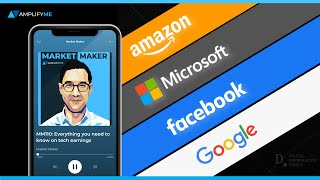
Anthony Cheung and Piers break down Q1 2023 earnings from Meta, Microsoft, Alphabet, and Amazon. Meta's stock tripled since 2022 lows after layoffs and a 26% rise in ad impressions. Microsoft's Azure grew 16%, while Alphabet merged DeepMind and Google Brain under Demis Hassabis to sharpen its AI focus. Amazon's cloud guidance suggested economic slowdown, contrasting with the other three firms' optimism.
Chapters
Hello and welcome to episode 110 of the Market Maker podcast, and it's very much going to be a tech titan earnings focus. Um, barring Apple, which doesn't come out till next week, we have had the likes of Meta, Microsoft, Alphabet, and Amazon have all come out this week, and we're going to dive into each individual company, talk about some of the good, the bad, and is there any ugly Maybe a few hidden spots we can highlight for sure. But Piers, why don't we kick off with Meta? We've always given them a bit of a hard time, as is the market over the recent, I guess, 12 months at least. But they've had a phenomenal comeback year to date, and then they've topped it off with a 10% response after their earnings report came out. So thoughts on that?
Yeah, a new, new highs. I mean, uh, the share price I mean, this, this year has just been quite phenomenal. Well, if you actually take it further back, they kind of— they, they, they bottomed out in November of last year, okay? Share price $87.50. $87.50. Now clocking in at $238. Um, you can do the quick math on that, but that's like tripling your share price. In 6 months, less than 6 months. I mean, so that kind of gives you an indication of what, what's going on. And obviously this is coming off an incredibly depressed low they've had. If you go back over the last few years, or couple of years, let's just say, if you take it from like the summer of 2021, let's say, to the end of 2022, was the worst 18 months in Zuckerberg's Facebook story, like literally from, from the start where the wheels came off. Of course, don't forget it was about, um, several factors, kind of several speed bumps, let's call them. Um, so obviously Facebook, when you think about Meta, you still think Facebook. Don't forget they own Instagram and WhatsApp and so on, but you know, their, their, their kind of original product Facebook was considered to be a bit of a kind of dying app in terms of usage, as, you know, TikTok and Snap kind of take over the kind of youth of this world. So it was thought that they were a bit of a dinosaur and they hadn't adapted. Apple changed the settings, the privacy settings on the iPhone, which meant that Facebook's— that directly impacted Facebook's ability to generate advertising revenue, which of course is the majority of the money that they have coming in. And a few other bits and bobs, right? And then Zuckerberg's kind of seemingly obsessive kind of stance in terms of wanting to win the race for the metaverse, which of course doesn't exist and maybe it won't exist and who knows, and it's way off in the future and investors can't see that far. And he was pumping so much money into that initiative that investors thought he'd just taken his eye off the ball. The current business wasn't being run very well, and it's all just about this pipe dream in the future. And so the, the share price got, got absolutely slammed, of course. And when I say slammed, summer of 2021, $380, all-time high, $380. Yeah, bottoming at $80, um, and in November last year. But look, they're back, and I think the, the earnings call this week and the earnings generally have proven that the year of efficiency, which is what Zuckerberg is calling the kind of restructuring, you might as well call it, right, where they're kind of, you know, they've laid off 20,000 people. The strategy is to what's called flatten the management structure. So loads of redundancies, you know, a little bit more, you know, focus on costs and spend. And so his year of efficiency, I guess you could say, is off to a better start than we had thought. And I think the corner has officially been turned. And whilst the share price has rocketed, I mean, it's still, it's still well over $100 off that high from back in 2021. And I think that, yeah, he's had 18 months of wobble and now he's back on track.
Yeah, there's a few different elements here because there's the daily active, monthly active users numbers, which on the daily side came in above expectations. Again, these numbers are just crazy when you hear them. 2.04 billion.
And so did you say that's daily active?
Daily active users across all—
is that across all their apps?
That's Facebook.
That's just Facebook. Wow.
Yeah.
Who uses Facebook?
Well, don't forget that we're sat here in the UK.
Yeah.
If you're in the US, you might think, yeah, it's a bit of a dying horse.
Yeah.
But for rest of world, yeah, they're still very much users of that platform, uh, amongst other things. But so the other thing was ad impressions. So the way they packaged this up when they deliver their earnings, as they call this, the ad impressions delivered across the family of apps. Is how they refer to it, and that increased by 26% year over year. But the average price per ad did decrease though, about 17% year over year. But an interesting point within that was they were talking about how, and this will be a very common theme throughout this episode, how artificial intelligence technology helped the company choose the right type of short-form content, i.e., Reels. And they were talking up this idea of how AI has improved basically their algorithm as to what is best to push to the user to increase the stickiness on the platform. And the better that— more efficient that process is, the more you can advertise to people. And that's how they're utilizing that technology. But to give it some context, Meta said they're making more money from Reels, and time spent on Instagram has gone up by 24%. I mean, that's huge. That number sounds huge. Don't have much context, to be honest, but that sounds like a lot.
Well, that's— yeah, I've got a few highlight bullet points, notes on Facebook or Meta's kind of earnings. A lot, a lot here, but the one I highlighted in red, as in easily the standout stats of the whole thing, was exactly what you just said. AI-driven recommendations have boosted time spent on Instagram by 24%. That's It's kind of blown my mind, that. And, um, I think, I think obviously AI, you know, 2020, quarter 1 of 2023 will always forever be the kind of, uh, the start of the race, like proper. Obviously people had been building AI stuff for years and years, right? But this quarter is officially, you know, ChatGPT is officially You know, the, the gun has been fired and we are off. And so AI is all over these earnings calls, of course, and everyone wants to talk about it. And what Zuckerberg was saying that— I mean, he kind of was trying to justify in some sense the big, what you might consider, overspend over the last few years, which was one of the key catalysts for that big sell-off in that Facebook um, in the Meta stock. But he was trying to defend it by saying that we were— he said that we were behind kind of on building out our AI, um, platform. But he said, you know, we spent a lot of money over the last couple of years trying to catch up on that. And now actually, not only have we caught up, he thinks that they're in a position of strength moving forwards. And he was saying that deploying AI tools to make the platform more engaging, to make advertising more effective, and then also on the cost side to streamline internal processes. And there's stuff like, 'cause he was saying around generative AI, he thinks he's in a really strong position. And what we can expect to see, I would say in 2023 as the months roll on is, is more on this, but he's talking about generative AI tools to help brands create more personalized ads more quickly, more easily. So yeah, I mean, obviously their business is— they're an advertising business, right? So the more time you can get your user to spend on your app, obviously, tick, 24% up on Instagram. Amazing. And then obviously, whilst when they're on it, right, how effective are the adverts that you present to them in terms of click-throughs. So it looks like, looks like they're back on track. Meta.
Yeah, and that generative AI part, it almost feels like they're absorbing then some of the other players within that normal advertising process. So if you talk about graphic designers, you talk about graphic agencies, marketing agencies, It's like Facebook saying, look, we've got the tech that can bypass all of that. It makes actually for the client side cheaper. You're getting more bang for your buck, but the money basically is now being swooped up, swept up from all those other people who used to be part of that, and they're just claiming it. So yeah, it's interesting.
And it's— and we'll talk about this with some of the other earnings, but obviously, you know, tech has done amazingly well in 2023. Okay, and the big, big tech particularly has, you know, massively outperformed the underlying indices like the S&P 500. But of course, and generally speaking, these earnings that we've had this week, generally speaking, have been very positive and have really surprised to the upside. And it's like, you know, we weren't expecting too much sort of growth from them, and actually they've delivered it. And it's like, so it's, it's saying, well, This whole idea around a US recession hasn't started yet. The recession, there are no signs of the recession. And so what we want to know is, well, what about, you know, when is this recession going to happen? Is it going to happen? How bad is it going to be? And I think that, you know, generally speaking, in recessions, it's the companies that are reliant on their advertising revenue you know, so Google and Meta, right? They're the most vulnerable. They're a bit more cyclical because as a business, you know, going through a recession, of course you're cutting costs, you know, all businesses now. And one of the, one of the easier ones to cut is your spend on advertising. But if, if Meta here can present tools that reduces the cost of your ability to present an ad to your potential customer, by cutting out the ad agency cost, which is substantial, right? Then, then yeah, maybe, maybe these platforms can be less cyclical in terms of being less impacted by a recession downturn. Um, so it's interesting.
Yeah, and just to kind of wrap up the, the Meta story, they did actually issue a bullish outlook for Q2 revenues They're looking at a range of $29.5 to $32 billion. This is very typical of what they do. They issue a range. That was against a Street estimate of $29.5 billion. And then the other things were Meta Labs. That, that was kind of what you referred to as in the metaverse. Now that's still making a substantial loss, $3.99 billion. That was a deeper loss than expected, actually, but kind of like what you said when he said that we were behind— Mark Zuckerberg— we were behind on AI. And he— and I think there's something to be said for someone who then goes— who says that sort of thing. Yeah, there's no excuses. Like, we were behind. And then here, what actually I kind of like is that the word metaverse doesn't appear until the boilerplate forward-looking statement section at the very bottom. Of their earnings report, which for him, I'm sure, just, just parking that idea is a big blow, I'm sure, to his ego. And so the fact that he's done that—
yeah, although he did expressly, um, mention it on the earnings call, he didn't— he did, yeah. Very, you know, deliberately make the point that, you know, yes, all this AI stuff, yeah, yeah, yeah, whatever, that's all anybody cares about now. He did say the metaverse is very much still a key part of his, you know, core strategy going forwards.
Yeah, I mean, if he can manage the, the costs, yeah, of that and just play the long game, very much sure the metaverse will become a very dominant revenue stream, and I'm sure they will be in a very strong position. Yeah, interesting if they can flip that advertising situation. But yeah, so that's Meta. Let's move on and talk about Microsoft. Okay, the one that everyone's been kind of getting excited about for the obvious reasons of ChatGPT initially, and then what's come thereafter. So a couple of things: they beat on their earnings per share, their revenues exceeded expectations. Intelligent Cloud business segment beat expectations. Productivity Business Process segment beat expectations. Need I go on? Basically, one of the other areas here notably was search advertising revenues. They were also up 13% and up dramatically as Bing integrated ChatGPT. I must admit, Actually, I'd been on Bing not that many times, to be honest, but I would say over the course of the last month of April, now we're at the end of the month, I'd say I've been on Bing about 10 times and each time I've used the chat function just to play around with it. So, and my behavior was I would never have dreamed of going on Bing before. Yeah.
Yeah. Well, actually, interestingly, I have not been on Bing. Once. But, and that the, for the reason being that why go on Bing when you can just go straight to OpenAI and openai.com and get on ChatGPT directly? Um, that's, that's my behavior. So I'm using ChatGPT and still just using Google for search, right? But I'd say my Google searching has definitely reduced for sure, but it hasn't transferred to Bing. It's just gone straight to the—
Right. So what I was testing out was that Bing is running OpenAI's ChatGPT-4 rather than—
Ah, is it?
So, okay.
I didn't realize it was—
What's the difference? The actual UI is a little bit different, a bit cleaner, a bit nicer. I actually like the '80s retro feel of the original OpenAI platform, to be fair, just because I'm old.
So hang on, because ChatGPT-4, if you go straight to OpenAI, you pay for that, right? It's $20 a month to get the premium access. But are you saying that you can actually get— use it for free on Bing?
Yeah, I'm pretty sure. I'm not sure how they packaged the subscription. Yeah, I know it's like, what, $20 if you're getting like the pro version on—
it's $20 a month. Yeah.
Yeah.
All right. I'll go and check it out.
That would make sense, right? From a— okay, we are a major investor in this company. However, we're by far the boss here and the traffic's got to come our way. We will help fuel your technological build of that product.
Yeah, but I mean, like, purpose. Yeah, absolutely. I mean, going back to their earnings, of course, like, on the earnings call, of course, all anybody wanted to talk about was, you know, ChatGPT and how amazing it is. And, and so obviously, uh, Nadella, you know, Microsoft CEO was saying that, well, actually, interestingly, because their earnings numbers were really strong, but he actually said AI capabilities were not a big driver. Yeah, yeah, right. Um, but what he did say was that the company is now— I'm quoting here— the company is now having conversations we never had with clients who are keen to leverage AI. And he made the obvious point that Microsoft are particularly well positioned at the very start of a new cycle. We feel we have a good lead and we have differentiated offerings up, down the stack. That's how he described it. So obviously, I mean, yeah, this is all in the future, right? All this ChatGPT lead they have hasn't touched their earnings really at all at this point. I know that OpenAI are now charging. There is a premium kind of subscription offering. So I've got no idea what the kind of numbers are on that in terms of— because they've got, who knows now, but like I know it was 100 million users, wasn't it, on ChatGPT, on the obviously mostly on the free, the free version. But I don't know what the usage numbers are. I think that 100 million stat, that's at least a month old now. So I assume that's continued to rise, but I don't know what— I think they've been quiet and haven't revealed what proportion of those users have actually flicked to being the, you know, premium subscribers. But, um, but look, you know, obviously that's all very positive for the future. Um, but yeah, I mean, their numbers then, just forget AI, were still pretty impressive. And obviously we often look towards the cloud division of actually a lot of these big tech We're talking about the big techs here, and certainly Microsoft and Amazon are the leaders when it comes to cloud computing. Azure on the Microsoft side, AWS on Amazon's side, and, um, it's always like the— at least it always has been— the kind of fastest growing part of these two giant businesses. So everyone always looks towards the cloud figures first. So, um, on the Azure side, that division climbed 16% which was better than expected. Um, and like, there were fears again, back to this idea around— we were talking earlier about advertising and how that's vulnerable in a downturn. Well, if you— if you— when you're talking about Microsoft and Amazon, it's like, well, cloud services are potentially vulnerable in a downturn with companies kind of reducing costs, and cloud computing costs being one of those items that companies might, might go to. So this is why these numbers again were evidence that the recession has not— has definitely not started. And so much better than expected figures. And, and yeah, that slowdown in spending that we're maybe worried about might happen definitely hasn't started yet.
Okay, well, let's, um, let's go into Alphabet and tie some of those concepts up with— because Google Cloud revenue and so forth, and advertising just very much paramount to Alphabet when we talk Google. Their total ad revenue, $54.5 billion, exceeded expectations. YouTube revenues, which I think has taken a bit of a hit recently, they actually beat as well. Their cloud revenue actually did miss ever so slightly though. A couple of other highlights in their numbers: a $2.6 billion charge related to layoffs, office space reductions during the quarter. That decommissioning cost, sunk costs right there.
Yeah.
And then the board authorized a $70 billion share buyback as well. And I'm sure that's not the first time they've done that to just—
yeah, a little Yeah, well, exactly. I was just looking back. They announced a $70 billion share buyback pretty much exactly a year ago today. So yeah, they're repeating that trick. The trick that really, I guess, was pioneered by Apple, pioneered in the sense of relentlessly buying back hundreds of billions of dollars of your stock. Well, I guess not quite hundreds in the case of Google, but, you know, $70 billion a year, like bang, every year, every year, bang, bang, bang, buying stock back, buying stock back, buying stock back. Which of course means, yes, one great way of boosting your profits. Because when we talk about profit, we don't just talk about how many dollars profit did you make, it's what was your earnings per share. And if there are less shares, well, then your earnings per share goes up. So it's just juicing that, that bottom line. Um, and Apple, they're just geniuses at it. And they've got, you know, obviously you need cash to pull it off, so you obviously got to have a phenomenal business that just, you know, generates cash like it's going out of fashion, like too much cash. And so you've got to, got to spend it somewhere, right? So yeah, Google, you know, you know, and we'll see that again next year. I mean, absolutely, you know, this time next year, look out for the $70 billion, um, being pumped in just quietly. Yeah, so it's a trick these big giant tech firms have been, been deploying for, for quite a while. But yeah, I mean, look at that, their numbers. I, I guess Google, out of all these ones we're talking about, I, I would say are the underperformers, which is You know, looking back over the last sort of 12, 15 months, underperformers in the sense of like their share price. Obviously, you know, they're facing a bit of an existential threat which they've never ever had in their entire history in the shape of ChatGPT. And, you know, does that genuinely threaten their search business, which of course is, is the giant, um, revenue generator. So look, it's quite interesting that Google are in this— they're, they're certainly not used to it, right? They're in this space where it's like, ah, okay, we actually do have a challenger. Um, perhaps we need to kind of step up. So looking at the share prices, like, of all of the— all of these big tech stocks, then Google's is the laggard, um, in terms of its rebound. Like, this year, for example, we were talking about Facebook, or Meta I should say, kind of tripling. I mean, that's— it's a harsh, it's a harsh, uh, sort of comparison because Meta was coming off such a depressed low. But like, Meta's stock has tripled in the last 6 months, right? Whereas Google's has gone from about, about $85— the low in November was $85, and we're trading up at $107 now, which is Percentage-wise, it's still good, right?
What's the S&P over this period?
Oh, percentage-wise, it's a good question actually. I'll, uh, I'll compute that in a second. But you know, it's still outperformed the S&P, I would guess, but it's underperformed its peers, is my point. And certainly when you're looking back to the, the highs back in 2021, yeah, you know, Google's still a fair ways off that. So look, it's just had a— yeah, it's just been challenged for the first time in its history. Um, and so what I— one of the interesting things, just outside of their numbers and stuff, was the move. Um, I think it was this week, or maybe it was last week now. Um, clearly they're— they've been surprised. ChatGPT, and obviously therefore Microsoft, have really pulled a fast one here, and they've come out of the gate. As I said, the gun has been fired, and Microsoft are out of the gate miles ahead. So they've made a bit of a move here. So Google used to have— it's such a behemoth of a business. And whilst they're spending a lot of cash on buybacks, they're also spending a huge amount of cash on lots of kind of moonshot kind of projects and ideas. Um, and DeepMind is one of these, right? DeepMind is the AI business. That they bought for $400 million back in 2014. And very much the, so the guy who, the founder of DeepMind, Demis Hassabis. So they're a London-based business. When Google bought them, it was very much the deal that, you know, the only, Hasabis only did the deal on the premise that they were kind of largely left alone. Like, yes, you can buy us, but we are going to continue to develop software that's as intelligent as a human being. And we're going to do it in our way. We're going to do it without a remit of having to build certain products and monetize those products and generate dirty stuff like revenue and profit. He was like, that's not me. We are going to, you know, do this, you know, it was almost like a non-profit type mindset, this guy, right? And largely they've been left alone because of that. Google in parallel set up what this department they call Google Brain, which is based in California. And that's the kind of, that's again AI, right? But very much commercial-minded. Sort of remit. And so they've had these two divisions running pretty much separately, you know, in parallel. What's happened last week is they've merged them. This is a really big deal because, as I said, there's been quite a lot of rivalry internally between these two departments. And they've gone, you know what, Microsoft is so far ahead, enough. We need to stop pandering to your internal politics. We're going to make a move here. And they've mashed these two together. With Hassabis being the head of both. And so it's definitely ruffled a lot of feathers on the Google Brain side. But they're calling this now Google DeepMind, OK, the merged departments. It's going to be headquartered out of London, which is a pretty— we've been London bashing on this podcast for quite a long time. But actually, this is a bit of a coup and really maybe puts London back on the map in terms of— you know, being up right at the kind of cutting edge of the AI kind of evolution. But, um, yeah, I thought it's just an interesting move. And, and the deal here— Hassabis has said, right, I will head up these two departments. But Larry Page has said basically the only way this is going to work is you're going to have to give up some of this sort of, um, nonprofit-type mindset. This department is now having a commercial, commercially minded direction. And so they are to build AI, general AI systems that are going to make money for Google and they need to compete with Microsoft and they're behind. And so this is Google's first kind of major move, I would say, to start to kind of get back in the race.
Hmm. I wonder what the timeline though is for that type of development. But I guess if the two haven't been working in unison, perhaps there's immediate crossover advantages that would happen as a synergy to create, you know, fast-track that process. But yeah, definitely interesting to watch. I wasn't aware of that. So Amazon, to finish, um, their shares jumped about 12%. It's funny because I actually put a post out, you know, the name of the game is get it out quick. Out the door it went. And then I looked I was like, ping, my phone went off like half an hour later because the conference call generally is a bit later. And someone had left a comment on my post like going, you bozo, look at the shares now. And I was like, oh no, what's happened?
You Jeff bozo.
Yeah, they just got crushed in the conference call. They went up from 12, then down negative, then they kind of flattened out. Pretty much. Um, so yeah, talking about— let's talk about the positives first and then we'll talk about the negatives. So from a numbers perspective, earnings per share beat, their AWS division beat, and advertising probably saw the biggest margin of clearance over Wall Street estimates. A couple of comments there. So this is the CEO, Andy Jassy. He said, our advertising business continues to deliver robust growth largely due to our ongoing machine learning investments that help customers see relevant information when they engage with us, which in turn delivers unusually strong results for brands. So again, jumping on the, the AI bandwagon and in fact mentioning the phrase AI 6 times in the earnings release and the full phrase of artificial intelligence twice. To 8. So in order to, yeah, play a bit of that catch-up, um, as opposed to some of the other names like Microsoft, these guys are just absolutely trying to scream and shout about it as much as possible.
It's all anybody cares about. It's literally— or investors, they're so, uh, I don't know, single-minded, or they just have a complete inability to focus on more than one thing at once, basically. And basically they don't care about any— like, Meta— go briefly back to Meta's earnings, you know, all the AI chat was amazing and great, uh, excellent. Slide in the— the spend on metaverse has gone up like 12 months ago. That's what sent the stock down 25% in like a heartbeat, right? So the kind of same kind of message, but no one cares. Um, but, but yeah, I mean, AI— what, what was interesting for me in Amazon's report, because as you said, stock up 12%, ping, and that's because their numbers were great, right? 9%— their numbers are quite incredible as well. Like, out of all of them, Amazon make the most money in terms of revenue, okay? So $127.4 billion in the quarter. So that was up 9%. I mean, that's quite remarkable. Let's just stand back and applaud.
You've got—
when your revenue is above $100 billion in a quarter and you can still grow it at nearly double digits, it's good. It's quite, it's quite remarkable. But anyway, half of that roughly— well, less now actually— is from their online stores. So that is something to note. Their online stores, which is what you know Amazon as, right, in terms of a user. Um, mostly you're on Amazon buying stuff, or maybe you're, you know, on Amazon Prime or whatever. Um, but that was $51.1 billion for the quarter, which was flat. That didn't grow. Okay. Um, but that's now, yeah, quite a bit less than half of the revenue, which is just showing how Amazon's diversification, you know, away from just that online store, has now got to the point it's now less than half their revenue. And it's the, obviously, the lowest profit margin by, by by a long way compared to the other stuff they're doing. Like AWS is their big profit generator, very high profit margins. AWS generated $21.4 billion. Um, so yeah, it makes up, well, very roughly about 20% of their, of their total revenues now. But, um, you know, obviously, so their numbers are great, right? Stock up, um, 12%. But Amazon said something that kind of contradicts what we were hearing from the others because their share price then dropped all the way back to almost flat. And basically they said in terms of their guidance going forwards, customers continue to evaluate ways to optimize their cloud spending in response to the, these tough economic conditions, uh, and we're seeing these optimizations continue into the second quarter with April revenue growth, growth rates about 500 basis points lower than what we saw in Q1. So Amazon are the only ones that, from their guidance outlook for Q2, have indicated that maybe this recession is beginning. We're beginning to see signs of it. It's just odd that none of the others really mentioned this, and their guidance was quite positive. So I don't know whether Amazon are the only ones being honest, or actually Amazon's business is underperforming. Because Microsoft, direct comparison, Microsoft's Azure, right? Microsoft weren't guiding that Q2 is looking weaker, but they didn't guide that. But then Amazon did. So I don't know, I don't know who to believe. Because both of their cloud businesses, their revenues increased weirdly the same amount. So they were both up 16% in Q1. Amazon guided negatively for next quarter and Microsoft didn't.
So maybe it's a big anomaly. I mean, ChatGPT has been out for a while now. Yeah. And so maybe then the association of that technology overall has created a degree of marginal shift.
Yeah.
From one cloud provider to another. I know these things aren't easy, but because I know that Amazon brought out— is it Bedrock? I think is their, their AI department or the team that they've put together. I think that's the product. But they are, they are last in that race at the moment. And so perhaps it's just some of that people, the early birds jumping ship. I don't know.
Yeah, but Amazon— so I mean, look, you can— this whole AI thing, right, you can, you can play it in so many different ways. I think what Amazon was saying on their call is, you know, we're perhaps not in the race like at the coalface, like a ChatGPT type thing, but they're developing microchips. They, they think they're going to be in the race on the chip side. Obviously this AI revolution is going to require several orders of magnitude greater computing power, right? And you need chips to be able to pull that off. And Amazon have got their kind of chip development. It looks like they're on course to take advantage of that.
Sorry, while you were talking, this really goes to show this whole conversation. So I quickly jumped on Google. So I jumped on Google, right, to search for the Amazon press release about Bedrock and then slung it into Microsoft's OpenAI to summarize what is a 5,000-word document. So I've gone from Google to Amazon's page, then over to OpenAI, Microsoft, to figure this out. So yeah, they're talking. So they've got a number of things going on, actually, Amazon. SageMaker Feature Store, JumpStart Studio. These are tools designed to make it easier for developers to build, train, and deploy generative AI models, right? The blog post also highlights benefits of using these tools: faster development cycles, lower cost, improve accuracy. Overall, focusing on advancements made by AWS to enable developers to build their own powerful generative AI applications. So yeah, but yeah, kind of.
Well, and actually an insight, another insight I've just remembered, because we use AWS as a business, we use Amazon's cloud. Now we've been using that for years, right? And something happened this quarter. I think I can't remember exactly when it was like back in January or maybe it was February now, I can't remember. Something happened that's never happened before. And it happened, I was like, wow, that's kind of amazing. I wonder why. And what happened was Amazon basically called us, got in touch, and said, we would like to provide you with a service of seeing how you can reduce your AWS costs. We got called by AWS. To help us reduce how much money we give them. And it was like, wow, what? Okay, that, that to me was a clear indication that they are really worried about what you've just said, which is people jumping to Azure because Microsoft have got, got ahead in this, this kind of AI race.
Yeah, it's like the most—
they're actively wanting, yeah, wanting to engage with customers 'Look, we got your back.
Look, let's help you reduce your spend.' You know, well, you know, that was very interesting when I see Bezos rolling out his, um, what is it, half a billion dollar new yacht coming out of the port. Like, yeah, yeah, cool. All right, well, let's wrap it up there. Thanks very much for your time as ever, Piers. Thanks everyone for listening. And also don't forget to check out the career series. The final episode of that, um, the third installment comes out on Wednesday next week. So just giving you the date, that will be the 3rd of May from when we're recording this. And yeah, that really great episode to wrap it up, probably my favorite of the three. I'm speaking to John Norman, who's a super experienced guy. He works at UBS, the World Bank. He was an MD at JP Morgan for 25 years. The final one's a good one. If you're a student looking to get into finance, you cannot miss that one. So make sure that you subscribe to the channel, follow, hit the bell icon, and you'll get a notification as soon as it goes live on, on the 3rd of May. But yeah, have a great weekend. If you're in the UK, enjoy the long weekend. If you're a student studying, don't stress out too much. Um, you're gonna nail it, so don't worry. But yeah, take care. Thanks, Piers.
Have a good weekend.
More from Anthony


Inside the Biggest Banking Stories You Need to Know This Week (Anthropic, Diageo, Private Credit)


Inside the Biggest M&A Deals You Need to Know This Week (UniCredit, GameStop, eBay, Eli Lilly)







AI Breakthrough or Hype? Anthropic’s Claude Mythos, Tim Cook Steps Down & LIV Golf Collapse