Ep.124: Is Nvidia Overvalued And Why The Expansion Of The BRICS Matters For The West And The Rest!
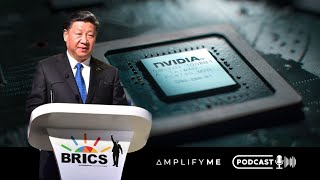
Anthony and Piers examine Nvidia's 88% revenue jump to $13.5bn and debate whether its 36 forward P/E is justified against Apple's 27 and the S&P's 20. They then trace BRICS from Jim O'Neill's 2001 thesis through its 2023 expansion to six new members, analyzing how the bloc threatens dollar dominance as Asia's projected GDP share rises to 40% by 2050.
Chapters
Hello and welcome to The Trading Floor, the end of week episode when we wrap up some of the major themes in markets this week. And what we have on the agenda is to talk about NVIDIA earnings, another blowout. But I guess the big question is, what next? Has their shares now fully priced in the AI boom, or is there more to go? So we'll discuss a little bit about valuations, and then also want to talk about BRICS. Not bricks to build houses, but BRICS in terms of the emerging market bloc, which this week launched its biggest expansion in its relative short history. Some new additions to the club, but what are the long-term implications for the West? So we'll look to deconstruct that, but I've got a treat for everyone. Piers is back on the podcast.
I am back.
I don't know what's, uh, what's been going on. It feels like a lifetime.
It has been a while. Well, I've been busy, and then I've been— I've taken— I've had a bit of time off, you know, recharging the batteries. Although my time off, actually, I didn't really have much time to recharge the batteries.
But anyway, well, you're talking up a big game, like you're going to come back with vengeance here, and you've got a lot of stored up market commentary to, uh, to get off your chest.
So yeah, there is that. There is also the fact I've been a bit out of the loop for a couple of weeks purposely, just trying to, uh, disconnect, let's just say. Um, but, um, yeah, it's interesting.
Yeah, let's kick it off and let's, uh, let's talk about Nvidia. Yeah, now I'll give you the numbers first.
Okay.
But I guess the main point here is that everyone wants to know is, is now a good time to buy Nvidia? Can we still juice it a little further or is it time to bail? So Nvidia reported an 88— so I did say that right— 88% jump in revenue driven by demand, of course, for its AI chips. Their adjusted EPS, $2.70, well above expectations of $2.09. Revenues, $13.51 billion, well above expectations of $11.29. Better still going forward, what do they think? Well, they continue to remain pretty bullish. They said that they see sales in the 3 months ending in October will be about $16 billion. Street estimates were down at $12.5 billion. So as we've known before, NVIDIA's performance driven by its data center business, that's where it includes things like the A100, H100. These are AI chips essentially needed to, to build and run AI applications is the easiest way to explain it. So think of ChatGPT. They also approved an additional $25 billion in share repurchases. And to give it some context, NVIDIA's net income year on year, what do you reckon now percentage-wise? How much is it up, Piers?
Oh, actually, I know the net income figure for the quarter, but I don't know what the growth rate is. I'm going to say, uh, probably it's, um, I'm going to go 250%.
Okay, you need to double that.
Wow.
Well, not quite. 429% on their net income year on year. So yeah, let's just give $25 billion back because we can. But one of the things here was, it was interesting, is that I was looking at this as it came out on the night and their shares popped about 9% at the peak in aftermarket trade. That actually opened and popped higher on the open on the street the following day. but actually finished flat. So they gave back all of those early gains. Now, is this profit taking? And if so, well then is that it for Nvidia? Is it now hit its kind of peak valuation? Can it go further? I mean, on the sell side of the market, 17 brokers came out after the earnings and having chewed over the numbers, they actually, 17 of them raised their price target for the stock. So what, what do you think, having had a look at these numbers?
Well, I mean, the, the thing is, right, so the valuation— well, the, the share price of this thing has, has— well, it's tripled this year, right? So that— so I know that last night, or sorry, on the evening of the, the, the, the results being announced, you got that 10% or 9% pop, and then it kind of came back a bit. It, it's already tripled And really the standout moment of the year, I think, just full stop, macro, micro, probably the standout moment of the year was NVIDIA's earnings. Not the ones released this week, but the ones for the previous quarter where all of a sudden it was like, oh, this AI thing is just on a tear and NVIDIA are absolutely perfectly placed for it and their revenues just went gangbusters. And I think the thing back then was, is this a bit of a— is this a bit of a— not a one-off, but are companies front-loading their chip purchases to try and clamber onto this AI race? And so Nvidia would see a big spike in orders, and then that big spike would start to dissipate. And I think what the thing about this earnings report is that, well, for now the big spike isn't dissipating. It's kind of, it's sustaining. And I know we've only had maybe— it's weird to think we've only had really 6 months of this AI explosion. It feels like it's been a lot longer than that, but it's only really been 6 months. But this, this order volume growth rate is still there 6 months on. But yeah, as you say, the share price didn't go up. So I was looking at the, the valuation because the share price right now is at $477. Okay, it started the year back at below $200. Um, well, if you go back to kind of December, yeah, it's about $133 back in December, right? So we've tripled, as I said. And you'd initially think, wow, tripling, that's got to be expensive. You can't triple and not be expensive, right? But the thing about this Nvidia share price, yes, it's gone up by 3 times, but has the valuation multiples exploded and changed? And the key point to make is no, they have not. And that is because it's quite unusual, I mean, almost unique for a company of this size to have a valuation explosion— sorry, to to have a share price explosion, explosion that isn't also combined with a valuation explosion. And that's because you've got this unbelievably ridiculous revenue growth that's underlying it all. People are comparing it to Cisco on one front, right? Cisco in the dot-com bubble had this massive share price explosion that was also a valuation explosion because there was no revenue growth along with it. And with Cisco, who've had a couple of decades of really strong performance, their share price still has not returned yet. In 2023, the share price is still below the 1999 peak, right? So they had a share price jump without a valuation— sorry, without revenue growth. Whereas, yeah, for Nvidia it's different. So I was looking at the numbers. Their net income, as you said, has gone up 400-odd percent. Well, it's at $3.25 per share. Is their net income. Okay, now if you annualize that— now firstly, that's quite a big if. You're basically saying they're going to create the same net income kind of profit in the quarter that's just gone, they're going to be matching that at least for the next 3 quarters in the future. And this is where it starts to get hard, where you're predicting into the future, right? But given they've had 2 back-to-back strong quarters and they've increased guidance for the quarter ahead, I think 12 months, there's enough visibility to expect Nvidia to deliver the same net income rate, you know, in the quarters that are ahead, right? So let's just annualize the $3.25 per quarter, make it $13 per share net income for the year, right? Now if you use that as their, their kind of profit, then we talk about P/E ratios, their, their price, their share price to earnings ratio, and that winds up at 36 times. Okay, the current share price gives them a valuation that is 36 times their profit, simplifying it. Now, how does that stack up against other companies? Well, Apple, for example. Apple's PE ratio right now, based on their current share price, is 27 times. But Apple's revenue growth is single digit. Yeah, it's like, let's sub-10%. Nvidia's revenue growth is 100+%. So you could argue purely on that comparison, Nvidia to Apple, that either Nvidia is still way undervalued or Apple's overvalued. So, and if you think about the S&P 500 index as a whole, the S&P 500 index Their PE ratio on average across all 500 companies is 20 times. So from a very simplistic kind of back of the envelope PE ratio comp, Nvidia is not overvalued here. It just depends on their growth rate and if it's sustainable. They're talking about tripling production in 2024, um, to try and keep up with the demand explosion. And you've got some analysts, I think you were saying, was one analyst, their price— talk, talk to me about price targets.
Yeah, so, so just to remind everyone, what, what's the share price trading at the moment?
477.
Okay, so the ones I was seeing yesterday were north of 1,000, top end I think was 1,200 or 1,300, right?
Yeah, I mean, look, I— so I think, and look, these— the thing about these equity research analysts, that's the people that come up with these, pluck these prices, that's their forecast for what they think the price might get to. We're not quite sure on their time frame for that move, but, um, yeah, I, that's, that's looking further into the future is what I would say. And here's the big problem with AI, as I said, it's pretty much a 6-month-old story. For the masses. I mean, obviously AI's been in the background, been developed for a decade or so, but it's a 6-month-old story in terms of this demand explosion. And what you can't— so you can get 12 months visibility, which is why I think the current share price of Nvidia is fair. At least it's, it's not expensive given its P/E ratio compared to Apple. Looking out over 12 months, fine. Looking out beyond that I just think, I don't know, it's too, it's too unknown. For example, rumors have it that Alphabet are trying to develop their own chip, their own competitor to NVIDIA's. And look, they've got cash to burn, they've got the money to plow into that kind of development. Program. And so who's going to win the race here ultimately in the long term? And whilst Nvidia are the only game in town at the moment, I think it's inevitable that they're not going to be the only game in town in who knows when, a couple of years' time, let's say. You, you know, you can't stop the Alphabets of this world just striding in and competing. And so yeah, it's, it's, it's I don't know, price points of $1,200, that feels like a bit of a punt to me at this point. But their share price at $4.77 is not expensive.
Yeah, and I, I must add that there's a way to interpret these price targets, because of the north end of that spectrum, these would be very small boutique-y type research firms that you've never heard of. There was one or two names of the individual actual named analysts that are quite, used to be quite big hitters on the street back in the day. But it's in their interest obviously to take a North Star approach of, yeah, let's go, here's the consensus on the street and let's say the consensus sits at 8, 8.50. I'm gonna go 1,200 and I'm gonna, I'm gonna justify that through my financial modeling. To punch out what is going to be my target, which is the most bullish estimate on the street. Because if you think about it, if everyone's talking about Nvidia in the timing with their earnings, what's the one that you think the media will push as a narrative? The question on everyone's lips is, where's this thing going to go? Well, if you sit as the single outlier on the top end, they're going to talk about you, and therefore you've served your purpose then in terms of bringing visibility to your, to your firm.
And can I extend that point? Because there is a conflict of interest slightly, because it's not only that getting your name out there and then, you know, fine, your, your profile rises. There's actually a direct revenue link to that, because ultimately, if you're a fund manager, right, and you're sat there and you own Nvidia stock, it's in your portfolio, you're like, wey, it has been a phenomenal few months. I've made so much profit on this trade, right? Should I start booking profit? Should I start taking a little bit off the table here? Or is there more upside, right? And as a fund manager, you want to try and tap into research that's being done by the equity analyst experts. And when I say tap in, I mean buy, right? You buy this research. And so if I'm a fund manager and I'm sat on a big position with a big current profit, do I keep it? Do I not? What I want to do is find, right, give me an analyst who thinks that this current price is overvalued and their target's back at 300, right? I want to buy that research because I want to see why. What's the justification that analyst gives for a bearish outlook, and then it's the opposite, right? Well, who's the most bullish, right? How— why are they the most bullish? Okay, I want to find out. I'm going to buy their stuff so I can read it, and then I can get this— got kind of 360 view on opinions. So then go, okay, I'll digest all of that. And then obviously as a fund manager, I then make up my own mind as to which way I want to go. So it can actually, you know, getting an outline, it's almost like I don't know if this guy at $1,200, whether his actual first model came out with a $900 valuation and then, oh, well, let me make a few little tweaks here to massage it up. So yeah, I can be at the top of the list and therefore maybe attract more demand for my research and I'll make more money. So there is that slight conflict of interest.
Such a cynic. Such a businessman, Piers.
Yeah. Well, it's all about, it's all about the revenue.
All right, well, look, let's, uh, let's move on and let's, uh, attempt to unpack this BRICS story a little bit. And so the headline news of the week was a group of guys all holding hands on a stage looking very pleased with themselves, but the BRICS emerging market bloc has launched its biggest expansion in its history. As Argentina, Egypt, Ethiopia, Iran, Saudi Arabia, and the UAE were all invited to join this thing called BRICS. So I guess we need to start from the top before we start looking at some of the individual elements of this conversation. So the BRICS, I know you've spoken about this before, but maybe you could give us a shorthand of what that is for those not in the know.
Yeah, well, the shorthand is quite interesting because Uh, so the term BRICS, the acronym, was actually coined by a Goldman Sachs, um, well, it was the head of global economic research at the time, a guy called Jim O'Neill. And in 2001, so it was kind of post-dot-com bubble, right? Everyone had just been burnt by the tech bubble bursting, um, and so Jim O'Neill, who became a bit of a rock star, you gotta say, probably one of the most famous kind of global economic research analysts ever, um, he kind of came up with this idea that, right, who are going to be the next— who are going to be the fastest growing economies in the next decade or two? This is— so this is in 2001. Who are going to— therefore, from an investment point of view, from a macro investor's perspective, which companies should you be backing? And he came up with 5, and the 5 being Brazil, Russia, India, China, South Africa. You only put them in that order because, not because of their size at that point or their potential growth rate, it was the best order to come up with a, you know, to coin an acronym that kind of you could speak.
BRICS.
Okay, so this is where it came from. It was an investment idea that then gathered huge momentum and became this product, essentially investment product, where you started to get, you know, uh, BRICS exposure kind of products that were being flogged by these big banks. Okay, so that's where it all started. It actually wasn't until 2009 that the investment idea actually turned into an actual political club. So it was only in 2009 that these 5, the leaders of the 5 countries actually got together and said, you know what, let's, let's kind of piggyback off this sort of trends. And let's form actually an alliance, an actual political alliance. Okay.
So interestingly, with the timing there, 2001, the Western world-led dot-com explosion and 9/11. 2009, global financial crisis, Western-led. Mm-hmm. I think there's a pattern here, which we'll probably draw back to when we start concluding this matter.
2023, post-COVID.
Right.
Yeah. I wonder whether there's something in that with Look, it's not a secret that China, who are easily the biggest of this group of 5— and when I— let me just pause. When I say easily the biggest, I've been looking into the sort of relative sizes of these economies, and, you know, of the 5, China's easily kind of outperformed. So China's economy is at $17.9 trillion. That's their GDP per year. 17.9. The next biggest is India, which is only at 3.4 trillion. Then you've got Russia at 2.2 trillion. Then it's Brazil at 1.9. And then you got little old South Africa— we'll come back to this point later— is only at, is only at 0.4 trillion. All right, um, anyway, um, yeah, China's obviously the biggest and has done the best, and it's no secret China want to, uh, compete with the US to start with on the global stage in terms of a superpower and then supersede them, right? And so, yeah, I think that ultimately China probably have used the timing of these economic crises that have been— well, certainly the dot-com bubble and the financial crisis were centered in the West. You could, uh, you know, obviously COVID's been slightly different, but yeah, using the, the fallout from an economic crisis to then go, right, let's try and, you know, regroup, let's try and expand and grab hold of more power whilst others are at their weakest and most vulnerable.
Yeah, so I mean, let's just cover off some of the, um, the actual composition of this group and how it's comparable to others, and then we can start to explore some of these other more geopolitical links that it has. So I was just trying to kind of pull together what could be a something else that this would be akin to, um, and the group is not a formal kind of multilateral organizations. It's not the UN or the World Bank or OPEC, but it certainly is heading that way because they have set up their own bank, so to speak, for certain nations to tap into emergency funding. So there are lots of offshoots and uplift to being part of this club. To give that percentage, you talking a few there about the trillion-dollar nature of the size of the economy. BRICS nations account for more than 40%. This is just BRICS. So this is without the inclusions here, 40% of the world's population, you know, and one of the most meaningful ones actually happened this year. So in March, they surpassed G7 nations in terms of GDP. And also India is now population-wise number one, because I think the kind of assumption is that that's China. But that, that has changed as well. So apart from geopolitics, you know, what I guess fundamentally, what is the upside to joining the BRICS club? And essentially this is tied around economic cooperation, multilateral trade development, all these types of things. And one of the things I think that is the easiest to comprehend is that economically Brazil, Russia's natural resources and farm products just make them an absolutely natural fit for someone like China from that perspective. And that kind of passage then of the products that we're talking about, soft agricultural ones, so farming related. So when you talk about corn ingredients for pig feed for pork in China and things like that, and then flip it, You talk about the pursuit of industrial growth and the consumption of energy products, and you throw someone like Russia in the mix, obviously strategically. So that kind of hopefully gives it a bit of a flavor of like the necessity to be in this. So going back to your point, then you've had COVID, and I actually think that COVID is like the commonality between those episodes in the last 3 decades that you mentioned. Uh, and the reason why is that I was reading about why African nations in particular want to sign up, because the, uh, the number that was going around was that there were 40 countries that wanted to be invited to attend this event who all want in at this point.
Yeah.
Um, and one of the main things here was the view that the dollar's dominance over the global financial system is impeding these nations' economic growth, particularly because in the US you've had interest rates go up at a very, well, unprecedented steep trajectory. And the Russian invasion of Ukraine, all of these things has strengthened the dollar against all major other currencies and raised the cost of importing goods priced in dollars. And so then what other alternatives can they look for? And I think Egypt is a good one. Who joined the bank, i.e., the BRICS Bank, in February to help ease the shortage of greenback. And what they were saying at the time was that they had planned to pay for imports from India, China, and Russia in their local currencies instead of the US dollar. So it's kind of moving this gradual shift away. I mean, one of the points of research that I saw out of Goldman Sachs that they've put out recently was talking about growth projections out to 2050. And they were talking about the fact that based on their projections, Asia, uh, XDM will represent 40% of global GDP by 2050. The developed markets expected share, 36%. Now, if you were to go back 50 years, the DMs represented over 75%. So the, the balance of power between the dominance of the West has shifted already dramatically in the last 25, 30 years. And the idea being that it will continue to do so quite aggressively. So this kind of moving away from the US dollar, which has obviously been quite a prevalent theme, is, is continuing at the moment. So that, that, yeah, I think is, uh, yeah, this underlying, as you, I think, said at the beginning, it's no big, it's no secret. There is a long-term strategy here, and I guess led by the de facto most wealthy and, and by size dominant factor, which is that of China. But what's interesting is when you actually start to break down all of these different players who've been as part of this latest inclusion, they've all got unique reasons why they want in, basically. And I think just running through a couple of these, I think Saudi Arabia is probably the obvious one. Because we know we've seen Saudi Arabia, Stephen and I have talked about this. They've been incredibly proactive to kind of throw out the tentacles into all different spaces in this quest to diversify away from fossil fuel industries.
Yeah.
And they need to be lining themselves up for just further sources of buyers essentially, and aligning themselves to who's going to be the most affluent customers in the future. And certainly that relationship with China and the common thread here will be the geopolitical tension that gets tightened with all of these nations every time that they move a step closer into the BRICS club, so to speak. And then, you know, you've got others like, you know, you talk about the UAE and Dubai. And their kind of quest to make that the kind of the de facto central financial hub. And again, where is all that activity? And you follow the money and it kind of leads back to the China train again.
Yep.
And then Egypt. I think Egypt is a country where they're going through absolute economic turmoil at the moment. If you want to check out some currencies, you know, if you're feeling a bit spicy, check out the lira. In Turkey and then check out the Egyptian pound. Uh, that'll get your pulse racing. But the idea being here is that I don't think there's an immediate payoff having Egypt in, but Egypt has a very prized strategic asset being the Suez Canal, which is absolutely integral for the passage and movement of trade and goods through the Middle East into the Mediterranean to serve the West. So there's definitely a lot of things going on here. There's Iran as well. And I think one of the other things that really stood out to me with this latest inclusion is two names that you don't really expect to see on the same billing, which is Saudi Arabia and Iran. Now, I think doesn't take too much of an explanation to go into it. They're essentially different sectoral beliefs of the Islamic faith. Let's just leave it at that. And so therefore leads to quite hostile relations between those two nations in history. And so bringing those two together, how does that work? But then Iran has always been strategically quite close to the likes of China who have been quite open and active buyers of Iranian oil through Western sanctioning. And then Iran's very closely tied to Russia through military arms, uh, connections. So why do they want Iran? Well, Iran, for all of its economic difficulties, has a monumental deposit of oil sat in its geography, and thus it's a very important asset to acquire and have within your portfolio as far as these bigger I think more powerful nations like China are concerned. The big problem here, of course, and I guess the inevitable one is that by aligning all of these countries, you're essentially challenging the West in an increasing fashion. It's kind of like Russia getting very apprehensive about the ever-expanding NATO getting closer to its geographic border. And therefore action must be taken. At this point in time, the BRICS have just taken a very symbolic piece of action. They've just expanded. And some of these countries that they're including are strategically, both from a commodity and a populist and thus GDP productivity point of view, very— increasing the power. And I know you've, you know, you've got some stats over this isn't all complete plain sailing. There are some countries in here where even within the BRICS, yeah, there's not quite a uniform agreement here, uh, where they all see the same page.
Yeah, no, exactly. I think that it's been, um, there has been reluctance from, let's say, South Africa and India to expand. So reluctance from internally the original BRICS to expand this club. It's kind of been China have been pushing for it for, for years, but it's always never quite happened. And I think from South Africa's point of view particularly, um, they have always been the most reluctant to expand the club. And that's just because it's just turned out that they haven't really delivered on growth like the other 5 did, as Jim O'Neill predicted. When you're looking at the South African GDP growth rate, then back in the early noughties. So remember, Jim O'Neill formed this investment idea in 2001, and their GDP was at, what was it, $135 billion. Okay. Then over the next 5 years, it doubled. So great, massive growth. And then over the next 5 years to 2010, it pretty much, roughly speaking, doubled again. So their, their, their 2000 to 2010 growth rate was unbelievable, off the scale, phenomenal. But believe it or not, their GDP in 2011 is still the highest GDP year in their history. And actually, here we are in 2023, and we're like back at $400 billion compared to $460 billion in 2011. So really, the last 15 years, has been a real struggle for South Africa. And so relatively speaking, their size within the club has been diminishing and diminishing and diminishing. Their size has been diminishing, so their power has been diminishing. And they're quite nervous about this idea of China's ambitions to grow the club and bring in other partners who are way bigger than South Africa. And so ultimately, South Africa feel like their power within the club will be— even though an original member will be diluted and diluted and diluted and diluted, and they'll be kind of forgotten about. So that's their angle. I'd say for India, they're in a slightly different situation where it's probably more political, where they're reluctant to have anti-West— like, so China and Russia are super keen to get the likes of Iran in play. Fair enough, as you say, from an oil point of view, but also very much from a political point of view. But India are kind of caught between a rock and a hard place here because they, they're very much aligned with the West and they, they want to continue positive ties there. But, but then equally, you know, they can see that long term the economic power shift and trends are well in place. And yeah, of course, you know, the Asia and China, you know, will become the biggest economic portion of the planet. And so they, they don't want to lose their position in this club. So yeah, you've got reluctant internal members to expand this thing.
Yeah. And then on that point of India, um, none of these BRICS nations have actually, uh, formally backed, um, the, the Silk Road kind of plan, this massive supersized infrastructure project that China wants as its long-term ambition. And that is a particular point of contention for India because strategically, part of that infrastructure build from China is a very strong alignment with Pakistan as an economic belt. And so that brings up lots of territorial dispute with India for lots of issues over partition, things like that many years ago. Yeah. And so, you know, what's interesting, and I think you were mentioning before about, okay, so perhaps there's a bit of horse trading going on here where it's like, We'll let you have this relationship with Pakistan if you let us then solidify our military base because India is now the biggest population on the planet and yet their military is nowhere near the size of China. Yeah. Because China have been working that military budget for quite some time, even albeit still much smaller than the US, but who else has bigger military presence? And strategic presence as well in terms of geography. It's some of those nations that you've mentioned, like the UAE, Egypt, right? And do they need— is part of the compromise here closer alignment with them militarily for sign-off then for you getting closer to Pakistan from a China point of view?
Yep, absolutely. And other things, I mean, like looking at— let's just quickly look at the others, right? So we're talking about Saudi Arabia, UAE, Egypt, Iran. There are two other joiners here. One's Argentina, and then the other one's Ethiopia. Um, Argentina, decent-sized economy, like they're clocking in at 0.6 trillion per year, so they're 50% bigger than South Africa from a GDP point of view. Um, and obviously bringing in another South American partner to kind of join Brazil, though that The, the slightly odd one for me is Ethiopia, just, just purely on size. When you look at the size of their GDP, they're 0.13 trillion, okay? They're like one-third of the size of South Africa. They are now easily the smallest. Um, but digging into it a little more, um, what probably a lot of the listeners don't know, and actually, to be honest, I didn't know either, until like 30 minutes ago. Their growth rate is off the scale. I mean, they— Ethiopia's growth rate is just phenomenal. They're still relatively quite small, but they're, they're getting less small fast. Um, and so their growth rate's off the scale. Go and have a look at an Ethiopia GDP chart. It's not far off exponential. They've been pretty much doubling every 5 to 7 years, a little bit like South Africa in the noughties. Um, so yeah, there's certainly one of the, uh, emerging African nations. Um, and so maybe that's, that's a play. But also Ethiopia, you know, a lot of these countries that are clambering to join, I think, have been incredibly, uh, that they've seen the benefits of lots of China investment, like infrastructure investment and so on. And so, you know, it's just about further cementing that relationship with their rich uncle, Xi Jinping, who's been pumping a lot of money into building out infrastructure in their countries. So that, that's certainly one thing. There are, there are some notable absentees from this, from the new joiners list. If you just like take your pen and scroll down the GDP chart where you're looking at countries by just purely by GDP, then there's some notable absentees. And I'm not including developed markets here, right? So these are all emerging markets that are looking to join this club. The biggest non-developed market that's not involved here is Mexico. But obviously they're going to be very much not joining because of their geographical location and dependence on the US, of course. So they don't want to rock, they don't want to rock that boat. The next biggest one is Indonesia. So that's an interesting one. And actually, it turns out Indonesia did get invited, but they've said no. They've said no for now. Their, their line at the moment is they're going to continue to think about and analyze the merits. Um, but yeah, they're the kind of biggest—
yeah, the, the Indonesian story, I was reading into that, and obviously their decline is that You know, for the reason they don't want to upset their relationship strategically with the Americans.
Yeah.
But that history dates back to Indonesian independence, and that was brokered by obviously the superpower of the day, the Americans, in 1945.
Right.
And so as a byproduct of that happening, the relationship there is then a strategic partnership. And obviously, if you look on a world map, the military tie for trade routes and maritime passage. If you want to be the world's largest economy like the US, you need to shore up that strait that includes going through Indonesia. So Indonesia is almost entirely dependent on the defense strategy being led by the US Navy. Then there's lots of other kind of brokered partnerships, which are more economic benefits. Um, and the fact that Indonesia and the US, democratic countries, principles and human rights and all, all those other things. So yeah, you're right though. I do think that for all of these nations, let's say there's a spectrum and Indonesia is leaning US. The problem is, is that US is a fading force, right? And at what point then do you go, well, hang about, that guy's military's much bigger than yours now. Yeah, and their economy is going gangbusters whilst yours is declining. So at what point do you shift? Um, that time of course is coming, but that's the—
that's the kind of foreign policy challenge. They're trying to get a foot in both camps and not— well, yeah, not the boat of either.
To conclude then, with the trillion-dollar numbers you were putting out earlier, So by 2050, this is how the world might look by sizes of economy according to Goldman Sachs. Number 1, China, $41.9 trillion. Pushed back.
Can I put it out there? I disagree with that, but go on.
Pushed back into number 2, US, $37.2 trillion. Number 3, India. Yeah, 22.2 trillion. That's the kind of the big three that they see.
Yeah. I'll put it out there. When we're on episode 48,956 and it's March 2050, I'll be telling you that, haha, you were wrong. I don't think China will be the biggest economy. By 2050?
Ethiopia.
Yeah, let's go. No, I think, I think China are already fading from a growth point of view. I think they got huge issues demographically. Maybe we need an episode to properly dig into that.
Yeah, so just, just quick snap then. So that means you're either backing India or the African continent like Nigeria or someone like that.
Yeah, so Nigeria for sure, India definitely. And I actually think, don't, again, don't discount the US. I know they're a fading force when you think about the proportional size, you know, relative to the size of the global economy is shrinking. But I do think like you look at, you look at the last decade, like post-financial crisis, The US just is phenomenal, just continues to march higher growth-wise. It's just whether or not this, this quite sort of bipolar political situation is going to kind of hinder that continued growth. But, um, but yeah, I think the US will be there or thereabouts still.
Yeah, I feel like, I, I feel like we've come to the episode, but I want to challenge you on the China point and I want to challenge you on the India point because I disagree on both.
Okay, well, that's, that's next week's episode.
Let's go. All right, cool. We'll wrap it up there. So thanks everyone for listening. Thank you, Piers, and we'll catch you next week. Take care.
Have a good weekend.
More from Anthony


Inside the Biggest Banking Stories You Need to Know This Week (Anthropic, Diageo, Private Credit)


Inside the Biggest M&A Deals You Need to Know This Week (UniCredit, GameStop, eBay, Eli Lilly)







AI Breakthrough or Hype? Anthropic’s Claude Mythos, Tim Cook Steps Down & LIV Golf Collapse