Ep.136: Jerome Powell Delivers Chistmas Early For Markets
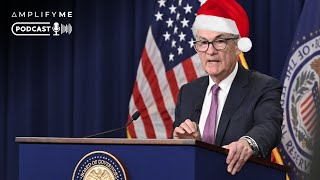
In the final episode of the year, hosts Anthony Cheung (Speaker A) and Piers dissect the recent policy meetings of the U.S. Federal Reserve, the U.K. Bank of England, and the European Central Bank, all of which left rates unchanged but delivered divergent forward guidance. Powell’s unexpectedly dovish tone signaled a shift from “higher for longer” to “higher for shorter,” sparking a rally in equities, a drop in short‑term bond yields, and a broad market rotation away from the “Magnificent Seven” tech giants toward small‑cap and rate‑sensitive stocks. The hosts compare inflation metrics across the three economies (U.S. headline CPI 3.1%, core 4%; U.K. headline 4.6%, core 5.7%; Eurozone headline 2.4%, core 3.6%) to explain why the BoE remains hawkish while the ECB stays cautious. They discuss the impact on global equity markets, noting that U.S. and European indices surged despite differing central‑bank stances, and highlight the rare occurrence of the S&P 500 rising while all seven mega‑caps fell. The episode concludes with a call for listener feedback and a look ahead to 2024 content.
Chapters
Hey, hello and welcome to the final episode. Well, the final for Piers and I, at least. Still to come next week, you've got a mini two-parter where Steven is counting down the top 10. Episode 1, 10 to 6, and Episode 2, 5 to 1, of the biggest banking themes of the year. I've already recorded those. They're pretty cool, if I don't mind saying so myself. So You definitely need to give those a listen. But one thing that you'll enjoy, Piers, when you listen to that episode is you get a shout out. And actually the SVB episode appears to be everyone's favorite, unanimous decision that by the board.
Okay. Done. I'll take that. It's a long time ago that, mind, if I'm still basking in the glory of something that happened 9 months ago.
That's, yeah, what have you been doing for the last 9 months?
Yeah, exactly.
One might ask. All right. But look, let's keep it on point for this episode because this particular week it's going to be bookended for the year really with the major central bank decisions. Just within the last 24 hours, we've had the US Federal Reserve, the UK's Bank of England, and the European Central Bank, all of which have left interest rates on on hold. That was very much as widely expected by the market. However, A, there's been a huge reaction in markets, but it hasn't been on all three of them. Predominantly it's on one. And then also there's a little bit of divergence between the three as well. So perhaps we can start from the top and talk about the big one and the first one, which was the US Federal Reserve. So what happened there and why have Bonds and yields gone soaring into year-end here.
Yeah, it's a good one with these Fed announcements.
Bonds, I should say, not yields.
Indeed. Um, with these Fed announcements, because actually on the face of it, what did they do? Well, actually they did nothing because, uh, interest rates remain unchanged. Uh, so the interest rate in the US is 5.5%. And it has been thus since the summer and it continues to be 5.5%. So actually, technically, have any monetary policy conditions changed? The answer is no. However, the markets ripped and smashed up. Well, we'll talk about some nuances. Generally speaking, markets ripped. There's a few pockets of interest where you've seen some, some downside movement. But yeah, generally markets went through the roof. And why. And so it's more about the language that they use. That's the Federal Reserve now to talk about what they're going to do in the future and more specifically, what are they going to do in 2024 with interest rates? And that's ultimately the biggest force on markets today. What's going to happen to interest rates in the next 12 months? And what makes— and that's generally speaking always the case, right? Markets are looking maybe, let's just call it 6 months ahead. That's where their pricing is based on what we think is coming in, in the next sort of 6 months. Now that's normally the State of Play. What we've got here is like a double whammy. You add on an extra bit of spice because not only are we looking at over the 6 months, well, what's going to happen in the next 6 months is that we're going to get a turn in direction of the monetary policy cycle. So we're right at the pinnacle of the upward trajectory of interest rates. That trajectory has been going up for like 18 months— more actually, 20. Well, let's just call it 21 months we've been going up, and now we're at the top. And the key is now we're going to go back down. So what we have here, we're right in this this limbo period between the interest rate hiking cycle and the interest rate cutting cycle. And then the same could be said for the bottom, right? When you've gone through the cutting cycle and, right, when's the hiking cycle going to start? Whenever you're at the top or the bottom of the cycle, markets become hypersensitive to then the timing of when will When will the change in direction actually occur? So that's where we are at the moment. And so what happened last night? Well, the Fed, I mean, look, I've been watching central bankers talk for 20 years. And what last night, what I'd say was one of the most clear, decisive communications I think I've ever seen in a really surprising way. Because markets have been on the up for the last couple— well, November was awesome, right, for stocks that went through the roof. Bond prices went through the roof as well as bond yields dropped. And the thought going into the meeting was, well, hang on a minute, the Fed aren't going to like the fact that stock markets have gone through the roof here. They've gone through the roof on the expectation that we're going to get rate cuts next year. And the general thought was, well, the Fed aren't going to like this. The markets have got carried away with themselves yet again, you know, being overoptimistic about what the monetary conditions might be. And the thought was the Fed would step up last night and slap these markets back down. And that Powell would go, don't, don't get carried away. Rates are going to stay higher for longer. This inflation genie is not back in the bottle yet. Calm yourselves down. That's what we thought was going to happen, except he came out and basically said, guys, here's the punch bowl. You've been drinking out of the punch bowl for the last month. The stocks are going up, and he's just doused in another bottle of vodka. And he said, let's go, let's party. He basically, I guess he's flipped from being, um, yeah, rather than being rates are going to stay high for longer, he's basically saying we're now going to start cutting. And yeah, rather than higher for longer, it's now higher for shorter. That's probably the best way of describing it. And so yeah. Yeah.
What I've just tussled with in my head there is whether compliance will sign off that tagline there, which I'm definitely going to use for this episode. He's come in and doused another bottle of vodka in the punch bowl. I'm not sure that one will pass, but no, good analogy at least. And okay, so that explains the Fed. So given that the Fed are in charge of the world's most important economy, would you have normally have thought then that someone like the Bank of England, the ECB would be forced to follow or their economic conditions dictate then a different course of action. So what's the difference here between what's happened?
Yeah, so the economic conditions are slightly different. These economies, they're not in lockstep, perfect sync. And in fact, COVID's really kind of shunted economies out of sync in many ways. And so they're not perfectly in sync. So you shouldn't expect the communication from these central banks to be exactly the same. That's really what's happened. Today, Thursday the 14th, we've had the Bank of England and the ECB with their meetings and their press conferences, and they've been more hawkish. Definitely, they're not stepping out and going, "Guys, we're cutting rates next year. You're absolutely right." That's what Jay Powell said last night. The Bank of England are more like higher for longer. They're basically saying what Powell was saying 6 months ago. Higher for longer, inflation we haven't tackled, this inflation crisis isn't over, all that language. That's what the Bank of England is still saying. The reason for that, I mean, you just look at the set of numbers that really matter, and that is inflation. When it comes to interest rates, it's inflation. That's what is driving interest rate decisions at the moment. If you look across the three territories, Well, in the US, the headline CPI rate is 3.1%. The core CPI rate, which is perhaps more important, is at 4%. Okay. And these numbers have been dropping and dropping and dropping, hence why we're starting to hear them talk about rate cuts. If you compare that to the UK, so the headline CPI rate in the UK is 4.6%. That's compared to the US 3.1%. Some decent amount higher. Core, well, core, it's 5.7% still in the UK versus the US 4%. So look, inflation's, it's come down slower in the UK and it hasn't come down far enough yet for the Bank of England to be ready to do a Jay Powell and just douse the punch bowl with some more booze. So they're going to wait. That's one thing to say. All right. Where I've got some beef with the Bank of England is, so they've got 9 people on their voting committee, right? And so each meeting they, between everyone gets 1 vote and then the majority rules. Okay. Now last, uh, sorry, at lunchtime today, the vote split was 6-3. Basically what happened was of these 9 people, 6 voted to keep interest rates unchanged. You've still got 3 members of the Bank of England who are voting for hikes, not cuts. So here you've got a real divergence between the Fed and the Bank of England. Basically everyone on the Fed is going, right, we're ready to start cutting rates in the new year. Whereas in the Bank of England, you've still got 3 out of the 9 going, actually, we should be hiking. So, but what I, my point around where my beef is here is ultimately Generally speaking, the US economy does its thing and then everyone else follows because it's such a dominant force on the planet, right? And so to expect the UK to head off in a sudden massive opposite direction economically to the US, it's just not going to happen. We're too synced, even though the sync is a little bit out of step. Ultimately, we are synced, and so What happens in the US generally is going to happen here. I think the Bank of England should be voting 9-nil to keep rates on hold. There shouldn't be anybody still voting to hike, in my opinion.
From an economic perspective in the UK, earlier this week, the UK economy, I think it was October data because it's backward looking, contracted 0.3%. Inflation is falling, which obviously goes against the grain of the three who are looking to hike. My question then is, are we in the sweet spot for global equities right now? Because yes, growth has been very robust in the US, but as we're going to see going forward, it's likely to weaken going forward. So growth potential is going to get worse. There's downside risks there. So At the moment, stocks are kind of steroid-induced by this idea of rates are going to come down. But as the economy actually starts to slow, what does then that look like as we go further into next year?
Yeah, so comparing the two again, the US versus the UK, the US economy is really strong. Like they've got, like if you are at if you're a stock, right, a share price in the US is, that's the sweet spot. We talked about Goldilocks, right? You've actually got a strong economy, positive, and you've got the Fed who are going to cut rates, positive. In the UK, it's kind of the exact opposite where you've got an economy that's weak now and actually contracted, as you said, in October, and the Bank of England are still threatening to hike, right? So you kind of got the double negative. Now there are Slight nuances as to why the Bank of England are being a bit more stubborn. I said inflation's high. The thing is, here in the UK, yes, the economy's weaker, but inflation's still high. And the thing is, we've still got services price inflation that's very elevated, and the wage growth numbers are still very elevated. And you've had stuff like the government raising the minimum wage. And things like this, which feeds into wage growth. Now, the thing about that is, especially at the bottom end of the spectrum in terms of income levels, if you're getting wage growth at the very bottom end, that tends to be more inflationary. That's because people earning lower income end of the bracket, they're tending to spend all of their income domestically. Okay? Top end of the wage bracket, the super rich, they're not spending all their income. Because there's too much of it to spend, right? And they're investing it in stocks and other assets. Plus, they typically travel more, so you're getting more spending internationally as well. So from an inflationary point of view, where the UK is a little bit different to the US, the wage growth is still elevated. And at the lower income level, that's what the Bank of England are just— they're kind of just looking over their shoulder a bit going, hang on, that kind of beast is still in view. And whilst that's still lingering, They don't want to start celebrating that the inflation crisis is over, which is fair enough, I guess.
Okay, so there seems to be quite a clear contrast between what you've discussed, the US and the UK. So where does Europe fit within that spectrum?
Um, Europe's kind of— well, so let me compare them again. So I was going through this inflation numbers, right? Well, well, actually also let's look at the, the actual— what's the level of interest rates? Because actually the Fed have got the highest interest rate at moment, 5.5%, but they've signaled they're going to start to cut. The Bank of England are slightly below at 5.25%, basically saying they're at the top, but they're not ready to cut. But actually the ECB is lower still at 4.5%. So the ECB's hiking cycle was smaller, number one. Uh, interestingly, out of the whole three, inflation levels in the eurozone are the lowest. So the headline CPI is 2.4%, below the US 3.1%, below the UK 4.6%, and their core CPI is 3.6%, below the US's 4%, below the UK's 5.7%. So they've got the lowest interest rates, they've got the lowest inflation rates, but the ECB are notoriously slow, they're not proactive. It's due to the fact you've got ultimately 19 countries around the table all putting in their own thing and they're all very different economies. It's just a lot harder to get stuff done. So Lagarde, Christine Lagarde, the president of the ECB, was basically saying they did not discuss the idea of cutting interest rates at all. In the meeting, and she was basically saying, cutting rates— actually, she made quite a good analogy. Cutting rates too soon after the most aggressive series of rate rises in the ECB's history would be like passing from solid to gas without going through the liquid phase.
Oh, as you were just— when you said solid, The way you said it and then gas. Yeah, I certainly wasn't thinking of probably what she was intending.
So there's your little bit of a GCSE physics lesson for you in the ECB meeting this afternoon. But yeah, they're closer to the Bank of England in the respect of they're waiting and they're being a bit more prudent and conservative, which is always their way, even though their inflation levels are lower than anyone else's. And you could argue economically they're in worse shape. But the good old ECB sit there and do nothing. So yeah, I'm not surprised.
Okay, final question then. You said at the top of the show that there are some pockets that haven't reacted so favorably. So what would those pockets be?
Yeah, right. So this is like, if I just list out some of the market moves, let's just go back to the big boys now and talk about the Fed. I talk about some of the market reactions on Wednesday night. When Powell was super dovish saying, right, we're cutting rates, let's go, let's go. Um, now I talked a couple of weeks ago about how this is phenomenal news for companies that you would put in the category of being interest rate sensitive. So companies where when borrowing costs are high, that's really bad news for them. Um, and that tends to be growth stocks who are more highly levered, are borrowing more, to invest in their growth because they've got loads more growth to go. So let's accelerate that by borrowing money. So that whole growth stock part tends to be— and that, that's the section of the market that's been batted down, and particularly in the smaller companies as well. So the small caps. So there's an index called the Russell 2000 in the US, which is the— an index of 2,000 small-cap US stocks. So that was up 3.5% on Wednesday night. Um, so that's your small interest rate sensitive stocks really powering north. Okay, you've got bond yields, well, they're dropping certainly at the— what we call the shorter end of the curve. I don't want to go too technical here, but like a 2-year government bond, the yields were down 30 basis points, 0.3%, which is a big move. Um, and then It's not just US stocks, right, that are feeding off of this. And here's a really good point to make. We just talked about the Bank of England and the ECB not doing the same as Powell. They're not saying we're going to cut, and yet European and UK stocks are up. Why? Because it's the US that's more important. So actually, and check this out, the DAX, that's the German stock market, hit a new all-time high On Wednesday night, DAX futures, and again this morning, new all-time high. Not because the ECB are saying they're cutting rates, because they didn't. It's because the Fed are saying they're cutting rates. You had the FTSE up 1.6%, European stocks through the roof, the dollar index dropped sharply. You've got gold prices higher, again all-time highs. So lots of movement all over the place. But the most interesting, I think, and actually it's something Stephen mentioned For our regular listeners, he coined quite a good terminology. I hadn't heard it. I don't know if he came up with it himself or he read it somewhere, but he talked about it's not the S&P 500, it's the S&P 7, and then it's the remaining S&P 493. So the S&P 7, meaning the Magnificent Seven, the big 7 tech stocks in the US. So what happened this week? On Wednesday was something happened that has not happened for, for the entire year, and that is the S&P was up on the day with all 7 of the Magnificent 7 being down on the day. That was the only single day of the entire year where that's happened, and actually that's only happened on 5 days in the last 5 years. Such is the dominance of these 7 stocks. Normally, if these 7 stocks are up, the index is up. If the 7 stocks are down, the index is down. On Wednesday, the 7 stocks were down and the index was up. And what's happening is money is flowing out of those Magnificent 7 who are not interest rate sensitive, even though they're tech stocks, you could say, and there's still plenty of growth for some of them. They're such cash flow so cash flow generative, they don't borrow money, right? So they're not— they're not— they're immune to the interest rate hikes. So they've done really well this year as rates have been going up. So now rates have been signaling to go down, you're getting people book profit on the Magnificent Seven and push this money down into the lower-cap stocks. So yeah, Magnificent Seven down whilst the index was up. First time than the whole year.
But just to be clear, you're not writing off the Magnificent Seven for 2024.
No. So just to be clear, there's a bit of a rotation of what we call a rotation of assets here, right? Where you're getting some players that have been running these strategies all year long, the Seven, and not invested in the others. Or maybe you got some going short the others if they got a more extreme strategy. All you've got is a little bit of a strategy shift. Where you're taking some of the money off the table from the Seven to pivot elsewhere. But this means the Seven dip. Have you heard of the terminology buy the dip?
Well, yeah.
So those who aren't in the Magnificent Seven or who aren't invested enough, in their opinion, this is their chance to come in on those stocks. So yeah, for sure, I'm not calling the top. On the Magnificent Seven.
Just to specify, this podcast is not sponsored by eToro or IG or anything like that when we start talking buy the dips. Um, but okay, well look, let's, let's wrap it up there. Final episode of the year. So yeah, just thank you from myself and, uh, Piers, I'm sure, for, for following us throughout the year. Um, do drop us a, a comment. I know you can do that on Spotify in particular. It's really easy to do. Let us know what your favorite episode was.
Hmm.
So drop a comment, let us know, and that will give us a little bit of direction and guidance then perhaps of how we can steer the content for 2024. Be really appreciated. But thank you as ever, Piers, for being the partner on the, on the pod.
Thank you. Another, another year in the bank. And, uh, yeah, look forward to seeing you on the other side. Have a great festive Holiday.
All right. Take care, everyone. All the best.
Bye-bye.
More from Anthony


Inside the Biggest Banking Stories You Need to Know This Week (Anthropic, Diageo, Private Credit)


Inside the Biggest M&A Deals You Need to Know This Week (UniCredit, GameStop, eBay, Eli Lilly)







AI Breakthrough or Hype? Anthropic’s Claude Mythos, Tim Cook Steps Down & LIV Golf Collapse