Ep.79: Fed's Powell Warns Against ‘Prematurely Loosening’ Fed Policy
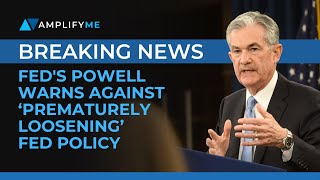
Jerome Powell warned at Jackson Hole that the Fed won't loosen policy prematurely, and September rate decisions depend on upcoming jobs and inflation data. Powell said July's inflation dip isn't enough to shift the Fed's stance. Markets may see short-term equity weakness and dollar strength.
Chapters
Welcome to the Market Maker podcast hosted by me, Anthony Cheung, where every Friday I talk to a member of the team about what happened in markets this week. From macro themes and single stock news to cryptocurrencies and careers in finance, our aim is simple: to make finance interesting and easy to understand for everyone. So let's get to it. Hello and welcome to episode 79 of the Market Maker podcast. And Piers Curran, my normal colleague who would do the show with me, is off the desk, and so I thought I would just do a breaking news episode, keeping it short and focused on what arguably is the main important event of this week. And it's literally just happened in the last 15 minutes, and that is the The chairman of the Federal Reserve, the US central bank, Jerome Powell, has just delivered his Jackson Hole Symposium speech. If you're wondering what Jackson Hole is, just a quick 101. Essentially, the US central bank has 8 interest rate meetings where they set major policy 8 times a year. However, outside of that, the Jackson Hole Symposium is an annual platform that central bankers have So typically you have all of the members of the US Central Bank, but you also get people from the Bank of Japan, the Bank of England, and so forth. And they all come together and gather for a symposium where they give their views about current economic conditions and then perhaps lay some hints, i.e., forward guidance on future policy. So there's been a lot of concentration from market participants awaiting the speech this Friday. Historically, that can absorb quite a lot of the just general activity of the week because not many people really want to step into the market and re-initiate new positions or change too much ahead of such a large risk event. But the event's just come out, markets are still chewing over it. So depending on when you actually listen to this episode, uh, the overall end-of-day market reaction might be a little bit different. But let me talk you through exactly what has been said because It's a major talking point. And I literally have just replied to someone on LinkedIn from the Amplify alumni, and he said he has an interview at point 72 in 2 and a half hours' time. And Jerome Powell is going to be one of the key things of which I'm sure that they're going to ask him about for his commercial awareness. So for that point, let's talk about what's just been said. And so the way that the information comes out— so if you've never really watched intraday, daily markets is that this is a predefined speech. So it's at a set time. In this case, it came out at 3:00 PM London time. So at 3:00 PM, he will begin delivering his speech live if you were to watch it on TV or financial news networks. But if you have a professional news terminal service, so like a Bloomberg, for example, then his speech would've been embargoed legally. And all that means is that these accredited news agencies they have seen his speech already ahead of time, typically half an hour, and it's in what's called a lockup where all the journalists go in, they're literally given his speech, they're able to go through it and pick out the top 10 kind of main takeaway points. And then when we get to the legally embargoed time, so in this case 3 PM, they drop all of those 10 major comments. So instead of kind of looking at Jerome Powell speaking, no one really cares about that when you're actually an active market participant because you've already seen all the key comments come out. And typically someone like Bloomberg will highlight with a red kind of sticky text headline what the major important thing is. So in this case, really, I can kind of distill down a very long speech into some critical takeaway points that really summarize what's being said here. And first one is that Jerome Powell said September rate action will depend on on the totality of incoming data. And that really sums up the, the status quo, and it's something we've been talking about all week with some of the, the interns we've had who are with us at the moment. And that's the idea of, I guess, when you're not used to looking at markets, you kind of think that, you know, is Jerome Powell going to go for 70, uh, kind of hint towards a 70 basis point rate hike come the end of September, or is it going to go for 50? What could he say? And this is exactly what we were expecting, was the idea that really we are too far away from that meeting. It's not until the 21st of September, so that's like 26 days away from today that I'm recording this. And in between that period, you're going to get, as you always do at the beginning of a month, you get the latest US major labor report, nonfarm payrolls. And then I think it's around the 13th you get the US CPI report, which is obviously a very weighted component of central bank decision-making, given the overarching focus on inflation at the moment. And so what he's saying is, is, look, we've got to wait for the data. So actually, you know, if you were thinking of this from a longer time horizon, if I was not, let's say, a day trader or a market maker or a sales trader in the short term, if I was a portfolio manager, I'm thinking, look, I don't really want to alter anything right now. I've really got to see for clarity to emerge from those data points to come in to really have a much better insight then as to what likely is to happen in September. We're too far out to really speculate. The other things that was said that were, were important was restoring price stability will likely require maintaining a restrictive policy stance for some time. Powell added that lower July inflation print You remember the one we had just a few weeks ago, surprise to the downside, which was a welcome relief at the time. So Powell added the lower July inflation print was welcome but not enough to change the Fed's view. And that's very important because central bankers typically are not reacting to one-time data prints, whether negative or positive. If they're trying to determine policy over typically what is a 2-year medium-term time horizon. They want to be making judgments on the data providing them with some degree of a trend and direction of where that kind of economic data set is heading, not reacting to one-time anomalies in that sense. So if inflation has peaked in the US, we need to see that in the upcoming CPI report that we'll get in about 2 and a half, 3 weeks' time, uh, as I said earlier. Then the final comment, um, he said, which was interesting, was that history cautions against premature loosening of policy. So actually, um, we've had a bit of two-way price action in the initial 5 minutes, and then we were exactly scratch of where we, where we were. And a lot of that rationale is based on the notion that what's been said here is kind of little guidance but consistent with what Fed officials have been saying. It doesn't rock the boat, it's not definitive about 50-75, and it's exactly then as we would have thought. And so a little bit of volatility, and it's kind of flattened out. We have in the subsequent 5 minutes— so now 15 minutes or so after the announcement— seen a little bit of downside weight coming into the equity space, uh, and a little bit of strength in the US dollar. And, you know, if you piece together the overall step back and look at what's being said here, is we're not talking about hiking or stopping hiking rates here. We're talking about hiking rates in a very aggressive fashion like the, the double 75 that they've done? Do we get a triple in that sense? Or do we slow slightly the pace but we're still tightening at a fairly aggressive margin? And the idea then, putting together that restoring price stability will likely require maintaining restrictive policy and that history cautions against premature loosening you know, you could argue still means that the, the Fed are in inflation mindset, which is tightening policy at this point. And that of course is more leaning on being an equity negative, i.e., uh, further pressure on things like tech stocks and so forth, the further removal of the accommodative policy that, you know, underpin the, the rise that we've had of equities of late. So yeah, hopefully that explains very shorthand exactly what's happened from the Fed. I think once we have the weekend to sleep on this, really the market acclimatizes to the fact that, look, we've got to wait for incoming information. But, you know, that's the difference between what markets look at and trade in the short term to ultimately, uh, real key decision-making on the real path of the, the economic direction coming from, emanating from Fed policy. So there's a difference between a trade opportunity against real fundamental view, if you like, of which the latter we're going to have to wait for. So that is it, nice short and sweet episode this time around. So I'm not going to go through the entire week. Um, if you don't already do so, you can stay of course on top of all of the market news and insights and career opportunities that we get from our partners. All you need to do is just go on the link in the show notes and sign up for the Market Maker Daily newsletter. And then, yeah, please do feel free to rate the show, share it with a friend, the podcast. It'd be amazing to get out there to many people as possible. And have yourself a fantastic long weekend if you're in the UK, and I'll see you for next week's episode as per normal with Piers. All right, take care, see you next time.
More from Anthony


Inside the Biggest Banking Stories You Need to Know This Week (Anthropic, Diageo, Private Credit)


Inside the Biggest M&A Deals You Need to Know This Week (UniCredit, GameStop, eBay, Eli Lilly)







AI Breakthrough or Hype? Anthropic’s Claude Mythos, Tim Cook Steps Down & LIV Golf Collapse