Fate of Brexit hangs in the balance
In this morning market briefing Anthony Cheung (Speaker A) and technical analyst Charlie review the fallout from the recent US tech‑led equity sell‑off and its spill‑over into Asian markets, then shift to a deep dive on several macro‑political and commodity themes that could shape risk sentiment. They analyse the sharp weakness in Apple and other FAANG stocks, the surge in Nasdaq volatility, and the implications for the S&P 500. The discussion moves to Brexit, highlighting the latest UK cabinet talks, Labour’s push for legal advice, and the looming deadline for a deal, all of which are framed as a source of near‑term pound volatility. Italian budget negotiations with the EU Commission are examined for sovereign‑risk implications, while the oil market is dissected in terms of Saudi‑OPEC production‑cut promises, Russian positioning, and key price thresholds around $58‑$55 per barrel. A brief look at Bayer’s earnings illustrates how media headlines can mislead when market expectations are already priced in. The briefing also notes upcoming UK wage data, the limited impact of Fed/ECB speakers, and technical chart levels for the S&P 500, Nasdaq, GBP/USD (the “cable”), and the Australian dollar, with Charlie providing pivot‑point and trend‑line analysis. Throughout, the presenters stress cautious trade‑management, the limited predictive power of Asian overnight moves, and the importance of monitoring fund positioning and political developments for future market direction.
Chapters
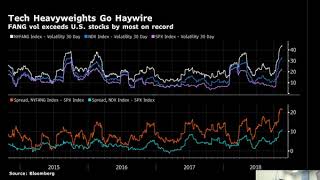
Very good morning, Tuesday 13th of November. Hope everyone is well. A couple things then to certainly cover in the briefing today, from the US equity sell-off from yesterday and the kind of red bloodbath overnight in Asia that followed, predominantly led by the tech sector. So we'll break that down and just, you know, digest exactly what happened, what were the key trigger points from yesterday. Have a look at Brexit, We'll see, uh, still a fluid situation. Lots of comments already coming out this morning. Um, Italy, an impending deadline for a renewed response on the latest proposal to the EU Commission on their budget. And then a quick look at oil and a round off with China. So that's what's on the, the agenda. And then I'll be followed by Charlie's going to come on and have a look at some of the charts from a technical perspective to wrap things up. So I'll try and focus on the fundamentals he can have a look at the markets a little bit more technically. But first things first, one thing to address is, uh, I saw a question from Alex in the, the Trading Live room, um, asking the question that can you use the Asia equity performance overnight to measure risk tone for the current day? Good question, but to answer that, the way I would say to approach this type of situation is what was the— what initiated the risk-off tone? If you think about it, yesterday it was the quite dramatic and swift fall that we saw in the US equity markets. And so it was a US-based move where it generated or came from, originated from. That then fed through into Asia, which was literally a net reaction of the fact that we closed sharply lower, weighed by technology in the US. So when Europe come back in, don't forget that just given the geographic time zones, UK and European participants have already really reacted to this news because we were part of the selling that was taking place during the US equity open. So our afternoon yesterday. So when you talk about how long lasting can the negativity be, well, in essence, I'd say markets have already kind of now got over what happened. to that respect. So I wouldn't— just because Asia is down, I'd say Asia are last to the party in regards to responding to the events which unfolded. And so therefore, I wouldn't necessarily be looking— that's the only exception would be unless there's new compelling negative news, which there really isn't too much this morning, if you were going to see a further continuation of the sell-off. So really, Asia is just a byproduct of what we have already seen yesterday. So I wouldn't be using that as a barometer then of initially just coming in and shorting European equities. So that makes sense. If anything, after such a dramatic down day, often you get a bit of profit taking on those shorts. You've also got to be aware that we're still in the middle of earnings season, and this morning you did have one of the German heavyweights, Bayer, come out, and they've come out actually in there the second best performer in the DAX. So, you know, there are other variables also to consider and keep an eye on. So I hope that just kind of clarifies that, Alex. First things first then, looking at the S&P 500 here on my chart, and to put into a bit of context the, the moves in which we've seen really over the last week. And so this kind of move higher initially, this of course was inspired by the kind of elimination of any risk factors surrounding the, uh, a full Democratic sweep, let's say, in the midterms. they went as expected. A little bit of steam taken out of the kind of fiscal stimulus that could be implemented by Trump, meaning that potentially a lower rate of interest rate rises going forward. Equities rose quite aggressively, got close to retesting pretty much to the tick then the mid-October high before turning back lower. And then yesterday, this tech-led sell-off saw us completely reversed that move. So net-net, we're back neutral to where we were just before the day of the results of the midterms. Yesterday then, this is what the, the kind of heat map looked like, and obviously we were talking about this at the time. Although it's a fairly convincing picture of what exactly was going on in terms of across the board, there were some particular highlights, and one of which was Apple and Amazon. Now the reason being is because of this, the, the market capitalization of these stocks. They have such a significant weighting on their respective index, and they're also, as we're going to discuss, such a good measurement, I think, of investor sentiment on an intraday basis because they do tend to out- and underperform day-to-day against the broader kind of benchmark index being the S&P. But For Apple, a significant sell-off. This is, you know, 5% move in a stock of that magnitude is no small feat. But Amazon equally down a similar margin, Microsoft, Google, Facebook, so all the FANG-related names were heavily weighed upon. For Apple, quick few charts to have a look at here. Quite a few tweets this morning using this terminology. This is a bit of a play on words from a concept back in the '90s about peak oil. And they're asking the question of, have we had peak iPhone? I— if you remember, 2017 was just quite a phenomenal story, not just for Apple but for the US equity market overall. Kind of minimal volatility, persistent record-breaking highs in US equity market, and Apple became the first company to achieve a $1 trillion valuation. We then hit, if you can believe it, it was only really about a month ago or just over 5 weeks ago, Apple was at a record high, as was the US equity market. But then we had them come out with their earnings report, and if you remember, they're kind of canceling their now reporting of their unit sales, that including the iPhone. They also said they're going to have a soft holiday period, which is influential for their overall profitability. It's kind of their key selling period over Christmas. We then had issues yesterday with the iPhone X now reportedly having problems which could require mass recalls about their screen, also translating to the laptop. And now yesterday you also had two major component suppliers cutting their forecast due to weak demand, and this coming under the cloud of a general slowdown in China and global growth. So quite rapidly their shares have gone from an excess of 230 down to sub-200. Reversing pretty much the second half of 2017's gains. What happened overnight? Well, one, some of the further follow-through that we had with the negative performance in Asia. These are some of the component parts suppliers that contribute to the making of the iPhone, and you can see here hefty losses coming on the back of these growing concerns over the demand for the iPhone iPhone products, which of course equates to roughly about 60% of the overall revenues generated by that company. And so if they suffer, if their outlook is lower, this reverberates and sends kind of shockwaves across the distribution or the supply chain in that respect, in that respect. So definitely a meaningful move when that type of thing happens. A couple of other charts to have a look at here, because I think there is a way that you can kind of look at these technology names as a bit of a reference point day to day, certainly as volatility certainly has, has picked up a pace. And that's because what we're seeing is day-to-day swings now in the NASDAQ 100 are averaging 1.7%, half a percentage point more than in February, when if you look at February for the S&P, for example, that was when we had that one of the most violent moves in recent memory due to the fear of synchronized policy tightening. So yes, we've had nearly as big a sell-off through the month of October, but not to the same ferocity in terms of the speed of which that played out. But what the options market is telling you is that we're getting quite close to that, because prices for options protection in tech exceeded the rest of the market by the most in 7 years when using implied volatility in the NASDAQ and the S&P 500. So you can see here, when the markets move, the S&P for October was down 6.4%, but the route on the NASDAQ was official correction territory. Looking here then at the New York FANG index, the point being here that the 30-session realized volatility for these particular FANG names— this is kind of your Facebook, Amazon, Netflix, Google, but other large tech stocks hit an all-time high on Monday and exceeds the fluctuations in the S&P 500 by the most on record. So again, these technology firms which steeply outperformed in 2017 arguably have then the biggest fall when conditions as they are at the moment seem to be tipping the balance into a more negative outlook for the various different reasons. And so one thing I would do going forward is I would definitely be monitoring these kind of tech names quite closely going forward as a precursor then to try and ascertain what is leading the markets here in the wake of any kind of central bank comments or any major economic data. I'd be looking for the NASDAQ to be a bit of a pre-indicator then of, uh, kind of day-to-day market sentiment, at least for the time being. Other factors at play, well, gonna have a quick look at Brexit. Let's quickly flip over the, the chart and have a look what's going on. And it's just so choppy at the moment in cable. I think trying to trade some of this, the, the range of price activity obviously is proving quite a tricky one because the headline commentary just changes from minute by minute. The latest state of affairs is there was a meeting yesterday evening at the Guildhall in the City of London where Theresa May said that negotiations are working through the night in an effort to reach a deal, but the final stage of talks is proving immensely difficult. This is absolutely copy-paste-repeat, I guess, of what exactly has been going on for some time. She again reiterated negotiations and departure are now at the endgame, but again we've heard this before about being 95% complete. Still, the problem is the same. It's what are they going to do on the Irish border? To give you some idea there of timeline, because I think this then needs to be factored in as to our, our expectations of impending volatility for the pound, negotiators believe they only have until Wednesday to secure a deal if it's to be in time to be signed off by a special EU summit this month. So the pressure on the timeline is ratcheting up, and I would say headlines then on will they, won't they have a deal in time is only going to intensify over the course of today and then tomorrow. So I would treat that— well, that being the pound— with a degree of caution. We do have some data from the UK coming out later If you were going to trade that event, I'd say you'd want to be incredibly prudent with just being active in managing that trade, not being sat in any sterling position longer than necessary with the prospect of being quite sharply stopped out of a trade on a lot of headline noise and rumor mongering that could be coming. May, the PM will convene a weekly cabinet meeting. This morning. There are lots of other things on the agenda that she needs to discuss, but no doubt Brexit will be one of them. Another thing to be aware of today, just to make things even more potentially headline-busy, the opposition Labour Party will try to expose the differences among the Conservatives this afternoon with a parliamentary vote aimed at forcing the government to reveal the legal advice it has received on a deal. This document now said to be about 500 pages long. The government doesn't usually release legal advice it gets, but the Labour Party is using a humble address— it's called the same device it used last year to get Brexit economic impact studies released. If you remember, they were quite wildly negative. So this is obviously an issue for Theresa May when she's trying to get public support for what she's doing. But in order for Labour to get this to go through, they do need the address to have the support of Tory rebels. But as you can imagine, those Brexiteers might also want to see the legal details because they themselves do not want Great Britain tied to Europe indefinitely through this temporary backstop. So lots more headache to come for Theresa, I'm afraid, for her. And that equates to lots more potential volatility. And if, you know, as a function of people's unwillingness to commit to trades with the fear of this, what we're discussing, it means that the moves in sterling almost become self-fulfilling. Because if everyone's kind of stepping out of the market, it means that violent market reactions, if you like, to headlines can be very quick and very extreme. So, you know, just be aware of that. The latest we've heard, and this is kind of the major publication, if you like, that's releasing it from the Republic side in Ireland, RTE. They've come out this morning. If you are utilizing Twitter, then Tony Connolly is actually a fantastic tweeter to follow. To add into your, your Twitter tweet deck. He breaks a lot of the Brexit headlines from the European side, and his contacts have said that a senior EU official has cast doubt on any breakthrough in Brexit negotiations this week despite speculation British cabinet meeting could approve a deal in the coming days. So this obviously is the reverse of what Theresa May has been saying and would add to the more negative weight in the pound going through. On the flip side though, we continue to see this, and this is something which we saw yesterday, is quite a few big funds— this is a fund called, uh, the Miriam Global Investors. They oversee and manage about $45 billion worth as a fund. And just reading through the article this morning, they've basically, every time the pound's been going lower, they've been adding to their long position. They're also shorting UK government bonds on bets yields will climb after an agreement is secured. So despite the kind of overwhelming negatives that are occurring at the moment, they're using the lower price to get further long on the prospects that ultimately a deal gets agreed and, you know, the worst case is avoided. There's enough political will on both sides to get this over the line, and therefore the pound sees a meaningful rally, and they're looking at 1. 140, and they're looking at the, the kind of net function of the fact that the market's so short. This is a look at the bearish bets from asset managers, and obviously if we did get a positive breakthrough, an agreement, then you would definitely be looking for a meaningful rally and a fairly aggressive one, at least in the pound, to materialize. Okay, elsewhere, quick look at oil, and the rout continues at a pace. And so, you know, the $60 bounce that we saw, or the interjection from Saudi, from the Abu Dhabi meetings at the weekend, were extremely short-lived. And talking to Charlie about this yesterday, um, you know, we were, we were kind of talking about the fact that if you've traded energy markets long enough, you will know that Saudi Arabia coming out on Sunday and talking about them cutting production by some 500,000, looking to mitigate the downturn that we've had in the energy markets, which is— if you've seen on that chart, you know, we're looking at 22-23% now after hitting that 4-year high. In WTI crude. This is tactical and absolutely regular state of play. And for me, the bounce that we saw back above $60 when they made that comment, I just thought that had to be short-lived because I've seen it too many times where, you know, a verbal commitment is one thing, taking action is something else. And this is kind of the stepstone approach that basically the major oil producing nations utilize. Rather than come in and say, yep, we're cutting soon as possible X amount, they will intonate what they're going to do to see whether that verbal intervention can be enough to prop the market up. But what I'm saying is that experience tells me that that's just not enough now. And when the price is trading at a psychological important level like 60, and we've briefly broke below it, you know, the market will want to test the hand now of Saudi. And not just us, Donald Trump was tweeting— I'm not sure if you caught this last night— but he said, hopefully Saudi Arabia and OPEC will not be cutting oil production. Oil prices should be much lower based on supply. Because remember what his agenda is? Well, America are pumping all-time record highs of 11.6 million, generating more than ever income from what they're exporting, all well and good for them, but also they want lower prices at the pump to be beneficial for the consumer, to make Trump more popular as a politician. All the meanwhile, this putting all the more pressure on Saudi Arabia, where the price of oil at these levels is absolutely counter to that of what they need in order to implement and see through their radical transformation of their economy. And diversing a fire away from oil to deliver that Vision 2030. So I just think at this point, obviously coming down to the, the year-to-date lows, $58.07, I think that's the level now to watch. I think short term, before we get there, we've got to look at the low point that was seen last night. That came in at $58.68. I think a run down to the $58 handle which is also the year-to-date low, that will start then, I think, upping the ante. And at this point, Russia have kind of said from the weekend meeting they're sitting on the sidelines. If we start breaching 58 and 58 quickly becomes then a further rundown targeting down to the 55 handle, not only will you hear Saudi starting to now not just talk but commit to cuts, Russia will also. Start to also join the party and talk up the market at that point, looking to take action as well, because they would also be suffering from the lower price. So some quite critical levels to watch here. And I think then from this point you can almost start to predict the type of commentary and movement that you're likely to hear. Saudi really stuck between a rock and a hard place, because don't forget, even though the waivers have been issued, the US are still implementing sanctions on Iran. If you politically poke the kind of the hornet's nest and upset Iran, well, Iran take it out and say that Saudi Arabia— so Saudi need to keep the Americans on side for their military support, but the US are also pushing Saudi not to cut. So Saudi have got some difficult decisions to make, but when push comes to shove, I would say that they're not really left with much choice. They're gonna have to cut production if we breach that 58 and start pushing lower, and they're gonna have to get their checkbook out and start signing new deals with the US in order to appease Trump, I would imagine. Who wins? Trump does. Win-win scenario in that respect. Okay, one other final thing on the news perspective that I just wanted to cover, because I think for new people this is just about how news agencies report news. News because Bayer, if you are aware of your DAX constituents, is one of the biggest companies in Germany. So if Bayer is reporting, you need to be aware of it. If you check out the DAX this morning, let's just refresh the order board, uh, Bayer, okay, it's dropped off some of the top, but it was initially out of the gate one of the best performers. But the DAX seeing a decent bounce this morning. The point I want to make here is if you read this headline, Bayer earnings slip on weak animal health and forex effects, you would think that this is a negative headline and that the stock should report or should perform badly at the open. The point being here is that their third quarter earnings, EBITDA, slipped €2.2 billion, which was above an average estimate of €2.05 billion in polls of— poll of analysts. The thing that I guess I want you to, to bear in mind here is about what are all of the metrics and what exactly has been priced into the market as per expectations. And so quite often what you get here is that a lot of this negative type of earnings or the Forex effect has already been baked into the price and expectations, and media financial news-wise, love to sensationalize negative news. But things like forex effects were already well known by market participants, so what might appear on the surface as negative isn't always quite the case. Okay, quick look at the calendar and I'll hand you over to Charlie. So a few other things here to be aware of. I'm looking further forward to this morning. You do have UK data, the standout of which if I zoom in here, is going to be the wage numbers. Now don't forget, exiting out Brexit, wages are increasing in Britain at the highest or the quickest pace in more than a decade. So if anything, you know, exiting out Brexit, you would think that the Bank of England would be having some serious discussions about when are they in the near term going to be hiking interest rates because of the knock-on effect that this could have on inflationary conditions and therefore the tightening of policy going forward as demand picks up. But obviously that's not the case because of the, the bigger political issues at play. That being said, though, I think this data, if it does have an impact, it's only going to be short-lived because of those reasons. So if anything, any bullet higher might be by the intraday market sold into if it were to rally at that point. Because of the risks elsewhere. So do consider that. Otherwise, ZEW, is this going to be market moving? Well, I would say there's a bigger thing to be aware of with the euro currency this morning. And obviously Piers was talking about the meaningful breach of a key technical area of the year-to-date low that was printed in the summer in August. We've kind of come down and even gone through some of the previous low points going back in 2016-17. The biggest story today, I think, is not so much the German ZEW, but it's Italy. Now, Italy are due to revise, after being rejected, their budget plan and resubmit to the European Commission. I wouldn't be— and I was discussing this in the weekly strategy yesterday— expecting too much volatility in Italy. My baseline expectation here is, is that the recent economic forecasts are are predicting a slight slowdown in GDP in Italy. So Italy might appease European bureaucrats right now with a little bit of a technicality that their budget requires a revision because the previous submissions' growth forecasts have now been downgraded slightly, meaning there's going to be a slight altering of their budget deficit numbers, which would be more appeasing that of a concession to Europe, but only due to technicality, not because of political intentions to do so. One of the finer details here is that if Italy in the longer term doesn't play ball with Europe, then they are subject to hefty financial fines, which would only escalate the uncertainty about the sovereign validity of a country on the precipice of being junk status. And then you would get some real significant tests on European— or Italian assets. The spread would widen. The index would fall and contagion fears would re-escalate, if you like. The problem is here that in reality, the legal process of this is that it would take several months, and I think the market is relatively understanding of that. It's not something that would materialize immediately. So I do think you're going to get a little bit more tit-for-tat coming between Italy, and I think the markets now with that Italian Bund spread in the 10-year at 300 basis points. I think it will remain around that level and not get to the, the kind of more influential 400 basis point threat level, if you like, or red alert level, not until another few months down the line. So a lot more conflict is what I'm saying I'm expecting, but I'm not equating that to the same levels of volatility that we may have seen a few weeks, months ago in Italian assets. But if all things remain equal, I would expect that to occur maybe come the new year if all things remain the same. So, but Italy today, you're going to hear headlines on that, something to be aware of. Finally, speakers. There's a lot on the docket to be aware of, but actually when you pick through it, there's nothing here too much that I think is going to be of grave concern. You know, there is a Fed voter, Brainard, which she does tend to be on the dovish side, but she's talking really about AI rather than anything else. Kashkari is a non-voter, a couple of ECB speakers, but not expecting too much on that regard at this point. One thing to be aware of though, in Italy as well today you do have Italian debt coming to market, and sometimes people equate then the demand for the debt, um, as to a sentiment reading for kind of risk appetite to pick up their, their sovereign issuance. But again, I think that they'll get that away without any real issue. Okay, that's it for me. Let me hand you over to Charlie. He's going to come on a couple minutes just to wrap up a couple of charts and trades he's looking at this morning. But I wish you a good day ahead.
Morning guys, just looking at a few different charts this morning in terms of, uh, strategy. I'm going to start with the Cable chart on a smaller time frame. We've kind of got this squeeze from the lows. Just looking here, let's get that drawn up. And then from here looking down. Now if I get the pivot points on here, you can kind of see in this area that I'm looking, we have already reached that. Now when we're currently— before we were trading, that I was thinking about the, the cable data. Perhaps if it was better, we could push us up to here. However, we already kind of entered the vicinity of this kind of downwards trend from the top. In terms of going forward for the day, this level here where we tested, we're going back looking at it, it's quite— we've got some touches on it, making it quite a historical level, making it therefore more relevant. Should we break it to the upside, we could perhaps reach this kind of area. That would be very, very kind of bullish area if we did get there today. Obviously we've had the comments this morning saying that potentially might have a deal in the next 24 to 48 hours should we, should we agree upon something for the EU summit going forward. So that was kind of what I was looking at on cable for oil. Again, we've had this kind of 14.5% drop throughout the month of October and carried on into, into November. As you can see, very much looking at— and I don't want to repeat too much of what Anthony's saying, but it's very much calling their bluff. Now, we've had Saudi Arabia coming out yesterday saying they're going to talk about the, the cuts, 500,000 barrels a day, coming up to a million should we get up to that, should we need to get to that point. But just bear in mind that we don't want that— well, they don't want to kind of cut into, into Russia. And essentially, if Russia is producing X, they don't want to cut too much and therefore make— not cut with Russia. Essentially, they want to produce as much as they can without faltering the oil price as such. So kind of looking, uh, with a short from pivot potentially. Now we have had these overnight lows, just looking here, which we failed to break, and we kind of tested them multiple times. You can see we've blipped above it and finally kind of coming off them. As you can see, I do still think oil will be downside in the very near term, potentially testing the 58 handle and the 58.07. Now this level here is back from the 9th of February so the start of the year, and I very much think it'll be about calling the bluff as such with the Saudi Arabians, and, and then perhaps getting, getting Russia involved and, and see if they'll start piping up and trying to talk the oil price up in that sense. Just going to look at the S&P now. S&P yesterday obviously had the big sell-off. Looking at this level, really, this again a bit more of a historical level going backwards. You can see that we've had a, uh, some interest there and again here, and then breaking through yesterday. If we get up to that, it'd be quite interesting to see how we do. Obviously we've got to get above pivot first. This pivot level holding quite strong this morning, um, and, and you can see that we've kind of had already a failed test. Um, interesting to see what happens come the US session this afternoon at 2:30. If we do break above pivot, I think the kind of next levels you want to be looking at are here, should we carry on or erase yesterday's gains. If we can carry on the losses and extend them today, perhaps down even to S1, quite a big ask, but with the S&P and current sentiment, it is very much, very much possible. Again, like I already said, we have tested pivot and kind of come off there with quite a strong rejection. Rejection, perhaps looking more to the downside. Can we get the sentiment to push us down? I just want to look up Aussie dollar. Now with Aussie dollar, very much the, the sentiment at the moment is, uh, well, I still feel like it is down. I mean, looking on a daily chart, you can see that from the, uh, from the start of the year, from the highs of the start of the year, I'm just going to get a trend line on Bear with me a moment. And, and it's very much reliant on the trade war. Now, as some of you may not know, Australia hasn't been in a recession for about 27 years. That's being held up by China and China's strong economy. And you can see that this trend line down here, after breaking through, we haven't fully come back to test it yet apart from the initial break. I do feel— and I was talking to Alex in the chat that potentially finding some support off this trend line, um, moving forward to potentially maybe, you know, if not, then obviously a breakthrough. But if we don't test it in the near term, uh, in the next week or two, then we'll probably hang around on this side of it, uh, come into the end of the year. And then obviously if we do test it, it'll be interesting to see what happens in that sense. Now, we have got the G20 summit coming up, and that's going to be on the 30th of November. Now, I do feel that that's going to be quite telling with the sentiment, especially for the rest of the year and maybe going to the start of next year. If Trump and Xi Jinping can negotiate some kind of trade deal, I do believe that this is going to weigh quite, quite a lot better on the Aussie dollar as currency, thus being held up by China, and therefore maybe changing my bias, especially in the, in the medium term, to perhaps more longish looking at in that sense. In terms of a more intraday perspective, I was just looking at this trend line from the top coming down. You can kind of see that we've, we've already tested it, and actually we have just broken it. That's just why I've been talking. So, but yeah, that was kind of what I was looking at. You can see that it was coinciding quite well with pivot as well. So yeah, that's the end of the briefing. So catch you in the chat, everyone. I'll be in throughout the day, and obviously Anthony will be here to answer any questions. Have a good trading session.
Yeah, with that pound data, not really a tradable event. I mean, the slight beat on the ex-bonus number by 0.1, but that is at the— within the range. The top end was 3.2, and as I said in the briefing, there's just— there's just bigger factors at play. The data, okay, wages are up, but that was kind of the meaningful rise we saw in last month's data, so just kind of continuation It's not a huge surprise, and as I say, focal point is, is the Brexit negotiations given the context of the day.
More from Anthony


Inside the Biggest Banking Stories You Need to Know This Week (Anthropic, Diageo, Private Credit)


Inside the Biggest M&A Deals You Need to Know This Week (UniCredit, GameStop, eBay, Eli Lilly)







AI Breakthrough or Hype? Anthropic’s Claude Mythos, Tim Cook Steps Down & LIV Golf Collapse