Finding your Investment Edge with Portfolio Manager Mahgul Ansari
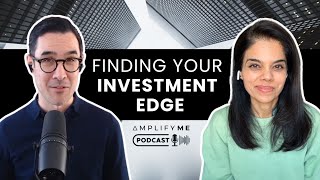
In this in‑depth YouTube interview, host Anthony Cheung talks with Mahgul (Gul) Ansari, an assistant portfolio manager at Premier Martin working on UK income funds. Gul walks through her unconventional 20‑year career path – from studying modern languages at Oxford and UCL, through a four‑year ACA qualification in audit, to investment fund auditing in Luxembourg, equity research, a brief stint at a hedge fund that ended with COVID‑induced layoffs, and finally her current role at Premier Martin. She explains how her language and accounting backgrounds give her a unique ‘edge’ in investing, describing how linguistic analysis of management commentary and treating accounting as a language help her spot hidden risks. Gul details a typical day for an assistant PM, emphasizing information filtering, long‑term conviction‑based decision‑making, and the balance between meetings, research, and market monitoring. The conversation then shifts to personal branding – defining a personal brand, building visibility via LinkedIn, and adding value to contacts – and authenticity, encouraging professionals to embrace quirks while resonating with industry expectations. Gul discusses diversity and inclusion, citing programmes such as GAIN, Girls Are Investors, the Pathway Programme, Investment 2020, and 100 Black Interns, and urges early‑career candidates, especially those without a finance background, to network, undertake side projects, and leverage support schemes. The interview closes with practical advice for non‑finance graduates on how to explore the industry and make the most of available resources.
Chapters
Hello, Goll, and welcome to the show. And really excited for this conversation. And just to give it a bit of a framework of discussion that people can expect, we're going to talk about your career journey and transitions, of which this is a definitely really interesting part of the conversation for sure. And then building an edge in investing. So a little bit more specifics about your role as a PM now, and then personal branding, authenticity, talk about the industry at large as well, and then advice for young people who are looking and considering a career in finance. But perhaps the best place to start, a big portion of our audience are either students or early careers professionals. So if you could take me back to those early days as you as a student, what were you doing? What were you thinking? And try and work our way up to your current role would be great.
Yeah, sure. Well, first of all, thank you so much for having me, Anthony Cheung. I'm really looking forward to this conversation. Right, taking me some time back now. So yeah, just at a high level, I have been working within financial services for around 20 years, and half of that was spent in accountancy and the remainder in sort of investment management and more commercial roles within finance. But yeah, let's start start, um, you know, with the university years. So, um, I initially studied, uh, modern languages at Oxford University, um, but, you know, decided the university course wasn't for me. Um, it, you know, it didn't really tell— I didn't have the chance to learn much about sort of French and German, um, culture and, you know, history and so forth. It's very much sort of linguistics and literature. So I transferred to UCL after a year And that's where I completed my degree. And if I'm honest, I only started thinking about careers in the penultimate year of my studies at UCL. Now, back then, you know, the standard career paths for modern languages graduates were, you know, become a translator or become a teacher or go into a sort of sales and marketing type of role. I'm not sure if that's changed or moved on, but the main thing is that, yeah, none of those really appealed because I wanted a real challenge. And I knew then that, you know, what did I mean by challenge? Like something to do with numbers, because I always thought that was a, you know, weak spot of mine. So I really wanted to push myself. So I started exploring different options within finance, and my dad, he suggested that, you know, I explored part of accountancy. And when I started exploring this field, it actually ticked a lot of the boxes that I had in mind. So it was definitely challenging because you're studying and working full-time simultaneously. And the exams, they're quite tough. You know, but at the same time, you also get to learn about the inner workings of a business, really a business's foundations, the P&L, the balance sheet, cash flow statements, how they all connect together. So I thought, great, I want to, you know, to go for this because, you know, you get a qualification at the end of it, which is regarded as quite sort of prestigious as well, the ACA. So yes, I applied to the top 50 firms in London. I got an offer with BDO Stoy Hayward, which is where I spent the next 4 years of my career, next or first 4 years of my career, studying for the ACA qualification and also working full-time in their audit department. But I knew fairly early on that, you know, accountancy, I wasn't really sure if it was for me and, you know, really fully utilized my sort of key core skills, um, and, you know, whether it fulfilled me. Um, so around 2008, um, this was the time of the great financial crisis, uh, and, you know, European and UK and even American markets were in turmoil, um, because of the, the lending system and the banking collapse and so forth. That really prompted me to kind of reflect on, on what I wanted to do next. Um, so, you know, using my language skills was a key part of that. Um, and yeah, as a result of that sort of reflection, I went over and joined, um, Deloitte's Luxembourg offices where I was auditing investment funds. Um, and we'll explore this in a bit more detail, but you know, that was really my first exposure to financial markets and I was totally hooked. Um, so Yeah, I, you know, I came across equity analysis, um, sort of whilst auditing, just stumbled upon, you know, that career, um, came back to, to England and started applying for equity research roles, uh, but it took me a really long time to get a job in investment management, um, and, you know, we'll talk about some challenges that I, that I encountered a bit later on, um, but eventually, yes, it took quite a few years, quite a few sort of lateral moves in, in different other bits of finance, um, before I actually, yeah, came on to it, came on to the, the sell side initially, um, where I spent about sort of 3, 3 to 4 years, um, and then I was poked by one of our clients whilst working on the sell side, um, Polo Capital, um, and joined them in January 2020. Uh, but you know, lo and behold, COVID happened, um, the fund totally crashed, and I sadly lost my job. Um, so yeah, again, that prompted a lot of kind of navel-gazing thinking. Ah, you know, is this really right for me? And you know, you know, what do I want to do next? Um, so yeah, I mean, the answer that I found was that, you know, I very much remain very passionate about investment analysis, um, albeit perhaps not in a hedge fund, which is the fund that I was working on at Polo Capital. For me, I think it was too sort of high-octane, um, and, you know, very high stress levels. So, um, yeah, I was very lucky. I got a, I got an offer then, uh, from Premier Martin working on the UK Info Fund, um, around June 2021, so about just, uh, over 3 and a half years ago. Um, and yeah, I joined as an investment analyst, um, and fast forward sort of, yeah, 3 and a half years, um, I've been promoted to assistant PM, um, and hopefully on track to, to be PM as well of, um, a couple of our UK income funds. Um, yeah, that's a bit long-winded, but yeah, I'm sure, you're sure you'll want to delve into Asterix software. Walk that a bit deeper.
Yeah, for sure. And yeah, what a journey. And I'm sure there's still plenty more twists to come. But one of the things there you mentioned was a good word, navel-gazing. And I can imagine even you mentioned very, the very early years, you know, you went to an academic institution that people globally would aspire to be. And then you left that environment, which I guess would've taken a lot of conviction, a lot of courage at the time. And then, but I'm guessing what did that act as a bit of an experience to help facilitate some of the next changes? Because you started out in accountancy, you did that for many years. I know there's that qualification that typically you would work towards, but then you realized it wasn't for you. So can you walk me through these moments of realization, your process to identify that? Because I think a lot of people can, A, get stuck into a role, or B, be too intimidated by ever making a pivot because it's just too uncertain.
Yeah, you're absolutely right, Anthony Cheung. You know, a big part of the process, it's about self-discovery really. And the reason that self-discovery is just so important is because if you don't find out what makes you tick, what makes you get out of bed every morning, I personally find it quite difficult to stick with it over a long period of time. And let's face it, I think ideally we want careers with longevity, right? We don't want to be consistently hopping from place to place. We want to settle down. Progress and develop in one place, in one role over time. But in order to do that, I think you need to find out what your passions are, what your core strengths are, the environment where you feel you can be yourself. Um, but that in itself requires a lot of exploration, trial and testing as well. And I think You know, this thing about, you know, a fantasy not being for me, Oxford, you'll likely do quite early on in my career, or, you know, back in those student days. And I think it's absolutely fine to do that exploration, that trial and error sort of thing early on in your career. But what's key is that, you know, you do that with a view to finding out where you see yourself longer term, I think. And where you really want to settle and just, yeah, just run with it and progress.
Yeah, I think it's such a strong message for young people, particularly those at universities, particularly those I find who are at the red brick universities, for example, or the Oxford and Cambridge, because there's a lot of expectation. You're supposed to know what you're going to do. You're supposed to have all these decisions made, but I think you're a really great embodiment of having been part of that, but also this period of self-discovery and self-development. So I think, yeah, really important message for young people not to get too stressed too early on. You mentioned it took over a decade really to get to where you are today, but you did mention earlier you've had obviously some, I'm sure, quite clear and big challenges to get over to accomplish that. So I just wonder what were some of those biggest challenges that you faced and how did you push through them?
Yeah, the biggest challenge by far was that, you know, when I applied for roles, the feedback— or one of the pieces of feedback I was given is that I lacked the relevant experience, um, which I think was a bit unfair because, you know, most of these jobs were sort of entry-level roles. I clearly lack experience, um, but I didn't let that dissuade me. Um, it's Instead, I opted to really think out of the box as to how I could overcome that. Um, so, you know, I thought to myself, could I be doing this job, like equity research, without being in a formal professional setting? And the answer to that was yes, because, you know, in order to analyze a stock, you need to have the information on a company. And that tends to be readily available to the public. In fact, it'd be wrong if you're investing on insider information, you know. So, so yes, so I had that, the data was already out there and sufficient in order for me to do analysis. The next question was, okay, but then what is the process of equity analysis? How do you write a note? What do you put in there? How do you value a company? And again, that was a process of just, you know, educating myself, reaching out to industry professionals, getting sort of guidance from them. So bit by— and then reading lots of books. I remember, you know, some of the professionals I spoke to, they said you should read McKinsey's Monitoring and Measuring the Value of Companies, that that's the gold standard of valuation. So, you know, it's an 800-page book, but that's exactly what I did. Um, so in my own time, um, this is after my full-time job hours were over, um, I used to write, um, equity research notes on companies that, you know, were of interest to me. Um, then I thought, okay, well, it's great that, you know, I'm putting all this stuff that I'm learning to use. I find it really fascinating. It's amazing. 'But I don't know how good it is.' So then, the people that I'd networked with, I sought feedback from them. I said, 'Can you, you know, would you mind sort of taking a look at this work that I've done on this company and giving me feedback?' And, you know, I was really surprised by how positively they responded. They were very happy to do so. So, again, getting that feedback was just an added bit of learning. That I got. And there were two great things about this process, i.e., going away proactively, doing notes myself, and so forth. So number one, it meant that when the right opportunity to become a professional came along, you know, I was ready for it, and I hit the ground running, and that sped up my sort of progress. In the investment management sort of career journey. The other great thing was it gave me a chance to test whether, you know, this, this role, this equity research path that I wanted to get into, whether it was right for me, whether I had the right skills for it. Um, because you can imagine, you know, after all this applying, lots of applications, if I'd gotten into a role and then discovered, oh my God, actually practically on a day-to-day basis, I'm hating this. That would have been catastrophic. I would have wasted a lot of time. So, you know, by the time that I actually got my first job in investment management, number one, I had the skills and I was able to do it quite well. And number two, um, you know, I was already— I tested that, you know, it was passionate. I was really passionate about it. I wanted to stick with it. Um, so yeah, so, so sorry, so that— so to cut the long story short, yeah, so Lack of experience was the first challenge, and that's how I overcame that. The second big challenge was another piece of really unhelpful feedback, which was that I wasn't the right fit. Now, to say that to someone from an ethnic minority background, a female who's relatively quite mature, fairly unhelpful, I would say. Like, which bit of that, yeah, makes me, sort of disqualifies me from doing a good job at your firm? I, I do not know. Um, you know, I, I think the, the industry view is slightly changing now in terms of what constitutes the right fit and, you know, just being a bit more open-minded. Um, but my advice to anyone who, who gets that feedback now would be to, to push back and probe a bit further. Why do you believe I'm not the right fit, and secondly, how does that align with your diversity inclusion policy if you have one? So yeah, they, yes, these are the kind of two challenges.
Thank you. Thank you for sharing those. And yes, it's interesting because you were saying about how I think there's a misconception sometimes a lot of early career professionals will look at someone who's now more senior like yourself and go, oh, you've always been in that position. But it's interesting then hearing all of that extra mileage that you had to do as a side hustle to upskill whilst doing a job. It's like, you know, I think that's quite a clear difference of those who can have that next career trajectory, if you like, that you've done. So yeah, really important, I think, to understand that nothing is a given. You have to earn it, you have to learn it, and you have to put it into practice every day, right?
Totally agree. Totally agree. And it's character building, you know, it's, you imagine what it does to resilience and, uh, yeah.
Yeah. I mean, absolutely. It's an intellectual muscle, right? So, um, well, let's, let's, um, move on because I really want to dive into your, your role a little bit. And there was a couple of bits when we met in a coffee shop a few weeks ago to just, you know, to have a, have a general conversation. You were talking about something called an edge. Now an edge is something that I remember being on a trading floor. Traders used to talk about an edge all the time, like daily, what's your edge? This sort of thing was very common language. I don't think I've heard that word since I left a trading floor like 10 years ago. But you talked about it a lot. And what was interesting is that given what you described at the top of the conversation, you said you studied languages and literature. And how in actually that gives you an edge. So can you just explain that, connect those dots? How does studying languages and literature give you an edge in investing?
Yeah, cool. So first of all, let's take a step back. By edge, what I mean is your competitive advantage. What are the things that are unique about you, which make you stand out from your peers? You know, there's hundreds of analysts out there, so why are you the best? I think it's really important to define that, and that's what I mean by it. So languages, yes, I did mention that I believe that, you know, studying languages, it does confer an edge in my capabilities as an SPM. The reason for that is that, you know, I find, well, number one, why is it unique, right? Don't find many modern languages you know, graduates in the world of investment management. There are some, but you know, I find a lot of people with sort of finance and STEM— let's say STEM, finance backgrounds. So yes, how does it help me? But I guess there are quite a number of things. Investing, you've probably heard this before, but it's not all about numbers and rules and science. There's actually an element of, of subjectivity, emotion, other qualitative factors that go into day-to-day investment decision-making. And some of the data points that we use to make our investment decisions, they actually involve a lot of words. For example, when management teams of companies speak about you know, their outlook on a sector or the company itself. It's all words essentially at the end of the day, what they're saying in analyst calls. And you have to study kind of the— you can glean insights from the language that they use to talk about certain subjects, which other analysts may not cotton on to. Um, so yeah, I think, you know, coming linguistic standpoint, that's one kind of advantage. Because yeah, just reading between the lines of what management is saying and how they're saying, you know, things that they're sort of pointing out. Yeah, that's really useful. The second point is about— yeah, grammar was another thing actually. So grammar is actually the rules they bit of studying a language, um, kind of rule of thumb, you could say, as well. Um, and we often use, um, rules of thumb when we're thinking about how a stock may perform in certain conditions. Um, in order to do that, you know, we look to the, the stock's past. For example, you know, in the last economic downturn, How cyclically did this stock behave? How long did it take for the company to recover its profits and revenues? And that gives you a good sort of pointer as to how the company might perform should that circumstance, like a similar sort of macroeconomic downturn, occur again. So it's a bit similar, I would say, to how grammar plays a role in sentence construction. Like you do. If this happens, this is likely to happen, this is how you use it. So it's that, it's the framework, that sort of construct, um, and applying sort of, yeah, grammar to, to that. Um, and the third thing, um, not sure, the third point, I think it probably brings in everything together— my languages, my accounting experience, and my investment, um, you know, the decision-making. I would add accounting as my sort of third language, um, that, that I now use. Um, you know, I mentioned earlier that I found that accounting, pure accounting, it didn't really fulfill me. But then when I saw accounting as a, as a language to interpret a company's financials, uh, then all of a sudden, oh my God, it's actually become the most interesting thing on Earth. Um, so in a former life, I was, I was a forensic accountant, and what that entailed was, you know, very in-depth study of a company's accounts to identify hidden risks, um, and potentially even opportunities, uh, which, you know, most other investors had missed because they don't even read the accounts, to be honest. So, um, or they— it's too sort of, it's a very long-winded process to them. Whereas because I've been doing accounts for so long, I had, you know, studying and had that exposure to accounts for so long, it probably takes me less time to go through a company's financial statements and find issues than it would, you know, another investor. So yeah, I, I, you know, that again, it's, it's that, it's the languages really that connects all three of these points together. And, and yeah, I think, you know, it's really sort of conversant.
Yeah, no, it's great to hear that explanation because I get a lot of accountant students wanting to pivot to say a front office sell-side role is quite an often thing. They sort of go through, I guess, that ACCA process and a couple of years and they're like, okay, I think I want to pivot. So it's good to get how transferable that is. And also that mental kind of structure mapping. That's really, that's such a great insight because Again, I think a lot of people don't know what they want to do, but they do know what they enjoy studying, for example, or how their mind works. And, you know, remove finance for a moment. And I've heard other people in the industry say this about— there was a chap who was an engineering student and how that applied to them creating algorithms to trade, even though he knew nothing about trading. It's the same principles being applied. So yeah, that transferability is really, really interesting to hear you say. But probably a good segue here is about understanding a little bit more then about a fund manager and how do you spend your time? Because I think it's a bit of a black box role. I feel online it's kind of like you hear, I think portfolio managers get kind of lumped into the hedge fund space and then people think you're just there trading behind a screen all day. But if you could explain to me like how is your time spent? Either on a day or a week and between research or talking to clients, colleagues, and, you know, the relationship side of it, what does it actually look like in reality?
Yes. Oh, so gosh. So it is a mixture of all of the things that you've just mentioned. No two days are the same. You know, one day I will have back-to-back meetings, speaking to companies, speaking to sell-side analysts. And also having sort of team meetings amongst the other PMs, just point, you know, we just exchange our views on a given issue. And there are, there'll be other days where, you know, it's really heads down and, you know, I need to look at this more deeply and, you know, I want minimal disturbance. Um, but at the same time, you know, my job, there's a lot of juggling information, and there is a lot of information to kind of process every single day almost. What's really key is discerning or identifying what the most important bits of data that might impact your investments or your portfolio and being able to kind of sift out the rest as noise. You know, there's been a lot of talk about, you know, Donald Trump and his Twitter kind of announcements that he's been making, which has caused a lot of sort of market volatility as well. But for us, it was, you know, I think it was less a case of, you know, oh God, we need to act because, you know, he's going to do this tomorrow. Our decisions tend to be very slow and deliberate. We are long-term investors at the end of the day. We're not going to necessarily, you know, sell a stock because it has, you know, issued a profit warning. Um, you know, obviously we'd examine that profit warning, but, you know, like I was saying, if it feels like a one-off, then we're very happy to stick with it. Um, it's about having, you know, investing with conviction. And what I believe is that if you are truly investing with conviction, you have thoroughly considered all different aspects of the data that you're looking at. Um, so yeah, so it's all, yeah, it's a conviction, thinking deliberately, acting deliberately, um, slowly, um, reading, being able to filter out the noise from what actually matters. Um, yeah, also being very, yeah, open-minded at the same time and You may come in with very high conviction, very sort of, you know, view that, oh, something's definitely the case for sure. But it's really important to seek the opposite viewpoint as well, I believe, because, you know, investing, it's all about— but it's all about getting to the truth of the matter, essentially. And getting to the truth of the matter involves a lot of debate. Of different viewpoints, often conflicting viewpoints. So you need to really understand what the controversies are about stuff and seek out something which you may not like, but it's really important to seek it out. Um, so yeah, there's, there's that. That's a lot. Um, but essentially, yes. What, what are my hours like? Gosh, I should talk about the hours. Uh, well, even if no two days are the same, um, I always start my day at around 7 AM. Because that's when the company news flow starts to be released. Um, and also read the Financial Times first thing, what's going on in the world, um, what might impact my portfolio. Uh, and as for, you know, the, the end of the day, well, it's actually pretty good. I tend to finish at around 5:30 to 6:00. Um, there's never any serious kind of urgency to trade, or I should say Not never, but there are rare, sorry, rare occasions where, you know, really have to press the button immediately.
All right, well, let's, let's, um, let's move on and let's talk about personal branding, uh, and also authenticity, because I know you, you've mentioned that to me before, and it's super interesting how In this kind of mini-series that I've been doing with women across the industry, I think there's not yet been a conversation where a woman hasn't mentioned that word authenticity to me, which I'm sure we can talk about in a moment. But my first one here is about personal brand. And I know sometimes when people hear personal brand, they're like, oh, personal branding. Like, what does that entail? What have I got to do in order to do that? But I wonder if you could talk to me about why that's important, I think, first, particularly because a lot of listeners will be in their early career and the value is probably going to add for them. So what does that mean to you and how can young professionals start doing it?
So, yeah, so personal branding, it's about what makes you, you, what you want to be known for. You know, what are the key characteristics that you want people to remember you by? Um, and again, you know, it's similar to the edge aspect. Those things which make you create and define your own personal brand, they need to be unique to you, Anthony. Um, because let's face it, you're just like thousands of others, not you know, someone's mom, you're not really going to stand out from the crowd. You want to be remembered for the right reasons. Um, so yeah, so that's personal branding, I think, is really important. Um, point one. But the second point is, um, about letting people know what your personal brand is, and that leads to something about, you know, the, the concept of visibility. So being out there, staying relevant, being at the forefront of people's minds. Um, how do you do that? Well, you know, these days you've got social media. I find that LinkedIn can be a really good channel to kind of post thoughts on a current issue or debate, or just like, you know, updates on your personal kind of career journey. That can be very way of having— displaying that visibility. Um, but then yeah, also, you know, like making connections as well and just reaching out to people, trying to let them know that you're there, add value to them. You know, you might want to send them a link to an article that you recently read which you think might resonate well with them. So yeah, personal brand, number one, define it, build it, and number two, just ensure that, you know, it it's out there, it has reached. And that's actually a very proactive process, I think. It's something you just never stop. You have to keep at it, getting that visibility.
Yeah, and it's really interesting you said that about adding value, like you could send someone an article. I do remember there was a stock that was related to gaming, as in computer gaming, and there was an intern that said, that basically had this deep like Reddit thread knowledge of this game series and highlighted this really obscure abstract source of information for this particular game development that they were doing. And they shared that. And that was incredibly valuable to the desk. I remember at the time, and it was just being like, look, you don't need to be a master of like finance in order to add value to a finance professional, right?
Right, absolutely. I remember, um, so I did a, uh, a bit of forensic accounting on a thought idea even before I entered the industry. I remember I was— yeah, this is part of my moonlighting, but, um, but how did I— what did I do? Well, I, I went into, you know, each UK they have to post their accounts on Companies House website, uh, which, you know, no one really looks at. But I took several days just pouring through the accounts of this company posted and its subsidiaries posted on the Companies House website to find some really horrible skeletons in the company's closet. Um, and I thought, great, I've got a really unique insight here, which, you know, I want to share. I want to, want to tell this kind of sort of contact of mine who I think holds the stock. So I sent it to him, um, and yeah, he was really appreciative of it, um, because, you know, this is not something that he— that one of his sell-side analysts sort of got. And here was me, someone just an outsider, a complete outsider, but, you know, I'd gone away, done the work, um, and bought him something quite valuable. Um, so yeah, so that, that, that, you know, again, adding value, really important.
Okay. Let's talk about that word authenticity then, because that is something I know that you deeply value. And I just wondered, you know, as I said, why is it that this really resonates? It feels like with the, uh, the community of women within the industry. And secondly, how do you balance being true to yourself while also navigating those kinds of expectations of the norm of the industry?
Authenticity. Uh, again, it comes back to the point about, you know, the factors that make you uniquely you. I know it sounds quite sort of abstract, but, you know, I think all of us have got some kind of quirk or idiosyncrasy that sometimes we can be a bit embarrassed about too. But I think we need to find that inner confidence. Like, it's okay kind of to bring that out, as long as it's not too weird, obviously. But it's like, oh, it's okay to bring elements of it out. For example, you know, you might love wearing really brightly colored clothes, and it's fine to come in with a bright red jumper, you know, into the office in a sea of kind of gray suits or just black and white, where people are just dressed in black and white. It's great to be the one that's wearing that, you know, hot pink or that, or that red jumper. I had a boss who did that actually, and, uh, he was really, he was really unique, really brilliant guy. Um, but yeah, so it's about, you know, just being so proud of your, of your little quirks. Um, and yeah, letting people know about them, um, because they, you know, often sort of pretty kind of— they tend to, tend to land well, I find. I think sometimes we overestimate how much our quirks might offend or discourage someone that we're trying to impress. Um, it's— yeah, more often than not, it's actually quite refreshing to, to come across someone quite sort of authentic. Um, you know, I'll give you an example. So, uh, you know, I did some presentation skills training about a year ago, but they used Steve Jobs as someone who kind of did a really awesome job whenever he was presenting. But, you know, he was always in that black polo neck of his. When he came up on the stage, he'd go to the back, get a bottle of water, come to the front of the stage, take a sip really slowly. The audience was totally captivated. What seemed like sort of perfectly natural, normal behavior. A Black Poland— he wasn't in a suit, he was like the CEO of some multimedia firm, isn't he? But you know, here he was, quite sort of casually dressed, doing something very casual, didn't really care, with that sense of confidence. But you know, notice how incredibly captivating that was. So the point about authenticity and learning to be more authentic thing is try to find people, um, who you admire and respect, who convey that sense of authenticity. And, you know, more often than not, more often than not, they'll be outliers. They're the ones with the quirks or something a little bit different to them. Just observe them, study them. What is it about them that makes them come across as so authentic? How can you then emulate that? What are your elements of your own sort of personality, backgrounds that make you authentic or a little bit different to hers? How can you bring that out more? Um, and then, yeah, so that's a lot of observing of others, but then also observe how others respond to what you say and do. Because I think if you, you know, what lands well with them— because I think if you do that consistently enough and get a good gist of what's working and what's not.
And how do you manage then the expectations of the industry norms? And one of the things I always observed when I was in the first 10 years of my career, like at the end, tail end of that, I was a head of market analysis and so on. I'd talk about markets publicly, but whenever I used to look at Bloomberg Television or CNBC or BBC News, it would always be someone who's probably another 10 years, 15 years older than I was. So, and it was always a white, slightly graying-haired male because I guess the industry norm or the public perception of talking finance is a certain embodiment of that Richard Gere type character. So yeah, I just wondered then, how do you balance then being authentic, but then at the same time when the consensus is almost that. But being able to make enough appropriate noise to be heard, to then represent yourself truly, but to break in, to be able to do it in the first place.
Yeah. So I think it's really important to understand the perspective or some sort of understanding of the perspective of the people or group that you're trying to impress in the first place, or connect with. Um, and then bring bring elements of that, um, to come— your conversations and your kind of contact or exchanges with them. Um, it doesn't have to be all the time, but that, that sense of kind of resonance, I think, does have to be present. Um, you need to be able to resonate with your audience, um, and you need to be able to connect to them at some level. It doesn't necessarily have to be, you know, the same kind of sporting activity or hobbies that they're into. It might be something that they're looking at from a professional perspective. As long as there's some kind of like talking point there, then, you know, that, that's great. Um, but if you, you may want to go the extra mile actually, and perhaps, yes, study the, the are there hobbies that they are interested in? And go, go the extra mile and, and find and read about it, and then bring it up in conversation with them. Um, there's no harm in that. Um, it might pleasantly surprise them, actually. But it's that, yes, I think it is really important to find those points of connection with, yeah, the, the person or group of people that you're trying to impress and build Connecting with.
And perhaps then this can move me on to my next question, because it's funny that you said that to kind of assimilate maybe some of the interest to build and resonate connection. And this kind of leads on to my next question, because I remember when I was young playing golf, for example, which is a very like industry norm for high finance. But I remember being racially abused on a golf course as a child. And so When someone says to me, I think when you are someone who's ethnic and then you have these kind of invisible barriers or life experiences that, okay, and if everyone looks a certain way, perhaps they wouldn't have even thought that that might have been a reason why you don't play golf. But I guess my question then is, well, no, I mean the question I have then is like, clearly you have a different background and it's on different levels. There's You're an ethnic minority female is one. You're a language graduate. You broke into, you said earlier, into investment management relatively late from an age perspective. So I just kind of want to ask then about what changes do you think the asset management industry needs to undergo in order to be more accepting of these people from, let's call it, a slightly unconventional background? Yeah. What is happening and what needs to happen to be more inclusive.
Yeah, absolutely. And I'll come to an answer for that in a second, but just taking a step back, you know, your experience— first of all, I'm really sorry to hear that, but I mean, this is an example of where I would say you don't necessarily have to play golf in order to feel that you fit in. I'm sure that— and this is not— sorry, this is not personal, Anthony, not personal to you, but I think it's more for our audience. Don't feel that you you really have to go out of your way to fit in, as long as you find enough points of commonality. You know, I'll give you an example. I don't drink alcohol, but— and that can be quite— well, that was— that used to be quite a big issue in terms of fitting in with my colleagues. But hey, there were other kind of things that I could connect them— connect to, uh, to connect connect to them with, like, you know, I love hiking, for example, um, love of tennis, for example. So yeah, like, I think there'll— there tend to be one or two things always, but don't feel— don't ever feel that you have to do something, you know, which feels forced upon you. I would strongly sort of, you know, not recommend that. Sorry, now coming on to your point about, um, what— how the industry is changing. And I do, you know, I'm sure you're aware that there's been quite, um, there was quite a heavy sort of D&I, diversity inclusion movement over the last few years. I think Donald Trump's arrival has kind of threatened that somewhat, and sadly, over the last few months. Um, but you know, the industry now, investment management industry, I think there are a lot more sort of support schemes on offer than they were when I was trying to break in. So, you know, when I think about the, the support programs that are available for women within investment management, you've got GAIN, Girls Are Investors, you know, which I regularly volunteer with, a fantastic organization that creates opportunities for women undergraduate students to learn about investment, learn about investments, and, you know, they hold competitions and internships. And university panels, lots of stuff like that. There's also a diversity project, the Pathway Programme, of which I was a member last year, which is a 12-month training course to give aspiring female investment professionals already in the industry, but just to equip them with their hard and soft skills and the networking opportunities to really forge a career and progress in investment management. We've got the Investment 2020 program, we've got 100 Black Interns. So I think there's a lot going on there, and I'm sure that, you know, there will be new support schemes sprouting over the coming years as well. I would say, yeah, just, just make— take advantage of them. Um, they are fantastic, and the opportunities they offer are fantastic. Um, like I said, yeah, I think the recent events over in the States, and, you know, the attitudes towards D&I. A lot of sort of large companies have also backtracked their support of diversity inclusion, which I think is really sad. But, you know, my employer, for example, the CEO of CranioMaitland, last Friday, he sent out a fantastic email saying that despite whatever's going on across the pond, you know, we were still very supportive of diverse culture. So, even if, you know, what I would say to your audience is that even if, reading this stuff in the press, there are lots and lots of asset managers who are still very, very supportive of diversity inclusion. And you know, I personally, I actually feel quite positive about the future of these initiatives. Okay.
Well, but perhaps to close then, and just kind of given everything that you've explained so far, is there's often a lot of pressure for particularly young people to follow a kind of quite traditional path to get into finance. Now, as we've learned, yours has been quite the opposite in terms of how you've arrived at where you are at, at the moment. So what would you say to someone who doesn't have a finance background but is interested in the industry? What should their first steps be to explore, to do that navel gazing, You've just highlighted, you just said the word explore, explore, explore.
The really, a really good way to do that is just by talking to people. Um, I'm sure there are sort of career services and events taking place at universities. Attend them, talk to the speakers, connect to this with the speakers on, on LinkedIn. Um, just, just reach out, even if it's a sort of family, friends, reach out to them. Um, and just have that one-on-one time with them. Ask them, you know, what led them to their current career path. What do they like about their role? What don't they like? If they weren't doing that role, what else would they be doing? Uh, and you know, what advice they would give them sort of, you know, going forwards. So yeah, it's, it's, and, and do that with as many different people as you can. So yeah, so exploring is one thing and connecting. The other thing is, yeah, just taking advantage of whatever opportunities are available to you, really. You know, I mentioned Career Service, but then also these other wonderful programs that are increasingly becoming on offer. You know, as I said, they weren't around when I graduated or even when I was trying to break into finance. So yeah, definitely make the most of them. But yeah, those would probably be kind of my key points for people who haven't got a traditional sort of finance background.
All right, well, Gul, thank you very much. It's been really interesting for me to learn. I mean, Some of the things I think you were talking particularly about the transferability of skills from how you described what you do in terms of your daily job, how you can almost connect that all the way back to the beginning of when you were studying, which was completely different. I think that's such an eye-opener or will be for a lot of people. So look, thank you so much for sharing your time and your story with me. And yeah, I look forward to seeing what happens next.
Brilliant. Well, thank you so much for having me, Anthony. Uh, it's been a complete pleasure. And yet, but my door is very much open. If anyone wants to reach out and connect on LinkedIn, please do so. Um, yeah, very happy to help. Uh, yeah. Thank you very much. All right.
Brilliant. Thank you.
More from Anthony


Inside the Biggest Banking Stories You Need to Know This Week (Anthropic, Diageo, Private Credit)


Inside the Biggest M&A Deals You Need to Know This Week (UniCredit, GameStop, eBay, Eli Lilly)







AI Breakthrough or Hype? Anthropic’s Claude Mythos, Tim Cook Steps Down & LIV Golf Collapse