FOMC LIVE - 1st May 2019
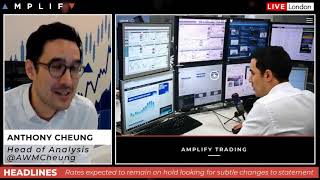
Anthony Cheung and the Amplify trading team provide live coverage of the Fed's May 1, 2019 interest-rate decision, with pre-event analysis of recent US data, real-time commentary during Powell's statement, and post-release market reaction across currencies, gold, and equities.
Chapters
Hey, just testing out the mic, testing the channel before we get things officially underway. At 6:30, the session will commence. But just getting the live feed up and running so that we can get everyone online, uh, ready for the event then at 7 o'clock for the release. So if you can hear me, if I'm coming through clearly, whether— if you can see my screen, got a picture of the Federal Reserve, then just let me know. Put a Y in the chat, please. It should be a chat facility on the right-hand side. If you pop a comment in there, just let me know whether you can hear me okay. So again, if you have just logged in, the actual session doesn't begin until 6:30. So once you're in, got a few minutes if you want to grab your coffee. Get your sugars in and then we'll kick off at 6:30. Uh, what the plan is, is I'll give a bit of a preview, uh, then Sam will come on ahead of the 7 o'clock London time release. I'll then come back, I'll cover as it happens, uh, we'll plug into the squawk as well and hear them announce the news, uh, then I can kind of dissect it in real time. All right, good. Couple of you in the chat. So, Kango Kid, I love you too. Good to have you with us. Mark in Canada, thanks for tuning in. Hope you are— you're well. Atlanta, Georgia, good stuff. Andy, yes, Sam is going to be with me throughout He is also going to be coming on both before and after the announcement, and so he can add his technical spin and look at some of the key levels which he's looking at across different asset classes as well. So definitely Sam will be there too. What time is the announcement, Toby? It's going to be in 37 minutes, so we're going to do a full kind of preview, what to expect and so on. And then we'll actually plug into the Squawk. I'll play it live through this channel. You'll be able to see and hear everything. Feel free to leave any comments though. The guys are here with me and they can answer any questions. Let me just make sure everyone's on point. Just while we're waiting as well for everyone else to get logged in, just having a quick look across the— let's just transition my screens for one second. So anyone who's not joined us before, just looking at the charts that I'm sharing here is the aim to give you a bit of a cross-asset class mix. Everything I'm looking at is futures markets. So basically I'm looking at EURUSD in the top left, Cable center, Gold top right. Obviously no point looking at things like the DAX today because it's a, it's a holiday in mainland or in Europe on the continent. So Germany, France, Italy, so on, out of the market. So yeah, it's been, been relatively quiet. I'm focusing on the 3 major indices, of course, for this event. So I've got the Dow on the left, got the Nasdaq in the center, got the S&P on the right-hand side. Interesting day, quite a few different data points coming out. Most recently, about 25 minutes ago, we had a headline: US and China have neared a deal to roll back some tariffs. Politico has reported the deal could be announced by the end of the week, and certainly that would be a, a bit of a positive. If you remember, with this ongoing US-China trade deal, although it's taken a bit of a back seat and things like earnings have taken precedence over the last week or so, definitely the trade war still a large risk for market prices, particularly with equities up at these elevated record high levels. And at the moment, what we've been talking about really is more tariffs not being rolled back but kept in place going forward. But this latest headline, Politico, certainly would be, be quite positive in that, to that extent. So that's kind of mitigating a little bit of the downside. A bit mixed in data today, actually. You had the ISM Manufacturing earlier, which was pretty disappointing, actually. Multi— I think it was a multi-year low in terms of the, the fall that we saw. I mean, it went from 55.3 down to 52.8. Pretty sizable decline, but counteracted somewhat by the fact that, um, the ADP employment change, private payrolls today, was way stronger than expected. And if that's any precursor for non-farm payrolls, then we'll be looking out for a similarly strong figure. But as I said, things like ISM Manufacturing, for example, were weak. And I think the non-manufacturing number comes on Friday, um, after the actual payrolls number. So yeah, we'll review payrolls in more detail, of course. as we go into that release. But definitely all focused on the Fed over the course of the next hour and a half or so. So we'll give it about another 3 minutes and then we'll officially kick off with things. So one other thing here, just to quickly show you, just before we get the show on the road, so to speak, uh, and let's just have a look at this. That's the, the heat map of of the S&P 500 today. And as you can see, Apple, real sharp outperformer. So if you remember, we've had a bit of a U-shaped movement overall if you look at the NASDAQ index future, because Alphabet was a bit of a disaster yesterday in terms of against market expectations despite pretty phenomenal year-on-year growth. They've pretty much set the precedence now, and the market looks for pretty punchy numbers on the growth side, uh, across a variety of different business, uh, areas for Alphabet. And their shares were down about 8%, but on the flip side today, you can see here you got Apple up north of 6.5%. And of course, this comes after a beat on the top and the bottom line, a new share buyback program with $75 billion, an increase of 5% to their dividend, and overall some stabilization as well of their iPhone unit sales in China, for example. So Yeah, pretty much net-net where we were, but obviously leave Sam to talk over the technicals a little bit more once we've done a kind of Fed overview. All right, so we'll give it about another minute and then we'll get things going. So while I'm talking, Sam and Charlie are both literally either side of me, so if there's any questions while I'm talking, they'll be happy to pick them up. As we go through the release, obviously you can continue asking questions. When I swap with Sam, I can kind of keep an eye on the chat, and then at the very end— so this will be after the press conference— we kind of bring everything together. But I'll start from fresh in about 45 seconds, and we'll kick off the kind of formal session. Okay, so half an hour to go until the main event, and that's going to be the latest interest rate announcement and press conference from the, from the Federal Reserve. So Thank you very much for, um, let me just switch over. Thank you very much for joining us, giving up part of your evening. I can see a couple of familiar names in the chat room, so, uh, I hope you'll find this session still useful for you guys to help navigate at least some of the interpretation of what we're about to see. A few other things then to be aware of, and going straight into the schedule and the order of play. And that is what exactly are we looking for. So half an hour's time, we have the main kind of first part, which is the interest rate announcement in itself. We're also going to get the statement from the Fed, and I'm actually going to show you that statement of what it looked last time. I've actually got a really nice piece of analysis out of the analysts at Goldman Sachs, and they've put together a mock statement of where the potential changes could come, and that acts as a very good tool for potential language changes that we could see. So we'll have a look at that. There's no projections. So remember the last time we did a live session with you guys, it was really quite exciting because we saw something which was very unexpected, and that was a really dovish release from the Fed. Remember, they took those interest rate projections over time, particularly for 2019, from 2 to 0, and the market wasn't expecting that. And there are other tweaks as well in regards to details and the timing of halting this kind of quantitative tightening process, or this unwinding of the balance sheet, which again kind of facilitated this dovish interpretation. So from the off, one thing I want to stress is today is unlikely to be as market-moving. Um, the last one was very built up. There was a lot to look out for. It was very— that was one of the one-in-a-year events where, you know, there's a lot riding on the decisions that are going to come out. This one is important and will be market-moving, but again, you've got to take into context the environment, the situation, not expecting every single one to be exactly an imitation of the last. 7:30 then will be the press conference. There'll be an opening statement and then there'll be an audience Q&A session with Fed Chair Jerome Powell. That whole session should last about 45 minutes. Okay, let's move on. I want to try and wrap through my fundamental view in about the next 12, 13 minutes, then I'll hand you over to Sam before the event kicks off, and he's going to look at the charts technically on what could be good levels on both sides or different scenarios depending on how hawkish or dovish the outcome is. So first of all, just a few reminders. This is the actual statement that came out last time, and so for anyone new to kind of these monetary policy events, there's a couple of things here to be aware of, and that is the structure of these statements. They are very fixed, they're always in the same kind of sectioning, like here when they refer specifically to inflation, here then about the kind of economic activity and financial developments and so on, as to then providing this kind of guidance about where do interest rates go in the future. Things we're looking out for here are— and this is something which analysts have been talking about from the bank research I've been reading— is look out for any change to the characterization of inflation. Um, so PCE, core PCE, which is one of the favored indicators of the Fed as to ascertain inflationary conditions, has been ever moving away from this 2% target that they have. And one of the biggest concerns here is about do they now need to pay heed to the fact that inflationary conditions are moving south? And so what are they going to do in order to counteract that? That's going to be one of the main things to how descriptive they are, how worried they are about inflation persistently remaining low. Could well show the hand on how dovish this reaction is going to be. The other thing is any change to their kind of patient stance, otherwise the description of the economic environment. Now let me talk you through this. This is the Goldman Sachs mock May FOMC statement. So again, just to reiterate, this isn't the statement. What they've done here, the analysts at GS, is they've lined out the previous, um, statement words that were used and put in hypothetically what they're expecting. And actually, I think when you read through this, it makes a lot of sense. And so let me go through this. So information received since the last meeting in March— so scrap January, it becomes March— indicates that the labor market remains strong and that economic activity has been rising. At a solid rate. So you can see here, it used to say the growth of economic activity slowed from its— and then the sentence continues. So let me read on. Payroll employment was little changed. They're going to scrap that and say job gains have been solid on average in recent months. So again, becoming more bullish on not just economic activity activity, but also that of the job situation. Recent indicators suggest that household spending has picked up while business fixed investment grew more slowly in the quarter. So here, used to say recent indicators point to slower growth, but they're dropping slower. We go on, and the second half is now more about inflation. On a 12-month basis, both overall inflation they used to say, has declined largely as a result of lower energy prices. Obviously, energy's gone back up, so that's now no longer a valid statement. So scrap it. Overall inflation has, for items other than food and energy, not remains, has declined and are running somewhat below 2%. So here, if I got a, a kind of a line or a knife and cut this statement in half, there's two sections, and this is really where the balance of potential reaction will come from today. And that is economic activity has been picking up more so than less, but inflation has been down. And so this hypothetical statement really reflects this, uh, in that sense. Now let me move forward. This then is a table that has all of the different key categories of an economy and each of the major economic indicators. So this doesn't encompass everything, and quite frankly, you don't need to look at everything because there's a definite tiering system to what the Fed give greatest weighting to from an economic data point of view. So here, quite neatly, you can see things like retail sales, consumer company, uh, confidence, uh, job creation, average hourly earnings, the inflation data, the housing data, the growth data, and everything else. Now, on the right-hand side then, to make sense of this box, this is where the data stood when the March meeting was here, and this is where that data now stands to this day. So, i.e., we've seen data since that time, and has it improved or has it got worse? And as you can see here, the verdict pretty much makes it as a simple way to interpret in the— there's more green than there is red. So actually, when you start breaking this down, retail sales has bounced back, consumer confidence is very high, we saw that yesterday, um, CPI has picked up, albeit remains relatively low, uh, housing market a little bit mixed on the starts and permits, but home sales, both new, existing, and pending, have all gone up, uh, manufacturing, the we've just seen a little bit worse on the last reading. But generally speaking, then this is why I've put this title on the right-hand side: Keep Calm and Carry On. I think definitely gives validation for the Fed to do what I think is going to happen here, and that's pretty much being a holding pattern. And as I'm going to explain, just by being fairly neutral, does that create— by default a hawkish reaction, given how dovish the market is priced? And that's what we're going to look at. A few other considerations. These are the tweets from your US President Donald Trump, and obviously if you haven't caught these already, to give you the summary, he's basically highly critical of the Fed. So he's gone from hating Powell to loving Jerome to now breaking up for a second time, and I hate your guts because you need to cut interest rates by not 25 basis points but 100 basis points, and you also need to do a little bit of quantitative easing to boot. And obviously we know that this is heavily geared politically. Donald Trump having weaponized the stock market and the economy as his validation that his policies are benefiting America and simply making it great again, then by doing this type of thing, he's kind of distancing himself in effect that if the Fed, which they won't, and that's react to him, the Fed will base their decisions on the economy, and that probably doesn't warrant anywhere near an interest rate cut soon as now, but it means that Trump politically, obviously it's a win-win scenario where he can come out of this. And if the Fed, um, progress following the path that they're on and that's successful, that's good for him. If the Fed and their current strategy and the economy doesn't respond and things get worse, well, he still wins because he can turn around and say, well, you know what, I told you so. So Trump's tweets ups the pressure. I don't think it makes any difference really to Powell what's going to be the outcome today, but it does have political connotations. This is what I'm quite interested in, and this is the Fed versus the market. And what we're looking at here is on the axis going from bottom to top, you've got the federal funds rate, and then from left to right you've got the time: 2019, the end of 2020, '21, and the long run. This is in effect a picture of the dot plot matrix from the Summary of Economic Projections. What you've got here are 3 lines. This top line in the kind of pale green, that is the where we stood, if you like, in December, which would have been the, the 2 projections ago where we were looking at. And that was when the Fed were— we were anticipating they were still committed to 2 more rate hikes in 2019, a much more higher neutral rate from where we are at the moment. However, Q4 was, you know, economically difficult, just to put it as a summary and to put it mildly. Big sell-off in the equity market, concerns over trade wars, unresolved Brexit, China escalation with the US on the trade war, earning profits being realigned to the downside, lots of different things. So that median expectation has gone down, i.e., we've got a more shallow trajectory of rates in the future and no more rate hikes anticipated for 2019. However, there's a very clear disconnect here between the Fed have readjusted their forecast to become more dovish. We know this, and that's helped catapult one of the main reasons the equity market and oil and have managed to come back so, so strongly in Q1. But the bottom line, this green line, that's how the markets are positioned. So there still is a distinct disconnect between what the Fed are saying and what the market is believing here. Now, a few more slides to make sense of this. This is looking at the implied probability of a 25 basis point point, uh, in this case rate cut. And this is taking a calculation from short-term interest rate futures, so in this case the federal funds rate. And this then is looking at the positioning in order to ascertain what's the likelihood of the outcome for today. As you can see then, the federal funds rate currently has a range of 2.25% to 2.5%, and there is a 97.5% probability that rates remain on hold. Today is not about an interest rate cut. If an interest rate cut happens today, that's going to be a massive deal. I would be looking for equities to rally. I'd be looking for T-notes to rally. I'd be looking for the dollar to get, get hit severely on the back of that. It's not going to happen. Could happen. It's not going to happen. Play. Then that leaves us on to what's going to happen later on in the year, and this is when things get way more interesting. If we start to get to September, the pricing of a 25 basis point rate cut is about— currently I think it's about 30%. If we go to December, the end of this year— and the reason why I isolate both those months, September, December, they are of course when we get projections again. Now in December, you You can see here the market is priced that rates will no longer be where they are today, and in fact they will be lower. And if you actually go out, there's 0.5% of the market is actually positioned for 100 basis points lower from where we are today. Obviously the most pessimistic about the future. A few other things that I just wanted to mention, um, one is this, this thing called the interest on excess Excess reserves— quite a few people have mentioned this about the potential that it could get changed as a partial nod to the recent subdued inflation figures. A number of banks suggest it wouldn't be surprising to see this IOER reduced slightly by 5 basis points. This would have the effect of pulling the effective funds rate down marginally. However, this is seen as purely a technical adjustment, so If that does happen, I wouldn't be looking for, you know, kind of huge impact on the back of it. The other thing is, what are the big banks expecting? Well, MS talks about this idea that the IOER could be trimmed. Importantly though, they say the statement gets only small adjustments to the current conditions paragraph describing the rebound in consumer spending and lower core inflation. Powell could also provide further details on the discussions of the longer-run composition of the balance sheet. This is about the bonds of which they hold. So these are things like Treasuries, mortgage-backed securities, corporate bonds. They didn't really go into that kind of detail before. If they do again, this could be very, very interesting. Of course, um, Bank of America's there as well. What they're looking for is a fairly balanced message And then if you have a look, what are we as Amplify expecting? Because this is obviously what everyone needs to know. Who needs Bank of America and Morgan Stanley, right? But we feel market is overextending its positioning for a dovish Fed for this year. We're expecting only minor changes to the statement today to reflect what we've just been discussing, an improvement in financial conditions and stable growth against the backdrop of softer inflation. I expect the Fed will remain in wait-and-see mode, adopting a familiar patience and data-dependent approach, and that might disappoint those looking for something with a bit more clarity on potentially hinting towards the necessity to potentially bring the optionality of rate cuts forward in the future. Questions to expect in the Q&A: any further details on the balance sheet, any response to pressure from Trump and his potential nominee. Of course, my response as Powell would be, I'm just not going to comment on these political situations, but I'm sure the press will bring it forward. So the balance sheet one, I would say, would be incredibly interesting and potentially market-moving if he doesn't really— if there's not too much statement movement, if it's fairly, let's say, benign in reaction at that point. Then I'd be looking for the QA or Q&A to really be the main part of this event, and particularly on the area of the inflation and the core PCE number. Impact on the outlook from the ongoing trade talks in US and China— again, this steps into the political arena, could be more focused on that point, which means Powell's probably going to back off and, and probably not provide too much clarity. The trading checklist, so again, quickly to summarize, we're going to get decision on rates, which is a non-event— we're not expecting a rate hike— it's the severity and the amount of the change on the descriptions around inflation and economic activity that are key. And we could see a tweak to the IOER. Part 2 then, likely to be the most important part of this event: the perception of recent economic developments, the emphasis on inflation, and any hints on conditions. So when questioned, this could be a good one to look out for. Or any hints on the conditions that would warrant adjusting guidance towards a rate cut in future. All right, that's it from me. Let me hand you over to Sam and he can quickly overview a couple of charts for you guys, and then I'll come back on. Thanks very much.
Yeah, thanks, Ant. I hope everyone is, is doing well. Uh, good to see some familiar familiar, uh, names in, in the, in the chat. I hope everyone's looking forward to it. Hopefully it can be as, as significant as the, the last one was, which was a decent reaction. We spiked higher, but as I was just talking about in the chat, we did then reverse pretty much straight away. And in the build-up to this meeting, really going back to Friday here in the euro, euro against the dollar, you can see we've been drifting higher. US GDP, which actually came in slightly better, but the overall reaction of other releases saw a negative reaction there. And since then, really from the beginning of this week, you can see this trend line that broke. Now from, from then on, it's been pretty significant leading to this whole push higher. So once we got around here, it was in the back end of, uh, of Monday's session, that pushed on. We came back to retest it, uh, and since then we, we've have, have drifted higher. As you'd expect, today has been a bit of a slow grind. We did have some data out earlier which, uh, was a bit mixed. ADP was better, the ISM was worse since I think 2016, and the dollar has weakened, well, all week really against this pair. A bit of euro strength come into the mix as well. In terms of levels to be aware of if we were to have a hawkish surprise, and, uh, you know, while I don't necessarily think that will be the case tonight. It might be that the opportunity to get short comes later on. I would definitely have this trend line on from those lows. Now, if that was to break, from a sentiment point of view, you've got to imagine people start switching their focus and then think, well, that 22-month low that we got last Friday, well, we can get that again. And some key levels to, to be aware of along the way, you've got a bit of a shorter-term trend. If I just bring this into picture, the yellow line here where you can see we broke through yesterday, found great support yesterday evening. So some couple, couple of trend lines along with the pivot that you would want to see break before really getting the idea that we are going to go lower. But if those trend lines were to go, I'd expect a further run down. Key levels of resistance above where we're trading on the futures here, looking at the higher back on the 22nd, 113.16, could, could expect to see price hold up around there. Really key point of view here on the 18th where we broke down, looking around here at 1.1343 on the futures, uh, i.e. the low of that early morning of the 8th, uh, of the 18th. I think if we were to get there, you're going to have an opportunity to— that people will be looking at to, to possibly go short. Just looking longer term on the euro If I just remove all of these studies here, I was looking earlier at just the patterns that we have been getting, and you can see there's been a couple of times where we start drifting lower and you start seeing people talk about, is this the recovery for the euro? Then we get that breakdown. Is this the recovery for the euro? We get the breakdown. And likewise, again, you get that push. And it might be that we're just starting to get that turning point coming in where people start to think we're going to go higher, only to get an opportunity to sell higher up. So here, looking at the, the longer term chart, if we were to get back to the highs that we had on the 22nd of April, or those lows that we had, uh, on just a bit before that— and let's put this now lower time frame— could offer a good opportunity to get short longer term. Then again, you can see that whole area as a zone. I think it'll be quite attractive. T-notes, looking for that same reaction to EURUSD and to gold as it reacts to the hawkish or dovishness of the, the dollar. And the, the reaction we see at 7 and then drifting into 7.30, similar trend line from those lows on T-notes. Obviously not a 22-month low in this case, but if that was to go, then it gets that change of sentiment, then the dollar can start strengthening again. And then you're identifying which dollar pairs may be more attractive to get short. On that point, I would say you're best leaving the pound alone unless incredibly hawkish. Uh, recently, well, the last couple of days, you can see here the pound has really pushed on yesterday, really from the morning, breaking a similar trend line. Uh, and it's extended quite far, going from that 129, mid-129s, up to almost with mid-131. So quite a big push there. So if we were to have an overly surprising hawkish reaction, the pound has got a bit more to come, uh, but it has quite overextended. So dovish, probably best to leave alone. Aussie dollar on key support that we saw, uh, multi-month. If I just put this on a longer term chart here, you can see going back to the beginning of the year, back in January, also March as well. And since then we have recovered a touch, so possibly one to keep an eye on. Stocks, well, look, last time we had, uh, that initial dovish reaction, stocks went higher. People started worrying, well, how can the economy deal with this? We came back down only to continue to push on. I think it's still a case of buying the dip if there is one. Where could that dip be? I think if we were to come back down tonight, and this would be obviously quite a big reaction to get there, but 2915 uh, which we had the low from last week, uh, on the sort of afternoon, that would be an area to, to have marked up. If you were of the, of the interest of getting short, this trend line break of that would be an area to do so, similar to the euro and T-notes. If those trend lines break, the sentiment changes and you can get that, that further push as people on a medium-term, longer-term basis change their mind. Um, having a look Here at that longer term chart, you can see this trend line going back from the beginning of March. So even on a longer term basis, if that was to go as well, people might start to really change their mind after a good earnings, uh, and overall dovish Fed for this year to the upside. And I'm not saying we're going to make that today, uh, at all, but I would have marked up just above 3,000 this trend channel, which was incredibly expected from last year, just from those looking at a longer-term profit target if we were to keep making new all-time high after new all-time high. There's the pound. That's what I was on about earlier with that trend line that had broken, and since then it has really pushed on. So talked about the potential trend lines in the, in the euro, in T-notes, in the S&P, just from a sentiment point of view, that's what can happen. So if those were to break to the hawkish side, then there could be a decent push just from a case of, of sentiment really changing. Gold on the longer term chart, you can see here Friday really struggled to push back above that resistance. That's been key, and each day there's been some decent selling pressure. Overall, at the end of the day, I'd be looking to see where we end up. Do we end up back above that? Then the buyers can start coming in. You would expect a dovish reaction to get us above that hawkish, testing this trend line. And if that was to break, there could be, you know, a fast money move back below, and you probably get the test of that, the low of April, uh, around 1267 on the futures, and then below that, 1250, which was last traded in the middle of December 14th, to, to be precise. Looking more intraday at gold, decent trend line which had a bit of a false break this morning, but you can see uh, there, how that's been squeezed into the upside. So again, you know, if it was really dovish and obviously the dollar weakens, gold pushes higher, uh, the opportunity to get long above, well, the trend line and that high of the day to target yesterday's high as your first real one before looking, uh, at the high of, uh, what's that, the 26th, so Friday. To the downside, if we were to have that hawkish, uh, surprise, if you like, those lows. A break of that could open the door quite quickly, especially the way gold can move. You've got about 4, 4 minutes from now, so of course any questions, please do, do get them in the chat. Myself, Anthony— well, Anthony will be back on here— myself, Charlie, and Eddie will be of service to you all. Hopefully there's a decent reaction, but as always, don't feel you have to trade it. Um, put the euro back in picture here so we can see, and the S&P there. I'm just gonna put it on the main screen now, all of those that you can see. So it'd be interesting to, to see the reaction. I've got euro, which I'll put on the, the top left, and the, the pound So just from an opportunity hawkish, I think the pound could be quite good just of how overextended it is over the last couple of days. Um, and the euro, that trend line you would want to break to really get in from a hawkish point of view. S&P, uh, would just bear in mind, you know, even if that trend line does go, that any trade should likely be just short reaction trades for, for those looking go short. The market is in a massive uptrend. While yet when it hits that all-time high, or hit the all-time high, a great place to take profit, I don't think the top is in just yet. So I'll just be a bit wary of that. Any dip is a good opportunity for people to, to buy there as well. But you've got 2 minutes now, so any questions please do let us know.
Okay, so just to be clear, we'll come off the mic now for about a minute and then I'll switch my mic back on. Now for anyone again that is kind of fairly new to this, pretty much trading these news-driven events is impossible without a Squawk Box. So we use a squawk in our Trading Live platform that's powered by RANsquawk. So they have a team of about 15 analysts watching all the financial newswires pretty much from Sunday night till Friday night. So we're gonna listen in to them and they're gonna call the news immediately upon its release. So then we'll better hear everything, we'll see the charts react, and then I'll jump on on if there's anything immediately that stands out, but probably like it is, we'll just listen to them, what they've got to say when they break the news, and then we'll jump on a few minutes after and see if we can analyze anything that, that sticks out.
30 seconds. 10 seconds. There's unchanged, as expected. It cuts the interest on excess reserves to 5, 5 basis points to 2.35%. Information received since the March meeting indicates economic activity has risen at a solid rate overall, and core inflation have declined on a 12-month basis. The Fed has cut its reference to low inflation being due to energy prices here. Job gains have been solid. Growth of household spending and business fixed income have slowed. Fed says it's to roll over principal payments from its holdings of Treasury securities that exceeded $15 billion, as it previously announced. Repeats it will be patient as it determines what future adjustments to rates might be appropriate, was a unanimous decision. So just recapping on this data, the Fed kept the federal funds rate target unchanged at 2.25 to 2.5% as expected. As we did flag up, it— there was that possibility it would cut the IOER. It did by 5 basis points to 2.35% to keep the Fed funds rate well within target range, it says. And it also acknowledged that growth has been at a solid rate while also acknowledging the inflation softening. It does say that the core and overall inflation declined on a 12-month basis, and it removed that reference to low inflation being due to energy prices. On the labor market, job gains have been solid. Growth of household spending and business fixed investment have slowed it, notes. And as it announced previously, it will roll over principal payments from its holding of Treasury securities that exceed $15 billion. And that was announced previously. Vote was unanimous. And elsewhere, it reiterates its message of patience as it determines what future adjustments to rates might be appropriate.
Yeah, so one of the interesting things here that they just said there is they'll roll over the principal payments for Treasuries. So actually, Treasuries making a decent, a bit more clearer one-dimensional move there for the 10-year, gone through R2. Very choppy on initial reaction there in the currency market as the initial reaction came out. So again, they, to re-emphasize, unchanged on rates as expected, cut the IOER kind of as expected as well. But the actual statement here, so just looking at it, this is from what the squawkers are kind of reading from, is to cherry-pick lines from this. And it was pretty similar to really what Goldman's were, were suggesting. But I'll continue to kind of delve into this and see, um, markets again quite choppy. But the 10-year, probably the more clearer view on that, just given that latter comment about the reinvestment of the principles, particularly for Treasuries. Equity is probably the least convinced. Obviously it's a bit of a sticky tricky one to pick a side when you've got a— or a tricky one, I should say, when it's like, what does, you know, what does a solid economy really mean? Is that good for corporates or is that bad for corporates because of the potential policy implications? So again, it's probably more clearer, at least in the yield move. But even that's pulled back to the R2 now. Gold finding some resistance at its initial R1. R1 on the spike. So we got above that high print that was seen a little bit earlier in the session after that weak data that we had. So retested that, punched higher, got above briefly the high point from yesterday midday, hit R1, then had a bit of a pullback. Same kind of case with the euro move. I guess unlike cable, euro's got a bit more of an obvious target with that R2 on the upside. But again, you can see the extremities on the wick here quite difficult to get hold of any kind of trade on the back of that.
Yeah, hi guys, just gonna, well, bring in the euro to have a look at just because it's coming up to a relatively interesting point just from a possible resistance here. If we look at see this trend line going back to what was the 26th, and, and so as you can see, that's just coming up to potentially being tested around the R2, um, also those highs as well. So from a, you know, take profit, you can understand why we're slowing up a bit from a technical point of view. If that as an area was to, to break above, and now that's when you would get the extension higher. So you've only got your, your first level, first test, second test. So this would only be the third test, sort of confirmation of that. But as a resistance level itself, with the higher 22nd and 23rd, it's massive. So you would expect a bit of a pause here. But if that was to go, now that could, uh, could lead to the other pairs following suit. And I, you know, if we have a quick look over at gold as well, that initial reaction you saw up to the R1 as well, but also importantly is that high that we had from yesterday. So usually, I mean, let me see, we put both these, these charts next to each other and we'll see, uh, how they react around here. So initially you've got gold just finding resistance there, the euro doing the same, pretty much the same chart, right? So you've got the initial dovish, uh, reaction of this come through, but both finding resistance up at these levels. Now gold going through, if that is to confirm a break, and you have got a a bit of resistance above, then it might give the key here— the cue, I should say— that a euro is also going to follow suit. So worth keeping an eye. The Aussie dollar not reacting too much, but above the pivot. So we'll see here. What can be quite useful, especially with these markets, is just a 5-minute close. If you're— if gold, sorry, is to close above the R1 and that high— so I'll put this onto a 5-minute chart now. And that will give the buyers just a bit more, a bit more hope, belief that this is going to go. But for now, testing, testing firm. As a few of you guys have mentioned, the S&P pretty much unmoved, not doing too much initially off that. And while— well, we just had a bit of a spike just a couple minutes ago. Um, while this isn't really giving much in the way of movement. It's only gone sort of 4 points. I think this is going to be an overall positive over the next couple of, couple of days for, for stocks. If there's no real reason right now in the press conference— of course it's still to come— uh, that for the sellers to take over, well, which direction does an uptrend keep going? It's still going to go up. So yeah, I think this still could be a buying opportunity over the next couple of days. Euro and Gold holding up nicely on those levels. So failing, we still got a couple minutes of that, that 5-minute candle. But this will save you a lot of the time. I've found if we don't get that, that break above, that's when you can start to get the reversal. So I wouldn't have been— not that we really broke above the R1 or that high from yesterday properly, but you can see just that failure here, running out of momentum, the sellers coming in, obviously taking a bit bit of profit. So unless in the next 2 minutes we get a close back above, and really be looking around here, 1289 or so, this market might just stall. Have a look at the other currency pairs quickly. As Euro just testing that trend line again, the pound, which had been on a decent push higher over the last couple of days, you can see pretty limited in reaction. Of course, you know, all already near that high of the day anyway, so just pushing above that as we speak. The Aussie dollar, uh, decent reaction to take it above the pivot, but very much now in the middle of the range that it's been in for, uh, the last couple of days. So, you know, choosing the markets— euro probably the favored one to keep an eye on here, along with, uh, that, that gold, just to get a cue for whether this has anything left in it. For now, holding up.
Okay, just having a, a quick look then. Another overview, a press conference is going to start in 20 minutes, and just given, uh, the statement that we've just had. I actually think the press conference could yield some interesting information and therefore as a net result could be potentially quite market moving because actually looking at statement for statement, it's not a great deal has changed. Here's a bit of a summary ZeroHedge have put together from Bloomberg's key takeaways. So keeping rates on hold, repeating language on patience, Talking about global economic financial developments, muted inflation pressures, nothing really we haven't heard before. They adjust the language on the economy. So this is that characterization thing that we were looking for, which was about economic growth and job gains. They classified as, quote, solid. Consumer spending, business investment slowed in the first quarter. The statement showed still reluctant to signal policy bias in either direction. So again, not buckling to Trump's kind of political will that he wants them to be cutting rates in the future, as we thought. I think as largely to be expected, the Fed not going to be influenced by that kind of, you know, behind-the-scenes movement from the administration. And I think largely to be expected that they kind of want to, you know, toe the line, as we were looking at with the the economic data that's come out. It's a pretty balanced argument, and therefore, as a net result, it's probably the right course of action to just keep the current status quo as far as policy is concerned. You've always got the optionality of adding in things later. One interesting point here is that perhaps the Fed don't even have to make too much movement now during the press conference or this whole event. Why? Because, well, actually, you're committing quite a lot if you do. So one thing to be aware of is, even as Wednesday, to see off the rest of this week, there are 5 FOMC members speaking later this week. So the back end of the week, you've got Clarida, you've got the Governor Bowman, you've got John Williams of the New York Fed, you've got Bullard, Charlie Evans. So all of them are going to be speaking, and You know, does this— do they use those speeches as a kind of a lesser committed way in order to kind of communicate more to the market? We'll see. But overall, you know, a little bit of a certainly a kind of dovish reaction, if you like. Dollar weakness, just seeing a bit of another round of, uh, some, some further weakness in the Dixie at the moment. So keep an eye— Sam was looking at that trend line in the EUR, be worth keeping an eye on that at the moment. You can see that, you know, kind of multiple reasons why that's a real solid resistance area, given the, the kind of zone of resistance seen above from the prior price action at the end of April, or about a week ago or so, with the rising trend line and the R2. So I'd imagine you've got to wait for the press conferences if there's going to be any kind of movement there to push us higher. Higher. But otherwise, like I said, at the moment, if this event was to conclude right now, I would say nothing's happened. I mean, move away from the short-term intraday volatility, they've just continued on the path. They've not really deviated. The statement is pretty much the same. So we roll on and we wait for more more incoming data dependency kind of stance, and we make decisions at a later point in time. Don't forget, from the Fed's point of view, if you were on the Fed and you knew that the very important China-US trade talks are due to potentially be concluded at the end of the month, then surely you can make a better decision about the future policy and about the performance of the economy when one of these big tail risks for 2019 is removed. That of course being granted that the deal indeed is signed. That in itself is not, not a done deal by any means. So yeah, at the moment it's not a great deal here, and hence now you started to see a bit of a pullback. So I'm going to come off the mic for a couple of minutes, let the market just play out. At the moment I'd say You know, if you haven't been in the market yet, then can't really see much in the way of opportunity now. Typically, after this flurry of price action, um, people will now await the press conference to begin in 15 minutes and then look for further cues should they materialize to then take the next course of action. Um, Charlie's here, Sam is here. Some of the other guys on the training floor, in the training room, they're all here. So if you're in the chat room, feel free to fire away, either to us or chatting amongst yourselves. I can pitch in as well on the mic if there's any questions. Okay, so I know it's quite small, but here's a— here's the actual statement with the updates putting a line through the previous statement with the blue underlined as the new additions. So as you can see, um, you know, giving it a rough percentage, there's probably about only a, I don't know, 8% change to the volume of the text apparent in the entire statement. So it's pretty minimal. And actually, uh, Goldman's did a pretty excellent job at hypothesizing with their mock May statement of what it would look like, cuz pretty much fitted that to the T. So again, talking about, you know, the labor market remained strong. Instead of 'but,' it's more now definitive, 'and economic growth has risen.' Uh, instead of 'jobs payrolls little changed,' they're talking about basically job gains have been solid. So again, a kind of nod to the fact that that, you know, things like ADP today was strong, you know, one of the strongest numbers you've had in months, and an upward revision to the previous, which certainly sets the scene for, um, the payrolls release from the BLS on Friday. Also as well, if wages pick up, then you've got a, you know, kind of diminishing workforce, although it hasn't played through particularly well, then does it mean that, you know, the Fed can be patient? Because inflation, if that continues, should naturally start to pick up. And certainly if things like the trade war are put to bed and people can be more confident about the future, would that help with the kind of fears about global growth that were kind of present only a few weeks ago? But just keep an eye on that gold. Sam was just mentioning gold. Just having another push up here as the dollar just having a quick flirt with the low again. Not really concrete though on, on the test here. What you'd be looking out for, I guess, is a bit of a kind of correlated move between the euro. You can see here on the left that's challenging that quite key level. So from a timing point of view, if you were going to be more committed to the trade, you'd be one of seeing a simultaneous break here, which basically is a dollar-led move of weakness, which then technically you get gold snapping through the high point from yesterday's session with the break of R1. And in that kind of triple technical area in euro breaks, gives that momentum to the upside, and that could trigger effect domino in the correlations to the other US assets. If that happens, could bump stocks up again, put the T-note on highs. So just looking here, I got the US 10-year in the corner here, that's just pushing up a little higher as well. So, you know, these, these would be positive signs for that gold in euro move if the 10-year remains on the front foot. So just transitioning my charts so you can see it here. So you've got T-notes in the bottom right. So yeah, this is what we're looking at here is the, the kind of cross-asset class movement. T-notes remain bid, the dollar kind of reflective of that moving in yields in the short term in reaction to the announcement. And then you've got the key tests now. Gold really looking to have a try at getting through that, that previous day high and the R1. If that goes and T-notes remain bid, could well see that euro start to, to break a little higher.
In the same vein as that political piece a short while back, US-China trade deal is possible by the end of next week. That is in line with that Politico piece that we saw a bit earlier in the session. CNBC is also citing sources here.
The Squawk just talking about some further updates on the trades, trade war side. So this is away from the FOMC, just referencing the Politico article from earlier. US-China have neared a deal to roll back some tariffs. Deal could be announced by the end of next week, and end of next week, so certainly would be very positive for the market in just getting that deal concluded. One thing I'd say on that point though is that with this trade deal, you guys know how volatile a character Donald Trump can be. And we heard some comments yesterday that were talking about, not from him, but part of his kind of close advisory team, US could still walk away from the deal. Now, this has promoted some further flexibility and concessions from China in the case of liberalizing foreign ownership of, I think it's banks and insurers within China. So if that was a tactic from the US, it's definitely paying dividend. But the risk of the trade deal obviously is very key going forward. You got the press conference starting in about 9 minutes. I'll get Sam to share the— well, we're going to be playing the press conference from here anyway, so we'll put into the chat room any main comments that come out from the press conference. Sam will post them in there. He's still available, as you know. If there's any questions, let him know. So hopefully at the moment you can see on my charts that I'll keep those visible. So just to be clear, euro-dollar top left, I've got gold top right, T-notes on the bottom right. Let me just change the crude chart and I'll put the S&P so we can keep an eye on the equity space as well. So S&P now here, and we can get— have a good idea of how things are moving across, across assets. The S&P at the moment finding, you can see, it's been a bit restricted by the previous high that was seen earlier in the session. You can see that's been a pretty good technical point in near-term price activity over the last day or so. So it hasn't managed to get through that 56 as yet, but the way in which assets have moved in a dovish turn, in, you know, reaction initially if that EURUSD and gold break high and T-notes remain bid, could get the break, and that 56 might work as a nice platform then for another push to the upside. Obviously the, the target would be moving back up and towards the territory of these all-time highs again. On the way up to that, you've got the, the high that we saw just before the US data was coming out this afternoon, so kind of that 59.60 area. Same thing though, if I was looking at the US indices at the moment, so if I just move these charts here, the NASDAQ in particular you can see has been also held up by that previous high. So again, timings-wise on the equity break, if it is going to push up, I'd be wanting to see the kind of simultaneous break in euro-gold, C notes, but also want to see the NASDAQ push higher if that S&P is going to use that level as a kind of launch pad to get up to retest those record highs again. Yeah, so comments. Simply Sai, uh, US economy still looks solid overall. Yeah, I mean, the statement really reflects that. The economic data, you know, has given credence to the fact that, you know, from economic activity, the job side, obviously growth that we saw, as much as it was pinned on things like, you know, infant trees and so on that we could, could have artificially heightened the reading. Definitely it was a feather in the cap for the president, outperforming what, 3.2%, and the top end of estimates was what, 2.8? And so yeah, growth pretty robust. So even if you get the Fed on, you know, pause, let's not forget where we were just, just a quarter or so ago when we were talking about multiple rate hikes. So the fact that the economy is, you know, shaping up, albeit inflation still low, does that just keep the Fed on the— on a pause for, for longer than anticipated? So you've got a fairly persistently moderate accommodative Fed amid corporate performance and economic performance, which gives you that kind of Goldilocks-type environment. You know, and is that beneficial? We go back to the, that kind of equity and bond rally in that sense. So remember, for anyone new to this, this is kind of a quite untraditional economic reaction. You know, you should get an inverse relationship between equities and bonds. And obviously what we've got here, you can see visible, NASDAQ slightly higher, as is the S&P, but T-notes also rallying, which would be kind of buying into that kind of narrative about the Fed stance comparative to what is, you know, a performing economy to some extent at the moment. Okay, you only got about 3 and a half minutes now to the press conference, so that's going to be the next meaningful part of this release, if there's going to be any continuation or do we get a pullback We're going to find out. Remember, with the Q&A, a few things just to recap. The Q&A tends to be, I'd say, front-loaded. There's definitely a hierarchy to the press and attendance, and what I mean by that is the most pressing, pertinent, i.e., market-moving questions that could promote those kind of moves in response from the chairman typically come first. The press conference lasts for quite a while, but it's the first, I'd say, 3 or 4 questions which usually have the kind of gravitas to potentially move markets. After that, it tends to get, get relatively dull and movement gets less at that point. So he'll come on, he'll read a short statement, then we'll go straight to the Q&A. Things in the Q&A Again, any more details on the balance sheet, the composition of the bonds of which the Fed intend to hold or unwind in that extent, any questioning about this kind of recent more persistent weakness, inflation could be quite key. The Trump and the trade war side, unlikely though that he's going to give any type of political-based answer I'm sure he doesn't want to get his hands dirty and the implications that that could have. Yeah, for any of those who haven't already done so, if you are just joining us and you've never been on our channel before, please do subscribe. Just hit the subscribe button on the YouTube channel. If you can like and subscribe, it would be much appreciated. I'm going to do a bit of review about Amplify and what we do and what we trade from the trading side, how we work with a number of different financial institutions and business schools from around the world. I can explain that in a bit more detail at the end of the session. We'll focus on the main event for the moment. Yeah, um, Cheyenne, I'm sure I pronounced your name correctly, but yep, gold still sticking at that level. I'd say that's probably because market's just waiting now for Powell to speak, so we're kind of in a holding pattern. And do we get further kind of confirmation that the market's taken the right signal in its kind of dovish initial interpretation, and we push on. And that, that previous resistance that's acting at the moment in gold then turns as a strong level of support. We push on. So yeah, it's all about what does he say coming up. Okay, should be beginning shortly. He's not taken the podium as yet. I'll let you know as soon as he begins. I'll keep the squawk running as well. And any important comments that will be reading out. Just to re-emphasize, Sam will share any of the major headlines into the chat, and then I'll come on and cover as well. As you've got the squawk, so hopefully you've got all bases covered. Okay, Pow's just starting now, just taking a podium. Yeah, I've just put the link into the, the chat room, but I'll repeat anything important that's said.
Committed to its symmetric inflation goal.
Yeah, so, so far, Powell saying that economic growth, job growth has been stronger than the committee expected, and inflation was weaker. So that, that balanced scale, but seeing a bit of a pullback now. The dollar immediately coming back up, so pushing EURUSD back off that move. Similarly with gold and T-notes. So again, initial opening phrase obviously quite positive or optimistic on the, the economic growth and job growth side. It's talking about the economy supported by solid fundamentals, quote. And he's talked about healthy GDP growth expected for the rest of the year. Yes, if you think about it, risks have moderated somewhat. GDP growth expected for the rest of this year to be healthy. U.S. economy supported by solid fundamentals. So apart from the inflation being somewhat weaker. Everything else is quite, quite upbeat. So a bit of a flip in the dollar early on here as he reads out the initial statement. Yeah, so they're talking about with a tight labor force and a growing economy, inflation will come back to target. So quite a few people, remember, were looking for hints that potentially he might make, uh, the conditions around what it would take for them to cut rates. He's basically saying no, we're right, we're right for what we're doing and how the economy is performing, and inflation will come back. So for those who are looking for that kind of dovishness from the inflation aspect, it's not materializing from what he's saying so far. So look at EURUSD now, gold coming off a little bit, equities bit of reversal as 10-year comes back as well. So EUR/USD, quite an aggressive pullback now, a decent 30-pip move. Be keeping an eye on that initial low that was seen early this afternoon, about 1:30 London time. That comes in at 67.5. Yeah, EURUSD continuing to remain under a bit of pressure. So you got the pivot level now coming in, in euro and gold. Having seen that sharp reversal on the restrengthening dollar, back down to test around the low point that was seen this afternoon. And that was also the low from yesterday afternoon. So with gold, quite an interesting point here just being tested on this pullback. Any break of that level, then obviously you've got the next targets down at the, the area that defined the low point from yesterday. That will come in on the futures. About 79 spot 2. Okay, he's going into the Q&A now. So again, just as an overview, a quite significant pullback on the initial moves that we're seeing. On the balance, if you weigh up the positives and the negatives, he sounded definitely much more optimistic about the situation. Risks abroad have eased. China-European data has somewhat improved, looking for healthy GDP growth over the rest of the year. U.S. economy supported by solid fundamentals. The IOER change was purely kind of a technicality, uh, and inflation had been just somewhat weaker. So definitely the inflation somewhat weaker heavily outweighed by the more positive comments that have come out with his description of economic activity and his belief that inflation ultimately will return if the job market remains tight and the economy continues to improve. So dollar strength complete reversal and some, and the dollar's still on the ascent at the moment. So just keeping an eye on gold. It's almost the opposite situation now for gold in the euro. You've got euro on the pivot level, having now got to a point of retesting the overnight Asia-Pacific low, and gold's now just retesting that low point from yesterday, just having a quick run through it now, the first test on that S2 area. So keep an eye gold. T-notes fully reversed now on the move from earlier. Uh, looking at the S&P, likewise, uh, keeping an eye on the pivot level. That's been the kind of near-term support point so far today. As I said, in the Q&A at the moment. Yeah, just seeing gold, gold going through that level. If the euro, I would say, gets through that pivot, target there would be the low that was seen yesterday afternoon. If it does get through that, potentially gold could act a little more heavy again as that promotes the euro break lower, might promote more dollar strength, consequently bump gold back down again in the futures. Yeah, S&P under more pressure now. So you look, clean break there in the S&P, fresh lows, getting a further extension. So keep an eye now for any further follow-through. Now that Euro goes, you can see the S&P, the bit of a trigger point there through the day's low, gets— stretches its legs out down to 2940. And so Euro through that level, and there gold goes through again, another couple of bucks down in gold. And then Euro hitting around the futures, that 112.43 is the target. On this next push. You can see how the market just responding there. And then gold, yeah, gold following through, another stagger down, another $2. So gold just retesting around the low that was seen on the 26th now. Yeah, T-notes now to test pivot, and that is the bottom end of the range of the, the session. So just keeping an eye there as well. Gold still looking pretty heavy for the moment. If we get a low below here, just kind of checking with Sam where he's looking for next as the potential targets. We got the low from the 24th in the afternoon, 72. Yeah, probably the next areas as well. Looking in gold here on the right chart, you've got this— let me mark it up with the lips, that's clear. Got the low on the 18th here on the left of that right-hand chart, and then you've got the low that was seen before the then push higher on the 24th. So be looking at 73.1 and 72.1s on the downside. Euro's still holding up though, so again, I'd want to see that euro break lower, get a bit more momentum to push it down to S1 before I'd commit to any further losses in gold. I'd want to probably see the 10-year follow through on a break as well to just give a bit more further momentum on any of those breaches in the gold market. You can see there quite a pullback as the euro holds and T-notes hold on those key levels.
Yes, a decent reversal from, uh, those resistance points. You can just see how important they were from a sentiment point of view. Gold is snapping back a touch from those lows, but, uh, Bring in that longer-term chart just to have a look at, uh, for gold, just in case we do get down to that trend line. I think it's just going to be massively important, especially with non-farm coming at the end of the week. If that was to be a big beat, and ADP today signaled that that could be the case, uh, just want to bring your attention to that. A break of that could obviously open the door up a touch and And if we lower that down, where would that come in? Not too far away from where 1273.72 would be. So one to have marked up on the charts on that longer term, and then into the shorter as well for gold. Obviously Jerome Powell very much involved in the Q&A at the moment. But euro, you can see why that's just held up a touch. People taking a bit of profit on that low of yesterday, uh, afternoon, but also what was the high of that morning. So as a zone around, uh, 12:37 to 12:42 in the futures, as a 5-tick zone acting as really good support. Uh, T-notes back down to that pivot, which was a pretty good level yesterday afternoon as well. So for now, price just pausing a touch. People taking some profits. But, uh, yeah, hawkish reaction here. S&P not moving too much. I mean, 16 points, you know, it's not massive. Yeah, the Redox. Yeah, I mean, obviously you need a bit of, a bit of luck to, to call it like that. But yeah, dovish spike, hawkish over the coming hours. I mean, it did happen probably a bit quicker than I would have expected. But yeah, the euro then just testing that low again, and you can imagine the dollar as itself is just pushing pushing to a new high, which it is. Aussie dollar, if you have a look at the Aussie dollar as well, just pushing lower. And an interesting correlation, just on, on the side of things, especially with the S&P, if that was to come under more pressure, the Aussie dollar in, in turn is going to follow suit, especially if you start getting negative trade comments out. Obviously that correlation with China, but the Aussie, I'd be keeping an eye on that low, that low that we had on the 25th, just how significant that was from the whole year. I know that's still 25 ticks away, so it would be a big push to get it down there, but especially if we close the day below, that could open the door for sure. Euro back down to that low from yesterday afternoon. My opinion on oil, Oliver, let's have a, let's have a quick look. So we had the, obviously, the DOE, uh, today. I started to see a bit of dollar strength, but because of the DOE and because everything else that's going on with oil, I wouldn't really expect to see, uh, it push lower off this, as many commodities will the, the dollar does strengthen quite significantly. The reaction that we saw from the Doha pushed it lower. I, I think overall oil will recover that move from Friday. From a technical point of view, you can see just how good the, the short yesterday was on those previous highs. Looking at the lows now, probably not far off, um, making a further the rest of that trend. Yeah, so again, sort of a false break of that. But short-term, medium-term, I think oil will recover to those upsides. I don't think we've seen the high of the year.
Okay, just taking one more question, then we're going to kind of wrap things up. There's a few other things I want to talk about. So just had a comment from Simply Sai. Thoughts on nonfarm payrolls? Seeing positive figures, but NFP moves have been small lately. I think you're absolutely right. The movement on payrolls tends to be fairly, fairly benign at this point. And I think that's largely reflective of what Powell is telling us at the moment. And that is that really the jobs market has been overall pretty decent. And so therefore, by default, it's not so much the job creation side of things that people are looking at. We know that within payrolls, the real key component is the wage number, because again, that fits into the arena of inflation. But that in itself has been— has recovered and been fairly stable as well. So again, it's probably, you know, data points like core PCE, which we've seen recently are very key. But yeah, non-farm payrolls, just to be clear, we will be covering that in full on Friday. So a couple things I want to share with you. So give me, give me one minute. Q&A obviously still going on, and I'll jump back on. Okay, so the Q&A with Powell is going to continue. Obviously he's going to be talking for a little longer yet. And so a few things I wanted to cover off. So we're going to move off now the topic. Hopefully you've enjoyed the session so far. Obviously movement can still happen, he's still talking at the moment. First thing is, if you're not part of of our community online at the moment, then there's a few things I can show you. This is obviously the Amplify YouTube page of which you're watching this live session right now. By all means, please feel free to subscribe to the channel. It's absolutely free. One of the main things of which people obviously would— will come to us for is we are Amplifier, a macro strategy-based proprietary trading firm. We also have a training arm and a technology arm, which I can describe shortly. But one of the things that I do is, if you scroll down, there's different categories here of different sessions that we run. And one of the ones that most people come to us for regularly is the morning briefing. And if you see here, so for example, this is the morning briefing for, for today. And this is a about half an hour session where first thing in the morning, so about 7:30 AM London time, myself and Sam, who is my colleague just on with me now, we'll talk about all of the news that's come out, the kind of fundamental and technical view for the day ahead. So yeah, feel free to subscribe to the channel, you can catch those every morning. Otherwise, if you were interested there is a platform called trading-live.com. This is our kind of internal community that we have as our chat. So you've got two functions here. You've got a live squawk box where there's a designated team of analysts that watch 24 hours a day all of the major newswires and break all the news, which we then— my job is to analyze and help the traders. And And then if you click on here, you've got a chat room, and within the chat room there's various different rooms where our traders, both current and previous, both in London and internationally, will be. You can see here there's different trading rooms for people's different kind of trading experience. There's New Traders Training Room, then there's the Trading Live Room, guys trading live funds, anything from quite new in the marketplace, so usually weeks or months up to many years. Amplify has been going as a proprietary trading firm for a decade now, so started in 2009. So there's guys in here that have been around, trade different asset classes, different futures products, sharing ideas, sharing trades, good trades, bad trades, and so on. But it also gives you a connection to talk to me throughout the day. So this video feed I've got on now is basically on permanently from 7 in the morning till 5 in the evening every day. A few other things then that might be of interest for you. If you have enjoyed this session, you can follow, you can follow me on Twitter. I put out just interesting things that I see. So for instance, we've got the Bank of England interest rate decision tomorrow, although albeit fairly likely to be a non-event. This is a crib sheet from a Dutch bank called ING, and it neatly summarizes all of the different potential outcomes, from being most hawkish to most— or most dovish to most hawkish— what the different types of terminology that could be used from the bank in its statement, in the vote split, in the quarterly inflation report, as to how the market might react. So these are the types of things I tweet. Maybe you might find that useful if you are trading either short-term or medium-term. So just search my name. My name is Anthony Cheung. You can see it, my handle's there on the screen beneath my, my video feed. The other guy that's been on, this handsome fellow, Sam North, he is the other guy that you need to follow on Twitter. I'd say me and Sam kind of complement each other quite well with our skill set in what our kind of specialisms are. Mine's very much on the fundamental global macro geopolitical side. His is much more heavily tilted towards technical indicators and technical analysis. So again, Sam kind of tweets more chart-based things rather than me, more about news and so on. If you go on to the AmplifyMe.com website, so this is where you can find us. If you were interested in finding out more about us, feel free to email info@amplifytrading.com. When you go on our website, I put the link in the chat, you just click on the dropdown. So if you are a trader or you're looking, if you're new to markets and want to develop your trading, maybe you spread bet at the moment, or maybe you've traded for some years but failed to find kind of consistency, or maybe you don't really pay much of attention or never really understood the fundamentals, then check out the professional training courses that we offer. If you're a student watching this, we run internships during the summer. These are internship training courses, they last for 4 weeks, and this is the same training and software. We have proprietary training software we've developed. I took part in one today as part of a training exercise for what we do with Credit Suisse, for example, where you basically imitate what it's like to run a bank like Citigroup from its retail depositor arm all the way through its investment banking division, for example. But we also do simulations in sales, trading, market making, broking, risk management, you name it. So the summer internship is a lot more holistic, very different from our kind of proprietary trading arm, which is much more focused. If you go on to— if you click on the trading one, this is the page that you'll see. It has its own kind of internal home page. There's me at my desk. That's Charlie, one of our traders, Saif, and some of the other guys. So if you scroll down here, let me just move this down. So as you can see here, there's a few few things. So this is the seminar that's happening at the moment. We do have a physical seminar where you could come visit the trading floor, meet me and the other members of the team. The next one of those is happening at the end of May. It's basically an open evening, so if you jump on the website, you can register yourself for a place here. Otherwise, we have two kind of— well, there's three main training options that we have if you're interested. Our flagship one is a 9-week program where people come physically to our location, which is based just around the corner from the Bank of England in the City of London. We train people from different backgrounds, some completely new, some come from a more retail trading background, some already work within a bank but want to rotate into front office roles and so need trading front office kind of positions. And then the kind of unique thing about about that course is you trade our funds in the final 3 weeks. Otherwise, we have a 1-week intensive course where we cover macroeconomics, monetary policy, technical analysis, risk management, psychology—all of the main kind of components to get you up to speed of, you know, kind of the elements of trading. This is very much to, you know, kick-start what you need to learn. By no means can learn this in a short period of time. It's very much something that, like with any profession, you get more experience, it's totally beneficial for performance. So we do a 1-week training program that happens in the city as well, in London. So that's a physical one, but we also do have an online program coming as of next week. So if you scroll down to the bottom, you'll see this— these are the 3 options: the career, the 1-week, and And this is an online program where we have an introduction to trading course which we're releasing next week, which we're quite excited about. So you can register your, your interest in that. Otherwise, the other thing to mention is on that page in the middle here, not only can you see the briefings, but you can get that on YouTube. If you look here, you can get the Amplify weekly strategy report to your inbox. So it's usually myself and Sam, who you just met, and we write a strategy report. So here's this week's one. So every Monday morning we'll put together our thoughts about the week ahead. So it can be very useful for things like this, which is a clear calendar of the main events happening throughout the week. Now we as a firm kind of look multi-asset, so, you know, we're concerned as index traders with things like Alphabet, Apple, BP, Blackstone, the FTSE, for example. As much as we're monitoring the FOMC and the Bank of England and all the jobs data coming out the US on Friday, or the Chinese PMIs that came out on Monday night, all these things are very important for how we look at markets. I give basically a macro overview of the main things I'm looking for this week, and then Sam looks at the charts technically with a couple of marked up levels from a medium-term perspective. That he's looking at. So if you wanted to get that every Monday, just go on that page, insert your email in here, and again, it's free of charge. You'll get that every day. All right, well, look, I'm gonna wrap up the session. I hope you guys enjoyed that. I hope it was beneficial. Obviously things are still moving. I can see euros just broke through that level a little bit, but thank you very much for joining us. So Ben, Joe, Kenneth, Andy, Warren, and everyone else that I've seen commenting— Oliver, Simply Red, Redox— great to have you with us. Thanks for giving up a few hours of your day to join us, much appreciated. And yeah, look forward to the next live event. Subscribe to the channel and you'll be alerted the next time we do go live. Otherwise, Morning briefing. I'll be back in 9 hours' time. I'll be back in this seat and I'll be back at it again. So hopefully by then at least we can digest exactly how the market reacted and, and where we go from here. Alright guys, have a good night wherever you may be. Take care.
More from Anthony


Inside the Biggest Banking Stories You Need to Know This Week (Anthropic, Diageo, Private Credit)


Inside the Biggest M&A Deals You Need to Know This Week (UniCredit, GameStop, eBay, Eli Lilly)







AI Breakthrough or Hype? Anthropic’s Claude Mythos, Tim Cook Steps Down & LIV Golf Collapse