**FOMC LIVE** 22nd September 2021
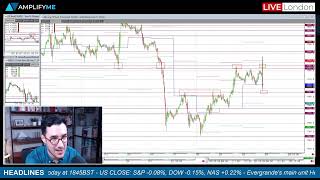
Live breakdown of the Fed's September 2021 FOMC meeting showing Powell signaled rate hikes starting in 2023 and 2024, a shift from June that initially spooked markets. The host walks through the dot plot, Powell's press conference, and real-time moves in stocks, bonds, crypto and currencies as traders digested the hawkish surprise.
Chapters
All right, testing, 1, 2. Just going to get everyone to get online before we get going. Hope everyone is doing well. Just setting up a few boxes on my side at the moment, but just going to welcome everyone to the live stream. So Nathan, uh, Nightwolf Crypto Talks, wow, what a pleasure to have, uh, someone who's evidently into crypto, joining us on the, um, the FOMC coverage. So great stuff, thank you. Yenny Mo, I hope you're doing well, Mo. Great to have you with us. Uh, who else have we got? Neil, thank you Neil for all your comments on the channel, um, on the briefings every day. Really appreciate the engagement. And this goes for everyone, feel free on the briefings every morning to leave me a message, stuff like that. I'll try my best to get back to everyone if I can. I normally have like a period in the day and I'll try and return messages. So yeah, feel free to leave, leave comments there. Um, Harry, good to have you online. All right, we'll give it another minute and then we'll, we'll get straight on to things and we'll discuss a little bit about what we're expecting from today. But yeah, thank you for giving up, um, an hour or so of the evening. The plan of action will be I'll do a rundown now, we'll listen into the live announcement from the team at News Squawk. They'll squawk the news straight away, we'll analyze everything that's happening. I'll try to provide, if I can, a bit of rationale behind why the markets are doing what they're doing, and I'll talk you through each chart. I'll bring it up, we'll look at it technically, and then we'll go in, we'll do a preview for the press conference or decipher what he says. Obviously we've got the projections, everything like that as well to get through. So hopefully a really good learning exercise, if anything, um, for today. So yeah, Davidson, Ross, Sean, Dipu, Onda, Frank, much love for you guys. I do see your names quite often on all things Amplify, so really appreciate that. Hans, hope you're well. Longtime member of the community, of course. All right, let's get to it. So obviously the main man Jay Powell is under a bit of pressure today because he really needs to almost disassociate himself, decouple this idea of tapering from rate hikes. That really is what the main event is that we're watching today, and it's a tricky one because Tapering in itself has been very well telegraphed, and so that is probably not the biggest surprise here. And in fact, actually, the thing that we're looking out for in this specific meeting, of course, is the latest summary of economic projections, the SEP. And the reason why that is important is because of the 8 Fed meetings that we have per year, 4 of them— March, June, Sept, Dec— we get the latest forecasts out the Fed. These include things like their outlook for unemployment, for for GDP, for PCE or inflation, and then also for the rate, the interest rate in the US. And of course, that's the update that we're concerned about. And this is those infamous dot plots that people talk about when these things come around. And movement on that dot plot could be very meaningful in the next 10 minutes or so when we get the latest announcement. So yeah, as some of you guys are saying in the chat, it's not so much about taper or to taper or not to taper. It's not so much that they are going to taper. Some of the recent data, obviously soft August jobs report that we've had, the criteria, if you like, about what would be substantial progress in their eyes are really contingent on two factors, one being inflation, which largely has been met already because even though the most recent print has softened a little bit and given the kind of transitory view a bit of an argument. It's still very high, but the labor market recovery has been perhaps a little slower than someone have thought, albeit it's heading kind of in the right direction. So yeah, the thing that we're looking for then is really a couple of points. For one, it's looking out for any changes in their wording that would constitute advanced notice, putting the market on advance notice. And that is the intention that tapering is going to come. Now, given the aforementioned soft data that we've had in August, it's highly unlikely that tapering is going to come now. I think that's very much off the table, and everyone's of that opinion. The question is that tapering is likely to come in November, December sort of time of this year. And if that is the case, of course, then, then we need some kind of more definitive hint now for then that to happen in time. No, I think don't get too bogged down in it though, because between now and then they obviously can have lots of speeches and things like that if necessary to guide the market appropriately when that course of action— and saying that leads me to believe that perhaps the language might be a bit light tonight. And if that is the case, with everyone as we have been in recent Fed meetings kind of having this hawkish tilt, if they go into this and they don't actually say a great deal and they leave it fairly open-ended without being explicit you could well see a relief rally. And particularly given the fragility we've seen in equity markets this week over this whole China Evergrande episode. And obviously that market's bounced already today, given some of the news that we had earlier on about this idea of them meeting some of their bond payments and, and the government's liquidity injection we saw from the PBOC. So the statement, they might well— what some analysts are looking for is a recycling of what Powell said. You remember a few weeks ago everyone was kind of penciling in Jackson Hole as a really meaningful event, and Jackson Hole served a good purpose for us because it gave us what the latest wording that he adopted. And at that point he said, I quote, he said on inflation, the taper test has been met and we have made clear progress on the employment side. So it's kind of that clear progress. How does that alter to suggest then that, you know, we're ready to go, or we're almost ready to go, so to speak. That kind of idea of advanced notice. While the Delta variant has caused some recent softness in the jobs market, which of course we have seen be clearly evident, the FOMC may choose to make relatively few changes to its statement, repeating the description that the economy continues to strengthen and that the surge of inflation is transitory. The idea about tapering, um, we're not gonna get too much into the nuts and bolts of that right now. Again, it's more about when does it start, but when does it start, I think really is kind of priced in at this point. I don't really think that that's the bigger deal here. The bigger deal for tapering specifically will come in the future when we start talking about, okay, when we know when it's gonna start, what is the composition of how that bond buying program is wound down. And so the proportion of tapering of mortgage-backed securities and of Treasuries, both in their respective sizes, and to what degree do they look to do that, and over what timeline? Is it 6 months or is it 12 months? The slower they do it, the more kind of dovish and cautious the approach. The more accelerated that timeline, the more quicker the normalization of tightening of policy in that first sequence of policy moves. So that's kind of tapering. The main thing that we're looking out for today really comes down to this. This is those infamous dot plots, as I said, and this is looking at the difference from March to June. If you go back to June, you'll remember there was a real shock in markets at the time, and we saw some big moves in, in markets— yield, dollar strength, equity weakness, gold come under pressure. And all of this came because there was quite a shock where not only did the Fed say now they're going to hike in 2023, where previously it was on hold. So just to make sense of these graphics, in March, remember, the median dot plot, the green line, was at the floor. So people weren't anticipating a change, and analysts were generally of the opinion, and banks on Wall Street, that they were going to bump that up to signal one rate hike in 2023, and they went for two. So if you remember last time, the main initial headline that rocked the market was the Fed are going to do 2 rate hikes in 2023 according to the dot plots. So it wasn't so much the language, it was the, it was the dots that created the initial move and then the subsequent comments came thereafter. And so for here, what we're looking out for now with the dot plots is any structural change to the trajectory of that green line. And again, for those who are totally new to this, the dots are representative of an anonymous vote from one of the 18 FOMC members. And where they see interest rates at the end of each subsequent year, including this year. This year doesn't matter. Rates are not going to change this year. That's guaranteed. Um, that could be— obviously it could, could be wrong, but we can just extrapolate that out of the, the kind of mix, if you like, because it doesn't really matter. The main point here is really 2022 and 2023, and the two risks are here is that Seven you can see here 5, 6, 7. So let me zoom it in. So if we're looking at June here, 7 of these people wanted a rate hike in 2022. So they're on the much more hawkish end of the spectrum. Um, the median though didn't see obviously a rate liftoff given the bulk of proportionate members still remained unchanged in 2022 until 2023. If there was a shift here and there was a rate hike now brought forward to 2022, I would expect in the initial reaction stocks to sell off, the dollar to spike higher, yields to spike, gold to move lower. Now, how likely is that? I'd say I don't think that's particularly likely, and so therefore all the more potent that move would be if that hawkish surprise did materialize. The other thing then is about what happens in 2023. So more than a third of economists surveyed by Bloomberg think the median for 2023 could increase from 2 hikes, um, an indication that the first hike could then occur in the first half of the year. So if the composition of these starts to bump up and more of these lower people start to move higher, bumping up to 3 hikes in 2023, that as well could see a hawkish type reaction as I described, but to a more moderate degree at least. Banks like Goldman Sachs are forecasting this as their base scenario. Um, we will also get a shift along to now inclusive of 2021 will drop out and we'll see 2024 come in on the latest dot plots. So everything shifts along. Now for 2024, um, the expectation are that there's going to be 3 additional hikes. So remember, this is going further out. So as we go through time, we go post-COVID, the economy starts to recover, and therefore interest rate trajectory starts to incline even further. So Again, something to be mindful of. What was the number for 2024, which will be new? Um, and that's pretty much it at the moment. And so as far as things like the Q&A, these sorts of things, we'll talk about that more. So just to refresh your memory, we'll get the statement, um, we're gonna get the dot plots, um, and all of those forecasts coming out. Again, just be mindful of what are the revisions to things like growth. Probably lower, inflation probably higher. We'll look at the dot plot matrix. So again, if you just jump onto the Federal Reserve website, click on monetary policy here, and this will update. And we're going to look at these things here, the projection materials. And as you'll see, there's a table. And what I'm going to be looking at within this table here is, first of all, the dot plots, any changes here. This will have the additional 24-column and then meaningful revisions to, um, the growth and the NPC numbers. All right, so we've got about 3 minutes now to go. So I'm doing this event solo at the moment, so if you are asking questions in the chat, I'll do my best to keep an eye on them. Um, but just be mindful that I might not be able to get back to you guys straight away. I can see Eddie, my partner in crime, Eddie Donmez. Is on the chat. So hey, Eddie, um, he's going to be manning the chat, so if there's any questions at all, he can pick them up while I'm doing everything live, um, on the screens as, as it's happening. He's more than happy to help. All right, we got 2 minutes. I'll turn the squawk on in a moment, and then we'll focus in on the event. Quick look at the charts then. At the moment, obviously everything's been fairly quiet for the time being, um, things have settled to a certain degree. Equities have bounced. The Nasdaq's up about 100 points, albeit it's off its best levels. Again, US indices buoyed today chiefly because the onshore property unit Hengdao Real Estate said overnight that they renegotiated a plan for bondholders to pay interest on a domestic note. This is China Evergrande we're talking about, and the PBOC injected just short of $19 billion into the system overnight, and that's seen as a a good short-term bandage, I guess, on the issue that had really been in focus at the beginning of the week. So now we're just— that's, that's been put aside. So if you're day trading this event, definitely Evergrande does not matter for the next 5 minutes. What does matter is what the Fed come out and say, statement language. Are we put on advance notice? How do they describe that? What does the projections look like? What is the number of rate hikes? Does it move forward to 2022? Very hawkish. Look for that type of reaction— stock sell-off, T-notes under pressure as yields go bid. Um, if they go to 2023, does that move from 2 to 3 rate hikes? And then 3 rate hikes expected in 2024. All right, I'm going to put the squawk on now. Okay, 30 seconds. I'll leave my charts visible. I'll let them cover the release, and then I'll come on afterwards and start explaining what's going on.
10 seconds.
And first hike seen in 2022. Median in the summary of economic projections sees first hike in 2022 if progress continues towards inflation and employment goals. It judges moderation in the pace of asset purchases may soon be warranted. So, advance notice given. Median looks for a hike in 2022. Unanimous decision today. Indicators of economic activity and employment have continued to strengthen. Sectors most adversely affected have improved in recent months. Rise in COVID cases has slowed their trajectory. However, we'll maintain Fed funds rate until it's achieved its labor market goals and inflation has risen to 2% on track to moderately exceed that for some time. Inflation is elevated, largely reflecting transitory factors. The Fed continues to frame inflation as transitory. Part of the economy continues to depend on the course of the virus. It repeats, progress on vaccinations likely continue to reduce the effects of the health crisis. Fed also raises counterparty limit for overnight reverse repo.
Okay, just coming off there, just to cover off some of the first comments. So yeah, unchanged on all of the policy in itself, but that's very much expected. The median sees a hike in 2022, so that's that hawkish surprise, the initial knee-jerk blip that you saw there in EURUSD and cable lower, stocks lower, but they've already popped and reversed that. So I'm just waiting for the Fed website to update so I can look at the actual report in its full entirety. But what I can do here is I can bring up here— these guys on News Squawk have just dropped a comparison which is super useful, and we can have a look at that. So here we go. This is the actual difference in language that they've used, so what they've dropped off and what they've brought in. So they said sectors adversely affected by the pandemic have shown improvement but have not fully in recent months. And they talk about COVID The committee will— if progress broadly expected, committee judges a moderation to assess progress in coming meetings, the pace of asset purchase may soon be warranted. So they'll continue to assess progress in the coming meetings if the pace of asset purchase will soon be warranted. So there's a couple of things there to have a look at, and let's see if the Fed It's just loading up now, the PDF on the Fed website. We can look at the dot plots. So initial hawkish reaction, so you saw stocks blip lower, FX markets did the same. So euro-dollar and cable blipped, but the reaction now is the fact that, um, from the tapering side of things and the language on that statement, it's not a great deal of change on the initial first glance, but I'm just trying to cast my eye on some other comments at the moment. So if you Fed bond taper may soon be warranted. They maintain 80 billion and 40 billion MBS per month. So that was very much as expected. So they're not going to do any change of that as yet. They said inflation elevated on transitory factors. So they do keep that. That's a little bit more less hawkish than perhaps some might have anticipated. So here's the actual table of event or the actual table. So here you can see the dot plots change. So we've got the addition of 2024 now. So you can see, so, uh, 1, 2, 3, 4. So what have we got there? 6, 7, 8, 9. And that, that turns the table then now where the median has seen an uptick to 2022. And you can see then the more progressive nature of the rate hikes thereafter going forward. So just going to turn the squawk back on while I read through some of the other content. So just to be clear, the Fed median dot plot sees 1 hike in 2022, previously 0, 3 hikes in 2023, previously 2, 7 hikes in 2024, a long run of 9. Yeah, 7 hikes, that's, that's pretty hawkish, but the markets at the moment reacting in actually a bit more of a relief type fashion, if anything. The Fed forecast shows officials were evenly split on the 2022 rate increase. So yeah, at the moment the dollar now is coming under some weakness. So as you can see here, weakness in the dollar and equity markets would be indicative of actually a much more dovish type reaction after that initial knee-jerk surprise. I'm still looking through things at the moment. I can't see anything that's quite clearly evident here at the moment that would suggest the rationale behind that, so I'll continue looking. But the NASDAQ here just coming back up in close proximity to the earlier high that we printed, um, just after the European exit of the cash markets this afternoon. Yeah, EURUSD and cable both catching a decent bid now on the back of the dollar weakness. So a couple of areas here in EURUSD to keep an eye on as we break out of some of the near-term range. So you can see here you've got those previous lows on this area, low on the test and the breakdown, and that previous high that we saw from yesterday's session. So just finding a bit of resistance there in the euro here on this most recent bid. As far as gold is concerned, that dollar weakness just helping assist the yellow metal. That's also being probably aided a little bit with the momentum through the breakout through the previous day's high, which was also a band of lower range area that was holding price. You can see here back on the 8th in this area here, here, and then yesterday's trading session. So gold having a bit of an extended bid on the back of that, on the run-up then to R1, just a bit more acceleration through the technical break of that level that had been an inflection point for price over the past 2 weeks. Yeah, I mean, this, this is one of the things, um, so like Ali is saying in the chat that I think is, is right. Whenever there's a hawkish change in the dots, for example, they try to tame that with some dovish commentary to kind of shoo in the actual more hawkish policy change. And so definitely when Powell comes out, it'd be interesting to see when he starts his press conference in 25 minutes how he tries to address that. Um, overall, so it's kind of like, in a sense, the taper, it's not happening now, um, but the rate hikes will be a little bit more aggressive in the future. So if there's two kind of sides to that normalization, um, sequence, the latter point, which is not in the near term, which is further down the line, is going to happen in a slightly more aggressive fashion But in the near term, there's not an immediacy to just get tapering immediately underway at this point in time. So yeah, you're just seeing a bit of moderation in that bid tone now for equities. So the balance there, as I described, is a little bit offsetting of one another. So a lack of more immediacy on tapering, which is slightly more dovish, counteracted by slightly more hawkish plots overall. Just having a look as well on the— back to the Matrix here for GDP. So for this year, they downgraded it to 5.9% from 7% they saw in June, but then they do see a decent reverse course picking up more pace to 3.8% from 3.3%. That's the rationale then behind probably why there's more members now looking for that increase in rates. in 2022 that's tipped it to 1 expected next year. Unemployment, it's expected to be a little bit higher, so perhaps not quite as good, but we're kind of expecting that. The payrolls data has been relatively poor, the August one following that trend, and so the decrease in unemployment rates has been a little bit slower than perhaps anticipated. Otherwise, other years remained unchanged. And for inflation, they revised that up to 4.2% for this year from 3.4%, but then kind of moderating, which would suggest transitory conditions on inflation. Then the fact that they just maybe underestimated the stickiness of the situation more short term, but overall beyond going into 2022 and beyond, those transitory pressures start to fade. Just having a look elsewhere. The US 10-year is pretty choppy, but not really. I was just having a look at the T-note. The T-note is quite telling, I always find, because whilst things like the dollar and gold can flip about as to inequities, the 10-year is always— it seems a little bit more rational in its movement. And you can see here the 10-year is exactly where it was trading before this statement came out. So that's telling you that actually, from a correlation point of view, I don't actually feel at this point in time at least, and there's still a bit of time to run to digest what's happened and for Powell to speak in the Q&A, but just trying to pile in and get long equities here thinking we're just going to go bid now for the rest of the session. I would rather see T-notes come up and at least make a bit of an attempt to break out of this range that we've been trading in for this week, which is that kind of area of that double top that's really top— been a marker for the last 2 days trading sessions. We've also got the R1 on the daily pivots there as well around this 133.11. Do you want to see that more kind of equity relief, more kind of traditional dovish reaction to this announcement? I'd want to see yields to continue to decrease, so the 10-year bid to just give you a bit more conviction of that equity move being able to sustain and be able to break out some of these key levels. Because as you can see here, as far as the Dow is concerned, there's a bit of lack of appetite so far on this initial reaction to bust through some of the previous highs that we've seen. This was the afternoon high. You can see we flashed up and then we've just failed to breach it so far. And similar kind of reaction effect that we've seen in the NASDAQ and the S&P at the moment. In terms of the S&P, Again, just bring it up. You got the afternoon high, that's where we momentarily spiked up higher, and it's failed to push beyond that at the moment. So really, I think I wouldn't feel too confident about that breaching yet, now that probably the market's got 18 minutes or so to wait for Powell. Probably wait for Powell, let's see what he's got to say, uh, and then I'd want to see gold start to move higher, T-notes start to move higher. If that materializes then I think a bit more confidence for that, that equity break, and we start to push on up. You'd also really want to see the dollar come under some more pressure to really validate that move where there's a coordinated kind of read on what's happening in that, in that sense. Um, Gordon, I did, I did see an email from you, Gordon. I've just been super busy. I apologize. Um, but yeah, absolutely. Next time you're in London, give me a shout and me and Sam will have to take you out. Your tails are always more than welcome, Gordon.
The market is tilting in the dovish direction over here, so we are seeing upside in equities finally, and we're seeing a bit of upside in bonds. Also worth noting that the dollar seems to be under pressure now as well, with euro-dollar and gold finding fresh sessions support, the fresh highs for the session. Also seeing EMFX edge out the dollar in recent trade as well. So just to go through our long and short in terms of the Fed and just framing it in a nice neat way, more or less as we're expecting over here. We've got the advance notice, we've got a steeper rate trajectory, inflation still seems transitory.
Bulls off the—
we're only now starting to see a bit of an extension to the upside here.
Okay, we've got 15 minutes or so till the press conference. I'm just keeping an eye on equities. As I am doing that, we have— if you're a student, university students, college student, and you're thinking about a career in finance but you don't know what to do— sales, trading, quant trading, market making, broking And then absolutely feel free to check out AmplifyMe.com. This is the new focus of Amplify. You might have recognized our name change from— we're still Amplify Trading, but we're focusing very much so on our proprietary technology that we use to train a lot of the graduates of the world's biggest banks and business schools around the world. So we've basically reconstructed this to allow for absolutely free training, but it is for students, bearing in mind, or recent graduates. If you are a trader though, if you go on the website and scroll to the bottom, you'll see as well I'm actually putting out a daily newsletter now. And so the aim of that is I basically deconstruct a major news story or something happening in the markets into a bite-sized 3-minute read just to try and make The objective being that you learn something, it's interesting, and it's written in a non-jargon way where you can just learn about markets bit by bit. So feel free to subscribe to that newsletter, would love to have you in that community. And of course then you'll get access to, to other things as well if you check this out. Other things, if you are not already doing so, We have a podcast, so part of that Market Maker kind of series that we do in our community, which is a daily newsletter, a weekend newsletter where amalgamate the best content out there. We also have a podcast, either myself, Eddie, who's online, or the head of TradingPeers. We'll have a conversation, we'll talk about some of the things that have happened that week. But if you haven't checked this out, please do. Would love it if you could take a listen. Again, it's aimed at not trying to make things overly complicated but interesting, engaging, and useful both for an investor, a trader, and a student if you're looking to get into finance. So yeah, check it out, add it on your, your listening list. Podcasts for me, definitely, I listen to loads of them. I think they're super useful for consuming kind of market knowledge and stuff like that. If you are listening to the podcast and you have done for a while and you haven't yet left us a review and rating, do it. I'd love it because it just helps get the podcast out to more people, and that would be amazing. So I'd be very much appreciative if you could do that. Otherwise, look, let's get back to the action and let's have a look what's going on. So yeah, equity is starting to have a bit of a push on the upside. The 10-year down at the bottom here though, still a little bit reticent to kick on. It's just had a brief flurry up to the top end of that range. NASDAQ's looking a little bit more bullish here, just had another look above that level. If we start to break out higher now on the NASDAQ here, areas that I'd be looking at are up— you've got the R2, but 15,265.5, this kind of area here really, which brings in the lows that you can see here and the high of that kind of consolidation after the push lower This is some of the move that we saw, um, at the tail end of last week. So this would have been Friday's move, then continuation on the Monday. So this is kind of the Evergrande sell-off, if you like, inspired. And so as we come up here in the NASDAQ, that area there— so here I'd be keeping an eye on— and then consolidation above there on the top end of that range from Friday would be here as key levels if we continue to push higher. Kind of likewise in the other indices. So now, now that the Dow is sat there at that level, quite keen to just keep an eye out. The NASDAQ is still having a bit of a tussle at that resistance, and so the Dow is holding for the moment. Now what's quite key here from a correlation point of view, if you look in the currency markets, euro and the cable are coming off, so the dollar is not continuing to sell off. So that gives me at the moment a little less conviction that these equities are just going to run away at this point in time. T-notes and the dollar are not playing the same game here of equities, which are— equities are reacting in a more relief-type fashion that something even more hawkish wasn't seen. So yeah, I still feel a bit of a lack of conviction yet. I feel for equities to break out to the upside given those other asset class movements at this point in time. Yeah, I think I'm just having a look at what some other analysts are saying at the moment, and I agree in terms of the rationale behind a lot of these moves. The bottom line being this is not too dissimilar from what markets were looking for. We're obviously getting closer and closer to tapering. So we've been put on advance notice. The rate hikes have come a little bit earlier and a little bit more aggressive. But again, that's not massively surprising, I'd say. And then the inflation increase for 2021 on the dot plots on the PCE forecast is quite, quite sharp. But importantly, in 2023 and beyond, it reverts back to type. So what the Fed is saying is the transitory is still transitory, it's just a little bit more pronounced in the front end. So, yeah, I'm looking out for the press conference to begin in about 10 minutes. The main point here is about Powell looking to distinguish the decouple or decoupling of tapering and rates. They are not two of the same thing. What he wouldn't obviously want to do or send the signal of is that just because we start tapering and we're doing this, it means that for rates they're two separate things. So he's going to be quite conscious of being— doing— of doing that. Yeah. So as you can see here, Now T-notes again backing off a little bit. So you're starting to see the Dow and the S&P, NASDAQ just come off, losing a bit of that momentum. So you see there how the other asset classes just weren't buying into that move to give you further reassurance that it's a definitive kind of reaction, um, or more aggressive that markets were trying to do. So Again, this is where it could be quite key, obviously depending on your platform and access, to have multiple charts up like, like I've got at the moment, so that you can determine your timing if you're executing very short-term intraday markets to maximize those kind of opportunities in that sense. Yeah, let's have a look at Bitcoin. Um, Simon's mentioning Bitcoin, and obviously something that I'm not kind of throwing into my immediate analysis here, but Yeah, Bitcoin's getting a bit of a boost. Let's have a look. We've just broken out here. This is looking on a 30-minute candlestick. So if you look at some of the price action materializing over the course of the last day, um, again, a bit of a breakout. And you can see the market rejected this afternoon pretty much in tandem with the stock move, actually, um, fleshing out its peak that came with the high that we saw midday yesterday. So as we start to break out high in, in Bitcoin here, I'd probably be looking at these levels, uh, and then just scaling it back up. Is it— is generally it's a very technical product, so I'd be definitely looking at round figures as well into the mix with that. So probably these areas here I'd keep an eye on. So pretty much there at the moment, which is this area here of the peak from Before then, the, the fall came on the overnight, uh, last Thursday into Friday session. And then you've got this kind of area here as next target. Not saying we're going to get up there right now, but yeah, definitely I think the move here more pronounced by the fact of the technical break above that area of short-term resistance in Bitcoin. Okay, what the plan of action will be is we'll listen in to Powell, we'll listen into the first 2 or 3 questions of the Q&A. I'm not going to stay on for the entire Q&A. I had to pick my daughter up from nursery and they think she's got COVID, so I need— she's not feeling very well. I have to take her for a PCR test tomorrow, so it's going to be a long night for me. I'm going to have to probably not get any sleep. So yeah, we'll tackle the beginning of the press conference, uh, we'll do the first one or two questions as well in the Q&A, and then, uh, we'll look to wrap it up. So any questions in the meantime, just give me a shout in the chat. Yeah, WTI, let's have a look at WTI. Someone's asking, we can do that. Here's WTI crude futures. Yeah, would you trade crude oil On the back of an FOMC, much lower probability that I think that it would be a trigger to really initiate a definitive trade from a news impact point of view on the back of an FOMC release. It's very indirect. It's more to do with the idea that, um, you know, a more positive narrative of the economy tends to read across then more impactful for the demand side of the equation for oil. Perhaps dollar— extreme dollar weakness might promote a bid like you'd see in commodities like gold and silver have seen on the back of the dollar weakness on the event. But crude here, very tame move. Definitely not a product that I typically advise looking at if you were looking at trading around an FOMC. Um, you got that high here on the 17th. You can see the markets respected that here. This afternoon. Upside level resistance I'd keep an eye on. Other than that, I'd say other areas of interest on the upside, if it was to remain bid throughout the rest of the session, I'd probably look up at these areas here, which would be 7247 front month futures, that area of resistance seen back on Thursday, and then really the upper bound of the price activity of the last couple of weeks here, up at around 7286. Uh, but yeah, not really that interesting, to be honest. Yeah, equities have put, you know, pulled back with 5 minutes now to go to Powell. So you can see again the reason why we haven't had a breakout in stocks, as I've mentioned a few times. But now the likelihood of stocks busting out to the upside in the next 5 minutes is very small. It's very small because of the fact that now we're so close to Powell speaking, everyone's gonna— who, who might have been trying to trade a breakout strategy on the push out on the NASDAQ break and trying to get along the Dow on that retest to that high, those people have bailed on that trade by now. So now sit on your hands, let's wait for Powell. Someone's asking, Amir, if you have a simulation day coming up, how can you prepare? Is it a walkthrough as well as an experience, or it's just an independent simulation? Nope. So there is some preparatory on-demand material that you can go through, Amir, on the platform. So do check it out. Otherwise, then, that on the live event, there'll be one or two members of the Amplify team that will be online talking you through, getting you used to the platform, guiding you through the full simulation. So don't sweat it. Just get involved on the Student Hub portal and consume some of that content there as well. But you'll be given instructions from the team the nearer the event comes. All right. Where, where are people from? It's always nice to know why I'm sat here in my office, which feels a little bit isolated compared to many years gone by sat on a trading floor. It's good to know where people are, people are from. Who have we got on the call? Yeah, Amir, if you're having any issues, just feel free to shoot an email to community@amplifyme.com. What have we got? Andorra, London, Florida, Turkey, Liverpool. Yeah, can't complain with that. Israel, Singapore, Sri Lanka. Italy, Scotland, Tunisia, Brighton. Yeah, not too far from my hometown. So Lady Jennifer, got a lot of love for you. Uh, who we got? India, Sri Lanka, Cambodia. Yep, Simon, of course, long-term person in the community, so thank you for tuning in. Stockholm, Hong Kong. Yeah, it's just incredible. It always blows my mind on YouTube the people that listen, uh, it's phenomenal. So again, huge thank you to everyone who, who follows Amplify, who follows the YouTube channel. That being said, you might have seen, um, Eddie and I have been trying to put out some extra content on YouTube, and our intention is to do more of that in future. And so actually tomorrow is the Bank of England interest rate decision, and I'm going to cover the Bank of England live as well. So that's at 12 o'clock tomorrow, Thursday the 23rd of September. I'll come on at 11:45, we'll cover that, and I'll be on till 12:15 tomorrow. So don't forget, if you're not already, hit the subscribe button on the YouTube channel, hit the bell icon. I mean, I'm logged in so you can't see it here, but it's located here, and then you'll get notified with any new content we put out. We put out a daily briefing, so I do that myself. So early in the morning I'll issue one. If you want to see some of my morning notes, then definitely you can do so. My Twitter account, a lot of people would follow me for the main purpose of just getting a hold of a short note that I put out every morning, which looks something like this, where we have first thing in your day as a routine if you're a trader and you're looking to just get set up for the day, if you're a student looking to stay on the pulse of markets, this is a 3-minute read that hopefully does that job. It aggregates the very best of what you need to know from all the different sources— the FT, the Journal, MarketWatch, CNBC, the list goes on. So feel free to check that out, and I tweet it all, so feel free to follow me on Twitter if you're not already doing so. Yeah, absolutely more than happy to help. All right, I think he's about to begin shortly, so let's go back on the Federal Reserve website and let's get this going.
Just notice, presser now underway. Ansar's been strongly committed to achieving its goals.
These measures, along with our strong guidance upon interest rates and on our balance sheet, will ensure that monetary policy will continue to support economic recovery. Progress on vaccinations and unprecedented fiscal policy actions are also providing strong support.
Okay, I'm just going to put the volume on for Powell so you guys can hear, so give me one second.
4% pace in the first half of the year, and growth is widely expected to continue at a strong pace in the second half. The sectors most adversely affected by the pandemic have improved in recent months, but the rise in COVID-19 cases has slowed their recovery. Household spending rose at an especially rapid pace over the first half of the year. Flattened out in July and August as spending softened in COVID-sensitive sectors such as travel and restaurants. Additionally, in some industries, near-term supply constraints are restraining activity. These constraints are particularly acute in the motor vehicle industry, where the worldwide shortage of semiconductors has sharply curtailed production. Partly reflecting the effects of the virus and supply constraints, Forecasts from FOMC participants for economic growth this year have been revised somewhat lower since our June Summary of Economic Projections, but participants still foresee rapid growth. As with overall economic activity, conditions in the labor market have continued to improve. Demand for labor is very strong, and job gains averaged 750,000 per month over the past 3 months. In August, however, job gains slowed markedly, with the slowdown concentrated in sectors most sensitive to the pandemic, including leisure and hospitality. The unemployment rate was 5.2% in August, and this figure understates the shortfall in employment, particularly as participation in the labor market has not moved up from the low rates that have prevailed for most of the past year. Factors related to the pandemic, such as caregiving needs and ongoing fears of the virus, appear to be weighing on employment growth. These factors should diminish with progress on containing the virus, leading to more rapid gains in employment. Looking ahead, FOMC participants project the labor market to continue to improve, with the median projection for the unemployment rate standing at 4.8% at the end of this year and 3.5% in 2023 and '24. The economic downturn has not fallen equally on all Americans, and those least able to shoulder the burden have been hardest hit. In particular, despite progress—
yeah, so at the moment what's being said is really very little that's new. So you're not seeing any too much in the way of any subsequent move as yet. He'll continue delivering this for a little bit longer, you know. But Powell's pretty well versed in this now, so he's unlikely to make any mistakes here. So it's really the Q&A, which will start in the next few minutes, which is going to be quite key. And emphasis on the first couple of questions normally carries the greatest magnitude for potential market movement. So yeah, just keeping an eye on things at the moment. Um, the dollar just coming under a bit of renewed weakness, testing around its initial pop low we saw on the first statement. So just keeping an eye on EURUSD as well, back at those highs again, but nothing really too spectacular being said by Powell at the moment. So we'll continue to listen in.
4.2% this year to 2.2% next year. The process of reopening the economy is unprecedented, as was the shutdown at the onset of the pandemic. As the reopening continues Bottlenecks, hiring difficulties, and other constraints could again prove to be greater and longer lasting than anticipated, posing upside risks to inflation. Our framework for monetary policy emphasizes the importance of having well-anchored inflation expectations, both to foster price stability and to enhance our ability to promote our broad-based and inclusive maximum employment goal. Indicators of longer-term inflation expectations appear broadly consistent with our longer-run inflation goal of 2%. If sustained higher inflation were to become a serious concern, we would certainly respond and use our tools to assure that inflation runs at levels that are consistent with our goal. The path of the economy continues to depend on the course of the virus, and risks to the economic outlook remain. The Delta variant has led to significant increases in in COVID-19 cases, resulting in significant hardship and loss and slowing the economic recovery. Continued progress on vaccinations would help contain the virus and support a return to more normal economic conditions. Fed's policy actions have been guided by our mandate to promote maximum employment and stable prices for the American people, along with our responsibilities to promote the stability of the financial system. —our asset purchases have been a critical tool. They helped preserve financial stability and market functioning early in the pandemic and since then have helped foster accommodative financial conditions to support the economy. At our meeting that concluded earlier today, the Committee continued to discuss the progress made toward our goals since the Committee adopted its asset purchase guidance last December. Since then, The economy has made progress toward these goals. If progress continues broadly as expected, the Committee judges that a moderation in the pace of asset purchases may soon be warranted. We also discussed the appropriate pace of tapering asset purchases once economic conditions satisfy the criteria laid out in the Committee's guidance. While no decisions were made, participants generally view that, so long as the recovery remains on track, Yeah, MFX, I can't see your comments.
Don't worry, I think it's the nursery being— taking precautions. She seems relatively okay and her temperature's come down and she's with her mother. So very much appreciate your concern, MFX, but she's, she's all good for the moment. So I'll get to her straight away. Once we're done. So I want to listen in the first 2 questions and then we'll wrap it up. But at the moment, look, Powell's not really added a great deal too much here, and thus the initial moves is starting to see a little bit of fatigue and actually a bit of reversal now. So Powell's just said gradual tapering to conclude around mid-2022, and that's just seeing a bit of movement here.
Economic conditions will be fulfilled by the end of next year. As a result, the median projection for the appropriate level of the federal funds rate lies slightly above the effective lower bound.
So yeah, we're just, just having a, a look. Powell said Fed taper process offers no new signal for rate hike outlook. Fed discussed the appropriate pace of tapering once conditions for doing so are satisfied if economy remains on track. That tapering of asset purchases could conclude around the middle of next year. And that's a little bit more on the hawkish side. So now, now you're starting to see that little bit of a turnaround where the dollar's gone bid, equities under a bit of pressure, and gold just reversed a little bit. So they've been a little bit more explicit about the timings in, in how long it will be, the taper timeline. Remember, the expectations were for 6 to 12 months, but obviously wrapping up by the middle of next year would be a little bit more sooner than the most hawkish expectation. Okay, we're just going into the Q&A now. So this lady is just asking about what are the conditions around substantial progress.
What substantial progress looks like. That would be great. Sure. So, so the test for beginning our taper is that we've achieved substantial further progress toward our goals of inflation and maximum maximum employment. And for inflation, we appear to have achieved more than significant progress— substantial further progress. So that, that part of the test is achieved, in my view and in the view of many others. So the question is really on the maximum employment test. So if you look at a good number of indicators, you will see that since last December, when we articulated the test and the readings today, in many cases more than half of the distance, for example, between the unemployment rate, unemployment rate in December of 2020 and typical estimates of the natural rate, 50 or 60%.
Okay, rather than listening to him live, I'm just going to relay to you guys what's going on because obviously he's just come out, he's talked about the appropriate pace of tapering, he's been a bit more explicit. He said if the economy remains on track, that tapering could conclude in the middle of 2022. And that in itself would be a little bit more on the hawkish end of the spectrum. So we've got yields going bid, the dollar's going bid, currencies are coming under pressure. He also said substantial progress on inflation has been achieved. Many on the FOMC say that substantial progress test on jobs has been met as well. So we've seen a complete U-turn now in the dollar for these reasons, and the EUR/USD pair has just flipped on itself and is now retesting around the lower bound of the initial volatility that was seen on the breaking news on the first statement. Equities as well, the peak has been seen already, so equities are turning around on some of this latest movement. So this is a complete reversal of the initial moves that we've had given the reasoning of some of the more hawkish factors that materializing early in the presser. Gold likewise under pressure with the dollar bid, so all of the gains have been taken back. And in fact, now if I was looking at lower levels, I'd keep an eye down here at the Friday and Monday high. So that would come in the futures market in gold at 1767.68 as an area on downside to keep an eye on. Any breakdown of that could well trade a little bit more heavy to a much more deeper move down to the S1 or beyond. Um, Powell said the language in the statement is meant to flag bar for taper could be met as soon as the next meeting, but that's not too dissimilar from expectations.
that suggests that inflation is going to be higher this year than Santa was thinking. I guess the issue of inflation rates for next year and 2023 were also marked up, but just by a couple of tenths. Those are very modest overshoots. You're looking at 2.2 and 2.1 overshoots. You know, 2 years and 3 years out, these are very, very tailors and tailors and tailors.
Just thinking now, as the Q&A is going on, I just saw Jennifer's comments and I kind of agree. If I was looking at this equity move right now and the volatility in FX and gold, it's a pretty pretty tame move so far. All in all, I mean, taper is going to come. He's basically saying the threshold for members has been met as soon as perhaps next meeting. It's what we thought. He's saying that it's going to get wrapped up by the middle of next year. Well, the range of expectations was 6 months to 12 months, so it's bang in the middle of that. They're going to hike rates further in the future. That's pretty much expected as well. Inflation is still transitory, albeit a little bit more higher in the short term. It's to be expected. Yeah, be interested to see when we come in tomorrow whether or not we just kind of carry on on our merry old way. And actually, this has been fairly well managed by Powell and the Fed team. Okay, the Q&A is still in progress at the moment, so he's just taking questions from the Financial Times at the moment. We'll listen in on one more and then we'll wrap up. And obviously I'll leave you guys to it. The session is going to go on with Powell a little bit longer. Yeah, Alec, I hear what you're saying. You're definitely expecting more volatility. I mean, one of the things is that I do feel like the market has become so, so taper-obsessed that the Fed have been talking about this for a very long time. And so the commencement of tapering, I think, is pretty much baked in. I don't think it's that unexpected nowadays. So the first things that people are looking out for are the timing and the range, and we've kind of had a hint at that now. And then it's going to be about the composition in terms of how they configure the reduction of their bond buying. That's going to be the next talking point going forward. But yeah, Powell's good at this, and so, you know, he's an expert, he's a pro. And he's just doing his job here, and he's doing it quite well. So at the moment though, the market is definitely— yeah, any of that bid that was seen earlier on, I think, is, is gone now. So you can see T-notes here are just coming under a bit of pressure, equities more pressure, and then gold session lows as the dollar index hits fresh highs. So Powell said in the Q&A, there's very broad support on the committee for timing and pace of taper, some who would have preferred to go sooner due to financial stability concerns. Yeah, with gold, I know there's a few guys looking at that. You can see here that last little push down that we had, so that Again, as we just marked up a few minutes ago, the market responding quite nicely there on that level, um, on that initial downtick. So that level of inflection of the last 5 trading sessions has been quite key. The market came down, got close to it, and it's just had a bit of a bounce since testing. Alexandros, thank you for joining us. I'm going to look to wrap it up now. So a couple of final departing points just to make. For one, don't forget to check out AmplifyMe.com specifically as well if you're a student. Would love to have you in the community. If you sign up for a free account, you get access to our student portal. Absolutely go for it. That content is there for you. If you are a trader, investor, things like that, feel free if you want to, to be part of our newsletter community. I put a newsletter out every day talking all things markets and, and everything else. So that's at the bottom of that web page. Otherwise, a few other points just to finish. Feel free to, to add me on Twitter, um, you know, message me openly if there's stuff you want to know about, want to hear about. Absolutely happy to either jump on a YouTube video with Eddie or one of my team and, and comment and put out a video about it, I'm absolutely happy to do so. The plan of action is that Eddie and I are going to be way more active in putting out new fresh content going forward, so I'm kind of pivoting my role to be doing a little bit more content focused. So yeah, otherwise, yeah, the podcast Do check it out. Um, I've had some good feedback on it, so I'd love to have you check that out as well. All right guys, gonna wrap it up there. Thank you for joining us. Um, again, Bank of England— I'm going to be covering the Bank of England live tomorrow, so if you want to cover the Bank of England with me, then feel free to join. Absolutely love to take questions while we do it. Lady Jennifer, how does one qualify as a student? Well, by doing the simulations, we are able to see by your performance certain data metrics about your behavior while you go through these simulations. And that allows us then, if, if you want to, to use that data depending on how you perform with our corporate clients So we work with the likes of Morgan Stanley, Citigroup, Credit Suisse, Bank of America. We also work with hedge funds like Citadel, for example, and they use the data from these performances as a way of recruiting talent. So predominantly it's for students. What I mean by students is university students, recent graduates, but obviously everyone is there. It's free. You can take part if you like. The simulation there is absolutely free. The portal is free. The newsletter. So it's just there to help. All right, guys, gonna wrap it. Thank you very much for joining me. Have a fantastic evening. I'll see you for the briefing. So don't forget to subscribe to the YouTube channel. I'll put that out tomorrow morning and I'll encapsulate, wrap up everything that's happened tonight once you've had a night to sleep on it.
More from Anthony


Inside the Biggest Banking Stories You Need to Know This Week (Anthropic, Diageo, Private Credit)


Inside the Biggest M&A Deals You Need to Know This Week (UniCredit, GameStop, eBay, Eli Lilly)







AI Breakthrough or Hype? Anthropic’s Claude Mythos, Tim Cook Steps Down & LIV Golf Collapse