**FOMC LIVE** 3rd November 2021
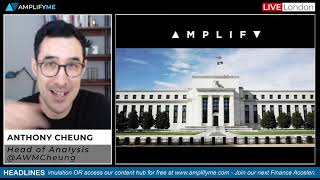
In this 90‑minute YouTube live stream, market commentator Anthony Cheung walks viewers through the Federal Reserve’s November 2021 FOMC meeting, which announced the start of tapering asset purchases ($10 bn of Treasuries and $5 bn of MBS per month). He begins with a pre‑announcement briefing, explaining the macro backdrop—persistent inflation that has proved less transitory than expected, modest but ongoing labor‑market recovery, and the Fed’s large balance sheet built during the pandemic. Cheung highlights key metrics such as the Dallas Fed Trimmed‑Mean PCE index, unemployment trends, and the Fed’s “substantial further progress” language. He then streams the official Fed statement and Jerome Powell’s press conference, noting that the Fed kept its policy rate unchanged, reiterated the taper schedule, and emphasized that the taper does not signal an imminent rate hike. Powell’s answers to journalists focus on the uncertainty of inflation’s path, the possibility of reaching maximum employment by mid‑2022, and the Fed’s willingness to act if needed. Cheung provides real‑time market reaction analysis—U.S. equities (Nasdaq, S&P 500) breaking to record highs, the dollar weakening, Treasury yields showing modest moves, and Bitcoin briefly falling. Throughout, he engages with the YouTube chat, answers audience questions, and repeatedly promotes his educational platform AmplifyMe, including free finance simulations, a content hub with podcasts, macro briefings, and career resources for students and early‑career professionals. The stream concludes with a recap of the market’s tame response, a reminder of upcoming live events (Bank of England, non‑farm payrolls), and calls to subscribe, follow on Twitter/LinkedIn, and support his podcast.
Chapters
Testing, testing, one, two. Just getting the live feed up and running and getting all my screens set up, so just bear with me, but we won't kick off for another 30 seconds or so. Just while we get everyone online. I hope everyone is doing well. Type a Y in the YouTube chat if you can hear me, see me okay, and so on. Okay, great to have you with us. Yeah, type a Y in the chat, let me know where you're from, where you're tuning in from. I'm just getting a few screens set up and then we'll kick off in less than a minute. But good to have everyone on board. Great, great to be back live again.
Okay, cool.
Let me see who we've got. Bunyad, good to see you. Uh, Glenn, Nikhil, Mark, Curtis, Imran, Birmingham, Liverpool, Belgium. Shout out for Laura tuning in from Calgary, that's awesome. Okay, Melbourne, Montreal, Vienna, Istanbul. Watford. Much love for Watford, Chris. That's where my mum was— grew up. All right, cool. Well, look, I'm sure people are going to be tuning in as we go, but yeah, thanks very much for joining me. If you've never been on the channel before, obviously I publish— you might have seen a daily market kind of macro update every morning, goes up on the channel first thing, just taking a look at the overall news that's come out for that day, look at the major events for day ahead, so check that out. Otherwise, I'm going to cover this event. I'm going to do the Bank of England live tomorrow. I'm going to do non-farm payrolls live on Friday. So if you're not subscribed to the channel, please hit the subscribe button. If you hit the bell icon, you'll be notified when we go live for all of these events. But look, let's get straight into it because there is plenty to talk about, and I want to leave appropriate time for us to tune into the squawk when all the news hits the tape. Okay, so straight to it. Let's have a look at a couple of things then. So first off, I know this is fairly small to see in terms of the actual text, and just before I begin, the chat, the YouTube chat I'm trying to monitor is on here, and I'm going to give the slides here. So if you have any questions, just hang five. I'll get through, I'll whip through these slides quickly in about the next 6-7 minutes. And then I'll take some questions, then we'll listen into the actual statement release coming up in about 12 minutes' time. So yeah, in terms of what we're looking out for here, obviously this is one of the most meaningful events in recent history in respect to— it's a major milestone in the post-pandemic era for monetary policy at the US Central Bank. How important is this meeting going to be? Perhaps not as dramatic as you might think when you hear the word tapering. And the reason for that is, of course, that people have been expecting tapering for a long time. And this is part of the art of forward guidance, the ability to utilize communication from a central bank's point of view so that when the time comes to alter policy, the actual impact on markets is fairly tame. And that's what the objective is as a central bank. They want to manipulate policy to best support the economy. And as we'll discuss, things like inflation warrant then less amount of liquidity in the system, so a decline of the amount of bonds that they're buying to stimulate the system as the economy recovers and COVID starts to dissipate. And so hence we arrive at this point in time, and the Fed have been very clear without obviously definitively pre-committing that they're going to announce tapering today. So it's very much baked in, in that sense. On this chart, what we're looking at here is basically the Fed's balance sheet. And as you know, if you're an economic student, you'll know the Fed's balance sheet is insanely large. The firepower that came in on the back of the response to the pandemic was monumental in size, and it absolutely dwarfs the kind of three-phased QE that we saw on the back of the financial crisis. And the reason for that is, is the immediacy of the need to stimulate the economy, obviously, with a humanitarian crisis, the coronavirus being a systemic risk to human life, economic activity just switched off overnight, and hence the forceful response that we've had. So just having a look then, this is how we've arrived at tapering, but very important to disassociate then tapering to interest rate timing, and we'll discuss that more in a second. Now, why are they going to taper? Well, one of the biggest things here is inflation, and and this idea that inflation had been perceived as being transitory. And what that basically means in layman's terms is this idea that high cost of goods or services was a reflection of supply constraints, for example, due to the bottlenecks through the aftermath of the pandemic. And so once those things started to smooth out over time, these temporary inflation pressures would dissipate. And so by definition, then transitory being a temporary kind of phenomenon in that, in that way. However, recent weeks and months have proven that inflation is indeed slightly more sticky than perhaps central banks thought. And hence the reason why in yields globally, and we've seen with other central banks, which is highly tipped for the Bank of England tomorrow to potentially hike rates. We've had the Bank of Canada wrap up their QE program pretty prompt. We've had the RBA in Australia drop their yield curve control measures. And this is all because they need to react to now higher for longer inflation. And it comes in the context, as we'll see, of improvements in the labor market and so on, albeit at a fairly moderate level in the US. So what we're looking at here is something called the Dallas Fed Trimmed Mean Personal Consumption Expenditures Index. Now I know that's a, a big mouthful to swallow, but basically this is PCE, and it's— PCE is an inflation metric that the Fed are very focused on as the determining kind of factor, or one of the, the highest weighted variables for their policy decision making. And what this basically does then is the trimmed mean measures toss out goods and services seeing the highest and the lowest inflation numbers And so therefore it's one measure the Fed officials reference that has, as you can see here, continued to track higher. You can see it's never been higher at this point in time. And so that means it's indicating inflation is moving higher in a broad set of goods, not just those that are kind of idiosyncratic to the pandemic, and hence the reason why action needs to be taken. The other, you know, kind of dual-prong attack that the Fed have is not just inflation, it's jobs as the criteria then for we've kind of progressed far enough in the economic recovery to warrant some type of normalization. And looking at the jobs situation here, this is kind of going on the trajectory of what the labor market looked like in the US, and then this is obviously the non-farm payroll reading and the just dramatic decline that we had obviously in the aftermath of the pandemic. The The one thing that we have been seeing here was we had a fairly quick acceleration in jobs picking up in, in the US. However, the last two nonfarm payrolls have been a bit of a disappointment. They've undershot in the number of jobs that have been created in the US, and that's put the job recovery at a slightly slower speed than perhaps we thought before. Importantly, though, the direction of travel is in the right way. The labor market will in time start to get back to the pre-pandemic levels. It's just going to take an extra 2 years from here on out to achieve that. And obviously we'll look at non-farm on Friday. So the idea here and the phrasing that the Fed uses, something called substantial further progress, and again, this is their hints towards what would be necessary conditions for them to exercise then a change in policy. And what we have here are a couple of metrics Again, absolutely happy to, to share these slides. I'll put them on the hub, which I'll explain more in a moment, where you can access them. But what we're looking at here are just two simple patterns. Unemployment rate percentage going from Feb 2020 to now, declining. Employment to population ratio percentage, declining. Jobs percent below Feb 2020, declining. The PC inflation number inclining. So all in all, you know, if you think about what the Fed's goal is, is maximum employment and persistent 2% inflation. Inflation is now above target, 1% and above, and there has been steady progress in jobs, and hence the reason why we've arrived at this juncture. Now, rate hikes is the other thing we're looking at today, and the market's very aggressively priced in, more so than general Fed guidelines, if you like, through their projections. Of how aggressive they're going to price, um, interest rate hikes into 2022 and 2023. As you can see here, the market now expects 2.5 rate hikes by early 2023. And so we're looking out specifically for any hints around that from Powell shortly. Just quickly, only a few minutes left— tapering. So yeah, meaningful today, the vast majority, it's very much expected. If they don't taper Well, you know, stocks to the moon as far as the initial response is going to be, but that is not going to happen. Pretty much assured of that at this point in time. It would be an absolute catastrophic failure of communication if they don't deliver the taper. So the taper size is going to be split: $10 billion Treasuries, $5 billion mortgage-backed securities. The number then would be $15 billion that the market is expecting. The pace then would look to wrap up the process of ending QE, active purchases by mid of next year is what the Fed has said before. But the FOMC is likely to indicate a caveat, and this is something we need to be very mindful of, that they could speed up and speed down the taper, the incremental decrease of bond purchases, to respond to develop economic developments. All in all, it's very incredibly well telegraphed, and so it doesn't come as a surprise today. The statement— this is the first thing we're going to see, um, just coming up in the next few minutes. We get the press conference half an hour later. So looking at the statement, committee members may revise their characterization in the statement around inflation, and inflation is key. How they feel about that is really indicative of what the rate trajectory might look like in the future and future Fed discussions. Largely reflecting transitory factors to acknowledge some kind of language that inflation is going to last longer and have the potential to linger at higher levels. This is what's been intonated by Jerome Powell, the Fed chair. One option here could be, according to strategists at JPMorgan, to change largely to partly, or to list drivers of inflation in order then to alter that phrase that largely reflecting transitory could be partly reflecting transitory. Very subtle minor downgrade in the language, but a meaningful difference. For the press conference, we're looking for more clues. Markets are going to focus on what degree Powell keeps then subsequent meetings here thereafter, the next meeting being the 15th of December when they'll announce then. Is then— is it every meeting the taper speed is up for discussion? If so, that could be interpreted as much more hawkish. In that sense that they could speed it up, um, or consequently speed it down. If the emphasis that cuts are to be renegotiated at each meeting, um, according to Pictet Asset Management, they think markets will see a higher risk that tapering could be accelerated in 2022, and that would automatically bring forward the rate hike. Under that scenario, you'd be looking perhaps for yield, dollar strength, equity weakness if we hear something of that nature. All right, that is it for the moment. So if you've been, um, just commenting in the chat, I've not been able to look while I was delivering that because I'm doing this solo. So I'm going to get around to the chat and answer any questions in a moment. But yeah, hopefully that all makes sense. So I'm just going to bring up the Squawk Box. I use a squawk by Newsquawk, best in business, and they're gonna read out the news as it comes out. So I'm just gonna reposition and test out my audio so we can tune in to their analysts. I'm gonna switch over to my charts as well. Okay, so I'm going to come off the mic. I'll let them take over to announce it. Again, there will be a slight delay given this is streaming on YouTube, so just bear that in mind. If the squawk doesn't come out for any reason, um, I'll just look at the news scroll and read out the headlines myself, keep you updated.
10 seconds. Rates unchanged. Fed keeps target unchanged. Fed to adjust stance is appropriate, NY Fed market says, to adjust purchases of Treasuries to $70 billion per month of Treasuries and $35 billion per month of MBS starting in mid-November, then to adjust purchases to $60 billion per month of Treasuries and $30 billion per month of MBS starting in mid-December. So it's beginning with cuts by $10 and $5 billion for Treasuries and MBS in November. And to taper purchases by $10 billion for Treasuries in each of November and December. Similar reductions in the pace of purchases likely appropriate each—
All right. I'm going to— I'm going to turn him off and I'll just take care of it myself. So just to conclude then here what we've had, a couple of comments and the Fed prepared to adjust the pace of tapering as warranted. Remember, that was one of the things that we were identifying. The monthly purchase reductions are at $15 billion, the 10 and 5 split, as we were expecting. They said inflation elevated due to factors expected to be transitory. So that to me is a little soft on the inflation comment on the first glance. They said inflation elevated due to factors expected to be transitory. So they're basically— the transitory remains, and that would explain on first glance why equities here, the 3 charts in the middle are your US stock indices, and they're all initially snapping higher. And this is the Nasdaq future I'm looking at here, busting through 16,000. That is obviously record territory. Same case for the S&P, just breaking out the subsequent range that we've been consolidating in waiting for this announcement. And the dollar weakness is what's just cultivated a bit of a pop here in EURUSD up to the range high, as you can see from some of the price action that we had at the beginning of the week on Monday. So I'm just going to glance through the comments again to have a look a little bit more. The T-note move though, very less convinced, but in the same uniform fashion that would fit with that equity and dollar move. So initial blip higher yields, perhaps responding to inflation comment before moderating. So let's just see what other comments here I can pick off to see what they've said in more detail. Um, Let's have a look. The FOMC voted 11-nil on the actual rate, absolutely as you would expect. So the Fed says taper starting November, monthly purchases of $15 billion. They're to adjust the pace of taper as warranted. Inflation elevated due to factors expected to be transitory. Now they are the 3 what we call sticky comments that first dropped on the Bloomberg scroll, and so they're the ones that the markets meaningfully will react to first. And they did say supply and demand imbalances contributed to price increases. They said economic activity, employment continued to strengthen. The vote was unanimous. Risks to outlook remain, uh, and that's pretty much the main comments at the moment. So again, the actual size, no shocks. The $15 billion is as per expected. So they commence and launch tapering. They reiterate transition, but it is quite controlled. Um, again, from a top level, there's nothing here that's dramatically out of place, if that makes sense. I've seen a couple people just noting that Bitcoin actually has just popped lower on the back of this. Now, I'm very reluctant to start drawing parallels with Bitcoin and broader assets on the likes of a Fed announcement, but Bitcoin at the exact release just popped quite a decent amount lower there on the back of the Fed, but it's, it's moderating that move. I would definitely not read too much into that, and I definitely would not start drawing conclusions that Fed announcements and dollar fluctuations are going to really dramatically shift the dollar, um, with a sustainable impact. I mean, that was around a 2.6% move there. Bitcoin just dropped but it's reversing that pretty quick snap as the dollar has kind of reversed 50% of the initial sell-off in itself as well. Let's have a look. Yeah, equities, another little push-up. You know, you would expect the NASDAQ to outperform under this scenario where you've got a fairly, um, kind of transitory inclusion on the inflation description, which definitely plays into the hands of the more bullish for equities because, as we were discussing, inflation is the key kind of fear that they're potentially looking to tackle. But if they still see it as transitory, well, it's the lesser then belief that the market will have that the Fed will need to be aggressive in their timing and accelerating the timeline on, on, um, the increase of reduction of bond purchases in tapering and also the timing of the next rate hike. So yeah, I mean, looking at the NASDAQ here Where do we go? Well, I mean, this is, this is uncharted territory. 16,000, obviously a big target on the recent rise that we have been seeing, and we're, we're clear of that now by 38 points. We've got the R2 on the daily pivots above at 16,060, sat just above there at the moment. T-Notes really not buying into this. And the currency market not really sustaining much of a move. So that euro, as we said, just kind of ran up to that area of resistance that we had at that previous high, and then it just flashed back down again. As I said, yes, that inflation comment, no notable— I think if anything, for equities, it's almost like a relief, okay? The Fed didn't say anything too aggressive or hawkish in that sense. And so the gravy train rolls on. You know, US equities have closed at record highs for 4 consecutive sessions. This isn't really going to detract much from that at this point in time, I'd say. Okay, let's have a look at a couple of questions. Let me just bring up the screen. Uh, sorry again if I can't get to your questions immediately. But let me just have a quick look. Okay, before I, um, address a couple of the questions, what I would really appreciate is a couple things, a bit of quick housekeeping if I, if I may. One is, if you're new to the YouTube channel, don't forget to subscribe. Again, I'll do the BOE live. Just been told by one of my colleagues that I should be able to kind of dual and get some of my colleagues on so we can online dual run an event so we can both pass comment, which will be pretty cool. So yeah, check that out, subscribe to that. The latest videos is all the daily updates that I issue. If you would like, I'm going to pop some of these links into the, the chat. There's a few things quickly I just wanted to mention. On Twitter, I'm, I'm active on a daily basis, but one main thing that I put out which I hope, and the objective is, is particularly useful for students looking to enter a career in finance, whatever that might be, and also any traders looking at the markets day to day. Every morning I put out a note where I go over the context of the close on Wall Street, the overnight session, and the outlook for the day ahead, the major macro news you need to be aware of. So I release that every morning on my Twitter account, as you can see. A few people say that's super useful, so I'll continue doing that. So my Twitter account is in the, in the chat. If you are a student, obviously your network is super, super important. Absolutely feel free to connect with me on LinkedIn, drop me a message, happy to help answer any questions about markets, career stuff. So that's my LinkedIn. And then one thing I strongly encourage you to do, if again you're a student, but quite frankly everyone is invited to definitely come and explore and try it out, is if you go to AmplifyMe.com, there's kind of two sections. Mine's logged in, so it looks a bit different, but you can either sign up for a free simulation. Or you can actually get access to our Content Hub. And our Content Hub looks like this, so it's pretty cool. You can like go in, click in, you get my morning briefings, you get our latest podcasts that I put out with, with the Head of Trading. If I click on Market Analysis, for example, it brings up a media player where I can access loads of different things. And if I go back to the hub for a second, Industry Insights So super lucky to have interviewed some really cool people. This is Bilal Hafeez. If you don't know who he is, he used to be the global head of research at Deutsche Bank and Nomura for a good period of 20 years. He and I had a really cool chat about his background and his career and his view on markets. And there's tons of other people on here that you can check out. So that's the hub. You just need to, to access that or to register for one of the simulations. You just need to go to AmplifyMe.com. And so if you're a student, 100%, you should get involved because you're not going to know what you want to do with your career unless you've actually done it. And that's what these simulations are designed for. All right, cool. Just going back to the actual market. Let's have a look. Yeah, really quite tame response, I would say. Given what we've had so far, and it's, um, we've still got a lot to play for with the press conference coming up, that at the moment is quite a resounding victory for Powell and forward guidance and monetary policy management. I mean, to be able to deliver the commencement of tapering without that infamous 2014 kind of tantrum, that scarring that a lot of central bankers might have It's worked. The market's just taken this in its stride so far. But just going back to what we're looking out for in the press conference, just, just momentarily, we're going to look out for really Powell's description. He's going to be pressed obviously on things like inflation, his view on that, the depth of discussion on that, the idea about is every meeting live, and if so, does the market interpret that that they're willing to be flexible and react. That means as well that in the future, when economic data points, particularly pertaining to things like inflation, the market will probably be even more sensitive because if meetings are live, they will conclude that just one meeting might well heat up the debate and that they might take further, more extensive action, for example. So yeah, a couple of things there to be aware of. Let's have a look. Any more questions? Yeah, Nathan, S&P to push to 5,000. Yeah, I mean, who's to say? Who's to say it won't? You know, it's such a market we're in at the moment. I mean, let's just have a look. I mean, we're in this trend channel for quite some time, really for most of the year. We broke down a little bit and in September and we've just come racing back. Obviously earnings season's really— it's been pretty decent, all things aside, considering some of the concerns over the supply constraints and things like that have impacted certain sectors, but hasn't really shifted the needle a great deal. You know, one of the things I was talking about in my briefing this morning, in my general notes for the day ahead, was that irrespective of the wills of normalizing policy moving into motion with the idea of tapering, the direction of travel on rates will be gradual. That's, that's my general view. Now, a good figure just to reiterate is that even if the Fed taper, as they've commenced and announced today, the Fed will still make available most likely over half a trillion dollars of additional liquidity via QE between November this month to the middle of next year, assuming that QE is wound down by the summer of next year, which is what they've telegraphed before. So still a monumental size, just not as much as we had before. So this is quite a coordinated gradual shift, as dramatic as the media will probably make it— try to make it sound. And so yeah, for equities, 5,000. 5,000 sounds pretty crazy, but I would have thought— there's a lot of numbers out there that people would have thought were quite crazy, particularly when you stick the S&P on a weekly chart and you think, hey, back on March of 2020, if you were to say to someone when we were trading towards 2,000, how about we have a 5,000 conversation some 12 months later, I think they would say you need to stop drinking. So yeah, I'm not here to, to temper any raging bulls out there, um, in this current conditions. Um, Tiva, can I please define hawkish and risk-on in terms of 10-year government bonds? Yeah, hawkish from a terminology point of view, hawkish would be tantamount to someone, um, someone who's more prone to being inflation-focused, fearful then of runaway inflation, the damage that could have in the economy. So more prone to tightening policy, the opposite being a dove in a more looser expansionary environment. And so therefore, in terms of 10-year government bonds, they would generally decline on the prospect then of a hawkish commentary would lead to higher yields. Um, that's, that's how it would kind of play out. Yeah, there's a lot of people that have talked about the general shape of the curve, the way the yield curve has been kind of lining up, particularly the aggressiveness that markets have been pricing near-term rate hikes is potentially of a policy mishap where they hike rates sooner to, to offset then currently high inflation. But that then triggers, then in itself shackles the kind of economic activity or prospects thereafter as inflation starts to moderate. And therefore the policy mistake being then that actually over time where an actual yield curve should incline, the curve actually is indicative of rates then collapsing later on down the line, which would be a very unusual— and this is when we would talk about general inflation, recessionary indicators, when we have an inverted yield curve and things like that. Khaled, can I have an idea about the Quant Python in the Summer Analyst Program? Do you know what's— do you know what is actually best is, I mean, I can give you a very brief description, but I don't run that session myself, mainly because I'm not a quant and I'm not a programmer. But we have people in our team that are, and they could give you a far better rundown. So for Khaled Ibrahim, I've put there my colleague Eddie's email. If you drop Eddie an email and and just literally copy and paste your comment and just say that you were on this YouTube session and he can give you some details tomorrow first thing. No problem at all. But yeah, I mean, the quant sim, to give it a bit of context, we run that for Citadel, you know, and the Citadel candidates are just mind-blowingly talented. But there's some really cool stuff that we get them to do with Python and with some of the software that we use. And so yeah, just touch base with Eddie, he can help. Um, okay, well, we're going to wait for the press conference to commence. I'm only going to cover maybe the first, uh, his, uh, his initial statement and then maybe the first two questions, and then we'll look to, to wrap things up. Um, just to repeat again, Again, I know I don't want to repeat myself too much, but again, if you haven't yet done a finance simulation with us and you're a student— so I mean, this is very much targeted for the student community. When I say students, I mean anyone from 16 to 24, so really school, college, and universities. You know, we'd love to run you through a sales trading, market making, and asset management simulation. It's absolutely free. It's the same, it's a much more elementary but the same type of simulations that we had run at some, you know, really recognizable names. So yeah, like I mentioned, we do the QuantSim with Citadel, but we also are actively part of the summer programs at Deutsche MS City, and we're very fortunate enough that if you take part in that Finance Accelerator, we can actually identify and flag you as a candidate if your performance is very good on a global level, as a candidate to watch, and that can help with your applications to some of the big financial institutions. If you are involved at a university society, please do get in touch with us. You know, just hit me on the email info@amplifyme.com. Or drop me a line on LinkedIn and we can get in touch because we run society events. We've actually done one for approximately 500 students just earlier this afternoon across, across the world. So US, mainland Europe, we do this out in China and Australia as well. So wherever you are, we'd love to get you involved. And if you're wondering like, what does our simulation entail? Well, here's some of the performance metrics of the things that we look at. And the whole thing is, this isn't like a, a prop trading simulation. This is very sophisticated performance metrics that we pull out of your behavior through a multi-hour experience. And what we try to look at is providing a performance heat map so that you can be judged on your performance, not where you've studied or where you're from, all these different things that are barriers to traditional recruitment into big financial firms. Our objective is if you're good, you should get the job. It shouldn't be about, you know, your color, your sex, your religion, none of that. So we're here to kind of disrupt that, and that's why a lot of those banks like to work with us, because I think everyone is on board that in sophisticated decision-making you need diversity. You know, this isn't just a woke thing to jump on the bandwagon. You will perform better as an organization in complex decision-making with a diverse workforce. And so with that, hence the reason why our simulations exist. So yeah, check it out again, AmplifyMe.com. All right, that's enough of me mentioning that. So any other questions? And we're still waiting for the press conference. Obviously we'll stay online. For that. One other thing just quickly to share is here. I'm just going to bring it up. So the Amplify Me link is there in the chat. There's also something that I do personally, which is I put out a daily market-related newsletter. It's a 3-minute read at the end of every European trading day to basically discuss one of the hot topics and deconstruct it and make it interesting and engaging. I'm definitely now, given the pivot I've made in my career, really want to help students rather than corporate clients I used to kind of service in with my research, to make finance interesting and, you know, a bit fun. And it doesn't have to be gray suits and boring and I try to achieve that in my newsletter every day. And so yeah, check that out. Be great to have more fellowship or fellowship on that. And then I also put out a podcast. I do it 2 episodes a week, one on a Friday when I talk to the head of trading wrapping up the whole week. So whether you're an investor, trader, or aspiring student looking to work in finance, it's a one-stop shop where we have really informed informal chat. Me and the head of trading, we talk about the main things that have happened in markets that week. So last week we talked about obviously Facebook's rebrand to Meta, we talked about the crazy ramp in Tesla shares on the Hertz deal, all these types of things. But we also have career-oriented micro-series as well that we're running at the moment. Again, it's available on Apple, Google Podcasts, all that stuff. So cool. All right, let's talk markets again. Sean, is there a list of unis Amplify works with? If it's in the UK, we pretty much work with majority of universities. So the best thing to do is if you wanted to get involved, You can just go to AmplifyMe.com and sign up publicly on one of our open simulations, or you can go through one of your finance-type societies that we've probably got a connection with. But yeah, Sean, what— I mean, if you're at uni, what uni are you at? And, you know, if it's not one that we're with, we'd love to talk to you and get involved and perhaps run something for your cohort. Okay, just going to have a quick look at anything else that's come out since. Yeah, so just looking at what some analysts are saying coming up to the press conference, they're just suggesting that, um, we now look to the Q&A talking points will be his opinion, Powell's opinion, that is, on market rate hike pricing as soon as the second half of this year. Also, Powell stresses the flexibility of the taper process. Does he walk back further on describing inflation as transitory? Discuss full employment being lower than previously anticipated. These could all be construed as perhaps being hawkish elements. So yeah, the general simple way to look at this, if you hear any hawkish type noises, that's generally dollar yield positive, stock negative. Anything dovish, more reiteration and non-movement of the belief of inflation being transitory, that's stocks positive, dollar yield negative. Um, the Finance Accelerators, um, they generally— yeah, someone's asking if there's one on the 11th. The University Societies, they run pretty much on a daily basis. Given, fortunately, the global kind of reach that we have now. But the public ones are every Wednesday. So if you wanted to take part in the next public one, you can do so by just registering for the next Wednesday one. I believe it's Wednesday. If you go to amfindme.com, you can just see. Okay, Sean, yeah, shoot Eddie an email and just introduce yourself and then just say, um, what uni you're from and that you're on the, the event, and then he can pick it up with you and hopefully we can get something organized at your, at your uni. Sean, yeah, I mean, with everything I've discussed, whether it's the Finance Simulation, whether it's the podcast, the daily newsletter, the hub, everything's free. I mean, it's part of our mission to democratize finance, to broaden the remit, to get people, make it more inclusive of different socioeconomic demographics. You know, certainly for me, I'm very passionate not having come from a traditional background to make that a possibility for, for more people. You know, how, how do we run as an organization? So for complete transparency, well, we work with big financial institutions and they want to be connected with talented people and they really struggle to reach those people. And so we act as the kind of in-between to facilitate that. And so students should definitely not have to, you know, dig in their pocket to answer those questions about what they want to do and gain experience and things like that. And so yeah, the employers do that, which is great to give that opportunity. Okay, someone's saying, who is, um, who's the person on the screen? Well, if you're looking at the podcast, that is me in a cartoon form, I guess, as I could describe it. I can see someone's typing in what I can only assume is Korean, given your surname, Yoon, Sung Gun Hyun. Unfortunately, I'm not Korean. I wish I could speak Korean, but I can't, so I can't actually understand your question. So apologies if I can't But if you— what I'll do is I'll drop my email. So if you do want to send me a foreign language comment, it's about markets or it's about Amplify, whatever it is, shoot me the email in Korean and I will translate it tomorrow and I'll get back to you. No problem. All right, the press conference should start in about 2 minutes. Again, he'll read the opening statement We'll have a listen in. I'll talk through any subsequent movements, and then yeah, we'll, um, we'll listen in on the Q&A and we'll wrap it up. But look, if there's any other questions generally, um, about anything careers-related, chart-related, technicals, broader fundamentals, happy to, to address them. One thing that you can find on the Content Hub as I mentioned on here is there's a career section. And so on here there's a couple of things like, um, if I just click on that. So, oh, sorry. So if you go here, you got HireVue interviews, how to navigate group exercises, how does a virtual assessment center work, mock interviews in general, mock interview specific to sales and trading. So some hopefully useful stuff there if you're a student, and because I know it is application kind of season at the moment and there's a lot of stressed students I've been talking to. So hopefully, you know, if it helps, then, then that's great. So yeah, feel free to check that out. You just need to go on to the website and then sign up for free. Joshua, good to, um, good to have you on, on, uh, on the call, Joshua. Hope you're well. But yeah, that— thanks for translating. The current inflation is, is short-term. Yeah, I mean, that, that would be what transitory is— would suggest. And so um, kind of the conversations about that are quite, are quite meaningful for what we're going to be looking out for in the press conference, because that's what one of the first comments was kind of suggesting, that they still kind of see that as holding true. Um, someone's asked about, um, will the Amplify internship this year be virtual? It's going to be virtual. Fortunately, from the feedback that we've had from the last 2 years is that people have really enjoyed it. It's made it more accessible for more people. Obviously, coming to London, living in London for a couple of weeks is expensive, so I hope that having used Zoom a lot, that we can give an enjoyable, immersive, practical— you know, everything you're doing is practical and not lecture-based predominantly, so it works really well in a virtual format. Our technology is all designed for virtual delivery, and we have a networking event where we have like a big summer party as well and stuff like that. So there are physical in-person networking events and things like that what we host, even though the experience itself is virtual. All right, well, let's listen in for Paweł. He should be starting now, so let me just switch over. We'll get the video feed up. Okay, he's talking now. I'm going to turn— let me just switch my screens and I will turn it on so you can hear.
Policy decisions after reviewing recent economic developments. Economic activity expanded at a 6.5% pace in the first half of the year, reflecting progress on vaccinations, the reopening of the economy, and strong policy support. In the third quarter, real GDP growth slowed notably from this rapid pace. The summer surge in COVID cases from the Delta variant has held back the recovery in the sectors most adversely affected by the pandemic, including travel and leisure. Activity has also been restrained by supply constraints and bottlenecks, notably in the motor vehicle industry. As a result, Both household spending and business investment flattened out last quarter. Nonetheless, aggregate demand has been very strong this year, buoyed by fiscal and monetary policy support and the healthy financial positions of households and businesses. With COVID case counts receding further and progress on vaccinations, economic growth should pick up this quarter, resulting in strong growth for the year as a whole. Conditions in the labor market have continued to improve, and demand for workers remains very strong. As with overall economic activity, the pace of improvement slowed with the rise in COVID cases. In August and September, job gains averaged 280,000 per month, down from an average of about 1 million jobs per month in June and July. The slowdown has been concentrated in sectors most sensitive to the pandemic, including leisure and hospitality and education. The unemployment rate was 4.8% in September. This figure understates the shortfall in employment, particularly as participation in the labor market remains subdued. Some of the softness in participation likely reflects the aging of the population and retirement retirements. But participation for prime-aged individuals also remains well below pre-pandemic levels, in part reflecting factors related to the pandemic, such as caregiving needs and ongoing concerns about the virus. As a result, employers are having difficulties filling job openings. These impediments to labor supply should diminish with further progress on containing the virus. Supporting gains in employment and economic activity. The economic downturn has not fallen equally on all Americans, and those least able to shoulder the burden have been hardest hit. Despite progress, joblessness continues to fall disproportionately on African Americans and Hispanics. The supply and demand imbalances related to the pandemic and the reopening of the economy have contributed to some sizable price increases in some sectors. In particular, bottlenecks and supply chain disruptions are limiting how quickly production can respond to the rebound in demand in the near term. As a result, overall inflation is running well above our 2% longer-run goal. Supply constraints have been larger and longer lasting than anticipated. Nonetheless, it remains the case that the drivers of higher inflation have been predominantly connected to the dislocations caused by the pandemic, specifically the effects on— the uneven—
just while he's talking, effects of the virus itself. Just gonna turn him off for one second. So he's still giving the initial opening statement, but as you can see, the actual reaction in markets has been very tame for the moment. But this is one of those things that you need to just keep your eyes peeled The S&P still up at around the higher levels. Currency markets are back flat scratch, as is gold from where we were pre-statement. And yields, not really, not too much change. So here Powell's just saying a bottleneck's lasting longer than expected. Supply and demand imbalances have contributed to sizable price increases. Employers having difficulties filling jobs. Very difficult to predict future of supply issues on inflation, and timing is uncertain. So, um, interesting at the minute, not too much though yet. So we continue to just listen to his, uh, his opening statement.
At this goal, if we were to see signs that the path of inflation or longer-term inflation expectations was moving materially and persistently beyond levels consistent with our goal, we would use our tools to preserve price stability. We will be watching carefully to see whether the economy is evolving in line with expectations. The Fed's policy actions have been guided by our mandate to promote maximum employment and stable prices for the American people, along with our responsibilities to promote the stability of the financial system. Our asset purchases have been a critical tool. They helped preserve financial stability early in the pandemic and since then have helped foster smooth market functioning and accommodative financial conditions to support the economy. Last September— sorry, December, the Committee stated its intention to continue asset purchases at a pace of at least $120 billion per month until substantial further progress has been made toward our maximum employment and price stability goals. At today's meeting, the Committee judged that the economy has met this standard. this test and decided to begin reducing the pace of its asset purchases. Beginning later this month, we will reduce the monthly pace of our net asset purchases by $10 billion for Treasury securities and $5 billion for agency mortgage-backed securities. We also announced another reduction of this size in the monthly purchase pace starting in mid-December, since that month's purchase schedule will be released by the Federal Reserve Bank of New York prior to our December FOMC meeting. If the economy evolves broadly as expected, we judge that similar reductions in the pace of net asset purchases will likely be appropriate each month, implying that increases in our securities holdings would cease by the middle of next year. That said, we are prepared to adjust the pace of purchases if warranted by changes in the economic outlook. And even after our balance sheet stops expanding, our holdings of security— securities will continue to support accommodative financial conditions. Our decision today to begin our tapering our asset purchases didn't— does not imply any direct signal regarding our interest rate policy. We continue to articulate a different and more stringent test for the economic conditions that would need to be met before raising the federal funds rate. To conclude, we understand that our actions affect communities, families, and businesses across the country. Everything we do is in service to our public mission. We at the Fed will do everything we can to complete the recovery in employment and achieve our price stability goal. Thank you. I look forward to your questions.
All right. Q&A now.
Thank you. We'll go to Nick at The Wall Street Journal.
Hi, Nick Timoroso of The Wall Street Journal. Chair Powell, the markets anticipate you will raise rates once or twice next year. Are they wrong?
Um, so I would say it this way. Um, we try to focus on what we can control, and that is, uh, how to communicate as clearly as possible in this highly uncertain world how we're thinking about the economic outlook and the balance of risks, and how policy will evolve in that case and also in the cases, which are frequent, where the economy evolves in unexpected ways. So the focus at this meeting is on tapering asset purchases, not on raising rates. It is time to taper, we think, because the economy has achieved substantial further progress toward our goals, measured from last December. We don't think it's time yet to raise interest rates. There is still ground to cover to reach maximum employment, both in terms of employment and in terms of participation. Getting to your question, our baseline expectation is that supply bottlenecks and shortages will persist well into next year, and elevated inflation as well, and that as the pandemic subsides, supply chain bottlenecks will abate and job growth will move back up. And as that happens, inflation will decline from today's elevated levels. Of course, the timing of that is highly uncertain, but certainly we should see inflation moving down by the second or third quarter. The time for lifting rates and beginning to remove accommodation will depend on the path of the economy. We think we can be patient. If, if a response is called for, we will, we will not be— we will not hesitate. So what I will tell you is we're watching carefully to to see whether the economy evolves in line with our expectations, and policy will adapt appropriately. Um, and that's what I would say.
Well, based then, if I could follow up, based on your current outlook for the labor market, do you think it's possible, or likely even, that maximum employment could be achieved by the second half of next year?
So if you look at the progress that we've made over the course of the last year, if that pace were to continue, then the answer would be yes, I do think that that is possible. Of course, we measure maximum employment based on a wide range of figures, but it's certainly within the realm of possibility.
Thank you.
Thank you. Next, we'll go to Jeanna at The New York Times. Hi, Chair Powell. I was wondering if you could detail a little bit how you're thinking about wages at this moment. Obviously, we're seeing strong wage growth, particularly for people in sort of lower-income fields. I wonder if you see that as a positive thing or as a potential start to a wage-price spiral and sort of how you sort of delineate those two things.
So wages have been moving up strongly, very strongly. And in particular, I would point to the— Employment Compensation Index reading that we got last Friday. Now, in real terms, they've been— they had been running a little bit below inflation, so real wages were not really increasing. I think with the ECI reading, it becomes close to— maybe not increasing, but close to back to zero in terms of the real increase. So wages moving up, of course, is how standard of living increases over the years generation upon generation. It's very important, and it's generally a good thing. You know, the concern is a somewhat unusual case where if wages were to be rising persistently and materially above inflation and productivity gains, that could put upward pressure on— or downward pressure on margins and cause companies to— their employers really to raise prices as a result, and you can see yourself, find yourself in what we used to call a wage-price spiral. We don't have evidence of that yet. Productivity has been very high. The ECI reading is just one reading. Again, if you look back, we— so we'll be watching this carefully, but I would say that at this point we don't see troubling increases. In wages, and we don't expect those to emerge, but we'll be watching carefully.
Okay. I'm just keeping an eye on the equity indices at the moment. The S&P has actually just broken out here to fresh highs. So we're just up to the R1 now, as you can see here. These are record territory, 4635. Steve Leisman of CNBC just asking his question now. But keep an eye on equities, the Dow future as well. I'm looking at all stock futures charts here. Just at the higher end of this range we've been trading over the course of the last session. That was the over— well, that was the overnight APAC high and the European morning high, which is testing now 35,937. Uh, the all— the recent high seen back on yesterday afternoon session residing just above that and the 36,000 mark, which would be the R1 as well, just above there also.
Looking for 5% inflation this year, 3.5% next year. It sure seems like you're on track to modestly or moderately exceed that 2% target. Thanks.
Yeah, so I'm not sure I totally got your first question, but I would say— in fact, could you just quickly succinctly say your first question again?
Sure, the idea that the trade-off between inflation and unemployment that you we keep policy accommodative to put this 5 million folks or find these 5 million jobs again, at the same time, all Americans will be suffering from higher inflation. Is that trade-off worth it, or is it better or smarter to raise rates right now to combat inflation and perhaps not lean so heavily on the employment side of the mandate?
Yeah, so, you know, this isn't, this isn't the traditional Phillips curve situation where there's a direct trade-off where that's really what we're talking about. Inflation that we're seeing is really not due to a tight labor market. It's due to bottlenecks, and it's due to shortages, and it's due to very strong demand meeting those. So I think it's not the classical situation where you have that precise trade-off. But I, you know, in this situation, we do have a provision in our— in our statute statement on longer-run goals, as you know, that says when those two things are in tension, what we do is we take into account the employment shortfalls and inflation deviations and the potentially different time horizons over which employment and inflation are projected to return to levels judged consistent with the mandate. So it's a— we used to call that the balanced approach paragraph. We have to think about the amount of the deviation, we have to think about the time it will take, and we have to make policy in a world where the two those two goals are in tension, it's very difficult. But what it really boils down to is something that's common sense, and that is risk management. We have to, we have to be aware of the risks that were particularly now the risk of significantly higher inflation.
Okay, I'm just going to turn him down for a second. Just having a look at the US indices, they're just breaking up to fresh highs again. So I think for the moment, not so much of what he has said. But what he hasn't really, which is to alter too much the perception of what the initial reactions were, where there's not really a great deal here which is overtly hawkish. And so equities just liking the, the lack of change on that front. And so the NASDAQ future just coming back up to retest highs and near the R2 now. And keeping on that Dow future, um, any breakout now of the prior day's high could well just accelerate a bit of a quicker move up to the R1 on the upside, which should probably help drag the other indices higher as well at the same time. So just keeping an eye on a uniform synchronized move here— major indices moving higher, dollar weaker, and Treasury yields moving lower. Hence the T-notes come up a bit, and gold's looking a little bit more perky now on the reversal from the losses that were seen earlier today. So these would all be indicative of a not so much dovish, I'd say, but a lack of hawkish material that's contributing to a lot of these moves at the moment. And obviously the way that the press conference is generally constructed is it's the first couple of questions that typically are the ones that are the ones the market looks for with the most guidance. And if he hasn't said something now, the more questions he takes, the less likely it is he will say anything new. And so the markets feel a bit more confident then to just buy into that first move. And so yeah, equity indices, another highs again. The Dow now testing that level, so just keep an eye there now. Yeah, dollar weakness just kind of coming into the initial move, still well off the initial lows that were seen on the statement spike, but just keeping an eye on that as well at the moment. Yeah, equity still remaining pretty well bid for the time being as gold kind of ticks up as well. Some of the emerging dollar weakness, you can see here just looking on the 30-minute candlestick, you got that previous low that was seen on some of the sell-off that came in on the 29th at the end of October. And you can see that was a bit of an inflection point for price on the initial decline, but then pull back to then push down lower today. And so we're right back at quite a key technical area of resistance now in gold at the moment, 1772.5. T-notes as well, just picking up. So that would play into what you tend to want to see. And the reason why we're looking at kind of multi-asset charts here is that if you were trading the, the currency market or the equity market, what you'd like to see as uniform moves, all indicative of an interpretation of what he's saying in a certain fashion. So here, this would all be indicative of, as I said, a lack of distinct hawkish surprises, just leading to the notion that this is all going to happen, these policy changes and the reaction effect to the economy, in a fairly measured way. And so markets are assured by that almost, that the the fact that markets have been very aggressive in pricing in rate hikes and so on. The Fed just stick to the plan. That's one thing I think I've found myself repeating like a broken record over the last 2 years. The market typically tends to overextend on market positioning. The Fed, I think, actually do a really good job because they just stick to the plan. They're less fazed in that sense to really believe shift— the big shifts that happen in markets tend to be quite behavioral, I often think. And I think here this is a classic case of the Fed stick to the game plan, and the markets have got a little bit ahead of themselves thinking about aggressive tightening, tapers happening, inflation's really high. Therefore, they're just going to start talking rate hikes now subsequently after pulling the trigger on the commencement of tapering. And yeah, they're not really doing that. And so the equity is breaking higher again now. That's going to then give more conviction. So keep an eye on gold because the dollar is continuing to soften. So we're right back up there as far as the euro-dollar pair is concerned. Retesting. And you can see we've just broken out now above that previous range high that we were trading on the initial test on the statement. So that will make the equity bulls a little bit more happy to just hold for the minute. And then gold, just keeping an eye on that. If the dollar continues to remain weak, could be a nice catalyst then for a breakout over that resistance level. So whether that level of resistance can hold in gold I'd be really just keeping an eye on the FX market to see the sustainability of some of this recent dollar weakness. If the dollar does continue to remain quite, quite heavy and equities well bid, the more I'd believe then that gold could break out above that resistance level. But it really depends on those other asset class movements in a correlated fashion to whether that will materialize or not.
Great. Thank you, Michelle. Thank you, Chair Powell. Well, I wonder if you could update us. You talked about getting back to full employment. And so could you update how you, how you define that? I mean, you've You know, a few months ago yourself and other Fed officials talked about getting back to the pre-COVID labor market. There was even hints you might try to do something better than that. Now we hear talk of, as you mentioned, people retiring, and there's talk of not being—
Okay, just keeping an eye on the dollar has just printed fresh lows now in the dollar. So cable is perking up. I'd keep an eye on gold now. There's a little bit more reason for further gold bid. Equities, another push-up. Cable as well in some of that move, just helping to continue to push up and getting to the R2, which at the 136.93 level would bring in some of that range high that we've been seeing here, that double top going back to Monday session. Yeah, gold then, there you go, gold now through that level. You can see there with gold how that was building. So that, you know, if you're trading a breakout strategy, that's what you're looking for. Um, so you can see there it was pressing on 72.5, pressing, pressing. The dollar went— pairs went bid, equities another push. Bang, gold breaks. And you can see the pullback in gold. The reason for that is, is just a lot of those pent-up stop orders on the other side of those, looking then to, to play that as an area of resistance. And so you get that trigger on the breakout, quick little run-up there. We just printed, you know, decent $4 or so on the breach, and then the market fades that move because it's just a function of the stops getting run. So you can see there how you would, you would play that on timing. Then comes the management of the execution. So typically when you get that kind of breakout move, you need to just hit it and take it for what it is at that point. That comes with refinement with time, I think, from the traders that I've seen and worked with. Um, that exec— that execution, you know, it's all well and good creating analysis and strategy. Execution is a whole, you know, thing to, to learn and improve and develop in it, in and itself. So So yeah, so now I think, can this gold market continue to push up after the initial spike? Well, really what you'd want to see is continuation of the moves, and those continuations are materializing at the moment. So S&P now, um, up to the R2, keeps that move alive for the time being. So a way of managing that, obviously, is if you're using multiple contracts, you can book some on the spike keep some of the position on, have the stop loss just under the level, and then just look to see if it plays out and your conviction to hold based on the notion of these other prices continuing to play ball. The problem you have now for any holding on to a gold long is what I can see here is you've got resistance at R2 in the S&P. We've already had a pretty decent bid. You've got resistance in the Dow at the R1 after the breakout there as well. And in the euro, you still hasn't— the euro been able to break out of that range high from yesterday in this week's session. And cable is at the highs. So my conviction now for gold to press on upside is lower because technically there's a few reasons why those other assets might not want to push on now from here. Now the NASDAQ is still bid, so that trade is not completely done yet. But I'd want to see the other two major US indices break out with some persistent dollar weakness to really have more conviction to hold. Hopefully that makes sense. All right, I am going to end it there. Um, I know the conferences are still going. I know— I'm sure there's more moves that might materialize, but my daughter wants to see me before she goes to bed. So I'm going to have to call it, call it a day, I'm afraid. So once again, a couple of things just to wrap up. Absolutely feel free to get stuck in on AmplifyMe.com. So again, here is the address. It's just quite simple. AmplifyMe.com. Jump on there. If you're a student, 100% sign up for a finance simulation. Give it a go. If you don't study finance, it doesn't matter, you don't need to. It might be that you've got innate talent and skill to do one of these jobs, and it gets explained from the ground up, and so you don't need any pre-knowledge or anything like that. If you do, great. If you're a trader watching this, then obviously you're more than welcome to jump on The Hub. It's absolutely free to make, you used to some of the content analysis stuff that we put out. The other things are, don't forget to check out the YouTube channel. I put out the macro briefings every morning, so I'll be doing one in less than 12 hours' time, and hopefully the market would have slept on the Fed and I'll be able to bring you the latest take as the land lies tomorrow morning in Europe. And then, yeah, Twitter, fairly active. So absolutely feel free to, to connect with me on here. I put out interesting graphics and research and things like that that I see, and my opinions on things as well. My LinkedIn, if you want to expand your professional network. Yeah, just love to connect, and any questions you have, feel free to reach me on there. And then the podcast, Spotify, Apple, One thing I'd ask, if anyone listens to the podcast, can you do me the biggest favor, if I can ask? If you listen to the podcast and you like it, fantastic. Can you go on Apple and drop a, a rating and review? We're on 84 at the minute. We want to try and aim to get 100 ratings by the end of, end of the year. It really helps push the Apple Podcast algorithm to spread the word, get out there to as many people as possible. So that would be amazing. Otherwise, I'm going to leave it there. So thanks everyone. Andrew, good to see you online as ever. Hope you're well. Jennifer, thank you very much for joining. Really appreciate everyone giving up some time in their evening to, um, to join me. I know we've all got busy lives, so Anthony Cheung, great to have you on. As I said, I know most of you will be working, but I'm gonna do the Bank of England live tomorrow, and that's going to be, I would say, perhaps even more interesting than what we've had today, albeit this move is still developing, because the Bank of England is a real toss-up. Are they going to hike or not? And obviously a different ball game given the fact that they are going to hike potentially before they even do anything with QE. So I'll do that live, but I'll record it and I'll upload it onto the content hub on Amplify.me. So do check it out. Um, and yeah, and I'll do non-farms as well on Friday. Um, so yeah, Mathis, CA, Devane, uh, Warren, absolute pleasure. Thank you very much for joining me. I really appreciate it. Um, thanks for all the kind comments that people have left as well. Means a lot when I'm sat here at home with the cat behind me. So yeah, everyone have a great evening and I'll hopefully see you on the hub. Take care.
More from Anthony


Inside the Biggest Banking Stories You Need to Know This Week (Anthropic, Diageo, Private Credit)


Inside the Biggest M&A Deals You Need to Know This Week (UniCredit, GameStop, eBay, Eli Lilly)







AI Breakthrough or Hype? Anthropic’s Claude Mythos, Tim Cook Steps Down & LIV Golf Collapse