From Mechanical Engineering To Global Markets At HSBC
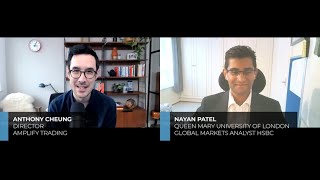
Nayan Patel studied mechanical engineering at Queen Mary University of London before switching to finance. After rejected trading internship applications in 2020, he took Amplify's Asset Management Bootcamp, which used realistic simulations to teach buy-side and sell-side work. He landed a Global Markets internship at HSBC for summer 2022.
Chapters
Okay, hello and welcome. I'm having a catch-up with Nayan Patel, who is a student who previously did our Summer Analyst Training Programme back in the summer of 2021 and has now gone on to secure a role as an internship at HSBC in the Global Markets division. But before we delve into that in a bit more detail, uh, Nayan, thank you very much for, for joining me, and perhaps we could start with a little bit about a little bit about you, really, your background, where you're from and what are you studying at uni, and take it from there.
All right, so I actually— so I'm at Queen Mary University of London and I study mechanical engineering, uh, which I know is that it's a bit strange because I know I'm getting into finance. Um, so in terms of my sort of interest for finance, it all started towards, um, my GCSE period, um, and During that time, I did a couple insight days, gathered up a bit of work experience, but I had no idea about sort of spring weeks, internships, grad roles. And that only sort of kicked in when I got into uni and it was my first year. And I remember missing sort of most of the deadlines for spring weeks. And so I thought the next best option was to apply for a summer internship. So in 2020, I started applying for internships and I was just receiving rejection after rejection and they were all for a trading position. And I remember applying with a 2-page CV. So it wasn't going that great. And the way I found out about Amplify was actually by accident. I, one day I actually got a bit fed up thinking I was just getting rejected from everything. And I just typed into Google trading internship and Amplify was one that came up. And then from there, I remember speaking to Eddie about the course and he was telling me about the asset management bootcamp. And so that, that's how that sort of started off. And then after that period, so this was sort of 2021, January time, I had an assessment center with Deutsche Bank for trading. And I remember going to the assessment center, did not go that well. I didn't get the offer, but what I was told in terms of feedback, I lacked lots of technical knowledge and business acumen. And so, yeah, so that, that sort of happened. And Eddie then emailed me after to say there was one space left on the Asset Management Bootcamp if I was interested. So I thought I'd give that a go. And if I liked that, then I'll do the program. And so I did, I did the bootcamp and I was amazed by like how great the simulation was, how like realistic it was, how much fun. And the pre-learning videos as well. I remember sort of learning exactly sort of what an economy is, which is quite strange because, because I studied mechanical engineering, I've never been taught any sort of finance knowledge or have had sort of basic finance knowledge. So the videos really sort of just broke it down right from the basics. So yeah, so I did, so I did the asset management boot camp and I remember learning more about the summer program there. And then from there, that's when I went in and I paid for the program that started, I think it was 7th of June. So yeah, so that's how I sort of got into Amplify.
Yeah, and then from the actual— your time then, yeah, Amplify, what is there anything that kind of sticks in your mind that was particularly useful that when you were applying then for subsequent interviews thereafter and getting this role at HSBC?
I think the biggest thing I found useful from Amplify was the simulations. And that's because going into Amplify, going into the Amplify course, I wasn't quite sure if I wanted to work on the buy side or the sell side. And I wasn't quite sure what sort of trading I wanted to do, whether it be a market making role or sales trading role. And so I remember when I did, I think it's the Flow Trader simulation you start off with first. It was quite challenging, but I really enjoyed it. And I really I really enjoyed how fast-paced it was, and I enjoyed both the market-making side as well as the sales trading side, where I was talking to the clients, which was quite— it was quite interesting as well. And then did the asset management simulations as well. So that sort of gave me an insight into both sort of streams, buy side and sell side. And I think after that, that's when I sort of understood what I was getting myself into. And it also helped with understanding some of the job descriptions, because I remember this time around when I went to apply for internships, and reading job descriptions, I literally understood exactly what they were talking about, uh, rather than just looking at the word trading and sending off an application. Uh, so I'd say that is probably the biggest highlight, the Flow Trader simulation. And I'd say one other important thing would probably be the equity research report that, um, I think I did as a group, um, in the first week. I remember when I did that simulation, I didn't really enjoy it, And looking back now, it was probably one of the most useful simulations I've done. And that was just because the team I was working with, we were all across the world. So it was a global team. You had these sort of issues of time zones. So that was a sort of good challenge as well. You learned basic corporate finance, you learned how to sort of conduct your own DCF, presentation skills. So it was one that sort of had lots of skills that you could talk about in an interview. And I remember bringing that that simulation up lots of different times in an interview as well. So I'd say those are probably the biggest highlights for me from the course.
And then like the global markets, you know, you've talked about your kind of your main interest in that, and that's obviously where you're going to be heading. But, um, was that always quite— because in my mind I kind of think mechanical engineering, probably much more numerical, a bit more structured logic in their thinking. Probably more M&A, IBD type characteristics perhaps, without finance in terms of skills, but you sound quite enthusiastic about the market side. Was that, I mean, was that always the case or?
It wasn't always the case actually. So before I did the course, I knew that I sort of did have an interest for trading, but I did also have an interest for investment banking, the M&A side, and I wasn't too sure what I wanted to do, but I thought I'd give trading a go, see how that sort of plays out. And I did actually apply to both, so trading roles as well as roles in investment banking. And so again, I wasn't quite sure what I was getting myself into. And I remember often doing the course, doing the M&A simulation, the IPO simulation, the equity research report, uh, that sort of, uh understood that I didn't really enjoy the investment banking side in terms of looking at— in terms of M&A, equity research, that sort of side. And I really enjoyed a role that was very, very fast-paced, very exciting, that was challenging. So that's what sort of steered me towards global markets and trading.
Yeah, and, and you're, you're still at uni, right? You're still— yeah, to complete your degree. So how do you now balance your kind of studies with your trying to keep up with markets?
So with that, I've actually— so after I finished the course, I got in the habit of watching the daily briefing every day, but just about every day. And so normally in the mornings, before I start my day, before I start going to uni, getting to any lectures, that's the first thing I I normally get into, I watch or I read, go on the FT, read a few articles, watch Bloomberg for a while. So that's how I sort of tie it into my day. And especially with these sort of newsletters you send out every day with the sort of the main market headlines that I sort of read whenever it pops up. But I think that's the way I sort of manage it by making sure I still keep up to date with all the financial news every day, but I don't sort of spend the whole day doing it. I just do it in the morning when I'm free, and then I can focus the rest of the day on my uni work or perhaps any interviews. Yeah.
And just any tips for, I guess, people going through the process, because you mentioned Deutsche Bank and you mentioned that that didn't go as perhaps as planned, but then you saw some remedies there about getting some more training and things like that. But just now in hindsight, now that you've kind of secured this upcoming internship in the summer of '22, is there anything now that if someone was to ask you who's quite raw, what's the best steps that you'd recommend?
So I'd say for interviews, just be yourself and understand what's going on in the markets because I think that's one thing everyone talks about in interviews. They always ask you a question about what's going on in markets, what your views are, is there a story you're following? So I'd say keep up to date as much as you can with what's going on in the markets. Because even if you don't sort of understand just about every sort of technical aspects, if you can speak about a story you've been following, it still shows a lot of commitment. It shows that you still have a bit of passion towards the role. And I think with the technical side, I'd probably say the best thing to do with that is probably learn. I think Amplify did this for me anyway, but learn sort of basic finance, how to read sort of a balance sheet, how to, understand lots of corporate finance terms as well. For example, what cash flow is, um, uh, and just other aspects like that, because they, they come in very handy when it comes to case study interviews as well, where they present you with a bunch of information and you've just got to understand that. I think it's in like 30 minutes or something, and then present it back to the interviewer. Um, so I'd say that's that, and definitely be confident about, um, what you're talking about as well. And yeah, just So I think, yeah, those are, those are probably my tips.
Okay, cool. Well, look, good way to finish then with some, some good advice, and thank you for taking the time out to talk to me. Yeah, all the best with the upcoming internship at HSBC, and keep in touch.
Thank you.
All right, thank you.
More from Anthony


Inside the Biggest Banking Stories You Need to Know This Week (Anthropic, Diageo, Private Credit)


Inside the Biggest M&A Deals You Need to Know This Week (UniCredit, GameStop, eBay, Eli Lilly)







AI Breakthrough or Hype? Anthropic’s Claude Mythos, Tim Cook Steps Down & LIV Golf Collapse