From Student to Podcaster to Goldman Sachs Intern
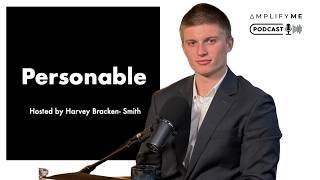
In this Market Maker podcast episode, host Anthony Cheung interviews Harvey Bracken‑Smith, a Jersey‑born student who attended Eton, studied at Duke University, spent a semester in Australia, and is about to start a summer internship at Goldman Sachs. Harvey recounts his journey from being a "big fish in a small pond" to a "tiny fish in a huge pond," describing how the competitive environment of Eton and the broader exposure of a liberal‑arts education in the US shaped his mindset. He contrasts the UK, US, and Australia in terms of family proximity, opportunity, lifestyle, and mental‑health considerations, emphasizing that the US offers the most competition and financial capital. Harvey explains his gravitation toward finance, citing his parents' careers in head‑hunting and accountancy, the meritocratic nature of investment‑bank graduate schemes, and his desire for a challenging, results‑driven field. The conversation then shifts to Harvey’s personal‑brand project, the "Personable" podcast, which aims to interview world‑class figures across finance, sport, entertainment, and more. He details the podcast’s origin – inspired by Eton’s Society Programme and a desire to make high‑level talks publicly accessible – and the discipline required to publish weekly episodes, using the podcast as a training ground for consistency and resilience. Harvey shares concrete networking tactics: approaching guests as equals, crafting personalized outreach emails, leveraging existing connections, and persisting despite high rejection rates (≈5% conversion on 1,000 outreach emails for recruiting, 80% acceptance for podcast guests, but near‑zero response for sponsorship outreach). He stresses focusing on inputs (number of emails sent, conversations held) rather than outputs (views, likes), and controlling what one can control while maintaining purpose, structure, and discipline. Key takeaways include the importance of stepping out of comfort zones, treating every interaction as a learning opportunity, the universal value of networking over pedigree, and the mindset of "why not you?" that drives personal growth regardless of eventual outcomes.
Chapters
From growing up in the UK to attending Duke University in the US and soon to be heading to New York as an incoming summer intern at Goldman Sachs. Alongside that, he's built Personable, a podcast already attracting big-name guests from sports, finance, entertainment, and many more. So today on the Market Maker podcast, really pleased to be joined by Harvey Bracken-Smith to talk about his move to the US. We've just been off the call. Talking about a semester in Australia, being in Europe. So he's all over the place, but we'll, we'll dive into that and also managing a personal brand, the development of that and how it's been going and his mission to pass on knowledge from industry titans to the next generation. So Harvey, how are you?
Amazing. It's so good to join you today. I'm sure we'll get into this into the podcast, but we actually met 5 or 6 years ago when AmplifyMe came to Eaton College, my high school. It was an absolute honor to meet you then, seeing you on the stage with 100 or so kids doing your trading platform and kind of me nervously going up to you asking for your LinkedIn. I don't know how many followers you had then or how big the podcast or even your program was then. So it's been spectacular to see the incredible growth of yourself, of your social media pages, of Amplify, and also to be now on the receiving end getting interviewed is a bit of a whirlwind moment for me.
Thank you so much. And yeah, when you first said to me a few months back and you were like, oh, we've actually met before. I was like, wow, really? It was like several years ago, but it's so cool that we get to reconnect like this and to see the success that you're having. I'm sure soon to go on to have, but, um, so yeah, I know you've been around the world, bit of a world tour, which we perhaps we could, um, we could start with, which is you, you kind of grew up in the, in the UK, but you've gone to university in the US. You've spent a semester in Australia. I just wondered, well, what's that transition been like? And that kind of lifestyle, managing, you know, studies, relationships, all of that good stuff?
Yeah, so I was originally from Jersey in the Channel Islands. And I think from an outsider perspective, a lot of people instantly think tax haven. But as a person born in Jersey, it's not the thing that first comes to mind as a little kid. And Jersey is actually a lot more diverse than a lot of people would think it'd be. So coming from a little island, my dad's English, my mum's Irish, so half English, half Irish. I really enjoyed being born there. I didn't really appreciate at the time the perspectives that everything only took 15, 20 minutes to get to. So it meant that I could go to school, go play rugby, tennis, cricket, all in the same day. And it wasn't really a thing that I noticed. I also think growing up, you initially start in your, your little school. And then you'd play other schools. But I very quickly noticed year on year I'd be playing the exact same kids. This isn't something that gets told to you. I mean, this is just the experience of being born and growing up and kind of noticing these patterns. And I would say when I got to around 9 or 10, so 9 or 10 years of being on an island with only 100,000 people, I think that's the point in time when for me it started to get a little repetitive. I don't think I understood the perspective that perhaps there'd be much more competition, people that could push me around the world. But I very quickly noticed myself getting to the highest sets of schools, the highest sports teams, being good music-wise. And so in all these different categories, I noticed that I wasn't really pushing myself as much. I don't think this was just a thing that I encountered, but a lot of the more intelligent kids on the island, I think you get to a point where people kind of diverge as the older they get. And so I kind of wanted to face more competition in a sense to really push myself. And so that was the point in time that made me want to apply to boarding schools. My parents had never gone to a school such as Eton, and so it was very much of a new process for them, just as much it was for me. And for Eton, as many of you will know, there are many feeder schools to it, such as Caldecott, Summerfield. And so it's almost like universities in which you have these group of schools that feed into it. And so coming from an island that not many people had gone to coming to that school. It was very much a new process, as I mentioned. And so when I ended up getting into the school, I think it was a huge surprise for me, my parents, and many people on the island, of which I kind of made the most of the opportunity. But I very much went from a big fish in a small pond to a tiny fish in a huge pond. I'd gone from top sets to literally bottom sets. I went from the top sports teams. I mean, I was a very ambitious rugby player at the time. So I literally went competing for the A or B team to the C team and even playing for the D team at some points in time. Cricket, I went from playing for the, for the island to going to the F team. Music-wise, I kind of fell out in love with that. And I think it was a really intense period of time in my life because, you know, being this kind of, at least in my mind, this top dog to literally what I felt to be meaningless and having no sense of purpose when you're suddenly surrounded by some of the smartest and most ambitious kids in the country. So I can talk a bit about the Eton process, but skipping ahead, ended up going to America. Again, we can delve into why I decided to go to America, but for me it was mainly focused on the idea that in the UK, unless you have the course that you decide, which you have to decide at 14, 15 in order to take your A-levels at 16, 17, 18, you're put down this very narrow path. And I didn't really know what I wanted to do, let alone within finance, but within any industry. And so I thought, how can I pigeonhole myself at 15, 16 years old for what I'm going to do at 18 to 21, for what I'm then going to do for the rest of my career? Particularly as people say that it's not just the university you go to in the UK, but it's the course, and that course gets ranked within the UK and beyond. So I was very much like, this isn't the system for me. What's a system that's going to suit me better? And America kind of seemed that this great place to do that, it being a liberal arts program. So you can kind of go in. Saying, hey, I really want to learn. I'm not sure what it is that I want to learn, but I want to get broad exposure. And so you go in at Duke, where I am, for example, you have to do like 20 core requirements. So it's like 3 math courses, 3 foreign language requirements, a few like languages, have to do like history. And so you kind of get this broad exposure of things as well as being able to specialize. So that was the idea of America for me. I also wanted to go to a new place just as I'd been to Eton. So I went there, absolutely loved it. Again, can delve into it. And then with Australia, as you mentioned, that was less of a case of that being built into my course, but quite a unique thing that Duke University encourage is that out of the 4 years in the junior years, the third or the fourth, we're encouraged to do a semester abroad. So many of my friends all went to Europe, but obviously being from the UK and in case you can't detect from my accent, I thought that it'd be a bit pointless to go only an hour or two away from home. And so I wanted to go to a place that would enable me to still speak English. I didn't want to be thrown right into the deep end going to somewhere like Japan or China, but I also wanted to go somewhere that, you know, was really far away from home. Not to be away from my family, but the podcast that you mentioned, I kind of wanted to have, instead of going out and doing the same things as everyone else, I wanted my own unique path, but I also wanted to kind of push myself away a little. Because I wanted to see, can I truly make this a thing? Can I get really consistent posting 3 to 5 podcasts a week, really focus on building a personal brand? I'd already got my internship in March and it's now obviously December, but I think that building a personal brand, another thing that we can delve into, is such an important part of the future. So yeah, so Jersey, UK, going to Duke and also going to Australia. So a very worldly experience.
Is it, is there an easy summarized way to talk about the differences, the pros and cons of UK, America, Australia for someone who's young and considering these types of options?
I think it totally depends where you are from and what you want to do with your life. I think the UK, the US, and Australia have so many incredible perks around about them. I think for me, being away from family, unfortunately my mother passed away a couple of years ago. So she passed away in 2023. And so I think, although family, I mean, family is the most important thing in my life. I think we've always kind of had a view that we want to go and achieve our dreams and our family are always there to support us in that. But I think because of going away to boarding school and because of having lost my mum, I think that wherever it is in the world, my siblings and I, and also my dad, we're going to achieve those dreams. I still speak to them every day. And so I think that's a barrier for me that a lot of other people wouldn't face in that I'm not afraid to leave the village in a sense. So I think that's the first thing. Do you want to be close to your family or do you want to go away? If you want to be close to your family, then I think the UK, US, or Australia is, you know, that's a pretty important thing, particularly Australia from the UK or the US. I mean, from the UK it can be 24 hours away and from the US it can be, you know, 16 hours from San Francisco. And also the time zones mean that you're basically not even awake the same times, so you're not really experiencing the same life. I don't know if this is a controversial thing to say, but I have found in my own experience that there's a lot more opportunity in the US than elsewhere. I mean, even if you look at Australia versus the UK, the UK GDP is about double that of Australia, and then the US GDP is about 10x that of the UK. And if you're thinking about finance, which is more of the focus of this podcast, it's not really necessarily just a regional thing. But it's a thing faced both nationally and internationally. And so in my view, it's kind of similar going from Jersey to the UK in that I want to be in a place with the most competition, in the place with the smartest minds, the brightest minds. And I think in a capitalist society, a lot of that is fortunately or unfortunately, however you look at it, is where the money is. And I think a lot of that is focused in the US. I think Australia has a lot of perks in terms of work-life balance. I mean, it's just an unbelievably beautiful country. A lot of the weather is incredible, particularly around the summertime. And so instead of being in London where you're kind of in the city, which actually has a lot of green space, which is amazing, you can go to the beach, you can go for a run. You're kind of surrounded by these, this, the harbor if you're in Sydney. And so everywhere you kind of go outside the office is beautiful. I think it's tremendous for your mental health. I think London still has a lot of the traditional banks and industries. I mean, everything in London is is here as well as in the US. So I think maybe a lifestyle difference. I actually have found that I haven't spent that much time in New York, but I might actually prefer London to New York in terms of the green space and the parks. I think is, I mean, you have Central Park in New York, but in London you have Hyde Park and about 10 other great parks. So there isn't really a way, I think, to say pros and cons. I think it comes down to family. I think it comes down to opportunity. I think it comes down to where you want to be, and also where the green space is, how your mental health is protected. It also depends if you're outgoing. I think I'm very on the forefront of trying to always meet new people, both through my building my personal brand online, but also through joining sports clubs and or otherwise. And if you can go across the world and join a club and meet great people, that's great. But I wouldn't just leave your community if you think you're more introverted, because I think going to somewhere like the US or Australia from the UK, and not having a strong backbone, I think that can be a very damaging thing to do. Okay.
And then listening to what you were just saying there, is then finding finance, is it like a result of, I mean, I'm getting the kind of vibes that you're quite a competitive person, quite like to push yourself, quite thrive in challenging conditions. Is it that what led you to finance? Because It does offer those types of things.
I think as kids, we all have this belief that we're kind of choosing our own path. And I think to an extent that is true. I think I've always had the— I've always taken well-informed researched opinions from other people. But at the end of the day, the decision has come down to me. And I think that's kind of a strength of my parents is that they're not these parents that are overbearing and always telling me what to do. In fact, most of the time, my dad and my mum, when she was alive, were actually telling me to do less and take more of a break. Because we're, I'm a very focused and determined person. And if you look at my siblings, they're kind of copycats of that. But both my parents were in finance. My dad runs a head hunting company, Concilium Global Advisors, and he's also building a tech startup. And my mom founded an accountancy company in Jersey called Fairway. And so I think I was always surrounded by this idea that finance was a career option for me. I think kind of Something that my dad spoke to me a lot about when I was younger was to go on a graduate training scheme. Because if you think about the role of a headhunter, it's often that they're helping to find talent for those people at investment banks, but they're almost, you know, I wouldn't say my dad is, I mean, my dad's my hero and has done tremendously well doing it, but it's oftentimes could be a secondary role to that at the investment banks in that the talent is the people in the investment banks and the headhunters are helping them to find people for those roles. And so I think a thing in my dad's mind was always, if I can help my son get to the investment banks, then he's made it in a sense in that, you know, he's done well himself and now he's kind of giving me a stepping stone to the next thing. On top of that, the graduate training schemes that he's talked to me about for years, he's also always said that these offer the best training in the world and that when you work at a top investment bank, you can kind of do whatever you want. So I think for me, despite what a lot of people say about going to an investment bank, consultancy firm, tech, big law, you know, being a doctor, whatever it may be, is pigeonholing yourself. I think the perspective that I gained from my parents has actually been, this is the stepping stone to do even more. I think another extension of that has been, I've always had the belief that whenever I'm faced one-on-one with someone, and we can talk a bit about how I've got some great guests on my podcast, that I can convince them to come on my podcast, that I'd make a great intern, that I'm incredibly hardworking and innovative, etc. But something that I've learned, and it's an unfortunate thing by going to Eton, going to Duke and going to a great firm, hopefully in the future, is that people believe that you're smart before you even enter a room. And so it goes from a point in which you're in a room and one-to-one, you have to prove yourself in a sense to say, I'm smart. I can think of things in this way. Therefore, please work with me, connect with me, whatever it may be. To they already have the belief that you're smart. So instead of having to spend 10, 20 minutes trying to convince them, or even having the struggle of getting in that room, people have the belief that you're smart enough already. And so I think there's so many of these things which I wouldn't have even thought about. And so I think it's actually, as much as I'd want to say it to myself, I think more of a credit to my mum and dad. And then I'd say the last point is that the competitiveness, as you mentioned, I don't think there are many industries that are so competitive, meritocratic. So the kind of the best people rise to the top in that. Also more specifically markets. I love the idea that you can make well-informed bets for the future, but it doesn't matter if you are Jamie Dimon or a new intern on Wall Street, you can still be wrong. And I think that unlike a lot of academia, which is focused on the theoretical, I love the fact that in a few months' time, you know, it's either right or it's wrong, right? You know, there might be some nuance to it, but it's a way of ultimately checking yourself over time. And it doesn't matter if it's a social media post or, betting on the stock market, when you're actually given this data point to say you were right or wrong, I think that's the best way to learn and improve. So kind of a multitude of answers there, but it all feeds down to the main core reason of why finance for me.
Cool. Well, let's talk about your podcast because I think as an offshoot of the podcast, there's lots of other learnings from it in regards to networking, how you source these people, why you started it, the motivation to keep going, to build the personal brand, to lift the podcast show to reach more people. So perhaps you could start with then the initial concept. So how was the podcast born first and what is the show's objective?
So kind of starting at the end and then going backwards. So the podcast is called Personable, where it aims to interview the world's best in their given fields. So I've interviewed billionaires, CEOs, athletes, including yourself. So I've interviewed the Chief People Officer of Citadel Securities, a former CEO of Barclays Bank. I've got a very exciting episode coming up in the next few weeks that Anthony was asking me about before that hasn't come out yet. So stay tuned for that. I think going back to the beginning though, and how the inception for the podcast came about. So I kind of took you on a brief journey of going from Jersey and being a big fish in a small pond to being a tiny fish in a mega pond. And I think that that was a very hard time for me, both in terms of being insecure, in terms of having imposter syndrome, in terms of trying to find purpose in a place where I believe that everyone else was much smarter than me, better than me, and really being thrown into that deep end. And I think for a while, a lot of the things that I say on my podcast are about personal growth and doing what you can in, in hard environments and always trying to be better and do, do more with what you have. But I think a somewhat ironic part of that is at that point in time, no matter how hard I worked at my fitness, no matter how hard I worked at my academics, it was like anything I did didn't really matter because everyone else was so much better than me. And so something that I found to, I found solace in was the Society Programme. So at Eton College, they have what's called the Society Programme. So from 8:45 to 10:00 PM, Monday through Friday, they're getting world-famous speakers from past prime ministers and presidents, CEOs and founders of companies, top politicians, people in the medical field, philosophers, et cetera. And I found that one thing that I could do that no one could take away from me is I could simply go to these talks. And initially I went out of— for entertainment. I mean, hearing from some of the most incredible people on the planet, there isn't that instant thought to be like, oh, let me be the next CEO of Barclays, for example. But more simply, wow, that's a cool person. I'd really love to meet them. I'd really love to learn from them. Let me go attend this talk. But I quickly found that after going talk after talk that these people didn't all go to Eton. They didn't all go to Oxford. They all came from different backgrounds, all of different races, genders, all had different— and even that they were even more ideologically, economically, and philosophically. I dunno if that's a word, but philosophically diverse in how they thought about things. And so I thought maybe I can be like them too. And so it went from being, you know, didn't believe I could get into Eton, get into Eton, go there, really kind of like embarrassed in a sense and insecure about how I was finding the best people on the planet, realizing that I didn't have to follow the same path that everyone else was doing in getting the best grades, sports teams and stuff, because these people didn't even go to a school like Eton and had found tremendous success. So that was kind of the seed of the idea. And then when I was at Eton, I really threw myself into the society program and the other clubs. So both, um, at the start of Eton to the end, I kind of found this own journey of personal growth where I went from all these bottom sets and bottom classes and not really respected in a sense to by the time I finished, I was head of society. So I helped run the entire program. I was head of the Entrepreneurial Society. So I helped get the CEOs and founders of Deliveroo, Ocado, Manchester United, and Chelsea, the Investment Society. So I had top execs from Goldman Sachs, Citi, the global head of research at Citi, former CEO of Barclays, founders of VCs and hedge funds. I was also head of fundraising and I was also high up in the investment club. So kind of gone from nothing to something. And when I was in that role, particularly the head of societies role, you know, you look at some of the programs at Stanford Business School or Harvard Business School, or even the Oxford Union where they get some of the brightest minds on the planet. Instead of thinking, how can we keep these people to ourselves? My instant thought was, how do I share the incredible knowledge of these people with the rest of the people on the planet, with the intention that other people can have the same mindset shift that I had had, going from these people are entertaining, but I can never be like them, to realizing that there is no one true— there's no school, no brand name, no thing truly holding you back. Because there is so much evidence of incredible people on the planet who have all found tremendous success, however you define it. In their own ways. And I think that it's only by truly being in the room or listening to a long-form podcast with those people that you can truly get their essence. So leaving school, uh, so sorry, during that role, I wanted to make the talks public. Unfortunately, Easton said no because of safeguarding reasons. I mean, some of the kids are only 13 years old asking questions, so you don't really want to have their people, them all over the internet. So then I'm supposed to, so this is now 2022, I'm supposed to go to Duke in 2022. August. But during that summer, unfortunately, my mother had had cancer and it actually come back a lot worse. And this time it'd been terminal cancer or incurable cancer, they called it at the time, that being terminal cancer. And so I decided to take a gap year from Duke and I thought, what am I going to do with all this time? Oh, let me start this podcast. Let me take this thing, which I hadn't been able to do at Eton. Let me make the talks public, call it Passable. As I said, because I want to show the more personal side of the world's best. My first guest was a guy called Reuben Narlingham. He's a billionaire, he owns the biggest port in Malaysia called Westports. He also is an owner in LAFC and QPR. Filmed that one in September of 2022. Didn't end up actually posting that until March 2023. Then filmed my next one in April, my two after that in May. I'd only done four. And I realized that in order to grow a successful podcast, you have to be consistent with it, because you actually become a part of people's lives and routines. So it's like the only way that I can become successful with this is putting one out every week. The other thing is, throughout my teenage years, I'd always come up with lots of business ideas, whether that be apps, or trying to learn to code or trying to do new hobbies. And I'd always found that I kind of do it between 2 to 5 months. So at the start, I'd been incredibly excited, motivated, I'd want to, you know, go and make the next Facebook or whatever it would be. But the moment I found a real sense of hardship, I would give up, not because I didn't want to do it, but simply because other parts of life got in the way. So the podcast was kind of the first instance of something that if I wanted to build a business or work at a hedge fund, or wherever it may be in the future, that relies on a lot of discipline and consistency, I really wanted to train that muscle. And so what I told myself is, it's not— despite having incredible speakers, it's not actually the quality of conversation the quality of speaker, the quality of questions, the quality of production, that is going to be my metric of success. But simply, can I put out a podcast every week? So starting in December— September of 2023, I then filmed a podcast one a week for 17 weeks straight. And so that kind of taught me that despite having given up on things in the past, I could keep going. And now since then, I've done 115 episodes, spoken to all the incredible people that I mentioned, grown my audience to more than 1,800 subscribers, getting hundreds of thousands of views every week on LinkedIn, trying to get to 10,000 by the end of the year. And you'll see with my incredible guests coming up how that might be a possibility. And really trying to grow my personal brand, both during the rest of my time at Duke and beyond.
Yeah, it's a, it's an amazing mission, actually, because when you know, when you, as someone who comes from like a different starting place, like one of those, these other speakers, like you say, come from diverse backgrounds. You know, you kind of look with somewhat envy of people who go to Eton and go, oh, they have such quality access to resources. So the fact that you've wanted to take that and share it with the world and utilize those contacts that you'd made during that time, I think is such an admirable thing to do, to share that knowledge and expertise to to everyone. So, couple of things then with that could be useful as transferable skills. I mean, you've had some phenomenal guests. I think that's the only word I can use to describe it where, you know, I get a lot of students that I encounter and they go onto a platform like LinkedIn, for example, and often they'll go, you know, who am I to say anything to anyone? Like I've not had much life experience. I've never worked in finance. I'm not as technically proficient. And then here you are landing Citadel Security, C-suite people, uh, you know, international Olympic-level athletes, uh, people in movies, like, so how do you source them in a context of what could be useful for people, I guess, when they're thinking about networking?
If I was to ask you a simple question before I answer that. What do you think is a harder thing to do? Not put yourself out there, never put yourself on the line, never risk being wrong or embarrassed, or put yourself out there, risk being wrong, risk being looking stupid and risk getting, you know, looking like an idiot in front of one of your idols. What do you think is the harder thing to do?
Yeah, no, no one wants to put themselves in harm's way, essentially.
Exactly. So I think that a lot of people think that the biggest risk is asking a stupid question. When I would argue that the biggest, biggest risk is actually never putting yourself out there. It's a very obvious thing, but something I come back to a lot. When you were to ask someone on their deathbed, what is the thing that you think is your biggest regret? And a lot of times people will say, it is something that they wish they would have done, not something that they did do that they wish they did differently, but something that they didn't do, whether go up to a potential romantic partner, start a business, take that risk. And so I think that's the core thing I come down to, with this podcast or anyone I come up to. I think that the biggest thing that I can instill in people or kind of motivate them to do is not a specific type of way of writing an email or a specific set of questions of going up to people. Because at the end of the day, we're all human, we're all different, and there's no cookie-cutter approach. But I think it's just about having the guts to go up to someone, the guts to write an email and know that I might send this email, I might go up to this person, be ignored, they might be rude to me, they might call me stupid. No one will respond to my email, I might write a post on LinkedIn, and no one's interested in it. But I think it's having the guts to do that, that when you meet these incredibly successful people, that they go, huh, Anthony, that was a really ballsy thing to do. I really respect you doing that. I would love to talk to you because I see my younger self in you. And so I think my advice to people in my peer group younger than me, or even older than me, is just go for it. I mean, I I think that most people are inside their own minds with, you know, they think about the spotlight effect where you think about yourself more than you think other people are thinking about you more than they actually are. And I actually think it's just about going for it. And I think that I just, I get just as nervous as anyone else. I mean, I'm incredibly nervous to be on this podcast today, but I think it's just doing it anyway. I think that is where you find the true success. You know, with all of those people specifically, so you mentioned Hollywood actors, So Tim McInerney, who's been on, he's been in Game of Thrones, he's been in Blackadder. I was actually at a restaurant with my girlfriend, my granddad, my cousin, my brother, and my cousin's boyfriend. And we're in this restaurant in London. It wasn't particularly like nice restaurant. It was just an average restaurant. And we're eating food. And my cousin says, oh, is that the actor? And we look like one by one, we probably all looked at the same time. And it's very clearly him and his partner. And so I think for me, so here's maybe the practical things in terms of going up to someone in person, because you don't want to ruin someone's meal. You want to see if they're happy or sad. You don't want to go up to someone on the day their cat died or whatever. So he looked pretty happy. So I thought, I'm going to wait until he finishes his meal and then I'm going to politely go up to him. So kind of just having a dinner with my family, enjoying it. And then it gets to the end of his meal and looks like he's got the check and he pays the check and gives it to the to the waitress. And so I just go up to him and like, excuse me, are you, are you Tim? And he says, yes, I am. I says, do you mind if I chat to you for a few minutes? He says, sure. So I shake his hand and I'm like, hi, my name is Harvey Reckon-Smith. And I introduce myself to him and also his wife, because I think it's important for the other people to also feel included. So then I say, so I host something called Percival where I try to interview the world's best in their own fields. I've interviewed billionaires, CEOs, and actors. Is this something you might be interested in doing? And of which he then said, yes. He said, don't give my email to anyone. So I'm not going to reveal that on the podcast, but I then sent him an email, came back and he agreed to do the podcast. If I didn't have a podcast and I wanted to simply either, I think, I think the other thing to say is that I think when you put people on a pedestal, you know, a lot of people when they meet someone incredible, think that the first thing that they should do is say, oh, can I get a photo? My kid's such a big fan. But I think what you're doing is instead of being one-to-one as human beings, you're putting them on a pedestal. So they don't think of you as an equal, they think of you as a fan. And I think these people have so many fans, millions of people across the world, that you're not really differentiating yourself. But they also have their local waitress or their local barman or their local postman or, you know, friends and family who they think of as equals. So I think by positioning yourself as an equal rather than a fan, I think is a really big advantage. So when I went up to him, notice that I didn't say, can I get a photo? I didn't say, oh my God, I'm such a big fan. And you know, my friends and family, and I'll never get over this moment, because he goes through that moment about 10 times in a day. You're positioning yourself as an equal, even if it's really hard. And even if you don't have the sense of confidence to do so, I think push through that. So if I didn't have a podcast, and I wanted to meet him, because perhaps I was an aspiring actor, either in that moment or later on, I'd probably do the exact same things of introducing myself and seeing if he had time. And if he couldn't, couldn't meet me in that moment, I would have just walked off. But I would then would have said, I'm an aspiring actor. I've been in XYZ show, I've been putting, or maybe I haven't. And, you know, I've been putting out an hour of content every week trying to learn my acting skills. I'd really love to have a 5-minute call from you to get your advice on pushing through auditions, or whatever it may be. And he's either going to say yes, or he's going to say no. But I think it's the very fact that you train that muscle. I mean, I've gone up to Tons of people. I've gone up to Theo James from Divergent. I've gone up to Ant Middleton. I've gone up to Caspar Lee, Josh Peters, tons of these people just walking around London. So yeah, I think it's just Cole Sprouse. So I think it's just about just going for it at the end of the day. Like there's only so much thinking you can do nowadays. I don't even ask my friends or family, what do you think? Because it just gets you more nervous. I just Go up to them. Please, may I talk to you? My name's Harvey. You know, do you want to chat? And if they don't want to chat, then you've got your answer. But I'd rather have seen that person and gone for it than not at all. And I think other people should do the same.
Well, what I'd love to know then is that, so with my podcast, this podcast, we talk to people predominantly in finance, but yours is much more broad in a sense of, I guess the commonality is that they've had success in their field, and that field could be anything essentially. So my question is, is there any identifiable characteristic that you've seen that is woven through these different kind of sectors? It's agnostic of sector, so to speak.
When I was at Eton and I ran the Entrepreneurial Society and the Investment Society, so entrepreneurs, investors, investment bankers, et cetera. I found that a lot of people would tell the same story over and over again. So, I mean, entrepreneur may be a bit more different, but particularly in the investing side, oh, I went to a good school, went to a good university, then I did my graduate training scheme and I worked there for a few years, then I went somewhere else, then I went somewhere else. And it's this sort of the same cycle. It's more of a focus on the what rather than the why. And so I think that was a big reason why on Personable that I really wanted to find about different people from different backgrounds. Cause I was actually pretty bored of just hearing the same story over and over again. But what I realized when I went to other people's societies, so a philosopher or an athlete or an actor, I realized that when these people were talking, even though I don't want to be an actor or I don't want to be an athlete, or I don't want to be a doctor, I realized that they would say things that I could actually apply to my own life. So for example, having had Justin Rose and Tim Henman on my podcast. So Justin Rose, great piece of advice that he gives. So imagine you're playing golf. So for those that don't play golf, your score is kind of calculated at the end of each of the 18 holes. So it's a cumulative, so it's not just, it doesn't just end, it keeps going. And so you can either be doing really well, so you've hit little, not very many shots, or you're not doing as well, so you've hit a lot of shots. And I think a tendency that we have both in terms of golf, but also similarly in tennis, is that although each shot is an independent thing, we have this bias in our minds that when we're doing really well, that we think we're doing really well, and that when we're doing badly, we think we're doing really badly. Whereas his mindset was simply just every single time, do the exact same progress process and focus on doing the best shot possible. And I think that's such an important thing to do, because I think whether you're trading in a stock or you're going to the gym or, you know, being an athlete on the sports field, we often look at the score and think that because we've not done well, we have to do more than what's expected and then make more mistakes, or because we're doing well, that we have to do less and take our foot off the pedal, when it's actually just about doing the same process repetitively that enables that success. Similar thing with Tim Henman. He would simply say, control the controllables. Each point is a separate point. Of course, there's points in both golf and tennis and in life that you have to push harder. But I think a lot of times we make the mistake of doing too much. Or rather too little, that enables us to make more mistakes. With regards to your question, is there a commonality between anyone? I don't think there is. And I think that's what makes people special and makes people unique. I think that it's the fact that I, you can talk to anyone in the world, and this doesn't just have to be an extraordinary individual. I mean, anytime that I go in an Uber or I'm speaking to people in a restaurant, I'm really interested in just talking to them because I think that there's a unique insight that you can take from any human being. You know, we look at success often by the title, the amount of money people are earning. But there's so many different aspects to success. And I think that's one of the things that makes life so great. So a lot of these people that you look up to might not have great relationships with their kids, or with their partner, or with God, or whatever religion you do or don't believe in, or their mental health. So I think you could find someone that's really fit. And that might work at a restaurant, which you might not deem as successful as working at a top investment bank as a managing director, but they have clearly worked out better lifestyle choices or better mental health things. So I really just think it's about going to as many people as possible, treating them as equals, and learning as much as you can from them. And I think that when you kind of extract as much value from these people through their insight, whilst also giving as much value as you can to them, I think that's when you become this person that is as well-rounded, as well-informed as possible. And can truly excel at all the different aspects of mental health, physical health, spiritual health, emotional health, but also I think will lead to a much more well-rounded and happier person overall. All right.
Well, final few questions I've got for you, um, in and around the podcast, because again, as I said earlier, I think there's just such good lessons that come out of, of, of 100+ conversations with a variety of different people. One of the things again, I get from a lot of students is dealing with rejection. I'm sure, you know, you are going to a very well-known tier 1 US investment bank, but I'm sure that wasn't the only application you would've sent out. And I think in December, December is a very seasonally challenging time of year, I think for a lot of students, because you look at LinkedIn and you go on LinkedIn, it's, I've secured my offer. And it seems like your entire feed is just dominated by all the success where obviously you and I know that's like the iceberg theory. Everyone else is below the water and hasn't been successful. So the kind of your experience of going through that process, but with the podcast, you know, being rejected from, you know, I'm sure I'd like to know what the ratio is to outbound to successfully recording and releasing a podcast because I'm I think that ratio would probably be a good one for people to hear of the realities of making this sort of stuff happen. But then also just persevering through those challenging moments. Like you said, you want to hit a streak of breaking 17 weeks consecutive recording and you're finding it really tough because everyone's saying no. So how do you kind of push through that? And yeah, just get your thoughts on that side of things.
Yeah, I think there's quite a few different ways to approach that question. I think with regard to, with regard to recruiting, I think you have to be extremely focused on what your goal is. So if your goal is to get an internship, and I know this is like, it sounds like quite an obsessive thing to think about, but I think for that period of time, of course, except, you know, not including family and friends and loved ones, I think that's the most important thing in your mental and physical health, but tier down from that with regard to recruiting and sports and all the other things that you do in your life, I would say that recruiting has to be your number one thing. Like, if this is what you want to achieve, then you have to be all in on it. Not, oh, at the end of the day, you know, I'll do like a few emails and oh, people didn't reply to that. Like, next week I'll do a few more. Not because I'm trying to be mean or anything, but because when you do these applications, you have hundreds of thousands of people applying for only a few hundred to a few thousand spots. And so it's not a case of do more because you want to get fitter in the gym, but simply because there aren't enough spaces to go around. So the best people, or the most hardworking people, the most disciplined, the most structured people, are naturally going to rise to the top. Because those that are the most disciplined and structured over their time are going to do more networking emails, they're going to have more conversations. And by having more, sending more emails, they're gonna have more conversations, which is going to enable them to learn more, which is going to make them more informed. So by the time they've had more conversations and more people are impressed by them, they've got a higher chance of getting a Super Day interview, and therefore they'll be more informed for that Super Day interview and so more likely to get it. With regard to LinkedIn and seeing so many people post online, what's hard about this process is that no one's coming to save you in a sense. And that's not a thing to say, well, no one's going to save me, what am I going to do? But rather, you should take ownership over what you do and be excited at the prospect of that if you put in the work, that results will happen. And that doesn't necessarily mean having an internship at one of the best investment banks in the world. But by having these conversations, as I just mentioned, you will learn a lot, you will be a much more informed person. And so whatever it is that you end up doing, I mean, my dad often says to me, my mum would as well, put good things into the world and good things will happen. So by working hard and doing good work and putting your best self out there, you will find some incredible opportunity not necessarily at that, that particular investment bank, but somewhere because not many people are doing it. With regard to LinkedIn, there are two options to kind of go down. There's the build a personal brand side, which I'm all over. And a lot of the time I tell a ton of people, a ton of my friends, post on LinkedIn because here's the extraordinary things that I've had because of it. If you're struggling what to post, just post whatever, what you did in a day, what you accomplished in your semester at the University of London, what club you helped build, what time you dealt with a struggle, and focus on putting one post out a week every week. Don't focus on them about how many views you get. Put the structures and the discipline in place initially, because if you get a post that gets a million views, but then you can't post the week after, it's pointless. Because when people follow you, they're like, what am I, you know, there's nothing else to consume, like follow, share. So put those structures in place, you will very quickly find, particularly if you post in finance, because of a lot of investment banks either have rules prohibiting people from posting, or that there's a bit of a thing that makes people not want to post because they're embarrassed about it, or it's a bit taboo, you'll find that you'll very quickly become one of the top or most noticed names in finance. So it's a very quick edge to kind of get ahead of a lot of other people. So you can go down that route. If you don't want to be public, which I think is most people, you're embarrassed by it, then I'll just delete LinkedIn. I mean, there are so many things on the internet that can hold you back. I think for me, like my girlfriend is a year below me and is now going through the recruiting program process. And she just deletes LinkedIn, she deletes social media, because it's not helping you in terms of your goal. I think for a lot of people, and it's part of the reason that I post, they hate LinkedIn. Because as you mentioned, they go on there, oh, I'm so successful, I'm so successful, I'm so successful. No one tells you those 290,000 people that got rejected from the investment banks, aren't writing 290,000 posts saying I got rejected. It's only those 3,000 people that got in, and then hundreds of people are liking their posts and hundreds of people are liking their comment, rubbing it in thousands of times over into your face that, you know, obviously make you feel crap. So just cut it out of your life. I mean, it's not a helpful thing to do. I think it's nice to know like who the people are, so you can put a face to name and you can have conversations with them and learn from it. But if it's not additive to your life, then I just take it away. I think the other thing I would say with regard to rejection is I think that I like to think of things in terms of averages. So with regard to putting out posts on my podcast, anytime that I put out a podcast, you know, whether I'm getting a couple hundred views or 1,000 views or 10,000 views, hopefully a million views in the future, I think it's an easy thing to say, this post either got more views than the podcast before, so therefore I am happy, or this post got less views than before, so therefore I'm sad. And that is a very like damaging thing to do because it relies on this constant cycle of improvement, which is impossible on every single, you know, 3 times a week, 1 time a week, whatever it is basis. So what I like to do is I like to look at how have I done this month compared to last month? How have I done these 3 months compared to the 3 months prior to that? And I think it's a focus on the inputs rather than the outputs. So I can't control how many people reply to my podcast, do my podcast, how many people like it, how many people share it. All I can control is how many interviews, how many emails did I send in a day? How many conversations did I have in a week? How many people did I follow up with? How many of those people that I had conversations with referred me to someone else? And I think it's this extreme focus on the inputs rather than the outputs that leads to the success. With regard to— you mentioned rejections. I think I probably sent, you know, I sent 800 to 1,000 emails when I was recruiting. And I probably had 100 to 200 conversations, maybe 100 conversations with different people. I would say maybe 30 to 50 of those had come from my 1,000 emails. So, you know, 5%. But then of that, I think the other 50 to 100 had come from already speaking to some people. So once you kind of get that entry point, they'll say, oh, speak to this person, speak to this person. With regards to the podcast, a lot of the people I meet, it's quite purposeful in terms of outreach. So I might send them like a very endearing email or have some form of like personal reflection or something. So for example, when we were getting reconnected, you know, I kind of had the thing of us having met at Eton. I'm a big fan of your podcast. I'm a big fan of the work that you do at Amplify. And so I think there's more of a reason to perhaps to potentially connect with me. And I think that I have a lot with many of the same. So it's not that helpful for other people. But I would say for that, I get about 80% yes, because I think a lot of the people, you know, I already kind of know, or someone else has said, meet this person. And just by kind of networking, you end up meeting more and more people. But I was sending an email a few weeks ago for this December series that I'm doing, I was trying to get sponsors. And I literally sent 1,000 emails, and every single person either ignored it or said no. I had maybe like 3 or 3 to 5 come back interested, and I had calls with them. But then all of them said no. And so this is what I mean about the do good things and good things will happen. Because whether it's with you, people listening, it's recruiting, and for me, it's my podcast. Every single one of those 1,000 people, you know, they may not have meant it, but by not replying, they told me I'm not good enough. They told me that I'm not worth sponsoring, that I'm not worth their dime, you know, they're not putting their money where their mouth is. And so for me, it's not saying, oh no, I'm not good enough and giving up. It's simply saying, okay, well, maybe I can't afford to get a studio and expensive equipment. But I can do it online, I can spend more time editing, I put out an Instagram post last night, and you clearly watched that because you mentioned my wording, industry titans. So that shows that it's working. And I think that you just pivot elsewhere. I think that the thing with life is that you never know, it's like, it's not binary, you can't simply do X and get Y. I think that you should focus as much time when you can is making the X 1000x or a million X or being more purposeful with the X. And that will lead to great, great output. I think that investment banks are just so tough with recruiting, whether you go through the cycles of when DEI was a big thing versus when it wasn't, or when XYZ school is a target school and then it's not, or this bank is hiring or it's not. With AI, with, you know, there's a big focus on undergraduate recruiting versus they're not, or whether there's— it's a booming cycle or the— it's like right now it's the worst undergraduate grad— well, graduating cycle of recruiting in the last 10 years. And none of that is in your control. So control what you can control, but have good relationships with people in the world. Build a podcast, build a social media platform, spend your time reading and learning the markets, reading the news, speak to people that have done it, that have either done really well in the recruiting process or haven't. I mean, for me, I spent kind of going on on this question now. But when I was doing the recruiting process, I really wanted to find out what are the people that have done well, done well. So they've gone to the top investment banks, What are the people that have gone to the not as, you know, that aren't the number one investment bank done? And what are the people that didn't succeed at all done? And I think that enabled me to get a better perspective. I can tell you the answer to that question if you like, of what they did, but kind of gone on for a while now.
No, come on, tell us, what were the findings?
Okay, so I found, so in the US it's GPA, it's not A-levels and GCSEs or first, whatever. So GPA is like 4.0 is an A and then 3.7, A-, doesn't really matter. But basically, you know, the kind of criteria that I thought about: GPA, so academics, the clubs that they're in, so are they in the prestigious finance club, are they in some interesting society, whatever, how much networking they've done, how many connections they have, and how wealthy that I perceive them to be. So those were kind of the criteria that I thought about. And I think for a lot of people that aren't kind of in the process, you know, I think that wealth or connections or the school that they went to, are probably the biggest things. I mean, the thing that I probably thought the least was maybe networking. I think that, you know, people kind of like the idea that many things are predetermined. But by speaking to people that had better grades than me, better clubs than me, I might even thought more intelligent than me, the number one thing that I found to be the biggest differentiator was networking. I found that when I spoke to people that didn't go to the investment bank they wanted, And getting to any investment bank is incredible, by the way. So it's a very like tiny group of people. But those that didn't succeed with the process, it was both the quality and the quantity of relationships that they'd been able to create. And the reason that I think that is so interesting is just like that point in time when I was talking about earlier in this podcast, when I said that I went from a point where I thought these people were incredible and I could never be like them, to suddenly I had this mindset shift to think I could be like them too, because they'd all come from different backgrounds. It was a similar mindset shift, a similar lightbulb moment. Because if you're sitting at home and you're listening to this, and you're hearing from some of the best schools, it's not the school that they went to. It's not the academics, it's not even the clubs. It's actually the quality and quantity of relationships that they've been able to build. I think that should be an incredibly motivating thing. Because every single email that you send, you're not expected to get these roles. I mean, the percent chance of getting into any of these programs is so low. So it's what, like, why not try? Why can't it be you? And so I found that for me, I was just like, all right, I'm leaving nothing to chance. I'm going to send hundreds of emails. I'm going to do 10 networking conversations every week. I'm going to spend hours researching these people, hours learning, and leave nothing to chance. But for me, that was very liberating to know that it was actually networking, because I think that's something that anyone can do. It's very meritocratic, as I talked about being an important thing for finance for me. And not simply the color of your skin, the school you went to, the background, or the people you know. So that would be my answer.
Yeah, I know that's a good, a good way to finish. And I was just jotting down some notes here in kind of reflection of the conversation. And I think a couple of things that have stood out to me are probably number one is controlling what you can control. I think that's such an important key lesson, particularly for a lot of young people who are their behaviors on social platforms is different to someone of my generation. And so definitely doing that and focusing on what you can influence, having purpose. So purposeful actions, if you like, when you're doing things and then discipline and structure, because I think a big barrier to getting anything done is this perception of time. It's like, I don't have enough time. And then it's just about kind of having that going back, what is the purpose of why I'm doing what I'm doing? And then having the discipline and structure to stick to that, I think really resonated with what you said. And then also the biggest kind of lever to pull, as you finished, was networking. Like, I think anyone can network. I honestly believe that. And I think you absolutely hit the nail on the head when you said, you know, you can almost lean into your naivety when you're inexperienced. And actually use that as your secret sauce and go, I want to learn from you. And lo and behold, you'll find most people would love to offload a life experience, a story, or some knowledge if you're interested, because people like to be heard and listened to. So, Harvey, thank you so much for your time having this conversation. I know you're still jet-lagged at the moment coming back from Australia. So, very much appreciate you jumping on early in the morning. And yeah, hopefully our paths will cross. I know we'll stay in contact more, but really excited to see what you go on to do. And anyone listening, honestly, I think the guests that Harvey has on his show, which, you know, is just sort of picking up some momentum, but they're better than Stephen Bartlett. I'll say that now for sure. In terms of quality, it's just, I think, an awareness. And when that awareness tipping point comes, I think the podcast show will really fly. So I wish you all the success with it. Thank you very much, Harvey.
Could I just add one last takeaway before we hop off?
Yeah, yeah, go.
I think for anyone listening, so I had, someone was very kind to me the other day, and a few days ago, they said, Harvey, you've done really, really well this year. You're obviously getting your internship, your podcast, your personal brand, seem happy, you've got a girlfriend, your life is going amazing. And I'm like, yeah. And they're like, what do you think it was this year that made you do well? I mean, it sounds like quite a cocky thing to say, but what do you think was enabled you to do well? And my response was, it wasn't anything I did this year. It was actually when I was 13 years old. And I mean, I hadn't even mentioned this, but I'd lost my friend a few years prior. I'm in the bottom set for everything. I'm in the lowest sports team. No one thinks that I'm smart. No one thinks I'm cool. I put on a bit of weight, you know, I wasn't anything to anyone, or at least that's what I perceived. And I think it was suddenly there was one day, and again, you lose motivation, you get it back, and you try and be disciplined, but you can't, but you just keep going. It's that mindset of why not you? And I think for anyone listening to this podcast is that we all have the ability, whether you're Bill Gates or anyone. Bill Gates isn't a frickin', you know, super jacked guy. Anyone has the thing that can say, oh, you know, I'll leave the athleticism to the athletes. I'll leave the acting to actors. I'll leave the investment banking to the investment bankers or the privileged kids. And there is an extent to which that still happens. But for those other roles, why not you? Why not work as hard as you possibly can on networking, on learning what you can, on listening to Amplify podcast, in doing their courses, in doing whatever you can to be the best version of yourself? Because when you reflect on this time, even if you don't get the result that you wanted, even if you don't get that investment banking internship or recruiting cycle or whatever you want to do, you will be so proud of yourself for being disciplined, for doing great work, and you will find that you will have become an incredible person whether or not you get that investment banking internship. So I thought that was important to add because it's something that I've dealt with, and I think that for a lot of people it's important for them as well.
Great way to finish.
All right.
Thank you everyone for listening. Take care, Harvey.
Thank you.
More from Anthony


Inside the Biggest Banking Stories You Need to Know This Week (Anthropic, Diageo, Private Credit)


Inside the Biggest M&A Deals You Need to Know This Week (UniCredit, GameStop, eBay, Eli Lilly)







AI Breakthrough or Hype? Anthropic’s Claude Mythos, Tim Cook Steps Down & LIV Golf Collapse