From Trading Floor to Leadership with Kate Hill, Global Head of Trading at Aviva Investors
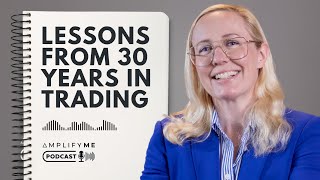
In this career‑insight interview, host Anthony Cheung talks with Kate Hill, Global Head of Trading at Aviva Investors, about her 30‑year journey through Citi, Morgan Stanley and HSBC and her current leadership role. Kate describes her first exposure to a trading floor in 1994, the evolution of her education and early career choices, and the major market shocks she lived through – the Asian emerging‑markets crisis, the carry‑trade unwind, the global financial crisis, and COVID‑19. She reflects on the intense work‑hours during tail‑risk events, the shift from a sales‑trading mindset to data‑driven analytics, and the cultural nuances of the large banks she worked for. Kate explains how the Global Head of Trading role is now focused on people management, regulatory compliance, and technology strategy rather than day‑to‑day trading. She shares a personal story about taking a leave of absence after her husband’s terminal illness, the impact on her career trajectory, and why moving to asset management appealed to her. Finally, she offers practical advice for students and early‑career professionals – research market structures, clarify performance expectations, and understand the evolving role of technology – and looks ahead to the future of trading, emphasizing electronic platforms, data analytics, and AI while acknowledging the need for non‑electronic contingency plans. The interview blends personal anecdotes, industry insights, and forward‑looking perspectives.
Chapters
Hello and welcome to this career insight session where I am joined by Kate Hill, the Global Head of Trading at Inviva Investors, to explore a 30-year career across Citi, Morgan Stanley, and HSBC. We are going to talk about stepping onto the trading floor for the first time. So Kate, I'm going to take you back to, I think it's 1994, which I think a lot of people are going to be interested to know what was the trading floor like back then. To navigating pivotal market moments. I know you've seen more than a few. Cultural differences between top institutions and how technology is reshaping trading, which I know is something you are very involved in. We'll also dive into some career advice for students and what excites her the most about the future of markets. So Kate, welcome. So great to be having this conversation.
Thank you. Thanks very much for having me.
Perhaps just to kick things off, someone kind of hears the terminology of the Global Head of Trading and also Aviva Investors. So what is that role and who are Aviva?
So Aviva Investors is the fund management arm of Aviva, as in the large UK-based insurer. We have about £246 billion under management in a variety of strategies across fixed income and equities. And the role of Global Head of Trading, I guess, is to manage and oversee the trading teams that trade for and on behalf of the portfolio managers responsible for managing those assets. So, we're a team of about 30 people. We have an office in Singapore, one in Toronto, and the majority of my team's based in London. And each of those— so the team is broadly split into smaller teams of asset class specialists that focus on rates, credit, equities, and so on.
Okay, great stuff. Good to get the context. And I remember when we met probably, what, like a year ago or so, I think one of the things I I probed you for and found out about your history was when you started. And I was particularly interested because you started back at Citi on an internship in 1994. And one of the events we met at was specifically around women in markets as well. And I just kind of had that question of like, what was the trading floor like when you went on it for the very first time, going all the way back to that internship at Citi?
Oh, that is a very long time ago. So I guess probably, I should put that into context, right? So, a summer internship was obviously, is very, very commonplace now, and most of the large firms do it. But at the time, I was really just looking for relevant work experience. I had told my father that I had lined something up for the summer and that I was working on it. Um, and in essence only actually applied for the Citibank summer internship program. There was no plan B. Um, and I didn't really know or understand what I was applying for. It was the world's tiniest ad in a career bulletin and it said, send a standard application form to the following address and mark which of these you would be interested in joining. It was corporate finance, it was mergers and acquisitions, shipping, and sales and trading. I knew nothing about any of those, but I thought sales and trading seemed to sound the most interesting, so I ticked that box. And sent off my application form. Didn't hear anything, which was bad. And I phoned and phoned and phoned. I think her name was Victoria, if I remember rightly, in HR, who I spoke to pretty much every week asking, um, you know, uh, is there any chance of an interview? And eventually she caved and I got my interview, and then I got invited down to, to join them for the summer in sales and trading. The Citibank office was actually at the top of the Strand, so not in the City or in Canary Wharf. And it was a fairly unassuming building. And the trading floor, by modern standards, was tiny. Not purpose-built in any way. And I'd never seen anything like it in my life. It was a, you know, a room, a very noisy room with desks quite close together, but a lot of screens, and not flat screens, big fat chunky screens like old school television. And I just thought, what are all these people doing? You know, why is it so noisy? And I honestly, I think probably my, one of my first observations is it didn't look like a proper job in the sense that It did. It just seemed to be more fun than work. Um, and so it, so it proved to be the case. Um, so in terms of what was it like, most people were quite young, I would say. You know, that was one of my, uh, observations. Um, and of course most, most of them, uh, were men, but I wasn't really conscious of that. I think in 1994 it was kind of as I expected it to be, so to speak. So, but yeah, I knew pretty much within hours of walking into that room that it was probably going to be a fantastic summer.
And then, could I just go back to, you saw that ad, so at the moment you're picking these specific finance-related roles, but where did finance come from to start with? So, why weren't you looking at all other types of jobs? What led you to that?
Oh no. So, um, so if I go way back when I was, I suppose, uh, deciding what to do at university, I had a choice between fine art and something more, you know, related to economics and politics. So I chose to do an economics and politics degree at Newcastle. Um, and that's where the sort of finance interests came from definitely, you know, free market economics, that sort of thing I thought was incredibly interesting. And I specifically chose to read economics and politics because I didn't think those two could be split. Thought those, you know, they're, you know, inextricably linked if you like. So that's why we ended up in finance, because that's what I was reading at university.
On that point, do you think it's more linked now than it was, and it has been from when you started your career on that point, on the intersection of finance and economics and politics?
That's a really interesting question. So I think, yes, the two are very much linked, but I think markets are quite a strange beast in the sense that they don't always react to what you think they're going to react to. So geopolitical risk comes into the fray and out again, a bit like the tide. So it's not always— my sort of moral compass, if you like, is always a little bit shocked that they don't react to various political issues. But that's been the case for the last 30 years, and I don't envisage it all it'll change for the next 30, to be fair.
Yeah. And looking at those 30 years then, I mean, one of my next questions was going to be, you know, some of the pivotal moments, the mark. So there's two sides. There's market events, because the recent ones that people will be fresh in mind, there's the COVID there's the European debt crisis, there's the financial crisis. There's others prior to my career as well, very meaningful ones. That you would've been part of? So on the market side, but also on the career moves and some personal decisions. So when you reflect back on those 30 years, what are some of those market events and some of those more personal decisions that stick out to you?
Across market events, I think, you know, from a trading perspective, the market events that sort of really stick out are the ones that have, you know, a very significant impact on what I would describe as the proper functioning of markets. You know, so normal, what, you know, tail risk events that aren't, you know, where your ability to trade and execute is severely challenged. You know, those are the probably the ones that stick out the most. Probably the first one's probably, you know, the emerging market crisis across Asia, which, you know, I, which now of course we're very familiar with trading restricted currencies. But of course there was a period before that all happened where some of those currencies were more freely tradable. That was probably the first sort of shock. And then I suppose the global financial crisis, obviously we talk about that as it, as it's a point in time event, but it wasn't really a point in time. It was more of a series of smaller catastrophes that ultimately led to a very, very big disruption in markets. And I remember one clearly, which was when we had that enormous move in Kiwi yen and the carry trade started to unwind. And now that sticks out because I got married and for various reasons I got married on the weekend and I wasn't able to take my honeymoon immediately because we had to make sure that desk was covered. And obviously in that market environment, that was super important. So I worked for a week after I was married. And in that week, I think I'd, I'd never worked as hard my entire life. The phone just rang and rang and rang and rang. Um, and we just dealt and dealt and dealt and dealt. I mean, it was so volatile and so crazy. Um, and then I went on honeymoon and that sticks in my mind because all I did was sleep in the first I was, I was in a lovely hotel, uh, on the Amalfi Coast sleeping a lot because I was, I was so, so exhausted from it. So yeah, that's, that's the one that sticks in my mind.
Question on that. When you're in the middle of one of those periods, like that week you described, is it just kind of survival instinct and you're just running on pure energy at that point? Like what? What is that actually like? Because when people, especially young people, hear that, like a whole week of intensity, like what is that? What's that actually like? And how do you actually get through that?
I don't, you don't really get the choice. You don't really, it's not a decision, right? So in the sense that at the time, uh, I was an FX salesperson at HSBC and you, you have a sort of a split mandate. You have a responsibility to your clients and looking after their best, best interests, and you have a responsibility to all the traders that you work with. So, it's, it's not an option. It's not optional. You have, you have to fulfill your role to the best of your abilities in, in, in, in that space. And to be fair, if that's, if that's not something that you like doing, or it kind of, You know, fills you with fear, then you are probably in the wrong job. And arguably you would've realized that, you know, many, many months in advance of a financial crisis of that scale. It's, you know, it's just so overwhelming, I guess, you know?
Yeah. And so when COVID happened, how did COVID compare and contrast and when something like COVID happens and you have that big market disruption, having seen several other market disruptions, do you feel any better prepared with that experience?
Yes, I think so. I mean, I think a very wise person once described the carry trade to me as picking pennies up in front of the steamroller. And if you've— it's interesting, it's very interesting people's perspective. Depending on when they join markets as to, you know, how shocked they are by these type of tail risk events. And the argument would be from a COVID perspective, that was very different in terms of the factors that were driving markets, but certainly not shocked from the reaction function necessarily, wherein I think if you'd have just joined financial, the financial service industry, that would've been a wow, you know? And I think certainly from my perspective at that point, my predecessor had announced her retirement. I was kind of getting over the shock of her leaving 'cause she was a very, very dear friend of mine. And also the news that I was going to do her role when COVID sort of happened. So she actually left the week that we removed ourselves from the office. So I was running around, you know, um, making sure people were able to work from home, you know, sorting out screens and so forth. So, but again, um, very similar to that week after I got married, didn't really have time to think a lot about what was actually happening. It's only when you, you get a moment to stop and reflect back, do you realize, oh wow, okay, that was, that was pretty big. Yeah. But in the moment, I think you're so focused on, on what you're doing.
Is there ever any points then when you have, say, new early careers people working within your team who are seeing like COVID is their baseline of like they start, that's their experience, their early career. Do they look to you to have these sort of conversations then? Or is it more driven out of data analytics these days to draw these conclusions and for them to learn? How much of it is a quantitative versus qualitative kind of assessment when these early careers people are talking to someone like you?
So that's interesting. So, um, You know, if I reflect back on some of my role, so, you know, one of the reasons why FX salespeople started really early was to give themselves, I suppose, half an hour, 40 minutes advantage on their clients so they could effectively prepare what's, what was laughably described as a morning rundown, right? Where you would have to write your own little commentary on what had happened in, you know, New York and, and Asia, and then be in a position to phone your client, actually speak to them, and, and talk about market events. And, you know, one of the reasons that you could do that is obviously you were drawing— at Citibank, we were drawing from all of the local offices plus the news channels that we had access to. But there was a, a real difference in terms of the news and information that the large banks had access to versus the rest of the industry. So you were able to add, add value really quite simply because your information was better than the next chap's. Now, of course. The world is very, very different and we're probably in a, you know, as close to perfect information as you can get. So there's nothing really from a salesperson's perspective that they can add or tell a fund management client first thing in the morning, other than, you know, perhaps some of their thoughts on flows they've seen and client activity and so forth. So you can imagine in terms of the data that's being collected, I mean, that's just fascinating. And the processing and so forth that goes on when, you know, you look back at different market environments, correlations, and so forth. So that, I think that's changed meaningfully over a 30-year period. Yeah. And of course you've, you, you know, added on top of that, um, uh, I, my memory fails me, but there was an incident I think in Indonesia in the early '90s and I was able to, the, we knew it was bad because, um, we could see smoke and fire in the city from our local office. And I was able to tell one of my clients who had a position, right? But now of course that That would be livestreamed on some form of social media. So even that local edge has gone. So it's a very, very different world, I think, for new people joining the industry to the one that I joined 30 years ago.
Okay. Well, that kind of leads me on then to talk a little bit about, you've worked across some of the biggest institutions, and I think a lot of people forming these ideas about which firm they might want to work for, as well as the role. I know you were at Citi, Morgan Stanley, HSBC in your current role. Just wondered what were some of the cultural differences? Because there's some more international focus, there's some more pure play US investment bank. There's where you're at, at the moment, maybe more UK-centric. So cultural, operational differences between those firms and how did they individually impact the growth of your career?
That's a good question. I suppose I was pretty lucky in that I started at Citibank, which at the time was the dominant force in global foreign exchange, huge net network, you know, and really at the top of its game for, for a number of years. But probably the biggest takeaway, I think, for anyone new to the industry is to understand that these large firms do have a culture. So I think when you're at university, it's quite hard to get your head round, well, what do you mean? What do you mean by that? There is a— and there are— and I would say at large global banks, the differences are really really subtle, but it is worth taking your time talking to as many people as you, you can possibly find that work or have worked at that institution, um, to kind of get a feel for, you know, is that, is, is that the sort of place where I would, where I would thrive? Is that the sort of environment that I would do well in? You have to do your due diligence, you really do, and there's no, there's And there's no way around that. So the more effort you put in that, the better. But the other thing is, I would say that those— it's not a static journey in the sense that the culture of those large institutions, albeit it changes slowly, it does change. So, you know, the HSBC of 30 years ago is not the same as the HSBC today. I would say The environment that I really, really enjoyed working in, and I think it was probably because it was sort of, I was at the right stage of my career, um, with some great people, um, was at Morgan Stanley. Um, it was a really entrepreneurial type environment. You were, it was very clear what your objectives were as a salesperson, um, and you were held accountable to achieving those objectives. And I would say the second thing was the P&L system between sales and trading was the best I worked under. It was really collegiate. It was very much about shared goals. So the, whilst the roles and responsibilities of sales and trading were different, you definitely felt like you were working together as a team. So that was a fun, that was a fun place to work. But it, it, I think it shows you, you know, regardless of where you're working, if you've got clear objectives and there's some transparency around, you know, how your performance is judged, then you are probably going to, to, to be in the best place possible to succeed.
Uh, in your current role then, how does it differentiate when you become a leadership position? So when you are a Global Head of Trading compared to some of these, uh, earlier roles that you had, like how does your day-to-day shift and what's that process or journey like?
Okay. That's, that's interesting because the first thing is, despite being called the Global Head of Trading, I don't trade. Myself. I think at some point in your, in your career, you, you're, you're ready to step back from that. So I, I, I was, and to focus on other things. Now, for some people, that would, that would mean that the, that, that makes my job incredibly unappealing, right? Um, and I certainly have team leaders that, that work with me that are, are still very much focused on trading and they love trading and, you know, they, they, whilst they're happy to manage a smaller team, my role probably doesn't excite them as much. But I guess one of the things, so the first thing, the most important thing is to actually manage the team, hopefully to, to achieve their objectives and the objectives of the firm. But it's more about the people side of things in the sense of there's always something going on, whether that be, you know, babies, weddings, you know, caring for elderly parents. So there's a whole sort of people management, and that's, that's getting that right is a huge responsibility and, and something that I love doing. It also means hiring individuals and, and I guess trying to build the team for not only the needs of the business now, but where we think the business is going. The other thing is reg, you know, regulation, all of the regulatory obligations that we have, obviously to deliver best execution for and on behalf of our clients, but reg everywhere. So reg, regulation that impacts our counterparties. So SACCA, GSIB, you know, all of these sort of post-global financial changes that have been made with respect to banks' balance sheets, they can have an impact on liquidity and so forth. So, people, reg, and I guess the third thing is managing, I guess, for the technology needs of the desk now, but also where it might be in the next, you know, 3, 4, 5 years. So having a think around how the needs of Aviva investors' clients might change and making sure that we are ready for that. So I guess those are the three, those are the three big day-to-day functions, which sadly no longer includes actually trading myself.
Did, do you ever miss that then? That, like that, that, that feeling, the picking up some pennies in front of the steamroller. Do you ever go, well, I—
Yeah, but I don't think, I mean, Uh, um, I, I've occasionally volunteered, but no one that, that works with me think it thinks it's a great idea. It was a bit like, you know, it would be bit like letting your granddad loose. You know, it's not, it's, it's, it's, it's not for me. I'm, I, I recognize that the, my skill set is very much out of date, so I'll leave that to people that are more highly trained than I've been.
Yeah. You're too, too modest. I know that managing people is probably the ultimate challenge, which is your full-time thing now. So, but with, um, when I was looking through your, you know, doing a bit of LinkedIn investigation, looking through your kind of, uh, career history, I did, I did notice that there was a formal leave of absence. Through your career, and I was just kind of interested to know, the fact that you're in the role that you're at now, which I assume is a very senior seat, but it did include a gap there. I just wondered, like, what was the decision that shaped that move, and how did that work? How did it come about? And a little bit more understanding about that.
Yeah, sure. So, that wasn't a planned leave of absence, that, that was as a consequence of circumstance. So what happened, um, very sadly, my husband, uh, was diagnosed with, uh, stage 4 bowel cancer. And my son was, I think, 2, 2 and a half at the time. Um, and it's the sort of news that hits you like a train. Um, and at the time the doctors told us that he was inoperable and incurable. And you know, it's the classic question, how long have you got? And, uh, the chap said, um, 6 months. So it took a while for that news to sink in. Um, and it's gonna sound crazy, but at the time Um, I did actually carry on working for a bit, and that's, that seems strange when I look back now. I was like, that's ridiculous. But when you're, I suppose that sort of news hits you, you, you cling to the familiar, you cling to the routine, and you kind of wanna be normal. You just, you know, the, the, the size of the elephant in the room is so enormous that actually, you know, putting one foot in front of the other and going in and out of the office, um, offered a degree of, of comfort. Um, and in the end, uh, within a, within a month or so, it became obvious that that was a really bad decision for everyone. Uh, and it was the decision to leave HSBC I made in about 30 seconds. Um, and I phoned my husband and I said, oh, oh, just so you know, I'm just, I've just resigned. I'll see you later. I didn't even think about it. He went, okay, what do you want for tea? And that was it. Because it seemed such the right thing to do. As it turned out, I had two fantastic bosses at the time who agreed that I would take a leave of absence for, you know, indeterminate amount of time so that I would have the security of a role at some point back at HSBC, which was a very generous and fantastic thing for them to offer me. So, um, I left, um, and we had about, I suppose, 12 months together, um, trying to get him better. We, we never really gave up on, on trying to cure the incurable, um, but in the end, he lost his battle and died in January 2013. So that's why there's a leave of, uh, absence. Um, I'm very grateful for HSBC to allowing me to effectively not resign. Um, and, and just be away, uh, for that period of time.
Well, well, thank you for sharing that. I mean, that's definitely a, a huge event to happen. Um, so it's a So from going back to work then, I mean, where's your head at after a life situation like that? I mean, are you, does it make you reconsider from a career perspective? Like, what do I want to do now? Or are you, is it the natural default to go back to, as you said, that the initial news outbreak where you're like, just need to get back to one foot in front of the other and go to what I know and familiarity is gets you back on the horse again.
Yeah, I think so. So I think, um, it kind of— there's, there's— if I look back on that, there's no way that that doesn't impact your perspective on life. You know, we— certainly from, from my perspective, it changed— it didn't change my priorities, but it kind of put everything into sort of sharp relief. So my primary purpose, well, obviously I was, I was, um, now at that point I was a single parent, not planned on being a single parent, and I still wanted to, you know, look after my son to the best of my abilities. Um, and you know, that, that becomes your number one priority. So, um, I decided to go back to work. I went back to HSBC initially. Again, I think it was, it felt like the right thing to do. It was familiar. I knew everyone, everyone knew me, you know, I didn't have to explain or go through everything. And it, you know, it just, it just felt like the right thing to do. I think in hindsight, if I'd have been a bit braver, um, and a bit more focused on the longer term. I maybe would've taken more time to think about what I really wanted to do. Um, and I might have, you know, if I ever, looking back on that decision, I probably went back to work a bit too soon. Probably should've taken, you know, a bit more time to think about Do I really want to go back to a bank or do I want to do something different? You know, I think if I'd have taken a bit more of a step back, I would've ended up at an asset manager sooner than it actually took to happen. And I think the decision to join Aviva Investors was, was a really, really good one. It also gave me a little bit of flexibility as a single parent. So I had, this was pre-COVID, which was fantastic. I actually, had one day a week, the ability to work from home. And I never really used it. Probably did one day every 10, cuz no one else was working from home. So it kind of feel— felt a bit weird. But what it did do very crucially was meant that if the, if my son was doing a reading at school or, you know, which was almost always at 11 or 2 o'clock for some reason, no one knows why. that I could actually go, you know, um, and if there's just one of you, so there's no, you can't, you can't split that responsibility. That's super important. So that was a really, really good decision. But yeah, I think it kind of gives you a different sense of perspective and I think I'm much more focused on my own happiness. Than I was before my husband got poorly.
And I know your son just got his GCSE results last week.
He did.
Yeah. And it's all gone well, so all good.
It's all gone well. Yeah. I'm very proud of him. Yeah.
Amazing.
And yeah, it seems to be turning out all right, which is just fabulous.
Yeah. You mentioned there about asset management, like the move to asset management. Might have come sooner. What does asset management then offer you that's not the same as working on a sell-side institution?
That's a really interesting question, and I'm not sure I can give a very good answer to that. You know, because, you know, from the outside looking in, there shouldn't be a big difference, right? These are both commercial enterprises. You know, I wouldn't necessarily say investment banking is cutthroat and vice versa, asset management is not the softer version. You know, these are, as I say, commercial enterprises with very strong focus on performance. I just think The culture is more supportive of the individual, right? To get the individual's, you know, best work and a little bit more understanding, I guess, of life, right? You know, that, that, you know, life is not, uh, a straight line and, you know, you, you sometimes you need a bit of give and take. So yeah, I think, and also for me personally, I I'd worked at 3 large institutions, ostensibly doing very similar roles. And I knew that a 4th large institution in a similar vein was not going to be that different. I was definitely at a time in my life when actually, let's, let's see, let's see if I can repurpose, recycle some of the things that I've learned. you know, in the last 25 years and put them to a different use. So I think it was also the desire to go and do something a bit different.
Yeah. No, that makes, makes complete sense. And that word recycling of that experience and that, that knowledge, maybe you could share some of that for the students and graduates who are looking to work in a career in markets. In terms of advice you could give in terms of breaking into the industry, but not only just getting in, thriving long-term, like what are some of the things that you would say to help them?
Okay. So in terms of breaking in, it's not, it's not like you see on the telly. That's the first thing. Do research, read around the subject and understand that You know, financial markets have a history. You know, there wasn't a grand plan in credit markets, in FX markets. You know, no one sat back in, you know, the late '60s, early '70s and went, oh, I know how to best design a fully functioning global marketplace for assets. This is what we'll do. And they actually have grown up with different tech. And there's a history to these things, which alongside the regulation informs the market structure, right? So it's quite difficult to figure that out from the outside looking in. But I think it's a really important part of the discussion when you consider Do I want to work in fixed income? Do I want to work in equities? Do I want to work in FX? Understand how those marketplaces are different would be the first thing. And the second thing is, I guess, when you are in like the working world, and I think this is true of not just finance but all jobs, you know, it's very easy when you're a student You know exactly whether you've done well or not because you'll get an exam, right? My son's just experienced, you get a score, you know, someone will tell you, uh, right, this is, this is how you've done relative to your peers. This is your score. Yeah. In the working world, there's no such thing as a score. Yeah. There are the objectives and goals that you're given and how you perform against them. And the single most important piece of advice I can give anyone is to understand what it is you are being asked to do exactly. Not what you assume is being asked of you, but exactly what you are being asked to do. And it's really valuable lesson, whoever is your boss or your boss's boss. To actually sit down with them and go, I'm not sure I 100% understand. Please, can you clarify? You know, what does this mean? What does that mean? How will I, you know, at the end of the year, how will you rate my performance? There are very few people that do that in, in any great depth or detail. And certainly if I look back on my career, I, I've gotten the wrong end of the stick so many times and wasted a lot of time and effort, uh, and ultimately money because your performance will determine your, your outcome from a new remuneration perspective. Because I didn't ask the right question, I didn't really understand what was being asked of me. So, you know, if you get that right from the very beginning, I think you'll set yourself on a path to success.
Yeah, that's very sound advice and definitely probably across industries, like you say, not just finance, it's probably suitable for everything.
Yeah. Because you come with a perception of what good looks like. But how do you know? You know, you've only just, you've arrived at the firm, you know, 2 minutes. So, you know, ask the qualifying question.
Okay. Final one to wrap things up. Let's just go to lastly, looking forwards, and what excites you the most about the future of trading? So, could be technology, talent, how the industry overall is evolving. Is there one facet in particular that you're— it's getting you excited?
That's an interesting question. The— it sounds— this is a real sort of cliché comment, but it's so true. The only constant is change. I remember in '95, '96, there were two main providers of electronic trading for foreign exchange, which is kind of like Pepsi and Coca-Cola at the time. Right. One of which was Atriax. All right. And only people my age will remember that name. And the other one was FX Alls. And we know who won that battle. But I also remember what someone said to me when we were talking about it. They said to me, oh, this e-trading nonsense, it'll never take off. Oh, okay. And if you look back, you know, uh, the technology that we had in the late '90s to now, yeah, you can, you know, you can, you can only imagine what's coming our way in the next, you know, 10, 12 years. That I think is really exciting. Um, I also think that You know, electronic trading of any asset class is a really, really useful tool. But it is only that, it is only a tool. And, you know, for those tail risk events that we're talking about, you know, the machines stop working. You know, you might remember the Euro-Swiss incident when the SNB did what they did. At that point, all the electronic trading pricing kind of hit their circuit breakers. So nothing was trading via electronic means for a period of a few minutes, but it might as well have been a decade in FX markets. So there's always gotta be a plan B or a plan C. So they are useful tools. I'm excited about the use of all of that data for pre-trade, having traders being able to make better, more informed decisions, you know, recycling that data. I think that's pretty, that's pretty exciting. And we've barely scratched the surface of what we could do there.
So would that be an emerging subsection of your team, like data engineering or data analytics?
Yes. Yeah, we, yes, we, we already have that. Yeah. It's something that we, uh, we look at. Um, you know, there's a, there's a whole universe of asks not started on yet. Right. Um, in terms of the difficult thing is in a, in a, in a world where you can point them in any direction is trying to figure out what's the most worthwhile use of that resource for now. You know, but you can see as people get better and faster, you know, using AI to code rather than having actual coders, you know, that will be coming, you know, we'll be able to solve some of these queries and problems faster, quicker, higher. So that's exciting. Yeah.
Okay. Well, look, let's wrap it up there. I just want to thank you once again for giving up your time. I know this has been a few months in the making, so I really appreciate, um, you're very welcome.
Really enjoyed speaking to you. Thanks ever so much, Anthony Cheung.
All right. All the best. Take care, Kate.
Thank you.
More from Anthony


Inside the Biggest Banking Stories You Need to Know This Week (Anthropic, Diageo, Private Credit)


Inside the Biggest M&A Deals You Need to Know This Week (UniCredit, GameStop, eBay, Eli Lilly)







AI Breakthrough or Hype? Anthropic’s Claude Mythos, Tim Cook Steps Down & LIV Golf Collapse