From Trading To Netflix: How Andrew Osayemi Overcame The Odds To Achieve Success Across His Career
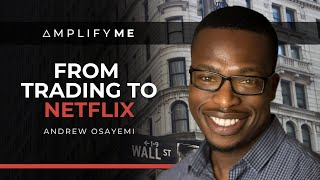
Andrew Osayemi grew up in Peckham on a social-mobility scholarship, worked at RBS in New York, then pivoted to TV production after the 2009 financial crisis and sold a show to Netflix. Now Global Head of Corporate Partnerships at AmplifyMe, he uses performance simulations and partnerships with Morgan Stanley to help underrepresented students enter finance.
Chapters
Hello and welcome to this career insight session where I'm joined by Andrew Osanyemi, who is the Global Head of Corporate Partnerships here at AmplifyMe. And before we kick things off, just wanted to give you a brief run-through of the, the life of Andrew because it's such an incredible story and one that really resonates with the mission of Amplify Me and going all the way from getting a social mobility scholarship that took him from Peckham to private school, landing a role at RBS, moving to be a trader in New York, being made redundant, coming back to earth, living with your parents, coming out of finance, going into TV, becoming a TV producer, becoming a worldwide recognized TV producer, I must add as well. And then kind of giving back to how you got your opportunity and working at different diversity firms, running their initiatives. And that really is kind of why you're, you're here with us, but really wanted to dive into that story because I think it's such an important one and I'd love to discuss it more, but perhaps kicking things off, Andrew, we could go right back to the beginning about growing up in Peckham. What did that look like in terms of your aspirations and your peer group at those young, young years in your life?
Yeah, no, thank you. Thank you, Anthony Cheung. Thank you. I was like, who's that person you're talking about? Oh, it's me. Yeah, growing up Peckham, one thing I say is that, you know, you can, you can you can never predict or plan where you're born and who your parents are, the situations that you grow up in. You just have to make the best of wherever you end up. And, you know, and I say I was lucky, lucky to be brought up in Peckham. So this is many years ago, like Peckham has changed, but back then Peckham was like low social housing, like, you know, people from under deprived backgrounds, like low socioeconomic, like aspirations. People just wanted to just like finish school, get a job, working somewhere, earn some money. Like aspirations wasn't super high. Like, you know, I mean, if you stayed out of like prison, got out of trouble, that was good. That was a good result, uh, when I was growing up. So, um, but there was always like something in me that One, just like, I'm not gonna lie and say I wanted to go into finance. I just wanted to get out of that, of that, of that cycle of, you know, this lower socioeconomic, um, like, you know, environment that some people get trapped in. And that was it. I wanted to get out, make enough money for my family, myself, and just, just achieve, um anything in life.
And you, you ended up getting a scholarship. So how did that come about and what was that process?
Yeah, so do you know what, it's a funny story, funny story. So I mean, I was a bit naughty at school, so a bit naughty. So I remember there was one day, right, I'm naughty, I get a phone call and, you know, you pick up the phone and it's like, ah, you get a call from school. It's like, Andrew has to come in to, to, to come into school the next day. Obviously my parents pick it up. You know that there's like a look that your mom gives you, like, you know, it's not— no one ever calls you in to come to school for like good news, right? So it's that look. She knows I'm quite naughty. She knows that I like to play pranks. So she's thinking, one, you're taking me away from my job, you know, you know, we need to earn money, like I need to come into school with you now. Uh, and two, like, what the hell could you have done so that like the teacher calls the house? For you to come in. So like, needless to say, that night I got like spoken to quite, quite harshly, um, and then dragged in the next day. I was dragged in, sat down in the class, uh, and the teacher said, you know, sat me down and said to my mom and said, look, Andrew, uh, I just want to— Mrs. Osiemi, thank you for bringing Andrew in. Um, I was like, is it, is it about what has he done now? Like, you know, has he— I'm really, really sorry. I'm really sorry. I'm like, you know, In that night, like, kind of, my parents from Nigerian background, like, in that Nigerian, really apologetic, like, really sorry, sorry for whatever he's done. We're sorry, we've disciplined him already, don't worry. And the teacher's like, no, no, no, no, no, it's nothing to do with being disciplined. Um, I just wanted to let you know that— and I think I was about 8— and she just said, just want to know that Andrew's, like, scored one of the highest in Suffolk in, in a national maths test. 'And have you ever considered like, you know, taking him to get a sociability scholarship that was being offered?' And this scholarship allowed anyone from an underprivileged background who earned below a certain amount to get a free scholarship to go to private school if they did well in the test. And he said the word, and like a phrase that really stuck with me for the rest of my life. And he said, you know, Andrew has loads of potential, he just needs to figure out how to make it count. And it's just that figuring out, which is what I've been doing through my whole life and has motivated me to go on and do different things. And from that period, from 8 to 11, my parents just said, you know what, you need to try and just focus on trying to do well at this test. I did well at the test and then I got a place to go for free to a private school in Catford called St Dunstan's.
And going to private school, because I think, I guess young people have lots of different situations, like getting a scholarship or the first time you go to university, and it might be completely the first time you've gone to the north of the country or the first time you've gone to London. Or so how did you find that, that kind of situation of just kind of landing there as a scholarship student? Amongst all these other people?
Do you know what, it was so strange because one, I thought one of the only students that took public transport to school. Like, I was coming from Peckham all the way to Catford. I was taking like 2 buses. You're like, what bus did I take? Like the 12 or 36 and then the 185. You know, I had to leave really early, so wake up really early to get to school. I had to avoid people seeing my school uniform and saying, oh, that's that kid that goes to that school, like, you know, let me mug him or whatever. Get to school like tired and then hearing people, you know what struck me was hearing people at halftime, they're like, where are you going? I'm going, I'm going skiing, I'm going, um, I'm going to Disneyland. I'm just like, I'm just going to hang out in my estate with my mates, that's what I'm doing. So it was that difference. And I think, you know, many people, and I think what we do at Amplify, and I think is, is that you know, we help so many people from different backgrounds, but when you get to somewhere, you get at a firm, a corporate firm, we don't really appreciate that the different routes, different people and backgrounds people have come through and come from. And I definitely felt the first couple years for me was a steep learning curve in terms of one, in my primary school, you know, I was one of the top performing students. I was super smart, but I didn't have to work really hard because I think maybe I was just naturally smart. When I got to secondary primary school. I mean, people studied Latin, French from when they were like 5. I was just way behind, and it made me feel, um, one, a little bit like, you know, lacking in confidence because everyone else was so far ahead of me, um, and two, just made me really go. Some people— and there was a group of us that had a scholarship, and I saw that it went both ways. Some people can get completely demoralized and just, you know, look, I'm never going to be any good, and then completely, you know, falter. But for me, I was just like, you know what, I'm going to prove— I'm going to prove them wrong, right? I'm going to prove I need to do well. And, and that allowed me to get a bit of resilience. But it wasn't easy. It was tough to, to settle in.
So coming out of that, you said you were kind of feeling things out, and that's kind of been your career to date. So what were you thinking in terms of career then at that point? So getting out of school and going to— so tell me about that transition. Yeah, uni, what happened at uni, and then what happened with the first job.
Yes, I remember. So like, so this is my A-levels, and I remember this, it was I think mid-over A-levels where you get your predicted grades. So teacher sat me down, and I don't know whether it was they didn't like me, I was too, like, too naughty, just whatever. This was the chance I felt that the teacher said, I'm gonna get Andrew back, you know, because teachers hold your future in their hands. Back then, they were the person that gave you your predicted grades that you took to UCAS, and then you would get a selection of universities. So, you know, I went into the meeting thinking that I could get like AAB or all A's. And the teacher was like, no, I'm gonna predict Andrew. I think it was CCD. And, and so these are the unis you can go to. But me coming from Peckham, and I think that was one thing, like, one thing that's always— I, I really appreciate living in Peckham was the fact that is like people that are born and raised in Peckham are just like, we're gonna, we're gonna succeed regardless, we're gonna overcome adversity, like, you know. 'What's the worst that could happen? I've grown up in this area, I'm just gonna bet on myself.' So I said to my teacher, 'Okay, if you're going to predict me that, I'm not going to apply for university and I'm going to prove you wrong.' And I still remember the day that I turned up to get my grades and I walked in, um, and this shows you how naughty I was back then, but I walked in, I looked at my grades and I got, I think, A in maths, A in economics, and B in physics. And I walked over to my teacher and I said, look, I told you so. And that was my, like, you know, I proved it. But again, I was like, you know what, I'm not gonna let anyone stand in my way, you know. And I think that's a lesson to anyone. You, you're gonna get rejection. People are going to tell you that, you know, you don't— you're not worthy of getting a job working in a bank or in a, in a law firm or wherever your aspirations is. But it's up to you to harness that and just say, look, I'm going to prove you wrong. Um, and that's what I did. And that which led me to not going to uni for a year because I didn't have a university to go to. Um, and I literally worked, worked at— got a job, um, working at, I think, a motor finance company, um, and just earned money for a year. And you could just imagine Earning money as an 18-year-old living at home, um, just meant just partying at the weekend.
Yeah, life was great.
Yeah, it was great, it was great. But it did also taught me about— because I came at the very, very entry level without no qualifications, it taught me that. And I saw everyone else that was earning a lot more than me had a degree. It actually made me realize the importance of having a degree, and with that, which made me go to apply to go to Warwick University the next year. To study economics.
So coming out of then Warwick, were you— or during that period, were you thinking, right, yeah, finance? Or like, what would you tell me, what was the process? Was it— because you mentioned law there as well as finance— was it like, well, how am I going to make the much— as much money as possible? Was it as quite black and white like that? Or was it, this is finance, and then it's like, well, what parts of finance? And then were you on top of applications, or was it much more kind of random than that?
You know, it's a good question, and I think it was more for me, I'm gonna make money. So I was like, you know, very more money-oriented. And I think a lot of people that come from lower socioeconomic backgrounds, like, are focused on the money, sometimes to their detriment, right? Because then you end up in a career or a path or industry that, you know, you don't like, doesn't really suit you, um, but, um, you're going for it for the money. But what I did, so I said I'm going to make money, but I need to find something that is going to best utilize my skills. At university, I was a poker player, so I played poker. I was part of the Warwick Poker Society. I actually— playing poker actually paid for most of my university, so I didn't have to take like a student loan or anything like that. So I was, I was relatively good. And at the poker society, again it allowed me to meet people that was way out of my normal friendship group. I would never meet these people, um, and they'll probably never meet someone like me. But everyone was talking about, you know, if you're a poker player, you should go— like, trading will be perfect for you, trading would be, you know, great for you. Also, I watched the movies. I watched the movie— I mean, like, Eddie Murphy was massive back then, and I'm showing my age a little bit, um, but it was a movie called Trading Places. And it's about, you know, this kind of like homeless kind of like, you know, guy on the street who's played by Eddie Murphy. He has a chance encounter with a stockbroker. They switch lives almost. And now he goes from being on the street to like trading in the stock market, driving a Bentley, having a butler, living in a mansion. I was like, I want that life. So those two things, poker And, and watching that movie made me think, okay, trading, trading. But I didn't know how to get into trading. And it was just through chance really that I was on campus. Firms used to come to Warwick. We were lucky to have firms that came to Warwick. And everyone knew that, you know, these firms gave free food at their presentations. I turned up, I ended up speaking to a trader. He said that you should apply, um, and then I actually ended up— one of my friends or classmates or housemates, uh, was involved in a society, a diversity firm, um, and then through that diversity firm I was able to get more educated about, about, about roles in finance and ultimately get an internship at RBS.
And so I'm assuming then you managed to convert that internship into a full-time role, and you worked in London but then also New York.
Yes.
So I mean, that's quite— I mean, you literally are living the Eddie Murphy journey there.
You know what, I was, um, I was thinking about the other day and I was looking back, like, you know, I literally had a stopover in, in New York and I was thinking back to the first time I actually landed in New York. And I remember what, like, what happened was, um, I was at RBS for 2 years And they were like, you know what, do you want to go over to New York to work for a couple of days? And I go over, you know, I have a good time, and my boss comes back, says, what did you like? What did you think? What did you like? I was like, yeah, I loved, you know, the buzz, the city. And he was like, would you like to work there? And coming from, you know, Peckham initially, it was such— I'm so used to being in my comfort zone, right? You know, to go and live in a new place, in a new area, in a new environment, I was just like Instantly I just said no, I can't imagine being away from my family and friends. And then he came back, he's like, are you sure? I was like, yes, I'm sure. Then he came back, he said, you know, we'll pay for your accommodation. I was like, uh, no, no, no, no, I'm still not interested. Yeah. Then he was like, you know, like, your accommodation will be like a penthouse. And I was like, I started to get a bit more And then they threw more and more things in the package. And then there was one, one person that worked there that came from the same background as me. He said, look, Andrew, I know what's holding you back. It's that fear of, you know, the unknown. And it's time for you to, to like jump off the cliff, like, you know, leave your friends and family. And then I ended up going, living in New York, living in the penthouse which was paid by the firm, um, right in the middle of Manhattan. Um, just like, you know, the, the flat was so big I was able to have like a pool table, full-size pool table, um, like, you know, chairs, dining room, event space, and still have loads of space. I wonder like, what, what, what do I do with all this space? It was, it was amazing. But it was a great— it was just a great way for me to just see that you go from one extreme growing up in Peckham to the other extreme. And then it was the people allowed me to meet. So the people that lived in that area were all affluent, and it just allowed me to realize that, you know, there's— I'm no different from them, you know, like they are, they're driven, I'm driven, you know, like they want to succeed, I want to succeed. And that allowed me to overcome a lot of the maybe insecurities I had that, you know, like only certain people made it. And I think that was a great, it was a great opportunity for me to live in New York during, during that period.
So when you're at this kind of like that peak of that story, when you're in your, your penthouse, I mean, how do you then, how did you manage the relationships with your friends that you grew up with in Peckham? Did they start to see you differently? Did you yourself even clock that maybe I've changed, or was there any conflict there at any point? Because you're still young at that point. No, like you know, you can take these things for granted and start taking them as normal, and then that can be quite toxic. So was there any, any of that going on at that point in terms of your personal development?
Do you know what, to be honest, no, no, not really, to be honest. Like, my friends actually, they were like, this is a free hotel in New York, I could come out. So my friends are coming out every weekend, like, you know, partying a bit too much, partying a bit too much. Um, but they could definitely see, they could definitely see that, uh, like, I think my journey inspired them, if I'm gonna be completely honest, because they were like, wow, through me they were able to see that, wow, this is possible. Like, how could, you know, someone like us get this kind of opportunity to live in New York, this type of apartment, these type of people, be invited to these type of parties, this type of access. Um, I remember taking my uncle— my uncle came to visit me once. I was like, wait, he's like, yeah, I like basketball. I was like, okay, yeah, let's get some tickets. And then we were like front row watching like Kobe Bryant play against, you know, the New York Knicks in Madison Square Garden. Um, so just so many crazy experiences like that. But really, I think it inspired them and my friends and family. Um, But it was, it was definitely for me was I was— one thing I did which I implore anyone to do when you go to a new place, I didn't just hang out with Brits. So it's easy to find like expat community and then just hang out with Brits and you don't really immerse yourself in like the local culture. But I've had so many like New Yorkers, New Yorker friends that allowed me to become like just introduced to a whole new way of life, people And I think it made me better. And I think that was where, if I'm gonna be completely honest, my aspirations to fulfill some of my creative dreams that maybe I'd harbored from when I was young, by seeing so many other entrepreneurs, people making money in different ways, like, you know, that live in New York, that made me start thinking about other things. So it's great to do different things. And like work in different areas as well.
Yeah, no, I think that's really great advice. And just on that last point before we move forward, you were talking there about what sounded like a great boss who was there being super supportive, you know, helping, you know, your interest in your development, helping you to make that decision. So have you had other mentors just during the journey, like professionally and personally, and How important do you see that role in someone's development?
It's a good question. You know, I— this is the one question I get asked a lot. Mentors, mentors. And I, I haven't had many mentors because like no one in my circle has really gone to those kind of areas. No one's worked— no one in my family or friends has worked in investment bank.
All right.
What I have utilized is resources. So I've utilized resources like, you know, like the diversity charity I mentioned, like SEO, which I, which I, which, which helped me get into banking in the beginning. Um, like books, like I'm an avid reader of books. I read like autobiographies to like learn from people who've done it, like people who I aspire to be, and then kind of get things from their journey. So I'm more— so when people say to me, be my mentor, I find it like, whoa, whoa, whoa, whoa, whoa, like, you know, this is Like, mentorship is like a— I feel like it's a marriage, you know. You can get so much out of reading books nowadays, like listening to podcasts, YouTube, like, you know, find examples of who you want to be and just read about them, study them, and then try and follow the path rather than having someone direct you and tell you. Um, because sometimes I, I get— I have some friends that say to me, oh, The reason I'm not getting ahead is because I can't find a mentor. And I'm like, are you going to let that stop you when there's so much information out there that you can? So I would typically tell people, really read books, watch movies, YouTube videos, podcasts, and you will find as much inspiration as you need to make it ahead.
Yeah, great. Because that's something that everyone can have access to in that sense. And so moving on then, and wanted to talk about how your time at RBS ended. I know you mentioned before you had to— then you've gone from penthouse back into the back bedroom in Peckham, back to living with your family. And I think dealing with rejection is definitely something, I guess, whether you're a university student applying for a role in finance or whether you're in your career and you get let go, rejection and then resilience to get over that are really integral key ingredients, it seems, to, to have in life to, to achieve success. So talk me through that period and how did you deal with that.
Yeah, so I'm going to take you back. So, and again, this is showing my age, you know, um, this is, uh, 2009. 2009, I'm still in New York and I go— my boss comes to me and says, look, we want to give you a new contract to stay in New York for another 2 or 3 years, um, same conditions, more money, you could stay in New York. I could see— my boss said to me, I could see you obviously enjoy New York, you know, stay here, Andrew, this is a great package. It's the financial crisis, people are losing their jobs, Andrew, this is a good deal. Um, but— and it was a good deal, it was absolutely a good deal. However, my girlfriend at the time was living in London, so I had a decision to make. Do I come back to London? I like know the girlfriend who I absolutely love is in, is in London, or do I stay in New York? Like, also, and I've got my girlfriend, I mean, like, so yeah, she was like, you were having back and forth, would you come to New York? She didn't really like New York, you know, she's a Londoner. What do I do? So I said no. My boss said like, no, offered me more money. I said no. And I was like, look, I was gonna stick to my guns. No. And I said to myself, um, I'm gonna go and see what happens. So I came back to London, and after about 9 months, I got like one of those— came in the morning, said, Andrew, can you come to the 10th floor? Go up to 10th floor, and it's an HR rep and someone who I don't recognize, and they're like, give me an envelope. So you've been made redundant. So I was like, you know, you just get that feeling, especially when you're a graduate. So when you're a graduate, it's like you've been sold, you're— we're a family, we're together, you know, you're, you're being brought into the culture. So to get made redundant as a graduate coming through the graduate system, you just feel like it's almost like a gut wrench, like you've just been, like, you know, someone's like really, really, like you've been ostracized, you've been almost like just been expelled from your family. Like, these are people that I've like known, and it's, it's like, so I was so, I was so demoralized by it, I was so demoralized by it, but picked myself up, I walked out went home, and it really gave me a chance to think, okay, Andrew, what is the one thing you'd really like if you had, um, time? And the great thing about being made redundant from a bank is they, they do give you like 9 to 12 months like money. I'm not sure how it is now, but that's how it was then. So I was like, like, you've got 9 to 12 months, what would you want to do? And I went back to when I was a kid And again, very different background from everyone else. I grew up in a very religious household, so it was religious to the extreme where my parents didn't allow a TV in the house. So we had no TV. All we could do is just like read books. My mom and dad thought the TV was the devil, um, it's going to bring in— it's going to corrupt our minds. And now everyone has like small smartphones My mom and dad are addicted to smartphones, so like, it comes full circle. But, um, so we didn't have no TV. So growing up, we had to use our imagination a lot. So imagination, when we read books, when we play games. And as a dreamer, when I was young, I always like, you know, one day, like that one thing I wasn't able to have, I'd love to create something for TV. Because, you know, when you're not that— when you don't have something, you want it, you're almost more drawn to it. So I was like, I want to create something for TV. And that was my inspiration. I said, okay, I'm going to be a TV producer. I'm going to make TV content. And luckily my cousin was a TV producer, so we joined forces and started a TV production company together.
Hmm. So without, without diving too much into TV production, I guess my line of questioning on that side was, what did you learn from that experience that you've now kind of brought into your toolbox for, for your your current situation. So what, what did that world offer you that perhaps wasn't present in finance, in a trading role?
Yeah, do you know, um, like TV made me believe anything is possible. Like, you know, you, you take an idea, like, from, like, you know, it's just a conversation you have with someone, you have an idea, and then, okay, you write it, you put it on paper. You hire some actors, they act it out, they bring it to life, and all of a sudden you have something, you have a product, right? That's just started from your imagination. It's become brought to life. So it really got some of my creative juices flowing. It also got some entrepreneurial ambitions. You know, I always wanted to be out there making deals. And this obviously, this is related to what I do now. You know, obviously you make a product now you have to sell it. So I made a show, a TV show, basically about my upbringing, really, like, you know, born in, like, Nigerian parents, brought in, born— me being born in England and my siblings, and how that dynamic between you and your parents are. So like, you know, just a normal family sitcom, um, but now I had to go out and sell it, right? So you can imagine, I didn't come from this industry, so I would turn up to conferences, um, without no ex— no, like, no leads. Go up to speak to people, network, hand out my business card, follow-up calls, have meetings, get my heart broken, you know, be told that, you know, we're gonna buy your show, and then the person, like, goes quiet or gets— leaves their job, and then I have to start all over again. So I've got that learning of being, like, being able to sell yourself, being resilient, um, not taking all the knocks Um, but also being like, just keep, keep going, keep going, keep going, keep going. And that ultimately allowed me— led me all the way to be able to sell my, my show to go on Netflix. So that was one key thing. And that's why I can really empathize with students who— okay, you've left uni, like you've graduated, you don't have a job, you're desperate to get into banking or into trading. You need to pound those doors. I've done it. You know, you need to go to those like networking events. I've been there. You need to sell yourself. You need to make people— be so memorable that people talk about you after you've left. Make an impression and really do all you can to break through and just keep going. And that's what I learned from, from TV. Just keep going. And if you're persistent enough and you have a good enough product, like you, you will make it.
So what, what drew you back into, to coming back into the financial sector then?
Do you know what I mean? People always ask me this and they're like, Andrew, you've done okay, why didn't you stay on TV? You know, you didn't, um, why don't you go back into banking, trading? Like, what, like, what, like, like, why are you here? Why are you doing this job? And it boils down to I'm almost compelled to help people based on the fact that I was given a lot of help in the beginning of my career. If I didn't have that sociability scholarship that took me to, uh, to the private school, I have no doubt I would have done well, but it would have been a different path. All right, you know, I had no doubt that I would have been able to, you know, my persistence or whatever, but I've been down a different path. You know, if I hadn't had that help when I was at university to get into investment bank, I wouldn't have been able to have that life in New York, like trading, and then ultimately go into TV and follow my dreams. So there was a point in time, you know, I think around 2018, when I was like, you know, assessing my goals, um, you know, mid-30s, and I was like, you know, it's time to give back, Andrew. You know, you've done, you've done relatively well. It's time to give back. And that's why I'm here. That's why I'm passionate about helping young people from all walks of life to really go and discover their dreams in finance, because I personally know it's a great stepping stone to allow you to achieve whatever you want to in life. Um, and I think, yeah, like, I think my friends that know me understand that passion, and I, and I hope to have influenced many people during my, my, my, my, my, almost my journey back into like, you know, this, this world.
Yeah. And so kind of to finish on then, perhaps— I know you've been with us now for a couple of months, but I've been a part of some of these conversations. You've even been formalizing these kind of ideas of what you want to do, um, in your role with AmplifyMe. Perhaps you could just give me a little bit of a, of an overview of the types of things that you're working on at the moment?
Yeah, I know, absolutely. There's like, there's 2 or 3 main things, 2 or 3 main things. Uh, firstly, firstly, we're looking at, um, trying to level the playing field, trying to level the playing field. So the great thing about Amplify, we just look at your performance, all right? We're not really focusing on your CV or your background or where you come from. If you come, you do our simulations, Um, you show interest, you keep doing our simulations, you know, you develop, you get better and better over time. We know that counts for a lot. You're passionate, you're interested, you know, you really want this. Um, we want to introduce you to clients who want those type of students as well that are hardworking and really want to get into finance. So my job at Amplify is to match the two, you know, students with clients. Get more clients on board so we can have these fantastic students and help students who may typically have struggled down the traditional path to get into their dream job. Um, secondly, and this is one of my diversity goals, is just around increasing the, the, the, the, the proportion of women who go into um, banking. Um, like, the good news is my then-girlfriend, like, became my wife. So, you know, I won in the end. I won, you know. So, and, you know, I've been blessed with a daughter as well. So I, I definitely want when she grows up so that she can have equal opportunities. And obviously you see the disparity in finance. So again, Our simulations is about introducing, you know, women who may not look at finance as an option so that they can try it out, see what it's like, and if they like it, come to Amplify to help them to get jobs as well, and clients as well who want to tap into and to help young women as well.
Yeah, and I know this summer you kind of spearheaded this program of us identifying some of the most talented women through the free simulation we run in partnership with Morgan Stanley, and they were sponsored then to do a 3-week intensive program with us. And I sat with them all in a room actually last Friday because it was the end of that, that program. And such a, such an electric atmosphere, like when it was just this group of women who work really closely with each other. So this was all online, and then they finally got to meet each other. It was like they were old friends and they were buzzing, and it was like I have never seen a group of women with such confidence, even though they came from a variety of different backgrounds, both from their academic studies, both from their ethnicity, both from how much they knew or not about finance. So from what they're studying, but they had this camaraderie and this kind of just ethos of just being super willing to learn, open with each other, honest with each other. It was so refreshing because, um, sometimes when I see groups of, or, or I should say individual women in a mixed group, I guess sometimes it can be quite easy to be overpowered by the male voices in the room, particularly in certain types of professions within the subset of finance jobs, cuz some are more heavily male-oriented than others. So yeah, it was really great to see them now. Get that confidence and build out that support network. And now, like, to see what they do next is like super exciting. So yeah, I think they're all going to absolutely smash it now.
No, absolutely. And I just think it's just, yeah, we're just like, we're heads level, the playing field, you know, women can do better than men, you know, as well as or better than men. And it's about just like, you know, how can we sell finance to anyone who feels like, you know, this could be something that they can go into. And I always tell people, whether it's, you know, whatever your background is, look at me as an example. It completely changed my life. It allowed me to go on to do so many other things, you know. So it's a great starting point in your career. And that's a message, you know, at Amplify we try to just, you know, share with all the students. You know, fulfill people's dreams. People come to us with dreams and aspirations. It's our job to make it a reality.
Well, that's a good finish right there. So, um, now look, such an incredible journey, and I'm sure, look, you're only halfway through.
That's it. I haven't finished yet. I haven't finished. We want to do great things. We're going to do great things at Amplify. Um, you know, to everyone listening, I know, like, you know, whatever you're thinking and your dreams are, like, you will be able to achieve it. You know, don't let anyone tell you, don't let anyone stop you in your journey. But it's on you, you got to put in the work. You know, we're here to help, but it's on you. If you put in the work, you will succeed. And I'm just— And I'm all here for it and I'm ready just to see you do well. So, Anthony, thank you for this opportunity. It's been good speaking with you.
Yeah, likewise. And just to conclude, I think if I'm right, I'm going to hold your feet to the fire with this promise you made me last week. I know that you have— you're a published author. You have a book. Anthony Cheung. And it's about The Successful Job Hunter, where it talks a little bit about your story and the lessons you learned and how you used a lot of that to help you in the application process. So I think we're going to make that free for a period for people to download the digital version. Is that still all good with you?
Yeah, yeah, that's good. So basically what it is, um, it's a great book, uh, The Successful Student Job Hunter. It's complete loads of stories, loads of stories. Like every example I give to help you get your job is backed up with a story, you know, from me playing poker, me DJing somewhere across the world, um, me going to New York, just different stories and examples, uh, to help you stand out in interview, ace your interview, and get your dream job. Um, and, uh, we're gonna make it free on Amazon, um, for like 2 or 3 days. So hopefully the same time as the from the day this podcast lands, um, that it'll be free for 2 or 3 days.
Cool, perfect. All right, thank you, Andrew, for sharing that. And yeah, I'll see you in the office.
Absolutely. Thank you, everyone. It's a pleasure. Thank you, Anthony.
Take care.
More from Anthony


Inside the Biggest Banking Stories You Need to Know This Week (Anthropic, Diageo, Private Credit)


Inside the Biggest M&A Deals You Need to Know This Week (UniCredit, GameStop, eBay, Eli Lilly)







AI Breakthrough or Hype? Anthropic’s Claude Mythos, Tim Cook Steps Down & LIV Golf Collapse