G20: Trump & Xi Jinping, will move markets
Trump and Xi Jinping meet at the G20 with a 25% U.S. tariff increase on China looming in January 2019. Oil rebounds despite crude builds, while Chinese steel demand weakens on trade-war fears. Fed Chair Powell's speech and the German CDU leadership race could shift markets.
Chapters
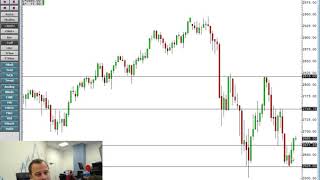
Hi guys, Wednesday 28th of November. Let's get this briefing started as we kind of track through. This is gonna be a big day, certainly later on. We've got some comments from Jerome Powell that we're looking forward to, an update on the Fed rate hiking trajectory in 2019. Quite key that, but as we move towards the latter end of this week, it gets more and more and more important. So we've been talking about the G20 summit all, all, well, for the last month really, but it's closing in fast. So certainly this is, even though it hasn't started yet, it starts on Friday, it's still absolutely the main driver of global markets. So we'll talk about the speculation around the discussions that Trump and Xi Jinping might have. And how that's having an effect on markets. We'll talk about oil. We had some inventory data last night, a couple of comments from the likes of Novak, the Russian energy minister, this morning. Also, obviously, an update on Brexit, but then also the kind of— the one thing I wanted to have a little focus on this morning was the German race, who's going to be the next leader of the CDU party now that Merkel has step down. So really looking at German political history— well, recent history, I should say— really whoever wins the leadership of the CDU party really is probably in line to succeed Merkel as the next chancellor. And so, you know, what's the kind of direction of German politics and what does that mean for Europe? So we'll have a quick look into that, um, as well. But first up, let's look at the charts here. So this is the S&P 500, and as you can see Well, looking on a 4-hour chart here, and so bringing in the general kind of downside we've had through a lot of November, but actually over the last couple of sessions we've managed to bounce, bounce a little bit. And so overnight, certainly into the close last night, and then not too much action so far today. If I bring this to a 60-minute chart, then Sorry, let me just take this time frame down. Then we just sat right up on top of what was a nice squeeze into new highs into the close last night, um, and we're kind of just sat up here, um, hanging on to these gains. Relatively speaking, the Asian session has been quite positive for risk. And I guess let's just get straight into this kind of G20 chat because Obviously, we've been talking about the big factors driving global markets almost permanently this year. You know, it's been that Fed hiking cycle and the strong dollar and the impact that's had on emerging markets. Then it's been the trade war risk between the world's two biggest economies, the US and China. And, you know, certainly the latter one is You know, coming to that critical point, because we're almost end of November here, and Trump's threat obviously is that if we hit 2019, then on the 1st of January 2019, if no developments have occurred, if no progress has been made with discussions between China and the US about their trade and reducing the US trade deficit, then Trump's going to ramp up tariffs. So he added, as you all know, on back end of September, He added a 10% tariff to a further $200 billion worth of goods. That's $200 billion worth of goods coming from China into America. And his threat at the time, back then in September, was if no progress has been made by year-end, on the 1st of January 2019, those tariff rates will increase to 25%. Now, obviously, there's been no progress made since September. But Trump and Xi Jinping will be meeting on the sidelines of the G20 summit on Friday and on Saturday. And are they going to be able to make any progress or not? And there's obviously been a huge amount of speculation and there's been some people commenting that they will make progress, some, some saying not. But really what's kind of fueled a touch of positivity in markets this morning and a little bit of upside or let's say hanging on to those gains into the close from last night. These were comments from the economic adviser. So this is Trump's White House economic adviser, Kudlow, and he affirmed that Trump could hike tariffs in 2019 if no constructive talks occur at the G20, and that the White House is disappointed in China's response to the trade issue. So that's the first half of his comment, which is kind of negative. But then he says, however, he noted that Trump is open to a deal with China, and there were recent comments from China's Vice Premier Liu that China wants a negotiation solution on trade based on mutual respect. And that's the big thing on China's side. They feel like they're not being respected. That's just Trump's style, you know, his aggressive threatening negotiation style. China have felt that, that has not— he has not given them the respect that they deserve. And this has kind of been a major preventative from any progress. So there is— I think both sides do want a deal, of course. It's just a question of whether any sufficient progress can be made on in the G20 summit so that the kind of risk around this can soften? And is there any chance that Trump decides to not hike tariffs again on the 1st of January? Because that's a big one. Now, markets are preferring to assume that maybe we can see some positive developments coming out of this G20 meeting. And so we've got a little bit of positivity and a little bit of upside, but kind of just to temper that. I mean, whilst we speculate, are they going to make progress or are they not, um, some news flow out of China overnight was quite interesting. So update on the outlook for steel demand has begun to hit, uh, steel futures. So the blue line on this chart is iron ore futures and the pink line is steel futures, and steel has been quite weak anyway, but iron ore suddenly decided to join the kind of party, or the, I guess, the opposite to a party in terms of sharp downside in the last couple of weeks. So you're starting to see the commodity markets— I know we've been looking at oil, and oil's been collapsing for 7 weeks straight. Well, actually, in other commodities like industrial metals, it hasn't been quite so sustained. And, um, you know, just go back a couple of weeks and they were relatively elevated, these markets. But both, certainly iron ore's had a sharp face to the downside in the last week or so. And this is now being driven by this idea that steel demand in China is really going to sharply drop as we hit 2019 or as we go into the winter. You've got two problems that's driving this steel move, and that's the pink line. And steel has been under pressure for the whole of November and is trading down at levels we haven't seen since the summer. But to size, and with any commodity market, price Obviously, you've got to be looking at those, the demand side and the supply side functions, to try and decide on price. Now, on the demand side, well, obviously the trade war risk is a very negative potential force on Chinese growth rates. We've been talking about this, you know, Chinese GDP figures have been on, on the slide, and, and that's even without trade war negative effects really playing a role yet. And we're worried that Q4 2018, you're going to start to see the trade war risk feed through in a much more negative way to Chinese growth. And what happens if we hit 2019 and Trump ramps up tariffs from 10% to 25%? I mean, that would be highly negative. And so on the demand side, things are looking very weak, of course. And it depends— and it really is pivotal— what happens at this G20 summit. As to whether that negative demand trend continues or not. But then on the supply side, this is something kind of slightly different. What we've seen actually from Chinese steel producers— Chinese steel mills have been pumping out demand at record levels. And the reason for this is actually pollution-related. This is where the Chinese government clamped down on the pollution-generating steel production— steel producers during the winter months to reduce pollution. So this is where the, the kind of steel manufacturers ramp up production ahead of what they think is going to be a government clampdown. So you're left with this double whammy where you've got an oversupply into what is an ever-declining demand from the market side. So This is certainly a reflection that actually things in China are not good, and we know this. So it really is critical. I'm just thinking about, can progress be made at this G20? And the stats and the data coming out of China are that economic conditions are deteriorating. Now, if that is happening, of course, this incentivizes politicians more to make concessions. You know, can China get over this lack of respect thing and sit at the negotiating table anyway? And what about Donald Trump? You know, we've got— check out the S&P daily chart. You know, you got the S&P having dropped very sharply through the last few weeks. And yes, I mean, you had one FT article this morning talking about, well, look, the S&P's gone up over the last 2 days, so Trump's going to be back to his aggressive self. As we get to the G20 and forget about progress with China. But I'm sorry, the S&P's gone up for the last 2 days. Yeah, fine, but we're at the bottom of what has been a very sharp and painful correction lower. Painful, I hasten to add, just for investors, um, not painful for the underlying economy unless you own shares, obviously. But, um, obviously that economic momentum story in, in the US, we're also concerned that that's peaked as well. But I would say generally, is the stock market correction enough to see Trump also soften his tone a little bit? It'll be interesting, but certainly very pivotal, this G20 summit. Very, very critical to how really the— certainly how the second biggest economy grows in 2019. I would say massively important, this meeting. I would say Jerome Powell talking today, and we didn't hear much from him yesterday, if anything at all. Anthony Cheung, um, let me show you the calendar for today. Anthony Cheung advised me that Jerome Powell was talking yesterday, last night, and I don't know if my reading abilities have deteriorated. I as I've been getting older, but I couldn't find anything from Jerome Powell last night. But he is scheduled— if I just go down to the speakers— to be talking today at 5 PM. And this is the big one in that he's talking— he's at the Economic Club in New York, and he will be making a speech, and it will be on the US economic outlook. It will be on monetary policy-related factors. And this is huge as well because if the China trade war risk, that's the big factor for Chinese growth. Well, what about for US growth? And I'd say it's the Federal Reserve and what they do in 2019 will be the biggest factor on US growth. And so is Jerome Powell going to choose to soften the Fed's hawkish stance? Is he going to choose to see things slightly more dovishly? Is he, to put it much more simply, is he going to start communicating that they're not going to hike rates in March 2019? Inflation perhaps will drop as a result of the very sharp correction that we've seen in oil prices recently. That might give the Fed a little bit of breathing space if they do want to put their cycle, their hiking cycle on hold, or at least reduce the speed of it. So we really want to see what he's got to say. However, having said that, we did get some slight— well, we got, we got some comments from the Fed yesterday. Another Fed member, one of the new guys and they were not dovish comments. So still, you know, let's stick with the game plan, we're hiking in December, you know, hiking rates at a slow pace is still appropriate, that kind of language. And so we did get some dollar strength through the session yesterday, and this is looking at the EURUSD, what's been going on. And as you can see this morning, we've just taken out the low that we had from Yesterday, this was yesterday's low here. So you've seen a general downward trend here, of course, and dollar strength feeding through and the dollar index up around the highs of the year. If I show you on a daily chart, you know, this does— you know, the last week has been pretty negative as we try to rebound from what was that low print, you know, the low of the year, which was set back on the 12th of November at 112.47. We had a decent go at rebounding with 5 up days in a row, but now almost all of that's been given back. And the fact we've just taken out yesterday's low, which was right on the kind of double bottom from the 14th and the 15th of November, technically now you would say it's highly likely we get a drive to test the, the low of the year. Maybe not today. It could happen today because certainly, well, if Powell remains hawkish tonight, then it definitely will happen and If Powell stays hawkish tonight, you should see EURUSD make new lows for the year and track down towards the 112 handle. If Powell is not hawkish, if he opens the door to reducing the speed of the hiking cycle in 2019, well then of course we could get some dollar strength coming— sorry, dollar weakness coming through, and that'll get things back moving back up towards the 114 handle and above. So for now, this week, slight dollar strength. As we're worried Powell's not going to be dovish. But of course, the man himself doesn't speak until 5 PM, so very important. All right, let's talk about other stuff on the G20 because it's not just about Trump and Xi Jinping. Other comments overnight, uh, Trump's actually, uh, he was going to be meeting with Putin on the sidelines. He was going to be meeting with Putin and some of these other major oil producers like the Saudi Crown Prince. They're supposed to be having a meeting and trying to talk about, well, what happens, what should we do, you know, should we do anything. The price of oil's collapsed, and of course Trump's going to be advocating the, the idea of let's keep oil down here and let's get it even lower. Um, the Saudis and the Russians— well, certainly the Saudis will be thinking the opposite to that, and the Russians, we're not quite sure. But anyway, there's actually a risk they're not even going to meet because Trump said, well, you know what, I might not meet Putin. And this is actually related to the, the military activity in Russian waters off between Ukraine and Russia, and with the situation and the incident with 3 Ukrainian vessels. And Trump said, look, I might not meet Putin, we're just, just trying to get a bit more info on what's happened there and whether Russia are at fault as the aggressor. And if so, well, you know, I'm going to cancel my meeting. So that's one thing to keep an eye on as we go through today and tomorrow, developments there. From an oil point of view, you know, it's hard to judge, isn't it? Because if the West step up their kind of— or if the West take the view that Russia have been the aggressor, I mean, this takes you back to 2014 when the kind of war— when Russia took the Crimea and we had the beginnings of the Ukrainian civil war. And, you know, back then this— that was very positive for the price of oil. The price of oil spiked higher on supply risk. So it is something to keep in mind as oil is tracking just above $50. Let me zoom in because because last night, whilst I'm talking about oil, oil did manage to get up through the 52 handle again, and we just drifted back to it now. But we did make a new high for the week last night— or sorry, I should say this morning, as we moved up through the high points from the day before. This is mainly off the back of this. So we had the API inventory data last night, and what we saw was crude oil prices did increase Um, but, uh, and looking at Cushing particularly, the Cushing build was quite small. Sorry, the, the headline: WTI extends rebound despite 10th weekly crude build in a row. Um, so we did get another build. It is 10 in a row. Um, this is quite seasonal as well, mine. We tend to get, um, we tend to get builds often through this period. But anyway, we another build last night. You did get gasoline drawdown at 2.6 million though, um, but despite the build on crude, despite the build on Cushing, um, crude prices still managed to hang on to their gains and push higher. What, what Novak said, uh, this morning, if I can just remind myself on my headline feed— so Novak, the Russian energy minister, met with domestic oil producers yesterday to discuss cooperation with OPEC and non-OPEC. Okay, so that's obviously quite important, suggesting that maybe Russia are interested in cutting production. The other thing that Novak said was that actually we pumped less oil in November than we did in October. So actually, when you're looking at the US and Saudi that in November have pumped at record ever levels, Russia's production has actually stepped marginally lower. There's not much in it, but it has stepped down marginally. But certainly that news that Novak's been meeting with oil producers to discuss cooperation with OPEC, um, is quite interesting. And probably that's why the price of oil has remained elevated despite some dollar strength, of course, despite the build on inventories, um, announced by the API last night. Okay, so that's oil. Um, let's look at Brexit. And this is a 15-minute chart where we're just looking at yesterday's session. We had some downside consolidation. If we put this on a 1-hour chart, you'll see that we're kind of down around the bottom point of this. Let me go to a daily, in fact, because we're just hovering just above the, the key levels. Let me, let me move— let me draw a few lines here. So You got the low of the year, and I drew on 3 lines there. Let me just get rid of some of these other ones. Right. I'm going to keep those 3, right, because they're picking out the lows that we've seen in the last few months. So you got the low of the year back in August. You got the low from end of October, and then you got the low from the 15th of November. Okay, now we were talking about this yesterday, but if you draw a trend line, we're right down testing the trend line, just looking at that movement over the last few months. And yesterday, key test, double, double support here because we had the low from the 15th of November, we had the trend line coming in of the last few months. And for now, today we've had slightly ticked higher But this is quite critical, I'd say. This trend line, if it does get broken, we're going to test the low of the year from back in August. Will that happen or not? Well, we did get some headlines overnight. This is from 10:51 PM last night: Theresa May backs down over Brexit votes in Parliament. This is actually— Theresa May was trying to get it so that Parliament can't Well, they just have to vote on the deal that Theresa May's agreed with the EU. That, and the schedule for that is at 7 PM on the 11th of December. Okay, and the idea was that they can't, they can't debate this in Parliament and then say, well, look, we don't want to vote on this because we don't like the deal. We're gonna force you to change the deal before we vote on it. And Theresa May was like, nope, this is the deal, it's yes or no. But it looks like she's backed down. So a motion on Brexit deal will allow MPs to change the wording first before they vote on it. I mean, the thing about this is it just opens the door for this vote to not happen on December 11th. You know how, how much— well, Theresa May's got seemingly not much support for this deal as it stands, so it could be quite important, this, in delaying the vote because it opens the door to allowing MPs to want to change the wording first and I guess you could say it slightly increases the chances of a hard Brexit. You know, if Parliament can't vote it through and it gets delayed, the vote gets pushed into January, Europe aren't interested at all in reopening the negotiations and changing any of the text, and we kind of hit March and we've had no vote and we've— Europe aren't prepared to change it, and well, we just exit hard. So you could say this slightly increases the chances of that hard Brexit, which helped to kind of give the pound that kind of weakness. We have lifted a little bit this morning, but the pound's right down here, of course, right down on the lows of the last few months. So not much positivity to report on. Theresa May's been out and about around the UK. Yesterday she was in Wales. Um, so while she's away, I mean, whilst the cat's away, of course, the— you got the, the mice in Downing Street speculating. And, um, I'm not sure, I don't know, I'm not sure it's a good idea that she's not in Westminster this week. But anyway, we'll see. All right, finally then, just and very quickly, there was a story I saw in the FT this morning that I think is important for the longer term. Forget about your Fed cycle. Forget about your US-China trade war risk. Forget about Brexit and Italy. These are the things that are keeping investors awake at night. And that's right at the front of day-to-day price action. Something that's not at the front of day-to-day price action, but could be as we come move into December, is actually to do with these three guys. I know there's four people in the picture. But forget about the one with the microphone. I don't know who that is, but some— I think she's just a presenter. It's the, it's the lady on the right, and then it's the two guys on the left, because these are your candidates to succeed Angela Merkel as the head of the CDU party. And the race has begun, and the CDU members will vote on this on, on December the 7th, and they will get a new leader. And the problem is Well, not problem, we don't know who's gonna win, and these are very different candidates. The CDU party, if you didn't know, have been running Germany, I think it's for 49 of the last 60 years, the CDU party have been Germany's government. One of the most successful political parties in Europe for sure, in the democratic world, you might even go as far as to say. In recent times, of course, in the last 12 years, Merkel's been at the front of this. Now, here are your 3 candidates, and they are very different, but the guy on the left, Merkel beat him in the leadership race for the CDU party back in 2003. He's back. He is right-wing, well, right-of-center. He's not right-wing. Wing, hard right, but he's right of center, proper conservative, um, you know, Christian, uh, not a fan of immigration. And he's— controversially though, he's a lawyer, uh, millionaire, chairman of BlackRock, um, Germany's— Germany branch. And, um, he's quite outspoken, but he's very competent, um, debater, and he's, uh, you could say he's got some great leadership skills given his career in industry. So he's perhaps seen as the best leader, but does come much further right of center than Merkel. You know, the CDU party's success has been they've been the centrist party where they've been catering for, uh, the right and the left, not extreme right or extreme left, but that center ground. And they've been in power for many, many years, of course. Well, he's definitely— if he wins, you're definitely going to get the CDU party tilt very much further right. Um, the lady on the, on the right-hand side of this picture, um, well, let me go down because this is quite a good article. And, um, you'll see here, if I just increase the size of this, these are the names of these guys. There's 3 of them in the race. Um, so Merz is— that is the, uh, the guy I've just been talking about, 63 years old. Spent, you know, very successful career in industry, also career in politics. But then you've got Annegret Kramp-Karrenbauer, or thankfully abbreviated to AKK. She's nicknamed AKK. She's kind of Merkel's understudy. She's more to the sort of left of center, but not as far left as Mertz is right. And she would be seen to be, if she wins, she would be seen to be the person that kind of maintains Merkel's, you know, current line. She's thought to be the favorite amongst the people, not as good a leader though, it's reported, but perhaps the most likely to win. But with Mertz's leadership, of course it's not the people that are voting here. If it was, then AKK would probably win. It's actually the CDU members. There's just over 1,000 of them. And there's a risk they might tilt more towards the stronger leader here. Then you've got the massive outlier, very unlikely to get anywhere, but Spahn here, Jens Spahn. He's very young, 38 years old. He's also quite right-wing, very anti-immigration. He's also gay. Which would be a first for Germany to have a homosexual leader. So that kind of adds another element to it. But I'd say he's just too young, I would say, against the more veteran AKK and Merz. So, but he is a leading, you know, real leading young conservative politician in the CDU party. He's really been making a name for himself and rising. But I'd say it's probably It's probably too early for him. He might, he might well be the next, the next one after AKK or Merz do the business. So I thought I'd put this on your radar because whoever wins this is likely to succeed Merkel as the chancellor in 2021, 2022. And then that, and if it is Merz and, and we swing much more to the right, then it can really shift and alter Germany's leadership, and therefore it could really shift and alter the EU more widely. So something to be aware of. Let's finish with the calendar for today. As I said, we've got Powell talking at 5, definitely the most important thing. Other than that, GDP date, nothing from Europe really of any note. GDP data, second estimate from the US for quarter 3. We're not expecting it to be changed from the first estimate, so 3.5% growth is what's expected. More interestingly, probably the October trade balance data. This is 2 days before the G20 summit. And, you know, this is what Trump's been whinging about, the trade balance and the size of the deficit. And where the September deficit was $76.25 billion, most of that is with China. And this is what Trump's worried about. And this is— so it's quite timely. We're going to get an update on the US deficit just 2 days before the G20 summit. So that'll be interesting. That's at 1:30. Oil inventory data coming at 3:30 from the Department of Energy. APIs last night showed a slight build. However, prices, oil prices, have been able to hang on to their mild gains. So it'll be interesting to see what happens here at 3:30. Other than that, then, it's all about speakers. Loads of ECB guys speaking throughout the day. No Mario Draghi on here, but you've got the Vice President de Guindos talking. You've got Carney talking around 4:30, but definitely the big one is Fed Chair Powell, and he's due to speak at 5 PM. Okay, all right, that's your, that's your briefing for today. Uh, enjoy the session, guys. Thanks very much.
More from Anthony


Inside the Biggest Banking Stories You Need to Know This Week (Anthropic, Diageo, Private Credit)


Inside the Biggest M&A Deals You Need to Know This Week (UniCredit, GameStop, eBay, Eli Lilly)







AI Breakthrough or Hype? Anthropic’s Claude Mythos, Tim Cook Steps Down & LIV Golf Collapse