GBP steady ahead of voting on Brexit alternatives
In this live market briefing, host Anthony Cheung provides a comprehensive overview of overnight and early‑morning market drivers, followed by technical analysis from Sam North. The discussion covers: the Reserve Bank of New Zealand’s unchanged rate and market‑priced dovish outlook, resulting weakness in the NZD and AUD; a sharp drop in Chinese industrial profits and its implications for the Aussie; US‑China trade‑war negotiations and expectations of tariff pauses; a detailed look at oil fundamentals, including OPEC+ supply cuts, Russian compliance, Venezuelan outages, Houston refinery issues, and the impact of US‑China talks on demand, alongside API inventory data versus upcoming DOE figures; a deep dive into the UK’s Brexit indicative‑vote process, the range of options on the table, political positioning of key figures (May, Johnson, Rees‑Mogg), and the timetable for votes; brief commentary on ECB President Draghi’s remarks on external demand; and finally Sam North’s technical outlook on EUR/USD, AUD/USD, GBP/USD, S&P 500, DAX, crude oil and gold, highlighting key support/resistance levels and short‑bias recommendations. The briefing aims to equip traders and investors with both macro‑fundamental context and actionable technical levels.
Chapters
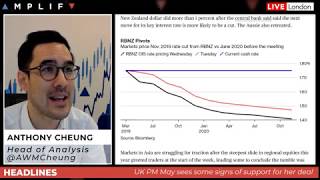
Okay, very good morning, 27th of March. Hope everyone is doing well. Um, just adjusting my camera, one sec. Um, going to do the usual routine. I'll give you a bit of an overview and summary of the, the news that's come out from overnight. We're going to look at a couple things. We've got an update, some movement in the antipodean currencies on the back of an interest rate decision from the Reserve Bank of New Zealand. And we're also going to have a look, of course, at Brexit. Quite a few things to tackle, predominantly later on this evening in terms of a voting process, but obviously the, the rumor mill, I'm sure, will be in full flow throughout today. So definitely worth keeping an eye on, and a couple of key things I can get you prepped up for. And then updates on the trade war situation between the US and China, some Chinese data overnight Quick look at oil prices as Q1 is set to be the biggest gain for crude oil since 2002. And definitely there are some supply-side risks that have started to materialize at the moment, and we're challenging quite a key technical level. We'll have a look at as well at those points as well as the API data from overnight. So that's what I'm going to cover with you, then I'll hand you over to Sam and he'll look over the charts a bit more intraday for specific technical levels in focus. But just looking across the kind of piste, if you like, this morning, and things are, well, relatively quiet. The dollar's a little bit firmer overnight. The DXY is trading up about a quarter of 1%, so as a consequence, both major currency pairs are seen lower. EURUSD down about 29, top left in the futures market, just above its S1. and cable within close proximity to the low point that was seen yesterday morning and also its respective S1 level. With a bit of dollar strength, got a bit of weight in some of the commodity prices. Just as I'm speaking here, the top right— well, let me just transition my charts here. So top right chart, you can see here gold's just printing a fresh session low, just breaking out of the bottom end of the Asian Pacific kind of range, bringing into sight some of the lows that were seen towards yesterday midday and afternoon. And WTI crude just backing off a touch, but generally speaking, that trading flat in the futures this morning. Equity-wise, US stock futures marginally positive. That's kind of being mimicked then in European space. So let's just jump into the news from overnight, starting off with the graphic that I kind of opened up with that I was sharing, and that's this one. This is— this what you're looking at is forward-looking expectations for what markets are pricing in overnight index swaps for the Reserve Bank of New Zealand. So overnight they basically had their interest rate decision. Everything was as expected. There's no change in rates. But what's been a pretty persistent theme for the likes of the RBA and the RBNZ that kind of geographic region has been a growing pricing or belief that interest rates will need to be cut in future. So the language pretty much intonating towards that, the, the most likely next move would be interest rates going down. And so even though the cash rate remained unchanged at 1.75%, you can see here that how the markets are now pricing— this was Tuesday was the kind of, let's call it the orange line. And so markets much more dovish, dovishly priced. And if anything, that has got even more steeper now. So going through into 2020, let's say January 2020, as you can see here on the bottom axis, interest rates anticipated to be as a minimum 25 basis points lower than they are today. So a reflection, you would say, across what we've seen elsewhere. Obviously, we were looking this time yesterday at federal funds rate futures where now you've got a priced-in rate hike from the US despite them saying they're going to basically pause and do zero this year. Markets are pricing in now on the kind of probabilities on balance of a cut by the end of the year. So that was the bigger move overnight. Obviously, the Kiwi weakened. The Aussie also weakened on the back of that. So if you are looking at the Australian dollar this morning, and wondering what the weakness was. That was really a trigger event, the local currency there moving in sympathy with the losses in the Kiwi. Also as well, when you're looking at the Australian dollar, it's always important to be monitoring the economic situation in China. And overnight you had industrial profits at large-scale Chinese companies in the January-February period fell 14% year on year according to their, their stats office. That's the largest drop recorded since May of 2009. So as you can see here, just to put that, that graphic into a little bit of context, you can see here not going all the way back for the best part of a decade, last time industrial profits in China were, were this bad essentially. So that's the kind of the Aussie situation. The other thing then, before we get into the kind of Brexit side of things, is Sticking with China, then we've got to talk about the trade war. And what's been happening is some commentary out of the, the Trade Secretary Lighthizer said he's hoping the two sides can reach a deal. So US side of the negotiating table still sounding quite bullish. This comes as they're in Beijing this week and then their Chinese counterparts fly to Washington next week. Anytime there's such commitment to continue to have regular and frequent meetings like this has kind of been perceived by the market that things are moving along, as Trump would coin, quite nicely. So yeah, US-China trade talks to resume, Trump vowing now an, a quote, excellent deal. A lot of this article, if you read it, I did tweet and share it earlier, is talking about the necessity almost that Donald Trump has to get this over the line and to manage it appropriately so it is received well by financial markets. So you would suggest then that that's going to be indicative of him being a little bit more passive rather than aggressive as the, as the time goes, goes on, because he needs to manage his political agenda if he's going to run for reelection in 2020, and time's kind of quite quickly running out. So with this, again, the summary, just to, just to go over that, what we discussed last week is we're not looking at a complete removal of tariffs. Probably what will happen is that tariffs will be put on hold if a deal is achieved and essentially rolled back through specific calendar periods as long as the Chinese and the US are being compliant with the terms that have been agreed, and they'll be gradually phased out over time. Seems the most logical approach, uh, and one at this point I still think is the base case of what will happen, just because of the political need from both sides, US and China, to get the job done and also to manage any potential— what is still the biggest macro risk to financial markets at present. The other thing I'm looking at this morning, uh, is this kind of headline: oil is heading for its best first quarter since 2002. So Again, just to refresh your memories, what does the chart look like? Well, this was it. We were looking at it yesterday, and we've come to quite a sweet spot, if you like, at $60 in WTI crude, at least just given the pretty phenomenal rally. I mean, Q1 is this move here. It's been a monster rally from $42.50 up to $60. The question mark, of course, is where do we go from here? It's almost a second kind of real decent attempt yesterday to break above that level has got rejected. But you can see here the pullback's quite shallow now. So with that, what I'm monitoring, of course, is then a potential breach of this level. Is do we start to open up the door to these other significant levels that are much higher up? 6250, 6350 is probably the latter, the more technically relevant. That also being, as you can see here, um, the next kind of fib retracement level of that entire Q4 sell-off. Now, to make things as simple as possible, I tweeted this morning the kind of factors that are in play and need to be monitored if you are looking at crude oil. And this is kind of my simplified way of doing it rather than going through every single news story. So you've got Russia on track to reach pledge reduction, so their compliance level for the agreed OPEC+ deal that's in play at the moment is that they should be cutting 228,000 barrels per day. Now, if you remember, Russia has been not quite so committed to the cause as, say, Saudi Arabia has been. Obviously, Saudi Arabia has a lot to manage in terms of its position as the de facto kind of kingpin of OPEC in itself, but also as well for their own fiscal agenda to be achieved. And obviously, they are committed to the deeper cuts going forward. Russia has always been a little bit shaky, but this comment has been received, if anything, of a slightly more bullish factor because Alexander Novak, who's the energy minister of Russia, said last night that they're on track to reach that target, which is very important because Russia typically has not been the most compliant of nations. But obviously they are critical for any deal of OPEC+ to have impact on the underlying price given the size of production that they manage being, what, the second largest in the world. The other thing that's happening as well is another power outage in, in Venezuela. There are several now that have been happening in recent weeks. And also, this kind of wraps in a little bit of geopolitics because Russia is getting somewhat involved in the Venezuelan situation, of which is upsetting the Americans. And then Saudi's getting upset because of the friction caused by Trump's stance on the Golan Heights being the ownership of Israel, which is causing conflict as well with certain Muslim nations. And so this quite quickly, the— I would say potential supply-side shocks have got numerous. And that's not even going into the fact that there's been disruptions to refiners along one of the most busiest traffic parts in the US which is obviously the Houston Ship Channel. I think, believe this is down to some health and safety issues as well that have been going on. And then the other big factor, of course, is about the US-China trade talks progressing. Now, everything I was saying, if you take the first cluster of points, so point 1, 2, 3, 4, 5, they're all supply-side potential shock risks. And then the bottom one, the US-China trade talks, is a demand positive. So all of these factors would be fundamentally supportive of crude. So definitely I think that the shallowness of the pullback on the retest of $60 is quite telling. And if $60 goes, I do think the market will probably chase the market higher if that is the case. There's something to just be mindful of. The other thing we had last night, of course, was the API crude oil inventory numbers. Um, just going back to a 30-minute chart on my crude because I do want to make quite a clear point here. Let me just get my ellipse. So this was the API crude oil inventory numbers last night. What I want to do by putting a circle around that price action is I really want to, um, dispel any notions that this data really is that important in comparison to those fundamental factors. These are way more influential than the, the week-to-week infantry numbers. The infantry numbers for me are purely a flash of volatility, and that's the beginning and the end of that. Now, what the data could cause— this, uh, the DOE's, when they come out later— is could they be the catalyst that's needed to break the impasse of the technical resistance at 60? If that is the case, it's almost like the logs are on the fire, that the fire is just waiting to be lit. And does the DOE provide that spark? And then the price action will ensue going forward. So that's what I look at, I think, when it comes to kind of trying to fathom the impact of the inventory levels. I think at the moment we know US oil production is back to 12.1 million. These are record levels. We saw that last week. That's not really that surprising because of the fact that it's being mitigated by all the other factors that I've been discussing, and predominantly as well the cut to the predominant amount of global supply from the OPEC+ deal. Now for the APIs, we will of course recap these later ahead of the DOE data, but last night you had a build of 1.93 million. So in effect, this was bearish on the headline. It was also bearish on the cushion, slightly bullish 5th draw in a row on the gasoline and distillates was a sizable draw. On the balance, you could say that that was actually slightly bearish, but as I've said, the markets have done nothing on the back of it because of all the other factors in play. So yeah, just look at everything in context, I would say. All right, well, let's move on. Brexit. I'm sure you're getting as tired of this as I am, having to talk about it every day for for a good 15-20 minutes. But let me be as brief and, and concise as possible. As per usual, the pound isn't necessarily moving this morning, but definitely it could move later on this evening. And so let's run through a couple of the major points here. First off, and this is something which I've been talking about quite a lot yesterday, was that ever since Theresa May and the press were making a bit of a fanfare about it, where Parliament has taken back control. Actually, I think what might happen here, in summary, when we go through this knockout indicative vote process, is that if anything, it just brings the Brexiteer-minded Eurosceptic MPs back on side to support May's deal. So I do not think you should discount May's deal going through still. And what we've heard is something similar from a couple of senior, um, kind of outspoken politicians that, you know, as individuals obviously only count for one vote but obviously carry a lot of sway behind closed doors. And one is Boris Johnson, who's been speaking. So Boris Johnson said could back a deal if there's a massive change in approach. And he was speaking with ITV News last night. Essentially what he was saying, reading between the lines, was if Theresa May goes, then basically I could support her plan. Now this follows as well Jacob Rees-Mogg yesterday saying quite similar things in his blog posts, and he was tweeting talking about the fact that he could accept the deal as long as the DUP accept it, that he could get on board as well. So you've got Johnson and an influential member of the ERG kind of becoming a little bit more warm towards the Brexit deal. What is then the options? So what is it that— what's the process for tonight? What are these votes that are happening? So let me just run through a quick summary, and I have shared in the chat room all of these articles, so I won't go through everything line by line, but this is the main ones you're looking out for. Labour's custom union, this is the proposal that's the official one of the opposition party. This is talking about return to her to seeking a customs union with the EU and a closer alignment with the single market. You've then got another customs union, which is a simplified approach by a slightly different instruction from a different Labour MP. You've then got the second referendum, self-explanatory. Norway, this talk about a complete renegotiation. UK would stay in the European Economic Area, or the EEA. And rejoin the European Free Trade Association. Obviously, that would be under heavy criticism for any Euroskeptics. Norway Plus, described as also as Common Market 2.0, this would have a comprehensive customs arrangement, again, in a nor— to the Norway option. No Deal Emergency Brake, the Malthouse Plan A. I'd probably say this is probably one of the least likely. This is talking about the idea about May's deal without an Irish backstop. I mean, the EU is never going to agree to any of this. Not an option— this is one of the interesting ones— is May's deal. May's office has said that they won't be putting her deal, the government's deal she negotiated, into the mix. And what people are suggesting is it could be that they fear it's Prospects would be damaged if it proved less popular than the other options. Let's not forget, from a legislative point of view, all of these, um, are not written law. Even if they did get voted upon and chosen, it's just then to then give indications to government of the best course forward. The government doesn't have to listen to that. They can plow on with their own plan, but obviously would come under heavy scrutiny if Parliament had said you should do this and they do not listen. So it's purely, um, an informative decision in that respect. What's the actual timing of tonight, or today I should say? Well, there's going to be lots of meetings. Apparently she's already meeting with cabinet members again. She's going to be meeting with backbenchers as well. But officially things start to kick off by 2 PM London time. So this basically will come after the PMQs, which is a regular feature, obviously on a Wednesday midday that begins. Speaker of the House John Bercow under instructions to interrupt any other business at 2 PM. So that's when it's going to start kicking off. That's when they'll start discussing and debating in the lower house. By 3 PM at the latest, Parliament has to vote on that motion and any amendments to it. So this is when really the first votes start beginning. But assuming Letwin's plan survives any attempt to disrupt it, which is— it's likely to survive, then the next stage is the House Speaker then announces the options for selection, of which all come into debate. This is when you have the debates over no Brexit, second referendum, single market, customs union, the deal, No Deal, and so on. The options debated. Then at 7 PM, the Speaker will draw proceedings to a close and announce the vote. This will be like the usual House of Commons votes. The MPs go outside and they go and walk through the lobbies. That akin to then a vote count. He then calls out voting for aye or no, and that takes about half an hour each process for each one. The Brexit delay one, just to be clear, I think this is largely a non-event. This is basically the debate on the legal order needed to formalise the delay of Article 50 from this Friday to April 12th. That debate could last up to an hour and a half. There is no danger of that vote not passing, and I absolutely agree with that. The indicative vote results, though, these are, I guess, the ones that are going to be the most important of of the ones previously discussed. Again, we'll take up to about half an hour for each one, and this is when, again, 8:30 to 10, and it could be sometime around 10 PM before we're kind of wrapping up in that respect. Under Letwin's proposal, Parliament will have control of its own agenda on April 1st. Um, April 1st, April Fool's Day. Not going to make a pun about Brexit, um, but then that's when we kind of pursue other particular courses of action. This is not to say then, after today, Theresa May technically could still bring her meaningful vote back tomorrow, and that could be done on short notice. But obviously we're going to know how the land lies by this time tomorrow, whether or not that is a viable option or not. This was something that I did share yesterday This was looking at all those different options we discussed and was quite a neat graphic, basically looking from left to right of the different options just discussed, and the most likely to pass to the least likely to pass. So the least likely being revoking Article 50 completely. This is according to the analysts at ING, but I would fully agree with that assessment. I think that at this point is probably one of the lowest probabilities. Um, then also there's kind of series of graphics here, so I do strongly suggest that you, you, you have a look at the link I'm posting into the chat room now, and it kind of explains things in a very simplified format. But if we did go down the route of a second referendum, renegotiation, or general election, again, this is an updated graphic. There's the 12th of April deadline where we basically need to make a decision either way to give notification whether we're going to take place in the European parliamentary elections. So this is really the D-Day. This Friday really is a non-event. But you can see any one of these other 3 potentially leading to softer Brexit options would take a considerable number of weeks, weeks in order to exercise. And it's this very factor here which makes people like Boris Johnson or Jacob Rees-Mogg start backpedaling and all of a sudden sounding a little bit more like they could support the Prime Minister and her plan. So yeah, going to leave it at that. That's the current status. As I said, the pound is not really moving right now. All of this is likely the action to come later. Um, one thing I just want to quickly finish on before I hand you over to Sam is just quickly, this is the euro-dollar future, seen a slight tick up in the last 5 minutes or so. While I've been talking, just coming back up to test the kind of late Asia-Pacific low here. We have some comments from Mario Draghi. He's just spoken a few minutes ago, so let me just give you a recap. ECB are now seeing a more persistent deterioration of external demand, adding that current data suggests that there are some signs that external demand may be affecting investment via manufacturing value chains within the euro area. So Yeah, well, nothing exciting there. Actually, reading that sentence almost puts me to sleep, quite frankly. So yeah, euro had a little bit of a move higher. How much of that is initiated by the Draghi comments? Not entirely sure. Doesn't sound like, at least in that comment, he said anything new that we didn't already know. So I wouldn't say he sounded out hawkish or anything like that. I'd say if anything, the dollar was up about a quarter percent this morning, uh, maybe a little bit profit taking because EURUSD and cable have both edged up a little bit. So maybe it's more dollar-led in that respect. All right, well, that's it from my side. Let me hand you over to Sam North, and he's going to talk you through a couple of things that he's been looking at as well. Okay guys, I'll see you in the chat room. Have a good day ahead. Thanks very much.
Hi guys, good morning. Yeah, let's have a quick look over the, the euro. Just seeing a bit of, bit of movement there, and it's coming up to pretty much where it was a couple of hours ago. Uh, just finding a bit of resistance, you'd imagine, on this point where the sellers sort of came back in. And, uh, I think bias-wise for, for the day, as it currently stands anyway, I think the short is the, the right sort of play for this market. If we go back and look on that sort of the longer term chart here, just got the 240, um, you know, that failure to, to break or close and really push on, I should say, on that trend channel. We're now back, back in it, uh, was, was quite bearish. Obviously the FOMC pushing us higher and then, uh, the poor PMI data on Friday confirming the break lower. And we're now sort of back in the middle of, of that range, if you like. Um, but from the more shorter-term perspective, I do, do prefer the short. And looking at this, you know, we've had a bit of a retracement, but does it change too much those comments if that's the, the main sort of reason for this? I would, I would suggest not. So looking at areas to potentially get short the euro, you've got the, the low that we had on the 22nd, which is pretty much the, the lower point of, uh, the European session yesterday before we had a little break before that. So that's an interesting area to potentially look at. The pivot kind of a bit mid-rangey, uh, from yesterday. And then if you're looking a bit above, uh, that, the previous low of yesterday, uh, which sort of turned to a point of, um, resistance as well. So those would be the two areas of resistance from, uh, sort of, uh, price action point that I'll be looking at to get short. If we were to get down to those lows again, uh, and break, uh, that and the S1, well, let's have a look whether sort of the target area would be where the low of the 11th— if I just move this above the camera— not too far away from the low of the day. So for me, looking at this, I would say I'd be interested around on the futures around 113.55 or 1 13.79, around that sort of area for now anyway. Obviously things can, can change for sure, and, um, you know, comments or whatever like we've just seen can move the market. But data-wise this morning, it's going to be pretty quiet, as were Monday and Tuesday. So, you know, not a day, not a morning to be trading this a lot, um, would be, would be my advice there. Having a look at that Aussie, as I mentioned, the, the Kiwi weigh in on this. Um, and it was a very frustrating evening for, for the Aussie. I know, uh, quite a few were looking to get short around this area and it just held and held and held and did come lower into this at the back end of the session, uh, and has come down since overnight. Uh, not much can be done about that really. But yeah, for now, again, I do actually prefer the, the short for this market. We're just perhaps starting to to come down to test the, the lower, uh, part of this sort of trend channel. If you like, it's not the cleanest by any means, but having a look at the, uh, the low of the 8th comes into the lows of the late '20s. Bit of a breakout through here on, um, on Friday, Friday evening, Monday morning, and we've just tested that again now. So I do quite like the look of a break of S1, uh, to try and get down to those lows. Yes, we've got S2. I mean, we have come a fair bit already but more, you know, looking at the sentiment to continue. Looking for a short higher up around the, the S1 doesn't look too bad. I know that would be about 20 ticks to the upside, so it would have to be a patience. But after the last couple of days, I think patience in this market is not a bad thing to, to sort of have around the S1. For me, looks like a quite nice area to consider the, uh, the short should we get a bit of, uh you know, dollar weakness perhaps to, to get higher in these areas. Euro and Aussie, they're the same. The pound, as mentioned, um, you know, not really doing too much. And as I said yesterday in the, in the briefing, really trying to talk about this technically for any long-lasting effects is going to be pretty tricky. Every little break is yet met with a bit of a push higher only to come back down lower. The, the high of yesterday, we had some resistance on the 20th, but we also did break through the R1 in yesterday's high and the high of the 20th. So it's, it's— listen, it's not the, the best market in the world by, by any means. Um, I think you need to trade this, you, you want your at least, at least 2 technical reasons really to get in. Yesterday, the, the low of the day around the S1 and low yesterday, that's— is quite nice and it's in that range that we're seeing now. And you've got the same if it was to come back down to the S1 today. So as a range trade, not too bad, uh, to look at. The R1 is yesterday's high, so For, for a sort of decent risk-reward, decent technical levels, you've got the R1 and high, you've got the S1 and that low, um, back towards the pivot. I mean, it's completely the mid, midpoint, if you like, of that last sort of 48-hour range. Uh, so, you know, whether you'd want to get involved in that too much, we had a bit of, you know, a few wicks of, uh, price action from, from yesterday evening. But for me, I think the, the better option is, is lower down or higher up. And I mean, depending on what happens at the pivot, it wouldn't be necessarily something that I'd be planning on, uh, right now. S&P, we closed the day, uh, above, uh, or we, we're sorry, we're now back above 2825, which for me is, is, is bullish. Interestingly, post-EU close, the last couple of days, uh, we've had some selling come into the market. However, that is met with, with some buying into, into sort of the close of the day. So yeah, the inversion story, yeah, that's put to rest really for now. If you look at the, the way the market is, is trading, we're now not too far off the, the high of the year again, despite, uh, the, the large sort of selling that we saw post-PMI data Friday as well. So having a look at this, areas to have of interest, the high of yesterday, not too, too far away from the R1, but it's also the higher going back on the 21st. So it's definitely somewhere I'd be looking at post-cash open if it was to be a negative one. You've got a nice range trade idea of S1 and these sort of double bottom from yesterday looks quite nice as a potential area to get involved in. If we were to push on, I know we talked about this yesterday, but a decent zone that price would have to get through between 2839 and 2842. So quite a bit of resistance up here, but I'd really be only looking at this sort of into the afternoon, I would say, and just be wary of what happens post EU close. Perhaps in the morning, taking the lead from the DAX, which is just coming under a touch of, of pressure. We see here, you know, with the, the euro pushing on the DAX, is coming under a touch of pressure, understandably. Having a look at the, uh, the previous highs of the, the DAX You can see we are gradually getting higher. We didn't quite make the test of that trend line, but that would come to quite an interesting point. You've got the R1 around there, you've got the highs of the sort of the afternoon going back, or the morning to into sort of midday on the, on the 22nd. So as a resistance point, as an area to take profit if you had the short bias, it's not a bad place to, to look to get in. Areas of support for European equities, similar really for, for the Euro stocks as well. If we were to come back down to that pivot point you have quite a good area, uh, where you could expect some support, really, I would say, uh, going forward. Oil, we did push on. We, we're actually coming down to— or we were, I was about to say, coming down to test that low of the day. You can see we have now got that test, and prices is just sort of had a, a 9-tick bounce from that. Interestingly, you know, the, the low of yesterday evening is, is a pretty good technical point, 50 9.68 on the futures that I'll be looking to sort of still have marks up on the chart. Was the low the 21st, we broke through there Friday to then find some resistance. Pretty key area. We had some resistance again there yesterday before breaking through early, uh, what should I say, late morning in the UK time. So that's a pretty key area. That's a, I would say, a line in the sand for anyone that, you know, is bearish about this market today. To, you'd only really be interested in getting short, I would say, say for a longer term trade if we were to get a confirmation of a break below that. The highs of the day, we struggle to get through, um, so you've got this mini range just above $60, uh, sort of a 30-tick range, uh, if you like. Probably with the DOE later, not looking to get too aggressive this market, you know, buying above there, selling below $59.60. I think it's not a bad way to, to go about it. Finishing up just a gold before we have a quick look over the Canada once again, and then the the overview of the market. That low of the day from, from today is yesterday's low, uh, below that S1, and quite a lot of support from the 22nd as well for this market. Overall bias for, for gold, if we just have a quick look at the, the last sort of few trading days of, of— well, we go for the month actually, so the last sort of few 3 weeks or so, not the, the cleanest, uh, trend line in the world. You can see we have had that breakthrough, but it's, you know, a rough look at a trend channel here. So for maybe a more medium-term, longer-term, easier direction, if you were looking for that short, you'd want a confirmation of a decent break below this whole area. I think if S1 was to, to go and maybe come back to retest, it's not a bad opportunity to get short. But for now, as long as we're, you know, above that trend line, I prefer to be looking to, to get long in this market. Yesterday's low was, um, tested around sort of midday, and you could argue it was a bit of good support going back, a good price action point from the 20th and 21st as well. But yesterday, I think if you had a bad day yesterday, you were not alone. But to, to take a lesson from that, the calendar— looking at the calendar today, it's not too dissimilar in the morning. So So if you were trading, overtrading, I would say, in the morning yesterday, uh, well, why would you really want to get too stuck in? Look at this, you know, nothing really of significance until, well, at 12:30 over the trade balance, but that's not going to move things too much, you know, from, from January. And then the oil data into 2:30. We've had the speech from, from Draghi. We've got, uh, Pratt speaking in about 20 minutes or so, just over 20 minutes or so. But yeah, I'll take it easy this morning, I would say, uh, as we're just seeing the, the dollar, just dollar pairs, I would say, just coming up to their higher points. Euro just finding resistance for now. But any questions, as usual, please, please do get them in the chat. And if not, I hope you all have a great trading day, and I'll catch you all later on.
More from Anthony


Inside the Biggest Banking Stories You Need to Know This Week (Anthropic, Diageo, Private Credit)


Inside the Biggest M&A Deals You Need to Know This Week (UniCredit, GameStop, eBay, Eli Lilly)







AI Breakthrough or Hype? Anthropic’s Claude Mythos, Tim Cook Steps Down & LIV Golf Collapse