Head of trading looks at the week ahead
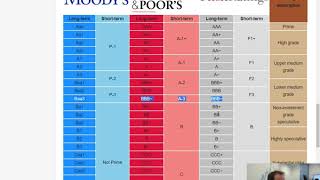
In this October 22, 2018 market briefing, the head of trading provides a geographically‑structured outlook for the week ahead. He begins with China, noting a sharp 4 % rebound in the Shanghai Composite after a prolonged sell‑off, technical resistance around 2,650‑2,700, and signs of a possible “buying team” intervention by Chinese authorities following weaker‑than‑expected Q3 GDP (6.5 %). He cautions that the rally may be short‑lived and that trade‑war drag is likely to materialise in Q4. Moving to Europe, he highlights two headline risks: Italy’s credit rating staying at BBB/BAA‑3, which temporarily lifted Italian bond prices and lowered yields, but a pending EU‑Commission letter on Italy’s 2.4 % deficit plan could reignite pressure; and Brexit, where Theresa May is seeking an EU concession on the Irish backstop while facing domestic political pressure and large public protests, with the GBP/USD (“cable”) testing a key trend‑line support around 1.3044‑1.3050. In the US segment he flags two geopolitical themes – President Trump’s withdrawal from the New START nuclear‑arms treaty with Russia and the fallout from Jamal Khashoggi’s murder in Saudi Arabia, which could affect oil markets if Saudi policy shifts. He also outlines the week’s economic calendar: a quiet ECB meeting, a pivotal US Q4 GDP release on Friday, and a full slate of S&P 500 earnings. The overall tone is analytical and cautious, emphasizing that market direction will hinge on whether any of these headline events produce new information; otherwise markets may consolidate in range.
Chapters
Okay, morning guys. So everyone's raring to go for the sort of final full week of October. So 22nd of October, of course, and let's talk, let's talk China. We're going to talk— well, actually, I'm going to split the briefing geographically this morning. I thought there's news really to be on top of as you start this week coming from us, or coming at us, I should say, from Asia, from Europe, from the US. Um, and often, you know, it's difficult to, to juggle all these balls, you know, where you're getting quite a few different, um, potentially significant news stories developing. It's hard to stay on top of them. It's even harder to judge which one of many, uh, is the most significant at any moment in terms of shaping and driving market sentiment. So I thought I'd just break these things up geographically. So we're going to talk China, major lift in Chinese stocks overnight, 4% plus to the upside, best day since 2015. So we're going to talk about why. We're going to talk about Europe, two key things in Europe to be mindful of. Firstly, Italy, secondly Brexit. We're then going to talk about the US with A few different factors to be considering. Obviously, Trump always in the mix. Let's say two things this week to be focusing on. Number one is Russia and Trump pulling out of the nuclear deal. Number two is Saudi Arabia and the— wow— assassination slash accidental death of a Washington US journalists. So these are factors to look at. We've got some, some really important GDP data out of the US at the end of the week. We've got 158 of the S&P 500 companies reporting their Q3 earnings as well. So, um, you know, and in the— in all amongst that lot, you've got an ECB meeting, which right now is sat somewhere down the bottom of the list of things to be mindful of. So that kind of just gives you a sense for what's ahead. So Certainly an interesting week. So let's start then. China, showing you the chart here of the Shanghai Comp daily chart. Now you've seen we had a major— well, it's been a bad few months, let's not beat around the bush here. The Chinese Shanghai Comp trading about 30% down from the earlier 2018 high, but a notable big breakout technically back on the 11th of October as we broke through the double bottom, August and September's double triple bottom giving way here, and then that created an acceleration down to 2,500 and below. And then Friday, really big session. Today even bigger as this market rebounds. Now the figures on the face of it, look at the headlines, and, um, you know, you're seeing 4% plus, uh, and you're seeing best day for Chinese stocks for 3 years. And that is true. However, all we've done here is got back to test what is key resistance, which is the, the August and September double bottom. So Friday's powerful bounce and extension today is, well, ironically following the worse than expected GDP data that we saw from China on Friday. I talked about that in Friday's briefing, so we won't cover it again. But the key thing is that what's happened in— in, as well as announcing this GDP data, you've seen a very broad-based concerted effort from Chinese officials to step in and try and adjust confidence. And, you know, we've seen this definitely in the past, and, you know, comments from top officials such as, you know, Chinese equities are not properly pricing in the actual real economic activity going on in our system. And that, you know, i.e., implying the recent sell-off is now overdone. We have seen this— it's kind of a nickname for the Chinese government's— well, a section of the Chinese government, we call them the buying team. If you go back to 2015, I mean, if you traded the Chinese equity market collapse August 2015, then you'll be familiar with this. And this is where the Chinese government was stepping in and to prevent stocks going lower. The government was literally stepping into the market and buying huge quantities of Chinese shares to try and prop up the stock market. Um, I have to say there's a slight whiff of the same activity going on here Friday and now again this morning. Um, it could well be that the buying team is back in action. Certainly, they've been trying to shape the confidence of investors by pretty much telling them, look, guys, this is the low. You know, you've overpriced this economic deceleration here. And so you've seen a strong, strong move to the upside. But don't for a second think that this is now— this is the low. Don't think that Chinese stocks are now going to ramp higher for the rest of the year. Don't forget that actually, ultimately, The trade war risk is kind of most of it's still ahead of us, I would say, certainly from an economic damage point of view. That GDP figure that we got from China, let me remind you, the GDP figure we got on Friday was at 6.5% here, which was the lowest reading since, since, yes, 20— oh, sorry, 2009. Right. And fine. But we had expected 6.6, but it was lower than that. But actually, the important thing to note here is that none of the trade war risk is responsible for this drop in GDP growth. And you could even go further and argue that actually the trade war risk was a positive factor for Q3 growth. And that is because, don't forget, that most of the tariffs on Chinese goods was only implemented right at the end of September, i.e., the end of Q3. So actually, you may well— it looks like we saw some, some, an increase in Chinese exports in Q3 as exporters try to front-run the inevitable forthcoming tariffs. So they're quickly trying to shift product out of the country into the US before the tariffs start to bite. So, so actually, I would say the economic drag that the trade war may well bring is ahead of us in Q4. So yes, nice, nice rebound for Chinese stocks overnight. But I would say that, that, that you want to be keeping your eyes all over that September-August double bottom. So we closed, we're going to close around about that level, anything around sort of 2,600, 2,650. Sorry, yeah, 2,650, let's say. That's the kind of key price point. And, and right now we failed to get through that. We really need to— the bulls need to get a gap close and a, and a move above 2,700. That's the key price point the bulls want to try and get their head above. But for now, two very powerful days to the upside. 3% up Friday, 4% up today, but it only really gets us back to this key resistance. So I'd say tomorrow's session's absolutely pivotal. And if we do find resistance and drift back lower, um, obviously we'll keep monitoring Chinese data as it comes through, but this may well not yet be the low, so we'll have to see. However, what's happened is that this has certainly fed through to some positive sentiment. I mean, the Asian session being very positive has fed through to Europe, and Europe's open being nice and solid. One, one other factor that's contributed to that is the fact that over the weekend Moody's chose to keep Italy's credit rating unchanged at BBB. Here's a look at Italy's credit rating. This is an alphabetical list of countries here, and you can see that Italy at BBB. So there was real worries that they would get downgraded as a result of the The Italian government's new plans to widen the deficit, spend more money, and along with the huge amount of debt that Italy carry and their, let's say, underperforming economy, and there were certainly fears that Italy would get downgraded. But why is that important? Well, why is that critically important? It's because Italy's credit rating is BBB. So what does that mean? Well, here's a table listing out how the credit rating agencies do things in terms of the, the scale, let's call it. And so, um, they, the, uh, well, Standard Poor's and Fitch and Moody's, these are the 3 international credit rating agencies. Standard Poor's and Fitch use the same system. Moody's use a slightly different one just to confuse you. But really the important thing is if I, if I Uh, yeah, so BBB— well, actually, for Moody's it's BAA3. I'm just going to highlight the row here which has got the BBB minuses from Standard Poor's and Fitch and the BAA3 from Moody's. So, um, Italy are kind of poised right here. Now the problem is if you get downgraded below BBB, then this becomes— if I highlight over here— non-investment grade. Speculative, otherwise known as junk bonds. Now, the problem with that is, uh, a lot of asset managers, a lot of pension funds that are managing billions and billions and billions, if not in some cases trillions, um, you know, these— certainly these pension funds have risk limits, and a lot of pension funds are not allowed to carry non-investment-grade assets in their portfolios. So if Italy did get downgraded below BBB, they'd be non-investment grade, which would force a lot of pension funds to sell Italian bonds. Of course, lots of selling of Italian bonds drives the price down, which of course drives the yield up. And we've been worried about yields spiking in Italy as a result of this political risk. And so this is a story in the news this morning. This has helped with positive sentiment in Europe Moody's choosing to not downgrade Italy, which means that therefore Italian bond yields have dropped as bond prices have pushed higher. Let me show you quickly here a chart of Italian bonds. Where are we? Here we go. So we're still up. Actually, let me just get— I can't get an intraday chart. All right. But you can see the spike to the upside we've seen on yields here. Yields going to a 4-year high. What we've seen this morning is yields chopping back. That's people buying Italian bonds, driving the prices back up, yields dropping as a result of Moody's not downgrading them. However, today is an important day because last week the EU Commission sent a letter to Italy about this, about their deficit plans, and saying basically, if you go ahead with your plans, you will be violating our deficit rules. And, um, you know, basically don't do it. And Italy have until today to respond to that letter. Now, the headlines this morning are Italy set to tell EU it won't back down on 2.4% deficit target. Okay, so whilst this morning we got some positive sentiment on Italian bonds, that can quite quickly reverse depending on the exact kind of tone of the Italian response here. But at the moment, uh, we're thinking that this saga is going to be ongoing and continuing, that Italy aren't going to kind of back down and make concessions, and that the Italian government are going to carry on pushing forwards with their 2.4% deficit widening, uh, budget. Okay, so Italy, certainly from a European perspective, Italy definitely up there on the agenda. Um, of course, um, talking about Europe, well, Brexit's never far off the top of anyone's agenda in terms of trying to navigate through market sentiment. each week. And so another important day for Theresa May this morning, or I should say today, um, you know, back from the EU summit in Brussels now. And, you know, the main takeaway is this idea that, um, further concessions have been made and that the UK is now looking to agree to potentially extending the transition period beyond December 2020, uh, and in return The EU will drop— well, I don't know, they haven't yet. But what Theresa May wants is the EU will drop their Irish backstop plan, which means that if there is no deal— this backstop plan, of course, is in the event of no deal, how will we deal with the Irish border issue? And the plan is that there will be some kind of customs check in the Irish Sea somewhere or off the coast, which basically means that Northern Ireland would remain within the EU. The EU customs union, and the UK would not. But of course, Theresa May's been insisting that no, no Prime Minister, no UK Prime Minister would ever agree to that, me included. That would be fracturing the United Kingdom, really. So the idea is that Theresa May agrees to extend the transition period if needed, and we're just waiting for the EU to agree to drop their Irish backstop insistence. So, but the problem is here in the UK, I don't know if you saw in London over the weekend, but apparently there were 700,000 people marching in protest against Brexit. These are people marching to— they want a second referendum. And 700,000 people does seem like a lot of people. I don't know how many of those were, were actually British, mind. There's a lot of EU citizens that live in London, and I'm imagining that good portion of that crowd were potentially EU citizens, but still, 700,000 is a lot of people. The other thing to note is Theresa May is under increasing and increasing pressure here, and the 1922 Committee only need 48 members of the Conservative Party to sign a no-confidence letter to trigger a leadership race. So Theresa May's got her work cut out this week, as she always does, to try and continue to navigate this tightrope. And we'll be hearing from her in the Commons this afternoon. But for now, Brexit risk definitely still on the agenda. Keep your eye on that. Whilst we're talking about this, let's have a look at cable though, because I've got an important trend line to point out to you. So this is the daily chart of cable where, you know, generally big sell-off in the first part of August as Brexit risk ramped higher and we had some strong US dollar as the US economy was, was, was powering on. Then we've had quite a nice steady reversal of that and we've got a very nice trend line that's kind of shaped the upside that we've seen over the last 2, 3 months. We had a key test of that on Friday. So be aware of this trend line. Which this week— well, I should say today— is kind of coming in with support around about 130.50 on the futures. But that was an important test and an important hold of what is an important technical level. Okay, but yeah, I mean, let's zoom in a little bit because I go to like a 1-hour chart here. Then, you know, on Friday we had a pop to the upside towards the end of the European session, kind of hanging around this this level, which was the low on the morning of Thursday last week. We've got this trend line from that daily chart, as I've shown you. The low from last week on Friday is an important level, down at 1.3044. But for now, slightly positive. You know, we've been up above the overnight highs this morning, but still, I guess the target on the upside is that high point, the spike high from the end of the European session on Friday. Okay, but just finding a bit of support here off that level that was the low Thursday morning, then has been, you know, kind of decent resistance throughout the Asian session last night. So we're just up above that and sat on top of that at the moment as we kind of await further developments from the Commons. Okay, so, so that's China, that's, that's Italy, that's, that's Brexit. Let's move on. And let's move on and talk about Mr. Donald. Uh, hang on one second, let me get my screenshot up here. Um, so a few things I guess to talk about, um, and let me transition that. So a couple of headlines. One thing that's starting today is this, um, Davos in the Desert. This is the sort of massive finance conference in Saudi Arabia that in 2017 was a huge success. The Saudis managed to attract all the big guns from across the world. Then, if you remember, but Kushner and Ivanka Trump turned up and they were the kind of celebrity guests. A major success for Saudi, and they were hoping for a repeat this year, but unfortunately, uh, Khashoggi Jamal Khashoggi, of course, got killed last week in Turkey in the Saudi consulate, and this saga has really disrupted this finance conference. It starts today, but of course most big guns have pulled out. However, there is evidence US allies skeptical over evolving Saudi story on Khashoggi. So while Saudi are saying it was an accident, it was— there was a fight in the consulate, and Saudi have sacked a load of consulate employees as a result. Perhaps this story isn't yet behind us, so further evidence may well be unearthed as we go through this week. So this is an important one. Saudi keep telling us that they will not be using crude oil as a weapon, which sounds quite alarming as a, as a kind of line to say. But what, what, what they're saying is, you know, that people are concerned maybe that if the US Well, if it is discovered that the Saudis have murdered this guy on the orders of the Saudi government, then we've got a big problem here because Trump is not gonna just sit back and allow that to happen, and he will retaliate as he has threatened. And of course, Saudi Arabia have a massive weapon in their arsenal, which is the fact they're one of the biggest, if not the biggest, crude oil producers in the world. So they could easily slap an oil embargo on anyone, you know, the US for example, and this would create major wild disruption in the, in the global supply chain, which would lead to oil prices spiking to the upside. Now at the moment, Saudi are not suggesting that they're going to get anywhere near using oil as a weapon, but you never know as this story evolves. Now at the moment, the last couple of weeks for oil has been highly negative. Coming off what was that major 4-year high set back at the start of October, touching up almost $77 here for WTI crude. But we've chopped back lower consistently over the last 3 weeks. Last week's low coming on the Thursday at $68.47, and no real movement here this morning or overnight. But just keep your eye on this Saudi— this, this Davos in the desert. Keep your eye on any further evidence being unearthed surrounding this, um, the murder of Khashoggi. Another kind of Trump development is over the weekend he's been riling the Russians by pulling out of a nuclear deal that really brought to an end the Cold War. Back in the 1980s, we had countries signing up to a deal where they promised not to build nuclear weapons that could be fired anywhere further than 500 kilometers. So it was really to try and protect countries against long-distance warfare. Now Trump's pulled out, and I guess he's pulled out for two reasons. Number one, he doesn't think the Russians are keeping their end of the deal. Trump thinks that Russia are building medium sort of length missiles, so that's one thing. The other thing is China aren't part of this deal, and I do kind of get his angle, I have to say, on this one. Basically, at the moment, you know, the US and Europe and Russia are supposed to be restricted— that their weapons sort of manufacturing is restricted by this deal. Deal that actually China aren't part of. So I think Trump's trying to angle here to create a bit of disruption, to perhaps bring China into the same nuclear accord. Maybe that's his medium-term strategy. But at the moment, he's sent his, his lieutenant, his military advisor, over to Russia. They're meeting with Putin over the next day or two. So news flow out of Russia will be important. So that's another thing to think about. So with Trump, it's, it's, it's the Saudi Davos in the desert, it's Khashoggi, it's then the Russians. Outside of the Trump circus, we do have some important data this week from the US. And have a look at the data calendar. And the data comes really, I would say, in two, two parts. First Firstly, you've got the earnings season continuing at full tilt. Let me see if I can just get that screenshot a little bigger. So on each day here, you can see at the bottom, at the end of the list, you've got the US earnings. Apart from today, no earnings today, but tomorrow you got 3M, you got Caterpillar, you got McDonald's. Wednesday you've got earnings from AT&T, Boeing, Barclays, Deutsche Bank. Deutsche always a kind of interesting earnings report to to see given what's happening with their share price. You've got down on Thursday earnings from Amazon, Merck, Twitter, Daimler, and then on Friday you've got RBS and Bath. I could say so, um, definitely some important earnings in amongst, um, the normal economic data. And I would say, um, I'll look at today's calendar in a second. Today's calendar is empty, but we do have, I would say, the biggest sort of event of the week with regards to economic data is not the ECB rate decision, which is on Thursday, which is actually expected to be a really dull affair. We know that they're obviously not hiking rates and we know now that they're also ending their QE program as of the end of the year. So as it stands, there's nothing really new the ECB can tell us. So ECB meeting on Thursday, but we're not expecting much from that. So actually, I would say the most important thing of the week is the US GDP reading. You got to wait until Friday until that, I'm afraid. But if a quick reminder on what's been going on with US GDP, well, what's been going on is this thing's been going up and up and up. Uh, 2.9% print for Q2, um, thanks to Trump's fiscal stimulus. Uh, and we're expecting this, this kind of, um, bumper phase of US growth to continue. Okay, so keep an eye on that because Of course, what, what's been happening— sorry, I'm not showing you the GDP chart here. This is the GDP chart for the US over the last few years. So you see what I mean? Nice solid uptrend, growth rates the best they've been in 4 years, and we're expecting growth rates to continue to push higher. But if you check out the S&P, of course. So let me look at a daily chart of the S&P. Then, you know, it's obviously been a bad month, to say the very least. And one of the reasons for the bad month is is because of the strength of the US economy and the fact that that strength has been sustained and the fact that now people are really properly pricing in further rate hikes from the Fed into 2019. You know, we've got a strong dollar and all the rest of it. And so this has really tipped the balance and sent things spiraling lower over the last couple of weeks. This morning, if we just zoom in on 60-minute chart, we've got some positive sentiment from China. However, the US stocks or S&P futures did tick below Thursday's low before this kind of China-led rally got things moving on the upside. So we're kind of back up to the middle of Friday's range here, and I'd expect consolidation now and things to settle down around here. And the reason why I'd expect that is because actually, whilst yes, we've had all these headlines, we are now just awaiting further news any of these situations. Further news from Theresa May and Brexit, further news from Italy, right? What are Italy going to say in response to the EU Commission's letter? Further news from any more evidence about Khashoggi. And then we're waiting for further evidence from the US big guns in terms of companies' earnings. We're waiting for further news from the GDP print from the US later in the week. And in the meantime, we do have, um, an economic calendar today that is empty. Um, you don't often see a calendar looking like this. I mean, there's literally nothing on it. Um, certainly no economic data here. These EU, uh, this ECB bond buying stuff is of course becoming less and less significant as they ramp down their QE program. So you can kind of forget all of this. Couple of bond auctions in here, but, you know, again, nothing of any note. Um, on the, on the central bank speakers, um, it's only— well, we've already had the, the Central Bank of Australia here, and obviously that's not critical on a global basis. And so really you're looking at the earnings, and, and even the earnings aren't really anything to get excited about, certainly not the US ones. And so you don't often see a data calendar that is this empty. So bear that in mind. Now we've had the Asian session come to a close. Yes, it's been powerful and positive, but I think we're going to be lacking in developments. And so we may well see things just start consolidate, unless of course we get any major updates from all of these stories that I've been talking about. Okay, so I would, I would get yourselves into the mode and the mindset of a quiet European morning and maybe even a quiet US session, looking for markets to kind of find ranges and establish ranges, and outside of any key developments, those ranges to be sustained. Okay, that's it from the desk for this morning. Enjoy the session, enjoy the week. Thanks very much.
More from Anthony


Inside the Biggest Banking Stories You Need to Know This Week (Anthropic, Diageo, Private Credit)


Inside the Biggest M&A Deals You Need to Know This Week (UniCredit, GameStop, eBay, Eli Lilly)







AI Breakthrough or Hype? Anthropic’s Claude Mythos, Tim Cook Steps Down & LIV Golf Collapse