How Ross Used His Amplify Experience To Land A Role At Morgan Stanley As An International Student
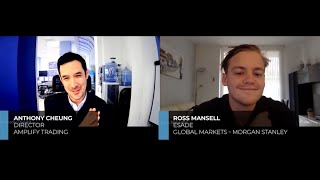
Ross Mansell, a South African master's student at ESADE, used the Amplify Summer Analyst Training Program to land an off-cycle internship in Global Capital Markets at Morgan Stanley. Amplify provided CV templates, cover letter guidance, and mock interviews. Ross credits the peer community and alumni connections at Morgan Stanley with helping him navigate rejections and land the role.
Chapters
Hello and welcome. I'm here with Ross Mansell, who did the Amplify Summer Analyst Training Program back in 2021. He's joining me from Barcelona, where he's currently studying a master's at ESADE University, but is from South Africa, but is coming to London because he secured an off-cycle internship at Morgan Stanley. But Ross, how's it going?
It's going good. I've, yeah, I'm doing my master's in finance at Asahi. I started in September last year and I'll be finishing in June and then heading off to London for 6 weeks before I start my internship in August with Morgan Stanley. It's in the global capital markets division, which is exciting. I'm very excited. I'm actually doing my thesis on a topic related to capital markets to kind of just get get some, some of the juices flowing before I start.
Cool. Well, look, let's take this back, um, to the, to the beginning. So did you always have like an ambition to work in, in finance? Obviously the things that you're studying would indicate that, but did you have an idea of role and stuff when you were at college and so on?
Yeah, I think at university I think a lot changed, um, Obviously I studied finance and accounting as in my undergrad, and this passion for finance and this interest, I think, was more what it started as, um, kind of lent to me pursuing a career in, in finance. And I was particularly interested in the sell side, so investment banking. But before then, I was very much a sporty person, so I never really had, um, I, I had some exposure to, to commodities and and finance in general, but it was never, uh, I didn't expect to be in this position maybe 8 years ago, uh, more, more so when I started studying, um, my undergrad. And then I wanted to kind of pursue that further. So I decided to come here and do a master's in finance. I think that was important for me because coming from South Africa, wanting to work in the UK was quite, uh, difficult in the sense that the, the, the job market there is more tailored to hiring Europeans and people from the UK. So doing the master's here has helped me kind of tailor my CV better and get some experience in a different country. So yeah.
And then how did you come across Amplify initially?
I think, I mean, on LinkedIn, I'd always seen stuff on Amplify, so PR-related things. And I knew that they kind of tailored their program to investment banking style. And, and obviously the buy side. So pretty much everything Amplify kind of gives you exposure to all sides of the finance, of financial markets, but I wanted some experience. And when I was in the UK last year, when I'd moved, I couldn't get any internships because of Brexit. So I was in a tough spot where I wanted some work experience before I started my master's, but there was nothing really there for me because of the whole work permit situation. So that's when I'd come across Amplify previously to that. And then I was like, let me reach out to someone at Amplify. And then George got back to me and then I literally decided then and there that I was gonna do the program. And yeah, it was a great decision. In the end, it's, yeah, it really helped me. It gave me some good exposure to what banks, investment banks actually do. I think a lot of the time we don't actually know as students, unless you've had that exposure or that experience at a bank, previously. So I would say definitely LinkedIn helped me with that. And, um, and I actually knew someone that did Amplify before. He went to Asadi as well.
Okay.
Yeah, he did it. His name— yeah, anyway. Uh, yeah.
So, so what, um, obviously you and I had had some conversations over recent months kind of prior to you securing the role with Morgan Stanley, but I know you've mentioned to me before about the importance of having kind of a peer group, a community around you to help support you through that. Cause I assume that it wasn't just straightforward. You applied and got the first job, right? Was it, what were the challenges that you, you had going through that application process?
Yeah. So the application process for banks is, is rigorous as a, as a, an undergrad. I mean, or as a master's student, I think going into an entry-level role is tougher maybe than going into a role as a more experienced individual, you know. I'll have to find that out. But I think having a good support system, like friends that have similar ambitions and people that want to get into similar roles, even though that's competition, at the end of the day, there's so many different banks and roles out there for individuals that having people that can check your CV and check your cover letter and can do mock interviews and all that stuff, I think that adds so much value because they they can give you the feedback that you need prior to actually doing the interview or helping you. I mean, one of the first steps in the process is the assessments, the numeracy things, and having access to like maybe practice questions on that also helped me a lot before. So yeah, it's all about prepping, I think, and also going into each stage, knowing that it's a toss of, I mean, you could get the interview, could not, but you got to try and put as much effort into the preliminary rounds as possible to make it.
So what do you think changed for you from the first application to then the eventual successful one? What part do you think was sort of the most substantial kind of tweak?
Yeah, so I mean, the, the applications that I did for this round, um, of, of intakes at investment banks, I think my approach changed a lot because my CV was a lot better. I came to Amplify and you gave us this template for investment banking CVs. And that helped me a lot because my CV before that wasn't in the right format. And that can really hinder your chances of just even getting through the screening process. So I think that helped me. Um, and then the COVID letter as well, kind of my structure of my cover letter wasn't, uh, how it should have been. So It's, it's those kinds of prepping situations where doing more research on the banks, doing research on markets and coming in fully prepared to know that whatever they're going to ask me, I can, even if I don't have a rehearsed answer, cause I don't think you really can. I think you just got to be able to think on your feet. That's what changed. I think it was more of a mindset shift than anything else.
And then kind of dealing with the rejections, because I'm just kind of sympathetic to the situation of most individuals. Yeah, you know, is there any advice that you would give to them? And they're kind of in the middle of it at the moment, still looking to land that role.
I think I got rejected by most, uh, by most banks that you applied to. I mean, in the screening stage, you do get rejections, um, very like often if you don't do well enough in the assessments. I think You get that email back a day later and it's like, flip, really? Like, I don't get the interview. And I think, um, you just got to keep on pushing, trying to improve your CV. Um, and those are the key things. I think the interview stage is up to you. I mean, if you do the prep, um, then you can get the role.
Um, I remember you and I talking a fair bit before a lot of those final round interviews and yeah, credit to you for kind of doing your upmost to be as prepared as you possibly could be.
Yeah. So I, I think with the rejections, it's more about the rejections before you even get the interview. Those are the disheartening ones. Um, when you, when you don't make the cuts based on a test or based on your CV or your cover letter. So if there's one piece of advice or anything that I could say is just try and make sure that you do everything that you can to get past that stage, because you can't really be upset about yourself if you've done all the prep possible. And you just got to keep on applying. Yeah.
And is there, is there people from the kind of cohort from Amplify that you still talk to at the moment?
Yeah, I speak to Chris quite often. I think you might remember Chris. He, he's in Wales. But yeah, they, I do keep in touch with a couple of them, but I'm in a different country, so meeting up with them is quite difficult. I did meet up with with Chris. Uh, and yeah, I mean, also he helped me a lot in the process. Uh, we did mock interviews together. So yeah, it was always kind of like, we've got— you come on to Amplify, you have 60 different people with pretty much the same ambition as you, same kind of idea of what they want to do. Um, so, you know, helping each other definitely is, is a good idea. Uh, and it also is satisfying when someone that you're helping gets a role. Yeah, I mean, one of my friends that I'm like, close friend of mine from school got a role and we were, I was helping him with, with, uh, with his applications and it's really satisfying.
Um, did the people at Morgan Stanley who had done Amplify before, did they help you out at all?
Yeah, they did. I reached out to a few of them. Um, that was definitely Something that I would also say is really important for the interview stage is reaching out to analysts, obviously people that have similar backgrounds or similar experiences. So Amplify is a good one because there are people there. So reaching out to people that are working at Morgan Stanley that have done Amplify, giving you kind of some feedback on their experience is definitely worth it. And also it's, it gives you more insight into their experience. So Yeah, I did that with a few of them. I think 3 of them got back to me and it was really useful.
So yeah, no, that's amazing. I think the Amplify community is the thing I'm most proud of. And I hope that you'll do the same for whomever watches this or in years to come when you, touch wood, I'm sure will go on to smash it when you get there. But look, great to catch up. Thank you for your for your input. And yeah, stay in touch. And yeah, all the best for your off-cycle internship.
Awesome. Thank you, Anthony Cheung.
More from Anthony


Inside the Biggest Banking Stories You Need to Know This Week (Anthropic, Diageo, Private Credit)


Inside the Biggest M&A Deals You Need to Know This Week (UniCredit, GameStop, eBay, Eli Lilly)







AI Breakthrough or Hype? Anthropic’s Claude Mythos, Tim Cook Steps Down & LIV Golf Collapse