How to Break Into Investment Banking: What Top Interns Do Differently
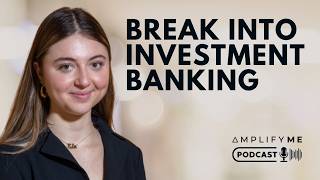
Ella converted a JPMorgan summer internship into a full-time investment banking offer by mastering both technical skills (Excel, valuation) and soft skills (storytelling, networking). She built commercial awareness through podcasts, used simulations to practice, and prepared obsessively before the internship with deal analysis and jargon study.
Chapters
Hello and welcome back to The Market Maker podcast. And today I'm really excited to be joined by Ella, an LSE Management student who will be joining JPMorgan in their investment banking team in a full-time role in 2026 after converting her internship this past summer. In this conversation, we are going to dig into how she built technical skills from scratch, balanced academics with applications. I know that's always an incredibly tricky proposition for all students, and stay confident in this ultra-competitive environment that we're in at the moment. So we're going to look at lots of practical steps that hopefully anyone can take as well, even before their internship begins. So they have the maximum chance of converting in the future. But Ella, how are you?
Hi, Jack. How are you?
Yeah, brilliant. Look, I'm really excited to have you on. I know I've kind of done a few conversations now with some of your colleagues at LSE and AIC. So both have been Great. So shout out to those two. But perhaps, you know, one of the things that struck me when I first met you is that you are a management student, not an econ student or something of that nature. So I just wanted to start with a bit of framing of, so how did you get interested in finance? And I know going to LSE, there's typically a lot of people talking about consulting or VC and startups and these sorts of things. How did you find finance yourself?
Yeah, so I think what was really interesting about finance to me was its interconnected nature. So back in high school, I completed International Baccalaureate IB Diploma Program, and we always had to like analyze different events from a multidisciplinary perspective by then. And I think the way everything in financial markets is actually a result of confluence of different factors like geopolitics, macroeconomics, psychology was really appealing to me. The need to have that multidisciplinary analytical skillset to be able to actually understand it was quite interesting. So that's how I actually initially got interested in finance.
And was there a moment when you were like, oh yes, that's it. Was it someone you encountered? Was it a video on YouTube that you saw? Was it a podcast you listened to? Was there like a light bulb moment or was it much more kind of more gradual than that?
I wouldn't say it was like a lightbulb moment, but it was more of a continuous discovery. When I started to read more about the deals, I realized how transformative they are. They're shaping entire industries. They're not just like valuations. They're not just numbers on spreadsheets, basically. So, seeing that, being able to actually craft a narrative for a company and being able to be part of that story was really unique to me. That's when I realized that like M&A is really interesting and investment banking is actually quite unique.
And in investment banking, I guess there's probably some preconceived ideas of what exactly that is, but I know you said before about it's a blend of qualitative and quantitative sort of skills. So what do you mean by that? How do those things come into an IBD kind of role?
Yeah, so it definitely requires an individual to have both qualitative and quantitative skills, and that is what initially drew me to investment banking as well. In terms of the quantitative skill set, obviously you need to understand how to value a business, what drives business value, that like technical background. But also you need to have those strong interpersonal skills. You need to be able to pitch an equity story, actually understand what are the qualitative reasonings behind that quantitative data. You need to be able to negotiate, get that stakeholder buy-in, and that qualitative aspect is really crucial. And I think it's definitely a blend of both. So, yeah.
Given what you just said there then, so you are a management student and I did my undergrad in business management as well. So, I know that, I mean, I think I did one module for one semester on economics, so it was pretty light touch. What you've just described there is, you know, on the technical side, there's probably a competency of knowledge that's required. So how do you go about finding out what to learn and then learning it? Like, what was that process for you?
So that's definitely tricky. I think it's really important to find, obviously, the required information that you need to know. And the first way to do that is definitely tailor your courses accordingly, possibly choosing more of like accounting modules, more finance modules. But the way to do that is initially look at obviously investment banking simulations, like the actual tasks that you might encounter and understand how can you find similarities in your courses and modules and how can you pick them strategically. I think that's the way to approach. But in terms of like getting that qualitative skill set as well, I think management also helps because in investment banking, you need to also concisely deliver information, right? And like writing an essay, it's actually applicable because you need to be able to communicate what you're saying in a concise and persuasive manner, and it shouldn't be undermined. It's actually perfectly needed in investment banking. So yeah, definitely it's actually everything in management is also applicable.
And I remember talking to you before. And you were kind of, it came across like you devour financial news. You were saying, I can't remember the example you said, you're like washing dishes and you're like listening to podcasts on 1.5 speed or something. Do you feel what made the difference for you to close that gap or indeed like give you an advantage over other people, do you think?
I definitely think like having a strong commercial awareness is really important and that can be built through listening to podcasts. And of course, like increasing your efficiency and listening to podcasts whilst doing house chores and walking to school. I think that's really crucial because that's like making the most out of your time as well, being productive all the time. And I think that provides an individual with a first mover advantage, but the key there is actually not doing those things, not listening to those podcasts just to tick the box. So that's really crucial because some people just do these things because it's like expected. Everyone should listen to Financial Times daily. Because in order to be good in your interviews, you need to have a strong market knowledge. But I think it's more about how those podcasts actually spark a curiosity in you. Like you should dig deep after you listen to something in Financial Times, for example, if like something is interesting, you should read more articles about that. So I think that sparking curiosity aspect of podcasts is actually really crucial bit that is sometimes on their mind. And that is the way I approach it. Using it as like an initial trigger to find what I'm actually interested in, in the news.
I totally hear you, what you say about don't just be like a passive listener or don't just tick a box because I remember when I was at university, I was a pretty bad, in terms of academic discipline, I would say. I'd be one of those people who'd rock up quite last minute and try and do my best. But one of the things there, yeah, just just about the idea of going to the library is not going to make you good at a subject. It was like, that was what it was in my day. And I think you get that a little bit where people listen to podcasts and they think, I've done that. They haven't actually absorbed or listened or gone off and researched. And so that's looking back in retrospect, what I would tell myself to do, but hopefully others can listen to. So is there like a resource? I know, like Investopedia, for example, But a lot of these insight pages kind of one leads on to another. And is that how you help yourself in terms of kind of finding your way through all the noise of information?
Yeah, genuinely, I use like Investopedia as well. Sometimes there's like a rabbit hole of 100 tabs like open. I'm always like trying to learn more and more. But I definitely use Investopedia. It's like an old school method maybe, but I use that too. And I use AI tools as well, obviously, to like help clarify some of the things that I listen in podcasts, that definitely helps too. So those are my like two main resources, I would say.
And a lot of the listeners probably feel like they won't be competitive because if they haven't studied finance, for example. So what would you say to them specifically as a group?
I think the key there is definitely identifying your unique selling point. And what do I mean by that is if you're like studying biology, for example, and this was actually an example I used in one of my interviews. And as a biology student, you go to a lot of labs, like what you're doing is like conducting experiments and it actually requires a lot of attention to detail, right? Like that meticulousness inside the lab, basically. And that is a skill built through years. And it's a skill set that is actually really applicable to investment banking when you think about it. Because like when you're working on those models, you need that attention to detail. And if you can actually connect those dots and bring that to the table and say that I have this skillset that I built through in my biology course, and I can apply this to investment banking setting, and then also reflect your genuine interest in investment banking, that I think is even more appealing than being like a strong finance student or like citing things from Warren Buffett on investment banking questions. So.
Yeah, I love that. You got to kind of own your history and your story.
Exactly.
Connect those dots. And I think that's a great analogy. Okay, cool. Well, one of the things then is, you've gone through the process successfully being that traditional process with this internship turning to a grad full-time role, but the approach of balancing just general school life with applications, with work life and all these other things where you're, you know, you're upskilling, you're getting ready for these things. How do you manage that? Particularly when you go to, in your case, you know, one of the kind of elite universities where, you know, it's, you're, there's a lot of expectations on you from an academic point of view as well as a professional point of view. So how do you personally balance that?
So it's tricky. It's definitely not easy. Like, it's a struggle that I hear from, like, everyone, all of my friends as well. And I think how I approach that is definitely constantly seeking productivity, as we previously discussed as well, instead of on and offs. Like, listening to podcasts whenever I can, utilizing my time efficiently, because it's really crucial. Then that also gives you the time to actually detach yourself. From your studies, from the application process and everything as well. And to give an example as well, whilst I was applying to these some internships last summer too, I just didn't say no to a holiday with my parents, but whilst I was like on the beach, I was listening to podcasts, like, obviously, like you need to detach, you need to enjoy the sun, everything as well, but constantly seeking that productivity is, I think, really crucial. And I find it similar to like a fitness mindset where you can have cheat meals instead of like a whole cheat day, because that allows you to stay on track whilst having small breaks, which will actually motivate you as well. So that's my mindset.
Like, how would you plan out your, your normal day? I mean, do you, are you quite meticulous with that as a, as a process? Like in terms of mapping your week, what, what would that look like for you, for example?
Yeah, so that's a really good question, I think, because that is, I'm still working on the agility concept as well. So I love being extremely planned, actually, like having everything planned and like to-do lists, but obviously things can go wrong or differently. So having that like flexibility is really crucial as well. So how I plan my day, obviously I write my deliverables, things that I want to do, but I don't want to be extremely rigid on timing because when things go wrong, I just don't want to be demotivated. I just want to make sure that I'm completing everything that I'm setting for that day, but also giving myself the flexibility to accommodate, um, according to what happens in a given day.
Yeah, makes sense. All right, cool. And then the one thing I know from your journey is that although I said you kind of did the internship to grad, um, I don't think you had a spring, right? And if I, if I think rightly, so I think there's a big belief and there probably is some evidence in it in that it's impossible to get a summer without a break. I mean, it's definitely not impossible, but challenging, but yeah. What's your take on that? Cause, and what was your experience? Because you didn't have that spring experience when you were applying for summer.
Yeah, exactly. I think that's a really important point. So, because when I first joined LSE, I remember first week, it was Freshers' Week. We were out with my friends and I hear the word like spring break, and I really thought it was a spring holiday. So that was like quite surprising and shocking to me when I learned that like people were frustratingly applying to spring breaks on the first week of LSE during the first week. And I didn't have a spring in my like first year because I didn't know by then that I wanted to do investment banking. And I think the key there is like just because you discover that you want to do investment banking later should not mean that you cannot become a banker. Just because you're like late to the game, like doesn't mean that you can actually like not start and like become a part of the game immediately. So it's more about taking action day one, creating the opportunities for yourself immediately and not being demotivated. Because that's what I did. Like I searched for opportunities for another internship opportunity that I can do in summer in Turkey so that I can build my knowledge and bring that to the table in my interviews. So that should definitely be the case because there are other opportunities, numerous like opportunities like bootcamps or like job simulations that people can find from online. And that really actually equips you with those technical skill sets that are— obviously a spring week is also like 4 days. You're not missing a lot. And I'm not just saying that obviously spring week is not useless. It's so important. If you want to facilitate your workload. But that doesn't mean that you cannot apply for a summer or you cannot become a banker. So, yeah.
Yeah. And I'd hugely encourage anyone who's, you know, in a situation where they hadn't obtained a spring. I think it was Hugo, who your, your colleague at LSE, and a previous episode we did, if you just go back in our, in our library. But I think he got, was it a VC, a hedge fund, and another, he had 3. But all came through targeting very small shops who needed their biggest kind of bottleneck is time. So they needed someone to just helping hands to do a bit of a jack of all trades. But he got some phenomenal work experience, which then enabled him to get, you know, close the gap really quickly. So it can be done for sure. So, okay, cool. Something else was that I think a lot of people do is they spend a disproportionate, probably, amount of time on the application process, and then they secure the role. And then I'm assuming, I mean, it's been a long time for me at that stage, but there's a degree of relief and you're like, oh wow, it's done sort of thing. So I just wondered then this pre-internship phase. And just beyond that, just what people can be doing probably all of the time, but what can students be doing more practically speaking to make sure that they are ready when, when the call comes, hopefully?
Yeah. So I can reflect on what I did, obviously, and a couple of key things that I can highlight there is definitely building your technical skillset, like familiarizing yourself with Excel, PowerPoint, those tools, because those are really needed to increase efficiency. Once you hit the ground. And like familiarizing yourself, especially if you are a Mac user, is really important because the shortcuts are different, like with Windows and Mac. If you can find a way to actually like work on Windows computers beforehand, if you're a Mac user, that would be such a good like advantage for you.
That's such a good tip. Yeah. I never thought of that. You know what? I was in the office last week and one of my colleagues went off to get a coffee away from her desk. And I needed like a snippet tool, like, cause I didn't, I was working hot desking of this image and she had an Apple Mac and I didn't even know how to like snip an image and then send it. I was just like, what am I doing? So if you reverse that and then you land in a bank, cause no one's using Apple Macs, right?
Exactly. It's like a different language. It can be like a different language if you haven't used it. So it's really important to— That's a good point. It's really important to do that. And the second thing would be trying to learn how to think like a banker before actually becoming one. And like the way to do that would be obviously listening to various deals news and reading news. That's really important. But instead of just focusing near on the numbers on those deal news, but looking at, okay, so what is that, like the qualitative reasoning behind that data? How is this actually going to affect this business, this industry? Thinking about those intricacies, trying to force yourself to think a bit more out of the box, I would say, that is, I think, really helpful. And in terms of reading the deals as well, familiarizing yourself with the jargon, the abbreviations, those are really important too. And those can be really helpful when you actually start the job, I would say. And the third thing, which is sometimes underestimated, I think, is definitely building connections beforehand. It can be with your, like, teammates, trying to, like, like arrange a face-to-face coffee chat beforehand and build that sense of rapport with them. And also like people who post the internship on LinkedIn, like trying to reach out to your cohort and like get to know them beforehand. Those are really important things because the first initial days, like that can be really stressful and knowing people around, that's just like, that will definitely reduce the stress levels and that will allow you to actually become a part of that community. Easily as well once you join. So, yeah.
Talking of stress levels, maybe I could ask you a question about, I mentioned earlier, you go to, you know, quite a competitive university from an environment perspective. You're surrounded by pretty strong candidates. You know, you interact with them on campus, at the assessment center, in the internship. How do you avoid comparing to others and that then leading to imposter syndrome or too much pressure that you can't feel like you can remain composed and perform at your best. So yeah, avoiding comparison and kind of the confidence, I guess. What's your take on that?
Yeah, that's again, like really tricky at LSE, of course, but like comparison is the thief of joy, right? So that should be the initial approach, but So like tying back to it, like what I have said earlier as well, identifying your unique selling point. I think that's really crucial because once you realize how you can differentiate yourself from other candidates, I think by then you could be a lot stronger and confident in your abilities as well. Like you should be confident in like what you know, you already know really well, and you can learn if you don't know something. That should be the mindset, I think. And I think like a lot of successful individuals do have imposter syndrome, but it's more about how you utilize it to your benefit, how you identify your areas of improvement. Because at LSE, let's say, if I realize that, oh, I don't know this, but majority of my friends who are applying, they know like a certain fact, like a certain technical skill set, I would say. I wouldn't think of it as like, okay, I'm behind or something like that, but I would be like, okay. Day one, take action. I will learn this as well. I will improve myself as well. So I think that should be the way to approach definitely like avoiding comparison. And if you have areas of improvements, that's okay. That should be the thing because investment banking, it's like a continuous improvement journey. It's a steep learning curve. So there's always something new to learn. So yeah.
And how about on the confidence side specifically? Is there anything on that?
I think with the confidence side, definitely believing that you're putting your 100% into this process and you're going to be successful at the end of this process. But I think like the key there is sometimes people define success merely based on concrete outcomes. And I think that affects confidence. One could be like, oh, I didn't have a spring week. Oh, I'm lacking behind in a concrete outcome scale. Or like I had 3, 5, 15 rejections. And I didn't do well in my first interview. If you define success merely just looking at those outcomes, then I think it's really difficult to be confident. But if you define success more of like the continuous accumulation of knowledge and the experience, then I think it's easier to be confident that, okay, I'm putting a lot in this process and I'm actually learning a lot and I'm gonna be successful. So that should be the mindset, I think.
Yeah, I almost think like one thing that you can have control of or influence of on its outcome is the amount of effort and consistent approach that you're going to have. Because actually, I think for a lot of people, that's where it can come undone a little bit. But it's, if you can just keep that mindset of progression takes time, but you've got to stay at it and be consistent. It's that that unlocks then the kind of confidence, I think, in the end. Okay, cool. And the final kind of practical tips. I know from when we spoke before, there was kind of 3, I guess, kind of good levers you could pull for someone who, you know, with an internship at JPMorgan or any other top bank next summer, what could they be doing? Because I was just looking at LinkedIn this morning. Everyone's kind of finding out, have they got an offer or not? It's kind of that part of the year. What would your advice be to them going into that experience in summer '26?
Yeah. So the first thing would be balancing perfectionism with practicality. I think that's really crucial because in investment banking, we have to deliver a perfect output. Like, that is what is expected. But also having efficiency is really important as well, because you're given a deadline, you need to actually deliver something. In a time-pressured environment. So having a practical approach is really crucial, I think. Like, instead of your, like, perfectionism preventing you to start the task, I think you should approach it with, like, an open-minded mindset and, like, give it a go and then double, triple check it. So that is really crucial because time pressure is, I think, one of the key things that appears as a struggle. And second thing, would definitely be like visibility. I cannot highlight the importance of visibility. And what do I mean by that is actually leveraging, like building genuine connections, having that initiative to actually knock on the doors of senior people to actually arrange coffee chats. That's really crucial. Getting that like stakeholder buy-in, understanding what different people value the most and building genuine connections based on that. Is I think really crucial because what sometimes matters at the end is if a senior person can say, oh, I remember this intern's face. So that's really important actually. And the third thing would be there is having a positive mindset and a growth mindset. That's really crucial because this is an industry where you're going to make mistakes and it's like really important to realize that there will be negative feedback as well. and you should see them as actually learning opportunities, reflect on those and grow. And that like negative feedback should never ever like demotivate you. I think that's a key point. Yeah.
I remember speaking to a few, uh, kind of heads of divisions before, um, who are super senior. And actually that last point was really key for them. It was like, I want them to have like this aura of just positivity, of energy, of like, these are the young people coming in and like, that's the type of culture and atmosphere that I want. And it's, again, it feels like that is something we can control, like how, you know, that mindset of positivity. So yeah, it shouldn't, should never be underestimated.
Exactly.
One last thing then. One thing you wish someone had told you earlier.
I think knowing your end goal, your why, that's really important in this application process. And it took me a while to like get there, but how I learned that was I was listening to one of the motivational theorists, Dan Pink, and he has a unique way of defining like sense of purpose, your why. And I think that's really important to discover that, like discovering that is really crucial because once you discover that, like all the process resilience, like comes easily and you can say, okay, I'm not actually like doing these just for the interviews, but I'm actually doing these because I want to become a banker one day and I will become one day. Then you see this whole process as an accumulation of knowledge and doing something for your future self. And that really helps you to be motivated all the time.
Yeah. So, so true. So, okay. Well, look, to conclude then, there's kind of a few things that I was making notes on whenever you and I have interacted and the things that I get is You know, you don't need a finance degree to break into banking, but it's quite clear from what you've said and how you say it. I mean, definitely that energy I get from you completely is you need that curiosity, that consistency, that discipline to build those technical skills as early as possible. I think you said it, and I totally agree. This sort of stuff doesn't have to cost you. I know that there is programs you can do, but you know, these podcasts, these deal flows that get talked about, you know, it's all there for the taking. It's kind of on your shoulders to whether you want to consume that sort of stuff. Then preparation isn't just about interviews. I think that was really cool what you said, which is like kind of forming consistent habits that make day one of your internship just feel like a natural flow rather than a surprise, and then you're kind of chasing to make up for lost time through the internship, which I think is sometimes a bit of a mistake. And then your edge comes actually from your mindset in the end, because I think a lot of people can probably level up to accumulate the necessary skills on Excel and the basis of financial modeling. So what is it that actually makes you better than the next person? Probably is your mindset, your attitude. So Understanding your why, avoiding peer comparisons, showing genuine initiative, you said, is a really key thing. You know, I think these are so important messages and I can see why that bank wanted you back full-time. So Ella, thank you so much for sharing your insights and your time. I hope you don't mind. I'm sure people on LinkedIn after hearing this are probably going to want to connect. Uh, so hopefully it doesn't, doesn't clog your box too much, but, uh, thank you so much for your time, Ella.
Thank you.
More from Anthony


Inside the Biggest Banking Stories You Need to Know This Week (Anthropic, Diageo, Private Credit)


Inside the Biggest M&A Deals You Need to Know This Week (UniCredit, GameStop, eBay, Eli Lilly)







AI Breakthrough or Hype? Anthropic’s Claude Mythos, Tim Cook Steps Down & LIV Golf Collapse