How to Navigate Your Early Career in Finance (Sell-Side & Buy-Side)
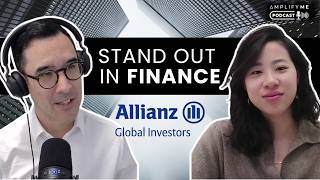
In this podcast, host Anthony Cheung interviews Wikki, a biotechnology graduate who built a finance career at Bank of America Merrill Lynch and Allianz Global Investors. Wikki discusses how she discovered finance through spring weeks, overcame assessment‑center challenges, and bridged the knowledge gap between STEM and finance via formal training and on‑the‑job learning. She reflects on the pressure of a traditional career path, the role of mentors and a personal “board of directors,” and her process for upskilling in new environments. The conversation moves to developing skills, emphasizing the importance of researching workplace culture, choosing managers wisely, and the value of off‑cycle internships where curiosity, feedback‑seeking, and proactivity distinguish top performers. Wikki contrasts sell‑side and buy‑side mindsets, outlines how to assess fit, and offers guidance on building relationships and finding mentors. She then shares career‑stage advice for early versus mid‑career professionals and explains the evolution of impact investing, highlighting growth in private‑market impact funds, regional trends, emerging roles (impact measurement, ESG reporting), and resources for aspiring impact investors. The interview concludes with Wikki’s advice to her younger self: embrace non‑linear paths, focus on learning, and avoid rushing.
Chapters
Wikki, absolute pleasure to have you in this series. How are you?
I'm good, and thank you for having me on this podcast.
And so to give you a bit of a, a flavor of what we're going to cover, it's the career journey and transitions, developing key skills, work culture and leadership, and impact investing and ESG. They're kind of the four areas. Within that, we've got a whole bunch of questions to ask, but Wikki, perhaps we could start with just a brief history, your background from student to what you do in your present role.
Sure. So, I did a STEM degree at university, actually. So, I read biotechnology at Imperial College London, and I graduated with a Bachelor of Science, First Class Honours in 2015. In my penultimate year, I did a summer internship with Bank of America, or what was then Bank of America Merrill Lynch, within the credit risk department, and I loved it. I got the graduate offer and then I returned to the bank when I ultimately graduated. There I spent 6 years, um, across credit risk, but then also in the debt capital markets side of the bank, uh, on the emerging markets, uh, bonds origination desk, and also then on the syndicated loans structuring, origination, and sales desk covering Europe, Middle East, and Africa, EMEA. After those 6 years, I then joined Allianz Global Investors, which is a global asset manager fully owned by Allianz, an insurance company. I joined in 2021 within the development finance investment team, which is now the development finance and impact credit investment team. We have expanded scopes and, and strategies. And my team, just to give a bit more context, is part of the private markets platform at Allianz Global Investors. And the private markets platform is itself around 15 to 20% of total assets under management, or what we call AUM, of the firm. Within my team, we make debt investments globally, focusing on emerging markets and pan-Europe. With our investment strategies primarily having a blended finance and/or impact angle.
Wow. There's a lot there to unpack for sure. We will get through it, but perhaps we could start with at the top where you said you were STEM, you studied a biotechnology degree. And so I just wondered, how does someone studying that get wind of a potential career in finance and how did that transition happen from— I'm sure there were some big challenges to confront and a bit of a bridging in the kind of knowledge and skills gap?
Yeah, sure. So quite a bit for me to go back into my past and dig up. No, but I would say I had friends at LSE and that was how I got wind of, you know, doing spring weeks, et cetera, because they were all applying, busy applying for that in their first years at university. And so I applied for one of the spring weeks. I think it was a Winning Woman event at JPMorgan. Um, did that in my first year for about half a week, I believe. And there really, I also had the opportunity, you know, to learn across a variety of roles within the investment bank. You know, they covered the financial market side, trading, but also investment banking, corporate banking, you know, capital markets. That was super interesting, but I was super new to the space at the time, obviously studying a STEM degree. But there I didn't, you know, succeed at the assessment center to get into the summer internship, and I ended up, you know, joining, as I mentioned earlier, Bank of America Merrill Lynch for my summer internship, and there I got a graduate offer. But there were a lot of, you know, learnings in that time. So as part of the feedback from the assessment center at JPMorgan, they basically, you know, said that, you know what, we liked you, but you didn't have enough confidence at the assessment center. We just weren't sure if you could perform if you were to join as a summer intern in that respect. And so I really took that away when I was preparing for my, you know, assessment centers for Bank of America, but also other banks I was applying to at the time in my penultimate year at university to try to make sure that, you know, I had that confidence aspect locked down. You know, I made sure that I, you know, I watched my body language, I watched the language I used at assessment center, and obviously made sure I prepared a lot from a technical perspective, as much as I could, you know, with the resources I had to ensure that I knew what I was talking about if I was asked certain questions. And I had that confidence, you know, that showed through hopefully at the assessment center, which I believe it did. I got the offer and then I, I went back as a graduate. So I think the biggest challenge to answer your question in making that change, going from science to finance, is that I didn't have that background, that formal background in economics, accounting, you know, financial statement analysis. And as I mentioned, you know, financial markets were new to me and that meant having to get up to speed with a lot of financial jargon and simple economics concepts. Like for example, relationships between interest rates, you know, bond prices, or even like simple accounting principles, you know, the fact that assets need to balance with liabilities and equity. So that's kind of the biggest challenge I felt that I faced. And to the second part of your question, how did I bridge that gap? I'd say two main parts. One is formal training. So as part of the graduate program at the investment bank, I spent about 3 weeks in the US receiving training on discounted cash flow, so DCF modeling, financial statements analysis, accounting principles, and you did that with the cohort, so your year in credit risk at that time. That was important, but the other way, which is arguably more important because it's really effective, is it's not so structured in terms of like training. It's learning on the desk, basically just doing the work, you know, not being afraid to take the first step at putting together a credit memo on, you know, a bank in the Middle East, which you've never heard of, but just, you know, saying like, you know what, I'll try anyway. And If I have questions after I've taken that first step, I will, you know, set up time with my colleague, my teammate, to sit down with them and go through it. Apart from that, it's also just asking, you know, your other teammates, other colleagues on the floor, other teams that work with you for coffee catch-ups, because it's always very useful. You never know what you're going to learn from these people who have way more experience than you at that stage.
Was there anything from the STEM skills that you had learned through academia that you thought actually, without unknowingly, when you learned some of the financial concepts that you just went, oh, actually that's pretty similar. Is there anything you can think of?
I feel like it's more the soft skills that were useful rather than any sort of like things that I learned technically, because I was really deep into the biology of cells and like, you know, mitosis, et cetera, like, but really into like signaling, very, very, very cellular level concepts, which I, it was very difficult to pull into finance. But I think the sort of soft skills, like for example, in my final year, you do a research project and you're meant to write a thesis, things like being able to communicate clearly through your writing. Things like making sure to footnote or reference appropriate sources is very helpful when you're writing a credit memo, because then you're like, you know, I show you exactly where my data comes from. It's not something that, you know, I haven't checked beforehand. I make sure it came from a credible source, public source, or if it's a private one, some, something that we can rely on quite reliably. And those sort of skill sets, I believe, came through from, from my science degree.
Yeah, that's really interesting actually. And then kind of moving on to the next question, looking at your resume, your career's evolved across different roles, sectors. I just wondered, did you ever feel any pressure to follow a more traditional path? And I mentioned that because you mentioned in your introduction of your history, you went to Imperial College London. And I know that a top university like Imperial where it can be quite hyper kind of competitive and people tend to be quite channeled into certain types of roles. I just wondered what that experience was like for you.
So, the short answer is yes. And I think I suffer from comparing with some of my peers who may have entered, you know, a single career path, like investment banking, and they've just stayed there. And now, you know, to me at least, they seem much more advanced in their career, you know, titles and pay-wise, et cetera. And, you know, sometimes I also get what-ifs, if I had stayed in one of my first few roles and just, you know, stuck it out and just built my career from there. But, you know, ultimately I listened to my gut, to my instincts, and I think that's really important. It's super important to listen to your gut because it will guide you to where you need to be. You might not be happy if you had stayed in that same role and, you know, it might look good on paper, but inside, like in terms of, you know, how you feel you are as a person, you might not be in as good a place as if you had made those changes. So I would say, yeah, I, I did feel the pressure, but you know, I'm, make my peace with it, knowing the sort of benefits I've gotten by having a more non-linear career path.
That confidence to kind of go against what the kind of herd were doing at that point. 'Cause I know I interact with the students still to this day at LSE, Imperial, UCL, and I know what that environment is like. So did you, I've heard before someone mentioned to me in this series about having your own personal board of directors. So people who you can go to who don't have any other, who are not involved in that environment, but you can speak to and things like that. Did you have anything like that that gave you some confidence to kind of break the mold a little bit?
Oh, it's a tough question. It's as tough a question as it is on like mentors, for example, because for me, like that personal board of directors, is like a group of mentors who can advise you on, you know, different aspects of your life. Might not just be on your career, but maybe some personal choices you're making as well, right? I definitely had certain people that I went to for advice when I was making big career decisions. And I have to say, they're there are people in, you know, either bosses or ex-bosses in my previous roles before I was making a move to another part of the bank, for example. And I felt, you know, their insight and wisdom was very helpful because, you know, they knew a bit more about making career moves, having done these in their careers themselves, and they can give you a bit of that retrospective, which they wouldn't have had at the time that we're making those moves. But A lot of it's also personal. So like, you know, my parents, my dad, for example, is a very wise man and just going to him and he's always able to give me quite an unbiased view sometimes, which is for me helpful. So I think I combine all this, but at the end of the day, like you are the one person making the decision that will affect every day of your life. You know, the job that you wake up to get yourself to, and, you know, affecting your, your balance, your routine, things like that, you know, where you live, where you set up your, your home base. And in the end, it comes down to you. So you, it, I highly recommend taking all the various advices that people you trust, people you know have your best interests at heart into consideration. But at the end of the day, you make that choice and you have to make peace with whatever choice you've made, knowing that the only person you can say has, you know, can take responsibility for that is yourself.
Okay, that's great. And then to just to round up this kind of section of the conversation, having made these different moves to different companies and roles, it's something that I think a lot of people might be intimidated by. A little bit afraid of in general. And so I just wondered about how you, what's your process to upskill and adapt to new environments?
For me, I ask questions and I take notes. I like writing things down because I feel like I learn better that way. My pet peeve is actually when someone asks me the same thing they've asked me before. And I've already explained it in excruciating detail. So I try to do the same thing when I'm learning something from others. I take notes because I'm committed to learning and absorbing what they've said. Similar to what I've also mentioned to one of your earlier questions is, um, getting my hands dirty and just doing the work that's been asked is the best way to adapt to a new environment. For example, when I joined Allianz Global Investors, I wanted to learn how to structure blended finance transactions and funds, as that was a way to mobilize, you know, capital at scale to emerging markets, and I wanted to be a part of that. And my manager, day one, she basically shared the entire suite of legal documentation for one of our blended debt funds. I've never seen fund legal docs before that state. and she said, you know, here you go, you're working on this fund amendment. And basically I took it and I just jumped into it and that's how I, I got up to speed in quite a short time. I guess to say my advice to others is that, you know, find what works for you. Maybe it's you're more of a verbal listener, that's how you remember things. So you talk to others and you absorb through listening. But I think the more you throw yourself into it at the start, The faster you overcome the learning curve.
Okay. Well, let's move on and let's talk a little bit on the developing skills area as an extension of that. And when you and I met for a coffee a few weeks ago, you were telling me about something which I guess I never really thought about, but makes absolute sense, which was a lot of people are researching, say, companies, which involves not just financials, but management structures. Things of that nature. And you were talking about how then you could take some of these learnings about the analysis that you might be conducting in your work, and then how actually can you apply that to internal teams and work culture and the kind of blended nature of the learnings from one could be transitioned into the other. So, I just wanted to kind of go back to that and get a bit more of your, your take on, on that, that experience and how that applies in your, your kind of current role.
Yeah, I think for me, that's more of when you talk about, you know, looking at, you know, internal teams and looking at companies and their work culture for someone to be able to analyze whether they want to move into that company or not for their career. For me, it's a lot about culture. The culture of the place you are working in is very, very important. It can keep you there or it can drive you out. So in many careers in finance, as you will know this, Anthony Cheung, it involves like long hours and spending lots of time at work with your team, with your other colleagues. And that means there's a, you know, very high chance that you as a person, your mood, your happiness levels will be affected by the culture and the environment at your workplace. Additionally, it's important to state that the culture within a certain company is not homogeneous. There may not be the exact same culture or style of working across teams or departments in a company, and in fact, it can be quite, you know, stark in terms of differences. So it's important before you choose to work for a particular firm, uh, in a particular team to do the, the, the research. You know, you look online, you do the desktop research, but also you try to do a lot of the, the, the type of research you can't get from just reading articles, you know, to speak to, you have to speak to as many relevant people who are from the team, who have worked in that team, who have worked with that team, or even just generally from the company to try to get a better picture of what you're getting into. I mean, even now in transactions, if there's a particular sector I'm not very familiar with, we speak to experts. Who are from that sector, because that sort of information you can get from someone who's lived through that for like, you know, decades of their life is, is quite valuable and it's quite different to the type of information you can get from just reading off, you know, research articles online. So talking to people who have lived that experience is very important. And I think the last thing I'll say on it is that of course you will never really know until you join. But at least you've made an informed decision before you take the leap. Just like, you know, with any investment, you never really know if an investment is going to be like, you know, the best investment of your life or maybe not. But if you've shown that you've done your diligence process, you've done your analysis the way that should be done, you know, based on your investment process, your conviction as well, you can stand by it. Then that's an informed decision. And then you can go ahead taking the leap, making that decision, knowing you've done all you could do.
I've heard people say before as well, a particular person to focus on is who would be your manager and what type of progression or activities have the people below that manager who've trodden the path before you in those roles done. Is that something you would also advise is kind of seeing what type of manager or leadership you'd be working under as to a pre— a somewhat piece of the puzzle, not complete, but as a predictor of your potential development within that role?
I think that's definitely one of the indicators you should look at because for me, I think part of the reason why I joined my current role is because, you know, I was really inspired by my current manager. who is my hiring manager. And basically, it turns out that she was inspired to join this firm because of her hiring manager at the time, who is now our group CIO. So basically, you know, we're all women. Um, there, there was this, I think, sense of like seeing someone, you know, so inspirational and someone you really knew you could learn a lot from in that team, and your development would be somewhat shaped by them. And you sometimes, you know, make that leap because you trust the people that you'll be reporting to. So I've seen that, and I've seen that for some of the colleagues as well who have joined because they were interviewed or they met the hiring manager during interviews, and they were so inspired by their stories and what they could do if they were to join the firm and take on that role. So I think that's actually super important. I mean, it's not the only factor in the decision, but sometimes it can be the factor that causes you to take the leap and make a choice to join the firm.
Okay. Well, that's something that I know a number of students will want to hear the response to on the next question, which is, you mentioned before about off-cycle internships. I think that's because where you work, that's something that exists and you find it particularly valuable, you were explaining to me before about, because you get a bit more time, a bit more hands-on exposure, and you get to see projects, transactions from kind of end to end. But maybe something as an answer that might appeal to a wider audience and great to get your insight is about what attributes set the top interns apart from just an average intern, so to speak.
Yeah. And to clarify, off-cycle internships here mean longer-term internships. So those lasting, you know, around 12 months rather than those 8 to 10 week types that you usually see for summer internships. So my experience generally, and I've worked with a lot of interns in my previous roles and now in my current role, is that I find that the top interns are hungry to learn. They're not afraid to take on a task or a project or a transaction that is completely foreign to them and learn through that process. They also tend to ask for feedback after undertaking a, a task for you. And, you know, they know that they're there to learn and they don't know everything yet, but you know, that's okay. So they'll ask for, you know, lots of questions. Or they would, you know, ask also for feedback on their performance after having done something, saying like, okay, look, what could I have done better? Maybe I didn't do that so well. Can I just check with you if that was okay the way I replied, etc., like replied to an email, things like that. And I think that's super valuable because people, you know, once you've asked for feedback, they tend to be a bit more, you know, softer and more like constructive because they're like, oh wow, this person, really just wants to develop and learn, like, it's great. Let me share with you all the things that you can do to be a better, to be better at this role and to build a career here if that's what you want it to be. I also find that the best interns are proactive. You know, they look to help you with any work tasks as no task is deemed, you know, beneath them. They know they will learn from anything they do at the firm, especially if they're working with good teams. So if you're looking to take on an internship, you know, you're still studying or just graduated in between courses and you're looking to convert that internship into a full-time role, as some of these long-term internships can often do it. Of course, it varies by firms, but I recommend having and showing some of these attributes that I mentioned earlier. It does go a long way.
Okay, good stuff. Let's move on and talk a little bit more. We touched on it there, work culture, but want to dive into that and leadership as a concept as well. And one of the things that, as you were describing your career journey and the different companies you've worked with and for, both sell side and buy side, and I think this is like a, feels like a conundrum for a lot of young people. They're like, 'Where do I begin? Do I transition start one place or the other? Do I get pigeonholed if I go for one or the other?' So on and so forth. But you having done both, I just wondered what are the key differences in skills and mindset?
Yeah. So I'll comment very generally, and also I'll caveat that not all firms are the same, from my earlier comment regarding culture. But based on my experience of the sell side more generally, and also speaking to, you know, peers in that space who are still in that space, sell side tends to have a higher focus on presentation skill sets, I would say, as it involves, you know, selling or pitching quite regularly if you're in a client-facing role. Even, you know, if you're a junior, you'll be working on pitch decks, you know, for these pitches, and that involves knowing how to put together presentations well. Or if you didn't know when you entered the role, then you'll know by the end of a few years there. Whereas on the sales side, you know, sorry, whereas on the buy side, you know, we can be more analytical, I think, and technically focused, for example, because we are investing on behalf of our clients and they can be retail or institutional investors, but generally I find that, you know, we are bound by the strong sense of fiduciary duty and need to make sure that any investment is sound and the risk-return profile has been measured up appropriately. We have skin in the game when we make an investment. So having done your due diligence process properly, making sure that you are making the right decision per the investment guidelines, per what you think your investor would like as part of this mandate, portfolio diversification, et cetera, is super important. For us. To your next question, what should young professionals look for when, you know, assessing whether something is the right fit for them? Basically, I think you have to ask a few questions, and, you know, one of them is whether the company, that desk, the team will teach you what you want to learn. Are they doing the things that you want to learn about and do yourself? And another thing is that you have to then look at the company's values and the culture of the team in which you're applying for a role. And my, you know, early comment on this still stands, i.e., still talking to people, et cetera. And one of the other parts, the third thing I would say is that, you know, after you've done all these things, don't think too much about it. Once you've done your initial scope, you know, initial analysis of the job scope, the learning potential, culture, pay. And all kind of lines up for you, don't be afraid to take the plunge and go for it. I would say nothing will line up perfectly all the time, so don't wait for the perfect role. Don't hold up your learning process.
Sounds a little bit like investing, trying to pick the bottom of this falling market, but I won't go there. So, so, so don't worry, but that is very, very sound advice and Something else that you mentioned to me before was you emphasize the value of people in an organization. And I just wondered, how can someone in their early career cultivate strong relationships and find mentors to help facilitate that growth in their career?
It's a great question. So sometimes your firm will have a formal mentoring program and you can sign up for those. It doesn't hurt to, you know, at the very least, even if you don't connect with your mentor as well that's been chosen for you as part of the program. It could increase your visibility and increase your connections and network in the firm. So I would say, you know, go for it if your firm has that. Sometimes, you know, your mentor can be a boss or an ex-boss, as I mentioned earlier, because they've, you know, actually seen you work and they can vouch for your standards and your work ethics and know how you think. But they, just to be clear, they inherently, if they're your current manager, they have a conflict of interest because sometimes, you know, your development doesn't exactly line up with the direction or trajectory of the team. So I would say, you know, that sometimes isn't the best place to look for a mentor. However, they can generally give you quite constructive feedback and also pointers on development because, you know, they've worked with you directly before. But otherwise, apart from these ways, finding a mentor can happen quite organically. So you can meet people at events like career recruitment events. You catch up over coffee, you know, and then you build a relationship quite organically that way. And something that I mentioned earlier as well, which I'll reemphasize, is that you can have mentors for different aspects of your career. You don't need the one mentor to be the only person to give you advice, and then you follow that to a T. Different people can be more useful in terms of their advice for different, different parts of life and different parts of a career. So that's one point. When you grow more senior, there is also the concept of coaches, which are there to help you with development in a much more structured way. But that's something that I think will become more useful because it also costs, you know, money potentially to spend on this unless your firm sponsors it. But it will become more relevant around maybe the mid-career stage. Okay. Yeah, go ahead.
Sorry.
Yeah, sorry. I just wanted to add one last point on it, which I just thought about just to summarize everything. Is that I wouldn't get hung up on the idea of finding that one person to call a mentor, which I know some people do because you're like, you know, I need a mentor, I need a mentor. But I would say just look at how you can build relationships with people who give you good advice. Generally, just look to cultivate these relationships. Don't need to put a label on it, but you'll find that over time it's, you know, becoming something more of a mentorship. Although you don't need to call it that.
Yeah, no, that's really good sound advice actually, because I think by putting a label on it, you just feel this immense pressure to be like, right, I have to find this. And everyone has this preconceived idea of this kind of wise old person guiding you, steering you through your professional and personal life, but it's not always quite like that, you know? Okay. And then the last bit was something which again is to address somewhat a source of anxiety, I think, amongst students or those entering the workforce, which is they feel like the decision they make now will define them. And, you know, given that your career that you've described up until this date, I just wondered if you could talk about how career priorities shift and is there kind of an idea that for you, maybe not for everyone, this kind of early careers, sort of 1 to 3 years, the more mid, and then the more senior plus. You talked about coaching there when you start taking more ownership over bigger teams and things like that. So I wondered what advice you could give to someone just starting out versus someone in their kind of mid-career.
Yeah, if you're starting out, don't be afraid to cast the net wide when considering a career path for you to follow. You really do have, you know, a lot of time ahead to decide what's the career path for you. So there's no need to rush into one type of career only. I would say take time to figure out what you want to do, and you can do so by, you know, experimenting with short stints, you know, internships, as we've mentioned. You know, for example, looking back, I may have wanted to keep my career choices open rather than going straight into banking right after university. Partly I did that, you know, because I had an offer already at the end of my second year and I didn't have to think about applying further. I liked that role, etc. But, you know, looking back now, you know, 10 years, yeah, actually coming to 10 years later, I've seen a variety of people with non-linear career trajectories who have done well for themselves, you know, and it hasn't hampered them from having successful careers. And in fact, I think some of their earlier life choices, which may have seemed less rational, you know, maybe they moved abroad to take some time off, but also decided to study another language, it has completely enriched their personal and professional experiences overall, which probably has set them up for, set them up for success now. So my advice is just take your time.
Okay, well, let's close by in the final segment talking about impact investing and ESG, which I know a number of people are always interested to hear more about. And so you've worked in sustainability and ESG across different investment scenarios, so to speak. How do you see impact investing evolving and what opportunities exist for young professionals interested in this space? Because I think sometimes they find that a hard answer to find.
Yeah. Impact investing space is a really exciting one. So looking more at the positive impact that companies can have on the planet and on societies rather than just focusing on, you know, companies managing their ESG downsides and negative impacts on the natural world and social environment. That's in general what I deem impact investing. Versus ESG investing, to be clear. I think impact investing is one of the key areas that will continue to develop and grow further, and this will be more in the private markets side of things, I believe, as typically the companies that have this impact potential, so to generate these positive impacts on the planet and the people, they are smaller than the mid-sized to large-cap corporates who have publicly listed in equity and bonds. These companies are usually like relatively new, so about 5 to 10 years of inception, and they're working on specific solutions that tackle real-world environmental and natural social challenges. So not necessarily at the size or maturity that you'll see in the public market. So I believe that will be more, and that's why I mentioned it'll be more on the private market side of things. Um, but the growth that I'm talking about will likely be staggered across regions. So for example, now Asia is lagging slightly behind Europe and the US in terms of depth of the impact investing landscape. But I feel in the next 5 years, um, it could look quite different. The private markets investment landscape could, could look quite different, and that depends partly on investor interest and also regulatory incentives. So apart from, you know, pure-play impact investing funds, right now I'm also seeing ESG-themed funds being quite popular, especially those which are decarbonization and energy transition focused. I also think that there is a big focus of institutional investors on climate finance right now, although that might also change depending on regulations in certain jurisdictions. So something to watch. More generally. Overall, and just to answer the last bit of your question, with this growth in sustainability and in impact investing, there will likely also be a growth in roles in this space. It could be more on the investment side, so there the typical skill sets, uh, required of investment professionals will be needed apart from an inherent interest in sustainability and social impact. But it also could be on roles that would not have existed in the mainstream 15 years ago, like ESG risk assessment and analysis, impact measurement, impact reporting, ESG reporting. These types of roles would also be needed. So this, you know, these could be some of the, the types of positions that young professionals interested in impact investing could consider. Outside of investment roles.
Is there such a thing as an internship that any companies you know have run in that specific department, or is it a case of a student just acquiring those baseline skills like you mentioned?
There are definitely internships in these types of departments and the non-investment roles as well. And at Allianz Global Investors, we have that because we have an Empower Impact Strategy team that does impact measurement and impact management, and we do take on off-cycle interns there, or rather we've taken on someone who, who is learning in that space. So I'm sure other firms as well who have impact investing units will have internships if they offer internships in general. So something to definitely look out for and, and take a look online. You can type in impact investing. Asset management firms, and I'm sure a couple will come out, including us.
Just finally on that subject matter, is there any available good resource for impact investing, like a podcast or a section on a major financial media outlet or anything like that, that you look at that you could recommend?
For that one, not specifically in any sort of public news sources, but there are like databases, like the Global Impact Investing Network, GIN, does articles on the impact investing landscape. New Private Markets as well does have a section on impact investing. However, I believe those are not always free. There could be a free trial, but I think you do need a subscription. So nothing I would say that I at least follow that might be so readily available. However, having said that, you know, I might not have scoped the entire universe of impact investing websites, news websites rather. So there could be more out there, which I'm just not so familiar with at this stage.
I did hear right, Jin is— Yes. Okay. Yeah.
Jin.
Mental note. All right. So to finish the conversation, and I've been asking this in all of these in this kind of mini series, is that if you were to go back and talk to your younger self starting out, is there any advice you would pass on to a 21-year-old Wiki?
Oof. I'll stick with one, one main one. And it's that life and likewise your career is not just about moving up a ladder in a linear fashion. You know, I would say think about what you want to learn, what you want to do, and don't be afraid to take the leaps, even if it means that you'll be detracting from a more traditional and linear path, if that is what you want to explore. And that is what, you know, would make you a richer person from an experience perspective. So don't rush. You have time. It's probably what I would continue to say, 'cause I felt like I was always rushing. I was used to get onto the next thing, which might have partly helped me well because, you know, I was very hungry to learn. But you can be hungry to learn without, you know, feeling like you are always in a rush. It's more also about your perspective on things. And that transmits into the general energy you give out into the world. So I think that's what I would probably say to my younger self starting out.
Okay. Wiki, thank you again. It's been a real pleasure to host you. Thank you.
Thank you, Anthony Cheung.
More from Anthony


Inside the Biggest Banking Stories You Need to Know This Week (Anthropic, Diageo, Private Credit)


Inside the Biggest M&A Deals You Need to Know This Week (UniCredit, GameStop, eBay, Eli Lilly)







AI Breakthrough or Hype? Anthropic’s Claude Mythos, Tim Cook Steps Down & LIV Golf Collapse