How to Think and Act Like a Portfolio Manager: Real Career Advice for Finance Students
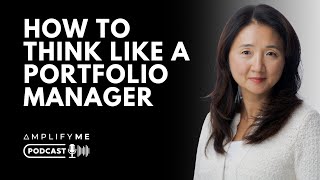
Ji Young Park, a Senior Portfolio Manager at Amundi, explains what it takes to move from analyst to PM: technical skills like valuation and risk management, plus comfort being wrong and a personal track record. Only 13% of UK fund managers are women, with 44% turnover for female PMs, and mentors for minorities are scarce.
Chapters
Hello and welcome back to The Market Maker podcast, where I'm joined by Ji Young Park, Senior Portfolio Manager at Amundi, one of Europe's and the world's largest asset managers. In this conversation, we're going to dive into the analyst to PM leap and what advice Ji would give to young professionals looking to break into the asset management industry today. So Ji, how are you?
I'm very well. What about you?
Yeah. Great. It's a Friday. We're recording this. So yeah, I mean, and you're in the office, you said.
I am, but it's not bad.
All good. All right. Well, look, we've got plenty of questions here to go through. Perhaps we could start before we go into your career path and your progression of the last 20 years or so, perhaps a little bit more about your current role. So, Senior Portfolio Manager, what does that involve and what skills are essential in that type of role?
So just to make the, you know, bring in the audience, I manage an Asia ex-Japan fund and it's long-only active equities to set the groundwork. So I would say what portfolio management entails, it's really, I'm going to put this into two buckets. One is core technical and analytical skills, and the second bucket is interpersonal and sort of other competencies. Within the first bucket of core technical skills, I think you need to have financial acumen. So this includes understanding business models, markets. The second is analytical skills. So this is looking at financial statements, interpreting market data, and have like a firm understanding of valuation criteria around those businesses. The last thing that's in this bucket is just an understanding of risk management and portfolio construction. And then within, then in the second component, which is the interpersonal and other competencies, I think what I do on a daily basis is really decision-making. So it's really looking at, you know, what is going on day to day, you know, making decisions using evidence. And this is mostly largely under sometimes great amount of uncertainty and not really knowing the future. So, the second aspect to this is having good communication skills. It's being able to kind of distill investment thesis in a very simple way, speak to your colleagues, and there's a fair amount of debate before investments go into portfolios, but it's also engaging with your client base because they need to know or want to know what it is that you've been doing. And then I think also within this bucket, it's really working on sort of self-awareness. And it encompasses things like have the ability to feel like you could be wrong at times, be curious, don't, you know, don't be afraid to ask questions and also be comfortable with being wrong because I think in these markets, even though you think you might know something, it's often the case you don't because once you take that little bit of information and you combine it to everything else, it could just be the wrong thesis or you could be right for for reasons that you didn't even know. So I think if you combine those two buckets, those are the core skills.
Just on that last point, that getting used to being wrong, because I think a lot of, you know, a lot of the academic process probably teaches you of a framework of success and it's very clear. This is what an A looks like or a B grade or, and so forth. But in markets, a lot of the time you are wrong. So how did you acclimatize to that as a process?
So I think it's probably one of the hardest things to adjust to initially. I think you do get better with time and it's really time. And I think if you focus on the wins that you have versus the things that don't go right, that sometimes makes it a bit easier. But I think if you just— I think it was probably Anthony Bolton that told me when I met him at one of these larger conferences, you only have to be right 51% of the time in investing, and that is often good enough. Sometimes you want to be more right than that, but 51% is often excellent. So I think it's just wrapping your head around the fact that you're not going to know everything. And just getting comfortable with sometimes you're going to be right, sometimes you're going to be wrong, but it is quite hard initially to kind of wrap your head around that.
Just before we move on to the next question, the other thing you were talking about was about talking to clients and presenting ideas and things like that. Because I think sometimes when I talk to students, they seem to think that because they don't know any different, that a PM is there at the controls making decisions all of the time, managing actively their portfolio. Not actually understanding that there's a lot of communication, debate with the team, like you said, about stress testing ideas, sharing intelligence, talking to clients, updating them where you're at. What is actually the balance between the two? I know it's not always probably a constant. So how much of that communication aspect, let's say internal and external, is there in a common day-to-day, week-to-week?
So the internal communication is probably 80% of the job because it's on a day-to-day basis. I work with other portfolio managers and we are fortunate to have analysts that work, that look at specific sectors. And so I speak to them almost every single day because I think what people, and we will get onto this a bit, is that you are using sort of mosaic theory to do some of these investments. You are putting together lots of different types Bits of information together to come up with an investment thesis as to why, you know, you might want to buy the stock. So it could be because of the company's market position and the earnings will be very consistent over a type of period. It could be because this is the only company that you can play like a certain theme in. There are many, many reasons why you might want to buy a certain stock. But it's important to kind of talk to your colleagues that may or may, you know, that might have more information than you, know something more than you, and again, to stress test whether or not this is a good investment to put in your portfolio. And then on the client side, so I think some clients want to be, want to have communication much more often. Other times I meet with clients quarterly to explain what it is that we're doing, how our performance is. So it just really depends on the type of client that you are speaking to.
Okay. So we're going to move on now to career path and progression. And having spoken to you and obviously looking at your LinkedIn, things like that, you began your career as an equity analyst. And so a lot of people aspire to be ultimately a portfolio manager, might not completely understand the pathway to get there. So is starting as an equity analyst the common route for people to get to a PM seat?
Yes, I think so, but I caveat this by it really depends on the firm that you work with. So, for me, being an equity analyst, I got to understand a lot of different sectors, and within those sectors, I also got to understand, you know, a number of nuances. And I think in my career, it was sort of important that I did. Because as when you become a portfolio manager, you're knocking together quite a lot of those stocks and you have to understand many of those underlying characteristics. So having had the time to kind of do deep dives into the companies and the sectors, I think is really, really useful for being a portfolio manager. And then I think the other step that helped when I was an analyst, I was also asked to In addition to, to understanding stocks, I was given a country to analyze when I switched into emerging markets. And I think understanding, like having a very deep understanding of macroeconomics as well as microeconomics, again, helps you put different types of sectors into context. So I think having that really solid foundation really helps you to become like a better portfolio manager.
And then having spoken to, so I did a lot of work with the Diversity Project program here in the UK. I was working with these, you know, these amazing women who could be anywhere from 3 to 5 years in their career to more, but are looking to make that transition, that kind of leap from analyst to PM. And so what do you think was key to your own transition and how does one identify whether it's the right move for them, right? You could stay as an analyst, I'm assuming you don't have to switch, but yeah. So just some more insights on that from your perspective would be great.
So I think as my career progressed, I also was a sector PM, so it meant that I managed a sleeve within a greater portfolio and it was my sector. And once I did that, I really, um, I just really liked just having greater input into the decision-making process. And I felt that I could deal with the stress of being super accountable for the decisions that I was making. The second aspect for the, for me was, um, I really liked the entrepreneurial aspect of being a portfolio manager because you are given a portfolio. So it is like having a business and then you do need to grow that book of business. And that really appealed to me because you are tapping into different sort of skill sets. So before I sort of made the transition, I was also head of research. So it meant that I was implementing, designing and implementing an investment process to be rolled out into two funds. And again, I really enjoyed doing that and then working with people, training with people, training up people. And I just thought if this is, if I could do all of these things, I do really want to be a portfolio manager so that I have greater accountability and responsibility. And I think at some firms it's harder to make that transition, which is why I think it's useful to understand what the track is. Some funds want you to stay on, um, a research, like equity research track if that's what you have picked. Other firms make that transition a little bit more simple. And so, as I started to kind of think about this, I started talking to a lot more people. I think one of the key things that I think you have to do is to kind of put your hand up and say, this is the type of role that I would like to jump to and think about ways to how to move into that role if your firm isn't set up to make that transition or help you make that transition for you. So, I moved into portfolio management because I had worked with the team that I work with right now. And one thing I forgot to mention is when you are an analyst, it's really, really important that you have a track record and that you keep a track of your own stock calls and really understand like what went right for you, what went wrong for you, and how you sort of think about that as your own investment process. So, when my old colleagues wanted a PM, I had spoken to them and I made the transition and moved firms to make that transition to be a PM.
Yeah, I guess that tangible evidence makes a great deal of sense in terms of you having the conviction, having that documented evidence of the calls that you've made, the results, the iterative process and refinement, and hopefully performance improvement over time. So, I guess it's almost leap becoming a bit more data-driven in terms of just feelings, in terms of I'm ready.
Yes. And I can't stress that enough. If your firm doesn't give you, like, some firms do give you what you have done as an analyst, and so you're able to kind of port that. If it's the case that your firm does not give you the underlying numbers for you to compute that track record, I always think it's very important to keep a spreadsheet of the investments that you have made, the ones that have gone right, the ones that you, that have gone wrong. It really just helps you be a better investor. But then also, if you are looking to make this transition, you do have evidence of what you have done.
Cool. All right. Well, we're moving on to the next section, which is the industry evolution and some market kind of insights. So two questions in this area. The first one of which is, what do people outside of the industry often misunderstand about the role of a portfolio manager first?
So I think one of the biggest things, or I think that many, um, a thing that many people underappreciate is just how all-consuming the job is. And I know that sounds very imbalanced, but I will just give you an example of this. I recently went shopping for new, uh, running trainers. And I tried on a pair of Hokas and I had never really worn a pair of Hokas because I, I've worn Asics, but I wanted to see what else was out there. And as I put these trainers on, I thought they were pretty comfortable, but then my head sprung to, hang on, there's a lot of people in this place. Um, who is making these Hoka trainers? And so then when I got back into the office, I looked up or I tried to find if there was a company that we could invest in that makes these Hoka trainers. There is, it's based in Taiwan. But it's, that is the kind of all-consuming funny aspect of this job in that you do sort of start thinking about things, um, outside of the office that pertain to work. And I think people do underappreciate just how much you can think about work sometimes outside of the office in little ways like that. I think the second thing that people underestimate is the speed at which you have to learn. So one day I could be learning about, or it's really teaching yourself, you know, about a pharma company. And then the next day I'm learning about gold mining, gold miners. And so I think you have to be comfortable with not feeling like you need to get a PhD in every single thing that you look at. Again, it comes with experience, but just knowing, or just trying to understand like how much is enough for you to actually make a good decision. And again, it goes back to what you'd asked earlier. I think communicating and working with people is really, really helpful in getting up to speed very quickly in the things that you need to look at from an investment perspective.
So I guess the second question is kind of an extension of this, which you've kind of already semi-alluded to, which is the marketplace can be quite volatile. You said the work can be quite all-consuming. So this balance, this kind of management of stress, the work-life kind of balance in itself. What's your kind of view or approach to that so that you can remain high-performing, so to speak?
Yeah. So, although it is all-consuming, I've really tried not for it not to be all-consuming. So, one of the things that I really like to do is exercise, and I've always been a runner, and now I've been incorporating a lot more other things like weightlifting and yoga into my exercise regime. But I think just having like an hour a day, um, where you're focusing on other things does do a world of wonder and it helps you sort of like achieve that, that balance. And then on weekends, I really try to have a lot of downtime and kind of just be away from, um, the phone. So I have a dog and every Saturday and Sunday morning, uh, my family and I and our dog. Do long walks. And I think during that time we have a no-phone policy and usually the walks are 2 hours to 3 hours long. It just gives us time to kind of be together as a family, but also just enjoying nature and just being, you know, outside and, you know, doing any form of movement, I think really helps.
I know, I know it's a very case-by-case and the geography of different companies can dictate this from culture perspective. But how hybrid is the work of a portfolio manager? Are you in the office every day, or is it a little bit around the necessity of what's happening at that point in time, or what does that actually look like?
So my firm still has a very flexible working policy. We are 3 days in the office, 2 days out of the office. Some weeks I can do that. Some weeks I can be 2 days from home, 3 days in the office. Quite, quite frequently I'm 4 days in the office, 1 day from home. Some weeks I'm 5 days in the office, but I think having that flexibility does help. I think for me, the reason why I'm in the office is because I have a lot of in-person meetings with companies that come through, but I can work from home because quite a lot of our team is not necessarily in London. We have offices in Paris, we have offices in Singapore, Malaysia, Korea, India, as well as China. So, all of us do communicate quite a lot digitally. So, if it's team-based stuff, I don't necessarily need to be in the office, but it's more because I'm actually meeting with companies.
Cool. Makes sense. And so, the next section I wanted to talk to you about is something I know you're passionate about, is diversity and inclusion in our industry. And there's two questions on this. The first one's around, you started your career in 2001. Actually, on that note, what month of the year did you start in 2001 then? Because obviously that was quite a volatile year for the marketplace. Was it at the beginning or the end of '01 when you started?
Can I just clarify this? I started in 1996, but I moved to the UK in 2001. And I moved to the UK in 2001 in March.
So, on that point, yeah, given the— so 1996, so just trying to think of the amount of change you must have seen like over the 30-year-odd period. So how has that changed, particularly as a woman in finance? I mean, I'd imagine what it's like today was probably quite a lot different from what it was back then. Is that actually true as a statement?
So I have to just give you a bit of background on this. I started off on the sell side, which is sort of investment banking, but equity research on the sell side. And then I moved to the buy side in 2007. So I would say in the earlier years, I didn't notice much difference between, um, the gap between men and women. I actually don't know what the stats are in terms of the intake for, for, um, men and women. But I think what I do notice now is that, um, well, maybe it's just useful. There was a recent article in the Times that just kind of, and it's a 10-year study that they've done. And so this is more for buy-side. But women now only account for close to 13% of UK fund managers. This is only slightly up from 12.5% the year before, and this is versus 10% over the 10-year period where they've conducted the survey. So I, I think, you know, there has been some progression on the buy side, but not enough, not enough. Like just not as, as much as one would've hoped. It seems like we are, the industry is very good at getting women to join the industry, not as good as retaining women. So I think the stats here are, is the rate of turnover female, for female PMs rose to 44%, and this is just 30% for men. So there is something going on where we do lose a lot of women sort of middle to late career in fund management. And I think it's very hard to kind of just pinpoint one area, but I think, you know, responsibilities change. Some women want to change industries, but I think what is happening maybe at the senior level is as there are fewer women that are senior, there aren't that many women that are left to kind of advocate for each other, and it becomes quite imbalanced because I think in this survey, they also mentioned that almost 80% of funds now continue to be run by men and male-dominated teams. So again, like if there are senior positions that are coming up and there isn't someone, you know, advocating for you, it's much harder, I think, to get into those senior roles. That could be one reason. It's not the only reason, but I would say, again, like I didn't notice that much change or that much difference when I was earlier on in my career. It has somewhat changed as I became more senior in my roles.
And just kind of tied into that then, we've spoken before, you and I, about the lack of racial diversity in the UK financial kind of industry. What I just wondered, what has your own experience been? I mean, you've been an American coming here as well to the UK to add in another layer of complexity to it. But yeah, kind of what needs to change for then that you feel for better representation and support for those types of communities?
So, when I was becoming more senior, I definitely was looking up to see if there were role models or, you know, mentors or allies that I could sort of find. And it was quite difficult for me in the UK to find those people. I had more luck in the US and obviously in Asia. So, I was able to kind of speak to those people. You know, using my sort of global, um, network. But I think in the UK, one big thing that I think I've talked to you about in the past is really the inclusion aspect, um, that I wish firms would do more, but that I wish minorities would do more for each other. So I think here it's really, we're so few in numbers. I think if we can help each other out, um, that would be really, really helpful. So being very open, um, to minorities across the board to keep or to retain people in the industry and to help them along, I think is really helpful. But I think for companies, I mean, it's really unfortunate that some of these DEI programs have gone away, but even if there isn't a company-wide program, but for individuals to kind of think about inclusivity, it is really— I guess I went to a diversity training and it was really about like, you know, look around at your own dinner table. And if you only see one color, think about how that feels and try to bring more people into, you know, of different backgrounds into your table to have those discussions because you do get more diversity of thought. You do get different perspectives. You will learn something that you probably, you know, didn't learn or, sorry, didn't know. And I think if, you know, individuals can work on just including people more, that will, that will definitely help. But again, I don't, I don't have, you know, a concrete answer because I think it's probably due to many things.
Yeah. Yeah. I know this could quite easily become a different, a whole new podcast series, but one of the things then that I wanted to finish on was really tapping into your your experience that we've just mentioned. It's been so far-reaching that there's probably some great nuggets of kind of wisdom here for largely our community who tend to be in their early career or a student. So one of three, for the first one up, what advice would you give to young professionals trying to break in firstly to asset management?
Yeah, so one thing I would say is to have a growth mindset. Be curious, ask questions, don't be afraid to learn, try your hardest not to be afraid to be wrong. And then I guess the second thing is kind of research the positions that you want and research the firms that you want. So I think what I do, being a long-only investor, is quite different than someone who wants to work at a quant fund or a hedge fund. For me, it's really about like understanding the business models, like taking a very, you know, a longer-term view of how these companies will be. But for some hedge funds, their risk parameters are quite different from mine. They can take a shorter-term view. And then on the quant side, it's a very, very different skillset. So, you know, like I think as someone that's going into this industry, they should try to think about like, what resonates with them and they can make the switch. Some firms, some firms do want, like on the quant side, they do definitely want people that have had a math background. So if, you know, if you have an English background, that might, it might be more challenging to move into a quant role. So I think it's useful for the, for the person to do quite a bit of research on that. And then the last thing is start investing. It doesn't have to be real money. It could be again on, you know, a piece of paper or, you know, however you might keep a note, but it's picking a company, going through what you think are the reasons why you think this is a good investment and write down the share price of when you wanted to put money in and track it. I think by doing that, it gives you a very good understanding of what you got right, what you got wrong, the parameters that you might think about and look at for what makes a good company.
And it's almost like you're building that process then that you earlier said you're going to utilize later for that switch, but could be in several years down the line to give you the confidence and the evidence to go into the PM role.
Yeah. And it also allows you to ask different kinds of questions, right? Because Having done that, you will have understood like, okay, I thought the company would actually make more money in this and they haven't.
Why?
Um, and when you work with people, you could also leverage more of their own experience as to what you might have gotten right and what you might have gotten wrong. But if you try to start it when you do, when you start in this industry, it's quite hard because you're learning so many different things at the same time.
Cool. Okay. And then two more to go. So this one is about giving yourself one piece of advice if you were starting in finance. If that was the case, what would it be?
I would say try to work for people that you could really learn from and related to this, find really good mentors and allies.
Okay, you mentioned that word mentor. So, so mentor, we, we, we spoke about this when we met a few weeks ago for a coffee. A lot of students get told you should, you should seek out a mentor, the valuable relationship that you can have with, with a mentor, but no one actually really drills into, I think a lot of people talk about how to maybe source or find a mentor, but how do you utilize that relationship in a harmonious and effective way. So the mentor and mentee relationship. So what does, what would that look like to you?
So I think this is mostly from the mentee side first, which is I think try to find someone that you can talk to because you are asking them for advice, right? Or I would hope that you're asking for them for advice and sharing things with them. So, I think the second thing is being— you have to find the person that you could speak to because you are gonna be, you know, vulnerable with them. You are gonna potentially have to say to them like, "Look, I have this problem that I'm trying to solve. Could you sit down with me for a few day— a few minutes and discuss it?" And again, it's really— I would say that relationship should be driven by the mentee. So, when you book the time with your mentor, You know, come prepared, have 2 or 3 questions that you want to get through. And, you know, be prepared to kind of follow up with those questions. I would say that is like a very good way to kind of start that relationship. And then it will just be, um, a lot easier because you can, you will have established a rapport with that person. But I think it's the worst when you find the person. And they have to pull things out of you. So I think it's a much beneficial relationship if you come prepared. There are talking points and discussion points, and then you can go away and think about things and then come back and continue that discussion with the person.
And then there are, you know, there are a few senior people that listen to the show and there are lots of other people. We often get people like architects, lawyers, and so it's quite a wide range of our, in our community on the podcast. Specifically, what would you say with mentoring in general for them? I mean, if you've mentored someone yourself, what have you got out of that process from your side, do you think?
So, I actually learned a lot from the people that I mentor.
Right.
Because they ask a lot of questions that are in the workplace that others around you might be afraid to ask. Um, and so I think if, if from a mentor perspective, I think trying to approach it with an open mind, you know, as possible. And also there is a generational gap sometimes. And I think that generational gap when you are in this mentor relationship is really useful because it really gives you a perspective into, um, how someone else that is very different from you thinks and, you know, the things that they might be going through and the challenges that they have in you know, in their organization and in their role.
Yeah, I definitely think I was sat on a call just a few hours ago with some students who had no programming knowledge and had created some incredible time-efficient applications within the financial workspace. So mainly kind of back mid-office type functions, which could be, you can make those efficiency gains. But it was amazing. And these are people who are just kind of regular finance students, but have that, that, you know, they're the native AI kind of generation, if you like. And then, yeah, learn so much. It's incredible. So totally agree with, with Anthony Cheung.
Yeah. I just think the way the world is going, the more you could learn from each other, the better, you know, the better off we are. I mean, We can't have the machines take over the world, right? But we can certainly work with people and utilize these machines to just help us be better.
All right. Well, that's the end. So thank you so much, Yi, for giving up your time. Really appreciate it. And yeah, wishing you all the best and hopefully catch up soon.
Thank you so much, Anthony, for having me.
More from Anthony


Inside the Biggest Banking Stories You Need to Know This Week (Anthropic, Diageo, Private Credit)


Inside the Biggest M&A Deals You Need to Know This Week (UniCredit, GameStop, eBay, Eli Lilly)







AI Breakthrough or Hype? Anthropic’s Claude Mythos, Tim Cook Steps Down & LIV Golf Collapse