How to Think and Speak Like a Macro Strategist: Finance Career Skills Explained
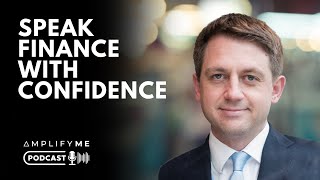
In this Market Maker podcast episode, host SPEAKER A interviews Mike Bell, an independent macro strategist and former JP Morgan analyst. Bell explains how his multidisciplinary social‑science background led him into macro, emphasizing learning from historical data rather than textbook equations. He outlines a practical framework for building a concise macro view, starting with the short‑term business cycle (recession → high unemployment → low wage growth → low inflation → monetary/fiscal stimulus → feedback loops) and noting the importance of overlaying the long‑term debt cycle. The conversation then turns to the impact of AI and past technological revolutions on labor markets, arguing that while new tech can cause bubbles, history shows economies eventually adapt, and demographic shifts will shape future AI demand. Bell discusses the limits of purely quantitative models, citing LTCM and the 2008 crisis as examples where short data windows missed structural shifts, and stresses the need for discretionary judgment. The bulk of the interview focuses on communication skills: how to develop public‑speaking confidence, prepare for different presentation contexts (career‑defining scripted talks, routine slide decks, live TV/Q&A), and use analogies (jazz improvisation, model‑plane building) to convey complex ideas. He also shares his LinkedIn content strategy—reacting to economic data releases, weaving long‑term themes, and ensuring timeliness—while advising early‑career professionals on when and how to post. Finally, Bell offers hiring advice, stating that the quality and insight of a candidate’s public work (e.g., LinkedIn posts) can be a differentiator. Throughout, Bell balances technical macro analysis with practical career and communication guidance for students and junior finance professionals.
Chapters
Hello and welcome back to the Market Maker podcast. I'm really excited to be joined by Mike Bell, an independent macro strategist who spent the last decade at JP Morgan. And in this conversation, Mike is going to break down how to build a macro view to explain markets with confidence and some tips and tricks around how to perform under pressure. So whether you're a student or early in your finance career, this conversation is going to be packed with tips on Thinking Clearly, Speaking Simply, and Making Your Content Land with Impact. So Mike, how are you?
Good, thanks. Pleased to be here.
Good stuff. And so I know when we've spoken before, you gave me a little bit about your background, and I know that you didn't come from a traditional economics background, but spent a career pretty much doing it. So I just wanted to get an understanding of how you first got into macro. And what attracted you to that in particular?
Yeah, and I mean, I think that's interesting because I actually think it's helped me not having studied economics purely at university. So I studied a social science degree, multidisciplinary at university. And in our first year, we had to study psychology, sociology, social anthropology, as well as sort of political and economics. Theory with some international relations. And, you know, as part of that, in the psychology course, we looked at how people do strange things when they're in crowds. We studied the tulip mania and stock market bubbles. We also looked at, for example, like how people comply with orders that are given by people in uniform or perceived to be so-called experts. All of which was just fascinating at the time, but nowadays I find very useful when I think about the way markets work. But mainly I was, you know, I specialized in my second and third year in the politics and international relations side of it. And as part of that, I read a lot of, you know, political philosophy, but also linked to that, a lot of the sort of economic theory. So it was much higher level than the equations that you would study if you did a pure economics degree. And it was looking at, you know, reading Marx and Keynes and Adam Smith and all these kind of people. And I guess what really got me hooked on macro is that I've always wanted to know how the world worked, to really understand how the world worked on the issues which really matter to people. And you know, I'd seen the recessions where people lose their jobs can have a real life impact on people. And the more I studied, for example, revolutions when I was studying politics and learned how the economic conditions were often a key part of that, it made me understand that you couldn't really understand how the world works in a way that was really important for normal people. If you didn't understand both the politics and the economics. And that made me sort of want to branch out and focus. I mean, I spent a lot of time looking at the politics, felt like I had a pretty good grasp about how that all works, and then wanted to focus on the economics. And once I got into it, I just found it fascinating. But I actually learned a lot of that in my first job.
So in terms of then just thinking about the economics that you need to learn from the equation side? Like, so for you, I'm assuming that there is a baseline of that stuff that you do need. So did you get that in that course that you studied, or did you have to just upstart yourself and teach yourself, or was it onboarded when you got your first job then?
So I largely kind of, I mean, there were obviously experienced people who I was working with who were able to help me learn it. But no, I really learned it on my first job. And you know, part of that job I was doing investing and there was a team of 4 of us and our job was to decide whether we should have more in stocks than in bonds or whether we should be investing in European stocks instead of the US, et cetera, et cetera. So, and we were ultimately getting paid on being right. So straight out of university, my job that was going to determine how much I earn was based on essentially, can you predict the future? And I thought, well, that's obviously not easy to do. And so I sat around thinking, well, how can you do that? How can you predict the future of what's going to happen with economies? It quickly became clear that one of the most important things to work out was, can you predict recessions, for example? Because Stocks tend to do very badly in recessions. Bonds tend to do better. So how would you do that? And if you look at a lot of the economic theory and the equations that you might study at university, if you did an economics degree, they actually do a remarkably poor job of predicting that stuff. So my approach was to look back and think, well, I guess one thing I thought was firstly, if all the economic theory that you learned at university worked, then every economics professor would be a billionaire, right? And they're not. So clearly there's something there that's not working. And then how can you actually work that out? And part of it that kind of struck me was if you're trying to predict the future, what hope have you got of predicting the future? If you can't explain the past. So I looked back at as much history as I could find of all the economic data. And you know, one of the benefits of learning on the job is that you then have access to a lot of the data that's not as easy to find publicly available sources and just looked at the interaction between different things. So, you know, when interest rates go up, what happens to these different sectors in the economy, what happens to housing, building permits, et cetera. What leads what, what goes first? What has been the historical interaction between inflation and wages and unemployment, for example? And so rather than starting with a theory, just saying, well, what actually happened? And has that repeated throughout history? And can you use that to build a model of how the economy really works rather than how you'd like it to work in theory? Because kind of part of the reason I hadn't wanted to study economics at university was that someone perhaps unfairly had kind of flippantly summarized by saying, you know, one strain of economics is trying to fit the world into equations by assuming that everyone is perfectly rational and thinks in a rational way. And that seemed to me perfectly obvious that that wasn't true and that it would be a better approach to focus on what actually happens and how things actually work rather than saying, well, how would it be nice if things work so that we could fit it into a simple equation?
So, kind of thinking of the audience listening to this, they often get told you should have a view on markets, like a macro view. It's quite a standard, I guess, global markets kind of question that you would expect one of these interns or grads to be doing. So I think students get told that, go off and have a view, read, consume some financial media, have a view. But what is, you know, someone from your experience, I think it'd be super useful for how do you build a kind of a robust but kind of concise macro view? Like where do you start and what are the kind of the cornerstones of building a view?
Yeah, that's a great question. So I mean, I think I would start with understanding the short-term business cycle, which is actually relatively simple, and I'm going to oversimplify it. But broadly speaking, the way I think the short-term business work cycle works is that let's start for sake of argument at a point where you've just had a recession. Okay? So you're in recession, unemployment has risen and is now relatively high by historic standards. And when unemployment is high, workers have less bargaining power. Right? So you go to your boss and you ask for a pay rise. There's loads of other people out there who lost their jobs recently during the recession who would like your job. So that conversation doesn't go the way you wanted it to go. Pay growth is slower. Fewer people are willing to leave because they don't want to take that risk of starting at a new company when they might be laying people off. And so generally speaking, you know, you get high unemployment. Leads to low wage growth. And then when wage growth is low, generally speaking, that means that inflation is low. So prices are going up at a slower pace. And if inflation is low and the economy is weak and struggling, then central banks tend to react by cutting interest rates. And so when interest rates get cut, And often you also get some kind of fiscal stimulus. In other words, either tax cuts or spending from governments. And those are kind of the two key levers, right? You've got monetary policy and fiscal policy, and tho— those are what can shift the course of the way the economies go. So you get some fiscal stimulus, perhaps the government cut taxes and Perhaps they spend some money, which all stimulates spending. It essentially puts more money into people's pockets. Interest rates come down, which means that their mortgage payments decline, which again means they've got more money to spend. And so that starts to put more money into people's pockets, which means that the people who still have jobs start spending. And then this is, I think, is the thing that traditional economics misses, right? It's all about momentum and feedback loops. So once people start spending more because interest rates are being cut, taxes are being cut, spending has been boosted, some combination of those three things, then they're spending more in, let's take the shops or restaurants. And so then the people working in those restaurants are getting more tips, which they can then go and spend in the shops. And the restaurants are busier, so maybe they need to hire more staff and the shops need to hire more staff. And so then those people who didn't have a job because they were unemployed now have a job. And if you go from not having a job to having a job, you go out and spend nearly all of that money that you suddenly have that you haven't had, and probably even more so than you normally would, because you've gone through a period of having to spend less than you would've liked to. And so that Cut in interest rates and fiscal stimulus kickstarts a positive feedback loop whereby spending increases, which leads to more hiring, which leads to more spending, which leads to more hiring, and round and round you go, right? So most of the time, the unemployment rate is coming down in a relatively straight line, sometimes at different gradients. But broadly speaking, if you look at history, and this is one of the first things I did when I sort of started off in the industry many years ago. I started in finance in 2008, just had a— it was just before the financial crisis. The financial crisis hit, unemployment was very, very high. They cut interest rates, there was some fiscal stimulus, printed money, and then the unemployment rate started to come down, but from a very high level. And I was thinking, I was also, what happens from here? And so I looked at history And so, well, basically what happens is that once unemployment starts coming down, it keeps coming down until it gets to a low level. So we're probably now at a point where things are going to get better once interest rates have been cut and money had been printed, and they're going to keep getting better for some time. Stocks were cheap, so that's a good time to be buying stocks, as indeed it turned out to be. So then, okay, you can skip most of the cycle. Most of the cycle is is that positive feedback loop. Unemployment is falling. Has unemployment— so why, where does it all go wrong? It's the kind of endpoint. How do you get back into the recession? And the way I think about that is that what happens is that unemployment eventually gets to a level where workers have bargaining power again. And how long that takes is dependent on how high unemployment was in the first place. So after the financial crisis, unemployment rose to very high levels. And so it took the best part of 10 years for unemployment to get back to the level where workers really had bargaining power, right? So you might study at university that the concept of a kind of Phillips curve, but in fact, the way I think about it is less about, oh, the fall from 10% unemployment to 9% unemployment should lead to wage growth and higher inflation. It doesn't. But the fall from 5% unemployment to 4% unemployment can have a real impact because all of a sudden lots of people are leaving their jobs for better paid jobs elsewhere. Companies feel like they need to pay the remaining staff more to keep them from leaving. And so historically, again, I just looked at the pattern. What happens when unemployment gets to low levels is that wage growth picks up. And so once wage growth picks up, you would think, right? Most people, if I speak to, and sometimes taxi drivers when they find out I'm an economist, ask me about it. And they would say, normally the average person thinks, well, wage growth's a good thing, right? And it kind of is. But the period where you need to worry most about the economy is when unemployment is low and wage growth is picking up. And the reason for that, simply put, is that when wage growth picks up, It tends to then feed through into higher prices, and when prices pick up, central banks then start to put interest rates up, and eventually that increase in interest rates starts to slow the economy down. And so sales growth comes down, but the wage growth doesn't come down until unemployment starts to go up. So what happens is spending declines because interest rates have gone up, but wages are still growing strongly, and that squeezes company profits, right? And then I'm simplifying, there can also be tax increases, et cetera, et cetera. But as it squeezes company profits, you get what's called paradox of thrift, right? And so you go to business school, I haven't been to business school, but I imagine what they teach you based on the way I observe the world is that if costs, you know, if you're coming under pressure, if profits are coming under pressure, cut costs, which sounds perfectly sensible if one company does it. But if every company has the same bright idea at the same time, then it causes a recession because every company's cost, every pound or dollar they spend is another company's income or another person's income. And so as they cut costs, it just tips the economy into a weaker situation until eventually they start cutting jobs. And then that positive momentum I described of falling unemployment leading to more spending, leading to more hiring starts to tip into reverse, where all of a sudden people start to lose jobs and they spend a lot less. But most importantly, everyone else does too. You hear from your neighbor that they lost their job, or you hear on the news that unemployment's rising. And so everyone thinks, I actually, you know, I won't do that lavish thing I was planning on doing. I'll just spend a bit less. I'll go takeaway rather than eat out at a fancy restaurant, whatever it may be. And that just tips the feedback loop so that people spend less and then more people lose their jobs, which means there's less spending. And then Even more people lose their jobs until they cut interest rates again and the whole cycle starts again. So you're in this kind of, I think that's the most important thing to understand, just understanding that short-term business cycle. And I'm aware I've talked a lot, but on top of that, you've got to overlay the long-term debt cycle, which we can talk about more if you want, but I'll pause for a moment.
Yeah, just thinking about the the business cycle, and then also your emphasis on looking at history to understand the future. How does things like the introduction of AI influence those factors? Is there anything in the past, because we've gone through meaningful technological change in human history, but so can we identify behavioral similarities that could be useful? Even though the technology is completely different.
Yeah, I think that's a fascinating point, right? And so if you look back, let's say you go back to the Industrial Revolution and yeah, back then everyone was worried. They were sort of knitting or clothes and they were worried that the machines that came in were going to put lots of workers who were in the textile industry out of work and that you were going to have mass unemployment. And to an extent that did happen, right? And you got protests against that. And, but obviously fast forward to today and you don't have mass unemployment because of machines that now can make clothing. People ended up doing different things. In fact, It allowed people to focus on other stuff and actually helped grow the economy. So, and you look at all sorts of different technologies throughout history where people have worried that it was going to take everyone's job. And perhaps initially there was a period where jobs were lost, but then eventually demand grew and people weren't left without jobs. Now, I don't know for sure. Could it be that AI is such a game changer that actually it's different this time and that it does displace workers in a way that is more problematic and doesn't just create new roles? That, you know, that's probably the biggest question for our time, but I do think, you know, one shouldn't forget that this is not the first big new technology. You can go back and you look at the railways. You'd look at, so there was a massive railway bubble in the 19th century. Obviously it was a huge technology that changed the world, but with it came a big bubble. In 1929, you had a massive bubble in stocks relating to radios. Again, huge technology. Think of how that changed the world. Nowadays we think of it as just pretty basic, and it's crazy to think that there was a massive bubble in radio stocks. And then you have the dot-com bubble in 2000 and, you know, many other examples throughout history where, you know, in 2000 it was all about the internet and how that was going to revolutionize the world. And of course it did and has, but if you'd bought Amazon stock in 2000, If you'd held it to today, you'd be very happy, but you'd have lost an awful lot of money between 2000 and sort of 2003. So I think there's a lot to be learned from history about how AI can change the world, but how it doesn't necessarily lead to mass unemployment. And I would link to that the fact that actually The big change that we are not spending enough time thinking about is demographic. Really for the last, you know, certainly last few hundred years, populations have grown. And certainly in some parts of the world, we're actually going to go into a period quite soon where populations start to shrink and particularly the working age population start to shrink. So, absent AI, the problem we would have is that we wouldn't actually have enough workers. So one needs to balance all these concerns around how AI is going to take jobs with the fact that actually we're going to need AI to take a lot of jobs because there are going to be fewer workers because people are having fewer children and have been for some time. But also, I think you need to look at it and think if every other major technological breakthrough in history has led to an equity market bubble, Is this time going to be different? And I don't think it is. I think there will be an AI bubble. And just the question for me is how far through that are we right now?
Yeah, the million-dollar question, literally. So having a look at this, so just to extend on this line of questioning before we move on, is that the marketplace in terms of how participants interact is becoming increasingly quantitative. Not just because of AI, machine learning, lots of other techniques that are being adopted, particularly in buy-side hedge fund sort of space where they've got capital to deploy and R&D in these things. I just wondered then, like one of the things when we've talked before is about how they can often fall short during specifically big macro shifts. And so I just wondered your take on the balance between model-driven insights and then discretionary inputs, if you like?
I think you need both, right? I think there's huge value from models, but any model is only as good as what you put into it, right? So if you think back, I mean, I maybe shouldn't give specific examples, but there was a famous example in the late '90s With the LTCM hedge fund, and you had some of the smartest people in the world working on that. But if you only look at data that goes back a relatively short period of time, you can be surprised when things happen that have actually happened many times before throughout history. But just haven't happened in the period which you're feeding through into your models. So you could have a model that has perfectly predicted how everything in markets is moving and is going to move based on data over the last 5 years or even over the last 10 years. But if that then misses a shift that's taken place over a longer timeframe, then it's vulnerable to that shift. So Yeah, I won't go into the whole history of it, but that's broadly what happened when that blew up in the late '90s. And then again, if you look at a lot of the models that went into the problems around the financial crisis, they were looking at housing data that didn't go back far enough. So their models all baked in that basically house prices only go up. You don't need to look back that far. Or indeed think very hard to realize that that's obviously not the case. But if your model says that house prices always go up because they broadly had for the decade or so prior to that, then when things change, you are going to get caught very painfully offside. So, and then the other thing, I mean, I remember clearly mainly because it was Valentine's Day back in 2022, going on Bloomberg, and the anchor asked me, so we've just had reports that Putin is putting tanks on the border near Ukraine. What do you think about that? Now, can a quant model build that in? In theory, it could, right? You can run searches of news stories and you can program it to say that historically when you have wars involving major energy producers, that often leads to energy price shocks, which then transmit into weakness for the economy, which is broadly what I said on that Bloomberg slide. Said that we look back through history, you look at the Iranian Revolution, you look at the Yom Kippur War, wars in the Gulf. Middle East states are energy producers. When there are wars involving energy producers and it leads to an energy price shock, it's often been bad news for increasing inflation, but also bad news for the economy and often causing recessions and bad for stocks and causing kind of stagflation type scenario. Could you build a model that had that in it? You could, but a lot of them didn't. Whereas it was kind of, I thought, perfectly obvious that if you're putting tanks on the border, it's because there's a high, at least a high risk that you're going to invade and that's going to cause a spike in energy prices. And with that, problems for bonds and stocks. How many quant models had that in it? Not that many, I would guess.
Yeah. An analogy that I often I use when talking to students on this point is I think of a— when I was young, I used to love putting together and painting those little model planes. You used to get those sets at like Hobbycraft sort of places. And it used to be the, the jump jet Harrier was the technology of the day back when I was a kid. And then you look at the jets that are being made now, the latest versions. And I saw this really cool documentary of this pilot who has this visor. And it has augmented reality in his visor that allows him to look at strategic information coming from the plane and it's feeding in and the plane is so much more sophisticated. But in the end, the end decisions that are made between targeting something or a maneuver or the location that they're flying is still down to the pilot in the end. It's just that they've got more information to make more timely, more insightful decisions. I thought it was a nice way kind of wrapping up the, it's still a human who has to have that little discretionary experience decision, but they're better equipped. So the likelihood that the outcome can be tipped, I thought was interesting.
I think that, you know, I wouldn't rule out that it's impossible that with AI and big data and all the advances being made, Like, could we— we're long past the point where computers can beat humans at chess, right? Could we get to the point where AI and feeding into kind of quant models can beat any human at predicting the future in the markets? That's certainly possible. All I'm flagging is to the there are some things that are obvious, or not obvious to everyone, but that are more easily visible by humans that you need to make sure in your model. I just think of COVID as an example. You could have built a quant model that— how many quant models had looked back to 1918, the last time we had a major plague? Probably not. And so was that in their models? Maybe, maybe some did and great, well done. But like a lot of those would've broken when something like that happened. Whereas with hindsight, it's easy to say, but also, you know, you could have seen, oh, there's these cases of this thing. Are causing trouble, and originally they're in China and now it's in Italy. Maybe that's going to go everywhere. And if you'd had time to factor that in, and if you'd had the history of knowing that most of the time these aren't a great problem, but actually there have been several times throughout history, you know, Black Death and Spanish Flu, where actually pandemics have caused major, major problems for the economy and disruption where you might have thought, well, at the very least, we shouldn't be max long risk at this point.
Yeah, no, it's interesting. You, there's two things that you, you, you've said when we've been talking about this and, and one I, I totally think is relevant is that if you go back to 1918, you go back further, it's just the unstructured nature of the data because it just, what the intention was not to populate models. Back then. And so although that is obviously a big part of the industry is to structure those historical patterns, having actual quality of that is like, that's your diamond in the rough sort of scenario, I think for a lot of these quant houses. And then the other thing you said right at the top of the conversation was there's a big problem with markets is that, you know, humans are irrational. And I guess even trying to predict human irrationality, I guess is the infinite challenge that the machines will always, always have. But look, I wanted to move on and talk a bit about, you mentioned there you were on TV speaking on that particular topic. And so I wanted to shift the conversation because a lot of the students that I talk to, I think are intellectually super capable. And in fact, I see the resume and I go, it's all there, like from academic achievement, I can see it. but then I meet them or they deliver a group presentation or something of that nature, or they just need to kind of be visible amongst a group of people. They just seem, seemingly a lot lack a degree of confidence, particularly in that public setting. And, you know, you've, you've done a lot of this. So I've got a few questions around this that I think would be super useful. For one, I think it is pretty much most people's natural default to not enjoy speaking in public. You've told me that you do enjoy it. And I just wondered, has it always been that way? Or do you think people can learn that skill, first of all?
You can 100% learn. I mean, no one's born knowing anything, really, being able to do anything. So certainly I learned it. It's just that some people learn it earlier than others, and you can also learn it very late in life, right? I've seen some very senior people. I won't say who they are, but I've seen some very senior people who, when I first got to know them, were not great presenters. And then as part of their very senior roles, they had to present and had training on it, often from an actor. And became excellent at it. So you can learn even if you're a CEO. I learned early because I did a lot of drama at school and then at university, and I was shy and nervous when I first started doing that, but then Over time, I became more used to doing it and started to enjoy it and started to get sort of main roles in just school plays. And then, you know, you got used to and comfortable being on stage. And there you have the kind of comfort of knowing what you're gonna say because you're kind of re— you're just saying lines that you've learned. And I was fortunate to have a good memory, so that was kind of easy for me to memorize the words. And so I then got used to that and learned it so that by the time I started my first job and was being asked, oh, will you get up and present to people who are a lot older than me about the economy and how we think things are going to play out? I was very comfortable, at least with the presenting side of that, because I'd done plays where it had been just me and one other person on stage for an hour. And so getting up and talking to a few people wasn't a challenge. But yeah, you can 100% learn it. But like anything, it's a skill that needs practicing. And the sooner you start, the better you're going to get.
There's obviously different scenarios when speaking in front of people can come to the forefront. There's, you mentioned being on TV, so CNBC, Bloomberg, these sorts of things. There could be investor days if you're talking about the CEO, earnings calls, regular presenting is probably the most common when you're just doing it internally or to clients privately. But then I know there can also be major career influencing situations where it's on the line as far as you are concerned. It's really, this is it. It's gonna define the next years if you like, if I really get this right. So I just wondered, how do you prepare? Is it a single way of preparing for all three, or is there differences in how you would go about it?
Yeah, I mean, I think it's really interesting and I've got quite a lot of experience with doing all of those different types of things. So all the way from live TV on Bloomberg, as you say, where you don't know what questions you're going to get asked and you've got bright lights on you and it's being beamed out to as many people as are watching and fundamentally as well being recorded so that then like the CEO of the firm you watch, you work for might watch it back. So that kind of, that's one skill. And I can talk a little bit about how I would prep for that kind of thing through to the majority of the presentations I've done in my life have been, I know what I'm going to talk about and I'm doing that presentation basically 45 minutes on what's the outlook for the global economy and what does it mean for markets. And I'm going to present that to however many people over the next month. And broadly speaking, the content is going to remain the same. I'll update it a little bit as the data evolves, but the broad story is going to be the same. And I'm going to use broadly the same 20 charts to talk through it. And, and then there's similar presentations, but normally shorter, but not necessarily shorter, where, as you say, it really is going to make a difference. And realistically, I can probably think of two in my career that I would put in that category. One was when I got approached to take the job that I had at JPMorgan. And JPMorgan's obviously a big firm. It's an impressive place to work. And I kind of felt like I was going to get one shot at this. And the kind of final round of the interview process was to go in and present to all these super senior people on the Art of the Economy. And they said, we don't want you to just talk about the economy. We are also interested in how you tell that story, right? It's about the The narrative. And so that was a presentation which I knew was going to potentially have a meaningful impact on how the rest of my life played out. I don't mean like overplayed. It's not like it was life or death, but it was going to have a big impact on my career and how the next sort of decade or so went for me. And so For that, I essentially wrote a script like you would if you were writing a play, and then I learnt it, and then I rehearsed it, and then I videoed myself doing it about 5 times. And so I got to the point where I knew exactly what I wanted to say, could say all that without thinking, could vary the speed and delivery of it. Yeah, but it helped, as I say, that I'd spent many years doing that for university and school play. So I already knew how to do that, learnt that presentation, and I crafted into it stories. I mean, I had a story about a fairground ride in Vegas, for example. I won't bore you with it, but and then delivered it on the day as if, oh, I'm just kind of, this is just what came to my head. Well, of course it wasn't, right? I'd practiced it 5 times and videoed it. I'd gone, actually, no, I don't want to deliver it quite like that. I want to slow this bit down and then say this for emphasis. I'd say those, and then I, you know, my boss, once I joined JP Morgan, after a while she moved on and there was a period where Briefly, I was kind of like the main person in London on my team and got the opportunity to do one of the kind of big main stage presentations, which historically my boss would've done. So that was, again, that was a big opportunity to show to the whole business that I can do this. And so same thing for that, right? I crafted a script with lots of stories and analogies that would illustrate the economic points in a way that was relatable. I told a story about a wedding and how that related to the life cycle of an economy, for example. And then I learned it and I videoed it, and again, I was basically doing a play. And people still, that was in 2017, I think, or late 2016. Still some people who were in that room come up to me and say, I remember that presentation. And like, what stage of the wedding are we at now? So you can, So that's how I would do like a potentially career-defining presentation. But the truth is you can't most of the time.
Yeah. Just to say there that I think that's really a good message then, because I think a lot of young people, let's say if you are a grad and it was my first week at JPMorgan and I see you do that, probably in my head, it's very easy. It's probably the easiest place for me to go mentally is to go, I'll never be as good as Mike. And like, you know, to coin that famous '90s phrase, I want to be like Mike. But the idea being that in actuality, this is what I always try to stress to all the kind of the students I work with. So when you see a really good public speaker, and certainly when it's a set event like that, you've just described that process. It's so methodical, so thorough. Really deep process. What you're seeing is the end result of a lot of work. But I think sometimes there are young people because of this, this nature of maybe it's a byproduct of social media and seeing a lot of finished articles, but there's a whole like journey to get to that point of being able to execute at that level. So I hope the people listening kind of understand that, you know, if someone you see is speaking great, that's probably because it's been a lot of, you know, graft to get to that point. And of course there is like natural skills that you develop over time, but for those big ones, but yeah, but tell me some about some of these other scenarios then. So like, like the TV one, for example, like you said, different type of scenario in terms of the recording thing. I thought it was quite interesting. Your boss might watch. I didn't really think of that, but yeah, you're absolutely right. You're representing a business, right? You're the face at that moment in time of a whole entire organization or division. So yeah, how would you go about that? How's it different in that scenario?
Let me just talk first about the middle state, right? Which is the presentation, which is probably like the bread and butter of what most people will do, which is a presentation that they've had some time to prepare for. They've got a slide deck and then they're going to present it probably more than once to groups of people. Because that's the kind of in-between stage from what I just described, the kind of career-defining presentation where you script it, learn every word of it, practice with video yourself. You know, you can't realistically do that. So I was, I was doing 8 presentations a week on average. And you can't do that for every single one. And then I'll talk a little bit about Like when you don't know at all what's coming, because I think you have to be able to do each stage to do that final bit. And so the middle stage, what are the best presentations if you don't have time to script it like a play? There's a structure to them, right? So you know broadly where you want to go. You want to have, you've got your slides. And by the way, don't put words on slides. You have a chart or a picture that tells a story. And so you, you show your chart, maybe it's unemployment versus wage growth, as I was describing at the beginning. And then you're going to explain to people what the message you want them to get from that is and tell it with an analogy. So rather than just saying, when unemployment comes down, wage growth goes up. You can say, you know, I remember in 2009 during the recession going to my boss and asking for a pay rise and then basically laughing at me and saying, you know, we'd love to, but it's not the economic reality at the moment. I mean, that story's not even true, but it's a story that helps bring to life, you know, the dynamic and the bargaining power there. So then you've got your slides, which are kind of your hooks, but you know, I'm gonna show each of these 15 slides and I know the kind of key message I wanna make on each of these slides. Then if you are quite practiced at it, I often find, and I often was, Basically just getting up and saying, right, well, so I know broadly where I'm going with this story. I know the key messages I need to land. And then I'm just going to talk about it. You obviously have to know what you're talking about, right? So it's much harder to give a presentation on a topic where you're not an expert, but, you know, realistically in work, you're not going to get asked to present on things that you don't know about. So if you know what you're talking about, you just get up and then tool as you go. So you're kind of making it up on the spot, but you're not completely making it up, right? There's a structure to it. You know, you're going to hit this point, you're going to hit this point, but the bits in between can change a little bit. And actually it's that interaction between structure and improvisation that makes those presentations good because you're not just worrying about And for a lot of people, if you haven't got the experience, it's hard. If you are thinking, oh, I must remember every word, every scripted word, you can get, oh, I've forgotten that bit. You know, particularly if you don't have a great memory for memorizing this kind of stuff. Actually, don't worry about exactly what you are saying. And I said, maybe for many people, if you don't have a great memory, maybe this is even the way you should do that career-defining speech. Because you, what you don't want to be doing is worrying I'm like, what's the next bit? I forgot. Oh, I didn't quite deliver that. Or worst of all saying, oh, I missed that bit. Doesn't matter. Right. Just what matters is a compelling narrative. And if you were making it up on the spot, then you, the other thing is you've got to be quite a good actor to deliver a script in a way that doesn't sound like it's a script. So if you haven't got a lot of acting experience, The best way to do that is to not be reading from a script, or at least reading in your mind from a script. Yeah, some of the worst presentations I've ever seen are people reading notes, because when you read, you don't intonate the way you do when you talk. And so, you know, that's one way I would think about it is that have your structure. And so I link this a lot to music, right? So I used to play jazz trumpet, but I started off playing classical trumpet. And in jazz, you improvise. But to what extent is that fully made up? You can practice improvisation. So classical music is obviously written down and you practice the technique and you learn it, and then you play and it can sound beautiful. And then there are forms of jazz music where you've basically got chords and you are, without getting into too much technical detail around it, like what makes good improvisation sound nice is when you are playing the right notes over the right chords, right? And so that's your structure. You've got your slides are kind of like the chords, you know what the piano is going to be playing. And now there isn't a specific right note, because actually there's lots of different notes that you can play over certain chords, but there are wrong notes. There are notes which will sound dissonant against certain chords. So that's kind of like the semi-structured bit, which I described with the kind of bread and butter normal presentation that you do. Having a structure, knowing where you're going, but kind of ad-libbing the details. I mean, when you're presenting a lot, like I used to, it also just keeps you interested, right? Because you're not saying the same script, you're just telling the story but telling it in a different way. And you work out which jokes land better, and then you edit them, you get the timing right as you do the presentation more than once. And then you've got something like doing Bloomberg or whatever, TV, where you don't know what questions are coming at you, but still you want to have some structure to it, right? It's not completely unpredictable what you're going to get asked. And so if you go on TV on the day that the Bank of England are meeting to decide what's going to happen to interest rates, they're probably going to ask you what you think about the UK economy and the outlook for interest rates. So prepare a bit about what you think the answer to that is going to be. And then where would that conversation naturally go? Well, it would naturally go to talking about what's going to happen with the Fed and what's going to happen with the ECB. And so you can then at least have some idea of where that conversation might go. And the difficulty with doing live, and it's the same whether it's, I mean, live on TV is the most extreme version of it. But it's the equivalent of the Q&A bit of a presentation that you might do in front of colleagues or clients. You can practice this presentation and then at the end you've got to go, right, so any questions? And now you don't know what's coming at you and you're still on stage. And that's the same thing, like what kind of questions might you get asked? And then there's an element of learning to think. Yeah, so there's filler material. You can say, look, that's a really great question while you think in your mind about what you're going to answer. Or frankly, I remember being on TV and them asking me something about Turkish interest rates because something just happened. And I've been on holidays to Turkey a lot, but I didn't know a great deal about the Turkish economy. And so I kind of like came up with a way of kind of politely not answering the question basically.
And so you've become a politician at that point. Okay, cool. Well, look, the other part of this that I thought you could add great value to our community is that you are particularly active and always have been on LinkedIn in sharing some of these insights. But, you know, one thing that I think LinkedIn forces you to do is to be pretty precise with the message that you're trying to land in the way it's crafted. I just wanted to know a little bit more about your method to doing that. How do you decide, first of all, what you want to post? When you have macro, you might have some geographic kind of responsibility, but even within that, let's say UK, there's many parts of it that you probably could dive into. Do you just go back to those pillars that you mentioned and talk about wages, employment, or Is it a trending theme that you think something's changed or a lot of people are talking about something? I want to share an insight on that and catch a wave of interest. Yeah. How do you go about choosing the subject matter?
Yeah, I think a lot of what I post is based on basically what's going on in the economy, broadly speaking. So I want my followers on LinkedIn to have a good idea of how I view the economic outlook across the major economies and its implications for markets. So to try and almost serialize in the way that, you know, Dickens used to, and nowadays we're used to with Netflix, a— what you could sit down and write a book, but doing it on LinkedIn is writing short kind of think of it like episodes as to how that bigger story is playing out. And then, you know, part of it has come from my experience with doing press stuff where you understand what journalists are interested in, right? And they're interested in like the breaking news. Like what is news? What qualifies as news? And the news is basically what's happening today, what's the new bit of data that came out. And so you, there's a, you can see there's an economic calendar of data releases. You know what's coming out on what days it's coming out, or whether it's earnings reports for companies. And so you can either write a preview. I think that the Bank of England are going to do X because of this. Or you can write a reaction. Oh, the Bank of England did this, or consumer confidence fell or rose. That's interesting because this was the labor market data, but when you delve into it in more depth, this is what it actually shows. So kind of reacting to the data as it comes out is the way I try to do that. And then there are some days where frankly there's not very much that happens of interest. And on those days I try and post about more long-term things which have been on my mind, which are relevant for the broader story. So it might be demographics or climate change and some of these things, how are they going to shape the big picture? So yeah, that, that's how I kind of think about it. And part of that though as well is about like the speed of response. So when you work at a large firm, what you'll find often is that for understandable reasons, there's often a desire to write something and then have it checked by 2 or 3 people and then have it made to look beautiful. And by the time all of that has happened, at some places, you know, it's 2 days later. So the Bank of England often meet on a Thursday. It's not uncommon to see somewhere publish something on a Monday. By then it is old news, right? Imagine a newspaper writing about the Bank of England report on a Monday when it happened on the Thursday. It would never happen. And yet you get large corporates doing exactly that. So I always try and make sure that I'm posting something either before it happens or the day it happens while it's still newsworthy.
And so just advice then to people just testing the water, like it, I imagine there's a, well, I know talking from having talked to them, it's almost like this is their online resume and persona, their professional brand. And it's those first few that they'll agonize over. So what kind of words of encouragement or structure do you think you could give to those people just to get the ball rolling? Do you think?
I think it's difficult, right? If you're first starting out, like let's say you've just started a job somewhere, should you be posting lots on LinkedIn? I'd argue maybe not. Because like I've been doing this since 2008, not the LinkedIn stuff, but I've been analyzing the economy and then I was in a role where kind of my part of my job was to represent views on the economy to our clients and people. So I guess what I'd say is like, make sure that you feel like you know what you're talking about and that you've got something to add. Don't just post for the sake of it, right? I will try and do analysis where I'm showing something which I think either goes a little bit deeper than just the headline data point, or maybe looks back through history and shows, well, how is what's happening now relevant to the past and Therefore, how that might relate to the future. But if you've got something where you genuinely think, yeah, this is valuable, this is something that people might be interested in. Well, firstly, you've gotta get permission from the company you work at to do that. Now, I was in a position where I was encouraged to do that. You don't just want to start posting, this is my view on the world if that isn't in line with what your chief economist thinks or whoever. And so you've got to make sure that it's okay for you to be doing that. And then you are right, it is your, like LinkedIn is your CV, it's your public face to the world. So make sure that what you are posting is what you want the world to know about you. And that it is smart and it's interesting and that it's okay with the people who are employing. Yeah, I mean, I don't want to put people off. I'm just saying like, I don't think everyone should just rush out and post every day. But if you're in a position where that's encouraged and a good thing, then post on the topics where you can add value. And try and tell stories, right? People love stories. Anyone can say this data point went down. So what? Like, why is it relevant? Tell a good story around it. Tell me something I didn't already know. Tell me, tell me something that wasn't in the press. Now, this is the other mistake that I see a lot of firms do. They'll say the Bank of England cut interest rates by 0.25%. Yeah, we know. Like, I couldn't see that on BBC. So what? It's the so what? Yeah. So why did they do that? What are they going to do at the next meeting? What are they going to do over the next year? What is wrong about the way that the market is thinking about that?
If you were hiring for a team, let's say you ran a desk and you're hiring for a team and you saw a student. In study doing this, which is definitely possible in terms of access to see what's, you know, the calendar of events and all of the things that you said about the planning. How would you perceive that individual then at that age compared to the rest of a cohort if they were actively doing that?
I mean, I've gotta be honest with you, it'd be, it would be dependent on the quality of what they were posting. So if someone was posting stuff which I thought didn't make a lot of sense or wasn't very good, that would damage their profile. But if they were posting something which I thought, wow, that's really insightful and I hadn't thought about that, and that makes me want to go and do some more research on that topic, then I'd hire them. So that's the challenge. If you are young and starting out is that, can you post things which are really valuable and gonna make someone who you want them to hire you, you're gonna impress them. You may well be able to, but just don't feel like I've gotta post every day, particularly if you are young. Postings if it's like, this is actually real value add. This is something where I'm doing my PhD on this and it's made me realize that the market's got it wrong on X. Or less extreme than that, I'm studying economics. It could even be a question. I sometimes, it could be, I'm studying economics at the moment and we've just learned that the economy works this way. But that, I, that doesn't seem right to me because of what I'm seeing happen in the world at the moment. What does everyone on LinkedIn think about this? Yeah, you can ask, ask me. I might reply saying, I think the economic theory's wrong. Or I might say, oh yeah, you just aren't thinking about that in the right way. Or I might say, I don't know, I'm gonna look into that. You know what I mean? So you can comment, you can ask questions. You can post if you've got value to add.
Now I think something you said there, I think it's really interesting and it's the, I guess the perception is that you almost need to break ground with every post in terms of like some really insightful thing. But like you said, with the question aspect, I, you know, my job on for 10 years early in my career related to markets was essentially I'm an aggregation, human aggregation tool. So, and that in itself can provide huge value because not everyone sees everything. And so there's lots of different ways to skin it.
Break ground. Like sometimes, like, I mean, you can look at my LinkedIn profile and see some of the posts I do. Sometimes all I'm doing is saying, take payroll data. It's the most watched piece of financial data in the world. Although I think it's coming out today because of the government shutdown, but Normally it's the most watched piece of data in the world. Posting on LinkedIn, nonfarm payrolls rose by whatever they rose by. Why bother, right? You're not the first person who's going to post to that. It doesn't add any value. But sometimes all I do is say, well, let's look into that in a little bit more depth. Let's strip out the government and healthcare workers who aren't really doing dependent on the strength of the economy. And let's look at what happened to employment growth in the cyclical sectors. It's not a massive value add, nor is it a huge amount of work, but it can tell a slightly different story, right? Sometimes overall payroll growth is positive, but cyclical payroll growth was negative. That's a big story. And then what does that mean? What does that mean for the outlook? It's just one example. Cool.
Well, look, we'll wrap up the conversation there. Yeah, really enjoyed that, particularly how you were describing the jazz analogy. I really like that because the other thing as well is I'm just thinking sometimes just when, you know, something, the audience throws you something and then you have to just roll with it in a certain way or different audience types and you have to tweak the sound a little bit, so to speak, sticking on theme. But yeah, no, that was super cool.
So one thing I would say on the whole jazz analogy for particularly for the younger people who might be listening is most of the best jazz musicians in history were pretty good classical players first. Okay. So if you look at like Miles Davis, Wynton Marsalis, And they were good classical players. Even take art, right? Look at someone like Picasso. He could do like, draw me a picture that actually looks like it does in real life. He could do that. Wynton Marsalis is a phenomenal classical trumpet player. So learn to do that first before you try improvising. You know, don't let your first thing be live on Bloomberg because it's probably not going to go very well. But if you learn that, then you can learn, right? Well, so I know how to do it in the structured way. Now I can experiment with improvisation. What if I change the way, the perspective that I draw this from in the way Picasso did? Or what if I actually experiment with playing the wrong note on purpose? Like Miles Davis did, right? These kind of things. But the key point is, as you said, like, don't look at someone who's later on in their career and just think, oh, either don't think, hey, I can't do that. But also don't think I'm just going to skip straight to that. Master the kind of classical piano or the presentation where you really practice it and learn it and all the rest of it. And then with time and fundamentally like being the expert in the room, you know, make sure that when you get up and talk to people, you are confident that if they ask you a question, you're going to know more than they do about the answer. Because that's part of where the confidence comes from, is knowing that you know what you're talking about. And so if someone, if you're in a room and you're an economist, you're often speaking to non-economists. Someone asks you a question, well, you can feel comfortable. You might not know the definitive answer, but I probably, I at least have an informed opinion on this topic. And if you know what you're talking about and you've done the structure and the prep for it, then later on down the line, doing the more improvised side of it in the Q&A, or whether you're doing it live on TV. That comes with time. Great.
Well, Mike, a real pleasure to have you on. I certainly learned a few things this conversation, so everyone else did too. So thank you, Mike, and take care.
Thanks for having me.
More from Anthony


Inside the Biggest Banking Stories You Need to Know This Week (Anthropic, Diageo, Private Credit)


Inside the Biggest M&A Deals You Need to Know This Week (UniCredit, GameStop, eBay, Eli Lilly)







AI Breakthrough or Hype? Anthropic’s Claude Mythos, Tim Cook Steps Down & LIV Golf Collapse