How to Think Like a Sovereign Debt Investor: Career Lessons from the IMF to Wall Street
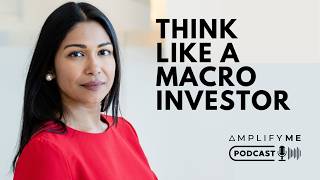
Dr. Lupin Raman moved from the IMF to PIMCO to become a sovereign debt investor, navigating a non-linear career shaped by chance encounters and cultural awareness. She explains that sovereign bonds are government loans blending financial, political, and legal risk, and that curiosity matters more than credentials when hiring junior talent.
Chapters
Welcome back to the Market Maker podcast, and this is a special guest episode because today I am joined by Dr. Lupin Raman, a senior fixed income portfolio manager with over 25 years of experience in macroeconomics, sovereign credit, emerging markets, and sustainable finance. Lupin holds a PhD in economics from the London School of Economics and has held prominent roles at the likes of PIMCO, the IMF, and the World Bank Group. She's also the author of what I've just seen is now a top 10 book on Amazon that's just dropped called The Sovereign Debt Investor, which gives students an introduction into how sovereign debt markets work and how to invest in them. And in this conversation, we're going to uncover the world of sovereign credit, explore Lupin's transition from the public to private sector, and uncover one trait a student could show her that would make her stand up and say, I want that person in my team. So we'll get to that towards the end. But Lubin, thank you so much for coming on the show. How are you?
I'm very well. Thank you so much for having me, Anthony.
Yeah, you were just telling me about the snow. You're not snowed in then in DC at the moment?
No, but it's been quite difficult in terms of getting around. It's like -10 degrees here and we're just not equipped for it. So It's been a tough few days in DC.
Yeah, you can only imagine what the UK news would be if we had -10. But as people can hear, and we'll get into this, that you have an English accent, but you're in DC and you spent a large portion of your life and certainly a large amount of your working career in the US. But perhaps we could start at the beginning, which is when you and I first spoke, you told me that You know, a lot of people go on this journey and find and explore their way into finance. You actually started getting into economics at the age of 10. So please explain, how does one at 10 years old fall in love with economics?
Well, clearly I was the cool kid. I think it really had a lot to do with my background and my dad. My dad was really heavily interested in finance and economics. I grew up in the '80s, so this was the, the kind of land of Wall Street, greed is good, power suits, you know, just stockbroking. And that world just absolutely fascinated me. Um, you know, my parents originally had pushed me towards medicine, um, but very quickly in my early teens, I realized that I wanted to do economics as a profession. And then, you know, eventually go into finance, whether that's development finance on the public side or the private sector side. I knew that I wanted to be in the markets. And so, yes, it was a— it seems a bit out of left field for a Bangladeshi-British girl to be so interested in the markets from such an early age. But I have always been fascinated by it, and honestly, it hasn't disappointed.
Back then, then was finance and, you know, because of the Gordon Gekko and greed is good kind of belief of what high finance was, how was that received then when you brought that up? Because you mentioned their doctor and things like that, which is quite different in terms of perceptions.
Well, at home it was the kind of reception that I got was really mixed. So my mom was really annoyed, I think because my delivery was not the best. You know, I first informed her about my future plan to be a stockbroker when we had guests and an auntie kind of clapped my cheeks and said, what do you want to be when you grow up? And my response was stockbroker. And so my mom was really angry with me, but my dad was very different. He was actually very patient. He listened to why I wanted to be in finance and You know, now looking back, some of my reasoning was very immature. You know, it was, I want to have my own private jet, essentially make lots of money. But he was very supportive. And I have to say that teenage bravado did not last long because my dad being my dad very quickly, you know, signed me up to the Financial Times, the Wall Street Journal, The Economist. So basically I had landed myself in a corner where I had to read all these really interesting, not periodicals at a very young age. But, you know, once I got into it, and once I kind of got guidance from my dad as to what to look for and what the budget actually meant and what it meant in real, for real people in terms of our household finances, it just grew that interest. Eventually my mom came round, but not until I actually got my PhD in economics. So it was, it was, it took a long time for her to come round to the fact that this was a decent career for someone like me to work in.
And just talking about then those steps into then picking the career or the pathway that you were going to go down, because I know that you were faced with what I guess a lot of students would would die to be in that situation. It's like I can go and be, go to a really prestigious university and teach. I could go down a bulge bracket investment bank route, or I could go and work for another organization like the IMF, for example. So can you just explain to me how did those opportunities come about and then how did you make the decision about which one to follow? Because all three are very different.
So I have to say that even though I had a very early awakening in terms of my interest in economics and finance, my path wasn't linear. It seems linear in retrospect, but once I'd gone to university, I was at the London School of Economics and I did my master's and my PhD, I started to lean much more towards development and working in international finance, development finance in particular. And so, you know, my interest moved away from working in high finance to working in more kind of a more policy role in helping developing economies. So, when I was going through the job market after doing my PhD, really, I had these three options, which were fantastic. And that's partly because of the PhD and the master's that I did. So those opportunities opened up because of the education that I went through. Um, but as I went through the interview process, I quickly realized which felt better to me in terms of my own personality and also in terms of what I wanted to achieve and contribute to in terms of society. So I ended up going to the, um, development finance route at the beginning. I didn't go to, to finance straight away, and that was partly because I saw value in contributing to the way governments across the world thought, and also the training that working in large international financial organizations could provide me. So, you know, in, in those types of institutions, the end client is the government. It's not an objective of making money, and that gives you access to a whole number of other scenarios and situations when you're thinking through an economic problem. And that was what really drew me to working first in, in development finance. And it was only after quite a long, uh, time working in finance, in development finance, that I moved on to the private sector. And that actually just happened very much by chance. Uh, it wasn't planned. It was a, a conversation that I had with a friend about next stage in, in my career and where my knowledge gaps in my career were. And at that time in development finance, and still to some extent today, there is a, a kind of a, a gap in terms of information and knowledge about how financial markets work. But, you know, we saw during the Asian crisis in the late '90s that financial markets can actually have a big impact on economies and how, you know, future growth and the welfare of countries evolve. And so I recognized that I needed to focus and learn much more about finance to really become a more well-rounded economist. And that's kind of how I ended up in the markets.
And am I right then in thinking then, so the first role at the IMF came about because of someone you were talking about, and then the move then into that last role you described came from just talking and networking, things like that. Was that right?
Yes, and actually both were very random. Um, you know, I was actually going to go into academia, uh, after my PhD, and I happened to be in the local student union, um, bar waiting for a sandwich. I got speaking to the guy behind me, and you know, at the time I thought he was so old. He was probably in his forties and, um, We started talking about Cuba at the time Fidel Castro was ill. So people were wondering whether, you know, Cuba was going to fall. So we were talking about Cuba and, you know, I was very opinionated and gave him my kind of economic recovery plan for Cuba. And he then suggested that I come to the IMF for an interview, and I didn't realize he was a recruiter, but he said, look, I'm recruiting for the IMF. I think you'd be a great fit. Why don't you come for an interview? And I was just like, no, I don't wanna work for the IMF. I didn't really know that much about them, to be honest, but I just thought, no, no, I don't want to work for the IMF. But actually he lured me with a free trip to Paris where the interviews were being held. So I was like, why not? Let's go. And once I met the rest of the team and learned a lot more about the institution, I realized that actually it was a really good fit. Both intellectually, but also in terms of the values that the institution held and in terms of what they were trying to achieve. And so that's how I ended up at the IMF. And then the second move to finance, really, a friend of mine was just chatting to me, as I mentioned, and we were chatting after work just about, you know, what we wanted to do next. And she was saying that, look, she was also at the IMF at the time, and she was saying that, look, you know, she feels like she doesn't know financial markets very well, and she's thinking of moving to the private sector. And so then I asked her, you know, why would you give up this amazing job for life and go to the private sector, which is, you know, much more cutthroat and just played by different rules? Uh, but then just hearing her views and what she was thinking about in terms of her next steps really started me thinking about my next steps. And, you know, at that time, this is almost 20 years ago, people stayed in one job for most of their life. And that was the golden ticket. Very different now, but at that time it made sense to me to start exploring what was outside of development finance. And that's how I ended up in the markets.
It's quite funny as you were explaining that, I was like, wow, the IMF basically have like these sleeper agents on campus, it sounds like, who are like subtly queuing for sandwiches and listening to conversations to recruit their latest interns. Sounds like a good job.
Actually, you know, they were, he was there for an actual proper formal recruitment drive. And later I found out that many of my friends had gone for formal interviews on campus, and some of them didn't make it to the Paris round. So, you know, what I take away from all of this is, you know, it's always good to communicate and engage with people around you, not in a mercenary transactional way, But first of all, it's always nice to chat to someone. You never know what they're going to say. You never know what you're going to learn from them and also what you may contribute to their lives. And so for me, even that chat with my friend, just brainstorming what she wanted to do in her life, changed the trajectory of my life and brought something that I would never have thought of. So I think that especially in when, when you're at university and in that kind of formula formulate stage of your life where you're trying to figure out what you want to do next, having lots of conversations with different people, both structured and non-structured, is actually a good thing. If you're an introvert, it can be very painful, but you know, I would, I would really encourage you to kind of bite the bullet and see where the conversation takes you.
Yeah, I do remember a previous guest. Telling me that because she was able to articulate with her peers about what she was thinking or what she was interested in, it was actually then through one of her friends sitting beside someone on a plane when she was going on holiday to New York that just happened to speak to someone and went, oh, I've got a friend who's exactly really interested in that. You should meet them. And that actually ended up transpiring into a job. So again, you've kind of got to be an advocate for yourself and like talk to people. I think for sure. But we're definitely going to get into the sovereign credit explanation in a moment because I think it's such an interesting area of finance. It's probably super underserved in terms of the understanding and awareness of students. But one of the other interesting things about your journey is that you grew up in the UK, you spent a large portion of your life in the US. And so I think what would be really interesting to hear for our listeners is like, what is that difference? So you've lived in DC, Newport Beach, so you've gone from one end of America to the other, literally, and NYC. And so kind of working, living cultures, like what should young professionals be thinking when they're thinking about geographies?
So there is a big difference between the US and the UK, which I really didn't appreciate until I was living in the US for several years. And I think this, this, what I'm going to say kind of goes beyond just moving to the US from the UK. I think whenever you're, you're going to a different country, you are facing a different culture. Even if they speak English, even if it's the same language, even if it's the same religion, even if people look the same as you, there is always a different culture. And what I found really was that the US culture was extremely different, very high-paced. Much more transactional, at least working culture. And, you know, essentially the way people are is a lot more, you know, open in a way. So, you know, I always felt that coming back, I actually came back to the UK for 7 years in the middle of my career and also worked in finance in the UK. It was really interesting to see the way the same international firms, individuals in, in the UK behaved and kind of worked to different rules, um, versus, you know, the, their counterparties in, in the US. Um, I think that being aware of cultural differences is really important in terms of how you do your job. So I'll give you an example, you know, in the US when I would be trading, I would just call up my broker. You know, just be like, "Hi," even if that was the first time of the day that I spoke to them, and just tell him the trade that I wanted to do. In the UK, that was just not done. In the UK, you would have to have a 5-minute conversation of, "How was your weekend?" or "How was last night?" You know, "How are the kids? How's your family? How's the dog?" You know. Before you actually get into the train. And it, that's, even though I'm a Brit, it was a big culture shock because most of my working life was in the US and it just felt very inefficient to me. But, you know, I realized very early on that you have to learn how to navigate each culture and learn how to make and form relationships in each culture because that ultimately is what's going to drive, is going to drive your success. That's not just in finance. I think it's true for any profession that you choose. You have to learn how to grow your network. You have to learn how to make friends, actual genuine friends, not just transactional-based relationships. And that really goes quite a long way in making you, making your job easier, but also making you successful. So that cultural difference was one thing that, that was quite, quite interesting for me to kind of learn and navigate. Straight up in terms of the working environment. And also there are things that I had to learn about myself. You know, in the US, people are very aggressive and they will almost, they will tell you to your face if they don't like something, if you are, if they think you're dumb. This is in the work context, obviously not socially, although sometimes also socially, but in general, mostly at work. Whereas in the UK, people are tended to be a lot more passive-aggressive, which was very difficult for me to begin with because I was used to the American way of working. So it's learning how to understand cues and the social cues from those around you and adapting to that and deciding what you want to adapt to because the values are going to be different in different places as well. And, you know, my career ended up being focused a lot on emerging markets. And so this cultural adaptation part helped me When I, you know, went to Brazil and talked to Brazilian investors, when I went to China, when I went to Japan, just to understand how they, how, how they would best receive the information or the negotiation, because then I had a higher chance of success.
So it almost feels like there's two kind of layers then to the, the challenge that you had. There was the cultural one that you've just explained, but then there was also that shift that you made from sort of policymaking to, I guess, ultimately, objectively speaking, profit-making. So, how do you kind of, on that side of it then, that transition from thinking mindset-wise, was that a challenge or did that feel fairly seamless as a switch?
It was very challenging, honestly, because You know, everything, every time you do something different, there is a learning curve. And I think that, you know, if you go into any job thinking that, well, I have a, I have the qualifications, in my case I had a PhD, which is the highest qualification you can have as an economist, and you think, well, this shouldn't be that hard. I think you're probably going to have quite a nasty surprise because the most important thing when you're going into any job is to really do the groundwork beforehand and ask questions. When you are starting off, that's the best time to ask as many questions as you can to the people who are working and are experienced. And so, you know, the, there are a couple of things that are different about policymaking to profit-making. The first one is the pace. It's not necessarily the objective. You kind of know the two different objectives. The issue really is the pace of work. You know, when you come down to the nuts and bolts of it, working in, in the public policy side is a lot more slower. It's more nuanced. You have to basically buy in, um, influence from many different groups. Um, and that, that in and of itself is, contributes to the success of the outcome, right? You can't just go it alone. Whereas when you're working in the private sector, in the role that I did, um, it was important to move fast. Markets move very fast and your profit and loss can change very quickly depending on if you put a trade or a transaction on in day 1 versus day 15. And so the pace is very different. I think also the kind of objective does shape the kind of personalities that are attracted to the different jobs. So, you know, as I mentioned before, you have to, because you don't have that much time when you're making decisions, you have to be much more direct. If you're someone who can't handle or you're not, you don't feel comfortable in that environment, probably not going to suit you. I think the markets are also very, very stressful because you see the impact of your decision almost within a day, if not straight away. Um, and so that can actually have quite a, a kind of a negative and a positive effect on your emotional regulation. So if you're someone that, you know, does not deal with stress very well, or that particular type of stress, then it may not necessarily be the area for you. Now, to my surprise, you know, I was someone that was always quite, um, you know, quite quiet, introverted, um, you know, I don't really get super emotional very quickly. And I actually found the pace of the markets and the stress of the markets to be something that was quite complementary to my personality, which, you know, may seem at odds to you. And also it was, you know, surprising to me because my concept, you know, growing up was stockbroking was aggressive. You're in a pit, you know, the Gordon Gekkos of the world, you had sharks and people shouting at you, everyone was super alpha. That wasn't who I was. I don't look like that. I don't behave like that. But actually in reality, I think when you go into the financial markets, you see that most people are much more measured. They can control their emotions, they can regulate themselves, especially if you want, you know, the ones who end up being successful long term. And so part of switching between the two worlds was also learning about myself and whether, you know, what really attracted me to each world and whether I, you know, I'd be happy working in, say, the markets versus public policy. And I have to say that for me, the markets were, you know, the ideal backdrop for the kind of, you know, engagement that I need and the intellectual stimulation that I need in my job.
Thinking in retrospect now then, do you think that your ability to naturally be fairly comfortable with stress, do you think that came from your dad putting pressure on you as a young person? Because it sounds like your dad was like, right, you're all in, you're doing this. I'm imagining, you know, I have a Chinese father, so I know what it's like, like having a, you know, the pressure of like, you got to do this, you got to do that sort of thing. Was there a lot of Do you think that in some way helped you? Because I know a lot of people I've spoken to before, there's some element of a sport or something where it's indirect to finance. It's not finance related, but it's the same underlying characteristics that have been built at an early stage. Would that be true?
I think there are a couple of things, right? When I look back, I think the first thing was So, you know, not necessarily in terms of dealing with stress, but in, in terms of why the markets really attracted me and why I ended up staying there for most of my career, it was because someone who is like me, a minority, a woman, for me, going into a profession where the fruits of my labor were directly observable and attributable to me was really important. Right? So, you know, if I made money one, one day, it was really clear that I made money. I lost money, it was very clear. I couldn't— there was no one who could actually take that away from me, right? And I think that that kind of merit-based element of, you know, my experience in the markets was actually quite a positive thing for me, which I found in the US financial market. Uh, I, you know, I'm not necessarily sure that that would be the the same in other countries. And the other element of, you know, dealing with stress is, you know, related to family background. You know, I came from a Bangladeshi British family where we really focused a lot on education, on meeting targets, on, you know, kind of doing our best, working hard, being able to withstand different changes in environments because one day, you know, I was working on my maths exam. Another day I was helping my dad doing something around the house because, you know, that needed to get done. So there was a lot of moving parts, and I think all of those kind of, those experiences contribute to how we are as adults. And I think, you know, the lesson that I've learned from all of this and what I say to my nieces and nephews who are actually at the stage where they are deciding what to do in their early careers or what universities to go to, is you really have to know yourself to the extent that you can for each stage of your life, right? So if you know that you're not someone who likes to think quickly, you like to ponder a bit more, maybe choose a role or an occupation where that allows you the time to think a bit more carefully about what you do before taking the next step. Versus if you're someone who is very quick on their feet and, you know, you like the, the kind of excitement of new information and processing information very quickly and making decisions very quickly, then choose a profession where you're able to do that. One is not better than the other. I think, you know, in our society, we tend to put a bit more value to the latter rather than the former, but really, ultimately, one is not better than the other. It's really the best option is what suits you and your personality the best.
Yeah, that's such sound advice. And it's really nice to hear it in a way that I think everyone can relate to that, the way you described it. Because I think sometimes there's an over, there's an over-tilt toward the end title or the end destination rather than just thinking about what I'm actually, what I'm actually naturally good at and what do I enjoy doing and these sorts of things. And then following that through. To then, well, what pocket of finance aligns with that? So yeah, and I think that's really interesting. Well, look, let's get into Sovereign Credit 101. So got a few questions for you here because something I'm very passionate in is, I think, you know, extension of what I just said. I think a lot of students when they think finance, like it sounded like you did, a 10, 14-year-old was like, right, I'm going to be a trader. I'm going to be Gordon Gekko. Is kind of trading or investment banking, like M&A. But although those are great professions, there's a whole world out there of lots of different roles, and I think your one is a really interesting one. So I wonder if you could give a really simple explanation as to sovereign credit. You know, if you were speaking to a first-year university student, economics, non-economics, how would you explain that as an area?
So sovereign credit is a subset of bond investing. What that means is there are groups of, um, institutions that lend money to other groups of institutions, and essentially the way they lend the money is through instruments called bonds. And sovereign credit essentially is when the lending institution lends to countries, and essentially it gives, it's lending to different governments of the world, whether it's the United Kingdom, the USA, the Brazilian government, the Chinese government, or a Kenyan government. So that part of sovereign means you're lending to a government. The credit part means what is the risk of lending to this country? So just like when you go to a bank and get your student loan or ask for a student overdraft, the bank is going to ask you, okay, what's your income? What is your spending habits? They may even ask you your parents' income, or if you have an underwriter or cosigner. The same way that a bank does that to you when you ask for an overdraft, these lending institutions assess each country's government. As to whether they're going to be able to repay the debt that they are now taking on. And so that is the risk part and the credit part. So sovereign credit in a nutshell is the risk that lenders have when they lend to governments around the world. Now, there is a parallel between sovereign credit and corporate credit. So you may be more used to hearing about, you know, corporate investment-grade types of bonds or credits because you have, you know, large companies like Meta or Apple that also borrow from the financial market. The difference between lending to a country and lending to a corporation is that a country is sovereign. They, a country's government determines the policies and rules and regulations that it abides by. No external country can really enforce a government to do what it wants to do. And so that part of the sovereign risk really becomes something that is also considering political risk, right? Maybe this country is governed by a friendly government to the United Kingdom or the US, and therefore a US bank will get its money back. But what if all of a sudden it's taken over by, you know, far-right extremist government that, you know, hates the US? Maybe they won't repay US banks in that scenario. So the job of a sovereign debt investor is to assess the kind of financial mathematical risks. Does this country have enough money to pay me back? But also the geopolitical risks. That are associated with a government's policies and the political stuff from which the government essentially conducts itself.
So, so if I heard that right then, are you a maths person or are you more of a political kind of scientist person, or are these two different roles within one sovereign credit team where people are, because you mentioned earlier in the conversation, you were like, you mentioned Brazil and a few other kind of emerging market countries. So are you going to these countries and meeting these governments, for example? I mean, that sounds like a totally different skillset required to someone who's modeling risk, for example.
So essentially there are many jobs that you can have and many roles that you can fulfill while in this big world of bond investing and within that sovereign debt investing, right? And it includes the range of roles that you've mentioned. You know, you could be a quant who are, who's basically modeling returns, looking at the financial markets from a very technical and mathematical perspective. You can be a credit analyst that is looking at the balance sheet of the country, and within that also thinking about the geopolitics about that country. You could be the public policy person that is going to different, you know, countries around the world, like Brazil, like Mexico, and negotiating with the government about the terms of the agreement. So there are many, many different roles that you could play within this kind of very large world of debt investing. I think that, you know, for me, essentially the really important thing is to be very flexible in terms of how you process information. So, You know, early on in my career, I had to be the maths genius, the quant, the kind of the trader, the analyst, the person that understands, you know, the economics of pandemics, person that kind of understands different political regimes, the person that can look into oil markets and understand how oil contracts are actually signed up and, you know, written. I also had to look into legal contracts. Sovereign debt contracts and understand the legal basis of the contracts that we were ultimately signing. So you have to put on many, many different hats. I think the, the key takeaway I would say for anyone looking into this, this kind of field is first, there are many different roles. So there are roles that can fit, you know, your own proficiency in different subjects. And then second, even within those roles, I think Being flexible in terms of how you, you know, what kind of areas you're willing to go into is important. And being able to process very different types of information very quickly becomes really important.
Cool. Well, I've got two more questions before I let you go. And one is one that I ask all of the guests that we have who've had a very extensive career like yourself, which is You would've interacted, I'm sure, with lots of people who are just starting their careers whilst you've been working these different roles. And I just wondered if you could distill it down to one kind of definable trait. And I know there's obviously many, but if there's one in your opinion that really carries true as to someone then who you would hire as speaking to then a 21-year-old thinking about how to position themselves. For their career? What would that trait be if there is such a one?
I mean, one is very difficult, but I think the number one requirement is someone who's curious. So, you know, I always look for curiosity and someone who is willing to, you know, go after information and really understand the causes of things for themselves. That's number one. You have to be curious. It can't be a kind of spoon-fed type of curiosity. It has to be really something that comes from within you, and that comes because you're passionate about what you're looking at, right? It's not the kind of curiosity which is, I have to read the FT cover to cover, and then I will know everything that's going on. It's more like, oh, okay, what are the implications of tariffs on you know, global international trade, which countries are going to be more affected? Let me look that up. Let me try and figure out how China could respond. Let's look that up, you know, let's see which sectors are going to be at the intersection of competition in terms of global trade or access to resources. So you have to be someone that is naturally curious about the subject material. I think the second thing, if I'm allowed a second thing, is to be low maintenance. I have come across many, many interns and MBAs who join firms and the mindset is that, you know, your boss, your manager, the firm owes you something. You know, in the real world, no one owes you anything. You have to really prove your seat. So if you're getting paid, you know, X amount of money a year, you really have to be able to earn your company or the institution 4x or 5x. So the mindset has to be really, what are you, what value are you bringing to the institution that you're going to, rather than, okay, what are they doing for me? This may sound really obvious, but just having that switch in mindset will already put you ahead of like, 60, 70% of, of a regular intake because I think that's the transition from being a student to working life that some young adults kind of struggle with. Because when you're a student, you know, people are there to serve you in many ways, right? Your professors give you information, your tutors help you figure out problems or the assignment, whereas when you're working, you are the one who has to have the answers. Not the other way around.
Great. Well, I'll let you slip in that second one then. No, it's so interesting. And yeah, maybe that's a bit of that US coming through, which is, you know, I, you know, there is definitely some working differences there between maybe the baseline attitude towards the workplace and things like that between the the US and the UK. Also the curiosity thing, I think that's definitely a recurring one I hear a lot. And I wonder then if you were a young person today, 'cause you have AI tools now at your disposal on your phone, like the amount of times I'm chatting to Gemini and just talking about stuff and it's like an immediate recall of information, although obviously you don't take it all as gospel, but the access to explore feels much less friction now than perhaps going to the library and finding a book and, you know, these sorts of processes that would have been a potential barrier in the past. So I definitely encourage people to do that. You mentioned the budget earlier, you know, when you were talking to your dad. That's a great one, I think, where, you know, you can connect tangible real-life things that are impacting people day to day. And then kind of reverse engineer it back to, okay, so why is it important? What is it within the budget that's important for what, for example? So yeah, great stuff. And finally, you have a book. And so what can you tell us about the book and your ambition for it and who's it for and what can they expect from the book?
So the book is called The Sovereign Debt Investor, and essentially it's an introductory guide for anyone interested in sovereign debt market. It's for students and new practitioners to investing to learn, you know, what this market is, how do you actually implement trades and invest in it in real life, and what are the kind of things you as an investor should be looking for. It also gives you an idea of, you know, the various risks that are involved in sovereign debt investing, and it gives you an idea of when things go wrong, what to do. So it's an introductory textbook. It's a professional slash kind of finance-focused textbook for any student that's interested in this field and learning more about it.
Cool. And there's a link in the show notes, so please do check it out. But Lou Finn, that's been an awesome conversation. Thank you so much for joining us on the show.
Thank you, Anthony. It's been great chatting to you.
More from Anthony


Inside the Biggest Banking Stories You Need to Know This Week (Anthropic, Diageo, Private Credit)


Inside the Biggest M&A Deals You Need to Know This Week (UniCredit, GameStop, eBay, Eli Lilly)







AI Breakthrough or Hype? Anthropic’s Claude Mythos, Tim Cook Steps Down & LIV Golf Collapse