Inside the Biggest M&A (Sports) Deals: LA Lakers, Chelsea FC, ESPN & Franchising Rugby
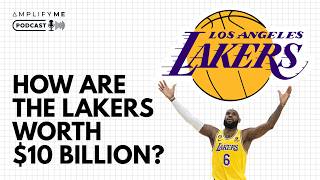
Mark Walter paid $10 billion for the Lakers, valuing the team on media rights, global brand, and scarcity. Alexis Ohanian bought 8% of Chelsea Women at 18× revenue. ESPN took a minority stake in a lacrosse league to own and distribute it simultaneously.
Chapters
All right. Welcome to the show. And we've got a special one for you. And if you're watching a video format, not just because there's 3 of us, we'll get to that in a moment, but because we're going to talk about sports. And I love sports, and particularly basketball, which I know we're going to talk about amongst other things. But sports is big business, bigger than it's ever been. And within the stories today, we're going to cover everything from LeBron James to the dark arts of private equity, all the valuation techniques, the strategies behind it. And you probably would've seen some headlines that the billionaire Mark Walter is to buy the LA Lakers from the Buss family. We're also gonna touch on women's soccer, look comparably between men's and women's teams and the valuation techniques there. ESPN buys a stake in Lacrosse League, and they're having a bit of a strategy shift. And then also English rugby was covered in the FT at the weekend, ripe for international investment after overcoming crisis. So there's a common thread of private equity within today's conversation as well. But as I said, top of the show, there is three of us. So Stephen, Silvia, how are you?
Yeah, good. Thank you, Ant. Delighted to be here and delighted to be here with Silvia as well.
Hi everyone. Thanks, Ant. Thanks, Stephen. Yeah, really great to be back on the pod. I made a special appearance a while ago now, but Always great to be here.
Yeah. And then, uh, I'm, I'm just gonna come out with the news, the breaking news straight up just to, to clean the slate. But Steven is no longer gonna be a consistent feature on the show. I'm in negotiations with, uh, his sports agent at the moment trying to secure him on a, uh, a quarterly contract deal. But he's, uh, I don't know if I can fit him in my salary cap at the moment, but, uh, No, Stephen, who I know, you know, it's been amazing having these conversations with you. I know I've learned a ton and I've been in markets now for 20 years, so I'm pretty sure I can speak on for everyone on behalf of our community. What an amazing insights strategy teacher you are. And I know teacher runs in your family genes, and so it comes as no surprise that you've been an awesome contributor to the show. So big thank you from me.
Ah, thank you so much, Anne. And yeah, it's a little bit sad, actually. I don't know, I was trying to figure out how many episodes we've done together. It must be at least 100. So 100 of these conversations where I, you know, chat a lot and you play dumb. And I don't think, I think that, I definitely think that's playing dumb as opposed to actually being dumb. So that's a, it's a very, So it's a fine line, but, but yeah, you mentioned, you mentioned teaching and that's obviously something that we do a lot at Amplify. I'm actually moving on from Amplify to pursue a bunch of interesting things and have a kid and all of those amazing things that one tends to do when they get a little bit older. But I do, you know, I think that word teaching is so important and anyone that can get themselves from a career perspective into a position where they can teach. It's such a good profession and it's such a rewarding thing. Even getting the comments on YouTube saying thanks for the episode, or, you know, some of the more interpersonal teaching that we do day to day. It's always, always rewarding. So it's been an absolute delight. But I'm also delighted to hand over to Silvia.
Yeah. And so Sylvia is someone you've worked with for a number of years also, right? She was pretty much within your team here at Amplify.
Yeah. So I've been at Amplify for the last just over 3 years now, and Sylvia joined just over 2 years ago to support me with all things investment banking, IBD. I'll let Sylvia introduce herself formally, but we've worked really, really closely together. We've built out the client list, which includes everyone from Goldman Sachs to Jefferies to Evercore to Bank of America. So Sylvia's done a brilliant job there. We work with some of the biggest and the best universities in the world as well. So Sylvia has been a brilliant person to work with and a delight to take on this podcast into the hot seat.
Yeah. And perhaps Sylvia, then just before we begin, a bit about your background, just a bit of context. I know we got a little bit there from Stephen, but from your side.
Yeah, of course. And thank you, Stephen. That was really kind. Now it's been like beautiful 2 years again, working on all things corporate finance. This is the next step. Definitely the competition is really harsh, but I know you may be coming back again, maybe once a quarter. Let's see if Anthony can close this deal. So you'll still see Stephen again, I'm sure, sooner or later. But yeah, just about myself. My name is Silvia and you will see my face more often here on the podcast now going forward, talking about all things corporate finance. So I work here at AmplifyMe on corporate finance side of the business with our corporate clients. So hopefully I will be able to like sneak in some advices for all students out there trying to get an internship or a grad role, like what you should be focusing on. And I've been working again, just like developing our suite of corporate finance simulations, everything from M&A to private equity to IPOs, et cetera, et cetera. And actually my background is from Goldman Sachs, so I used to work there as an equity research analyst. I was focusing on tech companies, which is pretty much something I'm really passionate about. So you will see like tech deals coming up here and there, of course. But yeah, super excited to be here and looking forward to it.
Cool. Yeah. And then look, I know you sent me over some notes and I got excited when you started talking about the Lakers. So, Yeah, hit me. What's the headlines here with this LA Lakers story and the Bass family?
Yeah, absolutely. I feel like for my first appearance, I had to like find something that would excite you, Anthony. So today we're starting up just by talking about the LA Lakers deal. So this is one of the most well-known and iconic sport teams in the world, which is but just being valued at a record-breaking $10 billion, which is huge. It's setting a new record in this sphere. And this happened after it has been selling a controlling stake to the billionaire investor Mark Walker. So it's an interesting deal, like from a number of different perspectives, like from the structure of the deal with like the Bass family, just like taking a step back in a sense, doing a partial exit, not really a full-on exit, but also again, like from a student's perspective, like looking to develop more like their valuation skills, again, understanding how brands value actually plays a role into these media rights, how they change the game, and how the sports franchises really are becoming some of the hottest assets in the market.
I, I, I guess a question then on, on like timing, was this a foreseen thing that was happening? I guess GenieBus, I know it's, it's, it's quite often appears in the press and the mainstream media and stuff like that. So was this, did people expect that this deal was going to happen? Or I guess there's no, I remember their father originally in the Magic Johnson days back in the late '70s, '80s when he turned the Lakers around. I don't remember any of the children, i.e., the now owners of the business having children to bring through.
Yeah, that's an interesting one actually, if you think about it, because again, it's been basically like the like public face of the brand for the past like 40 years. It has always been like in the family. And now we're seeing them instead just like making this shift, which is something I would like to discuss with you. Like, what do you think about it? Because we are not seeing a full exit, as we said. So the Bass family will still keep like a 15% share, which essentially means we are switching, we're changing like the control. Which is now going to Marc as an investor, but we are also trying to keep like some continuity with the brand and the family. Jose, what do you think, Steven? Do you think it's a great idea? Would you have gone for like a full exit instead? What do you think?
Yeah, so it's a really interesting question. So it's over 50% that has been sold by the Buss family to Marc Walter. And it's a really interesting one because if I was the Buss family, yes, I'd probably still want to have some skin in the game. Again, upside from a financial perspective, but also I think if you have, if you remain a minority shareholder, you probably still get the associated intangible benefits of being connected to the LA Lakers, i.e., courtside is what I'm thinking. I'm sure they've got lifetime access to the player's locker and all of that kind of good stuff. So they want to keep that association. It might end up being a little bit problematic from Mark Walters' perspective, and I'm sure that there's structures that are being put in place to make sure that Walters actually has the ability to push through the changes that he wants to within the organization and actually to lead from a strategic perspective with the Bass family, mainly as a silent minority partner. The danger is when egos both get into the boardroom together, especially one that's owned the company for 45 years, they're not gonna be wallflowers, right? They're not gonna be, and, and you might know some backstory on this, you know basketball better than us, but I can imagine there's some egos floating around, right?
Yeah. I don't know how that works because I have a superficial understanding of this character, Mark Walter, and I'm pretty sure he's ambitious in terms of the change he wants to to bring. Yeah, having Jeannie there, I would see as a huge problem. I guess the relationship needs to be that I'd only sign the deal if she's there on paper and has all those other little, you know, upside privileges, but has absolutely zero ability to have any day-to-day influence or exert any control on anything. But that in itself would make me very uncomfortable. I'd want her out and gone.
Yeah, it's all feeling a bit like Succession, right? And, or whether it's the Paramount, you know, the complexity around family-owned businesses. I think Silvia, you mentioned in your notes, she's going to remain on as the team's governing owner. Is that right, Silvia? I don't even know what that means.
Yeah, exactly. Like from what we can see from the news, it essentially seems like they would like to keep the day-to-day unchanged. Just keeping a bit of continuity with the brand, just like keeping the main, like, face that the public knows really well. But yeah, I would probably agree with you, like, this can become a little bit problematic. So yeah, it may be like not exactly the reality, what we can see just from these first few days in the news, I guess.
Yeah. I mean, I, I was having a think then about this, this $10 billion kind of valuation, this price tag, because in my head, A, being English, therefore I think football or soccer, and I think, okay, Man United, or I think further afield in Europe, Barcelona, Real Madrid, and I think they have international appeal. There's a lot of Asia continent appeal. But am I right there? Like Man U's probably what, half that valuation? I mean, at best, I mean, they do bounce about a bit, but they're valued at 10 billion. Um, and I know basketball is a big sport in a lot of these Far East countries with big populations like the Philippines or Indonesia, places like that. But I'd just like to get into the nuts and bolts of how is the Lakers like this record-breaking sum of money where they feel a little bit more orientated towards North America, or is this where you have these brand individual giants like LeBron James, who has a global appeal that helps sell the team as a secondary thing.
Yeah, no, that's a really good point. I think this is one of those deals which is like really interesting to try to value because we, it's not something that we can just like do the cash flows and do like a DCF and adjust that because there is much more like on the intangible side of things. So first of all, I think there are like 3 key main pillars we can analyze. So we have media rights. Which are definitely like the core cash machine for the team. So, Lakers have like a huge local TV deal as well as like big opportunity with like big media contractor on the national and also global level. Like, these are estimated to be worth $70 to $75 billion in the next few years. So, essentially when you're thinking about it, you're not just selling a team, like a sports team, but you're selling a global broadcast access to adopt your product, essentially. And as you were saying, and there is a lot of like the branding around it. I think that you're right in the sense that probably like with respect to football, perhaps, or like other sports is not like so, not so popular in every country around the world, but those big names everyone knows about. I think one interesting thing is like if you just walk out here in London, you can see a lot of people with jerseys. But like, if you can stop them and ask them, all right, are you a huge fan? Are you like following it? The answer would probably be no, just because like there is like a, just a huge brand around it. Like there is, it has become a global cultural icon in a sense. So we can also think about it just as a bit of a luxury type of company, like a premium fashion type of company. There are a lot of opportunities, again, not just like as pure football team, but like with merchandising, sponsorships, lifestyle brands, partnerships. So there is like this additional element that we can add on top of it. And maybe like, and again, as you are really passionate about this, you can probably share like, what do you think about like the value of like this intangible element of owning a sports team?
Yeah.
I mean, from the perception of like, we just had the NBA Finals. It's just happened. And it was the Oklahoma City Thunder against the Indiana Pacers. That, I mean, either could be any more the opposite of what the Lakers is from like a thoroughbred championship-winning team. These are both fairly, you know, not second tier, but definitely they're not the Boston Celtics and the LA Lakers, which is like the staple of like the history of the thoroughbreds of basketball. So that has shifted quite a lot, but I think what LA has is location, LA. There's this intersection that basketball in Los Angeles has always had of like fashion, music, hip-hop, celebrity. It brings together this cocktail that creates a very unique brand that basically can't be replicated. So I think given that there's only so many teams in a league, it brings together a really unique set of components that can't be imitated by the others. So Yeah. Well, they're not quite, they're not quite the team they used to be. Even though they've probably secured a very good player in Dončić in the last, in the last season, they feel like they're perhaps one of these teams where in the post-Kobe/Shaq era of when they were champions in the early noughties, they've got the best player, but perhaps not the best team. And as we've just seen from the last NBA Finals, teams are built on teams. And both of these are exactly that. There's, yes, a few superstars here and there, but I guess in the end, for a brand to be successful and why the Lakers were really successful in the '80s was because they were serial winners. They are no longer serial winners. And I just wonder, yes, they've got this unique brand and it has this cool X factor, but without winning, I don't know how far that actually travels.
Yeah. Just a, just a, hey, by the way, and I think this is your second pit to run your own basketball podcast. So I'm going to bring us right back into finance. I do want to cover Docic in a second. But I think the other thing that would provide a significant acquisition premium or evaluation premium to American sports teams relative to football clubs is the nature of the franchise, right? These guys can't get promoted, they can't get relegated. Their cash flows are relatively easy to forecast from a media rights perspective. You know, we're going to talk about Chelsea in a little bit, but they will get a a, you know, £80 million boost if they make the Champions League. And if they don't, they don't get it. And you know, worst comes to worst, they could get relegated. So that is why, that's one of the reasons why you get a significant acquisition premium or evaluation premium. But I also want to ask, and so we talk about the fact that the NBA has stayed somewhat within the US. If you compare that to the NFL, which is another kind of great American sport, we are seeing more and more matches being held here in the UK. Even, I think there might be one slated to happen in the Middle East at some point over the next couple of years. So what's going on with the export value or the export effort? Is it just, is it not happening? I know we've got superstars like Jokic, as you mentioned, who are not from the US. So yeah, what's going on there?
Yeah, I mean, I don't have the figures. To hand, but basically the viewership— Game 7 of the NBA Finals, I think, was the most watched finals that they've had in 7 years. Taking that aside, viewing figures for the NBA are absolutely plummeting. And it's almost like a vicious circle where the more it plummets, the more desperate the league becomes to try and regalvanize the game. And they've started to think of all these other creative ways to change, like the All-Star Game that they have, all these different sort of rules and things around it. And I think that's just degrading the game. So I don't know, and this is why I question like this valuation. The NBA is on a downward trajectory in its popularity, both in America as a watched viewership base and also globally. It's become so dramatized and the game is so far removed from what it was that actually it's just really not interesting to watch because it's super uncompetitive and it's all about then lifting up stars to make them characters and brands and offshoots of Netflix series to monetize it that way rather than the grassroots of the beautiful game. And so, yeah, I don't, I don't think it translates particularly well. It used to in the '90s, but maybe that's because you had Jordan as the linchpin. That acted as the global ambassador where people bought into him, and LeBron's never had that same quite global appeal, I'd say.
So Silvia, one for you in terms of these valuations, right? So at the moment we're seeing this almost arms race every 6 months or so. We get the world's most valuable team and there's a new record, whether it's the Boston Celtics or the LA Lakers or the Golden State Warriors or whatever it might be. What is this just going to keep going forever? Are we just going to keep breaking these new records or are there going to be, what kind of headwinds could there be that might see the wheels come off a little bit and maybe, you know, these were the heady days and valuations will start going down?
Yeah, that's a good question actually, because like what I was thinking about when I was like seeing this transaction and like comparing it with like most recent ones, which always seem we always getting like higher and higher. Is this just like a bubble in valuations of like the sport teams or is there definitely some intrinsic value in this, which is, will keep going higher and higher? I don't know. I would say I definitely see it crossing the ceiling and just like maybe giving a halt at a certain point if we are keeping seeing these valuations consistently going higher and higher. This also could trigger a bit of a red flag to investors willing to invest in this, like is the opportunity really there or maybe they just overvaluation, which maybe is also like a good talking point for a student to think about. Just like try to get down to your valuation of this company and understand, is it 10 billion really for you? Like with all the different elements that we can include being like branding, being like scarcity, because like reality is like we just get as many of these teams and usually they're not sold. This one is being sold after 40 years, essentially. But even considering all of these elements, is it really a 10 billion deal or not?
Yeah. So, so break it down for me in steps then. So do you not look at the brand aspect and just focus on the standardized process, looking at financials first, and then you start to bolt in this associated brand value into that already first part analysis, or do you start from the beginning and then incorporate everything all in one pot?
Yeah, no, that's a good question. Actually, it's really timely as we're currently running our summer analyst training programs. We're currently in the banking week and we talked about valuation yesterday. And some of the students were asking me like, okay, so is it just like as straightforward as it is? Build my model, build my little table with my DCF, and that is the valuation of the company? Well, there is flavor to it, of course, like, especially like when we're thinking about deals like this one, you will need to kind of like build layers in a sense. So I think a good starting point is definitely like starting from your most traditional method in a sense. You can try to do a DCF, even if I would reckon probably like this type of companies, like this sports team are not run really for cash flow maximization. So you could get like a bit of an undervalued type of valuation in this case. So you may also want to take some multiples, but again, I think like taking this starting point, then the important thing would be just adding some layers, kind of like taking into account those elements that maybe you can really not reflect fully in your valuation, even if you can definitely take into account some of the intangibles of the branding. And maybe something like adding a premium multiple for the branding of the company and then taking into account media rights. You may want to assume like some perpetuity stream in that case. And finally, again, for your scarcity element, either you can adjust your WAC or you can apply like another acquisition premium on top of it.
If you were another team thinking about doing something similar, because you've just had the Boston Celtics, you've now had the Lakers, and each number we said, the bar's going up and up and up. How do you, how, as an advisor, like a banker, do you go, right, we need to get a deal in now? If you guys want to do a deal, you Gotta go now. Or do you risk being that banker who pushed that team to get top of the market and then actually the market falls because the Lakers was the pinnacle? Like, how would you, how do you make that judgment call as the advisor?
Yeah, I mean, this is an interesting one. I would definitely say if I was one of the other 28 franchises that's not the LA Lakers or the Boston Celtics, I would be not necessarily rubbing my hands together, but I'd think, okay, check, interesting comp, love that valuation ceiling that's just been smashed. If I was a banker, I wouldn't be, you know, I'd be discounting that comp quite significantly because it looks, I don't know enough about this deal, but it looks like a bilateral, right? It doesn't look like the LA Lakers were going out to market with a huge competitive process and private equity is involved with their kind of very, very rational view on valuations. It looks like, okay, here's a, you know, Angelian, Mark Walter, who already owns the Dodgers. They've probably known of each other for many, many years. And this was, you know, this was a deal that got done and the number was probably the only number that the Busch family would've accepted because they didn't need to sell the asset. So, you know, a good moment in terms of smashing through valuation caps. If I was advising any one of the other, the Indiana Pacers, for example, I would say, look, you're not going to get $10 billion unless you've got a Mark Walter lined up who's willing to pay whatever the asking price is. Right?
Yeah. And if you're the Pacers, I think you were the 6th seed and you got to the finals. So time is of the essence. Absolutely. Did you just say Angellian? As well. Did I hear that right?
I think that is— please, any listener or viewer, correct me if I'm wrong. Is that— did I just make that up?
I thought— Do you know what? You said it and I thought it's just one of those words where you're just clearly more intelligent than I am. And I was just like, I'm just going to accept it or I'm going to mention it.
Look, the key, the key to sounding intelligent is to say it with complete confidence.
It sounded confident, so I'm going to take it.
And then check it later. Yeah, exactly.
Um, all right, well maybe we could just wrap up then this. So, so what, what's some, some key takeaways, um, Silvia, with this one then to finish?
Yeah, I think like there are a couple definitely. So again, whenever we're looking like at this type of companies, we need to make sure like we are valuing them as not really like what they are in a sense. Like when you're thinking like about a base, uh, basketball team, you maybe think like, okay, I will value it like stadium, I don't know, something similar. Not really, like you would go more towards like a streaming broadcasting platform type of valuation, you need to take into account a lot of different elements on top of what would be your basic cash flow generation, because it's not at all like a company based on that at the end of the day. And also again, from a banker's perspective, when you would like to pitch to your client like such a deal, you really need to kind of like sell it to the potential buyers. Like you cannot just like show them the financials because the financials probably will make sense. Okay. Yeah. But not for a 10 billion valuation. They will not pay that much. You really need to kind of like tell the story, build the story and kind of like sell them what is the growth opportunity there and why they should be interested.
All right. Well, look, let's talk a little bit about, you know, whenever I think maybe I'm biased because here in England, I remember actually I unknowingly was taking my daughter. I think it was an inset day. And I went into Charing Cross, went off into Trafalgar Square, and it just so happened it was the day after, it was the parade where England women's team won the Euros. And then I was just like, wow, this seems massive because it was busy. And I was like, I mean, probably not to the scale yet of what, well, I'm not going to say because England's men are never going to win the Euros, it would seem. But it felt like a different feeling. At that point. And you know, we, we continue to see success in the European game. I think it was Arsenal, wasn't it? With the, with the women's. And so I just wanted to get a sense of, yeah, let's move this over to soccer, football. Let's talk Chelsea, bring it closer to home, but talk about the women's game and how does that compare as a sports team? How would you even approach that?
Yeah, this is, this is so interesting. And I, I, I looked at this headline. It's not even a particularly new headline, but it's, it's something that just kind of caught my interest. The headline was, how much is the Chelsea women's team actually worth? And actually it produced quite a lot of interesting little subplots about, as you mentioned at the top of this episode, the dark arts of private equity. So we hear obviously a lot about the valuation of the world's premier football teams, soccer teams, Real Madrid valued close to $7 billion, Man United, $6.6 billion according to Fortune. I think it's a little bit lower than that now. And obviously Chelsea were acquired, um, Chelsea men's football team were acquired for $4.25 billion by Todd Boehly and Clearlake back in 2022, post-Abramovich. Now, the way that the Women's Premier League has been set up is derivative, as a derivative of the Men's Premier League. So historically, Chelsea Women's Football Team would be owned by Chelsea and Arsenal Women's Football Team would be owned by Arsenal. And they would be either a separately owned subsidiary, uh, sorry, a wholly owned subsidiary, or they would just be included in the day-to-day running of the business. What this story has told me is that these, these standalone entities Chelsea Women's Football Club have quite significant valuations and are attracting interest from outside investors. So the one that I wanted to talk about before I get onto the dark arts is the minority investment by Alexis Ohanian, the founder of Reddit, my favorite company, which recently bought an 8% stake valuing Chelsea Women's Football Club at £245 million, which is not insignificant. Obviously it's way below the £4.25 billion of the men's football club, but bearing in mind Chelsea Women's Football Club, their revenues were only about £12 million last year. So this is valuing them on an 18x revenue multiple, more than double the average multiple of male Premier League football clubs. So that's worth considering. Now, when you see those massively high multiples, the 18x revenue multiples, the first thing you need to look at is revenue growth. Because again, if you've got a big— if you've got a high revenue multiple, your goal is to grow into that revenue multiple. 18x. So Chelsea grew from £8.8 million of revenue the year before to just over £12 million. So pretty good revenue growth. And obviously, Ahanian is betting on the fact that women's sport, well, women's football is going to go from strength to strength. And if you are going to back an asset within women's football at the moment, it's gotta be Chelsea, right? They've won the last 5 Women's Premier League in a row, I believe. And I think 7 of the last 8 or something ridiculous like that. It was actually mooted last year that they were going to sell, that Chelsea was going to sell a minority stake at a £160 million valuation. So the valuations are going up and up and up, but they're still making massive losses, right? So in '23-'24, Chelsea Women's Team made a pre-tax loss of £5.2 million. And actually what's super interesting is if you dig a little bit deeper, There are football clubs in the second tier of women's football that do not want to get promoted, that have actively asked not to be promoted because of the requirements from a stadium perspective, the requirements from a salary perspective of being and competing in the Premier League. It's just going to put these, you know, small semi-professional clubs out of business. So what do you need to do? You either need to, as the overall company, Chelsea FC, that owns the whole thing, you either need to massively commit to a multi-year project of investment within the firm or the women's team, or you need to siphon it off as a separate subsidiary that has the ability to attract outside investors and start to get that upside that the rest of the sporting world is seeing.
So explain to me a little bit more then about the private equity relationship here, the involvement. What is it that they're looking at? I mean, some of the numbers here are making sense, but if you could unpack that.
Yeah, this is super interesting. So back in April, remember Chelsea FC is owned by Clearlake and Todd Boehly, private equity guys. They know their stuff, right? And if anyone knows football, Chelsea went on a massive buying spree over the last couple of years. If anyone knows football as well, you'll know that if you suffer multiple years of significant losses, you are subject to regulations and sanctions. So I'm a Nottingham Forest fan. We spent too much money in the first two years, incurred too much of a loss. And we got a points deduction. So Chelsea, who have spent so, so much money, reported a £90.1 million loss last year. And they have actually reported a £128 million pre-tax profit this year. Why have they reported a £128 million pre-tax profit? Because they sold Chelsea Women's Football Club. To themselves. So they basically sold Chelsea Women's Football Club to a subsidiary. So it's, it's recognized by Chelsea FC as a gain from a disposal of an asset, turning them from a loss-making company to a profitable company, which means that they don't get done by the sanctions, they don't get done by the regulations. They still own this subsidiary, maybe indirectly, maybe there's more control. Outside of the organization. And by the way, just to compound this, I told you that they made a loss of $90.1 million the year before. That loss would've been $167 million, but they got rid of two of the hotels that are on the Stamford Bridge site. They didn't get rid of it. They didn't get rid of the hotels to an outside party. They got rid of it to a sister company that, that still is part of the same entity. So think about this, just to get our heads a little bit straight. You've got the top co, which is owned by Todd Boehly and Clearlake, you know, Chelsea management company. Then underneath you have Chelsea Football Club, men's football club, subject to sanctions and regulations that previously owned all of the assets, the hotels, the women's football club, et cetera. So what they've done over the last few years to avoid a points deduction is say new subsidiary sitting underneath Management Co, new subsidiary, Women's Club, new subsidiary, Hotels. And they've, and they've, they've got it. They've got away with one.
How is that even possible? I mean, how is that not, I mean, it's so like obvious what's happening here. Like, is there not some sort of governing body that works on behalf of the English Football League that can like step in here and just say, look, this is not, this isn't right.
Yeah. I mean, you, I think, and you know this as well as I do, the smartest people are on the sharp edge of making money, right? So they will do things, they will exploit loopholes that were previously open. And those loopholes in the next few years might get closed, but Chelsea would've done what they've done, right? So they're not doing anything illegal. They're not doing anything that is outside of the letter of football regulations and the football law, certainly outside the spirit. And I'll just end this little piece by a little quip from a, from an unidentified Chelsea fan who says, next year we're gonna be selling ourselves. The lawn mowers for £90 million. Create a new subsidiary, Lawn Mower Limited. £90 million. Done. Easy.
Oh, you gotta love it. You gotta love the ingenuity of making money. All right, well, look, I'm just conscious of time, so maybe we could just have a quick touch on these last two stories involving lacrosse and rugby.
Yeah, this is super interesting. And the reason why I put these two stories in and I'll deal with them together, even though they're very different stories, is to explain a little bit about the direction of travel and the valuation trends in sport in general. So ESPN buying stake in lacrosse league. ESPN, obviously ESPN+, a streaming platform. ESPN owned by Walt Disney. You know, ESPN getting involved in the product as well as in the distribution and the media rights of that product makes sense and is important in the context of understanding just how, just how necessary and intrinsic the likes of ESPN and the media rights are to the clubs themselves. And obviously that probably wouldn't fly in a small, in a much bigger league. You're not likely to get Sky Sports or Sky buying a 40% stake of Wolverhampton Wanderers. It's probably not going to happen. But in these smaller leagues where ESPN can increase the value of the lacrosse league by putting it front and center in some of its streaming assets, there is this classic synergies that you can get there. So that's number one. This kind of commingling of the distribution and the ownership of the product. Number 2, this relates to the headline, English rugby ripe for international investment after overcoming crisis. This is, and we've discussed it earlier on, this is the Americanization of sport. And when I say the Americanization of sport, what I mean is the franchising of sport. Now, as a British purist, I love relegation and promotion, right? I love, you know, historically family-owned teams that are tied to their communities and all of this stuff. But that means that A, you trade at a discount to franchisees, and B, you end up getting into financial trouble. So in the Premier League, in the Rugby Premier League, 3 of the 13 companies in the Premier League went bust a couple of years ago because they just didn't have the investment firepower. They were locally owned, et cetera. What is going to happen? What we think is going to happen is that Premiership Rugby is going to be franchised. So these teams, Wasps, Harlequins, Saracens, et cetera, are going to become franchises. No promotion, no relegation, open to in, you know, to external investment in the same way as The Hundred cricket has been franchised and just raised £550 million by selling its franchises after a couple of years of running the product. The other interesting franchise, obviously you've got the Indian Premier League in cricket. The other interesting franchise which I would encourage everyone to check out, is SailGP. This is the intercontinental sailing franchise, which has, I believe, 12 teams from different countries. My favourite teams, firstly, are the British team, which is owned by Ben Ainslie, the legend of the Olympics. But the second is the Bond's Flying Ruse. You must have heard of these, Ant. Bonds Flying Ruse, owned by Hugh Jackman and Ryan Reynolds. And I believe that Bonds is a, I don't know, is it an underwear company or something like that?
You not got a pair of Bonds?
I don't have a pair of Bonds. I'm far too pale and northern for that. So yeah, franchises. It's super interesting and it makes sense, right? No promotion, no relegation. Certainty of media rights, predictability of cash flows. It's not sport from my perspective, but it's definitely business.
So maybe to close then, if I were a student going into interview applications, these sorts of things, trying to demonstrate my interest and knowledge about something like DCFs and more corporate finance terms. Am I right in saying then that a good place to go is find something you love? Could be Chelsea Women's Football Club, it could be the LA Lakers. There's always something, whether it's a sports team, a brand, a product, and then you can almost lean into that enthusiasm for your, for that thing, and then have all those technical components around it. Is that something you've seen or that you would advise?
Yeah, I think like, especially I would say probably from my experience, like just having interviews, talking about deals and valuations, going with what you like is the way to go. Because if you're talking about like a company, an industry you're really passionate about, honestly, just like your passion sparks out a little bit more, like they can actually feel like you did your research because you were genuinely interested and not just like you searched a random, I don't know, insurance company. You absolutely don't care about because maybe it's like just not your field, but you thought like, yeah, this could be interesting for my interviewer and not for me. And you're just like reading off from a script or kind of like just know it by heart. So yeah, my advice probably would be, yeah, find something which is relevant in the news right now because you need to talk about something which is happening right now, not just like 5 years ago deal, but also something you can relate to so that you can also add in like your sulfate flavour.
Cool. All right. Well, we will finish the episode there. We will say a huge thank you to Stephen and a big welcome to Silvia, and we'll see everyone next week. Thank you both.
Thanks, Ant.
Thank you very much. Thanks, Ant.
More from Anthony


Inside the Biggest Banking Stories You Need to Know This Week (Anthropic, Diageo, Private Credit)


Inside the Biggest M&A Deals You Need to Know This Week (UniCredit, GameStop, eBay, Eli Lilly)







AI Breakthrough or Hype? Anthropic’s Claude Mythos, Tim Cook Steps Down & LIV Golf Collapse