Investment Banking: The Mindset & Tactics That Get You In
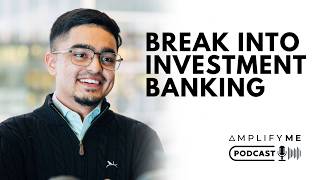
Shah Malik, an Economics student from East London, converted a Deutsche Bank summer internship into a full-time analyst role by mastering psychometric tests, networking relentlessly with bankers, and framing retail work to show resilience. He credits early exposure through the Sutton Trust, mentorship from UpReach, and a daily habit of following finance news with keeping him ahead.
Chapters
Hello and welcome back to the Market Maker podcast, where I'm joined by a guest today, Shah Malik, an economics and management student at King's College London, who will be joining Deutsche Bank as an investment banking analyst after converting his summer internship last year. In this conversation we are about to have, we're going to look at how Shah found this role in the first place, because I know he did do a lot of exploration to start with. So some really good tips on how to find your way through that. Ways to leverage non-finance experiences. I know Shah, you did work in retail and I get lots of students who have, and they're a little bit stuck on how to really frame that when it comes to applications. And then just some general tips on how to convert opportunities when they do arise. But yeah, first of all, thanks for coming on the show and how are you?
Doing good. I'm doing very good. How are you?
Yeah, excellent. Excited for this conversation because I know having caught up with you over a coffee, there's lots of really cool tips that you're gonna share. Take me back to your first roots into finance.
Yeah, I mean, to give a bit of a picture, I'd say, you know, my parents, well, more so focusing on where I came from, you know, I grew up in East London, grew up in Tower Hamlets. Parents didn't work in any area of finance or, you know, they more so worked those manual jobs that you see out and about and I'd say growing up, you know, I, you'd walk by Canary Wharf, right? You'd see these big glass tower buildings, but, and you know, these are the sorts of buildings that you want to be in, but it's very hard to picture yourself in there when there's not many role models, especially growing up, you know, no cousins, no uncles, no aunts in these sorts of buildings or in these companies. And I'd say, you know, having now gone into university, I saw that gap of, you know, cultural differences widen. So as a British Bangladeshi, there's very few people within King's that were, um, um, that were of the same culture as me, uh, studying economics and management. Um, on top of that, I'd say someone from a state school doing economics and management at King's, there was very few people there. Having now worked at Deutsche Bank and then the summer internship, I think I was one of, I think I was the only person that came from a state school in that division. So yeah, having grown up and now looking back in hindsight, it was a long, long, arduous journey. But yeah, I'm proud of the progress I've made and look forward to having this conversation with you and hopefully inspire students like myself to get into this industry.
Yeah, and maybe we can start with actually your your resume starts quite early on in terms of, I know there's this terrific Sutton Trust who give these opportunities, but I just wanted to understand then you secured a Year 12 placement. So for any Americans listening, this is kind of when you're pre-university age. So just at the tail end of school into what we call college when you're doing A-levels and things of that nature. So What's Sutton Trust and how did you come about that? And also what put that on your radar when most people are probably just thinking, right, I just need to do my exams here, you know, at 16 years old, 17 years old. So what was the switch for you?
Yeah. So maybe focusing on maybe the context first. So like when it came to these extracurricular opportunities, it was presented in one assembly on a Friday afternoon. In my, in my school showcasing all these different pathways that you could join with no clear direction as to which ones you should join or which ones would be a good fit for you. You know, I saw finance, I saw law, I saw engineering, and I was like, cool, but where, where do I see myself in any of these, any of these industries? And, you know, I quickly realized I had to make a decision about my career pathway. So I decided to pursue the Sutton Trust Artisan Bank and Finance program. Um, and I mainly pursued finance purely on the basis that I liked maths as an A-level and I liked the questions that had to do with money. So for example, you know, there's a sale of washing machines and the sale go, you know, goes down by 10%. Why is it a product of the washing machine? I like that because it's more applicable than anything else. Um, now focusing on maybe the internal switch, maybe what was driving that intensity all the way back at 16 years old. I did a lot of reflecting on myself and my situation. And I'd say coming from that background, especially being successful, it became more of a need, right? You know, my parents did very well in their own front, but they would always push this aspect of, you know, being the best you can be. So, you know, whatever path that you go down, make sure you do it with excellence, right? Make sure you do it with 100% intensity and take it seriously. And that switch made me sort of be like, okay, cool. Sixth form is a big inflection point, right? I could either go, or I could either very stay very stagnant, or this could be a big launchpad or starting point for my journey. And you know, people, especially of my background, they look at secondary school as more of a blip. I wasn't the most behaving student in secondary school, to admit, but I'd say in sixth form, I definitely did take my life more seriously and That switch around, you know, taking my life more seriously, having the drive to break into an industry that is very glamorous. You know, you see in movies, you know, it's obviously high, high paying. And it's just something that drove me back then when, you know, most 16-year-olds are more focusing on their mock exams and university applications.
So, so one of the things that enabled you to do then is to get access to quite a few and very varied different experiences. So I think I had them listed. There was like banking, consulting, there was fintech. You know, the kind of list is quite, quite long. And I think there's a lot of pressure when I talk to students that they're always like, right, you need to really narrow down and be very specific. But it sounds like early on you were trying a little bit of everything. So what was the strategy there in your mind when you were going through that?
Yeah, I'd say like finance is just so broad. Having been a student at King's, everyone around you pushes for investment banking, right? And bear in mind, this is especially in the start of first year. This is a time where I just don't understand what investment banking is. Let alone what finance really is. So for everyone to push for this one big prestigious, uh, quote unquote, um, division, I was like, there has to be more to it, right? That there's more areas of finance to explore. And especially looking at first year, this is the time that you have, you know, you have the most free time, so to speak. You know, your modules, they're hard, but they're not as hard as second year, third year. And you know, it's more that time to take on more commitments and just explore who you are. So having looked back at, in hindsight, each of those experiences, you know, in fintech, economic consultancy, they gave me an insight into those divisions and they would all complement my argument as to why investment banking. So an example I'd bring up is, cool, there's a student that, you know, did a lot of insight days around investment banks, did a lot of insight programs around investment banks, and, you know, compare that to the student who did multiple other divisions and industries, as well as exploring investment banking, that student would be more valuable because cool, they've explored all these divisions and they've made a well-informed decision to then push for investment banking. Whereas you kind of, whereas the other student would be more blind in the sense that, oh, they push for it without any sort of reasoning or backing to it. And there's also obviously coming from my background, the beggars can't be choosers philosophy. Around the fact that you just have to figure out and find a sort of experience that, that, that's out there. Now as for preparation, because you know, these are vastly different industries, I'd say especially early on, the applications across all these industries are broadly the same. It's the same psychometric tests. You know, you have your cover letter, which you gotta tailor, but again, you say you send off a similar CV. You have HireVue questions, which are, which is around why the company, why the industry, you know, you'll have interviews. And when I looked at that, especially progressing through and getting rejections, I realized it's not more so around the division, but it's more so around the fact that, okay, cool, there are certain aspects of the application process that I'm failing in. And these are where the social mobility organizations really helped me. So I joined UpReach, which is a social mobility organization for students of lower socioeconomic backgrounds in university, and they provide you with a mentor throughout the tenure of university that essentially will help you sort of prepare for all these aspects of the application process. So an example I'll give, I was awful at verbal reasoning. I was quite good at logical reasoning, but verbal reasoning, terrible at, you know, when you have that big English text and there's a lot of, there's a, you know, a true false, you know, I don't know what to say, uh, sorts of multiple choice questions. I was terrible at it and I knew that I couldn't just leave that stagnant and just apply to the next program. So UpReach were very good in the sense that they have all these free sorts of, um, banks of tests that you can use. And I would, you know, keep on hammering them out, see where I'm going wrong, see what, see the issues between my thinking and the thinking that I should be applying. And then as I'm doing all these tests, I see that I'm not falling below 80%, right? Seeing gradual progress in my verbal reasoning scores. So again, figure out what aspect of the application process is your biggest issue, and then that should help with your preparation.
Yeah. I just had a conversation just the other day and a student who otherwise would have a really amazing resume goes to LSE, keeps falling though on the online tests. So do you think with the online tests really then it's that self-reflection? Where am I going wrong? But practice, practice, practice. And really it's just getting used to those conditions and that being asked questions in that type of way. That'd be right.
100%. I think especially when we face rejections, a lot of people I see focus on these external factors. Like for example, oh, JP Morgan didn't hire me because they're just so competitive. Oh, we're in the most tumultuous graduate market ever. This is why I'm not getting a job. Valid reason. Okay. It is true to some degree, but focus on the factors you can control. Focus on these test scores that you can get better at, right? Because if you lean in on these external factors, you aren't going to improve at all and you're just going to stagnate and just keep seeing rejections. You need to see improvements. So yeah, I'd agree with you.
Yeah, that mindset. So important. Absolutely. And moving on then, one of the things that I noticed about your background is that you did an initial kind of placement with Deutsche, then spring week, summer, the full-time role that you're now going to go back to once you graduate. So that's kind of the traditional pathway to go down the funnel, so to speak. My question though was more, well, how do you keep a firm interested? And so you've converted at every opportunity you've had there. What was that? How did you go about that? And so that you're ensuring that there was a smoother transition to get to the next level, if you like.
Yeah, so I'd say to keep a firm interested in you, it's around phrasing it around you being interested in the firm and you showing curiosity around the firm. And I explained that through these, um, through these experiences. So my year 12 placement was a lockdown placement. So, you know, cameras on, everyone switched to online working. It was a crazy time for not only myself, but also the bank as well. Um, and at a time where I have no knowledge of finance or the corporate world, The very minimum I could do was to show up. So you'd be very surprised in me saying that I was the only person that turned my camera on. I was one of the only people that would put my hand up, right? Ask questions, ask very stupid questions, but I was the only person doing that, right? And this minimum level of showing up and engaging with these sorts of activities that a bank's giving you is so valuable because like, think about it, you're not going to be a DCF modeler in year 12. Don't even try that. But focus more on the fact that you are able to, you know, engage with them. You'll be able to ask them questions. You're able to show that curiosity. You're not expected to know very much in, in your career, especially early on, but you can at least show up. Now for the spring week, that was more similar. Funnily enough, I met you at the spring week as well, which was great, but that was more in person. And again, I, I knew a bit more, but not to the level I thought I needed to, but I made significant use of the networking period. So I'd reach out to people and mentors in the bank and ask them for quick coffees in the downtime periods or the lunch periods. Just ask to pick their brains a bit and understand their drive and their, why they're in the bank in the first place. And that was valuable because I could learn from them and I could use them when it came to, you know, oh, I need to prepare for my AC conversion for my spring week. 'Could you help me out here?' And that was extremely, extremely invaluable. And now looking to the summer internship. So yes, there's a baseline level of competence expected. You are expected to know your way around a PowerPoint presentation and to some degree, some sort of Excel skills. But those sorts of things are easier to learn than you may think. And you're not also expected to know an insane amount, right? To an associate analyst level. I'd say where the most value that I saw, especially in my progress, was being able to have genuine conversations with people and networking in the bank. Because in the summer internship, you have like access all areas, you know, being able to literally hop over to someone else's desk, just ask them a quick question and ask them for a coffee. And that sort of networking helped me really shine in the summer internship. So kind of just to wrap up. I'd say, especially from my background, engaging and asking questions is seen as quite cringy or quite nerdy, but I take the complete opposite stance. It's more so how you show your curiosity is what, and that's what keeps a firm interested in you.
Yeah, it's so interesting because I couldn't agree more because as you said, you and I first met years ago on the spring week at Deutsche, and you know, in my role, I get to interact with lots of different students, whether they're at business school or at a bank on one of these experiences. And yeah, actually there's only a minority that actually still embrace having their camera on, being visible. I'll even tell people like, it's very hard when there's a cohort size of 50, 70 for me to all remember you, particularly in a virtual environment, if I can't see you and connect some sort of conversation where you're asking me a question. And it's just small things like that, which I think missing a trick by not doing it. And I know it can be uncomfortable, but just getting comfortable being uncomfortable is actually, you know, part of the biggest thing. So on the networking side, you mentioned there, just interested to look at that a little bit more tactically, because I think a lot of young people get told either pre-an experience, you should network, you should reach out to your King's alumni, or you're on an internship, you should network because it's really beneficial for you. Can you just explain to me a little bit about how you actually go, how you go about that, like in an effective way? I'm assuming you have to manage your stakeholders and guess your line manager, just not just going off for coffees with other desks. I'm sure that can create friction if not managed carefully. So yeah, any tips around that?
Yeah. So I'd say maybe on the importance of it, because I do think networking is seen as just something that you can do in your free time, but it's not as important. When it comes to converting an internship, I see 3 main factors. It's your desk work, it's your intern project, and a more unwritten one, and arguably more important, it's around your likability as an intern. Can these guys spend 9, 10, 11 hours with you in an office, um, being stuck with you, right? Um, are you happy or are you someone that they'd be happy to have a conversation with very casually? And I think I shifted my mentality before the internship. I looked at it as, okay, these are 10 weeks I can spend with very senior players in the game, very, like, very senior people who have so many years in this industry, who have seen financial crisis happening in front of them, you know, have worked through, through all that. And I saw that as precious time. Once the 10 weeks are gone, I'm, I'm gone. I can't go back to them. I can't ask them questions. And I think that mentality drove me more to network. Faster. So first, first is around fixing your mentality and taking networking seriously. Now, more practically, I'd say it's around starting off small. So before the internship and during it, I would reach out to analysts and associates in your own team. These are people that are more relatable to you in, you know, years and age. And I'd say they would give you that cutthroat advice as to, cool, this is what you need to prep. Cool, this is what's expected. This is when you're probably going to leave the office, right? And that sort of advice is very good. And while it's all nice talking about work, it's also important to lean in on the personal traits. So, you know, ask them about their family, ask them about what drove them into this industry, ask them about their upbringing, right? These sorts of factors, it might seem very trivial, trivial. It might seem very nonsensical in the grand scheme of things, but they prefer this sort of conversations much more than you know, talking about work all the time. Like they see a coffee chat with you as a quick half an hour break for themselves. So you want to respect their time and just, you know, learn from them. I would also have a precedent before reaching out cold. So for example, if I saw an associate that I haven't reached out to yet, I'd ask them if they had any work for me. I'd do that work for them. And then I'd ask them for a coffee just to understand what was the work that I did. How did it fit in the overall picture? And by having done work for them, it's not as cold as, you know, sending an email to a random person. Them, you know, they actually know your name, they know who you are, they know what you did. And hopefully if you did good work, they know that you're good as well. And then I'd say a final thing, like don't be afraid to go too big. So, you know, I spoke on starting off with your analysts and associates, but you know, I had a coffee with the head of investment banking straight after panel talk just to dig into his own brains and say, cool, ask him what drove him into this industry. What lessons did you have for me? Asked him again about his family. You know, do you have children? I saw the ring on your finger. You know, all of that, right? These personal traits, they value that so much more and you see them open up more and just like you more as a person. So I saw the internship as cool. I'm sitting at a desk and I can only give neutral faces to everyone, but by the end of it, I can smile at everyone that walks by just because I managed to network rapidly across the whole bank.
Yeah, that's such good advice. I often think that there's this misconception that you're fighting over who has the strongest intellectual muscles. And so who can talk the most technical stuff, whereas in reality you are 19, 20 years old, you've got zero experience. And every student is having a conversation with me as, let's say, a senior, and it's always the same quite boring stuff. So the moment you take it personal is the moment you can then build rapport and potentially become memorable amongst a cluster of perhaps a cohort of 50 people. So, but yeah, no, cool. So that's really good advice actually. I'm quite looking forward to breaking down actually what you are saying into Lots of useful kind of tidbits for the community. So one of the other things was particularly those who've come from a certain type of background, often they'll have work experiences which are non-finance related. So yeah, I mean, for myself, I mean, I think I worked at a restaurant as a waiter when I was like 14. I used to just go to the temp agency and they'd send me off to the dog track, to the waiter, to B&Q, to stack shelves. And then there's lots of other people who are like that, where they feel a little bit, I mean, I speak for myself, you almost feel a bit embarrassed. You're like, well, that's not an accountancy firm or that's not a consulting firm because you didn't have access to these sorts of things. So you worked at Marks Spencer's as like a customer assistant. What I'm interested to know is how, instead of hiding away from these things, how did you switch again? You've talked about your mindset. So A, how do you switch the mindset shift to believe yourself that there's value in that? And then secondly, how do you actually position that M&S experience in a practical way if you're talking about applications?
Yeah. Say when it comes to the CV, first of all, in a practical sense. The biggest wow factor is variability. So variability in your skills and variability in the types of experiences. So it's all good and all having, you know, your little insight programs at these top banks, but showing, you know, non-finance experiences, showing all these other experiences that, you know, has value that you can't really extract from an insight program does wonders for your, for, you know, for anyone that reads it. And when it comes to the role of being customer assistant, I'd say it's more broader than the role itself. You're juggling that as well as juggling, you know, society roles in your university, juggling family commitments, juggling, you know, being a student, so having academic assignments. That sort of resilience is very hard to come across across a CV. And I'd say being a customer assistant or, you know, working some sort of part-time job, I'd say only then can you really showcase resilience. The aspect of obviously juggling multiple things, working under pressure, showcasing that grit. It's just something that I'd say I'm really proud of rather than to hide it completely because there's just so much value in it. So for any reviewers, please put your part-time jobs in your CV.
How would, bit out of left field then. So how would you frame, let's say, knowing what you know now about investment banking, How would you connect the dots from customer service assistant at M&S to the, to the skillset of an investment banker?
Yeah, so this is actually something that came across in one of my interviews for Deutsche Bank, right? And there's an anecdote that I tell a lot of my, the people that I mentor. So I had a preceding year 12 placement, right, for that spring week. So I was like, cool, they're gonna ask so many questions about this. It's literally 'Oh, I'm gonna buy Deutsche Bank. I'm gonna think about all the areas that they could tackle me in.' Come the interview, I show off this experience and he outright tells me, 'Yeah, I don't really care about that. I see M&S experience on your CV. Tell me more about that because I know that's actual work.' So as for how I kind of articulated it, first of all, I focused on the soft skills. So I, one sort of story that I gave, and this is for anyone that has worked in retail, Christmas Eve is the worst day when it comes to retail because it's so intense. Apparently everyone forgot to do their Christmas shopping because everyone in the world comes into that shop and you just have to manage so many different things at once. So that sort of intensity, that sort of coordinating other people, you know, helping other people to do X, Y, and Z, whether that's, you know, helping them stack shelves, helping them on the tills, you know, juggling multiple things at once. So for yourself, you know, stacking shelves as well as processing transactions. All of that can align directly to investment banking because you're going to be handling multiple work streams. You're going to be handling multiple transactions at once. A lot of managing directors will be pulling you apart in the sense that they'll be pulling you in one direction and you'll be pulled off to the next direction. And that sort of experience I had at M&S on Christmas Eve directly aligned with that. And, you know, my interviewer loved the answer. So yeah.
That makes complete sense. I always think that any customer-facing role is probably one of the most challenging And therefore you can acquire so many amazing skills when it comes to dealing with uncertainty, dealing with stress. Customer's always right. Customers generally always have a problem. So if you can learn to navigate that storm, it's pretty transferable for most professional careers, I'd say. So, all right, couple of quickfire questions then, just to finish off. One thing is you said at the beginning that you weren't really that aware of finance. You did some exploration, you know, you sampled some of these different roles, but what's one thing that you do or have done on a daily basis, or more of a habit to stay ahead of the curve in terms of acquisition of knowledge, but making sure you're on top of everything?
So this is more of a fundamental thing, but it's around being very hyper-obsessed with breaking into finance. So what that looked like was following finance pages on Instagram, listening to several podcasts just to learn from them, just to take, you know, key takeaways, reading the news every single day, right? So this hyper-obsession meant that I was juggling multiple things at once in my pursuit for finance. So what that meant was, especially working at M&S, I would be listening to podcasts while stacking shelves. Literally, I'd listen to Market Maker while stacking blueberries at aisle 5. It got that obsessive. Oh, I'm so sorry.
You must have been so bored when you were listening.
No, I wasn't. I was learning a lot. I was learning a lot. And that aspect of crunching time only comes from being so obsessed with breaking into finance because you're trying to find every single nugget in your day to kind of complement and improve your own skills. I'd say, you know, you don't have to go completely overboard. Obviously, you know, have a life, have certain things that you have outlets that you can, you know, calm yourself down with. But breaking into this industry, if you are hyper-obsessed, it is close to being guaranteed.
I'm going to ask you a little bit about social mobility because there's this tremendous organization you're very much a part of is the Wise Foundation. But before that, I just wanted to ask, You mentioned before that you were the only person on the Deutsche program who's probably come from your background. King's College London, similar. How do you get over perhaps either the imposter syndrome, the chip on your shoulder, lots of different things that you're probably feeling emotionally? How do you park that and make it positive? Because I can see that it's probably quite easy to become negative in that scenario. It's like there's them and me, but how do you kind of get yourself over that so that you can just perform in a positive way? And the reality is you're going to have to, in your working life, work with lots of different types of people.
I'd say, especially with the imposter syndrome that I felt early on, I think what that looks like is not feeling like you're being taken seriously, right? Not feeling like you're Adding value to a team, not feeling like you belong in a room, right? Where there's these people with such prestigious accolades that have gone on to do several experiences before you. And you know, that can feel very daunting. But I'd say the biggest thing that I tell myself every single day whenever I feel this is that I am literally in the same exact room as these people, right? They have all these prestigious accolades and I don't, yet I'm still in the same room as them. Yeah, I'm still on the same Insight Program as them. Right? Yeah, I'm still fighting for this internship or this grad scheme as them. So I'm clearly doing something right to some degree. The chip on my shoulder. So that aspect, I'd say I turned it more so into a drive in the sense that yes, there's these people that, you know, maybe more technically fluent than you, but why not see that as competition? Why not see that as cool? Let me beat them. Let me actually prove myself. Let me show to all these guys that I can do it despite my limited experience, despite my, you know, limited background as well. So yeah, and then I'd say more so for myself, I mean, especially coming from this background, you know, you kind of live quote unquote on the skin of your teeth and you want to kind of make it out for yourself. You wanna make, you know, you wanna make a good living, you wanna have stability. My parents, again, they worked very hard. Unfortunately, they never had, they were never able to go to university, but they emigrated here wanting the very best for me. And, you know, as a son, you can only do the very best for them and answer to that call. So, yeah.
And the Wise Foundation then, so perhaps you could give me a bit of bit of color, like what is that? How did it start? What's the mission? What are you aiming to get out of it to pass on to students?
Yeah, so WISE Foundation is a student-led lower socio— I'm sorry, student-led social mobility organization that aims to support lower socioeconomic students getting into top universities as well as top careers. So for students like myself, I saw that big gap within university. You know, there's all these big social mobility organizations that exist, But despite that, I'm still seeing so, you know, far fewer state schoolers in university despite, you know, only 7% of students coming from private school backgrounds in the UK. Like, that's just such a crazy stat to think of. And I think looking to my own journey, especially in Year 13. So my mum had Oxford University written for me. She was like, you have to go to this university. I don't care what you do or what you end up doing, this university will help you make it out, right? In year 13, I was the only student in my sixth form to get an Oxford interview. And that's, you know, after shortlisting, after, you know, several applications and, you know, maybe I felt a bit egotistical, but I was like, cool, damn, this Oxford might actually be a good thing for me. But unfortunately, I never had that support framework around me to help prepare myself for that interview. And unfortunately, in the end, I never got the offer. But now looking to this organization, this organization is built around getting those students to those top unis, getting those students to the top careers that they want to be in. And, you know, only recently when Oxbridge offers came out, we saw a lot of our mentees get these offers because we were able to facilitate them with mentees from, oh, sorry, mentors from Oxford and Cambridge. And, you know, looking back now, we've helped over 20,000 students through our streams of, you know, free resources, in-person school talks, mentorship and yeah, it's, it's, it's been great. And as for, you know, if any students want to get involved, you know, reach out to us. We have just published a website. So www.wisefoundation.com. Um, and yeah, there'll be an application portal where you can submit if you want to work for us. But yeah, thank you for letting me talk about that.
Yeah, no worries. And I'll definitely drop that link in the show notes. So definitely if that's applicable to you, then absolutely. I mean, I think it's such a, great initiative because, you know, it's sometimes the, it's not that the potential's not there within a lot of people, it's just the access to opportunity. And if you can give them that guidance, that mentorship, which they otherwise wouldn't have access to, hats off to you. So amazing work. And to finish then, I always kind of ask this of guests, which is a final piece of advice. And perhaps if I could take you back to 3 or 4 years ago, before you— you're sat here now and you've got to finish off your degree, but you've got the almost safetiness of knowing what your early career is going to look like with that role secured at Deutsche. But if you go back to the very beginning, what's one thing you'd tell that younger version of yourself to do differently, if anything at all?
I'd say it's— I briefly mentioned it previously, but stop focusing on what you can't control. I think especially when we are waiting for applications, we think about, oh cool, did I do this test right? Did I do this interview right? No, like focus on what you can control. Shift it completely from, from what you can't, because yes, there's these big external factors that might be driving your application, but you can always get yourself to be 1% better every single day. And that's by improving your application strategy. That's by getting people to review your CV. That's by getting people to review your cover letters. And I think stop, like, you know, stop stagnating and stop hyper-focusing on these external elements and more so focus internally where, you know, I remember especially earlier in my career, high views are the worst thing, uh, things ever. Now I actually don't mind doing high views, to be honest. And that's purely because I practiced. I would flick on a camera, I realized it was ba— you know, I, I suffered in high views, so I'd flick on a camera. Hit the record button and just practice saying a couple lines on, you know, tell me about a time you showed leadership, tell me about a time you showed teamwork. And this is me focusing on what I can control. So yes, it's a long, it's a long arduous process. You're going to get a lot of rejections. I know I did. But if you focus on what you can control, ultimately there'll be successes lying in front of you.
Yeah, that's great advice. And yeah, some of the things that really stood out to me in this conversation The identifying of areas for improvement. So it's kind of like, okay, important step. I think I got from what you were saying was to not just identify, but take action. As you were just saying there, it's about then self-correcting, learning, and getting better 1% at a time, as you said. Showing up, like, amen. Like, you've got, it's such a simple thing, and it's done by such a minority. Which is showing up can be, I think, unpacked into many different parts. There's like, you know, being there every day, being there early, first man in, first, last man out. Like there's just a mentality and behavior and interactions. And that kind of linked to the point you were making about being curious. Like I hear that so many times from employers. It's like, we don't expect a miracle from these interns. We just need to see curious, hungry, motivated individuals. And how do we determine that? Well, if they're showing up in the right way, that's the marker of intent that they're probably going to be of the right mindset and attitude and motivation to be really good. Then the other points I had were, yeah, your mentality. Just love that, like always kind of flipping it on its head and looking at, like you said, competition almost. It's like to fire you up, to get you going, to self-improve. And then also the other thing was that you said that stood out to me was on the relationship side. I think, again, just to repeat, so many students get caught in the technical trap. And I think you definitely need technical competency for whatever role that you choose. And, you know, obviously some roles are going to be more technical than others, but people respond to people. And the more you can make that human interaction, just the more powerful it's going to be, the more memorable you will be, and you will stand out from the crowd. Which is totally evident from how you describe things. So Shah, that was amazing. Thank you so much.
Thank you. Thank you for letting me come on today and hopefully inspire and educate a lot of the viewers.
All right. Take care.
Take care. See you.
More from Anthony


Inside the Biggest Banking Stories You Need to Know This Week (Anthropic, Diageo, Private Credit)


Inside the Biggest M&A Deals You Need to Know This Week (UniCredit, GameStop, eBay, Eli Lilly)







AI Breakthrough or Hype? Anthropic’s Claude Mythos, Tim Cook Steps Down & LIV Golf Collapse