Is TikTok Getting Banned & ByteDance's Next Moves
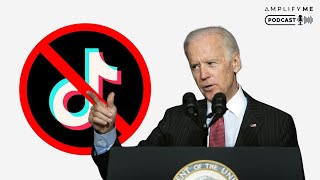
The House passed a bill forcing ByteDance to sell TikTok or face a U.S. ban, citing data-security fears and election-year influence concerns. The hosts break down the legislative timeline, potential buyers like Apple and Microsoft, why India's 2020 ban offers a cautionary tale, and whether ByteDance's Oracle partnership might head off a sale.
Chapters
Welcome back to the End of the Week podcast, and we are going to talk about one of the major headlines in global news this week, and we're not going to talk about inflation. I said to Piers, he raised the topic of inflation because we had US inflation earlier this week, big event for markets, and I slapped him down.
Well, but now you've mentioned it, but you said we weren't going to talk about it.
And we're not. I'm sure people follow our social feeds, know all about the fairly boring inflation reading we had out of the US. So we're going to skip over that. We're going to talk just about TikTok, and not because either Piers or I are, uh, content influencers on TikTok, far from it. But we definitely want to talk about this because it's interesting from lots of different things. It's interesting from a a technology company perspective. It's interesting from a potential M&A perspective, from a national security perspective, from politics as well. So there's a lot of angles to this story that I think warrants a, a thorough discussion on it. So the headline is that the House of Representatives passed a bill on Wednesday this week that would require TikTok owner ByteDance to sell the social media platform or face a total ban in the United States. So what I wanted to discuss with you, Piers, is firstly, why are they being banned? How might that ban work in practice? What would it mean for actual users of TikTok? Is TikTok a national security risk? And can TikTok do anything to stop this ban? And any signals here from Trump about what might come down the pipe towards the end of the year. So yeah, yeah, why are they being banned?
Uh, well, because the US House of Representatives, um, believe that TikTok, which is owned by ByteDance, which is a Chinese tech giant, um, They're worried really about two things, about security of, of data. Does the Chinese government use and, and spy on American citizens, um, by having access to ByteDance, um, data? Uh, that's number one. And number two, um, does it have an outsized influence on shaping people's opinions in America? With obviously an election year now here, um, obviously that then, that, that fear, you know, bubbles right up to the surface. So those are the kind of two main sort of incentives here as to why the American politicians are starting to try and take some action.
Yeah, and using that app to influence people's decision-making, did you know the stat of what the average user daily active user time on TikTok is?
What do you reckon? Well, I do know this. It's actually— I've got the global average and I've got the US average.
Okay, that's interesting.
Which one have you got? Global?
Um, yeah, I'm not sure actually, so you take the lead on this.
Okay, so the global— so the amount of minutes spent, um, by a user on average— I mean, this is kind of crazy. Stat, but entirely believable, um, is 95 minutes per day. I mean, that's, that's insane.
And so what— next question then. So what's the average length of a clip? So 15 seconds, 30 seconds. So to watch 95 minutes, wow.
Well, I don't know what— I don't know what you— I don't know if you use TikTok that much, but I use it. I mean, I'm not a 95-minute-a-day man. I'm maybe a 95-minute-a-week man. And the stuff I watch, it's much longer than 15 seconds. It might be a few minutes, some of the stuff I watch. But anyway, 95 minutes, right? Globally. What do you think the US average is?
I think it's got to be a lot higher. You're incorrect.
You're wrong. I'm just gonna stop you there. Oh, all right.
Okay.
It's actually like, well, According to the stats that the FT have— no, actually it was The Economist pulled out this stat. So I don't know if this is right, but look, they're a decent source in terms of their credibility. So they're saying 56 minutes a day for Americans versus 95 is the global average. Hmm.
Slightly surprised by that.
Yeah. But there's 100, but I, I guess there's 170 million Americans. It's basically half of the American population. And given, I mean, I don't know what percentage of the population don't own a smartphone, but obviously the kids, I mean, well, kids get phones pretty early on these days, right? But I don't know what the proportion of the population is, let's say under 10 years old. They're obviously not having a phone. So it's those that have phones, it's, you know, well over 50% of the population that have TikTok. Are a TikTok user, that is. And so I guess, yeah, that, I mean, we could tackle that, you know, an outsized influence on shaping public opinion. What I found hilarious, I mean, such a, I mean, it couldn't have backfired any more. So the House of Representatives, so maybe we should take a step back for a sec. For these, for anything to be voted as a, as a new law in America. There's kind of three pillars to their system, okay? It's the, it's the House of Representatives, it's the Senate, and then it's the president, right? The White House. And any bill, um, needs to be voted through by all three parties, okay? Now we know for sure Biden is all over this. This is Biden's bill. So you've got that, you got the White House in the bag. They will sign this off, okay? The Joe Biden will sign this off. Um, the House of Representatives, so they, um, announced that they were going to vote on this bill on the 13th of March. Okay, on the 6th of March— and remember, one of the things that the Americans are worried about is TikTok influencing public opinion. So what did TikTok do to try and stop this happening? On the 6th of March, they sent a notification to their users encouraging all of them to call their own members of Congress to try and convince them not to vote. So, and there were loads of congressmen that were on the fence here, not quite sure what to do. And then they saw that they absolutely do have an influence. This is the evidence of TikTok influencing a vote. And so that's why it actually turned out to be a landslide vote through. I mean, it, it got voted through 352 to 65. So this was a big bipartisan, you know, almost fully backed bill in the House of Representatives, and TikTok, a massive own goal in their attempt to try and influence it.
And so just to be clear here, I mean, one of the things that the National Security Advisor Jake Sullivan in the States said is that the goal is ending Chinese ownership. Not actually banning TikTok? Because I think the headlines are all like, we're gonna just ban TikTok.
Yeah, well, there's two— uh, sorry, I guess there's two solutions if this— so, well, hang on, before we talk about that, I talked about the three pillars, right? So Biden's gonna sign it, the House of Representatives, they've already signed that off, but there's still that third hurdle to get over. This now goes to the Senate. and it hasn't been voted through there yet. Only if it gets voted through the Senate will this actually, will this bill pass. There's then still a legal, a potential legal challenge that TikTok can present, you know, around, you know, freedom of speech and, and this kind of stuff. But, but will the Senate vote it through is really the next question. And here it, I mean, obviously you look at that House of Representatives, result. And you think, well, surely it's just going to sail through. But there's a certain guy who's, who's trying to put a spanner in the works on that with his own influence, right? Well, exactly. So basically, and this is absolute classic Trump, so I'm talking about Trump here because, I mean, I don't know, you got, you got to go back, but, um, it was Trump himself that basically in back in 2020, for national security reasons, um, was forcing ByteDance to, um, divest TikTok. And so therefore, this is one of the options, right? TikTok, the US part of the business, um, ByteDance sell it to a US buyer. Okay, and Trump was forcing this in 2020. So Trump himself was doing this. Now here we are in 2024. What's Trump saying? The exact opposite. Trump has now come out in opposition to this idea. Why? Because he's self-obsessed and he has billionaire backers who are ByteDance shareholders. So self-obsessed, right? Basically, you'll remember the January 2021 riots on Capitol Hill in Washington. And obviously Trump has been accused of inciting those riots. Okay. And in response to that, he got deplatformed, he got canceled, and Meta banned him from all of their platforms. Okay. Now, who would benefit from TikTok basically closing in America. Who, who is TikTok's biggest rival? Well, it's Meta, right? And through Instagram. And so who would benefit if TikTok suddenly vanishes? Well, Meta and Instagram would be the beneficiary. But here's Trump saying— and he actually, he said it— who would— Trump himself has said, who would benefit the most? It'd be Meta. And so I don't think this should happen. Basically, Trump's saying, forget about national security now. He just wants revenge. Secondly, there's a guy called Jeff Yass. He's the billionaire owner of an investment firm called Susquehanna, and he's a big donor to Trump. Susquehanna happens to be one of the biggest stakeholders in ByteDance. So of course, who else would would, would get damaged here as shareholders of ByteDance. So, um, yeah, it seems like Donald Trump, um, is playing his self-obsessed sort of, uh, game here and coming out in opposition despite he was on exactly the opposite side of the argument 4 years ago.
So, so that— so the timing here seems particularly interesting because we have got, you know, the clock is ticking now down to the US election. And these things, like you said, there can be legal challenges and so forth. They can get dragged out for a prolonged period. So yeah, it will be interesting. If I were— if I was advisor to Trump, what I'd be saying is, right, we need to be having some backdoor meetings with Republican, um, representatives in the Senate and saying to them, right, we are clearly going to win this election. And I want you beside me when that time comes. So you're gonna do this, which is you're, you're not gonna ban it, you're gonna vote against it, and he will have his way. So yeah, I don't know, this seems— when you explain it like that, particularly with the backing factor, um, you know, choice or no choice, I mean, if he serves his own personal agenda. He just wants power to be president come what may. Everything else is inconsequential. I think that could be said of most politicians.
Yep.
Uh, in, in that way. So yeah, I, I just wonder whether that actually is the secret here that's going to mean that this actually doesn't manifest into what a lot of the headlines are suggesting.
Yeah, indeed. Um, but look, let's just say it does, right? Yeah, let's just say Trump fails to influence this and actually the Senate vote it through. And let's just say, I mean, well, actually, let's just make another point here. The timing, as you say, is key, um, given the elections in November. But Biden's obviously wanting to get this done like before the election. I think Biden sees this as a real positive thing, you know, possibly, um, me in terms of his election race. But even if that— yeah, go on.
I'm just gonna say, you said positive. Well, yeah, I wonder, like, so the demographic— you said that, okay, let's, let's strip out the bottom end, so anyone younger than 10, any old school people who are not so sophisticated with their phone. So there's a large proportion of people who are TikTok users using it for an hour. You said, in the US. If you ban it, I wonder, you know, if you, uh, I wonder how much of a deciding factor that is if you're impartial, neither this way or that, but you have a reason then to vote because you're like, I want to use TikTok, not thinking about the bigger picture. I wonder if that could just be a catalyst to tip the balance.
Yep, indeed. So there's definitely risk here for Biden, but anyway, it seems like he wants to ram this through ASAP. But look, then there could be a legal challenge and you know how long that could take. So chances of this getting done before November, I don't know, it's probably unlikely, but you never know. But look, let's just say it happens, right? Then ByteDance have got, well, they've got two choices. One, they spin it off and sell it. And then obviously that would be their preferred choice because the second choice is, well, if they can't sell it, then well, they'll have to close it down, right? Now, from a, you know, well, how much is this worth to ByteDance? Well, it's hard to get data on this, to be honest, but ByteDance, we know that they as a whole business generated $110 billion of revenue in 2023. Okay. Now, it's believed that about four-fifths of that was domestic revenue in China. It's not just TikTok. That they own. They also own an app called Douyin and then another one called Toutiao, which is a news aggregator. So they're obviously, they're a massive player in mainland China. So $110 billion, 80% of that in China. So you got 20% left. So that's like $22 billion, right, of international revenue generated. Now, what proportion of that is in the US? I don't know. Um, but you know, it's, it's, it's going to be, I don't know, let's just say as a wild guess.
I know the advertising revenue for TikTok US is $9 billion, I believe.
Okay, I was going to say let's guess $10 billion. All right, so $9 billion is about, about there. So it's a $9 billion company, but there's no point in them going, well, look, let's just spin off the American part, because if this gets voted through, almost inevitably you're going to find other US allies, you know, other Western countries doing the same. Um, I don't know if you're aware, but it's already happened. I mean, India have already banned TikTok. This was actually back in, um, 2020. Uh, this was in response to, um, military skirmishes on the border with China. And so one of their, their kind of, one of the Indian retaliations was to go, look, we're going to ban TikTok here for national security reasons. So it has happened already in India. Who's to say the UK, Europe, whatever, right? Australia, who's to say that they're likely going to follow, right? You would assume. So I think for ByteDance, I think this is more like, well, not spinning off the US part, it's really spinning off potentially ex-mainland China part in a way. So it gets really complicated. Here, and that might complicate who the buyers might be. But look, let's see, let's see who the buyers might be, because you've obviously got the big tech giants, right? Because the point, I guess, is let's just say it's $22 million revenue, right, outside mainland China. This is a big company. We're not messing about here.
Well, yeah, I read the figure that they were previously valued at around $300 billion, right?
What, ByteDance, the whole company, or is that That's the US TikTok.
Oh, the, the, so the stat I had, the comment I had was the company, i.e., ByteDance, had previously valued the app at around $268 billion.
Okay. Well, I think you can safely say we're talking north of $100 billion here. Mm-hmm. Valuation, let's just say roughly. So who can afford that? Not many, right? I mean, look, the, the biggest capital raise in history that, that would like, I'm pretty sure that would double the biggest deal like ever done. I think the Saudi Aramco deal, what was that, like $25 billion when they IPO'd, I think. And that was like one of the— so anyway, that immediately eliminates the vast majority. So you've got the big tech giants. The problem there, of course, um, Alphabet and Meta particularly, will forget, forget that because the antitrust regulators would block that because of the They already own a large portion of the advertising market, right? So they wouldn't allow Alphabet or Meta to come in and buy TikTok. So then you've got the other big tech giants who are potentials, but again, there's possible antitrust roadblocks. So you've got Amazon, um, you've got, um, like Apple and Netflix. And actually both those last two, Apple and Netflix, they were both sniffing around, you in 2020 on this deal when Trump said, right, let's ban TikTok and force them to divest it. So both Apple and Netflix were interested, and it would make sense, like, for Apple, you know, obviously we're concerned about iPhone sales growth. So this would be a very nice way for them to enter that, you know, social media market that they've kind of missed out on. Netflix as well, you know, streaming subscriptions, you know, we're worried about growth on that. Um, so that makes sense.
Yeah, I guess one thing is, is that in 2020 TikTok was like the emerging app, super like potential, growing at an incredible pace. And I think, yeah, their revenues might have gone from, I think, US$1 to $9 billion in the last 4 years.
Yeah.
But one of the things here would be, A, are you now going to pay too much because it's that much bigger? And then B, you're buying what appears to be a little bit like an app, you know, with apps, I think you do always run the risk of with social media and the evolution, the change that happens so quickly with technology that you can fall in and out of favor. And you know, it was only 12 months ago and we were kind of, you know, podcast titled the deathbed of Facebook. And here we are, you know, they are phoenix from the flames sort of scenario.
Yeah.
Um, and, you know, flipping this on its head, a couple of stats here, um, because Instagram overtook TikTok in new app downloads last year, and the percentages I think are quite, quite meaningful. So Instagram's total number of app downloads grew 20% last year.
Yeah.
Whereas TikTok was up 4%. So it's— it has flipped quite a lot. I think one of the major things that I've read about, given that, you know, my job is to do a lot of content, is this idea about being able to have and achieve overnight viral success. But how do you monetize that? And you monetize it by converting your audience over to the more matured platform in terms of getting paid. Um, and then there's a couple of other things, you know, one thing that Zuckerberg is great at, obviously he's shown throughout his career, is basically pinching other people's ideas. Um, and the Reel thing, which they implemented, uh, definitely has been a big game changer. Also, Instagram has benefited from ByteDance. I don't know if you ever see on Instagram, you'll, you'll see that they are, there are TikTok watermarked videos that people share. So again, this is all part of that transferring of user base from one platform to the other, where actually it's almost again ByteDance almost shooting themselves in the foot, allowing their content to just be used, thinking that actually they're going to steal the users back.
Yeah, it just hasn't happened.
No, and it just hasn't happened. So I just wonder then, is, you know, what is the appetite of big tech to even touch this thing, right?
So you make a very, very good point. You know, you can list off all these big tech firms and yes, you could make a business case as to why it might be a good acquisition for an Apple, let's say. But you're right, if they wanted to buy them in 2020, well, that would have been a great, great time to buy them. And they've obviously had explosive growth. But here we are in 2024. It's a much mature asset. And as you say, the trends aren't good. And in fact, their user numbers declined. So in Q4 of 2023, they were down 12 million. Like, and so when you start getting, you know, you saw what happened to the Meta share price a couple of years back when they started to, they almost looked like they'd reached peak usage and the user numbers started to decline and their share price got hammered. So the current trends, user trends for TikTok are not good. Um, and looks like Meta has really come back with their Reels and stolen back the market.
That's another good point you made there, which is the demographic of the users. So TikTok is incredibly narrow and concentrated on the younger end of the spectrum, whereas as we know, Facebook kind of captures quite a multi-generational demographic because they have the Facebook platform which is the old, the old geezers like you and I. And then you've got younger people who are still using Instagram. But one of the things here is because the two are so almost integrated that you get a blended usage case across people like you and I using Insta as well as using Facebook. Whereas would we use TikTok? I mean, I can say I never use it. I'm definitely— I think I clock about 1 minute a month.
So I've got some interesting stats here on, right, take the user, take the TikTok user base and what other apps do they use, right? So for example, the highest crossover is, as you'd expect, Instagram. So 80% of TikTok users also use Instagram, right? Next, um, 78% of TikTok users use YouTube. Then it drops off quite sharply. 53% of TikTok users use X. And this one really surprised me. Only 35% of TikTok users use Snapchat, apparently, which like what, from what I see with my kids, they use TikTok and Snapchat. That's it. Forget about even Instagram. So I was quite surprised that there wasn't much of a crossover with Snapchat.
Um, so what you're saying is there's not a lot of pickup then for these big tech firms?
Well, yeah, that's, that appears to be the case. So, um, and I think the other are quite— I haven't mentioned Microsoft yet, but obviously as we've been talking about, if you were an interested buyer in 2020, doesn't mean you're going to be an interested buyer in 2024. But Microsoft were in 2020, they submitted a bid not just for the American TikTok, also the Australian, the Canadian, and the New Zealand TikTok. So they were trying to buy all of those, but actually ByteDance backed off the deal because one of Microsoft's, one of the things with their bid is they wanted to take control of the app's data and the source code. And ByteDance were going, whoa, whoa, whoa, you're not having the source code. That's the kind of deal sort of—
I'm not sure if that would be too much of a deviation for Microsoft's current strategy of— I know there's AI integration into a lot of these platforms like TikTok and so on to optimize in certain ways, but I think they're— where they're heading is much more an enterprise scale.
Yep.
And so I don't really see that strategically as a fit.
So there's one, and I'm talking about Microsoft by extension, the, the The ex-owner of Activision Blizzard, the founder, a guy called Bobby Kotick. Oh, yeah. He apparently is trying to convince Sam Altman to team up with him to try and raise some finance to do this deal. So that's like an outlier. So outside of the big tech, who might not be interested anymore anyway, probably would get blocked by antitrust. You know, who's left with such a massive price tag? And this is ByteDance's issue. And it might be that there aren't any buyers, in which case, well, happy days for Mark Zuckerberg, because do you want to know what happened in India? So when pre-TikTok being banned, Insta— so TikTok was the number one app download in India. Okay. Instagram was only sixth on the list of the most downloaded apps. Then they banned it in 2020. Okay. By 2021, Instagram was number one, top downloaded app in the country. So it went from sixth to first as a direct result of TikTok getting removed from the equation. So there's a lot to gain here from—
yeah, so, so how we're talking then is the likelihood of, um, the goal of ending Chinese ownership and this US buyer coming in is pretty small. So what about then, let's say there is a ban, what, what does a ban look like?
Well, it gets removed, the app gets removed, right, from, from app stores, right? So Apple, Google, from Google Play and It just gets removed. I mean, yeah, I mean, I don't know. I mean, this obviously has never happened, right? But I don't know in terms of, I assume, do Apple have control over, can they just switch the app off? I mean, you've obviously already got it downloaded on your own phone, right? Can they, okay, I guess they can just switch it off on their end and it's not downloadable anymore.
Yeah. And I'm sure you can still use VPNs and and so forth to bypass restrictions if you really wanted to access it.
And look, there are a lot of people, like, thinking about from the other side now, there's a huge amount of Americans who, who don't want to see this happen because they're very reliant on TikTok as a platform to reach their audience, right? So, you know, there are people that would get, you know, be— there'd be collateral damage here if they just suddenly pulled the plug overnight.
Yeah, I wonder then, thinking as now an advisor to Biden about this whole thing, going back to the political angle, is the— is one of the main, um, kind of things that Trump really leverages is China in previous election cycles. So you kind of take that weapon away from him by you're the one who's being the aggressor, saying you know, we want to safeguard the American economy for the best interest of the US people, and therefore we're being anti— appearing to be anti-China. And then you kind of take that away and force Trump to act on the other side. So actually, for Biden, it's not really a case of this goes through, this doesn't go through. This is all just positioning for the election, essentially.
Yeah, it's just— yeah, I guess these candidates want to be They want to put themselves up as having opposing views and differences of opinion so that ultimately voters— there's, there's a different choice, right? Um, and you, and you, I guess you pick a side.
Um, so I guess Trump now has to pivot from China to just anti-wokeness and double down on that as a key issue, and the DEI and all the rest of it will probably become more polarized.
Probably. I imagine there are other things. I'm just looking here, like ByteDance. They have been trying to allay concerns, you know, around, around the, the kind of, uh, the security risk. So they've actually, they've actually, um, enlisted Oracle, which is obviously a US company, importantly. Um, so Oracle, they've got Oracle in to fence off and like ring-fence data from American users. So they are trying to segregate the businesses, but ultimately, I don't know if the lawmakers will ever be satisfied that that gets, you know, 100% bulletproof done. And there'll always be that lingering risk. I would suspect that no matter how much ring-fencing might be going on, there's always the there's always a hole in the fence somewhere.
When money's involved, Piers, there's always a hole to find. Uh, but okay, so look, you've heard Piers and I discuss this, but we want your opinion on whether you think this will go through or not and TikTok will be banned in the States or not. So on Spotify, if you're listening, I'm going to drop a poll. It's going to be ban, no ban. Or if you listen to this and you've accessed it via LinkedIn or the other social feeds, just drop us a comment and let us know what you think. And if there's anything we've missed and you want to add into the argument for or against, then we'd love to hear. But yeah, thanks, Piers.
No worries. See you later.
More from Anthony


Inside the Biggest Banking Stories You Need to Know This Week (Anthropic, Diageo, Private Credit)


Inside the Biggest M&A Deals You Need to Know This Week (UniCredit, GameStop, eBay, Eli Lilly)







AI Breakthrough or Hype? Anthropic’s Claude Mythos, Tim Cook Steps Down & LIV Golf Collapse