Lessons Learned From My Biggest Trading Loss
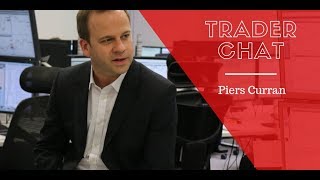
Piers, head of trading, lost €35,000 on German bond spreads after failing to place a stop order. He describes the emotional crash and how he recovered: smaller positions, trade-by-trade confidence rebuilding, and strict separation between work and home life to reset.
Chapters
Okay, hello everyone, it's, it's Anthony from the trading floor here in London at Amplify Trading. Very fortunate to be joined by our head of trading, Piers. Just to give you a quick introduction, what this short session is going to entail is that here at Amplify we have a mixture of we proprietary trade, so looking at the futures market in a multi-asset environment. So things like what's going on at the moment with Brexit and trade wars is, you know, it's great for us in volatility. But we also take people who are new to markets, and one of the recurring most common themes here is about new people who are trading, even those who are experienced, and about how they get used to the idea of becoming comfortable with loss, and also this idea of a loss of confidence and getting back into the market and regaining that kind of composure and so on. So I thought there's no one else better at all that I know, having known Piers for the best part of, I don't know, 15 years, something like that, and having him traded for even longer than that, to, to talk you guys through maybe some of these ideas about how do you get over a big loss, for example. So Yeah, well, let's, let's start with the, with the big question. How do you get over a loss, Piers?
Well, yeah, good, good question. And, you know, I think obviously trading is an incredibly difficult skill to, to master, and certainly one of the big hurdles in that is dealing with the fact that you're going to lose money. And it's, it's a It's just part of the deal. And I think, you know, ironically, unless you're— yeah, I think you've got to learn how to lose money first before you can actually learn how to make money. So I thought, I mean, I thought I would actually go extreme and use the example of my worst ever loss, right, in my career.
This is like the opposite of what most things you will read on the internet, which is about my biggest ever trade. But I think This is the whole thing. It's really important to understand the opposite side.
Yeah, biggest ever loss. So I think I'll just kind of briefly talk about how it happened, but then more about how I felt, and, you know, emotionally, and then actually flip it on its head and in the end talk about how in many ways it was, even though it was my worst day, perhaps in many ways it was my most valuable day. Yeah, from an experience point of view. So, so the biggest loss was €35,000, and I was trading German government bonds at the time, and I was trading the 2-year and the 5-year. So I was trading the Schatz and the Bobble. Yeah. And one of the strategies we used at the time, not so much now, but was a spread trade where you're, you're essentially long one and short the other one. And so it's a hedged position.
Yeah.
So for most— so really my error came in my, my failure to hedge my risk. Now, if you— to kind of put it into the context of an outright trade, if you're just trading one market, it would What happened was really the equivalent of me not putting my stop order on, if you like. So what happened was I bought 1,000 Schatz, so 1,000 2-year government bonds, and I was supposed to be selling 400 baubles, okay, to create my spread. So in a spread trade, you're hedged in that you're kind of market neutral then. So if an event occurs out of the blue, then both markets will move in the same direction, and you're, you're making money in one but you're losing in the other, and they offset.
Yeah.
So actually what you're trying— the spread trade is about trading the changing shape of the yield curve, if you like, but you're market neutral in case any event occurs anyway. So I was long the Schatz, So I needed to sell my bobbles, which is my hedge, my risk. But I went to click sell 400, but instead of clicking the at market button, which is what I should have done, I clicked into the box on the ladder next to the bid. So that means it's the same as an at market order as long as the bid is still at that price. But the split second I clicked, Yeah, the bid flipped and became the offer, right? And so my order didn't get filled and it went on to the order book as a sell order. So I sat there with my 1,000 long shats and my sell order unfilled. Okay, what I should have done was then immediately sold 400 at next price down, but I didn't. I was angry. I literally a split second, yeah, and I missed it. And 400, you know, just taking one price down, but that's €4,000 worse off. Yeah, so 400 contracts, €10 per contract. So taking that would have been a 4,000 as a split second, and that's gonna cost me €4,000. And I didn't accept that, and so I waited, right, like 5 seconds, 10 seconds. I was waiting to see if my offer would get filled and I'd get the price I wanted. But of course I didn't. And then it flipped down another price and then another price. So I'm left long with no hedge.
Yeah.
So that's my— when I said my stop order, that's kind of what I mean. I didn't get my, my risk covered. So, so in the end, I dealt with this badly. I thought, I thought, right, forget about the stop. Forget about the hedge. I'm just gonna try and get out of my long 1,000 shats without losing money now. So I put an order to sell because that had flipped now. So the price I bought at was— is now the offer. So I thought, so I'm gonna try and scratch this. So I put 1,000 in to sell at the price that I bought, waiting on the offer. Didn't get filled. Flicked down and then down. And then in the end, I got out of it like, like 5 minutes later, maybe I can't— maybe 10 minutes later, 5 to 10 minutes, and I'd lost €35,000. And nothing happened. It's not like my biggest loss was off a major market shock event. Really, nothing was happening. It was just my failure to manage that risk that escalated. And so I lost €35,000. Now, the feeling I had during that 5-10 minute period was I had the feeling that I had lost control. So I was no longer in control. And I don't know the best way to— I mean, you'll have felt this if you've been in this position, but the best way to describe it is maybe you know, when like you're on a roller coaster and you're just going up, up the hill and you're back, and then when it releases and you drop, and it's almost like that feeling of zero gravity for a second or two. Yeah, it almost felt like that. I think you've got a— the reason why I know that is because it was that moment that enabled me to almost self-learn, learn something about myself. In that, that feeling, right, was the feeling of me losing control. And the point being, if you lose control, you're in trouble. Yeah. So I'll come back to that point later about this becoming a really valuable lesson. But so I lost £35,000. So I'm sat there and I'm— firstly, I wasn't allowed to trade again, right? So the worst thing you can do is is immediately try and make your money back because now you're— it's all emotional and desperate. I wasn't allowed— that was kind of taken out of my hands because I had a risk manager. I mean, I was trading for a trading firm and you have a risk manager, and if you— yeah, I was out. Okay, they were not happy.
What's the conversation from the risk management team when they see that?
I mean, well, without using the words that they used exactly, it's what the the effing hell is going on? What are you doing? Yeah, you know, what, what, what the hell? Yeah, just, just get out, you know, as in best form of risk management, remove yourself from the screen. Yeah, so yeah, I was told to go home and I felt, I mean, my emotions other than that loss of control after the event was, it was like anger, but anger at myself. I mean, I think there's a fine line here. Some people deal with loss by projecting their anger and blaming something else, which I think is very unhealthy.
A lot of traders used to do to me.
Yeah, right.
So, analyst.
And so some, some people will— you're never wrong, you know, it's something else that's happened. Yeah. But you can blame it, you know, the last person you want to blame is yourself.
Yeah.
And so you, you project that onto other things. I, I never really was like that, so I was angry at myself. It was like anger and frustration, but then it, then it shifts to something way more than that, I think, like guilt. I definitely felt guilt and ashamed And actually then embarrassed because then I remember walking home and I didn't tell my wife, right, because I was embarrassed. Yeah, about what I'd done.
And actually, you know, so she's not gonna watch this video and go, yeah, you owe me 35,000.
Well, in the end it turned out to be very positive for me, this experience. But definitely at the time, I was literally there, I was ashamed.
So did your family pick up with that? Like, you must have changed for a period.
I think I'm not very— you can't really see my emotions particularly. So I don't wear my heart on my sleeve. I'm quite introverted in that way, and I think that So even though I was feeling it big time inside, perhaps I can put a face on that shows I'm not bothered. But I mean, I was. That was— but then, but then, but then it's about, you know, once you're in, once it's done and you're at home and all right, feeling embarrassed and ashamed, and it's then about the task ahead. And I think what some people— I think personally the wrong way of the way forward, what's the next step after this has happened? I think the wrong approach is to start thinking, right, how do I recover from this? I've got €35,000 I now need to make back. And like being daunted by the mountain that you've now got to climb just to get back to where you, where you started. Because I think if you go down that path of thought, then you're just— you put yourself under too much pressure. You're most likely going to be— continue to be emotional about what happened. And then normally when the emotions run hot, you tend to be— it's more likely you're going to be irrational. And you're going to make bad choices. So for me, it was about what's critical with dealing with loss is dealing with loss by accepting that it's happened, understanding you can't go back and change it. You can't get the money back. It's gone. So, but it's about you know, accepting that and then just moving forwards. And it's very easy to say that, it's very hard to actually be okay, you know, get— just have closure with that event that's happened. Now I need to move forward. I think for me, one of the best— I mean, I said I didn't tell my wife, but one of the best, you know, when I was trading My best years were actually when my kids were really young, like when they were like, had a 6-month-old and let me think, like a 2-and-a-half-year-old, right? So you got a baby in a terrible twos.
Yeah.
And I'd get back to the house and my wife's like, "Here you go, here's the baby that's been crying for the last 4 hours. Where have you been?" your turn.
Yeah, that's my life now, right?
So, but my point is that then you're— you've got an entirely different environment to have to concentrate on. And obviously your 6-month-old doesn't care that you messed up your risk management and lost $35,000. You know, they need the nappy changing. So it's quite a good leveler. I think it's— for me, it was a great— I, you know, purposely, in a way, personally didn't talk to my wife much about my trading.
Yes, you know, on that point, I've met a lot, a lot of the traders that I've ever met. They all— I don't think I've ever met one that doesn't say that, where— and I know everyone manages their relationships with their partners differently, but all of the traders I know say they never talk about trading with their partners because they just don't want to involve them in that. I mean, it's okay, like you said, for you to deal with that anger and frustration or disappointment, but then it's almost like they don't want to burden their partner with it.
Yeah, I sort of sense— I thought so. For me, I think it's purposely not doing it so that I have two very separate environments. Yeah, so that I can be in one which is a at home and not— and it having no connection to markets and my trading and my P&L, having that separation. Also, I think it's really hard for someone to understand. Yeah, if you're not a trader, it's very difficult to understand the emotions that go with it. And so I think it's hard for a third party who's not a trader to really be able to help and sort of engage on that. So, so for me, that was, you know, the way I dealt with loss was to get to my safe environment, if you like, outside of markets and trading, and get on with the changing of the nappies and all the rest of it. And then, and then just, just deal with it, but always with the knowledge that tomorrow morning I'm gonna be back at my desk. So I I'm gonna have to at some point get back on the horse, if you like. But my P&L's zero, you know, it's a new day and I'm gonna move from this point which is zero. I'm not gonna move from this point that's minus 35,000. Yeah. I think that's really key.
Yeah, so, so from a practical point of view, so for a lot of the people that will watch this, how can they create some kind of process then to build that confidence back again? Because it's not like— or is it— where you can just go back in and trade that 1,000 contract size again? Or do you have to work yourself back to that point? And if so, what's that process?
So I think it's two schools of thought on that. I think that for less experienced traders, I think a really good policy is after a loss, loss-making day or week or whatever timeframe, is to de-risk. So trade smaller size. Yeah. Which is the exact opposite to what your emotional self is trying to do, because you'll often see some traders, they've lost money and they're desperate to make it back, so they increase their size. To try and make it back faster, you know, that's your death warrant. So it's about de-risking. So I would half my size or down to a quarter of my size and just start going back to the basics and just trade by trade, you know, building back into, into it. And I think, but then, you know, in the end it's also about backing yourself, trusting yourself, and being confident in what you're doing. I have— and here, where inexperience is tough, like for me, by when I had that bad day, I, you know, I'd had a couple of few years— I can't remember now— 3, maybe 3 years under my belt as a trader. Yeah, 3 years of, you know, consistent success. And so for me, it was always like, you know, my consistent performance over a long period is always that comfort blanket, you know, that understanding that I can do this. And so yes, the wheels came off, but I know if I put them back on properly, then I can again trade like I, I had done. But, but I think D-Risk— but if you don't have that experience to draw on for confidence, then D-Risk and go back, you know, it's back to zero. And you de-risk, reduce your size, and just slowly trade by trade, you know. And just understand that you can't make back loss. It's lost. So it's about just looking ahead.
Okay.
But I'll— to kind of finish, perhaps I mentioned that this was probably the most valuable day of my trading career, even though I lost the most money. And that's because I got that feeling, that loss of control.
Yeah.
And so that was that self-awareness. So from that point on, if ever I felt just a slight hint that that feeling was beginning to rear up, I was then out, take my trade off, stop. But then that's— so that's actually about self-awareness, and as importantly, the discipline, right, the self-discipline to act, yeah, on your self-awareness, right?
And then that's the, you know, if you read any trading book, you listen to anyone who's traded for a long time, the markets, that's like the recurring word I would say that you hear in many different ways.
Yeah.
But I guess a good way to finish then— yeah, for a reason— is discipline. So, well, look, let's— we'll end it at that. Thank you for your time.
Pleasure.
I know you're a busy man, but obviously we're, we're gonna post, we're gonna publish this onto our YouTube channel. And what I'm gonna say to any of the, the people watching this video. If you do have any questions for Piers, feel free to leave a comment on the, on the video itself. And then when he gets a bit of time, perhaps next week or two, I'll get him to reply to people. So absolutely feel free to discuss in the community. It'd be great to get some comments on the video. Otherwise, don't forget to subscribe to the channel as well. We do updates every day and a week ahead strategy report, which we'll cover on a Monday morning. But otherwise, thank you, Piers.
Thank you.
Thank you for watching. And have a great weekend. And we'll see you again soon.
Thanks very much.
More from Anthony


Inside the Biggest Banking Stories You Need to Know This Week (Anthropic, Diageo, Private Credit)


Inside the Biggest M&A Deals You Need to Know This Week (UniCredit, GameStop, eBay, Eli Lilly)







AI Breakthrough or Hype? Anthropic’s Claude Mythos, Tim Cook Steps Down & LIV Golf Collapse