LIVE FOMC - 11th December 2019
In this live YouTube webcast Anthony Cheung (Head of Market Analysis) and his team break down the December 2019 FOMC meeting for a global‑macro proprietary trading audience. The session is structured around a pre‑release briefing, a technical‑analysis segment by Sam North, live RAN‑squawk coverage of the Fed statement and press conference, and post‑release market commentary. The hosts explain the mechanics of the Fed’s statement, SEP and dot‑plot, and why the market expects a “non‑event” – rates held steady with a slight hawkish tilt. They review recent US data (strong non‑farm payrolls, a rising GDPNow forecast) that underpins the Fed’s hold, and walk through the historical rate‑cycle context. Technical trade ideas are presented for the S&P 500, EUR/USD, gold, US 10‑year Treasury notes and the British pound, emphasizing key support/resistance levels, 5‑minute closes and trend‑line tests. The team also discusses liquidity differences between bonds and FX, the impact of macro risks (US‑China trade war, UK election, US presidential election) and the limited value of the dot‑plot for short‑term trading. A brief promotion of their Amplified Trading training programme is included. Throughout, the presenters stress stripping out noise, risk‑reward assessment, and the importance of aligning technical signals with fundamental drivers. The webcast ends with live coverage of Jerome Powell’s press conference, a Q&A on the Phillips curve and rate‑cut analogies, and final market observations.
Chapters
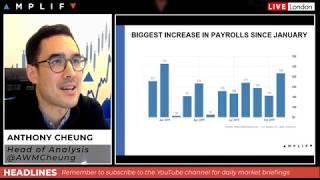
Okay, before I start, guys at home and tuning in from wherever you may be, can you give me a "why" in the chat please to make sure that you can see and hear everything okay? So just doing a sound check. Hands. PM Dub, Fez, hope you're well. Just let me know whether you can hear and see everything okay and then I'll kick off. Okay, good. Thank you very much, guys. Let's, let's begin. So starting off then, let's go through the, the order of play. How are we going to cover tonight? So we're going to have a session that's going to last, uh, well, the main event's coming up in 30 minutes, then a press conference in 60 minutes time. So My plan is that me, in my capacity of Head of Market Analysis, I'll do my best to break down this monetary policy event into its kind of more simplistic and actionable parts so that you guys can hopefully understand a little bit better about how we as a global macro proprietary trading firm would tackle an event like this. So I'm going to run through a sequence of slides to explain what it is that seasoned traders would be looking at in an event like this. Then I'll hand you over to Sam North, who you'll recognize— he's the better looking one out of the two of us— and he's gonna go over some technical analysis and some trade setups. And then he'll hand back to me for the actual release, where there we will listen into the live squawk box from RANsquawk for the actual release. And then I'll talk you through everything in real time. As it comes out to hopefully navigate some of the initial volatility. So kicking things off, for anyone who's never seen a Fed event before, before I go to the statement from the Fed, let's just have a look at 7 o'clock and 7:30. So, uh, there's two parts to every Fed press conference now. That is the initial 7 o'clock release of the statement and also the announcement on interest rates. And on this occasion, we have 8 total Fed decisions per year. 4 of those, we get what we call the Summary of Economic Projections, or shorthand, the SEP. These are historically some of the most important events because the Fed typically likes to change policy. Uh, not that this is one of those events, as I'll get to, but the Fed has had a tendency to change policy, out of which there's the additional information of their projections, because it adds further transparency as to the thinking then that would validate any potential policy change that they're making. And what the Fed's objective here is, is price stability. They don't want, if you like, fluctuation of market prices or sentiment. They want a nice, orderly, controlled response in markets. So that's happening at 7, and then at 7:30 you basically get a press conference coming out from the Fed chair, so in this case Jerome Powell, and he'll look to explain firstly through a statement of why they made the decisions that they did, and then he'll have an audience Q&A, which of course anything could be asked, but we're pretty much aware of the, the common themes he's likely to say or respond to and therefore we have to then look at how markets react as he speaks. So that's the order of play. So starting off from the top, the actual statement— this is a mock FOMC statement of the exact wording to the T of what analysts at Goldman Sachs are predicting the statement we're going to see in 26 minutes is going to look like. So here they've taken the previous statement and they've basically scratched lines through what they foresee as the language changing. And so here, a couple of the, the word or terminologies. And again, from a, from a new trader's point of view, the subtlety of understanding monetary policy is that it is subtle, and so therefore it's quite difficult unless you're very familiar with Fed language, and it's no real different from learning a foreign language in the traditional sense. It's gonna take you a bit of time to get used to it, what types of words describe what types of things, because the addition or removal of one word can mean a hell of a lot to someone who knows what they're looking for. And so what can be useful is people like Goldman's put out these types of reports, and it gives us a bit of an indication as how this language could change And so therefore we're in a better position to be able to react accordingly because we have this benchmark of expectation. Uh, in this case, the overall assessment though from the statement today is that there's probably not gonna be a great deal of change, uh, because the idea here is that, and as I'll discuss in the next few slides, economic conditions don't warrant any immediate action from the Fed in in terms of, let's say, more simplistically moving interest rates. So let's move on. What have we had in terms of recent economic data that has created this expectation of the Fed sitting on their hands today and actually for a number of months? Well, we had a really important piece of economic data come out on Friday. This was the release of U.S. non-farm payrolls, traditionally one of the biggest data reports that we see on the first Friday of every month. Now, as you can see here, I've got a graphic or a chart of the last 12 readings of non-farm payrolls. The reading we had on Friday beat expectations by a big degree, was even more positive than the most optimistic analyst on any Wall Street bank was anticipating. So it came in at 266,000, and as you can see, that's the second best print we've had for the entire year of 2019. So at this point, what this is telling you is that, um, on a top level, the number of jobs in the US has never been better other than one time in the entire of 2019. So in this case, the idea then that things like trade wars, this idea of a global economic slowdown, the idea of a disorderly risk of a disorderly Brexit or populism in Europe and XYZ, all these negative facts. Actually, domestically, the job situation in America has never been better as far as the last reading is concerned. So again, leading to the idea that the Fed don't need to cut or anywhere close to doing that anytime soon. Now, this is something which, if you follow our morning briefings, you might be familiar with. This is something called the Atlanta Fed GDPNow model. So if there's any students watching, if you're ever studying economics or you are considering going down the economist route, this is a tool basically that you will become very familiar with. It uses the same and very similar methodology as to how the actual Labor Statistics Department of America compiles their GDP data. Reading. So the headline GDP report— all this GDPNow model does though, and it's done by one of the reserve or regional Fed banks, is it updates in a more real-time fashion that whenever there's a top-level US economic indicator, the model in itself is intelligent enough to automate an update almost in real-time fashion to give us an indication then that as we accumulate data metrics, what is the further forward-looking GDP growth likely to be? The more data we accumulate, the more accurate that forecast can become. And traders are looking at what is the economy and how is it going to perform in the future. So this is very closely followed in markets, and as you can see here by this blue line, it's spiked higher. Reason it spiked higher is we had a bit of a, a bad data kind of route, if you like. That was when everyone was getting a little bit spooked by a slowdown in America. However, some of these recent data points have outperformed, and so therefore growth in the US for Q4, which we're not going to see the first numbers officially until the beginning of, of 2020, would suggest that US GDP will sit at 2%, which is quite a bit stronger than what people were thinking only a few weeks ago. 2% would be basically, uh, a stabilization of US growth at around those levels from Q2, Q3 of this year. Now, putting into context the journey that we've been on in interest rates, um, is very important. So here you can see rates basically flatlining at ground zero post-financial crisis, the kind of unprecedented level of historically low interest rates in order to safeguard the economic system from the subprime crisis. We then initiated, of course, in December 2015, the first of what then ultimately became a sequence of rate hikes before we hit the highest level at 2.5%. But since that point, of course, as we know, in 2019, whether again it's the escalation of trade war the fear of a global growth slowdown, and therefore, if you remember, the inversion of the yield curve, fears of an impending recession and so on, the Fed took preemptive action and actually started to cut interest rates, having done so now 3 times this year in what they were classifying as the title on the slide, a mid-cycle adjustment. Now, these are quite rare typically interest rate cycles tend to go up and then down. They don't tend to go up, have a little blip in terms of a mid-cycle correction, and then resume the upward movement. I mean, that— you'd have to go back to the '90s when that was last occurring. So the idea here, and what traders are basically trading today, is the future expectations and how they fluctuate. So here it's about, well, that's fine, 3 rate cuts have helped, it appears, if non-farm is a, a case in point, to stabilize economic conditions. But where do rates go in the future? And so this is when we look at a few other things. Now, one is, what is the market's perception? Well, this is going back to late summer. You can see the 2s-10s yield curve, the blue one, that's the one that briefly inverted And that was when, if you remember, around August, September time, everyone was panicking. You switch Bloomberg TV on and everyone was sort of saying the end is nigh, the recession is coming. You'll remember me and Sam were very much of a different point of view because our thoughts are we're in, as I said, an unprecedented monetary policy era. And what I mean by that is, is that yields are artificially suppressed by unconventional tools like quantitative easing, for example, which is still obviously back underway in Europe. It's been underway and continuing in large size in Japan and so on and so forth. So, you know, we thought that that was a little overdone. And ever since that point, if you actually look at where that blue line is now, we are basically all the way back to where we were at a fairly stable level for the entirety of 2018 and for the best part of the first half of this this year. So the panic over that inversion phase has faded somewhat, and what that means then is if we start looking at FFR— if you don't know what FFR is, that's Federal Funds Rate— and basically we can track in the short end Federal Funds Rate futures, and they give us an indicative probability of a 25 basis point rate change in the US federal funds rate. Now, this blue line with the, with the pattern on it is the current level of interest rates in the US, 1.5% to 1.75%. And there is effectively a 98% probability that the US central bank keep rates on hold tonight. So with that in mind, and as I'll go on to explain, the actual rate announcement tonight is a complete non-event. The probability of the Fed changing rates— if they changed rates and the market is priced at 2%, then Jerome Powell, in my point of view, should be fired tomorrow, and the central bank have massively failed at their job. Their job is to communicate, provide forward guidance in order to not shock and spook markets. Hence the reason why whenever a market is priced more than 50%, the Fed never failed to deliver. And in this case, it's nearly 100%. So what I mean by when you try to trade these types of multifaceted and complex events, it's about removing the unnecessary noise and information. The more you can strip it down to the specific potentially market-moving parts, the easier it is to trade. It's the rate change— let's forget about that conversation, it ain't gonna happen. When is the next rate change gonna happen? Well, even to solidify that point even further, the next rate change, as far as markets are pricing in, isn't expected to happen until this time next year. The 16th of December 2020 is when, uh, federal funds rate futures are pricing in potentially a rate cut. So not anytime soon is kind of where we're at at the moment. So hence the reason why in the statement what we're looking for really is the Fed to be giving the, the appropriate language that they're standing pat for the moment and they're in a kind of wait-and-see mode. Now this is a couple of other points and then I'll hand you over to Sam to, to wrap things up. This is Um, part of the Summary of Economic Projections is we get a table and quite a detailed report about what the Fed officials think about forecasts for GDP, unemployment, uh, PCE inflation, core PCE inflation, and almost most importantly, where they think interest rates will be at the end of this year, next year, '21, 2022. And then the longer run, what they call. And it's this one that I've highlighted with the red circle that is key. Where do they see interest rates in the future? To make that graphically make a bit more sense, here's the same information but extrapolated out into what we call a dot plot kind of matrix. And here, each individual yellow dot would signify a Federal Reserve member And so such like with every central bank, there's a large spectrum between different policy views. Those who are seen as hawkish and those who are seen as dovish. And what I mean by this is those who are more prone to having tighter monetary policy would be hawkish, more focused on inflation or the threat of inflation. Dovish would be those looking for a more stimulative action in order to support a fairly fragile economy, for example. Now, most central banks will have a mix of both because that, uh, instills in a healthy debate for what's the best course of action given the current economic conditions and their thinking about the future. What traders are looking at here then is every time in these 4 meetings where we get these forecasts, it is what is the change in the composition of these dots. Now, I know that sounds quite weird for those not used to this information. But basically, the composition of these dots tells someone like me where exactly then interest rates will be in the future. So if on the balance most of the dots are moving higher, it means then that the median dot plot, the green line, has become the trajectory more steep, that interest rates are going to rise faster over time. This would be hawkish. That would be positive for the dollar, positive for yields. Probably negative equities, negative for gold, for example. The more shallow the revision to the median dot plot, the opposite effect. And this is what traders will be looking at today. Um, most big banks are expecting today to be, uh, a fairly calm, orderly affair. However, that's not completely the case. Um, Bank of America— I did read their research this morning although they say the hurdle for a significant dollar reaction is fairly high, they say that risk seems somewhat skewed towards a potentially hawkish market reaction. So again, hawkish would be potentially a little bit of stocks under pressure, gold under pressure, and US 10-year under pressure as the dollar rallies would be the, the classic asset class reaction. Goldman's, they've said the base case is for the FOMC updated dot plot to show policy on hold next year. So that would be in fitting of the current market's perception, as we just saw with the federal funds rate. They do say, though, that there could be surprises in either a dovish or hawkish direction. One would be if the FOMC participants project one more rate hike. So remember, their base case is that the dot plots will remain flat, i.e., rates unchanged in 2020. A hawkish surprise would be one rate hike. So perhaps once Trump— I say once— if he secures a second term at the end of next year, perhaps then with that kind of removed, and if he takes the foot off the gas of the trade war with China, now he doesn't have a political deadline to service, then perhaps then the economy starts performing again and higher interest rates. That would be hawkish. The other side would be if the median long-term dot plots from September's 2.5% level, or policymakers see higher inflation as a prerequisite for a next rate hike. Because at this point, those conditions aren't materializing, so it'd be more dovish. Okay, questions from the Q&A. I'm going to go into this more. I'll revert back to this, um, when we get to it, but I don't think anything here is going to be too shocking. It's going to be, what do you think about The trade war, I think that will be the main one. What risks do you associate with that on the US economy and then subsequently US monetary policy? Maybe details on the balance sheet. This is where it gets a little bit more complicated. This is about their quantitative tightening process, which they were doing, which has been on pause, about the composition of the bonds that they were purchasing and reinvesting the principal. Uh, overall then, here's a checklist of things. So part 1, in 10 minutes, the decision on rates is a non-event. Let's forget about that. So point 2, not expecting a great deal of change in the statement with perhaps a slight upgrade in the description of the jobs market for the reasons aforementioned. Point 3, expecting a repeat of recent comments from monetary policy and the economy are in a, quote, good place, and it would take a material reassessment of the outlook to prompt a change in rates. That's the language of which Powell has been using. Expectations are that he will say exactly the same phrase again. So is there any change? And if so, what is that change? And is he becoming more optimistic or more pessimistic? And then the dot plots, particularly next year, um, is there going to be a move or are we flat as per what Goldman's was saying? As far as part 2 is concerned, in the press conference, as we just said, probably the trade war and its implications will be key. Okay, with that, let's flick over to the charts and let me hand you over to Sam and he can add a few final points and then we'll put the squawk on over the actual announcement itself.
Hi guys, good evening. Hope we're all doing well, had a good day. Bit of a, a bit of a while since the last meeting, 30th of September— of October it was, I do believe. A lot has happened of course since then. England have lost the Rugby World Cup final, Tottenham have got a new manager, and Arsenal have won one game since those 5 weeks. So not too good. We'll start off with the S&P. As, as Ant mentioned, look, very unlikely something's going to happen here in terms of movement, but let's just say on that complete curveball that, uh, we do get a cut, uh, stocks are gonna, gonna spike massively here. And actually looking at this on the bigger picture, 240-minute chart, all-time high, uh, they're trading just worth having this trend line on. You can see over the last few trading sessions that's almost been reached, but certainly well respected to the top end of that. And then from the bottom, you've got to have it as well, from the low of the 5th. You can see price just getting squeezed in from from both ways. And, you know, I would be very surprised if we break higher or lower from that. But yep, dovish reaction, uh, looking for a push higher, hawkish to the downside. And as we put this down 60-minute and get a bit more intraday, you can see— actually, let's go 15 and just have a look at the last, um, well, 24 hours or so really, going back here to the cash open yesterday, 2:30, uh, UK time. You can see we've respected this trend line quite well. So I'd have this on, um, just more of a guide really. If that and the pivot level was to go, then we could be looking lows of the day. But certainly to the upside, you can see the highs from this morning, they're the highs from yesterday. So we've had a 1, 2, 3 test of that point already. So let's just get that as a bit of a, bit of a zone here around 3143. But even if we do get above that, just the significance of that trend line, just a bit bit above, uh, I wouldn't be getting too excited unless we broke that. And as with any Fed meeting, it's all about those closes. And certainly on the, the shorter time frame, can we get a 5-minute close above or below a level to see that continuation, uh, as well? So these would be the key points that I'll be watching: 3143 to the upside and that trend line, and then this lower trend here and the pivot around 3132, and then a test maybe down of this lower one here. I absolutely do love the, the trend lines, uh, Guillem, as you, as you said. Have a quick look over euro, similar really. You can see from those, uh, highs that we had not too long ago last week, we're getting squeezed in and we almost had a little breakthrough just now, uh, of that area. You can see, uh, the dollar, this is what today it's flat pretty much on the index, but we are just weakening going into release in 7 minutes or so. So keep a watch on that. Yesterday's high being tested 1, 2, 3— this is the 4th time now. So as good a line in the sand as you could possibly want, uh, for a guide of whether this is going to be taken hawkish or dovish would be that one there. As we do come lower, if we come lower, that low of the afternoon and the pivot is worth keeping an eye on. And actually this market has been pretty technical. You can see Today's low is yesterday, uh, late morning's low as well, in a market which has been getting squeezed from both directions. But, you know, to be honest, I'm not expecting too much above the highs of the day, looking towards that R1, uh, 111.06. The highs that we had, uh, before non-farm payrolls as well is also a pretty key point. And putting this on the, the longer time frame, 240, that's the significant of those highs from last week. You can see going back to October, November, it's massive for the euro. And, uh, you know, we'll go through some longer-term levels for the euro ahead of the election tomorrow, uh, because of course there is a real big, uh, trend line near, uh, the bottom that if that was to go, uh, could lead to some further downtrend. But we are in an overall big trend channel from, well, going back a few years now, so prices getting squeezed in from both directions. Gold's an interesting one, uh, just this afternoon we've been pushing higher on some dollar weakness and we came back to test some of those levels that we had from the support before non-farm payrolls on Friday. We tested that first retest, always going to be the strongest, and you can see we've come down a few dollars since then. Keeping an eye then going into this meeting, yesterday's high and the R1 previous high of the day there as well. You've got your zone really that you can imagine will be contained from, uh, the, uh, interest rate decision. If we do get above that high, 1477.4, be looking towards 1480, and then you're looking at that double top from Friday, Thursday last week. To the downside, let's just get this on a 15-minute. Probably worth, you know, getting a bit of a trend line on that, but I'd be looking for price to find some sort of support around 1460 $1.039.4, or the double bottom that we had from this morning yesterday evening as well. If we were to have something super hawkish— and listen, Donald Trump will not be wanting that— you've got to be aware of this, this whole area from the lows of November. You can see just how well we've been respected on that trend line. If that goes, well, this market really could come under some serious pressure as well. T-notes, the other market that I'd be keeping an eye on here. You can see pretty similar to the euro in that we have been getting squeezed from both directions over the last few days. Obviously down on non-farm payrolls, we recovered most of that yesterday. And I would just be marking up these highs of recent times in where we have retraced back to. And if, of course, if we were to have anything dovish, be looking for those to get broken and they could be the possible targets going forward. To the downside, if we are to get a hawkish release, this trend line been so well respected over the last few days, so if that is to break, could lead to some further downside for this market. Any questions? Well, we've just got another question for gold. We'll have a quick look over that. Signal-wise, you know, the, the key level I'll be keeping a watch on is yesterday's high. Hawkish, uh, reaction, get below there, then be looking for for us to filter down towards 1469.4. Dubbish. And a test of that previous high that we had, and then 1480 on these levels or on the futures, will be pretty significant. And if we can get 1480, a lot of that non-farm payroll move to the downside for gold would have been completely reversed. Yeah, Mojo, it will happen soon, I'm sure. But yeah, got about 2 minutes now to the release, so I'll make sure the the squawk is on, and we'll leave that for you. But yeah, focus-wise, if I was to be looking for an opportunity, currency usually going to focus here on, on euro against the dollar, T-notes, gold, and S&P. I'd almost trade in the after reaction, uh, for a clearer move from then. The pound, as we know, Brexit, general election is going to be the main driver, so not expecting to see too much and I would not be focusing on this, uh, following, uh, 7 or 7:30. And you can already see the move from yesterday has been reversed following that poll. Got just over a minute and a half.
Cool. Yeah, just one thing I wanted to, to add while I was off the desk. I just had a quick look at some of your, your questions and comments, and I think Fez made a good point Let's not forget that we do have the— still the confirmation about what exactly is going to happen with these tariffs on Sunday between the US and China. So it wouldn't be—
okay folks, just over one—
unusual for a late-game tweet or comment on that matter. So all the more reason to be fairly prudent and responsible with the risk and duration of the trades that you're taking around this event. So just under a minute.
Too much from this according to analysts and money market pricing. So just to recap, we'll do the rate and then we'll go through the particulars like the SEP and statement.
Yeah, so just to be clear, I'm going to leave my mic open so that other voice is, uh, the team at Randsquawk covering the, the release live. So I'll let them do that first. We'll look at the charts. I'll have them up on my screen. And then I'll add further commentary as I see fit if it's necessary. So I'll let the squawk do it. They'll have a countdown now. My charts: euro-dollar top left, cable center top, gold futures top right. In the middle you got DAX, NASDAQ, S&P, WTI bottom, US 10-year bottom right. 10 seconds.
10 seconds.
Live.
Yeah, unchanged as expected. Unchanged. Maintains interest on excess reserve rate at 1.55%. Judges that current stance of monetary policy appropriate to maintain US economic expansion and inflation. Drops language from prior statement that uncertainties about this outlook remain. Fed drops statement from the language from the prior statement that uncertainties about the outlook remain. Fed will continue to monitor incoming data, including global developments and muted inflation. Repeat, job gains solid, inflation still below target. Unanimous decision over here in terms of the forecast. The median view of the appropriate Fed funds rate for the end of the year, 1.6%. That seems to be a marking to market over here. Looking at end 2020, 1.6%. That would imply no hikes or cuts next year. And in 2021 end, 1.9% is seen now, and that's from a prior 2.1%. And 2020, 2.1%— at 2022, 2.1% expected against the prior 2.4%. Longer-run dot unchanged at 2.5%. Their median forecast, the Fed policymakers, is for no change in rates in 2020. 13 of the 17 dots see rates unchanged, 41 rate hikes. Looking ahead in 2021, one hike expected in 2021 and 2022. The individual forecasts are varying. It keeps— for us, for inflation, unchanged. GDP over the forecast horizon is also kept unchanged. Sees a low jobless rate. There has been very little reaction.
Yeah, I'm just going to turn the squawk down for a moment because, um, I am mindful that some of the people watching might not be familiar with this type of information. But largely this is a non-event, as we were expecting, with a slight hawkish tinge, you could say. The idea that removing of some of the language, talking about rates are appropriate, is to support growth and jobs. The fact that they hold rates steady and signal prolonged pause. I mean, this was what the markets were largely anticipating. I don't see any rate cuts next year, but again, that was the base case scenario as we discussed, as per what Goldman was saying in the, the buildup. So there's not a great deal that really immediately jumps on that I think that was causing any way of a sustained reaction. A little perhaps blip in the hawkish direction for gold and the US 10-year, but I think a lot of that perhaps is just a a bit of a function of those looking for potentially something a little bit more dovish in the, in the dots, but that hasn't materialized. So no rate change, it indicates, for next year. They removed their reference to uncertainties around their outlook, but again, that's as expected. I just wonder with equities, I mean, if there are fairly confident about, then the external kind of risks to the global economy have diminished, well then, you know, surely this is positive, you would think, for equity. So, well, let's see, marginal uptick. So again, as I said, it's a— it's kind of slightly hawkish, but there's nothing here that I'd say is spectacular in that respect. Sam's posting in a couple of the comments. So no change in rates. 13 of 17 policymakers see no change in rates in 2020. I'll see if Sam, anything you want to add on the mic in terms of levels?
I mean, obviously it hasn't seen a great deal of movement, but the initial thoughts Yeah, now this is, uh, this is one of those times where just for that extra confirmation you want to be seeing some 5-minute closes of these levels here. So we've got another minute until that, and, and here with gold you can see it's snapping all over the place. So unless we were to really close 5 minutes maybe below that previous high and that R1, you know, I'm not going to be too interested about, about getting involved here. And, and when you start looking around, do you know see a lot of it is kind of unchanged. We come down to test this new trend line that the market has now been looking at. So let's get that marked up there. And look, we're almost all the way back there. So you've got 30 seconds until the, the close of that 5 minutes. And unless we get some extra movement in gold, I'd be surprised if it was to go just yet. S&P— well, market doesn't want to come down, does it? But you can see it's pretty much, uh, where it was trying to extend higher, but, uh, you've got a bit of short-term resistance, 3138.5, that I'd be, uh, keeping a watch on there. But, uh, yeah, got a few seconds now until that 5-minute close. And just having a look here at gold, or you can see closed pretty much back where it was. So unless now this market was to get back below here, I wouldn't have wanted to, to get in. So yeah, can, uh, can help, can help out. Pound, as you'd expect, absolutely unmoved. Focus on tomorrow, uh, for this market, which of course we'll be covering live. So please make sure you, uh, do join there. Uh, the euro unfazed by what's happening, just trying to push up here, uh, as well.
Okay guys, so, um, I'm just going to come off the mic.
For one second. Yeah, just picking up a few things, you know, just looking at that gold chart that Sam had marked up. I mean What a cracking response to that trend line. I mean, pretty much to the tick, and then on the spike initially, and then it's pulled all the way back. And, you know, one thing with the Fed events, I mean, don't forget that, you know, there's still a press conference to come. And even though Powell is, you know, a super experienced, slick communicator, he's unlikely to make too much of a mistake. So, you know, I'm not anticipating any great fireworks to come out of the press conference. But, you know, this, this is it. I mean, when you're trading these, these big macro events, what I want you to remember is that you've got to put it into the context of the, the here and now. And then the here and now, obviously, it's the day before the UK general election, which is quite uncertain in terms of— it's not a done deal that the Conservatives will get a majority government, so therefore it could be quite a lively affair. But also you've got the top-level biggest macro risk of all, which is the trade war, with a deadline coming on Sunday. So yeah, with all the things I said in the preview about the current reasoning behind why the Fed should stand pat and not really rock the boat, in addition to the macro context of right now, hence the reason why you've had a fairly tame reaction, I would say. Um, but before the press conference, and I go into that in more detail, I did to show you something and run over a quick, um, a few different things. Uh, one is I'm going to post into the chat room now, uh, a link to, uh, Amplified Trading. Uh, this is our trader page. So we have a, uh, professional trader program, and essentially this page gives you all the information that you would need to understand a little bit more about what we do we do have a training program. The general journey of how that training program, or anyone who, who trades for us as an Amplified Trader, they go through our training program. Now what we have done for 2020 is we've restructured our training program to a new format. Now the new format We basically have created an e-learning platform where you can learn online, and I'll show you the content of that online program in a second. But after graduating with the online, it might be that you feel you've accumulated enough knowledge that you feel much more empowered, hopefully, to go about your trading in a more efficient and effective way. But then we have the ability to come and train with us in-house in London. Our offices are based just around the corner from the Bank of England and, and the European headquarters of Bloomberg. So we have a week of putting that theory into practice and then the option to trade a live funded account in London with us under our mentorship for 4 weeks with the potential to get backed. And with each one of these 3 phases gaining you a Level 4 accredited Diploma, starting with Level 4, Level 5, and then culminating in a Level 6 Diploma if you completed the full program. So not only the potential to get backed by us, you also get a professional qualification to the same status of what would be a bachelor's degree if you were studying in the higher education format. This online program then, all you need to do is if you, yeah, go on that link that I posted in the chat, have a look, be The online phase is where it all begins, so check that out if you're interested. Just hit the Start Now button, that will have a pop-up. So here's our head of trading, Piers Curran. You just insert your name, your details, your email, your number, and then hit Submit. And actually, you'll get a free video that's about 15 minutes long directly from Piers where he talks about his trading process. Process. So it's a free video, so even if that's just as far as you get, I think it's definitely worth just populating your details in here just so you can see what he has to say. He's a guy that's been trading for, what, nearly 20 years, and he was one of the biggest fixed income traders in— on Eurex in the world at his peak of his powers. So certainly he knows a thing or two about the bond market, you specifically, of which he then on our online program teaches a specific module on that, that subject. If then you like what you see, basically it'll take you through to our learning portal, which is here. And this will all be quite a smooth journey if you go through that process on that link I showed you. And here you can see all of the chapters that we would cover in our online school. Now the way that our training works is that before anyone trains, trains with us in London, basically everyone would complete this online program, and through this you get a schooling in kind of the Economics 101. You can see here I've shot a variety of different videos where I go into great depth about everything you need to know about the equity equity market in a sequence of on-demand videos that you can access on your phone, your tablet, on your desktop, and so on. We— I then do the same for the forex market. Piers covers the bond market. We do the commodity market. We of course look at all of the major technical analysis tools. I do then a specific module about, like what we're doing tonight, how do you trade the news, how do you read market sentiment, how do you understand economic data. Will DeLucy, our managing director, then gives sessions about trading psychology, biases, behavioral finance. There's then chapters about setting up and creating trading strategies, and of course risk management. So it's a very comprehensive program. The cost of this, as you can see from the top, is £250 £1,000 a month. But rather than me going into more of this in more detail, as I said, I think the best thing for you to do is just check it out if you're interested in learning a bit more about what we do and about markets. The link's in the chat now. It will be in the description of the video as well when we finish this, this session. And then if you have any questions, do let us know. But we are specialists in global macro trading, so we're quite unique in that respect. My job was I spent 10 years running a global desk for Ransquawk, the guys that you just heard, the squawk. I was one of the original founders of that business, and then I developed that desk for 24-hour coverage to clients all over the world. So my specialism very much is kind of delivering real-time analysis for these types of events that we've, we've just witnessed from the Fed. Which of course we're going to go all the way through for the press conference as well. So yeah, that's it, that's all I'm going to say about our training. Let's get back to the market, let's talk about what else is going on. Um, EURUSD seeing a little bit of a movement on the upside here. We've had a little bit of a punch higher in the EURUSD currency, just coming to the top end of the range in the EURUSD pair of what was the the high that we saw in the first week of December. So finding a bit of resistance at around that area, as you would imagine. So actually getting a little bit further follow-through of some dollar weakness becoming a bit more apparent. And gold has actually reversed course. So this is what I mean by these types of event— it's not always a one-and-done kind of thing. Perhaps now when you actually look at this the fact that they've not been a little bit more bullish perhaps on the, the dot plot, for example, perhaps that's indicative then of disappointing some of the hawks. So the initial interpretation, a little bit of a reaction to the headlines on the Bloomberg tape, and then you get a bit of further digestion. And now the fact that, um, the market's taking a bit of a cue in the opposite direction does make the press conference a little bit more interesting, uh, coming up. So gold, having responded very nicely to that trend line, has now broken the intraday high that we printed earlier this afternoon in terms of the European session. So just looking to reverse course of some of the substantial sell-off that we saw on the back of the breach of a level towards the beginning of the month. So Yeah, let's let Sam come back on now that we've, we've seen a little bit of movement in the opposite direction, uh, see what other levels that he's got his eye on.
Yeah, hi guys, uh, yeah, I think that's right, you know, the fact that they weren't hawkish enough is showing a bit of dollar weakness here. And, and well, listen, this is the best example you'll need for the 5-minute close and just a failure to do so. I would have saved, you know, a lot of people there from wanting to, to get short gold. And look, there's your level, there's your R1, 5-minute close back where it was, and look at that reversal, big, big push higher. And, uh, be looking for the same thing here. The fact we 5-minute closed above that, that high— I know you've got the R2 there, but we're looking to perhaps now you know, if we can get through there, I'd be looking to €14.80. Euro loving life here, getting above then that, that triple top, and, and potentially looking to extend its legs to that high that we had, uh, back on the 4th. And, and this level, if I just put this on the 240, I know, um, you know, there's a long way to go to the end of the day, but, uh, if we can close, let's just say where this circle is here for It's pretty big. You can see every time we've come here, we just haven't been able to close the day above. Now we've got the press conference in 13 minutes, uh, and things could absolutely, uh, you know, reverse if you like. But, uh, such a key level historically, going back now to October, November. Every time we come in, we get decent, uh, price action and in the case of a reversal here. So let's have a look, let's have a look with the euro, see if we can get a close above. It's pushed on, um, through those highs and, uh, and extended that move to the upside. But, uh, gold is finding a bit of resistance on that R2. S&P, you've got to imagine we've probably got a bit more in this to the upside, to be honest. And, uh, you know, it's just broken through that resistance where it had a brief pause, didn't it? But, uh, I'd be surprised if S&P doesn't make the high of the day now, 3143, uh, and a quarter, uh, that high double top from today and yesterday for, for those markets. So keep a watch on that. But, uh, here's a good example of the 5-minute close on a level here. You get the 5-minute close, comes back to retest it, and and then goes as well. Relatively quiet out there, has to be said. Um, T-Notes trying to extend a bit above. Keep a watch on yesterday's high for that.
Hi guys, so Piers Curran here, just jumping on. So I'm the head of trading. I know that Ant and Sam have been running the show up until this point. So kind of just to give you my two pence for what it's worth, I don't know, I've traded Fed events. Well, I mean, I started trading in 2002, so I don't know, do the quick maths. I've traded Fed events for 17 years, and there's one every 6 weeks, so you do the math. I don't know how many that is, but you know, well into 3 figures. I'd say on the whole, today's event hasn't been particularly good. It's not up there by any means in terms of, you know, throwing up good trading opportunities. To give you a sense, have I traded tonight? The answer is no. You know, I think when markets get what they were expecting, then it becomes a little tricky to judge how price should change, because in theory, of course, price shouldn't change if the expectation has been delivered. But obviously in practice it's not true. You always get price volatility, you always get noise, you always get short-term movement. Just as I'm speaking here, I can't help but keep half an eye glued to this Nasdaq as it ticks up and has a good strong tester of the high point that we saw yesterday afternoon. So stocks, you know, I guess stocks are a good example. And whilst we're on the Nasdaq chart, I'm going to just bring it into a shorter time period to kind of show you what I mean. And actually, let me go to a 1-minute chart and show you when, when, when what happens was as expected, it's difficult to trade. So here we actually got a sell-off first. In equity indices across the spectrum. And it's not just the NASDAQ, but all of the US indices, and indeed then correlated moves across European indices and so on. But actually, that downside movement, that initial knee-jerk reaction, was obviously replaced entirely by upside movement. And, you know, these, these kind of wave patterns higher. And I'd say because what happened was what was expected, then you shouldn't necessarily expect price to move too far away from where it was beforehand. So when we start to get to these strong kind of technical areas like we've just done here on the Nasdaq, so that high point again from yesterday afternoon, you know, it can provide nice clean sort of technical prices to, to think about maybe operating at. But for me, when I'm trading Fed events, I try— it depends what type of trader you are, I try and be selective with the Fed events that I get involved with. You know, what I'm looking for is clean, large, unidirectional movement. That's where the opportunity lies. When you're getting volatile, chaotic, multi-directional movements, well then, a) A, it's obviously a hell of a lot harder to actually trade and harness that movement, but B, there's just not as much profit potential. And you've always got to be thinking in your brain about risk-reward. And I think you've got to make a quite composed, logical, rational judgment about whether the potential reward is enough for you to take the risk that would be involved. When the news flow is as you expected, then, you know, I'd say on balance, more often than not, um, the risk-reward isn't quite there. So I prefer to sit on my hands. And, um, you know, I know from experience that's, you know, if I trade every single Fed event, then, you know, these types of events, you, you, you're perhaps going to lose money rather than make money, um, or you might break even over sort of 20 of these events where not much happens, and so therefore it's just not worth it. But it's hard to control yourself, you know, when prices are moving, that kind of human element knee-jerk reaction is, right, movement, opportunity, I want to get involved quick. And it can often end badly if you haven't understood the, the outcome and whether the information flow is unexpected or not. So just couple of bits of insight. So yeah, let me just have a look on the questions here. Can you explain the T-notes? You guys trade during events, sometimes volatility seems to dwarf the FX pairs. So from Mojo here. Well, I'm not sure I agree with that. I mean, certainly generally speaking, trading bonds, trading T-notes, something like T-notes is the US 10-year government bond. The volatility level of T-notes is very low. It doesn't move much normally, and that's because it's very liquid. What does, what does that mean? I guess if I'm gonna start using terminology, I'm gonna— I need to explain myself. So let me just get a ladder up here very quickly. I'm not gonna spend long on this, but when you look at— look, this is a currency market, so this is the dollar-yen. So if you looking at my, my— let me move it. My face is blocking it. Look at the dollar-yen here. This is the Chicago Mercantile Exchange on it. So on exchange futures products. And this is the dollar-yen. Okay. Well, I want to point towards the black numbers here. That's price. The red numbers and the green numbers that you can see to the right are— let me change the screen sharp. Thanks, Anthony. Now we can see it better. Perfection. Thanks to my glamorous assistant Anthony Cheung. So let me show you on the left-hand ladder. So this is market— this is a Level 2 market access. So the way we trade is we trade direct market access. We trade on exchange. It means we've got a live link to the Chicago Mercantile Exchange order book for these products. And the way this Level 2 works is that not only do we see the price, but we can also see all the orders in the order book above and below where the market's trading. On the right, we've got an FX market, dollar-yen, and on the left we've got T-notes. Now, the big, big, big difference between the two is the number of orders that there are on the book. So the orders are the red— the red numbers are the sell orders, the green numbers are the buy orders. And the number represents the number of futures contracts queuing to buy or sell at that price. And what you'll notice is that on T-notes, the number of contracts queuing to buy and sell are in the thousands, whereas here for FX markets, it's double-digit. So this is, this is a liquidity difference. We talk about T-notes being very liquid. That means there's a huge number of orders on the ladder. At all times. That just means it's harder for it to move and change price. It takes— for T-notes, it takes more buying power to actually move it up, or more selling power to move it down, compared to FX. So it's just harder to move, therefore it's less volatile. Okay, um, it just— it's a different beast trading bonds. It's just the volatility behavior is entirely different. Also The way it responds to macro events is different. Now, bonds— the one occasion where bond volatility actually elevates and becomes more in line with other markets is when you get monetary policy news. One of the best instruments to trade off monetary policy events is bonds. It's because bonds are very sensitive to interest rate changes, of course, and guidance on how rates might change in the future. This is where the liquidity levels actually drop because people start pulling their orders. And this is where bond market prices can move a lot more rapidly than they normally would. So hopefully that kind of gives you a little bit of an insight. So let me just have a look here. Andrew, having just watched your trend lines and channels program on the online training course. Okay, cool. You talked about 3-point touch on a trend line, look to buy Can I ask why you wouldn't buy gold tonight? Okay, so this is— so Andrew's been watching the— has obviously joined the online school and has been going through our kind of chapters. So I've done the technical analysis chapter. One of the elements of that chapter is, of course, trend lines. Sam's favorite, and he does have trend lines tattoos on his arms. Yeah, why wouldn't you buy gold tonight? So the one thing, the one thing, the main reason— you've got to be really careful trading technically right in the moment where you're getting key fundamental news, because in the end, when you're getting big fundamental developments— and sorry, let me transition my screen to show you that gold chart and that trend line. When you get— in the end, when you're getting big fundamental news, that will be the absolutely the largest driving force on price. If you like, fundamentals override technicals when you're getting important fundamental news. Therefore, it just becomes slightly more risky to try and pick— to buy— try and pick bottoms at technical levels when the price is being driven lower by fundamentals. It's just dangerous, very dangerous trying to pick bottoms off a sell-off driven by a fundamental development. I would prefer to use my trend lines when there's less, you know, breaking fundamental news. If you take the breaking important fundamental news out of the equation, then fine, okay, pay more attention to the technicals. The technicals will influence price more. And if you like the risks around buying at a trend line, you know, the probabilities of success are just higher.
All right.
Well, I think with regards to the live press conference, Jerome Powell is about to step up onto the, onto the ockey. So I'm going to hand you back to Anthony Cheung, who can kind of talk you through the next leg of this Fed event. But nice to, nice to chat to you guys briefly. Thanks a lot.
Cool, thank you, thank you, Piers. I hope, I hope you guys found that, that useful. It's always good to, um, get some insight from Piers just given his wealth of experience. So as he said though, Jerome Powell's just about to come out. Just looking at the live shots, he hasn't taken the podium as yet but will do so any moment now. So what I'm going to do is just going to bring up a live audio feed. Sam's just shared one as well in the chat room so you can watch the press conference live. Normally what we would do here is that we would watch the press conference, leave the squawkers running, and then if there's anything meaningful said, I will come on and then repeat it and explain why it's important to you guys. So we'll listen in. He's begun now, so it's underway. I'm gonna bring up the feed as well so you guys can hear what he's saying through our channel. So just give me one moment.
Reserve Chair from 1979 to 1987.
Should be able to hear Powell now.
Accomplished many things during his long and distinguished career at the Fed and elsewhere. Of course, he's best known for leading the fight to tame the double-digit inflation that he inherited as chair, thus laying the foundation for the prosperity and price stability we enjoy today. But what is perhaps most admirable about him, more than his many accomplishments, was his character. He believed that there is no higher calling than public service, and he dedicated the lion's share of his life to it. With courage, integrity, and tenacity, he always pursued the policies that he believed would ultimately benefit all Americans. My colleagues and I continue to draw inspiration from his example. Turning to today's meeting, my colleagues and I decided to leave our kept our policy rate unchanged after lowering it a total of 3/4 of a percentage point at the previous 3 meetings. As always, we base our decisions on judgment of how best to achieve the goals Congress has given us: maximum employment and price stability. Our economic outlook remains a favorable one despite global developments and ongoing risks. With our decisions through the course of the past year, we believe that monetary monetary policy is well positioned to serve the American people by supporting continued economic growth, a strong job market, and inflation near our symmetric 2% goal. The economic expansion is in its 11th year, the longest on record. Household spending has been strong, supported by a healthy job market, rising incomes, and solid consumer confidence. In contrast, business investment and exports remain Services have remained weak, and manufacturing output has declined over the past year. As has been the case for some time, sluggish growth abroad and trade developments have been weighing on those sectors. Even so, the overall economy has been growing moderately. And with a strong household sector and supportive monetary and financial conditions, we expect moderate growth to continue. As seen from FOMC participants, The median expectation for real GDP growth slows slightly over the next few years, but remains near 2%. The unemployment rate has been near half-century lows for well more than a year, and the pace of job gains remains solid. Participation in the labor force by people in their prime working years— ages 25 through 54— has been increasing. and wages have been rising, particularly for lower-paying jobs. People who live and work in low- and middle-income communities tell us that many who have struggled to find work are now finding new opportunities. Employment gains have been broad-based across all racial and ethnic groups and all levels of education. These developments underscore for us the importance of sustaining the expansion so that the strong job market reaches more of those left behind. We expect the job market to remain strong. The median of participants' projections for the unemployment rate remains below 4% over the next several years. Inflation continues to run below our symmetric 2% objective. Over the 12 months through October, total PCE inflation was 1.3%, and core inflation, which excludes volatile food and energy prices, and is a better indicator of future inflation, was 1.6%.
So just while we're listening in at the moment, so he's just running through obviously the PC inflation graphic. So just transition, you can see it here. So this is when he's just justifying a little bit more detail around the summary of economic projections we saw released in the initial statement. So, so far nothing really too shocking. The process will be when it gets to the Q&A, it gets a little bit more interesting. That's when we'll get potential questions about the trade war, its impact, Trump, Brexit, perhaps the election tomorrow night, these types of things.
And supportive monetary policy, we expect inflation will rise to 2%. The median of participants' projection rises to 1.9% next year and 2% in 2021. We're strongly committed to achieving achieving our symmetric 2% inflation goal. Over the course of the past year, our views about the path of interest rates that would best achieve our employment and inflation objectives changed significantly as the economy faced some important challenges from weaker global growth and trade developments. As the year progressed, we adjusted the stance of monetary policy to cushion the economy from these developments and to provide some insurance against the associated risks. In addition, inflation pressures were unexpectedly muted, strengthening the case for a more supportive stance of policy. Rather than modestly increasing the target rate for the federal funds rate this year, as seemed appropriate a year ago, we reduced it by 3/4 of a percentage point. This shift has helped support the economy and has kept the outlook on track. The median of participants' projections for economic growth is now 3.5% for 2017. Our projections for economic growth, the unemployment rate, and inflation are little changed from a year ago, aside from a lower inflation projection for 2019. Of course, that is the function of monetary policy—to adjust interest rates to promote employment and price stability in response to forces acting on the economy. We believe that the current stance of monetary policy will support sustained growth, a strong labor market, and inflation near our symmetric target. Our symmetric 2% objective. As long as incoming information about the economy remains broadly consistent with this outlook, the current stance of monetary policy likely will remain appropriate. Looking ahead, we will be monitoring the effects of our recent policy actions along with other information bearing on the outlook as we assess the appropriate path of the target range for the federal funds rate. Of course, if developments emerge that cause —cause a material reassessment of our outlook, we would respond accordingly. Policy is not on a preset course. Finally, I wanted to note that we've been purchasing Treasury bills and conducting repurchase operations consistent with the plan we announced in December. These technical operations are aimed at maintaining an ample level of reserves and addressing money market pressures that could adversely affect the implementation of monetary policy. Our operations have gone well so far, Pressures in money markets— money markets over recent weeks have been subdued. To address possible pressures in money markets over the year-end, we've been conducting term repo operations spanning year-end. We stand ready to adjust the details of our operations as appropriate to keep the federal funds rate in the target range. Thank you, and I'll be happy to take your questions.
All right. Into the Q&A now. And normally, just before the first question is asked, The, the Q&A tends to have a very usual format of the hierarchy of the press. So the more important journalists speak first, and they normally ask the more pressing questions. So even though the Q&A goes on for a while, we'll listen into the first 2 or 3 questions. These tend to be the ones, if anything, that could move the market. So let's see what gets asked and how it's responded to.
Well, that's, um What's happening there is the fact that the relationship between resource utilization or unemployment and inflation has just gotten weaker and weaker over the years. If you go back 50 years, you would have seen that when there was— when labor markets were tight and unemployment was low, inflation moved right up. And then as the Fed got control of inflation, the connection got weaker and weaker. Weaker and weaker to the point where there's still a connection, but it's a very faint one. And what that suggests is that you would need to keep policy somewhat accommodative, and we believe that policy is somewhat accommodative, and we think that that's the appropriate place for policy to be in order to drive up inflation.
I mean, it's faint and nonexistent though, it seems to me. So this suggests that really your policy policy lever as it exists now isn't really influencing prices at all. So in that case, what do you do to reach your target?
You know, I don't think that's right. I mean, we— the— again, the relationship between slack in the economy and inflation is weak, has been weak. The coefficient is something like 0.1, so it's much, much lower than it used to be, but I don't know that it's gone down any more in the last decade. It just is quite faint, but it's still there.
I mean, you can see it.
If you look at where wages were 3 or 4 years ago, they were running around 2%. And now the whole group of different wage measures that we monitor has moved up to 3% and 3.5%. And that suggests tightening. The same thing is true, but much less true, of inflation. The relationship between— in a way, the wage Phillips curve has a higher coefficient than the price Phillips curve does. But we do still see some relationship, and that's what you're seeing in those numbers.
Mr. Chairman, Steve Liesman, CNBC. You've used the analogy to 1998 to describe the rate cuts we just went through, and I'm wondering if we can sort of continue the analogy. Within 7 months of those '98 rate cuts, the Fed took them back and then some. So were these— those kind of rate cuts the kind that you need to take back, or are we in a place now where we're at a neutral rate? Take back, I mean, if those risks that you say we're cushioning from don't materialize in the way you think, or is this now a new sort of steady state for the economy at this rate? This is the right rate for the economy that you see going forward and don't need to take those rate cuts back.
So there's similarities, conceptual similarities, I think, between the two instances during that long expansion, I guess in '95 and '98, when the Fed cut 3 times only to resume raising rates. And the notion just is that it's a— the economy needed slightly more accommodative policy, but it wasn't the end of the expansion, right? And that's the same situation we believe we're in here. We did in fact turn out to do 3 rate cuts. That wasn't in the plan, you know, in any kind of specific way at the beginning. So that's the same. What's different is you have a very different— you have very different structural characteristics in the economy, particularly around inflation. So now, as you can see, inflation is barely moving up notwithstanding that unemployment is at 50-year lows and expected to remain there. So the need for rate increases is less. And by the way, this is— it's a good thing that, you know, we think we can— I think we've learned that unemployment can remain at quite low levels for an extended period of time without unwanted upward pressure on inflation. In fact, we need some upward pressure on inflation to get back to 2%. It's quite different in '95, '95 and '98 when there were those two adjustments. So I would say similarities and differences. findings?
And given that we're approaching year-end for the markets, will you be taking any extra steps to ensure that funding is available in the repo and FX swaps markets? There was a report yesterday from Credit Suisse suggesting there's a good chance.
Okay, so yeah, Andrew, just to take your question. So from the Q&A, what am I hoping to hear that we're influence your decisions for the coming months? Well, first of all, you can't really— when you're listening to these events, sure, the Fed are putting out projections about their economic forecasting for the years ahead, but that dot plot— so let me just show you what that looks like in reality here, because so far the comments. He was a little bit dovish in one recent comment he just said, but let's just quickly have a look at, um, this. So this is the dot plot, or this summary of economic projections, and then you've got the dot plot down the bottom, which is here. What you'll see though is there's a lot of question marks over the validity of the dot plot and how necessary it is, because it very seldom does it end up being that accurate. And it's not that accurate because if I was as a central banker like Jerome Powell to tell you what is monetary policy going to be in the end of 2022, well, there's obviously a lot that can happen in the world in the period of 2 years. So it's by no surprise then that it ends up being quite accurate However, this isn't about being accurate to the T to forecast specifically where rates will end up being. It's to give the market clarity, but to give people who operate within an economy, like companies, for example, which make products and employ people— that's it, that's the main core function of an economy— clarity about the future. If they know then roughly where the economy is going going to be and what policy is going to be as well, then they can have some degree of confidence about planning for the future. And that's what the central bank's trying to achieve. So when I listen to these types of things, it's very rare that a central banker would be explicit in saying something about, we're going to do this by a specific time. That's not really how forward guidance as a monetary policy tool works, because they want to provide hints and clarity and transparency to the market, but never pre-commit. Because if you pre-commit— let's say if I say I'm gonna cut rates in 2 months' time, well, what happens if Trump turns around and says, I want to do the most amazing trade deal with China, and let's get it done and signed tomorrow? Well, things have changed for the positive, but you've already pre-committed to to a rate cut, which would be for a negative economy. And so in that sense, you'd have to change tact and you would lose credibility. So it's about not really reading— it doesn't really influence my decisions so much for the coming months. And the reason for that, I guess, is a little bit of context as well, as we discussed in the preview, which was Fed rates are not anticipated to change for about 12 months. When we get later on down the line— now let's think, you know, if we have the US election is happening in November of 2020, well, there's going to be some serious movement probably in the rhetoric coming out of US President Donald Trump. And if that is in some way harmful to global trade and therefore global growth, Well then, yeah, definitely for sure these events like tonight get really important and really do shape my view for the coming months because really it's how close are the Fed now from not being on hold but cutting rates in that example. So hopefully, Andrew, that makes a bit more sense. I'd say this event is a little bit unique in the way of which it's not such a groundbreaking one for real clarity because, you know, things like the Phase 1 trade deal deal probably is going to get wrapped up in Q1. That will add a bit more clarity. Hopefully, touch wood, we get clarity on Brexit a little more if the Tories do indeed get a majority tomorrow night. So some of these bigger uncertainties get removed, and therefore we can listen to the Fed about what they're going to do in future with a little bit more authority in that respect. Just having a quick look then, uh, we've had a little bit of dollar weakness come through. So you can see in the top left-hand corner here, both EURUSD and Cable have seen a slight uptick. Cable has come up towards really the high that we had in yesterday's session before we got bumped lower by that negative YouGov MRP poll that came out last night. So that's already been taken back through the session, of course. But coming back up to that, well, really, if you go on a daily continuation in the pound, this is a daily chart that Sam and I were looking at from a while ago, and this starts to encompass some of the price activity. Well, you can see here, this goes back to July 2014 in sterling-dollar futures, and you can see we're at a real, a real pivotal point on the longer timeframe charts. You can see this trend line from July 14th, April 2018, and where we are at the moment. And so if we do get that relief rally of sorts, depending on how large a majority— let's say if it is, you know, 60-70% plus Boris— and we snap through that technical area of resistance which has restricted some of the recent price action, well then sure, we get a little of a push-up, maybe relief over the coming days up to 1.34. But don't forget, a lot of this appreciation of the cable pair in FX has been the fact that this is the market pricing in the belief that the Tories were going to get a majority. So the bigger risk here— and we're going to go into this in loads more detail tomorrow night because we'll cover the full election live— the bigger risk is a pullback. Now the pullback, if I was going to pick some, you know, again, this is very top level on the daily chart, but there's some real clear levels here to target when you're trading tomorrow night if we do get those bigger extreme moves. If I remove this ellipse here, where you've got these highs that were seen towards October time, so definitely around there would be a target. You've got the lower bound of that consolidation seen October, November, and that respective high, and these other areas of support that we've had, and the hard Brexit initial movement that we had in the Tory press conference 2016. So that's a real key critical level as well at 2833. Then of course you've got 2630, which starts to bring into play, uh, the initial high in September with some of the other areas of resistance that were seen back in '17, and then the bigger move course, is down at the 120 area. Now, to get down to these lower bound ones, well, we're really— I'd say to get a 120 tomorrow night, I mean, you're talking about a 12-point moving cable. You've got to get a Labour majority for that to happen, and the probability of that happening is nigh on close to zero, I would say. And I'm talking about explicitly a Labour majority. If we get a hung parliament, well, then that's when we start from where we are trading at 132, I'd say a hung parliament, well then we've got to be looking back down to 128, the range of which we had in October, November. Perhaps then a breach of that takes us down to 126.30, so we could be in for a decent-sized multi-point move. But as you can see, and as we'll discuss tomorrow, there's going to be a lot of scenario building, of pre-planning for different outcomes tomorrow, it, it's about then breaking it down into its more actionable parts, which is the battlegrounds and the chronological order of when everything's going to be coming out. Let's go back to the charts and have a quick look. So the US 10-year is rallying, gold is rallying, and now the dollar is being hit. So some of these recent comments here have said— I mean, one of the ones that stood out, let me see if the headline feed has captured it. Uh, Fed's Powell said 3 rate cuts wasn't the Fed's plan when it began cutting them. The need for rate increases is less than what it was in the mid and late '90s cutting cycle. Um, so Yeah, we've had a definite— a little bit more further follow-through. Definitely equities less responsive, more of a currency and yield story seems to be playing out at the moment.
Yeah, we're just having a look at oil— at gold. Um, that 15-minute trend line we were talking about before, you can see— let's bring that back on— um, held up perfectly, didn't it, on that first test. And look at that, once that went, 1480 taken out and a decent spike above there. Dollar getting a bit of a hit. Gold loving, uh, that week a dollar. And, and yeah, it's gone through here. And euro much the same in pushing above. And I can't stress the importance that if we do close above this resistance point today for euro, I mean, it really could, could get a bit of a relief rally on top of that. I mean, we just found that the support that we did on the 5th, 1.1141, great place to take profit if, if you're got anything long on that. But, uh, yeah, some technical levels going as well, gone through for sure here. But yeah, for gold, just keep a— obviously a watch, you know, how this market can move if we were to get any retracement at all to that trend line. As we know, that acts as a level now of support. So decent breakthrough, lovely test. 1, 2, 3, get the push through. 1480, uh, that level was acting as support. I mean, next level of resistance that I'd be keeping an eye on is 1483.6 and previous highs from around there as well. S&P has to be said, you know, we got that high today. We said that would happen, 3140. 43. I mean, with this weaker dollar, you'd imagine that we can get a bit of a push through here. And as with— you saw with gold and euro— there's going to be stops above here. So it could lead to a bit of a, you know, a spike on. And I'm just going to bring in as well, as you can see, S&P just pushing through that high. The Dow Jones, of course, ridiculously correlated, but that is coming to a very similar resistance point. 1, 2, 3— this is the 4th time there. Uh, the NASDAQ is on its high of the day and actually potentially leading the way here. 1, 2, 3 tests of the resistance at 8, or 8,398. But, uh, yeah, just keep an eye on this S&P because we can get maybe a, you know, the, the hourly close, 8 o'clock UK time close above here. I don't see why it can't push on. T-notes as well. Pushing higher as you'd expect of this dovish follow-through. The pound as well, back to 1.32. Who would have predicted that 24 hours— well, I guess 24 hours ago it wasn't 10 o'clock yet, but from 10:01 yesterday where we pushed lower following the poll, complete reversal with that pound, uh, Yeah, decent, decent move up. Not far away from that, uh, that high we had yesterday, uh, 13 ticks or so. Dollar still weak. Keep an eye on gold, 1483.6 for the futures. Uh, the euro, let's just bring that level back in again. You can see just extending here. Keep a watch literally where we're trading now. 1.1140, uh, was the, the low that we had Back on the 4th. No worries, Jaden. Hope, uh, hope all is well. And everyone in the, in the chat, tomorrow should be a good one. Uh, we're gonna be live UK time from, from 9:30, and we're gonna— well, depending on how things go, pull, pull the all-nighter. I reckon it's, you know, after last night's poll, it should be a pretty interesting one. Uh, gold just hitting that resistance point now, and there you go, nice, nice little reaction. Shows, you know, the market's looking at it. Decent bit of profit taking there, already down a dollar, literally to the tick. Euro having a little flirt with that level as well. S&P trying to get above, keep an eye on that 8 PM UK time close as well.
Yeah, just, um, Sam just whispered in my ear he's got to go, he's got a hot date waiting, so I'll leave him to it. But, um, Yeah, just having a quick look, some of the recent comments, uh, just to add that Powell's been saying from the fundamental perspective that wants to see a significant persistent rise in inflation before another rate hike. So you would think, I mean, that's not really going to happen anytime soon. So consequently, hence the reason why perhaps the market is just liking this idea that the Fed, you know, it's they're not near that anytime soon. And so the kind of the risk then is that they stand pat and the risk is to downside. If anything, it's worse to see it. See you, Sam. So again, this notion that Powell suggesting it's just, it's just a challenge to get inflation back to 2%. Remember, as a Western central bank, the Fed, like the Bank of England, the ECB, The ECB have an inflation target, and that's 2%. If they cannot, and it starts to pull away consistently away from 2%, then they need to do something in order to get inflation back on track. And the way that you could do that is by cutting interest rates to stoke demand again, and consequently then demand increases, inflation goes up. And so that comment, I think, is what's just resonating with the market. And, you know, the S&P here, I'm sure Sam's just been talking as well. It's just broken that kind of triple top there on some of the, the recent price action we've had over the last day. And so equities now starting to respond in and what is really a monetary policy type of correlated move. So equities higher, bonds higher. So this is a break of traditional norms where there would normally be a rotation out of in terms of risk sentiment here because of underlying monetary policy being here indicative of being slightly dovish despite the initial knee-jerk reaction we had around an hour ago. Bonds and stocks moving higher, dollar weakening, both major pairs in EURUSD moving and cable moving higher and gold moving higher and equity and oil moves a little higher, uh, part of the inverse relationship with the dollar but also If the Fed are more inclined to provide more accommodative policy, well then by default that should help prop up the US economy and the global economy and keep demand solid. So a bit of a read across there as well. Okay, it's coming up to top of the hour, so I'm going to look to wrap things up. A few closing things I just wanted to cover though. First of all, thank you very much for joining us. I mean, it's just awesome that that you guys give up an evening or an afternoon if you're in the States to join us for these live sessions. So I very much appreciate it. Hopefully they continue to be useful to you in your development as a trader. We've got loads more live sessions to come before the end of the year. Other than the general election all-nighter which we'll do tomorrow, me and Piers, the head of trading, you bring briefly heard from earlier. We're gonna do our outlook for 2020 next week. We've also got the big fat Christmas quiz, which will do live as well, all market-related of course. So if you fancy a bit of a go at that as well, you'll be free to join Sam. He's going to be doing that. A few things though here that could be quite useful for you. This is the Amplify Trading Twitter account. So every morning on my way into office. So I've got about a 20-minute commute into the city. I share some of the most relevant news stories from Bloomberg, Reuters, so on and so forth. So rather than troll through the news, if you want to get just a bit of an efficient way of staying on top of things, and do follow Amplified Trading. So again, it's just useful for the major stories of the day. I do tweet myself. This is is my— as you can see from my video feed, my handle. But I generally share things that I think are interesting. So if you look at the things I've shared today: Goldman Sachs mock December statement, a crib sheet for all of the chronological order of all the key battlegrounds for tomorrow night's election, just good graphics summarizing some of the key stuff that people are looking at with Brexit at the moment. So yeah, useful stuff. You know, one thing that non-professional traders I've met since joining Amplify about 4 years ago— people's awareness or understanding of fundamentals typically is relatively basic, but it's definitely in the modern world of trading when there is so much information influential news, particularly political news happening that can move markets, it definitely helps. So yeah, check that out. That's my Twitter. Sam, obviously, as he's been talking, you know, this is the beauty of trading. It's not about trading a fundamental way, trading a technical way, trading, you know, order flow, advanced technicals, whatever it is and how you trade this market is down to you. But I would say that there's key competencies you need to be aware of. So how does an economy work? How do you interpret economic data? How do you understand monetary policy? Just as much as how do you, how do you do prudent risk management? How do you understand and utilize different technical tools into what type of situations and what type of markets. You know, these are all things that are necessary to learn before then, I would say, going on to find your kind of edge, if you like, that you can then take on to the next level. So, and again, that's the reason why we do the training that we do, is to provide people with that, that kind of foundation. And so again, just finally to close, I'll put that link in. Do check that out. This is our kind of professional trader program which does start— the main bulk of that learning is done online, so can be done anywhere in the world. It's a subscription format depending on how much time you can dedicate to it. So if you're working full-time, it's also accessible. And then as you scroll down, it all explains— it's self-explanatory. There's different options to continue your trading and so on. So if you click the Start Now button here, which anyone is watching, I do encourage you to do so. Basically, you'll get a pop-up, input your details, you'll get a free kind of session video from Piers, the head of trading, and then a bit more information about, about the program. So with that, I'm gonna wrap it up. Andrew, fantastic to have you on the online program already. Ready. I hope you're enjoying it. And yeah, Trading the News is your next module with me. So as you have been doing, and feel free to continue to do so, leave any questions on the, on the platform and I'll pick them all up tomorrow. And then hopefully, Andrew, you'll have some time to join us as well tomorrow for the live election coverage. Okay guys, that's it. Thank you very much. I'll leave you guys to it, and I'll thank you again for joining us, and I'll see you tomorrow night. Mojo, Andrew, PG Investments, Vern, Jose, everyone else, thank you very much. Let's hope Sam's got a smile on his face when he delivers the briefing tomorrow morning. Okay, cheers guys.
More from Anthony


Inside the Biggest Banking Stories You Need to Know This Week (Anthropic, Diageo, Private Credit)


Inside the Biggest M&A Deals You Need to Know This Week (UniCredit, GameStop, eBay, Eli Lilly)







AI Breakthrough or Hype? Anthropic’s Claude Mythos, Tim Cook Steps Down & LIV Golf Collapse