**LIVE** FOMC Meeting, 27th July 2022
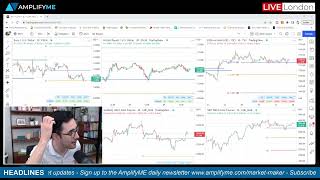
In this 2‑hour live YouTube broadcast, Amplify host Anthony Cheung (joined by interns and regular viewers) walks the audience through the market expectations ahead of the July 27 2022 Federal Open Market Committee meeting, provides a real‑time rundown of the Fed’s 75‑basis‑point rate hike (unanimous vote) and balance‑sheet reduction plan, and then offers on‑the‑fly technical analysis of major asset classes (NASDAQ‑100, EUR/USD, GBP/USD, Bitcoin, 10‑year Treasury, gold) as the Fed statement and Jerome Powell’s press conference unfold. He discusses the probability of a 75 versus 100‑bp hike, recent inflation data (9.1% CPI, 40‑year‑high PCE), recession risks, potential dissenters (Esther George) and new voters (Susan Collins, Michael Barr). The host also promotes Amplify’s podcast, daily newsletter, finance‑accelerator simulation partnership with Morgan Stanley, and invites viewers to connect on LinkedIn. Throughout, he emphasizes the importance of patience, selective trade execution, and monitoring Powell’s language about the neutral rate and future policy moves, noting a dovish market reaction and the need to stay agile ahead of upcoming data releases.
Chapters
Hello everyone, hope you are doing well. I'm just setting up some of my screens and I thought I'd come on a little bit earlier than I intended because I haven't done a live session in quite a while. Looking forward to this, um, good to be back on live. And so I'm not going to formally kick off till about 10 minutes time, so 6:45 London time. So yeah, some very familiar faces. Joshua, really good to see you. Hope you're doing well. Hope the new job— well, not so new now probably— is going really well. Definitely would like to catch up with you in, in the city when you're next free. Oliver, same to you. Hope you're doing well as well. One of the old faces from Team Amplify, so Much love for you. Andreas missing those morning briefings. Yeah, with, with two young children now, I don't think I could get away with it without one of them running in and spoiling the show. So Courtney tuning in from the States, I assume. So great to have you with us. Good to see you again. Yeah, as I said, I will look to get things going with a rundown as per normal. If you've listened to one of these sessions, I'll do a rundown of what we're expecting from obviously the Fed coming up at the top of the hour. I'll do that rundown at quarter to. We'll listen in live. I'll try and then pick through some of the initial market post-reactions from the, the statement. And then I'll stay on, obviously keen to take any questions, talk through market reactions as they're happening, and then we'll listen into the press conference. I'll probably listen only to the first couple of questions just to keep this quite concentrated for like an hour session. Um, so hopefully it's going to be useful for everyone. Let's hope the Fed go 100. Not that I think that will happen, as we will discuss shortly, but It's always nice to have some fireworks. Fred, absolutely, you know, brilliant to have you online. Thanks for joining us. I'm sure everyone else will make you feel welcome. So yeah, I'm just gonna ping this link out to a few different people and then we'll get going officially in around 7 minutes. But in the meantime, feel free to chat amongst each other. If there's any specific questions as well that you've got, feel free to just pop them in before we begin. Happy to, to pick them up in the interim period. Just before I begin, a couple of links that might be useful for you if you're not listening to the podcast that we put out every Friday where me and the head of trading Amplify co-founder Piers Curran go through and chat about markets, kind of aiming for me and Piers in the pub at the end of the week catching up about market type vibe. So hopefully it's interesting but a little bit more delivered in a way that's enjoyable rather than listening to a lot of bank commentary. So that's the Spotify link. It's obviously on Apple and Google, all the other major podcast platforms. So do check that out if you're not already on there. And then I do put out, me and the team, a daily newsletter which you're more than welcome to sign up to. Um, it just covers some of the major themes in markets each day at the end of the European trading session. It goes out, has things like career tips, job opportunities, mainly for graduates looking to work in, in finance. So if that's you, then check it out. Yeah, the Summer Analyst Program, um, I'll share that as well just while we're here. So we do have our latest group with us at the moment. In fact, it's quite some of them I assume are going to be tuned in tonight. I've told them to, um, to do so, to just watch this Fed meeting. It's always good to kind of build up, watch, prepare, see how it happens, how it unfolds, the cross-asset kind of correlations and impacts, and then review it. That's the best way to learn, really, for sure. And then if there's anyone on LinkedIn, absolutely feel free to connect with me. Please do. I post fairly regularly. I'm going to try and jump back on probably 10, 10 PM tonight. We've got a couple of corporate earnings coming out, and I'll try and add a bit of color to the likes of Meta, which is coming out after market. Obviously will be of interest as well from a single stock perspective. So I'll post some of that stuff on, on LinkedIn later. All right, we give it 5 minutes and then we'll, we'll have a bit of a look around the market. and we'll do a bit of a preview for what can we expect from the Fed and the announcement. So yeah, just hang in there 5 more minutes, we'll get everyone on board and then we'll get cracking. If you're just logging in, couple of links there as well, just for anyone interested, podcast, newsletter, uh, and so forth. Okay, yeah, we've got a couple of people tuning in from the Amplify team, so Alex He's there with the interns at Credit Suisse. So I hope all the interns at Credit Suisse are doing well. I think we've also got the summer interns from Citigroup also joining us as well this evening. So yeah, for anyone who's not aware of Amplify, let me just— before we kind of kick things off talking and concentrating on markets, um, we originally started as a proprietary trading firm, as many of you know. This was back 13-odd years ago now. Um, but we have since pivoted, uh, just given a lot of the great success that we've had with the technology that we build for simulation training. And in short, that's now been adopted by most of the major banks on Wall Street, and we work with nearly every major business school in the world. So that's been super successful, uh, very happy to say. Um, and we partner with big banks like Morgan Stanley to take a lot of our training out to the wider community for students. So anyone who's been with the Amplify family for a long time will know that our, our bread and butter was always intraday cross-asset futures trading. That's where we cut our teeth as career people. But nowadays we focus a lot more on the practical education side, and as well as the training and recruitment for large major financial institutions. So yeah, Hopefully makes a bit more sense. All right, well, look, let's kick things off and let's just get straight into this and start talking about what can we expect from this meeting today. And first off, you know, thanks very much for joining us. If you're on the YouTube channel and you've not been here before, you know, if you enjoy the session, please feel free to subscribe. I do put out an Outlook every Monday morning about, from a macro top-level perspective, what's happening in that week in markets. So hopefully it's useful, particularly if you're a student, but also if you're a retail investor, just to be aware of the major kind of milestones to look out for that week that could create subsequent market reaction or change of direction. So check that out. Otherwise, look, let's talk about the Fed. And so a couple of things we're looking out for here. First off, I just thought I would start with what are the top banks expecting here from the first and foremost the rate decision in itself. And so I thought I'd just give it a bit of a cross-section. Um, you can see here Bank of America all the way through to Wells Fargo includes MS, JP, GS, and so on. They're all going for 75. Now if they do go for 75, it would be the second consecutive meeting of pulling the trigger on such a large increment change. Typically, um, central banks tend to operate in much more incremental terms, but as we're going to look at, inflation is so rampant, as you are all aware, that it's causing much more rapid reactions from central banks to tighten what has been extraordinarily loose monetary policy and fiscal stimulus on the back of COVID essentially. This would be akin to the most aggressive tightening cycle then from the Fed if they execute back-to-back 75s since the 1980s. But again, inflation is tracking at a 40-year high, so it kind of makes sense in that, that respect. A couple of different things then. We have had a little bit of gyration on market expectations about what do we think about the probability of 75 or 100. And why was 100 a conversation? Well, you'll probably remember this little peak here That's the peak that we had going through— would have been, what, the week of July 8th? And this was when we saw the US inflation data. And, and this is what US inflation data looked like. It came in at 9.1%. So I'm just going to shift my screen over a little bit. 9.1% was much higher than previous, but was much higher than expected. I think at the time, if I remember right, it was expected at 8. 8%. And so it's the highest reading since November of 1981. So to put that in a bit of perspective, if we put this on a max chart, we shift it over, you can kind of see the breakout that we've had where we've been punching these multi-decade highs on the back of an energy crisis topping up supply chain COVID-led disruptions that's created this definitely not transitory, broad-based, sticky, persistent rampant inflationary conditions. So this is kind of where we are at, at this moment in time, and that's what led to then this, this pump up in the expectation of perhaps the Fed were going to pull the trigger on 100 basis points. Now, if you cast your mind back, there was the Bank of Canada, and the Bank of Canada decided that through front-loading better to go big now because ultimately, as we will discuss, economies are going to roll over pretty soon and it's going to probably require rate cuts going into 2023. So better to get on top of the inflation situation, show the market that you're serious about tackling that, and get ahead of the problem. So that in combination with that higher than expected inflation print, which proved back-to-back inflation reports that we're not at peak inflation yet, meant that we were at the time pricing in 100. However, since then things have moderated quite considerably, and so going from a pretty much a shoe-in 100, it's now dropped to the expectations of more of a 75 basis point rate hike. Now there's a couple reasons why we've had a moderation in This is looking at the FedWatch tool where we can, we can look at short-term interest rate futures to determine then implied probabilities of outcomes for this meeting. As you can see here, the expectation is right now the market is priced— and this is a really important thing to ascertain to understand how the market will react subsequently in a few minutes' time— at 76.3% for a 75 hike. There is, and I must be clear here, there is around a 24% probability of a 100 move. So it's not completely off the table. However, it's a low-case scenario. That being said then, one thing is if we do get a hike 100, we should see a meaningful appreciation of the dollar, a sharp acceleration upward for US yields, so lower in T-notes, and equities would probably see some downside price action. Gold lower because the market is not well positioned to accommodate right now that 100 move. The market has been led to believe through economic data, through central bank communication, the 75 is what we're going to see. So a couple of things to look at then on that regard. One is a few things. So we've had a bit of a downshift then to more of a the thoughts about what's going to happen in the future. We'll get to that in a moment. The press conference is going to be really key, and I actually think this meeting is less about the rate hike, albeit there's an outside low probability chance of 100, which would be unexpected and therefore quite volatile in reaction. This is more about what's going to happen in September, so we'll talk about that in a moment. The other things are that we've had signs of a slowing economic growth already in the US. So again, for the, for the Federal Reserve, inflation has proved much more potent than they initially thought, and, and they have pretty much miscalculated that on every step. So now it's about, right, 75 followed by a 75. They might then downshift to a half-point move in September. Slower economic growth is already happening. You remember the Q1 GDP figure came in a contraction of 1.6, We've got the second quarter advance reading of US GDP this Thursday, tomorrow, and expectations are of very moderate growth, but a high probability we could see what would be classified as a technical recession. Um, you might have read a note from Goldman Sachs in the last 24 hours. They see Europe is already in a recession, and we could see that in the US. Hence a lot of the Biden kind of comments that you've heard in the last 48 hours. So growth is slowing. So if you're going to get these hikes in, you want to get them in now because later on you're going to have less ability to execute such large hikes. The other things are then commodity prices generally have been cooling over the summer. Okay, there's still some risk factor to supply disruptions on the energy side, but if we look at the broader commodity space, definitely it's a different place from where it was just a few weeks, months ago. The other things are then is this is a look at University of Michigan consumer sentiment. The previous reading did see a slight uptick, but we're still talking about pretty catastrophically low levels of US confidence at this point in time. Last week's US retail sales, industrial production numbers were mixed. Housing data has been poor. The economy's already rolling over and slowing. Consumers are really depressed. It's not looking good, right? Uh, you saw Walmart's numbers the other day. Tanked. People are really only buying necessity goods. So a lot of signs are that the recession is inbound at this point. So that finally, coupled with the fact that you had kind of the outright leading hawks on the Federal Open Market Committee, these people being James Bullard and Waller, who last week came out and basically said, look, we endorse the 75 move there's skepticism over going larger than that. So if your hawks on the far end of the spectrum are saying 75 is good and is good enough, then that again was a key reason why the markets pulled off that 100 call. One bank who is going for 100 is Nomura, the Japanese bank. They are still thinking that they will want to show the Fed— the thesis being they want to show resolve after that forecast beating number we had last time, that they're really serious on getting on top of the issue. They are in the minority camp. Most think 75. All right, a couple of other things then to be aware of for this meeting, um, to talk about a few different areas. So dissenters— so when we hear about, you know, when you're trying to pick through the headlines and all the noise beyond the actual rate in itself, what else could we look for? Kansas City Fed President Esther George is likely to dissent. She dissented at the last meeting. She disagreed with going with 75. She preferred a half-point move. She warned basically that, um, the thinking that moving rates too quickly could cause unnecessary large amounts of market stress and blow overall then the Fed off course with its strategy on what it needs to do to control the current economic situation. So totally unsurprising and therefore non-market impactful if Esther George dissents. Don't be surprised by that. New voters: Boston Fed President Susan Collins and Michael Barr were sworn in earlier this month. Michael Barr is the Vice Chair of Supervision. It's going to be one of the first times we get to really see what their voting patterns— could they dissent? We will, we will see. That won't shift though the needle on the headline change in rates, whatever that might be. We then have the balance sheet. And so, yeah, I mean, this is just looking at the odds of recession in the US. But the balance sheet, the one thing we need to look out for with that is they're likely to reiterate this idea of shrinking the balance sheet. Remember, there's kind of a dual strategy here with reversing very accommodative monetary policy One step is hiking of interest rates. The other is not actively then reinvesting the principles of your existing quantitative easing. So in a sense, reduction of the balance sheet through quantitative tightening and phasing it in, in a reduction to eventual pace of around $1.1 trillion a year. I mean, these are crazy numbers, but this is what we're looking at. Economists project that they will bring the balance sheet to $8.4 trillion by year end, dropping to $6.5 trillion in December of 2024. And again, these are mind-blowingly large numbers, but they are very important that the Fed starts to get the balance sheet under control. No announcement is expected on the sale of mortgage-backed securities, but just keeping an eye on those kind of end sum numbers, if there is any, about the forward guidance around the balance sheet. We then, half an hour after the rate statement, which I'll help you kind of COVID and I'll go through in full at the time. And we'll then get the press conference with Jerome Powell. Typical format will be Q&A first. First questions are most important. They tend to be the much more ones that are prominent in terms of investors and traders' minds. So they'll be about what do you think is going to happen in September, or if you did 100, why, what was the rationale. So they're all the ones that could be potentially market moving. As the Q&A goes on, it gets less kind of interesting, and also the main questions have kind of been asked, and then that wraps things up. Probably about 45 minutes that will last. A couple of things: markets are betting on the prospects of rate cuts by as soon as the second quarter of next year. One of the things that you'd look out for in the press conference is the idea of could Powell push back against that How would they do that? He won't be explicit. He will use the nuance of language to talk about kind of things like being the Fed can be nimble, nimble being quite open-ended and loose language in that they will be responding to incoming data developments on the economy and therefore all options are open. But you're kind of saying like, yeah, sure, we can— you shouldn't get too ahead of yourself pricing in rate cuts just yet. And that's sensible. That is Central Banking 101, because if you talk about what's going to happen in 2023, I mean, as much as we can make plausible estimates based on the information at hand today, obviously anything can happen. Vladimir Putin can turn that tap completely off, kill off the eurozone, Italy can blow up, and then the COVID new virus could come out. And then it's a different ballgame. So this is kind of— you shouldn't be surprised by that uncommittal language. It's about forward guidance, giving us a parameter of the future, what it looks like, to reinstill a degree of confidence and credibility. But of course, it's going to be flexible to change, as it always is. And also the dot plots, the projections from the Fed about where rates will be in the future, don't forget, is kind of suggesting that rates are going to come down anyway after peaking. This year. So overall, the outcome of this meeting is fairly well known. So from a trading perspective, one thing I definitely encourage is the market is kind of 75-25. The hike's happening. Is it 75 or 100 basis points? Don't get caught chopped up in a 75 announcement on the initial breaking of the news. There will be some volatility in price because a portion of that market has got it wrong, essentially. And you could see a pop in either direction, but then the reversion back to where it started pretty quickly, and it can be quite severe. You could get stopped out, um, and abused quite quickly by the market. So in that sense, I think unless you get 100 straight out, you're going to see obviously a much more prominent, sharp initial move Definitely want to be on the lookout then for what type of language accommodates that. Either case, 75 or 100, I think 75, you've just got to keep your powder dry, pick through some of the noise, read some of the headlines. I'll help you with that, and then we'll look at the price action accordingly. Um, so yeah, hopefully that all makes sense. I'm doing this on my own because I'm not in the office, so if you've been asking questions, I'll have a quick look now. But yeah, I'm going to focus in, in a moment. We've got about 2 minutes. I'm also, um, will have the squawk on. The analyst will call out the news. I use a service called News Squawk. They're part of the desk that I used to run for many years. Highly recommend them if you are trading day to day. Couldn't really do this job without them, to be honest. So, so do check them out. But yeah, we've got about a minute and a half, so I'm going to put the squawk on. I'll have a quick glance if there's any questions. And then yeah, let's listen in and see what happens. Stephen Sari, all the way, I hope still well in Brighton. Good to see you online. Okay, so just to make it clear, I will move my charts and try and make them bigger as I talk about them, just in case it's a little bit difficult to pick them all out. So I've got EURUSD in the top left, I've got GBPUSD in the center top, so cable. I've then got gold top right. I've got the US 10-year tucked away behind my video feed. I can pull that out if need be. NASDAQ 100 down here, and I've got the S&P 500 in the bottom right-hand corner. Again, I'll expand them as I talk about them when we start looking at some technical levels. I've also got other charts I can pull in as well as we discuss. We've got about 30 seconds.
10 seconds.
Okay, 5 seconds.
Let's hike 75 basis points as expected to 2.25 to 2.5%.
So hike 75.
Fed says that's the recent— indicators of spending and production have softened, job gains have been robust, and unemployment rates have remained low. Says inflation remains elevated, reflecting pandemic-related imbalances and higher food and energy prices and broader price pressures. Balance sheet reduction will accelerate in September as planned, with monthly caps off runoff rising to £35 billion for MBS and £60 billion for Treasuries as initially planned. Is prepared to adjust policy as appropriate. Votes in favor of policy was unanimous. Can they do maintain that language? They are strongly committed to returning inflation to 2% goal and that they are prepared to adjust policy as appropriate.
Right, so just to quickly jump in there while the squawk is still looking at stuff. So in line, 75. You had a little tiny blip momentarily in the euro, but it's come back to exactly where it was, and that's been mimicked across the different asset classes. So they've hiked 75 very much as expected. It's a unanimous decision at 75, so there's no dissenters. Recent indicators of spending and production have softened. Strongly committed to returning inflation to 2% target, and they're prepared to adjust policy as appropriate. All of that language is kind of 101 textbook, almost copy-paste-repeat of what they're— what they've been saying recently. So market reaction thus far has been very tame, and that's because this is about as in-line a language as you're going to get. Um, what's going to be quite key though is that now if you're trading this type of event, patience is absolutely critical. Because what can be quite frustrating sometimes is when events like this happen, is it's like, oh, they didn't do anything, and you feel a bit almost like the wind's been sucked out of you. Just stay agile and keep your ears open. And we've definitely got the press conference to come, and as I said, he's going to be pushed on what happens next. 75-75, does he then start to kind of downgrade expectations around what's to follow when we get to September, which is really key. So at the moment we've had a little bit of upside in the NASDAQ and T-notes. So in the few minutes after, you can see this— I'm looking at the NASDAQ 100 future here. It's coming up to just test up at around the high point that we saw about 2 hours ago. Any break above there, then you can see these technical levels from that high that we have back on the 20th. You can see the lows here from the 22nd, just above where that high is from where we were trading on the 25th before the Americans came into the market. So if we do break above the intraday high, probably be looking at the higher at 12,500 followed by 12,519.25 on the upside as levels of technical resistance. But Upside here very moderate, but upside nonetheless because the Fed haven't gone 100. And if anything, for tech stocks in particular, who are much more sensitive to rate yield expectations, it's kind of the worst case averted. Rates are going up, but perhaps not as rapidly as would have been feared. Otherwise, elsewhere, yeah, pretty lackluster. The euro— so if I put the euro on a full-size chart if I cut the time frame down to like a minute on the euro, this is where you can get absolutely killed when you're not patient. So if I put this on a 15-second chart, I mean, look, this is— these are 15 seconds. So 15, 15, 15. So that's a minute, 2 minutes, 3-minute price action. You can see we've had a range of, say, well, going down from here, 101.21 all the way out to 50, and it took some quite large, almost 35-pip range before we started to see a push higher. And if you actually look where we were trading 3 minutes before the decision, we're basically flat. So it's a really good case where if you're not disciplined, you can get absolutely carried out in this type of noise. Where there isn't direction, because guess what, this is an inline decision. So again, it's about just picking your spots, being selective. Obviously you might have thoroughly prepared, been waiting for this all day. That doesn't mean that the best move of the day still might be, um, still yet to come. So we've got to listen in for the presser shortly. Other asset classes, just looking at Bitcoin. Bitcoin's had a little bit of a pop. Bitcoin's had quite a Obviously an inverse correlation in regards to the rate move higher. Bitcoin generally has been moving lower. So a little bit of, again, short-term relief. Bitcoin just taking a bit of a bounce on a bit of a pop on the upside, going from around $21,700 through $22,000 momentarily. Uh, the dollar pairing just a little bit, which has helped just moderately support both major pairs. Yep, couple of, couple of you in the chat loving the Bitcoin gains. Um, well, let's see, let's have a look at Bitcoin then. Let me just shift over. Okay, so just having a look at Bitcoin. There's that pop that you just saw. So you can see here, yeah, completely responding off that technical high that we had going back to what, yesterday, two days ago, in the evening, just getting short of that on the initial spike. Would, would not feel that confident or have conviction. This is what you'd call a fast money move. You know, if you were hitting market on the relief short term, there's not a lot of fundamental rationale to see that market bust higher, at least on the information known at this point in time. And so what you've got here is a case of anyone who was jumping in, just hitting that on the back of the initial headlines, they're bailing at that technical level of resistance because this is an inline decision. So it's almost a function of the unwind of the outside bets of going for 100. The worst case hasn't materialized. There's a brief pop. People book that profit. I mean, if you are looking at Bitcoin, you know, it's a decent pop. You've moved there a good $250 or so on that little bounce. Or more than that, in fact, 450. But yeah, unsurprising at all to see that pullback on the exit on that initial resistance area. Yeah, and the NASDAQ stabilizing now, so those gains very short-lived. So again, byproduct of the inline kind of situation that we've discussed. Okay, um, we got a bit of time, so just wanted to mention again, if you haven't already checked it out, there's a couple of web pages I want you to have a look at. If you're not already part of the newsletter community, that's how we stay in touch with everyone. Please check it out. Market Maker goes out at the end of every European trading day. And we got the podcast with the wrap-up of the week. I'm getting one of our tech guys and quant trainers to join me on the podcast this Friday, so anyone interested in that side of the business, uh, he's gonna have some great insights to share with everyone. And then if you have not done one of our Finance Accelerator simulations please do check it out. Um, here it is. Here, yeah, we work in partnership with our, uh, US bank Morgan Stanley, and this is a finance accelerator event where you— if you're a student and you're interested in markets, but beyond that, for anyone really, regardless of background, and you want to know what it is to facilitate a trading role at a bank, in a big financial institution, in a sales trader, market maker capacity, or on the buy side as an asset manager, check it out. It's a totally practical free simulation. We use it to identify talent to potentially fast-track to our partners at Morgan Stanley. So really nothing to lose. And if you haven't done it before, highly encourage it, um, just for your own understanding of how markets work, to understand potentially a career path that might be of interest for you in the future. So you've got the link in the chat. Okay, let's have a look at what else is going on. Not too much at the moment. So if there's any questions at all about anything else that's going on more broadly speaking, I'd love to, to get stuck into it. Uh, obviously we had the earnings last night. Microsoft and Alphabet. I did actually put out a piece about this because it's quite interesting. Microsoft shares originally dipped 6%. They then finished the aftermarket trade up about 3%. Alphabet pretty much missed on most metrics, but their advertising continued to tick over irrespective of some of the more peripheral social names like Snap and Twitter. Having a disastrous earnings season. Google is just such a monster, it continues to kind of produce phenomenal amounts of returns. And yeah, there's a bit of a breakdown there. I just shared a link, so feel free to, to check it out. Uh, Meta's after market, and obviously that's going to be one that will be closely scrutinized, particularly in the recession fears are growing. Remember, I looked at that chart earlier. Here is the United States recession probability kind of tracker. This is done via a Bloomberg survey, and the, the odds of a US recession are rising as the Fed are raising rates. So the tightening of, uh, of policy is certainly— then people are thinking it's going to have ramifications then on the timings and bringing forward the timeline when a recession will occur. Yeah, just having a look at the chat. Um, it definitely is a case of just, just sit on your hands and wait. Uh, Jay Powell will be out in about 50— well, 17, 18 minutes. And so I'm sure that if there is going to be a market move, and I actually think there will be because I actually think he needs to give clarity about the next phase of the hiking cycle. And for that to make sense, let me have a look at the interest rate hike cycle. And so Let me switch over my chart. So here, here are the Fed's hiking. So we are in effect back to where we were after— how many was it? 9 rate hikes we had when Yellen first did that first one in December of 2015. You then had the delayed rate hikes due to the EU referendum. You remember, wasn't expected to happen. You then had Trump come in. But then Trump came in, um, at the time, tax cuts, economy started booming, rate hikes started rapidly. Then on the incline, on the typical fashion of 25 basis points, we hit the neutral rate at where we are now. And so it's quite key. But if I start to then look at, um, fed.plot June 2022 Sorry, I haven't got this pre-prepared, but let me just quickly bring this into shot. I think it's important to look at everything in context. And once this moves— so this is the current Fed dot plot matrix. To make that make sense, every other Fed meeting on the calendar quarter, March, June, September, they release projections on jobs growth, inflation, and also the dot plot. The dot plot, quite simply, if you're not aware of it, is a representation of each member of the Federal Reserve, the Federal Open Market Committee, and where do they, when questioned, foresee interest rates being at the end of this year and each subsequent year thereafter. So at the moment, interest rates have hit what was before the peak of the previous cycle. However, we very much anticipate that that's going to go well beyond that. If we look at the actual official Fed forecasts, they anticipate that rate hikes will be up akin to around 3.25% by the end of the year. So if we go back here, it could be then that we have a 25— a 50 hike. It's very rare for them to go for 75 down to 25, even if the recession is inbound. Normally rates tend to move in a fairly incremental fashion. I say that, but Bank of Canada— well, Bank of Canada did the same. I think they went 25, then 50, then they've gone 100. So they've kind of doubled up each time. The Fed, a little bit more incremental. But if we go back and start looking on a longer time frame, this is on a max, you know, if rates are up at 3.5%, remember we were in excess of 5% prior to the global financial crisis when that happened. Will we get up to 5%? Well, the Fed don't think we will. The Fed think we'll peak in 2023 at around 3.75%. There are people on the street, economists, who think that rates will go well and above 5% and that the Fed have just got this wrong and that inflation is going to be more persistent than we think. Again, this is open to interpretation, and this is why there's breadth of view on the street between different banks. About what might happen next. Okay, let's just flip it back, have a look. Yeah, things still pretty static at the moment, so not too much going on. The only thing I can see on my Twitter feed at the moment is Shakira rejecting, uh, facing of tax trials. Maybe I need to update some of my, uh, the things I follow. But otherwise, look, the figure of watch tomorrow is certainly— we've got GDP, that's going to be quite key. Don't forget as well you've got Apple and Amazon reporting aftermarket on Thursday, so there's still plenty to get your teeth into. Beyond this actual Fed event, which in a way has been fairly well telegraphed in the buildup to this. Hence the reason why it's been fairly, fairly quiet so far. Yeah, Joshua, what's, what's Bilal's team going for now? I remember probably about 6 weeks ago Bilal was calling for 8%. Fed rates. I don't know if he's moderated that a little bit. Oh well, I can always rely on you for the, uh, timely dad joke. Yep, Angela, good to have you on as well. And yes, Of course, we've also got month end as well, last trading day of the week, the 29th, and then we kick things off fresh August Monday the 1st. So at the end of the month as well, which can always be interesting just given, um, generally what we would do. I haven't looked at it myself as yet, but looking at general performance of assets over the period, um, so we're at the end of the month, not so much of a quarter or a semi-annual or year end where what can happen is dependent on asset class movement, portfolios which were agreed upon with their clients then start to be rebalanced and you can start to see a bit of window dressing, kind of buying and selling of securities, not necessarily based on the fundamentals of those products, but more so to rebalance portfolios to fix or fit back in their original preset form. That was agreed between the provider and the client. And that, that can have some influence as well at month end, probably not as potent as a quarter or as I said those other periods, but yeah, definitely something to be aware of as well. So thank you, Angela. Just having a quick look at some of the comments. Yeah, Joshua. So I did read that there was a note that came out of the CEO, I think it was, of Wealth Management, Morgan Stanley. And she was talking about this idea that in the past the pattern of history has been then the, um, inflation metrics. So typically what the Fed look at is the, the core PCE numbers. Um, they would have to peak and turn, uh, as would other inflation-based metrics before the Fed would even start talking about kind of pulling back on their more assertive approach to rate tightening. Uh, and so Morgan Stanley's thesis was talking about equities and about this rally that we've had recently, bouncing quite comfortably from the original selling pressure that we saw, uh, in the likes of the NASDAQ and US equities. They think that's a bear market bounce, and ultimately the direction of travel will be lower. Now, I must say, that's their view. Um, I think that that's been a little bit disrupted perhaps by those tech titans that we saw last night, because I think the market was really a little bit anxious ahead of those two big names because they really do set the scene for the rest— Apple, Amazon, so on— that will come out in the next, next two days. And I don't think that overall— I mean, you probably would have seen the numbers— if you look at Microsoft and people like that, growth is slowing. So revenues growth, um, was, was just 12% year over year in the quarter, which is pretty crazy. But that's actually not great news for them. And their Azure and other cloud services grew by just 40%, but the market's appetite kind of sits more like the mid-40 to 50% range. The idea being here is, as much as there's currency, uh, foreign exchange exposure that's hurting a lot of these US listed names, because companies like your Microsofts and the Alphabets, kind of like with— you saw with Netflix— all of these companies, because they have global exposure, the rapid tightening cycle and the rate differential being much more advanced in America has meant the dollar is really strong comparative to other currencies, particularly the euro. We've obviously had parity recently, given all the other added complications that Europe has with the proximity to to Russia and the energy crisis. And obviously that hurt Microsoft to the tune of just over $1 billion in the last quarter. But even with all that, it was the outlook that MSFT issued. And if you think about these big tech titans like Microsoft and you think about cloud technology, it's almost like recession-proof or like it was COVID-proof in a way. And it's the same with Google Advertising. It's kind of like the Yellow Pages of what you need as a business to operate, particularly if you're a small business. You know, online presence is everything and paying for that privilege comparative to more peripheral services like your Snaps and your Twitters. And so I actually think that those tech earnings— this week has 175 S&P 500 companies coming out. I think there's 12 of the Dow 30. And actually, I think that if you were of a bearish disposition, you would have wanted to have seen a more negative outcome from those tech titans. And they're really key because they're so influential. They really prop up this market. And if they're not really getting whacked like I think some people were thinking might have been the case and didn't materialize, then you might just have to hold on a little bit more to see. So yeah, is the bottom in yet? Well, let me ask you all. Do you think we've— do you think this is a bear market bounce and equities will move back down to retest lows at some point? Or do you think now we've already seen the bottoming out of this bear market move that we've had year to date? What do you guys think? Let me know in the chat. I'm gonna have a look at the NASDAQ here on a 1-day And let's have a look. So you can see here, beginning of the year, we literally peaked on day 1 of the year, a little Christmas high that we had, Santa Claus rally, uh, just coming in that, that final Christmas week in December. Then obviously we've had just rampant inflation and then a big twist with the Fed getting ever increasingly more hawkish to eventually get to where we're at today with the back-to-back 75s. We haven't seen that for 40 years, that type of speed of tightening. But if you look at the NASDAQ, we were trading 11,000, we're now up at 12,500. So we've had a good bounce. So the question is, is this a bounce where directionally we're going to go back down? And actually we're going to continue to go back down to pull back towards— this is where we were pre-pandemic. There's obviously a massive level there, that peak that we had before then we saw the outbreak spreading into Northern Italy, South Korea, Iran, if you remember at the time, before it really turned into a global pandemic status. He then had that as a real nice footing of support long term in June. So this was well after March 23rd, where the Fed had come out gunslinging, unlimited QE and all the rest of it, and we had that monumental ignition, if you like, of this, this huge rally. So yeah, are we going to head back down there or have we, have we hit the bottom? And actually now it's about the recovery from here on out. Have we kind of got over the worst fears of Fed tightening? And as the economy starts to slow, the Fed starts to back off that, that accelerator on the tightening side. So let's have a look. What have we got? Bear market bounce, dead cat bounce. Okay, bear market bounce. Okay, Richard's saying it looks like a bottom. So there's one person who's a little bit more optimistic. Everyone else looks like they're quite bearish at the moment. Uh, Joshua thinks one more leg down by year end. Don't think it's it just yet, Rory. One extra push down, Richard. Piers, if you're online, I'd love to know your thoughts. What do you think? Obviously, this would be perfect fodder for us in a podcast. Renata, are my charts public in TradingView? No, I mean, I literally just have my charts to watch stuff. So I don't actually publish anything on TradingView, to be honest. I don't really have enough time. So yeah, I just use it from a purely viewing platform. I quite like it. I like the fact that I can, you know, I basically work hybrid in the office, at home, in my office, on the move when I'm traveling. So it's really useful. As you probably know, TradingView just pops up, it's all automated. The app's really smooth. So yeah, quite like it. Here he is, Piers Curran on the chat. Don't try picking bottoms. Literally, you go picking bottoms, you know what happens. So yeah, I think trying to pick a bottom is never sensible. But I guess at the moment, one thing I did see, and this is a really good example of behavioral finance and how we get influenced by things. And I did a post on this just the other day, which let me switch over. So this is a post I did and this was talking about that Morgan Stanley one. So Morgan Stanley was saying, and we'll jump into the presser in a moment. Morgan Stanley suggests the Fed hasn't stopped tightening monetary policy in the past. Into a key measure of inflation, i.e., the core PCE that we mentioned, is below its benchmark overnight lending rate. I mean, core PCE, what's it tracking at now, 5-6%? The core benchmark, the benchmark overnight lending rate, it's a mile away from that at this point. So they're saying that it's got to go a long way, there's going to be a long time before we get to that point. If that's so, equities have got to weaken at this point. On the other side, Edward Yardeni— I don't know if you've ever gone on Edward Yardeni, he's quite an influential, um, analyst in the market. He's got a really good website actually, he does lots of equity sector analysis, stuff like that. You should check it out. He was talking about the resilience of corporate earnings, and yeah, that's kind of like, like I was saying with those tech earnings, I think they were quite resilient. Bank of America though, this is the final element in the puzzle. They produce a survey every month where they talk to fund managers. And so rather than trying to pick bottoms, this is a little bit more about what's actual real money in the market doing. And one of the things there is that money managers said that they've cut equity exposure. It's the lowest since 2008 financial crisis, i.e., if you're not sure than go to cash, stay out of the market, reevaluate when there is clarity, you know. So I think it was quite interesting to look at the market in various different lenses and read a breadth of opinion. But in the end, such as life, if you follow the money trail, it often leads to some quite interesting results. And money managers' exposure to stocks is, is the lowest it's been since the financial crisis of the point in time. All right, press conference is going to start. Let me turn it on now and we'll listen in to Jerome Powell. So let me get it up. So he'll read a bit of a statement and then he'll have the first couple of questions. I'll try and stay on for a little bit and then we'll look to wrap things up. Okay, the presser hasn't started just yet. As far as market, um, movement at the moment, still very much wait and see. So if you're not in a position, highly encourage you to stay out and just wait now. Okay, they're just about to begin. So got the live shots here, you can see just about to take the stand. Albert, got much love for you. Thank you. Especially, I've got a— I've literally got a 5-week-old baby on the other side of that screen, over on that glass screen over there. So I'm going to try and tackle as much of this as I can get away with before my, my wife kills me. All right, pal's coming out now, so Just about to kick off. We'll listen in. I'm going to just turn the squawk off because I want to listen to Powell direct.
Good afternoon. My colleagues and I are strongly committed to bringing inflation back down, and we're moving expeditiously to do so. We have both the tools we need and the resolve it will take to restore price stability on behalf of American families and businesses. The economy and the country have been through a lot over the past 2.5 years and have proved resilient. It is essential that we bring inflation down to our 2% goal if we are to have a sustained period of strong labor market conditions that benefit all. From the standpoint of our congressional mandate to —maximum employment and price stability—the current picture is plain to see. The labor market is extremely tight, and inflation is much too high. Against this backdrop, today the FOMC raised its policy interest rate by 3/4 of a percentage point and anticipates that ongoing increases in the target range for the federal funds rate will be appropriate. In addition, we are continuing the process of significantly reducing the size of our balance sheet. And I'll have more to say about today's monetary policy actions after briefly reviewing economic developments.
Okay, just quickly then, some of the major things here: they'll continue process of significantly reducing the balance sheet, and labor market extremely tight, inflation much too high. It's essential to bring down inflation. So we've had a little bit of reversal, yields and dollar just picking up a touch, but again, still very moderate at this point.
In the second quarter. Despite these developments, the labor market has remained extremely tight, with the unemployment rate near a 50-year low, job vacancies near historical highs, and wage growth elevated. Over the past 3 months, employment rose by an average of 375,000 jobs per month. Down from the average pace seen earlier in the year, but still robust. Improvements in labor market conditions have been widespread, including for workers at the lower end of the wage distribution, as well as for African Americans and Hispanics. Labor demand is very strong, while labor supply remains subdued, with the labor force participation rate little changed since January. Overall, the continued strength of the labor market suggests that underlying aggregate demand remains solid. Inflation remains well above our longer-run goal of 2%. Over the 12 months ending in May, total PCE prices rose 6.3%. Excluding the volatile food and energy categories, core PCE prices rose 4.7%. In June, the 12-month change in the Consumer Price Index came in above expectations at 9.1%, and the change in the core CPI was 5.9%. Notwithstanding the recent slowdown in overall economic activity, aggregate demand appears to remain strong. Supply constraints have been larger and longer lasting than anticipated, and price pressures are evident across a broad range of goods and services. Although prices for some commodities have turned down recently, the earlier surge in prices of crude oil and other commodities that resulted from Russia's war on Ukraine has boosted prices for gasoline and food, creating additional upward pressure on inflation. The Fed's monetary policy actions are guided by our mandate to promote maximum employment and stable prices for the American people. My colleagues and I are acutely aware that that high inflation imposes significant hardship, especially on those least able to meet the higher costs of essentials like food, housing, and transportation. We are highly attentive to the risks high inflation poses to both sides of our mandate, and we're strongly committed to returning inflation to our 2% objective. At today's meeting, the Committee raised the target range for the federal funds rate by 3/4 of a percentage point. Bringing the target range to 2¼ to 2½%. And we're continuing the process of significantly reducing the size of our balance sheet, which plays an important role in firming the stance of monetary policy. Over coming months, we will be looking for compelling evidence that inflation is moving down, consistent with inflation returning to 2%. We anticipate that ongoing increases in the target range for the federal funds rate will be appropriate. The pace of those increases will continue to depend on the incoming data.
And yeah, so we're getting a little bit of jumpy price action. He said they're looking at compelling— looking for compelling evidence inflation coming down over the next few months. The pace of rate increases will depend on data. Another unusually large increase could be appropriate at the next meeting. So they're all fairly balanced comments. I mean, it's uncommittal. Albeit some of the language is a bit on the side of saying— when you say another unusually large increase could be appropriate, I wouldn't be surprised if people jump on that and think, well, that's another 75. But he's saying it could be, and that they would still depend on data in terms of the pace of the rate increases. So hence you're getting a lot of two-way price action in the 10-year, um, also in the euro, so forth. I'm just keeping an eye on the NASDAQ. It's just coming up to those levels we were just looking at before, which was— it's through that prior high we had on the 25th. We're just testing that low and high from the 20th and the 22nd. So that inflection point for the NASDAQ just being tested here at the moment. Obviously above there might get a little bit of clean air for a bit of a further push directionally. Powell said it's likely appropriate to slow increases at some point. But again, that makes sense. We already kind of know that's what we've been talking about. But again, stepping off the gas a little bit is a, is a stock benefit in terms of directionally for the way this is being interpreted. But look, all other asset classes on the broader spectrum are not really showing much confirmation move at the moment. The gold price has perked up a tiny bit with the equity move. Yeah, I'd want to see currencies start to pick up a little bit with the dollar under a bit of pressure, um, if it's kind of perceived to be not quite as hawkish a commitment about the future options, if it's a little bit more passive, open-ended, that they're just being data-dependent and that they're likely to slow increases at some point. If that's a dovish perception, then what you'd want to see is more confirmation of dollar weakness, which we're seeing a bit of. That might then fuel— and if the NASDAQ can bust out of that pivot or that, that inflection point, technically might get a bit of a further extension, and that might drive some of those moves. But the 10-year is not showing much movement either at the moment, so it's a lower conviction at this point. Okay, first questions in, in the Q&A now.
In the context of the ongoing increases, uh, in the policy rate that we've been making, I'd say that we wouldn't hesitate to, to make an even larger move than we did today if the committee were to conclude that that was— that that were appropriate. That was not the case at this meeting. There was very broad support. So again, Powell said would not hesitate on a larger move if needed, that we were prepared to move aggressively, more aggressively, if as inflation continued to disappoint. And that's why we did move to a more aggressive pace at the June meeting, as we said we would do. At this meeting, we continued at that more aggressive pace as inflation has continued to disappoint in the form of the June CPI reading.
Colby. Thank you so much for taking our questions. Colby Smith with the Financial Times. As the Committee considers the policy package path forward, how will it weigh the expected decline in headline inflation, which might come as a result of the drop in commodity prices, against the fact that we are likely to see some persistence in core readings in particular? And given that potential tension and signs of, you know, any kind of activity weakening here, how has the Committee's thinking changed on how far into restrictive territory rates might need to go?
So, um, I guess I'd start by saying we've, we've been saying we would move expeditiously to get to the range of neutral, and I think we've done that now. We're at 2.25 to 2.5, and that's right in the range of what we think is neutral. So the question is, how are we thinking about the path forward? Um, so one thing that hasn't changed is that it won't change, that our focus is continuing to— is going to continue to be on using our tools to bring demand back into better balance with supply in order to bring inflation back down. That will continue to be our overarching focus.
One other asset just to keep an eye on is Bitcoin at the moment. It's having a bit of a further breakout on the upside now at $22,400. So it's just got its head above that late high we had on the 25th in Bitcoin.
Are we seeing the slowdown that we— the slowdown in economic activity that we think we need. And there's some evidence.
So one thing he's just said here in this recent response is we're in the range of what we think is neutral. That, you could say, is a dovish comment because they're at 2, 2.5, which puts us back to that peak of that previous top, you remember, of the prior rate hike cycle. That's basically saying, look, we're at the top of the hiking cycle. So that is, uh, basically suggesting then that probably it's a downgrade to expectations, certainly of seeing another 75 again. So the market has reacted to that. You're getting further dollar weakness, so the pairs are moving higher and T-notes are moving higher, and the NASDAQ broke out. So everything's rallying now on their dovish interpretation of those comments. So you're starting to get a decent move now forming across the board. Gold as well, it's broken out of its kind of top end of its trading range over the last 2 days sessions. So looking to target up now around $1,736, about $5 shy of that at the moment. So again, that comment, just to be clear, he said the new Fed funds rate now is right in the range of neutral. And people are interpreting that as meaning then that they've kind of— they've moved rates expeditiously, I think is the words that they're using. So they've gone quick, but this is where they want to see it. And so therefore discounting then future aggressive rate hikes down the line. And so that's a relief to markets about more tightening. So that's negative dollar, bullish currency pairs, bullish stocks, more prominent NASDAQ tech technical breakout on that inflection level. T-notes rallying.
And we're going to be making decisions meeting by meeting. We think it's, uh, we think it's time to, to, to just go to a meeting by meeting basis and, and not provide, you know, the kind of clear guidance that we've have provided on the way to neutral. Nick Timoroso, The Wall Street Journal. Chair Powell, you've said that your policy works through influencing expectations.
He's still taking questions at the moment. And yeah, I kind of agree with what Piers has said. I think you need to be careful with your execution at the moment in managing some of these long positions if you're in any of them. Rates are most likely probably going to go up again. And so the markets jumped on this as that this is the new neutral, but the Fed's forecasts themselves are still for another 50, 75 basis points on top of where it is at the moment. So I think perhaps there's a little bit of overinterpretation of that statement that he's made, because I agree with Piers, I think rates are going to go up. I think he's just misjudged a little bit of the wording on how to shoe in the kind of deceleration of the size of the increase in rates. So downshifting in gears to a half point from a three-quarter point hikes, I think it's just got a little bit lost in translation, uh, is my initial take.
I would— the best data, the only data point I have for you really is the June SEP, which I think is just the most recent thing that the committee's done. Since then, inflation has come in higher, economic activity has come in weaker than expected. But at the same time, I would say that's probably the best estimate of where the committee's thinking is still, which is that we would, we would get to a moderate, moderately restrictive level by the end of this year, by which I mean somewhere between 3 and 3.5%, and that we, the committee, sees further rate increases in 2023. As I mentioned, we'll update that, of course, at the September meeting, but, you know, that's really the best I can do on that. You said inflation had been a little bit hotter than anticipated. Has your view of the terminal rate changed since June?
So I wouldn't say it was—
I think we didn't expect a good reading, But this one was even worse than expected, I would say. I don't talk about my own personal estimate of what the terminal rate would be. I do, I will write down that in, it's going to evolve. It's obviously, it has evolved over the course, I think for all participants, it has evolved over the course of the year as we learn how persistent inflation is going to be. And by the time of the September meeting, we will have seen 2 more CPIs. CPI readings and 2 more labor market readings and significant amount of readings about—
yeah, so at the moment Powell's saying, you know, it's an important point, there's 2 more CPI reports, there's 2 more jobs reports before the September meeting. So he was kind of pushed there on saying, is the terminal rate where it is or are you going to hike more, kind of explicitly in reacting to what we've just seen as a catalyst for this market move. But he's kind of pushed against that saying, look, things can change, it's evolving, and he's been very uncommittal. But Again, not quite the usual authoritative, you know, owning the moment Powell that we're used to seeing, but I guess that's a reflection of the great uncertainty over the, the inflation conditions at the moment. Someone's just asked me about cable. Yeah, cable's had a quite a pronounced move. It's broken through. You can see this kind of area, this triple top that we've had throughout the trading week. It's also busted 121, so it's just seen a little bit of further upside. So I can just remove these marking ups of when Johnson resigned. Um, so let's just have a look at cable on the upside. Obviously the Q&A, I'm still just trying to keep half an ear out on that at the moment. So probably be looking around. So any further upside in Cable, you've got 1.2162, which is that low, highs you can see on a couple occasions. So quite a key area there, just coming in a few pips ahead of the, the R2 on the daily pivots. I'd probably keep an eye on that as upside levels of resistance. What would I expect CPI to be coming up in terms of the US? 9.2, 9.4? So impossible to say really. I mean, they've— think about it this way, every bank on Wall Street on a median consensus basis across 70 different institutions thought inflation would be 8.8, and it came in at 9.1% in June. So trying to pick where that, that number is going to land is incredibly difficult, but I think it's going to go up further from what it is at the moment. I think the Fed's rates will go up from what they're at at the moment. So it'd be interesting to see. I don't, I don't quite believe— I think the market has misread that comment personally, but let's see. We won't really know, I guess, until the dust settles where we close on Wall Street, and then once the market sleeps on this to make its decision, um, with a good night's rest of what it thinks then going forward. One thing to be aware of is if the Fed's intention is that rates are most likely to go above and beyond, because otherwise there's— that would be a radical change to their June dot plot forecasts, then you'd probably hear from a Wall Street Journal source post this meeting later on tonight or overnight, you'll probably get a plethora of Fed speakers start coming out hitting the tape, these sorts of things. That's— that would be in order to realign market expectations if the Fed or Powell felt that he was not correctly interpreted.
Um, price stability is really the bedrock of the economy, and nothing works in the economy without price stability. We can't have a strong labor market without price stability for an extended period of time. We all want to get back to the kind of labor market we had before the pandemic. Where differences between racial and gender differences and that kind of thing were at historic minimums, where participation was high, where inflation was low. We want to get back to that. But that's not happening. That's not going to happen without, without restoring—
So the chart on my screen at the moment is the US 10-year. It's just retesting the high that we had from yesterday's session, just finding a little bit of resistance here on that last push on the upside. At that level.
Howard Steiner with Reuters. Particularly in regards—
All right. So I'm going to wrap it up there. I'm going to put the Fed link into the chat. So you're going to have to put it up, watch it yourself, listen in. He's probably got a couple, 3 or 4 more questions in the bag. and then that will conclude matters. So yeah, I, I need to jump off. So hopefully that was useful. Certainly, as I said, look, the main thing here is the market has moved in a fashion of a dovish reaction, probably more described by being less hawkish in clarity about the future moves. And this centers around the commentary on the neutral rate. And the interpretation of what that means. One thing to remember is there's a long time to go between now and September, including two CPI reports, and the Fed have been fairly talking about dependency, these types of things. Um, the Fed chairman has also just said doesn't think we have— we have to have a recession, says the path to avoid that, but the path is narrowing. So again, he's trying to, trying to be optimistic on a bad situation, I guess. All right. But look, we will deconstruct this tomorrow. Remember to follow all the various different social feeds on Amplify. And so let me just share the Amplify Me LinkedIn. And my LinkedIn. Love to connect, and really great to see some familiar faces. So Oliver, Angela, Gordon, Joshua, all the rest, thanks very much. Have a good evening, and, uh, I guess see you in a couple hours for Meta.
More from Anthony


Inside the Biggest Banking Stories You Need to Know This Week (Anthropic, Diageo, Private Credit)


Inside the Biggest M&A Deals You Need to Know This Week (UniCredit, GameStop, eBay, Eli Lilly)







AI Breakthrough or Hype? Anthropic’s Claude Mythos, Tim Cook Steps Down & LIV Golf Collapse