LIVE Q&A - Professional Trader Programme
Amplify's head of market analysis explains the firm's two training paths: a 9-week in-house Career Programme and a new online e-learning portal launching December 2 that covers macroeconomics, asset classes, technical analysis, and risk management. Completion earns a Level 4 diploma, with options to progress to funded trading roles.
Chapters
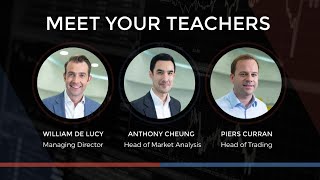
Okay, testing out the mic, just making sure that I am coming through okay. Should be live now. So Charlie, I know you're in the chat already, let me know, give me the thumbs up whether you can hear me okay. We'll get things up and running. I'll go over a bit of an overview of what we're going to cover this evening. Obviously it's going to be much more two-way than just me talking about markets or talking about our programs. It's gonna be very much so more of a Q&A, talking about the new online program that we have at Amplify going into 2020, in a way our trader training program is going to change. And also if there's any questions just about what we do in general, I've got Charlie here on hand as well, and Charlie is one of our Traders. He also acts as one of our analysts, helping as well with some of the help for our, for our trainee traders. So just doing a brief sound check, but while we do, I'll leave Charlie to address any incoming questions. But just wanted to have a quick look at what's been going on today. Let's talk about markets first. And obviously in front of me, if you've never seen an Amplify session before, then basically I cover— my role, let's start with me, is I'm the head of market analysis. And what my job is, is I act as the kind of eyes and ears for the traders of watching what's going on during the day. So from a fundamental macro perspective, I'm supposed to be the person in the know-how which is able to interpret and anticipate what type of news is driving the market, what might be the next episode of what could be a catalyst for market direction. And we don't just look at the forex market, for example, we look at multi-asset. So that being then the major 4 asset classes, we look at stocks, bonds, FX, and commodities. So bit of a mixture, and you can see that from the different charts I've got up on my screen. So just for clarity's sake, we've got Euro futures on the top left, Cable center top, then you've got Gold futures in the top right. You've got the Dow, NASDAQ, and the S&P because of course we've been trading in the US session for this afternoon. We'll have a look at the S&P for, for one shortly. And then we've got WTI crude futures down at the bottom, and we've got US Treasuries, the US 10-year future trading at the bottom right. So every morning, essentially, I'll give our guys a full rundown of the fundamental news of the morning. So what's happened on the close of Wall Street, what's happened overnight, the Asia-Pacific session. So therefore, what can we expect at the UK European Open? So if you're not already have done so, then do subscribe to the channel and you'll be able to access those slightly delayed. I give it live to our traders a little bit earlier in the morning. It goes up on YouTube at around kind of 8, half past 8 kind of time, 8:45, and you better see that and what we're looking at every day. But the kind of history of what Amplify does, I'll come into shortly. But as I said, let's just talk about the markets and what's been happening so far today because I'm sure people might have some questions. So as you can see from the charts, it's really equities which have outperformed, and that's been an interesting day because we're right up there near record high territory. Of course, Donald Trump was tweeting earlier today and was incredibly vocal about the fact that the stock market's back up towards all-time high record territory. So Here's a graphic of the S&P 500 over the course of really the last— well, this is going back to the early part of the summer. And you can see this is where we're at at the moment. We're right up there, just a whisker away from all-time record highs. And combination of different things, really, from a broader long-term— I mean, this is a higher time frame chart. I'm looking at a daily continuation here. To put it into a bit of perspective. You've got the Fed having executed 3 rate cuts through 2019. More importantly, from a macro topic right now driving markets, you've got a lot of positivity coming out of the Phase 1 deal between the US and China. There's been some positive news, and I'll quickly run through overnight, or I should say over the weekend, in Hong Kong, specifically specifically, which may quell some of the recent uprising and violence that we've seen with those protests. And also a couple of individual unique equity stories today, also just helping fuel the flames a little bit. Tiffany up around 6% to be acquired by LVMH for $135 a share. You've had some other solid movers— eBay about the divestment of their StubHub unit for $4 billion. Tesla with some strong upfront demand for its Cybertruck orders, irrespective of, you know, some of the calamity that was the testing of the bulletproof glass in the unveiling of that new car last week. So a couple of different things has put us up at these levels. But as you can see here, what we do at Amplify is a combination really of fundamental and technical analysis in order to develop our our intraday trading strategies. So here you can see that this is looking, of course, in a much more broader picture on the higher time frames, but we definitely would drill down into shorter time frames when we're trading the intraday on the execution and risk kind of framework of a trade. But here you can see, you know, key things looking out for. Of course, this week is going to be a front-loaded week. You've got Thanksgiving on Thursday, so complete US market closure on Thursday and reduced trading hours on Friday. Which normally means then that we've got a cluster of US major economic data coming out on Tuesday and Wednesday. So it'd be quite busy and then particularly quiet in the afternoons for the rest of the sessions. So here it's about this understanding of the top-level, top-down macro environment, and then how does that play out in terms of a variable to consider when creating your trading strategies. So This is what we do at Amplify in terms of the way we trade. So we're not looking at, say, single stocks, but as you can see from the run-through of the news I just gave you, I certainly do keep an eye on important, um, single stock news, particularly those of a much more larger market capitalization, because of course they can be particularly relevant for the broader picture and how equity indices may move. In that respect. So as I said, we look at multi-assets. So here's the euro, and again, just looking at some different— a trend line back from really the first 14th touch and then last week's low of November. A bit of downside pressure today amid some of the currency movements that we've had. If we're looking at CLE crude, again, I won't go into these in more detail yet. And then sterling. And obviously, for macro traders like ourselves things like Brexit and understanding the nuances of British Parliament and UK legislation is particularly something that we— it's kind of our bread and butter, so to speak. And that can be the stuff that's particularly hard to monitor or utilize when you're trading if someone— if you've not been taught in the correct kind of way in how to basically break down fundamental news. So that's kind of what we do. That's what's been going on today. So equities up at record highs. So gold on the back foot, down about $7 at the moment. Crude pretty flat, some slight fluctuations on the back of some of the developments on the, on the Chinese story, but nothing too much. As I said, just wrapping up on some of the market moves, and then I'll, I'll talk about and take some questions from you guys. This was the, the situation from overnight which caused a positive reaction to markets today. It wasn't a singular, but one of the major variables that helped overall lift market sentiment. And that came after pro-democracy candidates won roughly just shy of 90% of the seats counted in the local elections taking place at Hong Kong over the weekend. That was up from around circa 25%. And so a much bigger swing, just given the kind of push, if you like, of what happened with Carrie Lam trying to be influenced, if you like, from mainland China, and the pushback that's had with the anti-government protests which have been going on for the last few months and obviously turned quite violent. And so this has really played out reflective of that democratic right that the kind of area of Hong Kong feels like it wants to, to reflect. So that's kind of one positive thing. As I said, the trade wars have been playing out positive. China and US very close to a phase 1 deal is what the Chinese were saying overnight. They've also talked about being much more stringent on intellectual property theft, one of the key components of getting a deal over the line. This morning then, a couple of other things that we've had: German IFO continues to see a stabilization. I won't really classify it as a recovery. As you can see down here, IFO— again, this would be one of the things that our traders would have a lot of knowledge about, economic indicators. Something like IFO is one of the most important European and German figures that we see, as it gives traders an indication of how do companies on the ground within Germany feel about the current and future 6-month expectations. So these are very important for trading things like the DAX, the euro, and the Bund, these types of instruments. So yeah, I mean, that's, that's the kind of the overview of just a quick market wrap to give you a bit of a sense. And as I said, I know there's some of the guys I've got— I can just see some familiar names in the chat— but if there's anyone really new that's never undergone any of our training, well, this is the purpose of this session for you guys to ask me questions on that side. We do market updates every day, so I'll leave the market stuff for now. So I'm gonna bring up some slides and I'm just gonna talk a little bit about Amplify, what we do in a bit more detail, and who we are. So to start off with, we've been around now for best part of 10 years. Company was originally founded in 2009, and I'm going to give you a bit of a backdrop just to build in a little bit more to understand why we've come to this, this point of evolving our trader program now to facilitate more people outside of London and the UK. So what do we do? Well, we have two real distinct arms to our business. One is a global macro proprietary trading firm, so we We train people, they can be a mix of backgrounds, some already within the financial sector, perhaps even working within a major financial institution, but looking to pivot between a back mid-office role into a front office role, or it can be people that are completely nothing trader related. So they might be a teacher at a school, we've had a maths teacher before, had a taxi driver before, So different people, essentially. Some who've never traded but have had an active interest in understanding the news, for example, things like Brexit, and obviously how important politics are now for understanding the direction of financial markets and monetary policy. Or those who are spread betting and are looking to become more consistent, enhance their kind of skill set by getting some sort of formal education. The one thing I can be upfront and crystal clear on right now is that learning how to trade— there is no special formula, there is no magic wand. Anyone who tells you that online is lying, and I feel I'm qualified to say that having worked in markets now for 14 years, having worked with the two guys that founded this company, Will and Piers, They've been in the market for 17 years, worked at a big US prop firm before starting Amplify. You know, there is— it's the same as any profession. You've got to work at it, you've got to have good foundations, and that's generally what we aim to do with a lot of our programs. If you've got the foundations, then you're on the right path to develop in the right way. And like anything, you need to have consistency, persistence, and you need to develop yourself over time. That's the general rule of thumb for success. Trading is no different from any other professional career in that way. So that's the trading arm. The, the other side of our business is a technology arm, so I won't talk about that too much because that's predominantly used for university clients. So we work with over 50% of the universities in Great Britain We also work with various universities across mainland Europe and elsewhere globally. This is because we've developed our own proprietary technology which allows young individuals to experience different roles in practice. So risk managing, sales, trading, an investment bank, IPO process, compliance, these types of things. So quite different from what we do on, on my side. We do have an office in Shanghai, we've got a team out there, but mainly based on the technology side. And we've also got— we work with a number of business schools in Germany as well on that side. So who are the people? Because the reason why I'm going to bring up the first 3 is because these are the 3 people that deliver all of the content on the online program, which I'm going to talk about shortly. First up is Will. Will DeLucy is the managing director of Amplify Trading, one of the co-founders, and he was a senior bond trader at a US prop firm called Goldenberg Heymeyer. This was going back to 2002, he started his career. Um, you then got Piers Curran. The two met actually at Goldenberg Heymeyer. Piers joined them, um, a year— what, around the same time as Will, I think, but was on the part of the macro team at HSBC after he originally graduated from Imperial College London. Then you've got myself, so I'm head of market analysis. I was part of the original team that founded the company called Ransquawk, which you might have heard of. It's one of the world's leading squawk companies, so if you've not heard of that before Basically, we acted as the eyes and ears for a variety of different market participants, and my job was to run the analyst desk for a good 9 and a half years. And then I joined Amplify about 4 years ago, where I now oversee the trading division and help teach the guys about macro. There's some other guys you might recognize, particularly the chap here on the far right-hand side, Sam North. He's one of our senior traders and he oversees and risk manages our live traders as well, heavily involved in their development, and someone of which if you did go on to train with us in-house you would be working with quite closely. Um, this is just to give you a bit of an idea again about Amplify and how we, we look at markets, and it will make a bit more sense then when I talk about the program. Now one of the unique things I think when you're learning to trade is that almost anyone who's done this or started in a non-professional way typically has learned via technical analysis. Now that can come obviously in a variety of different tools and ways in which you can do that, but the point being is that technical analysis, once that price is printed in time, it never changes. So it allows a lot of backtesting, a lot of time for people to be able to to read about these technical indicators or tools and then apply them to future price action. It's a lot more definitive in that sense. An area of which retail traders typically struggle on a lot is how do you understand the news and how do you use fundamentals in terms of your trading strategy. And now a lot of the pushback I get, questions, is there's too much news How do you know what's important and what's not? And so these are all of the things that I help our traders understand, and they understand this by going through quite a regimented and structured way of learning about, you know, what is monetary policy, what are the different tools and policies deployed by the Bank of England, how is it different from the Federal Reserve, how do they communicate, what are interest rates, how do we understand how interest rate expectations fluctuate, just for an example. So it's all of these things that should form fundamental analysis, but you could extrapolate that out over, you know, the equity market to the commodity market. So if we talk commodities, you've got to understand about the supply coming out of OPEC members, the rise of shale production. You've got to understand the geopolitics out of the Middle East, for example, and the Persian Gulf. So there's lots of things to learn on the macro side, which without really someone breaking it down for you can be quite challenging. So again, that's the main function that I kind of have now, Amplify. So for us, all of our trading decisions start with a fundamental idea analysis. Then we have technical analysis. So fundamental analysis gives us a direction of which markets or asset prices might move. But we cannot place a trade without identifying what's the maximum point of entry, where's the stop loss, how do we calculate, uh, kind of risk with our trade, and so on. And that comes then to build the strategy and execute the trade and eventually exit that trade. Now, one of the main things as well for anyone new to, to trading would be the idea of reviewing religiously everything and every action that you take. Anyone who's serious about trading, I'm sure, would have like a trade blotter. There's various different ways and forms you can do that, whether manually via an Excel sheet, or I know there's ones online that you can have. But there's no better substitute than to identify the type of trader you are, what type of products that you're best performing in, or time of day, what style of trade, and understanding your strengths and weaknesses in that way. So every trade that we do goes through this kind of process, and that's, that's, that's very important for people to remain disciplined then when they're trading. This is about the idea that instead of what we commonly see with new traders, this idea of overtrading, this is much more than to try and instill a real strategic way of thinking about every action that you take when you place a trade. So, you know, again, why do most retail traders lose their money? Well, it's because, again, they've got false expectations on how quickly they can achieve what they want to. They don't really understand or pay any attention to the fundamentals, so often get caught in a situation where the market reacts to something unexpectedly, identifying when to trade, picking the right levels with the right kind of risk and so on, and how to trade, how to manage those psychological kind of stresses that can come along with that. So I'm gonna skip along and just talk about then our programs. And gonna briefly talk about two programs that we have at Amplify. And I can see Mark and Jason, you've got some questions, so I'll address those as well in a moment. But before I talk about the online program, there are two existing programs that we have happening in January, and then that's the last of those old format. So before I move on to the online, we do on the 6th of January have our final 5-day program. So this is something which we've, we've always ran or run. What this is, is basically it starts at 9 o'clock in the morning and it finishes at 5 o'clock in the afternoon. And this is the kind of foundations of everything you'd need to know about, about trading. So for instance, with have a whole day dedicated to global macro monetary policy, whole day to technical analysis. We'll then do introduction to all the different asset classes. So as you can see here, that would include then things like geopolitics, for example, if we're talking about commodity markets. We talk about the bond market, which might be something as a retail trader you're not too familiar with, or how to utilize the correlation effect of of what the bond market and yields are doing as to what that could mean for, say, the forex market or equity market. So long story short, this is kind of your— it's a super intense week, 9 to midday, 9 AM to midday London. This is all taught in our trading facility in London. And 9 to 12 is trading on our systems. We use CQG, which is kind of the benchmark platform that most proprietary traders use in the industry. And then from 12 to 5, we go through a series of lectures from myself and other members of the team. So that's happening on 6th of January. And then the other final program that we have is our existing Career Program, which is a 9-week program. And I'm just going to explain this because it'll probably help me explain why we're transitioning to a slightly different structure for 2020. So here, basically, people opt to join us on the trading floor in central London. We're just around the corner from the Bank of England, a Bank tube station. We're just around the corner from the European headquarters of Bloomberg. So we're right in the thick of it, in the heart of the city. And people come to join us here, and they go through 3 stages of development. Each stage, and there's 3 in total, lasts for 3 weeks. So Stage 1 is all of that kind of intense grounding of all the key areas that you need to know in markets and getting used to the systems, kind of more simplistic ideas about getting used to functionality on how to execute different types of trade strategies and so on. Stage 2 then becomes a little bit more advanced. In terms of lectures and the trade ideas and discussion. And then stage 3, importantly, is when you trade real money. So one thing that makes the Amplify course previously, and will continue to do so in future, is that if you do join us for that final stage of training, everyone gets to trade a live funded account. Now although you're still very early in your development and in reality, if you're gonna trade live, a live account, I'd say you need several months of trading on a simulator before taking that leap. But we want people to experience the real feeling of what it's like to trade, and you can only really do that if you're trading a live account. So the guys trade an account value size of about $2,000, trading micro futures in major FX pairs. US indices and gold, for example, in the commodity market. So it gives them a real flavor of— even though the, the P&L is not, you know, not what we're concerned about, we're not looking for people to generate significant sums of money. I mean, we're trading micro futures. The point is, is though, experiencing that real risk starts to to change the game in terms of the psychological way of which then the barriers of which you'll encounter as a new trader. And so these are the key things of which that part of the training is really, really based on. The other things that are important about this is you get a level, an advanced Level 6 diploma in trading and financial market analysis that is accredited by the London Institute of Banking and Finance, a Level 6 diploma in a professional qualification framework in the UK, is the equivalent of a higher education bachelor's degree, uh, i.e., an undergraduate level degree at university standard. So all the training that we do is structured, it's all monitored by the regulators in the sense of it's accredited program by a London body that's been around since, I think, the 19th century. So, you know, just to show the fact that this is obviously a credible training program that you're going through. Now I'm going to leave it at that, and I'm going to talk about the online program now because that's what my main purpose is for me to talk about today. So then I'll take some of your questions. So the online program, and this is how the— that career program I've just explained, this is how it's going to change going forward. So anyone who's listening, if you are joining us in January, don't worry. That obviously has the benefit of you're going to be with us for 9 weeks, which is fantastic, of course. But for those going forward beyond that date, the program is going to change slightly. So from February, March onwards, anyone who undertakes our training in future is going to start their journey by learning a lot of the core competencies of, of the theory online. So we've developed a brand new e-learning portal where it's based on a subscription format. I'm going to bring it up shortly and I'll show you. But what we want to do is, as you can see from this journey, continue or have the ability for people wherever you're situated, regardless of what country, or if you work full-time, you know, they are the most significant and biggest barriers that most people who we've met over the last 10 years have had in being able to train with us. And so by taking that first part online, we've basically captured nearly all of the theoretical content that we teach on our 9-week program and put it all in in-demand video format. With subsequent reading material and lots of different assessments to make sure that all your learning objectives are being met. There's also access to use one of our apps that we've created to replay historical market events so you can apply some of your fundamental understanding, for example. And then at the conclusion of that online learning, basically there's two things. One, you'll get a Level 4 diploma even for just completing the online program. And then 2, you'll have the opportunity to continue and further your training by coming in-house to put your theory into practice into Stage 2, which would be here. Stage 2 then would be 1 week in London. So you'd be sat basically with me, Sam, and the other Amplify team members, so Charlie in the chat room. And then he's going, and we are gonna be able to basically help you implement then what you've learned online onto the systems and into reality on a simulated account, that will then earn you a Level 5 diploma. And then for those really interested in, in taking this all the way through to the real kind of professional level, and also with the opportunity, um, dependent on the end outcome and your performance, to be backed by Amplify to become an Amplify trader, then we have Stage 3, which would be 4 weeks. Sorry, that says 2 weeks, that should be 4. 4 weeks in London for Stage 3. So yeah, the key thing here is everyone then going forward will undertake the online program. Whether you go on and further forward, again, if you're based maybe in other countries elsewhere, I know we have a lot of YouTube followers in Korea, for example. If you're in Korea then it might be that you just do the online program and you get what you need in terms of an enhancement of your understanding of financial markets. But for those who want to take this further forward, come to London, then there's also the opportunity to do so. What makes us different from our competitors? So as you can see, the knowledge. Um, obviously it's a bit strange me talking with a picture of me on the screen. but the main thing is, is that we are all people in terms of the content on the online course, people from industry. I think collectively, obviously, between me, Will, and Piers, there's some 40+ years of industry experience. We all have varying different skills as well. Will specializes in trading psychology, He was doing a session with NatWest Markets, one of the major banks in the UK, at the weekend, working with senior sales traders with 25+ years experience who flew over from New York and from the offices in London to train in psychology specifically. So he definitely specializes in that area. Piers, much more well capable to talk about— he He traded the bond market for the best part of his career, so understanding that in a lot more detail. He's also a specialist in global macro, which is kind of my forte as well. And then the other thing is trading live funds in that stage 3. Not going to talk about this too much. I've already kind of really mentioned this. We get a variety of different people with different learning objectives, of course, do our course. Some, like Michael, want to learn to trade their own funds better. Some want the opportunity to be backed by Amplify to continue their development. Some we're able to place in much larger proprietary trading firms and act as a bit of an incubator to them to get that proof of concept and performance to then trade a much bigger account. We've had people go to Positive Equity, Geneva Trading, for example, big European, UK-based prop trading firms. And then there's others like Inga, who is now working at the world's largest broker, TP ICAP, having traded for us for the best part of 1 year. She then went on to secure a role. I think she's broking now European bonds at ICAP. So a variety of different outcomes. I'll answer your questions coming up, but here are the dates in regards to the online program. So essentially it's gonna go live on Cyber Monday, the 2nd of December. So for those not familiar with the retail online holiday, you've got Black Friday this Friday and then Cyber Monday on Monday. So we're going to go live and launch our online product then. It has gone out to a select few people already, but the formal launch is going to be on the 2nd of December. Again, if you were to undertake that program, you can then opt to join us for Stage 2. And if you did, these are the dates down the bottom: 17th of Feb, 2nd of March, 20th of April, and then the 1st of June. And then again, if you complete Stage 2, there's the option to do Stage 3 as well. Um, what I will say is I'm going to bring up this page now, which is here, and I'm going to drop this into the chat. So for anyone who is interested As I said, this has not been formally launched as yet. So as you can see here, that is a web link to a page on our website which has got the countdown. So it's 6 days, 5 and a half hours until the product gets launched formally. So if you are interested in that online product, you just need to put your name, your email, and your telephone number and hit submit, and then you'll be kept informed as soon as it goes live. On the 2nd of December. Now, what does the actual system look like? Well, this is it. So what I'm going to walk you through is the costs and content. So let me show you the content first. And the great thing about the online course and what makes it quite unique is that you are learning predominantly directly from me and Piers. I'd say 95% of the content is either directly from the head of trading or from myself in the capacity of head of market analysis. So it's not like you're learning from someone who's just learned to trade or has been trading for 2 or 3 years, you know. You're learning from, you know, people from industry, as I said before. In terms of the course content, so how it will work is when you enroll, you will then be able to access 4 free videos, basically introduction to macroeconomics, trading the news, and trading psychology, as well as a, a session on technical analysis, support and resistance. Once you go through that free section, you'll then technically hit a paywall, of which then the online program works on a £250 per month subscription format. Now we anticipate that if you were working full-time, so So if you only had the ability to dedicate about 4 to 5 hours a week, it will probably take you about 2 months to complete, 2 to 3 months to complete the entire program. So again, as I run through the content, it's quite comprehensive. So depending on your situation, it might be that you just complete the online program. Again, you'll be upskilled, you'll get your Level 4 diploma, and then you can continue to join us via our trading community online where you can access me and the other team members, or you can continue to pursue your training with us in London. So some of the subject matter, just to give you a bit of a flavor of the online program, you've got Economics 101, so understanding macroeconomics, understanding monetary policy, fiscal policy, economics terminology. Then you've got basically an introduction to the 4 major asset classes. So instead of just talking about, you know, what is the equity market, it goes into more depth. So these videos range. So even for equity markets on its own, there's a good, what, 12 videos here, or 11 videos that you need to watch with an assessment at the end. So each one of these videos lasts for approximately 7-8 minutes. Up to about 25-30 minutes depending on the subject, you know, in different investment strategies in the equity market, market structure, knowing your different indices. So the German DAX, the FTSE 100, the S&P, um, how does earnings season work, what do you need to look for, what are good resources to monitor, how do you interpret earnings reports on a micro level, and so on. So we basically get to repeat Introduction to Forex markets, the bond market— what is a bond, what makes it move, the yield curve explained, the role of credit ratings, how do you trade bonds. So these are all from directly from Piers, the head of trading. Commodity markets, technical analysis— now these are great, they're all filmed from the head of trading, and he basically has taken a selection of the most commonly used technical tools, so support and resistance, pivot points, moving averages, RSIs, trendlines, channels, things like that. And he's combined each topic with two roughly 20-minute long videos, one about the technicality of what is the tool and how is it made, and then two, the implementation where he goes through live charts and how he would use them in reality. So these are, these are excellent chapters there from Piers. Trading the News, so this is things where I talk about how do you prepare for economic data, how do you utilize things like Twitter, for example, to be able to trade or find rumors and, and circumvent the need for traditional news sources, for example. Trading Psychology, as I mentioned, with Will. Then we go into more detail about how do you create a trading strategy. Risk Management, which is obviously one of the key components of having success in the markets, the Retrader app. And then we also have the ability for every week there's a set scheduled touchpoint which you can opt to join, which will be basically a 30-minute, 60-minute session with me privately in a group session within the portal where it's your opportunity to ask me any questions that you you've got about the content that you're learning. If you miss those sessions, it gets also recorded, stored within the platform, so you can go back and see those kind of group sessions at any time as well, going back. And that, that's pretty much it. So as you can see, there's, there's more content that's going to be added over the coming weeks, but there's plenty to get your teeth into straight away upon the launch of the products on the 2nd of December. How this works, again, it's £250 per month subscription. So once you go through the free 4 videos and you like what you see, you just input your card details and that will start then until you opt to cancel via the portal. So it can be as quick or as long as it takes for you to complete, working around your own schedules and time commitments. The Stage 2 of the program, so just going back here, Stage 2 is 1 week in London. The cost of that is £1,500 plus VAT. And then Stage 3, which is 4 weeks, so just to remind you, that infographic is— I'll have that corrected. It's actually 4 weeks, and that is £5,000 plus VAT to complete the 4 weeks training, in-house training, live funds, and qualifying you for a Level 6 diploma and the opportunity to be backed as an Amplified Trader going forward. Okay, that is it. Let me take some of your questions then. And while I do, I'm just going to leave this up on your screen. So this is the— my Twitter account. Some of you I know probably already follow me. My handle's below my feed here. I tweet basically anything that I feel is going to be useful for traders. So here is the calendar that I put together last night where I'll talk about my kind of what I've identified as the key things to look out for for the week ahead. I've then put, you know, things about Hong Kong, for example, when I was coming in earlier this morning, and other details as well. So let me take some of your questions then. And I'm sure the guys have been answering some of them, but if anyone wants to repost their question from anything I've covered, then please do so now and I'll do my best to address them. One thing as well, if you are not already subscribed to our YouTube channel, and as I said, there's a couple of things you might want to check out. So first of all, do feel free to subscribe. But then when you do, we post our daily market morning briefings here in the top section, morning briefing. The one I did this morning goes in a weekly category, so you can see here, you can access it there. There's also a Trader Insights series, and this is where there's some really excellent videos. There's 3 there at the moment. We've got another one we're going to film with Will DeLucy, our MD, later later this week. But Piers, the head of trading, talks about— and it's a really great session, he's really open and honest— he talks about his biggest loss and he goes into it in detail of how it happened, but importantly, how he used it as a real milestone event in his trading career for the good. And so that's a good 20-minute conversation between me and Piers. Then there's a chap called Ben Marsh who did our career program and several years ago, is still having great success in the market, and he has some really good advice for anyone new looking at getting into trading. And then Sam North, who's one of our senior traders, his morning routine. So some, some good videos there to maybe check out. So yeah, some other things as well that might be of interest to you, um, so feel free to subscribe to that. And again, if you're interested in this online program I've been talking about, then again, I'll repost now the link You just need to input your, your details here and you'll be kept informed and notified as soon as it goes, it goes live on the 2nd. Okay, so let's take some of your questions. Jasmina, when does the free trial video start? So as soon as the product is launched on the 2nd, you'll basically be able to access this page and then you enroll by clicking here. You put in, I think, your name and a few other details, and then you have access to be able to view these. Once you've viewed all of these videos, you'll then hit a paywall. That's when then you will have to input your card details and so on, and then it'll open up access to all the other chapters. So that's how that will work. So Vitaly So just to be clear, the 9-week training program will no longer exist in its current form, but the new program is the exact same process in a sense of you— they're still trading in-house, there's still an ability to get backed, they're still trading a live funded account. If anything, this change should make it easier for people to hit the ground running so they can front-load a lot of the learning before they even come to our offices, so we can start kind of, um, at a fairly intermediate-advanced level in terms of the trade strategy implementation and execution. So the 9-week basically is being restructured, what we hope, for the more positive so that it can also be something of which people who don't have the ability to come to London can also take advantage of, of learning the right foundations to continue to develop their career in trading. And what does it mean to be a back trader, Christian? So being a back trader, so down here, so the last career program that we had I believe there was 18 traders that actually completed Stage 3. It was quite a large group, probably the largest that we've had in a while. And I think it was 8 or 9— Sam will know, he was risk managing them— I think it was 9 people, so half of them finished positive in terms of their P&L. Now it's not just P&L, there are— there is some discretion of course course about how you adhere to the risk parameters. How did you, how did you achieve that profit? What was the type of trades you've been doing? What's the frequency? There's a lot of other discretionary decisions that need to be made. But if you get backed, basically there's no more training fees. We provide you then with the trading system, CQG. We give you connection to our trading floor, and then people trade from home. Now at that point, they're still trading an Amplify funded account, they're still trading micro futures, and the goal there is an incremental increasing profit target to be achieved every month, and therefore qualifying you to trade a larger account, more micro future contracts available, and then over time transitioning that into trading full Futures. Now the realistic timeline is that getting to the point of transition to full futures will take probably several months, of which point there's a couple of few different avenues. One could be you might want to go your own way and trade your own funded futures account but still be connected to us in terms of the trading floor through our community where we have other live traders trading and chatting all day. You might want to use it to pivot into a different role within financial markets. And so there's a few different outcomes depending on your, your objectives. So I hope that makes sense. We should offer a tape reading Level 2 structure module as part of the program. So Blue Smurf, absolutely. The We have— there's a, there's a guy that we have who did our program several years ago. He's gone on to trade one of the biggest prop firms in Europe, and he is definitely skilled in a lot more of the other ways of trading. I mean, there's, there's several ways you can trade. Of course, if I was to put it in a very binary fashion, there's the kind of macro approach there's the technical approach, and then there's a kind of order flow approach. So reading the tape, market profile, footprint, things like that. So this guy I've mentioned, essentially he— we introduce him towards the end of our longer-term program. So those who get to the point of completing trading on our training floor, and then they have an option to continue their learning with him, but what we absolutely want to do is have people grounded in a solid fashion on being able to interpret the macro fundamentals with solid technical analysis, and then they can develop with him individually, one-to-one, or in small groups if they want to do things like reading the tape, for example. So we won't include that on our main program, but it's going to be a bolt-on course post-program where people— it's going to be developed in the near future where we'll have on-demand videos but an ability to learn one-on-one from that chap who I mentioned. So yep, we can definitely accommodate that in 2020, and so that'll be something to look out for in future. Are there reading materials to match the videos? There is some, yes. There's a couple of external links to, to have a look at, but its majority is video content. In regards to the actual program online itself. Just having a look, quick scan, any more questions? Toby, the pay structure— so the online program is £250 per month subscription format, and then it's a one-off course fee for the next stages. So depending on how long it takes you, if you, if you're dedicating yourself full-time to learning online, I would say you can complete it in a month. If you're working full-time, you're doing it part-time, it'll probably take you 2 months, possibly 3. Stage 2 then is in-house, which is £1,500 for 1 week's training here on the floor in London, and then 4 weeks live training is £5,000. To join us here in London to get your Level 6 diploma and the opportunity to be backed, but obviously being mentored directly and working with the team here on the trading floor. Okay, any more questions? Otherwise we'll wrap things up. Anything about the program? As I said, the main purpose here is if you want to stay stay informed of when this goes live. As I said, you can just enroll, and perhaps you just want to make use and watch the, the free content. Got no problem with that at all. So if you did, just pop your details in there and you'll be kept informed of the, the link when it goes live. But then if you like what you see, again, it will be pretty self-explanatory when it goes out. You just need to continue on then after you've enrolled and you've worked your way through the free material to then access the rest, just need to input your card details and you're ready to kind of go. In the meantime, obviously I do post our morning market briefings every morning on our YouTube channel. The one thing I would say, and I'd encourage you to do, is that if you ever have any questions at all, like there's been a couple today for for example, not too many, 6 comments. If there's anything in the material that we're covering that you have a question about, then just leave a comment on these videos and I will endeavor to answer them every day. Maybe not immediate, but at some point I definitely will. Um, so the 9-week program— so just to be clear, the final 9-week program happening on the 6th of January, uh, follows a different pricing structure, Stephen. So that's 3 stages of 3 weeks. Each stage is £1,600 plus VAT to undertake, but all training there is done in-house. Jasminder, what the structure of the online program, the best thing is, as I said, I've run you through very, very quickly some of the overview, but there's going to be a kind of course brochure put together over the coming weeks. But for now, when it goes live, we will have full details of that, uh, for the 2nd of December. So if you just input on that link again, I'll share, um, you'll be sent that as soon as it comes out. Mark, is there any subscription needed after the course to get your info data needed for analysis, or can you get this for free? So everything that I'll teach— so, you know, back in my previous role, pre-joining Amplify, I had the luxury of working with a lot of professional news-based systems, but they are very expensive, and so not particularly useful for a retail trader because ultimately if you work at a big bank, for example, things like a Bloomberg terminal would be paid for you. But obviously this is a cost if you're a retail trader. And so ultimately, you know, this is one of the big misconceptions that you think perhaps a Bloomberg terminal is going to make you a better trader. But the reality is, is is that the things of which institutional users are utilizing on that platform, there's very little that really is of relevance to a retail trader apart from really the news, the simplicity of being able to access news stories linked to different charts for different assets and equities, for example. You know, the things that these institutional guys are looking at, which gets much more complex the data much more granular for their purposes of studying and analyzing would not be necessary really for, for what you'd need. Certainly from what I can show you by utilizing things like Twitter, you can definitely learn how to curate your own feeds for the purpose of assimilating a news feed that you would get on a major financial news terminal, for example. So yeah, that's all be part of the course, of which we'd, we'd go through in greater detail. And again, institutional people largely using Bloomberg for its chat facility, for example, but also, you know, other things that really would not be used in the sense that if you were doing normal technical analysis, taking unhedged outright positions in the market, not really needed. Warren, over the years you've learned so much from you guys at Amplifier and starting from scratch, tuning in each morning for the update. So yeah, amazing. Thank you, Warren. Obviously we'd love to grow our YouTube community, and as I said, I'd be absolutely thrilled if there was dozens and dozens of comments every day asking me stuff about markets. I'm more than happy to, to help. I do, you know, coming from the company in the role that I used to do, which was predominantly just servicing institutional clients, I must say that the trader training marketplace is incredibly diluted. There's a lot of fake news out there about what it is that you need to know to be able to understand markets. So, you know, I'd love to be a person to help break that down and be, you know, obviously I have a specific forte, which is understanding the fundamentals, but my colleagues specialize in other areas. And I definitely think that we can help on those fronts to prepare people much more effectively. In that respect, about understanding the markets to the competent level of then risking any type of serious money in the market for, for your own account. Do you have to buy our trading platform to start the Foundation? No, it's all done. It's just a web-based portal for the e-learning system. When you do come in-house, the Also, as I said, we use CQG. So if I just bring that up so you can see what that is. This is CQG. CQG's been around for— since the mid-'70s perhaps. But ever since trading went fully from the floor to the screens in the late '90s, I guess it's been more and more used. And it's used by the prop community for sure. So I mean, feel free to check this out. I mean, this is the platform that we use. Put the link in the chat. You can look at the different products that they have. There's a, there's a scaling different. There's CQG FX, QTrader, Spreader, and IC. IC being the top-tiered one that I think when you're learning and developing is not really so necessary. But some of the other ones like QTrader and FX Definitely get you— you can get a free trial for by just signing up to them. But they would be the systems we'd use if you were to come here in London and implement some of that online learning in, in practice. Okay, I'm going to wrap it up. I think we've been going for, for roughly an hour. Yeah, TT, Bluesmith, that's the other one. Of course, it's very notorious in the prop world. But gonna conclude it there. So thank you very much, guys, for joining me, joining me. Hope that made more sense. Again, 6 days until we, we launch the, the online learning. And again, just to be clear, yes, it might be that for some of you the online stage might be all that you complete, but for others and those who want to take on our full kind of professional trader program that would last then cumulatively another 5 weeks of in-house training, then this would be your first step to completing that. And then again, I know you're on YouTube right now, so again, thank you very much for joining us. Do check out and subscribe to the channel to be kept informed of all the briefings that, that we deliver every morning. So, uh, Blue Smurf Mojo, Jasminder, thank you. Stephen, and I will catch you later on. Thanks very much, guys. Charlie Online, thanks for, um, sticking around. And then Mark, take care. Gordon, thanks very much. And thank you, Warren.
More from Anthony


Inside the Biggest Banking Stories You Need to Know This Week (Anthropic, Diageo, Private Credit)


Inside the Biggest M&A Deals You Need to Know This Week (UniCredit, GameStop, eBay, Eli Lilly)







AI Breakthrough or Hype? Anthropic’s Claude Mythos, Tim Cook Steps Down & LIV Golf Collapse