LIVE trading steam - US Data & NYSE open (Forex, Stocks, Bonds, Commodities)
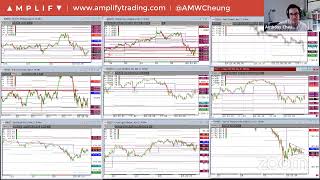
Anthony Cheung and team break down the US market open, analyzing tech strength and energy weakness. Sam walks through his 15-minute post-open trading approach versus scalping, while the group covers Michigan consumer sentiment, Chicago PMI, and gold's S1 support levels tied to yields and dollar strength.
Chapters
Okay, cool. Sam, if you want to, uh, just do a quick introduction, I'm just going to quickly sort the description out.
Yeah, absolutely. Yeah, hi guys, welcome to, uh, our live feed for the next hour or so. I'm going to cover the data. We'll have a little preview ahead of that. And, uh, we'll run through the charts, what's expected, some areas to be aware of, and also we'll go into a bit more detail following the, the release as well, what it could mean for the end of the week, end of the month, and, uh, ahead of the US cash open as well, 2:30 UK time. So an hour after the release could be an interesting period. So before we go live, and any questions, please do fire away. For those that are on Amplify Live, so you've got the Zoom Q&A, you've got the chat function, so please just fire them along whenever. Myself and Ant will be with you for the duration. Everything's set up pretty well. Stocks hitting those lows, knocking on the door. I mean, if you looked at Twitter this morning, Ant, it would be Armageddon out there. Not quite though.
Yeah, it's, um, that was the main talking point. So the latest podcast, uh, the Market Watch we put out just a short while ago, and Piers and I were having a chat about that. And it's always just so interesting. Obviously, it's in the media's interest to play up. It's like it's the doomsday scenario. This is it. The correction is on. We have a toppy. This is it now. And yeah, it's just way ahead of itself, in my opinion. Hopefully the briefing that I do in the morning, hopefully people were able to listen to that. And one of the things I was trying to suggest here was that, look, this move that we've been seeing this week could have some more legs to run. But if you're looking for the Fed then to buckle, and this is kind of like the market be the Fed challenge, and I just don't see that really playing out. The whole I think a lot of what's happened has been driven by a number of different factors. I was talking about as well this morning with some of the guys about these hedge funds are trend following, and this has been— it's broken out. If you have a trend following strategy, then a breakout of a yield in the 10 years we've seen beyond that of then the pre-pandemic levels is going to exacerbate market conditions. And I think that's largely a large portion of what we've seen. And There's so many people, of course, who you and I know who have been plowing into equities at these levels over the last couple of weeks, just getting really bought up into this whole, I want to invest in the stock market mantra. And the market then comes off as it has done, 5%, 6%, 7%, and that feels pretty painful then at that point. Whereas ultimately, you and I know, and particularly yourself being a perma equity bull, that if this market comes down, and even now, I mean, well, look, let's start there. I mean, with this S&P, where would you feel comfortable with a correction if taking place, or not even a correction, a further deeper pullback where you would want to just look to reenter and build back into that more medium, long-term position?
No, I'm, I'm waiting 3,600, so just above your 3,592. I guess if I were to be really specific, that would be the area I like. I like the look of that. I think that would be about 10% from the high. I think that's good enough. I mean, to be completely honest, are we going to get 10%? Are we going to get 10% low of these highs? I'm not completely sure, but I like it there, and I think that's a good sort of value area for, for the next leg to the upside. Um, I regretted on the 1st of Feb that 3656, I was waiting for 3600 and I didn't get in. So the following 300 points were hard to take watching that. But as things go, what comes up sometimes does come down. And it looks at the moment like we can do that. But 3800, such a big, big technical area where, um, look, we, we have an inline of poor data released today in terms of not beating those expectations? And why isn't this now the low for the next few weeks? It could be, couldn't it? So, uh, 3,600 is what I've got my eyes on. There's some individual stocks I like the look of, uh, as well, but really I'm just waiting to see what happens, 1:30, and then of course it's the last day of the week as well, a month. So yeah, I'm keen to get involved next week onwards.
Yeah, and, um, you know, I was having a look this morning just what's in store. I mean, obviously this, this PCE number coming out is, is definitely of interest. But then you've got next week, you get all of the latest ISM manufacturing, non-manufacturing, you've got payrolls, you've got stimulus kind of like D-Day, let's get this through now, this Biden bill. So there's a lot of factors there that could promote an extension possibly of this kind of yield focus, or it's not going to go away anytime soon. It's interesting coming back to the intraday that things like if I look at the S&P here and the T-note just underneath it, I mean, we're just poised. It feels like that's just a classic range, right? I mean, it's a big, big range for some extent. We're talking about 40 points here, but it has been respecting that. That bottom side of that is also that low you can see from what, beginning of the week or 23rd. And T-notes here, if you think about it, this is a yield story that's driving these movements. And it's moving the equity market. And look at how quiet T-notes are right now after that day yesterday. Yeah. I mean, it's definitely— I mean, this price action's got to give, right, in either direction at some point. I mean, it would be very unusual, I think, given the context of this week that we're just going to sit here and just see it out in a very tight range around the pivot. So yeah, definitely if that breaks out to downside, let's say this PCE number is particularly high, for example, then that obviously would fan the flames of this short-term perspective of inflation. But we've got the Squawk on and for the figures, they made a good point and it was, look, the Fed have been clear. We've had the semiannual testimony this week and the Fed have said basically that we ain't going to do anything. We're just going to stay where we are. And so And this goes into the analogies that Piers and I were talking about this morning about, look, the market's just got to have its little semi-shakeout and the Fed have just got to survive that shakeout and then just go on. Because ultimately this inflation, the belief that we have many on the street is that it is temporary of nature. It's not going to be long-lasting. And the Fed communication is they're looking through what is inevitably going to be a pickup in inflation over the next period ahead in the short term. So Again, I'm not looking at this data as like, oh my God, the Fed have got to pull the trigger now. It's nothing like that. It's more about does it feel the psyche currently dominating investors' minds in the short term, which is this kind of inflation focus. And so if that does happen, obviously if yields move higher with equities, I mean, I was looking in the briefing, Sam, at the NASDAQ, You said about the S&P, but I think the NASDAQ on the daily chart as well is looking interesting at these lower levels, which is around that 12,727. Had a brief flirt through it. It failed to sustain the break though, but that's obviously quite key for today because a break substantially of here, which has held up price for the best part of the last several weeks, means then that surely we've got to gap down pretty quick. I mean, that's only a 2.6, 2.7% move to get down to there.
Yeah, I mean, that, that's what— off the highs now, what is that, nearly 10%, isn't it, of the, of the highs? I guess you could, you know, the, the— as common a word as yields at the moment is the word rotation. So, you know, that's why I guess we're under a bit more pressure there as well, um, than the NASDAQ. But yeah, key level there. The Dow, I mean, the Dow Jones was at an all-time high yesterday.
So yeah, I mean, I was looking, I was looking at the Dow shape I mean, check that out.
Incredible, isn't it? But then if you take out yesterday and the day before, it's right, isn't it?
Yeah, I mean, you're exactly right. I mean, actually, if you just eradicate some of that and take that kind of area here, 31,170, it is range-bound largely. But yeah, that was pretty explosive on the prior session. But it's similar here. I mean, that looks pretty pronounced, but it's the same kind of deal in the FX market at the minute, looking at Sterling. On a daily continuation. I mean, forget looking on a 30— on a 90-minute and thinking, okay, that looks for February, okay, fine, that's a bit of a pullback, but we're still up massively from where we were at the beginning of Feb. We were all the way down here at 135 handle, so it doesn't look that frightening, right, in perspective away from the intraday, which looks like that when we've sold off, it looks pretty one-dimensional. But then if you look at a daily, I mean, look, look where the pound was. We were at 126, 127 only, um, at the end of September. We've gone all the way up to a 143 type area. So, um, yeah, I, I mean, I don't know about you, but I still feel pretty bullish the pound.
Yeah, I do, I do. I mean, look, the weekly candles on those currency pairs look look horrendous right now, but the monthly looks okay on the pound. And I think those 2018 highs, uh, 144 area, I think does come in, does come in for the pound. So, you know, there are some big areas of support for, for pound-related products. I mean, look, there you go, 137.60s looks like a really nice place to, to maybe get in again. Um, so maybe we drift lower before that next leg higher, uh, Data today could move things obviously in the dollar space quite a lot. But yeah, overall I'm, I'm still, still bearish the dollar against these, these main pairs.
Okay, well look, I'm gonna switch the scorecard on. We've got about a minute to the data now. So yeah, just quickly guys, core PCE index, the month-to-month expected 0.2%, year-on-year expected 1.4. Can you hear that all right, Sam?
This will be a bit louder, ideally.
Consumption rising 2.5% month on month. The PCE, the month on month, rising 0.2% for the core metric, and the year on year seems falling to 1.4% from 1.5%. After we've dispatched that, we'll have a look at the advanced goods, the components for that, and then the economic producer prices. Starting 10 seconds. Looks like 10% of all the personal income is awake for the consumption.
Yes, context, that 10% against an expectation of 9.5.
It doesn't need to be a delay from getting that data.
So just while we're waiting, the advanced goods trade balance looks like 1.5% for the PCE year on year.
Wholesale inventories at 1.3% from a prior revised up 0.5%, ex-auto retail inventories down 0.2%.
Yeah, core PCE year on year 1.5% versus expected 1.4%.
So look, just what you expected month on month, the year-on-year core PCE at 1.5% versus a prior revised down 1.4. That's been a tick higher in those core inflation metrics. Meanwhile, looking at the headline PCE, that comes to 0.3 month on month, pairing from 0.4, and the year on year at 1.5% from 1.3. And meanwhile, Canadian produce prices 2% month on month versus 1.5% prior, year on year 4% versus 1.8%. The raw materials prices up 5.7% year over year, a big one month over month, that's from 3.5%, and the year over year at 6.2% from negative 0.7%. And as we're alluding to, no real price reaction being seen after these data. Just to recap, personal income rises 10% month on month Polls looking for 9.5%. Consumption rises 2.4%, slight miss in the 2.5% forecast. Remember, this is likely to be driven by that stimulus check that Americans got at the beginning of the year. The inflation gauges, core PCE at 0.3, that's a little bit above the 0.2 forecast. Year-on-year gauge, however, at 1.5 from 1.4. And as we mentioned, Fed likely to look through these data, but we do believe that there will be feel for some of the hawks who are negotiating stimulus.
Yeah, just, just jumping in there, I just wanted to comment on, uh, you know, equities and T-notes, very minor tick up. And for me, that's behavioral. This number is 0.1 higher than expected, but people are so like inflation-focused and hyped that actually 1.5, 0.1 higher is actually disappointment for those people. And they're actually like, hang about, what, 1.5? 0.3 month to month against 0.2 expected, which is the same as previous. Well, that's let us down a little bit for people who are looking for this pending inflation surge. And so I don't actually read anything into that data from a top-level macro perspective, but from a behavioral perspective, I think why you're seeing a bit of an uptick here in equities is that people are waiting for this. And people might have been positioned thinking that what if we get— I mean, top side of the range was 1.7. So what if we got 1.8? What if we got 1.9? What if the Fed had got this wrong and inflation is actually already like core PCE is going through the roof? Of course, that's not the case. And this kind of pays heed to the whole runaway mentality that the market somewhat has. Exacerbated a lot of the market reaction, the movement this week. So yeah, equity is actually a little bit of a pickup. The 10-year, I mean, look, it's the, it's the tiny movement, but it's just come back off, um, some of the recent lows and back up towards its pivot. What do you think, Sam?
Yeah, I mean, I'm a bit gutted really. I wanted fireworks of a really good number and it's not that. So look, for me, Tim just put a comment in our our Discord room, all-time highs next, next Friday. I, I agree, I agree. Look, I mean, we've got data points out next week where the story can change, but for this next leg lower and yesterday's move to be justified, we haven't seen the data that, that should, should lead to that. So I don't know, I, I prefer the moves to the upside now. I think interesting though to, to watch gold. Gold's not having it, you know, this number for me should help gold push higher, and it's not doing that just yet. So I'm keeping a watch on that. Um, but yeah, overall it's, it's not a good enough number for me to be selling at market on stocks. You know, as always, it's a trade what you see, but I'm not selling.
So let's just have a look at some of these US indices then, as they, they see a minor positive reaction. So the S&P is just coming up to have a look at around the, the high end of the range. That was the overnight Asia-Pac high, that was here. And then you had the European Open high here, um, coinciding with that. You've also got in the NASDAQ, which has obviously been quite hard hit in recent weeks. So we had a bit of a breakout, I mean, it did come back through there, but then that was through late yesterday evening when we, we just kind of sentiment soured into the close. And then Asia followed through. We're coming back up to that point now, and you've got the pivot sat above. So how would you kind of view that level?
Yeah, well, I, I said I don't want to sell, but if, if I was bearish and I saw a good reaction around there, that would be an area I'm looking at. So on the flip side, the way I would look at this from, you know, more of a bullish perspective is, well, what happens if we break that level to the upside, get a bit of confirmation above there um, you know, 15-minute closes, for example, above those pivot levels, then I think we can push on. Uh, yes, we've got the cash open less than an hour away, but this would certainly be a zone where we're coming into of resistance where the bears need to take control. Because we finished the week above those sort of lows from yesterday afternoon and previously on in the week, i.e., the pivot level now, you know, it's a victory for the bulls regardless of us moving, moving to the downside. Um, so yeah, it's like slight risk-on, um, equity space. But, um, yeah, I think we need to obviously clear up those pivot levels and, and that trade would come to fruition.
Uh, so I don't know if we can get some of the other guys on, maybe just ping them the link.
Yes, absolutely.
Piers or Will.
Let me invite those guys on.
So yeah, I mean, the pretty, pretty tame reaction overall. I mean, I don't think you could have expected too much else, to be honest, that different. And so the open on Wall Street is obviously going to be important. The equity market definitely has been a focal point of activity this week. You know, the NASDAQ had its biggest down day yesterday since October. Um, so it's going to be interesting to see how we can see off this, this week. Um, so look, Sam and I are going to be on for next hour or so at least because we want to cover through, um, obviously keep an eye on energy products as we go through the next half an hour or so, and particularly WTI. We can talk about a bit more detail, then we'll, we'll drill into some of the equity stories as well and have a look at that ahead of the NYSE open.
Yeah, looking forward to it. Look forward to it. So, uh, sell the latest podcast to me, and I'm looking forward to listening to it. So the latest podcast, yeah, um, last week's was fantastic, really, really sort of put things in perspective for me. So I'm looking forward to this one, no pressure.
Yeah, I mean, look, let me— while we're on, let me just quickly flash it on the screen so people know, because this is a relatively new thing. You know, people were asking for a podcast for a while. And I'm not the biggest consumer of podcasts. So finally got my act together. And we've— myself and the head of trading, Piers. So Piers and I would normally have a catch-up anyway at the end of the week, as you know, when we're in the office in a non-pandemic time. You know, you nip next door. Have a catch-up, you know, outside of the office, and we would talk about stuff that's going on in markets. And we just basically wanted to convert that into an informal catch-up at the end of the week via a podcast. And so that's what this is, and we released the latest one today. So if you check it out, the link I put into the chat, but if you go here, this gives you a bit of a summary. So we talk about this whole move that's been happening in markets. We talk about correlations, we talk about what we think about the Fed, and a kind of analogy of the Ferber method, which I know any fathers, mothers out there will be familiar with. And then, good to see I've got the main man himself, because we talked a little bit about FOMO, and we talked about it on— we touched on it on the podcast, but I know there's someone who loves the subject of FOMO, which is Will. So Will, how's it going?
Yeah, very good. Thank you. Hi, Sam. Yeah, a bit dull on that, that data release. I think someone like me who loves a bit of action would have loved that inflation figure to come out way higher than expected and then just got absolutely stuck into some movement. But no, not, not yet. And I agree with you guys, like the path of least resistance is higher. But about FOMO, I just think this— I've— the last time I saw this much new interest in trading and financial markets was when we started Amplify, January 2009. And that's because every movement was covered in the papers, everyone was looking at huge volatility and just a whole wave of people wanted to get involved. I think the big danger out there when new traders are seeing this type of volatility is feeling like they're missing everything, right? I remember, I don't know if you saw Davey Day Trader on Twitter talking about GameStop when it went 100% 2 days ago and he's like, who did? 'Who made the call? Why wasn't I on this?' Right? And then I think then instead of buying GameStop, because I think he missed it, he then bought AMC or Nokia or something and lost a ton of money. And actually, that's so common with new traders and volatility in that they see everything that's happened, and it's very easy to kid yourself that had you been there at the right place and the right time, you would have taken these opportunities. And, and new traders start to think, 'Oh, I should have got that, I could have got this.' and not realize that volatile markets, they're here to stay, right? There's so much going on at the moment. If you miss an opportunity, learn from it. Think about what, you know, at least your analysis was right. But the main thing, without any question, you said it, Anthony, on your masterclass series, uh, the, the, what's the, your guest name on Wednesday?
Bilal.
Oh, he was excellent. He was excellent, super experienced. And he was saying the first rule for any new trader is knowing how not to blow up. After that, everything can be a slow progression of continued experience. But I think what we'll be seeing with this type of volatility is everybody expecting huge moves, huge action all the time, chopping and changing. And I mean, even just this week, look at some of the stock prices this week. If you look at British Airways or TUI, it's been up 5%, down 5%, up 5%, down 5%. Even stocks like Rolls-Royce, up 7%, down 10% daily. And it's just, it's amazing to watch, you know. And I, after this many years, sort of learned to just enjoy it and not to panic too much. But I do think there's a danger. I don't know if anyone watching this feels the same. There's a danger of getting sucked in, of being drawn into the action, and then as the The critical point here is that if your timing is slightly off, it's absolute curtains because you're going to be buying every high and selling every low. And you're—
it's—
you're going to be— I don't know if anyone's experienced that that's watching. You'll be out of sync, out of sync with the moves. And then the harder that you start trying, the worse it gets. My favorite German word, Verschlimmbesserung. Which means trying harder and just making things worse in the end. And everybody, I'm sure, knows that when you're out of sync, right? You just keep on trying. So, well, I just guess what I want to share on FOMO is if you're sitting back and watching and learning, that's good, right? If you can think about what you're doing beforehand and then an opportunity rises and you take it, that's good. If you identify an opportunity and don't take it, and it worked out that it would have been great, well, that's good too, because it shows your thought process is correct. But don't beat yourself up thinking, I knew that was going to happen, should have done it, and enter, because your timing will be off. And in these markets, if your timing's off, you'll then just— a whole room of pain awaits you.
Yeah. And then, you know, for you and I having gone through these kind of episodes of almost focused attention on certain subjects, there's always another big story. There's always another kind of, this is the one, this is the thing. And from my point of view, it's definitely good. And this is another good thing from that talk that I have with Bilal this week. It was like, look, it's great to be involved in monitoring the markets day to day, but sometimes you just got to take a step back and then just look at it from a distance yourself from it. Be objective and think, OK, so what is the broader trend? And he did make a good point about the way that people present research or findings. And often people will show you what they want to show you. Look, this correlation is really tight with this correlation, which means this. But actually, they're trying to curate a narrative to what's happening. And actually, step out of it, and they might tell you a different picture.
I think with FOMO and psychology, though, even before that, it's more about self-awareness. —because you can't take a step back and look at it if you don't know that you need to take a step back. So even before that, it's understanding yourself and actually quite enjoying the physical flags that you get. So I had it when I was obviously looking at the VIX today, Sam, which I'm completely out of. And immediately that surge of emotion comes damn it, I knew that was going to happen. And then you almost— the more experience you get, the more you kind of then can look at it on that bigger perspective, you know, and not, not necessarily laugh about it, but say, well, look, it's actually just back to where it was 3 days ago when you got out anyway. So net-net, it's fine. And not to take it too, too seriously. You can't be on every move, you can't be on every piece of action. Don't expect to be. But as long as you can learn from those that you've missed learn from those that you should have been in, then, then you're here for the long term. Yeah, completely. Don't do that, you'll blow up.
Don't you agree, Sam? Yeah, completely, completely. I mean, I got in the VIX too early last week, so I took a little loss. And, and yeah, you just got to accept it, you know, just think in the future I'm going to be taking these kind of opportunities. And if you lose, you learn from it. So as long as you learn from every trade, then like you said, it helps with that longevity of being in this game.
Yeah, just, uh, well, because I know you're super busy, one chart I want to flash your way and get a comment on is this one. Hit me, let's have a look. This is the Bitcoin future. Oh yeah, so I've got here a bit of a, uh, a bit of a markup. So this is when Tesla came in, so this is going back to around 8th, uh, of the month. And so we were trading below $40,000 We obviously got close to $60,000. And now we've pulled back. And I think it's been down as much as 23%, 24% from the initial high. So what's the current pulse on this, do you think, in terms of price movement?
Look, I mean, I think it could— I took my Bitcoin off around $33,000 because I thought that was phenomenal high. I think even if we're back down to $30,000, net-net, over a month view, this is still a phenomenal bull run, isn't it? I mean, it doesn't matter. I think the danger with Bitcoin, with some of these FOMOs, is your timing on these hypervolatile products is absolutely crucial. So whilst we're mucking around down here, to be honest, there's no particular trade on the long for me. I think the longs might come back in once we break above that resistance level. You've got 51,065 that you've highlighted with the red bar. Until we get back above there, leave it alone. If we get back towards that sort of, you know, not even the 40s, I mean, even, even around the 30 handle, then, then, then you might be interested in buying a dip. But yeah, for Bitcoin, for me, this is the most important thing about this. As you know, Sam, and you know, Anthony, it's not knowing when to trade. It's every time knowing when not to trade, when not to be involved. And this is a perfect example. Do you remember Elon Musk's photo on Twitter that you shared with him being, shall we say, distracted by Bitcoin, Anthony? Right? You remember that image?
Oh, yeah.
So now's not the time for that. Just leave it alone. There's plenty of other stuff going on. I think the danger is if you've been used to seeing 20%, 30% pops and these wild moves, For somebody that's been involved in Bitcoin now, trading gold is just going to seem so dull to them.
Well, so saying that, this is gold on a daily chart. And we had a flirt with the November low there. So how are you guys feeling about gold at the minute at these levels?
Well, I mean, as I've been saying with Tim, I've been scaling out of my gold. I could have got out of my gold positions way better. Towards the end of last year, certainly. I did start to scale out and got tiny parts on now. I just think, I just think no one's interested. No one's interested in the gold story. It's not what people are looking at. If people start to be interested again, I'm interested again, right? But one of the things is about understanding markets. It's all about understanding people, and it's behavioral. No one cares about gold at the moment. Doesn't seem that way to me. I mean, it obviously one of the things about gold is, yeah, it's a great inflation hedge on one side, but is it? It's not acting that way. In fact, it's more acting in response to interest rates. And so, yeah, I think, again, gold's another one to leave at the moment. You could expect— yeah, why not test down to the $1,700 mark, back to where we were in June? And actually, if you then scroll out and put this on a monthly chart, again, that doesn't change the picture, not really. If you push that down, can you see that would just make quite a nice retest of that 1676 level? I mean, in the longer term, doesn't change the picture too much. But I'm not— yeah, I'm definitely not watching gold as closely as I was because I don't feel like other people are watching it at the moment. Does that make sense? And it's quite hard to do, but it's just realizing that you might be at the wrong party. And this one sucks. Let's move to another one.
I think you explained that perfectly well, to be honest. I think that's right. I think attention is elsewhere, and, and gold isn't the shiny object it once was right now at the moment.
Yeah, I mean, I, I, I, yeah, I just feel like it's, um, yeah, attention is elsewhere. But one of the things, one of the best pieces of research I read coming into this year was just basically saying something along the lines of, look, this rally is phenomenal, and potentially it's here to stay. But at some point in 2021, 2022, you might be better off taking some money off the table. And I still agree on that. At the moment, I think these valuations are phenomenal. But the volatility— and if you can't— if you're in a large size, volatility is going to hurt. Yeah, large exposure and volatility a very sick trader make, right? And you all know that feeling that— I was actually speaking to one of Goldman Sachs, actually fantastic meeting I had yesterday with used to be head of trading at Goldman Sachs, multi, multi, multi, multi-millionaire talking about investment in edtech and projects like this. And he was talking about the need for anybody in trader to feel that deep interior of despair. To feel that wretch and be able to deal with it. And, and that's true, that is a learning process, but you can, you know, you don't want to be going through that daily. So in this type of volatility, I do think you have to just try and be comfortable with the size that you have at risk. Um, and then when something happens— this is definitely the way I'm playing at the moment— if something happens, when something happens, great, I would— I do want to be on it. Um, but yeah, I mean, that stocks could go S&P could go back up to its highs or sell off 5% today. Either one makes sense to me. When you're in that type of market, it's, uh, it's hard to call it.
Yeah, no, no, it's interesting the timing that you said about 2021, '22 and taking some off the table perhaps, because I think that's a really interesting time horizon. Because for me, that's when this whole stimulus— we're out, the vaccination is kind of done to a certain extent, the reopening has occurred. The economy's gone through a massive acceleration phase, and then things start to slow down a little bit because now the stimulus isn't coming left, right, and center anymore. And that's been factored in, that reopening phase. Then it's like, well, where do we go then? And then we're going to be, I would say, on balance, higher in equities where we are at the moment. So then we're even further down that road, and then what happens? So That, that will be further on a very interesting period, I think, as well, till to come. No problem biding, biding your time.
Uh, but listen guys, I've got to make a move. Uh, enjoy the rest of the session.
Take care. Cheers, Will. Um, yeah, let's, let's take a look at oil just ahead of, um, 7 minutes coming up until, uh, 2 PM London. So we normally see a bit of a pickup in volume. And yeah, just wanted to have a glance at oil on the, on, on the daily. And it's just been on a, on a tear really for, for some time over the period of the last, you know, kind of month. We've seen a decent breakout of price from what was then— I mean, look where we were kind of pre the full-blown pandemic. We're kind of trading here. We broke out above there having found some resistance to price in the mid-latter part of January, then we've shot up And now we're at the level around $63.40, which was the high that we printed back in— do you remember that? Do you remember? I can tell you where you were.
I can tell you where you were.
So this is when me and Sam were sunning it up in Tuscany in Italy at the time. And I remember getting a couple of messages, people going, have you heard the news? The Saudi news? And that was when the drone strike happened and we had this historical large gap up in prices. Um, so that's, that's basically where we're trading at the moment. And above here, obviously, $65 then becomes, you know, very meaningful, uh, if we start looking at the last couple of years' data. But yeah, oil has been very bullish, as has other industrial-based metals like copper, for example, if we're looking over a weekly period, because of this whole growth prospect picking up because of generally a perception that economies are going to reopen. And when that happens, then things are going to fire up. US data has been very strong. Stimulus is coming, so on and so forth. Throw in then a deep freeze nationwide across America that happened last week. And as much as that's thawed out, the idea here that things like OPEC, even if they do reintroduce a degree of production, which offsets a little bit the depths of their supply cut. They're still supporting the market at this point. And then, as, you know, Tim, one of the other traders here, talks about a lot is the chronic lack of investment in US shale production. And generally, that's going to put a squeeze when demand's going to explode as we go through the reopening phase. So yeah, definitely there's, there's reasons here with oil and You know, just to be clear in terms of the news flow this morning, this US intelligence report about Khashoggi that's going to show that basically MBS had him taken care of, um, as much as that sounds pretty sensational, it really has no consequence, I don't believe, in terms of the price of oil. Well, look at the price of oil today. It's done the opposite then, if that was a theoretical move and you were thinking, wow, that's going to really flare up tensions between the US and Saudi.
It's funny that Khashoggi is in the news today, but we're exactly the same—
that day. Incredible. Yeah, it's funny how these things work out. But yeah, look, the Biden administration is just bedding in. There's been a really good TV documentary that was being on. I don't know if you caught it. It wasn't last night, the night before, and it's about Trump and his presidency. And it was a 3-part series, and the last episode was about Asia. So it was talking about the trade war with China and the nuclear situation with North Korea, and then what Trump was doing. It's really fascinating because it interviews all the right people— McMaster, Lighthizer, like all the main movers and shakers— and it gives you an idea of what it was like to work with Trump. Which is on BBC, sorry. Yeah, I think it's on BBC, and it sounds like horrendous because Trump would just like, you know, shoot from the hip a lot of the time without real credible kind of, I guess, strategy behind a lot of decisions. But the long story short, Biden administration coming in, if you think about the news cycle that's been happening of late, you've had Iran and this whole idea about what are we going to do with sanctions, the return to nuclear 2015 kind of Obama-led agreement. Is that going to happen? So that's reared its head again. You've got China, the US military naval ships flying down in Taiwan across the sea. War game exercises, flexing the muscles. So why do countries do this? I mean, it sounds pretty provocative action. But actually, this is what you do. It's kind of like me going for a meeting with Sam, and I've never met Sam before. And I want him to know that I'm a serious player. So I just make noises so he knows that I'm coming at it with some serious— with serious intentions. 'And so we negotiate in a slightly different way.' I mean, this is just the nature of what these countries do. And then you throw in the Saudi mix. So at the moment you've got Iran, you've got China, of which I must stress Biden's approach is the same as what Trump was doing, because China is a credible long-term implications in terms of what the US has got to do in order to somewhat get along with or control the inevitable superseding of power in the end to China. Not that that's going to happen anytime soon, but that is their number one competition and trade partner. And then number 3, you've got Saudi. So if you think about it, there's Iran, China, and Saudi, all yet really Biden needs to sort out in terms of what's the policy stance and relationship he's going to hold with these people. Um, and at the moment It's all kind of talking tough, flexing the guns and the muscles at the moment with China. Iran, kind of the same. And then with Saudi, the relationship is going to, if anything, be much more sensitive now that the US are calling them out in terms of what we already know, right? It's not rocket science to know what went on with Khashoggi. But how do they deal with that? The Saudis— this is where the relationship comes in. The Saudis have got vested interest in the US stock market. They have ownership on large multinationals. They have an arms agreement and military alliance with America in a situation where tension is rising in Iran. It's not just like, oh, you killed this guy, that's it, the relationship's off. There's a lot of layered kind of understanding to this relationship. You know, why does a conservative Islamic nation have such an alliance with a Christian nation like the US? Well, it's a relationship born out of need on various different levels. And so, you know, they've got the black stuff that we want as far as America concerned, and geographically sat in a very sensitive area that would help militarily control that region. And they also buy a large degree of our arms. And then on the flip side, you've got Saudi, who have a nonexistent military force in a hotbed of activity for confrontation with their historical enemy, which is Iran. So there's a lot of stuff there that Biden needs to figure out and really show his hand at. And when I think about all these things, Beyond, you know, the narrative, which is the vaccine, which is the dominant factor for oil and commodity prices right now, which is this growth pricing in at the moment, there's so many things there that I think— I do think that oil— I do think the oil goes higher. I think it goes— well, let's put some calls out there while we're here. Let's, let's not beat around the bush, get the daily charts up. What we—
what you think it is in, like, target before it starts to come down for a bit, or—
yeah, yeah. So we go 65, no problem. So then let's have a look.
I think 70 is, is a good enough area, I think, for— yeah, I think that— I mean, and then it's 75 or 70 though, do you know, you know, so But then if you go 70, what's 5 more bucks between friends? Um, I mean, Tim in the chat has just said oil is gonna rip. Forget 65, 70 is happening.
Um, I, I, yeah, I think definite— well, I say definite, nothing's definite, but I'm— I feel strongly about 70 bucks as the beyond 65, which I think will break. And that will be meaningful given the multi-year significance of that level. Uh, when we get to 70, I, I think then it becomes a case of not going 75 plus, then breaking out above this 2018 high. I think then it's like, okay, where are we at at this point in time? I guess you've got to think about timeline. When is this going to happen? I think ultimately you are going to get this massive acceleration of economic growth really take hold. Because at the moment, the market yield move we're seeing is pricing in that happening. When that actually starts happening and actual economy activity starts picking up and subsequent demand for oil, planes can fly again, people can go on holiday and do stuff, goods can be manufactured and exported and sold and bought because people have more confidence and there's stimulus sloshing around still, then I do think we we get to a period where we kind of consolidate. Now what that range might be, well, $75, $65, or $65 provides a bit of a floor once we get through it. Yeah. And then that will see us through then for the months thereafter. That's probably how I'd see it at this point.
I asked, um, a question on my, my Instagram and Twitter, and it was, will oil ever go negative again? And I personally think people were just having me on. By saying yes, but it wasn't a clean sweep of nos. You, can you see that happening again?
Well, if it's happened once, it can happen again. What's the probability of it happening? I'd say it's very small. You have to think about then a lot of that move was to do with things like what is it? USO and the oil ETFs related to then their position holding in certain futures contracts and how they had to roll out of contracts because they're all kind of concentrated in certain areas. And so beyond the kind of full infantry situation being at Cushing and stuff like that where there's no storage and so on, you have to remember it's kind of like— I can't remember who I spoke to, they were talking about the comparisons or parallels with the taper tantrum of 2013. It's like the same with oil and what's happened in April of last year, or May, whenever it was. And it was— now that that's happened, don't forget, people are now aware of what to look for and that it has happened before. So the first time something happens, obviously the movement and reaction effect is amplified comparative then to when it happens again. That whole kind of you know, once you see and hear something multiple times, doesn't matter how dramatic it is, it becomes then normalized. And so I think by the time people start clocking on that, okay, for whatever reason there's a— there's some sort of storage issue, whatever catalyst might create that, let's say, I don't know, we have another renewed pandemic on the back of a mutation or something like that, um, then I think then the appropriate things would happen too quickly and ahead of time to allow what was then a panicked situation where people were bailing positions at the last minute because they had to, which then subsequently resulted in that negative price. So personally, I think it's very hard to see it again.
Um, not impossible, as we've seen.
Yeah, right. Incredible. Yeah. So what— let's have a look in the chat then. Is there We got the open 25 minutes. Yeah, Tim in the chat, it will never happen again. Yeah, I don't disagree with that. I mean, in terms of probabilities.
And then look, I mean, imagine 365 days ago someone says to you, you know what, I reckon oil was going negative. You look at them like, what? What?
Well, you know what I said? That when, when, uh, Bernanke first said we should do QE, everyone was like, what? Because I was talking to some new traders earlier in the week, and it was particularly when you've not been exposed to markets that long and you kind of make the assumption that QE is just normal.
It's just normal.
And yeah, you're right. It's hard to factor in. When people talk about negative rates, you remember when that was a thing. Now it's kind of bedded in as just part of the toolkit. Now. So I definitely do think that markets, and particularly central banks and the like, are very good at being creative in finding other ways and means beyond what's available now that in the future might become new ways to try and manipulate the lending environment or liquidity or whatever that might be. And then it becomes— when I started my career, it was so easy. It was just like, Oh, GDP is strong, retail sales are up, right? So rates go up, and then it goes bad and rates go down. It was just kind of quite binary. But obviously nowadays it's so much more complex about, you know, is good bad, is bad good, is bad bad, how bad is bad, and does it mean like more QE? And if so, what's the composition of it, what's the average bucket of the maturity they're targeting, what's the capital key in the eurozone, what's then the Lisbon Treaty's parameter threshold and all this stuff. It is more complicated now than it probably was, I'd say. But simplifying it, I think with central banks, when the shit hits the fan, then they just do what's necessary. And I think, you know, we're, we're not out of the pandemic yet, and so I don't think there's any reason for them to change course right now. And, you know, Europe is case in point. You know, Europe is so far, so far behind in that respect to the vaccine and the reopening that, you know, there's definitely no way the ECB could start making any type of noises at all anytime soon. Anything other than adding more stimulus in whatever shape or form that is. Um, what do we expect at the market open on Monday? Yeah, there's Chinese, um, official manufacturing, non-manufacturing PMIs coming out the weekend. How important are they? I don't, I don't think they're massively important. Um, China, uh, data was The Chinese data was like on fire for quite a period. It softened a tiny bit recently, but it's still expansionary in most of these readings. So the data there has been pretty solid. You remember, I think it was earlier this week, maybe Tuesday, Asia-Pac session, I think the Chinese equities had like their worst performance in 6 months or so. So it was almost at the point as well in China where too good means well, hang about, are they going to stop adding liquidity? Are they going to start tightening policy? And that caused their market to just have some temporary downside that was quite heavy on the actual session. But over the weekend, there used to be a period, you remember, Sam, where at the weekend you were kind of like, oof, what might happen with the virus over the weekend? We don't know. But that ship has sailed. Because the trajectory of viruses has become a lesser concern now. The idea about mutations, remember, that was a thing probably 8, 10 weeks ago, maybe 3 months ago when the first one happened in Kent in the UK and then South Africa, Brazil. That's also, I think, that ship has sailed to a certain degree because what was the greatest fear was a dramatic mutation rendering vaccines redundant hasn't really materialized. And so it's hard to see that happening. Again, could it? Yes. Will it? Low probability. So you're willing to look beyond it. So that's not much of a risk anymore over the weekend. The Chinese data, I don't think, is much of a risk. Really, I think it's about then this current narrative of yields spooking people. And equities coming under some pressure, uh, and perhaps then room to come off a little bit, giving it reason to come off some of these elevated levels. I think this might persist, not necessarily for Monday open, but for next week. And I'm quite keen to see the ISM data and payrolls. What does that look like? I mean, if payrolls is good and ISM is very strong, then it could get quite interesting. Because does it— because the Fed aren't going to say anything. So if the data gets really strong, the Fed are still not— are still backing off, just playing it cool. Well, then the market's going to continue to be a little bit, I think, negative in its psyche of yields will move higher, and that will trigger then some further spillover. Um, so kind of looking at next week as a whole rather than anything specific over the weekend, uh, to be honest. Yeah, I mean, it was—
it's funny you say about the whole weekend risk. You know, they're gone are the times of, um, worrying about the virus initially. I mean, there's literally a year ago to the day, I think it's the 26th or 24th of February, where it then gapped lower the 24th to the 26th, the first real big one of the year. And it obviously, it never came back for— well, it didn't come back for quite some time, but They were just fascinating times in the markets, weren't they? And, um, yeah, I don't, I don't see a mass— like, I don't, I'd be very, very shocked to come in Sunday evening UK time and there'd be a gap higher or lower in, in US stocks right now. But a year ago it wasn't surprising. I mean, it was like opening, like, limit down, wasn't it, in the US on Sunday evenings, which is incredible, incredible.
Yeah, just, just having a quick scan on the chat, make sure my, um, audio's on.
Yeah, just having a look at the pound sort of breaking out back up to near its, um, sort of 140 region, little break of that previous resistance area. Euro up to the previous low, so a little bit of a relief following that data. I mean, the S&P is still range-bound, isn't it, on that high? You've got the open 20 minutes, 18 minutes away, so probably not worth getting too involved on that. T-notes, if you've mentioned there, is, is contained. Gold, I'm— I have to say, if the— if euro and pound push on and gold doesn't, then I think we're in for a big move. Next week to the downside in gold if it just can't catch a bid with other markets, which it's struggling to at the moment. What, uh, and how, how— and looking at T-notes price on the, the longer time frame, you know, it is where it was really a year ago, give or take. How, how, um, how low does it come before it becomes attractive again? Do you think?
Well, this 1.32 in the 10-year was a big level. This was, yeah, really prior to the main episode of pricing in what was going on at that time, and then the shakeout obviously in the big equity rout that we had. So yeah, I mean, look, we're only 2 points off that from current price at the moment. I mean, if you were just blindly looking at this technically, you'd be thinking, well, yeah, why is it not going to get down there at this point? So yeah, there's a bit more scope here, and that's what I'm saying about perhaps next week could be quite interesting given the setups here. Um, because as we were looking at with some of the S&P and NASDAQ charts, what you'd be looking for is a synchronized break of these key longer-term levels to then see another little leg to what we've had this week, then not only do the dip buyers come in in the stock market, I think people will start fading the yield move as well in the fixed income market. One thing I've learned over the years with markets— I can't remember the guy who was, he had a really good way of saying it, but generally, markets always overstep on the initial interpretation of information. They always overprice. And that's what's really quite a common behavioral element of markets. It's like markets love taking a crumb of information and then generating an entire end outcome. And sometimes they can just get one step too far. So Um, yeah, just having a look at the pound though here. Let's just quickly jump back in. And I was looking— this is the pound on a 30-minute, looking at the sterling future. And I had a couple of things marked up, Sam, from the briefing this morning. Yeah. Um, you know, initially, well, this fib was from— I was trying to capture just basically the February rally. So going from the low to the high, and the market kind of did respect that to a certain degree initially this morning, had a bit of a bounce, and then came back, back up to that rectangle which was looking at, which is the highs and the lows. And, and yeah, they came back down again. Um, since that point, we did have some comments out of Haldane. Um, I know Haldane gets a lot of grief on Twitter, um, from certain people, which will remain unnamed because he's a fairly vocal chap. He's like the UK version of Bullard at the Fed. And he came out and he was talking up this idea about, "If inflation goes up, it could be a little bit hard to control." But I think context is quite key. He has been very much more so on the hawkish side of the MPC for some time. So him making those sorts of comments, I think, is not unusual. He's also been very open to stepping away from the majority and being quite an outlier in his view. So I wouldn't make assumptions that any of the MPC share his thoughts at this point. Um, but interestingly, look, the pound's just recovered a little bit and we're just coming up to that kind of next area that could be quite interesting to look at, which is kind of here. So looking around 139.82, just above that then and would be the 382 retracement on that move as well. Um, so would you be keeping an eye on that for the rest of the afternoon?
Yeah, definitely. I think you've got the, the key levels marked up there for, for the pound. I really do. I think it's, it's one way you can understand the little push higher we've had following the data break of the technical, uh, resistance at 3950s. And, and yeah, we just had a 30-pip pop, if you like, up to the next area where people would take profit. So now it's almost in the midst of, you know, probably no new trade to be taken, uh, to the upside anyway, unless it can get back above, you know, 39.82s, then 140 comes in. But on— in regards to the medium-longer term, I'm still, yeah, bullish on the energy complex.
And Energy Intel reporters suggest that Saudi Aramco has begun commissioning its Jazan refinery, which is 400,000 barrels a day. According to sources, according to Amina Baker of Energy Intel, Aramco has started commissioning its 400,000-jazz refinery. According to sources.
Yeah, that's not a market-moving comment. I mean, that's just Saudi commissioning a refinery. So yeah, no consequence for today's market price. I did see some news on Twitter earlier Bring it up. Did you catch that about their paid premium service?
Yeah, I did. Yeah, quite a lot. I mean, it had a good day yesterday, didn't it? Yeah, good day yesterday. Um, although trending on Twitter earlier was RIP Twitter. Oh, it's the people.
People love a freebie though, don't they? They do. That's it.
Yeah, I mean, do you know what, and we actually— you might not even remember this, but I remember I'm going to say 2 years ago talking about getting in on Spotify, and it's one of my big regrets not having got in at the time. And that's, I think, 20-odd percent off the high at the moment, and I like it. I think it's, it's a, it's a buy the dip. And I'm just slightly annoyed that the data today wasn't better. So we just had this whole rotation push as well, and the yields and stocks come lower to get in, and Because yeah, I feel, I feel like that's, you know, going to go to 600 and it's currently—
yeah, 300 or so. Yeah, Spotify was one of those that, um, just kind of stumbled into. I think I got into Spotify very early, um, and you know, as complex as you can make investing sound sometimes, you know, whether you want to do some sort of deep dive financial balance sheet analysis, or you want to talk about, you know, deploying a top-down macro approach and identifying sectors and sector value and all this sort of stuff, I just use Spotify, right? And, and so does pretty much every single person that I know. And actually, most people I know pay for Spotify now. It's not like they're free being it. I mean, I remember I had Spotify for quite a long time when it was free. You just had to put up with an advert every now and again. And then they brought about the payment mechanism to monetize it because they went through this big acceleration of membership at the beginning. Just get it out to everyone for free. I remember people were saying the same, "Oh, RIP Spotify. Can't charge people for this." But yeah, obviously it was trading way lower than what it is now. Um, it's one of, you know, with that sort of thing, I mean, I just don't even, I don't even look at it.
I need to.
Yeah, I just guess like, I mean, what, what's going to happen? What, they either go up or someone buys them out and just like assumes them into their own ecosystem, whoever that might be. But I guess they're beyond that point now because they're quite big. But, um, yeah, there's a question here talking about stocks. Someone was asking about the growth stocks, is this the end for them in the near term? And again, it really does depend. With investing rather than trading, it's really about your time horizon. What are you looking to get out of what you're doing? I mean, if you're thinking, oh, growth stocks, Apple, yeah, it's going to come off now. It's a bad time for Apple. It's like, well, yeah, sure. I mean, they might weaken a little bit in the very near term in this environment where the NASDAQ's getting hit 3.6% yesterday. But is Apple not, not gonna go up? Yes, by the time that we go through the next even couple of months. I mean, of course it's— I mean, I say of course, most likely it will. So, um, yeah, your time horizon is key. I mean, again, I've got some Apple from a long time ago, and Apple's just a slow burn, just let it ride, I'll see you in 10 years kind of job, unless something crazy happens. And, you know, I saw your I saw your Instagram poll and it was like Amazon or Apple. I mean, I don't— both. I mean, it's not really one or the other. I mean, look, if you're going to be picky about percentage points, then sure, you kind of like the breadth of the model that, say, Amazon might have. But I guess from an Apple perspective, you know, Eddie was talking about this before in a few weeks ago when Tesla investing in Bitcoin and Apple investigating a wallet for these types of things, and so sort of coin exchange. And yeah, there's interesting stuff on that side that perhaps could be another evolution of that company. But I just think, again, this is that mentality of the stimulus check retail trader coming into markets fresh and just thinking, "Right, who do I buy then?" And it's just, that's it, they're in. They're in right now. It doesn't really matter about— and they want, they want, you know, this is the interesting thing about the, um, the kind of anchoring of what, what I think is quite interesting now with a lot of, um, the kind of demographic who might be more entwined with that whole Robinhood and zero commission. It's just like, I mean, if you're trading GameStop, right, and that's the first stock you've ever looked at and your first trade earned you like 100% and you did it in like 3 days. I mean, where do you go from there? You're going to be like, unless I'm getting an absolute rush, thrill of ride of my life and returning 100%, then where do I go from here? And then you say, oh yeah, why don't you park it in ETF and get 9% S&P on an average basis? And you'd be like, what, over 12 months?
Yeah, you're joking. Yeah. I mean, one of my good friends is— he, he loves the penny stocks, and Penny Stock Twitter is fantastic. It really is. Everyone just pumping their ideas, and I'd love it. I absolutely love it, looking at it. But yeah, it's— I think, look, for anyone listening and wanting to start out, it's absolutely the safest place, you know. Get in ETFs that you believe in, and, and then you can go about learning about the rest. But Yeah, GameStop is— if that's your first one, it's, it's probably the, the most unhealthy one to have got in, in that respect, because everything else is going to seem like a comedown, um, from that. But that had obviously another couple good, uh, well, really good day— what is it, 2 days ago? Or evening? 2 evenings ago?
Yeah, yeah, it's got everyone excited again then. Yeah. Yeah, I'm not— I'm gonna say no comment.
Well, look, I mean, I, I am— I'm really proud of myself because I didn't get in and I knew that I wanted to. I knew I had people messaging me that AMC is going to do the same, and I knew if I got in I was going to lose because it's just not my style, it's not my approach. And thankfully for, you know, I was justified. But even if it did continue to go higher and higher and higher So what? So what? I think that's my, uh, my way of dealing with it.
Yeah, cool. Well, look, we got the open, 5 minutes. Um, yeah, we'll stay on for just a little bit through the open and then see how it opens up.
Is the S&P frozen or is it, um It's literally just meandering along that high, isn't it? Look at that. I think it'd be an interesting open if you put the S&P on the 240. If we are to get above the, the pivot level and some of those previous lows and also what was— let me just— this, this sort of region here. And you see those two previous highs. If we, if we close the week above that, I mean, that's, that's a big win for the bulls really. And I would say we start on the front foot next week. On the flip side, if we go and test that immediately in, in the open, selling pressure starts and we finish the week near the lows, then Yeah, I think we can continue down. I think that's a really, really key level. I'm super interested to see how we've, we've closed the week and of course the month as well, uh, in and around that. And you know, we're not far from, from there now. I think that's going to be a big psychological level.
Yeah, Tino's just literally doing nothing. It's just, uh, it's like alarm bells when you see price action like, like that, which, you know, in the context of things, the 10-year having a range of 4 or 5 ticks in any normal situation would be perfectly fine. But you know that it is getting squeezed a little bit through the course of the day with Pivot.
Yeah, and I mean, and if it does break those lows and gathers momentum, then, you know, you'd imagine we get a similar kind of move to what we had yesterday. So I think it is going to be certainly interesting.
Seems like at the moment that the PCE disappointment for the inflation bulls has, uh, is just enough for relief for the time being. But obviously I think we've got to wait for the open to really make more sense of it.
Stellan, you just asked a question, should I buy the Tesla dip? I don't have a chart in front of me, but I do think it comes a bit lower. So there will be a dip to buy in Tesla, but in my opinion, it's not right now.
Djokovic still, still, uh, not getting the love he deserves in your opinion, Sam?
He's not. I mean, I'm, I'm I prefer Nadal. I do feel a bit sorry for Novak. I think he shows his frustration quite clearly that he hasn't got that, that love. I mean, Federer is probably the most popular tennis player, isn't he? That backhand and, um, his way of carrying himself on the court, all of this has got him many admirers like yourself. No, no, I'm Tim Henman. Um, but no, he hasn't. And if I was a betting man on who's going to retire with the most Grand Slams, I probably would say Novak. Um, and then, yeah, I, I feel, I feel a bit sorry for him. But then he's had a couple of, you know, misdemeanors in his career, most recently, recently the US Open in the summer.
Wasn't there something with Australia and he was saying about something about the COVID thing?
Oh yeah, didn't he get a bit of trouble? Yeah, he hosted a party. I said the party. And if Nick Kyrgios is having a go at you for something, then you know you've done something wrong. Ah, Kyrgios.
Yeah, I wouldn't, I wouldn't, I wouldn't bite with Kyrgios. No, you just gotta just, just let him do his thing and just, or just say something point blank like When you win a Grand Slam, son, then you can talk. Then you come talk to me. Otherwise, not interested. Yeah, absolutely.
You know, in tennis though, it's interesting. You've got a couple of these young, young players that are getting better, um, but just shows how good Novak, Roger, and Rafa have been to still be, you know, smashing it out out there.
Okay, got the open.
Okay.
Yeah, if there's anyone new joining, um, the feed, then, you know, we are global macro traders. So, you know, if you're a US-based stocks trader and you're kind of looking at some of these small-cap stocks and just looking at the, the order flow data and just trying to pick up, you know, a couple cents here and there in and out of different stocks, that's, that's not how we trade. Um, nothing wrong with that way of trading, of course. It's just that we're We're global macro cross-asset kind of base strategies, so we'd be looking at outright positions based with that at the forefront of the decision-making kind of process. So, um, yeah, much more placed to talk about some of the big themes like that. Um, so a bit different from perhaps that single stock-centric focus. Yeah, so push up session highs and initially out the gate, NASDAQ, S&P.
Yeah, keeping watching those, those pivot levels. Um, yeah, it's always, you know, you know me, and I prefer the wait 15-minute approach just because those initial spikes higher or lower can be reversed so quickly and people will absolutely trade the open and do well from it if it's their approach, their edge, and they're consistent with their reward and risk. But for me, yeah, I prefer to wait to see what happens 15 minutes' time and then, you know, go for a market check after the US cash FTSE open.
It was a constructive open for the cash indices, particularly for the NASDAQ, which is of course up by around about a percent as yields come in. This is a theme we've been alluding to over the course of the morning. And not only of course of the morning, over the last few months as well. So tech stocks doing pretty well, leading the pack. On the bottom of the pile, energy lagging. It looks like it's taking its cues from the crude complex where the WTI price down around about 80 cents at the moment. Financials also among the laggards, likely a function of those yield moves that we're talking about. Uh, Sam, for the rest of the session, nothing specifically scheduled by way of major events. We'll get the final Michigan print for February at the top of the hour.
Okay, gonna shut him down. Um, there's a question for you, um, general question: when looking to enter a trade, do you have any rules, indicators that you use to confirm that entry?
Yeah, absolutely. Um, so if I was to look for a trade, say, on a shorter to medium, medium-term outlook, I want to be Well, first things first, I want to know what's going on. I want to know what's going on. So in the morning, I'm not really looking to get into a trade till after 8. So for me, I'm looking at the, the news, what's driving the market in the calendar, and watching, watching the briefing really. So, and a lot of my decisions come from what you say. So no pressure, but I want— yeah, I want to. And the reason I do that is I'd like to follow the trend of the market. So if there's news that's come out overnight, then, you know, I need to be thinking, does it mean that now the market's going to come back lower, or are we continuing that? Is there any key data point speakers that are going to come out during the day that I now need to be aware of and maybe can't trade? So that would be— once those boxes are ticked, then I'll look at the charts and put them on say the daily chart to look at any key areas that were near a 240 timeframe as well would be sort of the minimum level that I would trade off. So I'd like to see, for example, I'm looking for a long, I'd like to see an uptrend over the last at least few weeks. I'd like to see a break of a key resistance level, confirmation that we've closed above, and then looking for the, the sort of the retracement back into what was resistance, now support. With a good risk reward. Um, now what makes that easier for me is one, experience, but also, you know, knowing what key levels are. Longer-term levels are looked at by more people, you're going to get a better reaction off of those. So yeah, I start with, you know, looking at the bigger picture, the key daily levels, and then are we going to continue the trend? Is there anything coming out today that means we aren't going to keep going higher? Is there anyone speaking? Is the risk-reward good? And I decide my risk-reward based on the levels that are on the chart. I know some people will say, look, I'm trading a 5:1, and that means I have to miss out some, some potential key levels just to back up the stats. For me, it's about, you know, what is the chart telling me? Is there a weekly high near? Okay, well, I'm going to book a bit of profit at that point. So yeah, that's, you know, the basis of it. Um, it's, uh, obviously, you know, going to be still some discretion in there. Like, for example, today I'm not going to get into the medium-term position. One, because the data. Two, it's the last trading day of the month. I'm going to wait till Monday for a new week, new month, before looking to get in anything new. And it's just, I guess, understanding the, the calendar for, for the week, weeks, months. Um, but yeah, I like to follow a trend with a technical reason to get in, a technical reason for my stop which invalidates it, which I accept before getting into the trade, and then technical reasons for my targets where the risk reward is, is better than 2:1.
Cool, thanks, Sam. Um, there was another question in regard to, uh, I'm not sure how the age of this person, but just to, to Tick it off. Talking about bachelor programs around Europe, would you suggest to someone observing markets for 2 years now and training developing strategies for 6 years, 1 year? I'm actually passionate about economics, macro, micro, was thinking about doing economics and finance. So I, well, I guess I tackle this 2 ways. One, if you're a student, um, and you're thinking about what discipline to study at university Uh, yeah, I'd say majority of people would study economics or something finance related. It's not a prerequisite though to work in most roles. If you were going to work in a more technical-based role like research or some kind of quant-based role, then it's going to require probably mathematics, engineering. Those kind of numerical-based disciplines could be very crossover. In terms of what colleges or programs to get into, you want to aim for as best as one that you can possibly go at. You know, we have a different arm to our business which, which has technology to identify talent based on performance, which is the way that big institutions want to go down now in future. But ultimately, big institutions still generally recruit from a small catchment of universities. Similar in different geographic regions. So a select handful of schools in the UK or in mainland Europe or in the US, it's a similar kind of thing. So if you get into those, great. If you are older and you, you know, you want to just up your skill level, uh, and it's just about trading, then, you know, joining communities hopefully like Amplify Live can offer that. You know, we have live streams every day, we've got, you know, lots of content we're adding. I think today I've got at least 3 or 4 videos I need to upload from conversations that we've had um, over different things. Um, so with that, obviously academic qualification and your ability to trade have very little correlation, I would say. Uh, it's, it's so psychological. And, you know, Sam's got a new group of traders. So Sam, Sam is our, you know, head of trader development, and he's got a new batch of people coming in next week to undertake some of our training. So quite keen to see what the background is of the new bunch, really. Um, have you got any insight yet as to anyone unique in terms of their circumstance, like any sportsman, or, you know, had pilots obviously given the pandemic?
But yeah, we've got— I think we've got a couple pilots again, again, this group. Um, see a couple people in, in the chat now. Oliver, you're, uh, you're terrible. Don't worry, I'm sure you're not out there. That's starting. So yeah, we've got a good mix of people as usual from all different backgrounds, ages. Um, so yeah, I'm really looking forward to it. You know, it's, it's set up nicely, isn't it? Not just, you know, the markets now, but over the coming weeks. You know, I'm, I'm expecting it to be super interesting as we just see the NASDAQ push through, the Dow not really biting towards it. S&P doesn't know what it wants to do. T-notes hanging on that bottom trend line. Um, but yeah, no, really looking forward to it. Um, and, uh, yeah, we, we start Monday, Monday morning.
Yeah, just keeping an eye on gold here. Just had a bit of a retest down at that, um, S1 on the daily pivots, which was the low we printed straight away in the futures at the market kind of entrance in Europe. And obviously on the daily, that's that kind of longer timeframe level we were looking at, 62, which was the November low. So, um, is it same, same case here for, for you from a technical perspective, to close today?
Yeah, really interesting to see where we closed the day. And, um, you know, that little bit of dollar weakness that we had from the, the data, if, if gold couldn't push on that, then yeah, I fear for it. If we were to close the week right now, um, then I would— I'd imagine we, we, we have a decent downward move next week, to be honest, to begin it. And, uh, from a technical point of view, as you can see, you've got your— the rectangle marked up. That is a key support point and has been a key level going back to last year. So for us to psychologically close the week below, everyone's seeing that. So, uh, Yeah, does not look good for gold right now, uh, but there's still time to go before, you know, if it snaps back, finishes above 1762, 1770. You know, if you're looking for a reason to get long, false break is, is one of those reasons.
It's quite funny, I was just seeing, um, Ahmed's just said in the chat he's taken a quote from one of my notes in the morning, and it says, quote, Anthony Cheung, 2 weeks ago, when markets are quiet, it never really stays this way for long, so keep your powder dry. Yeah, it did feel like we went through a period of it was getting too quiet. And, you know, just through my experience, you know, market— markets do not reflect that consistently for too long a period. It's almost like it almost becomes self-fulfilling in a way. It's like we go— the longer we go through these stretches, and when you start getting people put up the dates of like, it's been 24 days since the VIX did this, or the S&P had a change of that, you know it's coming there. Yeah, from a behavioral element. Um, so yeah, it's quite— that's quite funny. I would have said that. Um, but yeah, you can check out my, um, Twitter handle, um, if you want to get a morning note. I put it out very early UK time, kind of around 6:45 in the morning, um, kind of prep you up for the day ahead. Um, I don't know if there's— I don't know if you covered this or not. Fred was asking Sam about execution. Do most swing do mostly swing trading and getting stung when trying to get in on a retracement. So looking, if you look at anything like the RSI, moving averages, VWAP for confirmation to take a trade, or have you got a rule set up for yourself?
Yeah, and, and each person will probably give you a different answer, to be completely honest, but it's, it's what works for you. And if you're using a moving average, you want to make sure that moving average works on that product that you're looking at, and you can, you know, backtest it. You can review how well the 100-day moving average reacts when it gets hit, um, and same with Fibonacci and, um, you know, RSI and, and whatnot. So any, any tools that you use, before you put them on, you want to have a little scoot back, scroll back on the screens to make sure that they do work. I, I like to keep it quite simple, um, if it's the first retest of a market— of a level, sorry— then I'm happy to, to get in straight away. Uh, I'm obviously looking at the, the calendar, the news, to see what actually— is this just a little pullback to get long, or has the trend changed and, and gone? If it's a multiple, if it's a second, third test of getting in, then, you know, I'll wait to see how we close in and around that level before pulling the trigger as such. But in terms of other tools that could be used there are so many, aren't there? And that's why, um, if you are to go down that route, you just want to make sure the one that you're using works and has been respected. And you can see that people are also looking at that. The 200-day moving average on stocks works because people talk about it. And previously we found support there. Will we find resistance if we're below? So, um, yeah, for me, I'd keep it quite simple. When I do my analysis on a Sunday on the currency pairs, I, I add a moving average and, and type around the different ones— the 100, 200, the 50, the 10— to see are we near anything, but have we also respected it in previous weeks or months? If we have, then I need to have that on. It's like with the pivot levels that you see on Anthony's screens now. I think they're great because they, they're mathematically calculated for you. You don't— and you don't put your own pivot levels on and decide where they go like we would with a moving average. Everyone that has pivots on sees the same level. It's like with the markets, the highs and the lows— people that trade markets can see the high and low, but with other tools it can be relatively tricky. So you want to make sure that it works. Even with pivots, like for example in oil, you can see yesterday the low was the pivot point. The high today almost was the pivot. We've, you know, found a bit of support on the S1. In previous days as well, the R1s and the S1s have been okay. So I would have them on and consider them. But if, you know, other technical tools aren't working, aren't respected, then, then I'm not looking, looking to have that on either.
Just keeping half an eye on that gold top right chart, just flirting again with that S1. Yeah, yeah, banging on there, isn't it? Um, yeah, quick question, Sean. Uh, you noticed that we offer an accredited Level 6 diploma, Trading Financial Market Analysis. How much do you think this would help building a more competitive CV for a uni grad? Um, yeah, I mean, look, if you're a uni grad or a student, it's all about, um, getting experience and then having increased knowledge about being able to talk about markets through live interaction. Of having taken risk and formulating and executing trade strategies. So something which obviously you can't really do in a traditional internship in a firm where you're not really getting that hands-on or with that much responsibility, or academically in a theoretical sense. So yeah, for sure, it can help. Definitely, we've had some students do it before. Really depends on your career objectives. Obviously, working in financial markets is a there's tons of different types of roles that you can do. And we have a separate division called Amplify Me, which I strongly suggest you check out if you haven't already done so, where you can take part in some different types of training, which is more like capital markets. And they do stuff like sales trading, market making, things like that. Could be much more beneficial if you want to go in those areas. But if it's trading specific, then definitely from a knowledge base, at least, you Absolutely, that program would, would help. Um, yeah, we are— the training we do at Amplify is all accredited by the London Institute of Banking and Finance, and our Level 6, um, certificate is the highest in the UK for any provider for trading and financial market analysis. So we're quite proud of that. It just means that everything we do, we're responsible for in that sense. But, you know, just back to gold. There you go. So a little bit of weight just coming in, uh, in gold price. So you can see it was just penting up there, just kind of tapping away at that, that low, and it's just opening up now. So $27 loss now on the session. And what do you reckon from here, Sam, in terms of downside?
I mean, that level, yeah, that you just marked on, that's, that's the point where I think you might even have a little short-term reaction. But I, I think this is really key. On, on the daily close, the weekly close, and there could be a lot of room for it to go down. Um, so then you're sort of looking— what's that, sort of 1730-ish, I guess, that, that high that we— let me just get the annotation— this, this sort of area here I think could be a point where we can get a bit of support. But yeah, I wouldn't want to be long, and even on this $17.50 area. I wouldn't want to be buying here. I think this, this is quite a key technical break. And, uh, yeah, I mean, he's obviously got a bit of a pop there. What's that done now? $12 in, in this, in a short space. Um, 47— no, 10.
Yeah, you can see how, how important that level was on the break. Yeah, had a bit of a false break initially just after cash open, and then now under some, some pressure. Uh, just having a look elsewhere, actually the equity open I'd say is pretty tame, all things being equal. Not too much at the moment though. I guess interestingly that those topside levels of resistance are holding. Largely for now. So it would have been a bit of a different scenario, I think, for the bulls if we would have just exploded through that. And then that, that kind of area here in the NASDAQ kind of pivot and those lows and that previous high acting as a bit of a platform then to help price stay above it. But we've never got over it initially on that opening kind of drive on the cash market, S&P as well. With that range in the, the pivot just above. Um, so yeah, be interested to see. I think you've got to wait for this to play out really over the course of the afternoon. Oil, just not interesting really right now, and that's not really the focal point, I'd say. Gold still session lows, down $30 now, another $3 there on that move. It'd be interesting to see the 10-year Trying to have a look on the downside here. If that starts to break out, then the asset class reaction is kind of set up then. T-note lower, equities lower. Now you see the S&P, NASDAQ coming in, little pressure here. So dollar's also firming up a tiny bit. And this would be reminiscent then of the moves which we've been seeing in the last few sessions. So firmer dollar pressuring metals, equities off, yields up, T-notes lower. It's starting to get a bit more heavy now in equities. So almost like the, the gold price was that first domino to fall there.
Yeah, all, all sort of, you know, as well, you could better get the hour, hour close in a few markets as well, and these rejections up at these tops in equities. Yeah, T-notes can just push down a bit more. You've got to imagine we're going to get a little bit of a drop.
It's got a question here, Sam, really important one here. Do you enjoy playing soccer or golf more?
Oh, If I was better at golf, it would be golf, but I'm not.
Are you, uh, are you good enough to tell us, share with us your handicap, or you'd rather keep that under wraps?
No, I'm happy to. I mean, if anyone wants to give me free lessons, they can. Um, my— I'd say I haven't had the privilege of playing in a long time, and I hurt my ankle back in September, so I didn't play that much. So 20. 20 is my handicap, and I think it's probably a tiny bit higher now. Um, 18 holes for me is a bit too long. I don't really have the, the consistency to, to do well. I can do well on some holes. I'm an inconsistent fair-weather golfer. Sun's shining and I can have a beer, sign me up. Yeah, yeah.
Well You know, I, I, I would like to just give that some context of you were a professional footballer, so, uh, it gives you some, some wiggle room for why you, um, your, your golf is not yet to an elite level.
Soon come. Lee, uh, I think, you know what, I think it would be a draw, Lee. I think Leicester-Arsenal draw. Madison out is going to cost you, I think. Although if he's, if he's available, then I'd back you boys, um, I would say.
All right, anyone got any more questions at all at this point? Yeah, just while we were addressing some of those questions, um, I was keeping an eye, half an eye on the Chicago PMI number. I mean, 59.5 In terms of the range for Chicago, um, that, that's within that— the bottom end of the range is 58, so a little bit soft, but it's still quite a high number there actually. Let me see if I can pull it up on the, the historicals and show you. Yeah, I mean, this is what Chicago PMI kind of looks like in the, the grander scheme of things. So, you know, that number being a little bit soft, I don't really think is a real factor given the fact that, you know, it kind of just puts us on the level average of where we've been over recent months after the the dip and sharp increase that we saw given the initial lockdown phase we went through, through the spring Q2 of last year. Just on the calendar, you do have University of Michigan coming up in a couple of minutes, but this is the final reading for February, so not expecting anything real focused on the, on the back of that. Yeah, equities still a little bit heavy here. Well, so, so when, when would the equity sell-off become interesting when you're looking at a chart like this on the S&P? So you've got to get through the bottom end of that range. Yeah, I think it's—
it is unfortunate. I mean, people that sold up at those highs on the rejection range trade, failure to get above, you can, you can justify it and you know, they're now thinking, well, how about those lows, take a bit off. But yeah, I think it gets interesting like you saw with gold, you know, below that support, that's when it can get more interesting. You get that next push down and, and whatnot. But data out, like you said, 3 minutes, not expecting any fireworks there. Our close, ultimately the S&P is probably still in that range, isn't it? Um, the Dow coming down to the bottom of its However, but the NASDAQ, you know, since going back to 130s is unchanged. So it's just perspective on it, I think. And unless the S&P breaks 3,800, then, uh, I think it's okay.
I do have a question about forex flows on end of month. Do you know how to broad view on them? See major banks with their own models. Yeah, when it comes to that kind of month end, generally I pick that stuff up from what the banks are circulating. Um, you know, websites like ZeroHedge, for example, if, uh, if you were looking to get freely available content, are quite good at that. If there is any meaningful kind of month-end sizable flow that's expected or biased towards long-short certain currencies like the dollar, um, then they will pick it up. I mean, for myself, given that I used to work a squawk company, I still— they very kindly give me access to certain things and They collate a lot of that information for me, so Squawk Services can, can offer that sort of thing as well. So yeah, there's no— I've never had a need to calculate anything myself. I've always kind of drawn upon just resource gathering from, from bank calls for that sort of thing. So Philippe, I hope that answers your question. Sorry that you've had to repeat it a couple times if we've missed it. Yeah, gold, another push. 33 now on the session. I did make the call, Sam, in the briefing, 1700.
Yeah, well, I mean, the rate is going, it'll be a lot.
Yeah, I was being a little bit cheeky just saying that. I mean, from a— I understand what you're saying. There's a couple of areas here the price might have a little response to on the decline. But the ultimate kind of move here on the daily close then, should next week play out as we've discussed earlier, I don't see why we don't go down there if we get— but we need to see that uniform move here. What I'd need to see for gold to hit that marker, I'd want to see the whole market roll over like it did yesterday. You know, we get a big down day, and but the T-notes got to lead that charge. It's got to come from a higher yield to pick the dollar up and just drive the dollar higher again if you're going to see a day where you're getting $70, $80 gold loss. Um, cool. All right, well, Sam, should we, should we wrap it up with the, the sharing on YouTube? Yeah. Let me stop the sharing. So one, just before you do that, uh, for anyone who is watching this on YouTube, um, you know, there is no fixed schedule for us to do this, just from time to time, given the fact that, you know, if you do follow us on YouTube, really appreciate, appreciate that, you know, if you subscribe to the channel, we're putting out lots of content every day. Obviously my briefing goes up delayed, but albeit up every day. Um, I do have an, um some videos coming out scheduled for the weekends coming as well. So, um, yeah, that will do an ad hoc basis. But if you'd like the live streaming, the first priority is for the Amplify Live community. And once we, we come off this live YouTube feed as well, we're going to just continue on there going forward. Um, so yeah, otherwise check out AmplifyLive.com and also don't forget If you're not already following it, um, you can check out the latest podcast episode which, um, Piers and I— Piers being the head of trading— we just had a fresh conversation this morning about mainly the topic we're looking at and talking about right now, which is inflation and yields. So definitely worth, um, having a listen to that as well when you get a moment.
Awesome. Thank you guys for tuning in. Uh, catch you all shortly.
More from Anthony


Inside the Biggest Banking Stories You Need to Know This Week (Anthropic, Diageo, Private Credit)


Inside the Biggest M&A Deals You Need to Know This Week (UniCredit, GameStop, eBay, Eli Lilly)







AI Breakthrough or Hype? Anthropic’s Claude Mythos, Tim Cook Steps Down & LIV Golf Collapse