LIVE Trading Stream - (Stocks, Forex, Commodities & Fixed Income + NYSE open)
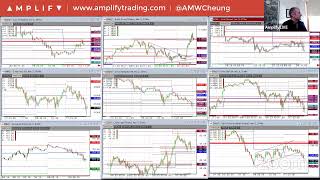
Anthony Cheung and Tim discuss market moves before the NYSE open: a cold snap cutting 3-4 million barrels of crude production in the Permian Basin, the dollar pulling back with cable rallying toward 1.40, and S&P 500 weakness around the 3,900 level. They cover oil, forex, equities, and commodities with technical levels and trade setups.
Chapters
All right, live on YouTube.
Are we live on YouTube?
Yep, got the, got the icon in the corner. So yeah, look, good, good to, um, I know we used to do live sessions on the YouTube channel for the community, um, over big central bank events and things like that, but we obviously have now started Amplify Live So we've got those guys also on board joining us through, through the Zoom which we're delivering this in, which we deliver our live stream every day anyway. So do check that out if you get a chance. But we just wanted to, um, you know, Tim and I got caught in conversation about this entire energy North American situation really since the weekend. I was off work and Tim's peppering me with WhatsApps of weather patterns Yeah, and, uh, so I knew something that was going down, and, uh, yeah, inevitably, absolutely, it's been a focal point really for the last couple of days. But Tim, before we get into the energy situation, I don't know if you want to share your charts and just get us up to speed of what's been going on today.
Sure, let's just— let me, uh, take a peek here. Um, all right, so here we have just an overview of the standard markets that we look at each day in Discord as a team. So essentially, we've seen the dollar actually come off the highs this morning. And the reason why I go straight to the dollar is this really does drive so much across these futures markets. And 7 AM just couldn't take a bid over this sort of 91s even area and just went off at 7 AM, 8 AM, down she goes. So we had sort of a, you know, so you see euro taking benefit from that. We're looking at a pullback potential here about 20600s, even around that area. You're seeing cable is having a phenomenal run today, up 0.8% off of that as well. Um, we've just had jobless figures come in and pretty, pretty, pretty soft in terms of a loss of a lot of the figure— well, basically a reading of 864, I think it is, coming in on an expectation of 7— sorry, 861 was the print on an expectation of 765. So more people claiming unemployment, yet the housing starts and building permits up. But we are seeing that softness on that figure bleed into equities here. And, you know, in the S&P, for example, in the center screen down she goes. However, um, you know, as an oil trader, I normally have very little to do over FOMC minutes, over these data events, and while oil does kind of nothing and shrugs it off. However, if I switch over to my, uh, well, I'll stay with this view. However, we've seen, well, just to pay attention first of all to the, the risk that we've seen so far this week in equities, just the, the story of rising real yields and, and the bonds dropping off there. So that has been the initial downside we've seen Tuesday, Wednesday in these equities markets, right? So the yields rising, prices falling, right? Okay, that's sort of the macro environment we're in in terms of the, you know, these actual markets, what they're doing.
But, um, on a—
looking at oil, so we— I think we covered a video a number of weeks ago when we were here breaking up and holding here. Sorry, not a number of weeks ago, probably about, well, the 7th. And, uh, up we go through this very light volume area. Um, you know, and I think oil would, would be pulling back. However, we have the Permian freeze, and we are in into the Permian freeze. So if you thought 2020 was going to be, um, you know the worst year ever. Well, I think for a lot of people in Texas right now, they're not having a great start to the year. Essentially, we've had a really cold weather system which people thought was going to come in mid to late December. A lot of gas traders caught offside with that weather system then not hitting North Continental America. Now we are getting it. I think it's certainly in Europe, it's being called the Siberian freeze. I don't know what the system is. They're calling in North America, but we're having record low temperatures and we're having rolling blackouts across the Permian Basin and Texas, north and central Texas, which is really the thriving heartbeat of the US oil industry. So what we've essentially seen on the news is they've shut in both production rigs in the Permian Basin, and they've also— a lot of the refiners down around the Galveston, South Texas area have also shut down refinery operations because the weather is so cold. So we're in sort of a, a really historically bad situation for North American crude. The estimates at the moment are between 3 and 4 million barrels a day is frozen essentially, um, because of weather shutdowns. So what does this mean? Well, that figure equals 40% of North American production, given that we have a figure of around 10 million barrels a day production, down from records of about 13 million seen last year or about 18 months ago. So, uh, we're— the industry really is just waiting for DOE figures 4 o'clock today, usually out at half 3, but we have President's Day this week, so we're pushed on a day later. And yeah, really, I think the market is just waiting for DOE. But API last night came in at a draw of 5.3 or 5.8 mil— 5.8 million drawdown last night. So just to give you an idea where we sit in the energy picture, I have my story chart here of oil. Um, just a quick rundown on this. You know, we were down trading about $34 when Pfizer vaccine and Moderna came out with their vaccines. Um, you know, we're bid up then into the $48.85s. Uh, we got a $15 mil bill with which the industry completely shrugged off. Um, then we had the surprise cut, which is really what everyone's talking about the past couple of weeks. Well, yeah, months actually from Saudi. So you can see the inflection point that that caused on the market, probably up to around the $54 handle. But now you can see really for me, the trade here starting the week of the 1st of February is really where the market started to realize that because of the— because of how bad things got last March, April, negative priced oil, so many exploration and production companies cut their investments and scaled their production and development for 2021. And so really, 2 weeks ago, I think the market just started to wake up to this fact. You're seeing a huge amount of call options being taken out on these companies in the overall industry, and you know, a lot of people are talking about $65+ here. Also, some analysts I was listening to on Bloomberg this morning are saying, listen, if the dollar keeps weakening off, I think we're going to see— we could easily see $80 on the Dixie and $80 a barrel WTI. Now, let's not get ahead of ourselves, but I certainly see that we're in— well, we're in a situation that a lot of analysts are saying is one of the largest crises for North American oil that they've seen, and that's including Katrina. So, yeah, I mean, Anthony, I don't know, you've been monitoring some developments here as well.
Yeah, just to cover bases, really, because we're not an energy-specialized trading firm. We're not looking at the complex. We typically trade and look at the crude market. I know Tim and others look at nat gas as well from time to time. So just to cover any new entrants to markets, I mean, we look at global macro. So essentially we're looking at the bigger picture. And if there's a good product or asset to trade at that time, then we're interested. And at this point in time, this is an unprecedented event, this current weather system, as Tim's just been saying. And one of the questions that in my job— my job is to support the traders in a way of giving them access to information so that they're best prepared to make decisions about the trades that they might be in or, or considering taking beyond that of just the price pattern on the chart from a technical perspective. And so I was just looking around some resources and was having a look at, um, the National Weather Service. So So kind of in a similar fashion for those who track energy markets, you typically look at the national hurricane season and you look at weather patterns forming in the Atlantic and so on and how that might impact strategically important areas in North America. What was quite interesting was Tim was just talking about shale production and the current rate of how that's been dropping anyhow in the post-pandemic environment with demand having dropped substantially. Prompting OPEC+ to take this action. But I mean, here's a look at the main areas of where shale activity takes place in North America. And the Permian is the one which obviously is the one that Tim was talking about, the one that gets the most focus given it's the, the largest by volume. And so here is why Texas is such a talking point. So when you're reading those Bloomberg articles and they're really focusing on the Texan crisis and so on, I mean, that is where you've got Permian Eagle Ford and Haynesville, all in the same state, pretty much, with Anadarko just above it, even in the northern tip of Texas as a state. So that's why that strategically is quite important. So the way I kind of think about this sort of thing is a couple of things. One is you've got to look at the impact of news in the— what is the more existential threat to price in the near term? So when we talk about OPEC and we talk about COVID-19, you know, these are massive drivers of the price of crude oil. COVID, big one, the vaccination, how quickly economies open up and so on. However, there's now this huge weather system that's led to almost 40% of entire US oil production taken offline. And as Tim rightly said, that renders any talk of OPEC talking about, look, we'll reinitiate a million here, a million there, That's nothing when it's compared in, in how is the price of oil trading right now, as in this week. The system will pass, things will normalize, but for right now, this is the talking point. So from here, the thing that's interesting then is this is a weather catalyst. So then it's about, well, how can I track the weather appropriately to stay on top of this sort of thing? So here you've got the National Weather Service, and I've just been looking at this website And that, you know, there's, there's a bunch of pretty neat tools that if you were really going to get down into a more granular level could be quite useful, from the current weather system to animated forecast maps to see how the systems, according to the technology, should develop over the period of the next 12, 24, 36 hours and beyond. You've then got medium range forecasts because all of this is basically coming back to the main point, which is how do you trade the price of oil now fundamentally? Well, there's been this major catalyst. So what's the next catalyst? Well, the price of oil has now moved up. We've touched $62 and above overnight. It's trading $61.5 at the minute. Where do we go from here? And to determine that, it's almost like the worst of the cold snap has hit. How quickly does the country thaw out will determine then how quickly the infrastructure can start clicking back into gear again. Now, how quickly that is going to be is what's so difficult to anticipate. Now, we can't guesstimate that. Well, we can, but we can have a more accurate guess by tracking these weather patterns on a frequent basis to see then basically making it as binary as possible. The quicker the weather normalizes, i.e., becomes warmer, or the quicker the process can begin so the output can start returning to market, and the more bearish that would be for price or vice versa. So here then there's a few things and looking at the current weather systems, this update was within the hour. And again, if you remember, if we are overlaying this with this, it's okay. My understanding is then that Texas as a state is particularly important. Obviously, we know the Gulf of Mexico as well is very sensitive for crude oil and energy prices. So then it's about, okay, so what is the weather like in this particular area? Like Oklahoma, for example, obviously incredibly strategically important as well for oil. Cushing. Yeah, with Cushing. And then, yeah, looking at how is this going to develop and then what are the subtle changes that you see to these over the next— I would say the next 48 hours is quite key. A, it's because it's coming into the end of the week. There's only this session and next to trade these products before the exchange shuts. And then two, um, it's almost like this story has generated— now more participants are interested, so there's a lot of people looking at this now. And so it brings about potentially interesting opportunities for the rest of the session. Now I'm just going to quickly switch back to my charts because equities I can see are just touching on fresh lows here. So NASDAQ center chart, got the S&P on the right. S&P just breaking down through 3,900, which was a rough area of support from yesterday's session. And the NASDAQ's just taken out that same kind of reference point on the lows. So, um, any, any area here on the downside, Tim? Um, obviously we've got 15 minutes to cash open.
Yeah, and the NASDAQ, I actually think it's, it's going to put up a fight here, but on the downside you got the 20 EMA. Uh, if I switch over on the charts— yep, um, you've got it.
Oh, I'll just shut mine and you can share yours.
I got it there. So, um, yeah, you've got the 20 EMA, that's daily exponential moving average, at 13,473. That has really been a pretty fantastic support as we trailed up on these equities. Um, looking at the broader picture though for the NASDAQ on the daily, you can see here on the right-hand side of my screen in the 30-minute here, as we push down, we are now pushing down through a pretty savage level that was 535s. I think, um, we easily come down to this 20 EMA right now. And actually this high here from the 21st of Jan, um, just below also with this overall trend channel up that we've seen. I think, I think that would be a nice place to put on a little bit of risk and, and probably fade this what is a down move right now. Um, also yesterday we saw fantastic support on NASDAQ 25th of Jan high, uh, really lovely, uh, fade on the downside there, back up Um, so yeah, it's big levels. We're down 1.24% at market right now in the NASDAQ, and we haven't even opened. Um, what we have seen though is any downside that we see pre-market and early on the market open on these US equities, we do kind of get bought back up again pretty quickly. You know, people buying these dips, um, you know, love it or hate it, there are dip buyers out there. I've heard they exist. So, um, just to finish off on— well, let's, let's keep having a look at some other levels on these US equities. You know, the S&P under pressure here. We did cover this in the pre-US video, which is live in Discord right now, uh, for the team. But, um, let's see, S&P, S&P, S&P, if I can find my chart. There we go. Yeah, this is what the S&P looks like right now. I've been looking at this level up here, the 3963s, a little bit of a fib extension area, and then the magical 4000, uh, just above at the top of this red zone. I think, uh, I think we're gonna have another situation where we're selling down pre-market and then we're just gonna find buyers down below, uh, in the S&P on the prior high of the 19th of Jan and also the high of the 20th 5th of January. Sorry, is that right? Uh, so we're on the weekly bars here. So yeah, weekly bars. So probably a little more time to play out on this picture, to be honest. Um, but yeah, just to finish off in the energy focus chat, um, I have the all useful map from the EIA, Energy, uh, US institution. Now this actually shows you the North American network of energy. We have Galveston Port here and over to way over to— if you kind of don't know what you're looking at here, here's the North American continent. We're looking at the energy picture across North America just on this lower area. But as you can see, as we zoom in a little bit here and have a look at They should update in a second. Essentially, yeah, here you go. So essentially, this is a lot of the Permian basis up around here. This is the area that's really badly affected right now. And you've got— Cushing Point is right here. I don't know if you can see my charts. Let me just use an annotation tool. Get a big pen going on. Yeah, something like this. Essentially on my screen we have Cushing is right here, and then this frozen out kind of Permian Basin is all this area here. And then this is the main delivery and points for the refineries. So all these guys in the bottom bubble are shut down for operations. They're not buying in oil. And in the middle bubble here, they're shutting down operations and there's nothing going to the ports. So, um, you know, it's a really bad situation anyway.
Well, we've got just under 15 minutes now to the open on the NYSE. In terms of the rest of the session, what's in store from a schedule point of view? You've got—
yeah, um, let's just stop that one. Yes, uh, well, we have DOE coming up, so yeah, I mean The other thing we have to take into account here is Department of Energy readings, DOE. Now we have a specific way of trading DOE here. Well, I do anyway, and a lot of people using this. So if I kind of just focus in on my energy book here, let me just get it up. Actually, just focus on it like this. So here you can see WTI in a 30-minute bar on the left, and you've got a daily bar on the right. Now, I actually forgot that I tracked this massive downtrend in oil. So we're— what we're going back to here is, uh, Gaspar 2014 June highs, right? Uh, June highs 2014, 2018, um, October highs, 2020 Jan highs, and lo and behold, today's highs. So pretty interesting trend here. I actually wouldn't be surprised if we get a really strange reaction to DOE today, given that we are really up here on oil. And I think we're trading April. This is April delivery oil we're trading, the J21 contract. I don't know why traders would essentially be paying $65 for oil delivery that isn't for another— essentially, essentially calendar-wise, um, well, a month and a bit now, a month and a half, because this weather system is going to be old news by this time next week. Well, almost old news. Um, so maybe there's a little bit of, you know, buying the rumor and buying what's already happened and sell the fact. Um, So that adds just another interesting dimension to this. But to show you what happened on the API last night, essentially, just delete this off and make this look a little better. So when we got the readings, this was the initial bid here that we got out of the API's drawdown of 5.8 mil. Um, and we're stuck within that range. So this says to me that traders are definitely not that excited about pushing these prices further up here right now. I think, um, if we got a confirmation of this on DOE, I think we could push in here. But I— there's a little part of me that wants to take a short on that and down we come, um, given the technical layout of this and that so many people are just going to want to buy oil. I think the contract you want to be looking at if you want to be a buyer of energy right now is, um, natural gas. Now this is natural gas on the daily, um, or sorry, the weekly. And then we have natural gas, uh, on the 30-minute here. We've seen we're just springing up out of this area. I think we were up about 8 or 9, uh, yesterday, you know, same day before. This is trading at $3.15. I think something like 60% of the other grades of natural gas— this is Henry Hub— 60% of the other grades are trading at like $150. One of the grades in the Rockies was trading at $600, which is historically— I don't think they've ever traded at those high prices. Anyway, that's really a rundown from me. And any questions out there in YouTube land, I wonder?
Just while you have a look, let me have a quick look at the currencies just to give some variation to the different asset classes. So, um, yeah, I was just looking at Cable and Euro. I was talking about this a little bit in the morning briefings. So, you know, if you don't— if you're new to the channel, don't forget that every day I, I basically do a morning macro fundamental update. I normally do that pre-7 AM for our Amplify Live community, and then it goes up on the YouTube channel a bit later. But what I was talking about this morning was this— that just, just the ongoing— it's been fairly persistent of late— is the divergence between sterling and euro. And sterling certainly putting that to heat this morning, where, you know, we've basically touched 140 in cable, which is a meaningful level on the, on the daily chart. We've been looking at that as an eventual target for quite some time. I know people like Sam have been just pretty patient, just sat there waiting for this to, um, to eventually materialize. Then, you know, based on the notion that— and I was listening to an interesting comment from a talking head yesterday. I was watching on Bloomberg, and they were asking him about, well, are we starting to see the first remnants of the disruption that Brexit is going to cause by what's happening with trade and the Northern Ireland issue re-emerging and so on? And I think he's right in how he replied, which is the thinking being that Brexit definitely will have structural issues in the period for the next years to come. But right now, for the next 3 to 6 months time horizon, this is about vaccinations and reopening economy. And that's the key driver or metric that market participants are looking at when it comes to sterling. And so although there might be an over-degree of optimism about how smooth Brexit has been, it probably is a lot more bumpy to anticipate in the future. For discussions we've had before about still a lot of unresolved issues. But the point is, for now, it's about a vaccine story, and the UK continues to perform well on that front. So that's what's kept that belief there. And, you know, for someone like Sam, I know from a fundamental perspective you've got to maintain a belief as well that the Fed are not going to be fazed by this renewed reflation idea, which they have pushed back against. Brainard, just before he came on, you've had the minutes last night, you've had Powell, everyone's pushed it back against that early notion of that initial post-Georgia Senate switch to the blue wave that initiated that kind of reflation thinking. As long as the Fed remain that way, in combination with the UK to June continuing the trajectory, which is a divergence in an outperformance of vaccination rollout compared to, say, mainland Europe. And that's what's kept that sterling currency so supported, irrespective of the disconnects you could say between that of the reality that's on Main Street, which is— I was reading this morning that at some point furlough's got to end. And when it does, there's millions of jobs that you could say are zombie jobs that have been kept alive. And these are not just individuals, these are companies as well, by the idea they've been backstopped by the government. That's the tricky point, I think, that not just the UK, but every economy faces in the future, which is a decision point of turning the tap off fiscal stimulus. And this is what the market's chewing over at the moment as a key issue. And that's what's splitting opinion. I've heard a lot this week, and Piers and I will cover this definitely in the podcast tomorrow. And that is this idea of people are starting to get ever more concerned about equities. The higher we go, the more the bears start crying out that we need a pullback here. And it's an interesting point. And at the moment, from the people I've been listening to, it's a split opinion. Right now between those who are pretty firm. I would still say on the balance, the majority consensus is that we go higher and that ability to have that sustained, more impactful downside might not emerge yet. I do think that the risk of that though does come in time when we get to that tipping point of, yeah, economies are 75%, 80% inoculated economies have to reopen. What does that then mean for fiscal monetary policy? That for me fundamentally, from macro top level, is the key that then could create something more meaningful and a reaction effect. But underlying that, don't forget that it's a weird environment where theoretically though, the companies should be performing better in that type of economy, which is heating up, which is performing. It's just the removal of this, this kind of low era environment. But that's the Fed's job then, in an Yellen-esque format, to do it as smoothly and gradually, as cautiously as possible, to keep the gravy chain running. It's whether or not they can achieve that. So at the moment, cable, yeah, it's quite, quite interesting up at these levels. I think if I go zoom back to the intraday— I know we've got a couple minutes to stocks open, which we want to keep an eye on. Any pullbacks here looking at 39.53, that was that initial high print that we had, um, in the overnight session two, two days ago, would be an area to keep an eye on. The euro likewise has been shackled for the time being by around that 120.89 was the level I was looking at this morning, which has— we've had a brief flirt up toward 121, which is the R1 sat just below 3 or 4 pips, but that level holding for the moment. Quite a key level you can see here over the last 2 weeks or so, price activity in the euro currency. And yeah, just quite keen to see then, can the, can the dollar maintain some of the upside of late? You know, I was looking at the Dixie this morning in the briefing, and if I just flip over to that Dixie chart in the futures, this is what I've been looking at and tracking for a while, is this long-term trend line in the Dixie going back on the May-November test. So here, if I zoom in to the current price activity— this is looking on a daily— you can see here on the daily, with the Dixie weakening at the moment, I mean, look at the respect it's had over the last 5 trading days. Um, the resistance, resistance, it gapped up above and then it's come down, tested, and it's done so again today. So I am quite interested to see here. It does, does now. We've— we— the DXY found a bit of resistance around 91-ish today. It resulted in it backing off, which has helped support euro and sterling. But if that trend line holds, then around these levels, if the DXY remains supported, then, um, it'll be just interesting to see how this afternoon plays out. Do we get a bit of a pullback on those highs in those dollar pairs? So yeah, that's really the The FX update at the moment in some of the majors.
One minute cash open.
Cool.
We are going to get the GameStop hearings today, which is, you know, grab the popcorn, crack a beer, that's going to be good viewing.
I can just see, uh, Will's joining us on the on the chat. Yeah, need a pullback. Yeah, I mean, Will did a really great session with you, Tim, on Bitcoin. And the idea about— I don't think anyone is not of the view that some of these assets can go higher. It's just about the route to going higher. And the idea then that a pullback— you often hear this, that certain products need a pullback, which is a healthy sign for then a continuous push to the upside. If something is just parabolic going one direction, that's telling you you're going to get burnt on the wrong side of that when it pulls back.
100%. 100%. We talked about this in gold a couple of weeks ago, and that I was just like, I— the deeper we got a pullback, the better I like it for getting along. For getting into longs. It's just, it's just dizzying. I'm actually a little bit tired of hearing about the correction that's coming. And you know, as we were talking about before this session, I was just saying, listen, how about, how about Yellen and Powell just rip the band-aid off, announce when they're gonna, they're gonna start to ease off on the QE, and we can start, you you know, getting some real good, you know, movements and realistic value into the market. You know, we're open now on equities, pretty unchanged really across the board, although you've seen cable taking a pullback, little pullback there. Be mindful that, you know, we have the Dixie's found a little bit of support, 95.57 here. Um, and we have been bought up on, on these pre-market sell-downs for pretty much the last year. Uh, and any of these pullbacks are just being bought right up. But more specifically, over the last— well, since Tuesday, any downside pre-market and during the open on the market has just been snapped up. So you're getting that pullback on cable now to yesterday's high. Should act as a floor, but I mean, it's up 0.68% already on the day. What I'd be mindful here is of— is the bonds are, are really weak on their low of days, and I think you're going to see a bit more of this real yield conversation conversation and come back over the airwaves.
Yeah, what's quite interesting from a cross-asset class perspective at the moment is equities and T-notes are lower. So that would play true to that belief that, you know, irrespective of the worsening jobless claims— yes, they were above the top end of expectations, but even an 800 type K figure is not massive. Because if you look at the actual— the way that that data has been performing, that's not too out of line of the average over a slightly longer period. And then you had, what, some housing data as well? And housing starts— was it the housing starts were particularly strong, wasn't it?
Uh, yeah.
Was it the building permits? Uh, let me double-check. Yeah, the building permits are 1.881 million against expectations of 1.68. This comes on the coattails of— this is exactly what the Fed— and Tim and I were talking about this earlier before we came online with the community this morning. And it was the data's been really good. But if you're the Fed, you're like, whoa, whoa, whoa, just hold your horses a little bit. It's like data is good. Yes, that's great. So the economy is surviving, it's performing, it's recovering. But it does put the pressure on them and it makes the market feel like the question's being asked of them. Now, that's why you've had such frequent Fed communication of late. We've had speakers every day because the Fed's job, if I was in charge of the central bank, would be, look, we need as soon as these conversations start materializing about us and what we're doing and will we remain supportive, If there's more long-lasting inflation, if we start to break well in excess of 3%, 4% territory in inflation, these types of ideas of reflation, well then we need to soothe those concerns by just talking all the time. So the key thing I think in the— if these current trends in markets materialize, to monitor as a trader going forward is is there any incremental subtle changes to this language over time? The more the market behaves in a similar fashion with yields that we have seen generally of late moving higher, the more likely it is they've got to address that. And then that therein lies a potential disruptive event for markets. Um, we're not quite there yet, evidently, from the fact that they're all staying put at the moment. They're not really changing the rhetoric at all. Does that make sense?
Yeah, I just think with these yields rising, people who have been fleeing the bonds over the negative interest rates are going to start to get enticed back in there to that risk-off. Product. Got a little bit more yield.
Come on, Tim, don't do this to me. You've just tweeted— I've just seen a guy looks just like you, he's just tweeted something. You gotta talk me through it.
I don't know what you're talking about. Somebody said short oil, is that right?
So, so, okay, so what, market, market's held up people are waiting because even though, as we've said, the weather system is the undeniable driving factor, but that doesn't mean that the inventories won't cause a degree of volatility very short-term over the release. And so what you're thinking, markets are just holding price, waiting for 4 PM for the data, and then it might give back some of that bid. Yeah, yeah.
I just feel like it's too obvious right now. Yes, it's too obvious. And hold on, uh, Yogi's getting very excited again. He was very excited about the Wells Fargo— or no, what was it, Walmart earnings? Yeah, I think, I think it's— I, I just think this, this weather system is going to be over. And I, I was reading analysis that the situation on Katrina, actually everything got back to normal very quickly. So, you know, going with what we were talking about, the, you know, likening this to a hurricane trade strategy whereby you, you know, you buy the rumor essentially, you buy that the fact that this hurricane is like imminent within 48 hours, 24 hours, and then as it's, it's hitting land you're literally unwinding that trade as it's hitting land because you know within 12 hours all those refineries, all those rigs are just going to be back to normal operations quick smart. And this is just par for the course for these guys in the Gulf of Mexico. So I see this risk premium of the freeze. I think that risk premium in particular is going to have to be unwound very quickly. Within a matter of, I'd say, 24 to 48 hours. So yeah, I'm just, I'm really looking at both sides of this, but I'll show you the chart. I'll show you the chart.
And then you're going to be covering this in full on the Amplify livestream, the DOE release?
I, yeah, as I do each week, cover in Discord.
To the team.
Um, I cover the, uh, yeah, sorry, the DOE release, uh, live, and we look at the strategies in and around that. So let me just, um, my system is a little bit slow right now. Can you see the screen?
Yeah, there you go.
All right, this is WTI on the weekly. Now the chart you're looking at is the J21 contract. That's April '21 futures. Um, that's what we're looking at. So we have, as I said, the highs here 2014, um, the highs 2018, the highs 2020, and where we are now. I think there is a, there's a good trade thesis for letting DOE wash out on the upside, and then it's just pare it back. So that's me explaining myself, public accountability here. But that, you know, this is— there's a— just in this area, right, just to make, you know, there is a lot of wiggle here just in this tiny candle.
This is a weekly bar here.
So if we kind of come back down to essentially, uh, this picture here, um, this is the trend here on the 30-minute bar chart. Okay, um, so, you know, there— well, there's not too much. I mean, it's about a dollar up from where we are now. No big shakes.
But I'm just a little—
the reason why I talk about this is I'm just a little— I mean, so many people are asking me this morning, why are we not printing 64, 65, 70? Somebody there said, why aren't we printing 100? Well, we're not printing 100 because I think that's just way too expensive for a barrel of oil right now. But I'm, I'm a little bit disturbed as to why we're not at least printing up to say 64 handle, a lot over this risk.
And there's just a question, and I know this is a product you've been looking at quite a bit recently, is copper.
Ah, copper, yes.
Do you want to give us an update on the chart there, what that's looking like at the minute?
Uh, it's, it's looking like someone launched a rocket, that's what it's looking like. I mean, look at this. Look, look at the overnight, uh, half 12. We're, we're up, uh, just, just, well, at market we're up, um, 1.8%. Um, massive bid into copper. For the last couple of weeks we've been talking about the copper, uh, copper-gold spread. Um, I don't have that spread chart set up here, so I should have had that set up. But essentially, copper to gold spread chart is breaking out of a multi-year downtrend. And certainly we're seeing that as gold is pretty much going out of fashion at the moment, or certainly seems to be. Um, you know, this is just the past couple of days.
Let's look at the past couple of weeks even on, on copper.
Looks like this, um, really nice sort of baseline to this trade of $3.51. Um, you know, we're trading $3.89 now. Um, the trade I like on, on copper, I think, uh, the spread is the best way to play this. Um, if you could buy an exchange spread on this, all the better, and gives you a lot more margin relief on your equity on the account. Um, Yeah, so essentially that will be long one copper, short one gold. However, you're gonna have to work out your spread ratio given that one contract of copper trades at $3.89, whereas one contract of gold is trading at about, what, $1,780 a contract. So you need to work out what the perfect spread ratio is there. But yeah, yeah, nice market. We did release a video, um, internally on silver versus— or sorry, the SLV ETF on silver versus the Sprott Silver PSLV ETF, which is an interesting video if you're looking at getting involved in silver. Um, so yeah, it's a slightly messy chart here, but Um, I like silver over the next couple of months.
Just on that point, Tim, let me just bring up the, um, let me just bring up the portal and I can show the guys where they can find that SLV video because it was a great video. I think it— if you haven't seen it, it definitely needs a watch. So We just grab screen for one second. Just going to move a few windows. So this is our— on Amplify Live, there's 4 separate sections. There's a live stream that's run by Tim every weekday. I join him for any time there's major events going on to add my kind of fundamental view on things. Separate to that, then we have a Discord room, which I'll show you in a second. And then we've also got some, some training material that's on demand, but more than that, updating continuous educational pieces, live training events, strategy discussions, and so on that will get stored on the hub. So here, for anyone new to markets, there's kind of a series of very detailed videos to get you up to speed on the foundation, but Something for the Discord listeners and those who haven't checked this out already. There's 4 new sections here I've created. So all under Amplify Insights, you've got the Trader Toolbox, Macro, Commodities, and Crypto. We've had— we as macro participants are just interested in all things markets. And crypto has definitely been something we've been watching of late. So here you can see there's— There's different crypto sessions we've been doing from 10 minutes up to an hour long, looking at different things. We've brought in specialists. We had a PhD-level professor come in and talk to us about blockchain technologies and emerging innovations in the space and things like that. So it's been great. But beyond crypto, there's things here like macro insights. So you can see here there's hours worth of content. And we're adding to this on a daily basis. You know, more structural stuff where we talk a little bit more away from markets, more about the trader cost structures, balancing trading and work life, longer-term portfolio management, single stock selection, all these sorts of things. So yeah, we're worth checking that out. But I've, I've made a slight change to that so that this player you can, you can access at any time. The Discord chat, what does that look like? Well, this is the Discord chat here. We have a variety of different rooms depending on, on what user you are. But there's things you can find on here. There's technical charts on an intraday, medium-term basis where we have Sam, who's one of our more technical-oriented traders, sharing charts, um, all day, every day. Then we have calendars, daily, weekly earnings estimates and earning releases when they come out. There's bank research reports on a macro, forex, and commodity basis. There's live recordings, so, you know, if you ever miss anything, then like yesterday's retail sales report release, so we were— Tim and I were covering that just for the community. So there's live recordings of that, you know, there's sessions happening all the time here. And then we had masterclass, so I got— I was joined last night by Merritt Black, who perhaps is a familiar name for some of you. He's now running his own prop desk, Apteros, but he used to be at SMB Capital in New York. But we've had loads of great people here. A pretty heavy-hitting portfolio manager who had some fantastic insight as to simplifying a kind of macro approach to a view on markets over a 9-month kind of timeframe. We've had Dr. Brett Steenbarger, obviously a fairly influential figure in the trading psychology space. We've had Matt Chung, my brother, who works in the fintech area and has some really interesting things to say about emerging technologies and so on, how to get exposure to that in an equity sense. So yeah, some cool stuff on here. So just check out AmplifyLive.com if you're if you want to have a look in more detail.
Yeah, we've got Mark Gardner coming up on the masterclass also.
Yeah, so tell me a little bit about Mark, Tim.
Yeah, so Mark was the largest bond trader in Australia for about 5 years running, and he's now— he's a personal mentor of mine for a number of years actually. We had a chat during the week which we've recorded and ready to put out on the platform, but It's funny actually, because there's a, there's a little-known bond trader called Rambo, and there is a documentary out there on Rambo. And so Rambo was a pretty decent-sized trader in the CME for a number of years, and then he decided to move to Australia, and he absolutely destroyed the Aussie bonds market and And actually, Rambo and Mark now work together. And so Mark has got his own firm now. He's mainly focusing on equities. And yeah, it's good to get his view on the markets. And we started the conversation off really looking at what is the relation of, you know, what effect does the APAC session, Asia Pacific session, have? What effect does that have really on the London session that comes after and that European session that comes after. So it was interesting from that point of view. And then we really got into, you know, the broader topics about the markets, which it was good to get his input on.
So what was your nickname when you were at Geneva? Did you have one?
I don't know.
It's just like—
I do.
It's got to be something about your Irish. I suppose you were based in the Dublin office, though, not Chicago, right?
Yeah, I think my nickname in this room is called Tight Risk Timmy. Simon's reminding me here. We have Top Gun call names. I'd rather go by that one, Viper. I know Anthony's is Goose.
Yeah, Mother Goose.
He fights it. But no, I actually— we didn't really go in for a nickname. So I'm the Geneva desk at all.
I remember there was this one guy, um, for many years ago, he was short guy. He must have been the best part of 5 foot 2, so pretty small guy. And he was, um, he was a broker. He was on our floor and he, um, he was called Cheesy. And I remember saying to him one time, I was making a coffee, I was like, why do they call you Cheesy? And he just said, because my head is like a dairy Lee triangle. And I was like, God, these, these traders go to no expense with their creativity. Because everyone had a nickname.
I mean, it was—
no one was called by their actual name, or at least abbreviation of their name.
Um, there was— I—
the only nickname that's ever stuck is Doug, because my second name, obviously, in school, uh, most, pretty much all my friends just call me Doug. Actually, it's funny with some of the guys, you know, each other for about 22 years, some, some of the guys still just have to think for a second when they have to remember what the person's first name is.
Yeah, that's embedded.
Let's go.
So oil's having a bit of a pullback just through that 30-ish area. It was holding up a bit of resistance to price yesterday. It was yesterday's session, 2 days ago. So do you look for a floor at 61s here until the data hits?
Yeah, that's the normal expectancy of, of what we look at here. Yeah, um, there's an API range that we trade And it's kind of just breached that. But I think 61s is the floor on the API range. I think if we, if we get down like to S1, 60s, 63s, I think that's going to be quite cheap for not having the data out. And obviously with the macro event of the freeze, I think, I don't think we're going to spend too much time down at 60s, 63s or S1 before we get the data. If that happens. But I'm leaning a little bit on the short side. So, you know, by saying that, that weekly chart does look set for a breakout. So I'm not committing to do I want to be a buyer or seller at this time yet. I think I'd be all eyes on the euro for getting a nice entry on the longs. Uh, cable now giving it up below 3953s. So just to let everyone know, the prices that I'm trading are the front month futures. So if you're trading CFDs, the at-market prices I quote may not be the exact prices that you're trading. Um, that goes in for the highs and lows of day as well, unless you're trading direct market access. CME across the NYMEX or CBOT or COMEX, as all those CME-listed sub-exchanges. I think gold is sick as a dog. There's a question in, in the Discord. Will we do a masterclass on copper-gold ratio and spread? Yeah, we can certainly look at that. Yeah, for sure. Yeah, we could look at that in a couple of days.
Perhaps we can organize it and Will can join you for that and just do a chat for the community during the day. And we'll just record it for anyone who can't attend it.
Yeah, absolutely.
So add to the—
Let me shoot Will a message now and perhaps he can do it with you tomorrow morning.
With regard to some of this moving to Australia, this time from the publisher in the UK, Guardian Media Group, believes that public interest journalism should be as widely available as possible to have a healthy functioning democracy. It goes on to say governments have a fascinating role when it comes to establishing fair and transparent regulation of online platforms. It's just that regulators are struggling from time to time to pull Facebook, not just in Australia, it's in the UK today.
Okay, we've got about 5 minutes before we, um, wrap up the YouTube live session, but if there's any questions while we're here, let us know, because otherwise we're going to flip back and just continue the private live streaming on Amplify Live for the rest of the afternoon. So while we're here, and if you are following on YouTube only, hit us with your questions and we'll do our best to address them for the next 5 minutes.
Gold headed to $1,500. Oh, I don't know, I don't know. $1,500, that's, uh, it's my—
oh, you're—
I don't know, what, what do you think, Ant? $1,500? I, I can't see it. I think that's a little too cheap, but I, I certainly bite your hand off to buy gold off you at $1,500 over the next week for sure.
Just having a look here on the monthly. I mean, there would be 1521. It's obviously a really important area we're at at the minute, which on the daily kind of looks like that level we were looking at. We got yesterday was looking a little bit heavy. We broke through the, uh, the previous low on the beginning of Feb, on the 4th, and there's a lot of attention on that low that was seen on the 30th, which was, I think, as kind of like the reverse of what Tim was looking at on his oil annotated chart, where oil was picking up after the vaccine news and Pfizer in early November. Gold's done the opposite since that point in time, given it's such a key catalyst obviously for for the determining factor of the economy over the, the kind of medium-term horizon. So yeah, 1,500 for me feels ambitious. Um, I definitely think if we break here though, it could trade quite heavy quite quick. Yeah, perhaps then looking— I mean, the next obvious target then is we fall over to 1,700 in pretty rapid fashion. That would start to bring in some of the area of reaction effect that we had back in, well, really the initial phase of the pandemic when that was all kicking off. This is kind of the epidemic pandemic phase when we had the global shutdown then that as a consequence resulted in that big push above $2,000. Yeah, today, tomorrow, I think is quite key for oil on these lower levels. Where we finish on the week. Do we hold above that point on the daily, which is that 4th of, um, or 30th of November low at 1762?
Just if you hold on that chart for a second, um, if you hold just there for a sec. So there is a strategy that we use in the room, it's the, the bull and bear flag, right? And we normally look at this— oh, hold on, let me get this set up. So, Norm, look at the channel that you have, right? This down channel.
Right.
And we sort of— I'm getting a bit of a lag on my pen here. Sorry about this. But essentially, if we look at that, you do look for one of the key points for a test up like this is that we get suspended in a way like this. And then we, we managed to come up here, break out, pull back to the area, and then this is an entry here to get long. So it's just one of the strategies that a lot of the guys have found edge in. Now I know this is daily continuation, it's a much bigger strategy to run on a daily bar, but you know, this is— a lot of the traders in the room have found edge in this. So you know, if you're kind of struggling to find edge as a trader um, this is the sort of stuff we cover in the room on a regular basis. Different types of edges. We just did MACD histogram edge this week. Um, there's a bull flag, bear flag strategy that we'd be looking at. And that applies to, like, this could be a 30-minute bar chart or 5-minute bar chart. And it's, it's, it's a great way to kind of keep your nose clean, keep your risk tight, and develop as a trader.
Cool.
And yeah, there's another comment here, or question, about should we be worried of rising unemployment concerns in the UK, a lack of willingness in the government to support workers? So if you didn't catch my, my comment earlier about the pound, you know, whether it's the end of fiscal support, which is furlough or whether it's Brexit kind of reality and the structural changes that are still to really be defined that's going to cause disruption. I think, yes, these things are potential issues, but at the moment it's about trading what's here and now and what's the clearest driver. And that definitely is heavily geared towards the vaccine. So Joseph, at the moment, I think you have to trade the pound on the basis of vaccine deployment as far as the UK. As a consequence, the speed of restrictions and how they are loosened, that will be the most powerful thing in the 3 to 6 month horizon. I think beyond that point, then once we're over that period of adjustment or readjustment back to a degree of normality, then people will start bringing in these other factors. Probably the unemployment one, the end of fiscal support, I think is an interesting one, perhaps even before the Brexit issue, which I think will be— could be even years before a lot of those things get really addressed in their entirety. So the effects on the pound for now is definitely, and what has been in the short term, an outperformance comparative to peers. As far as the FTSE is concerned, I mean, the FTSE index is not something I typically look at on a regular basis. But Tim and I were looking at the FTSE probably about 6, 8 weeks ago. And we were saying that the relative underperformance of the FTSE because of the fact that not only has COVID hit, but you've got the drag headwind of Brexit, which has kind of been a bit of a noose around its neck given the uncertainty going into then the agreement that now materialized, obviously, at the end of last year. So yeah, most of the things I read, people are still relatively bullish about the FTSE prospects at the moment. I mean, I can't really speak about it much from a technical perspective for right here, right now. But yeah, the FTSE for sure, I think the pound will be much more sensitive, I think, to those aforementioned things. The vaccine, the restrictions, the end of furlough and probably reduction of fiscal stimulus, and then Brexit, I think the FTSE might well just be more of a catch-up and a lesser volatility reaction than the FX market. That's probably what I would look at. Okay, final questions. Do you recommend a squawk service? Um, yeah, if I was going to recommend one, I'd probably have to recommend Newsquawk because, you know, we look at the world in a macro point of view and they're the best by a country mile for macro coverage. It depends what you're trading. If you were trading single stocks, I'd probably recommend Trade the News. Um, you know, they, they're the there have been the best in the business, but they cover single stocks specifically. Don't go to them for macro. I'd go to New Squawk for macro.
Just cover a couple more questions in here.
Yep.
Um, does someone in Amplify here use volume? Uh, no, but market profile more so. Um, that would be me. And then, uh How do you see the effect of— yeah, okay, Anthony loves talking about interest, or sorry, inflation at the moment. It's his favorite topic. How do you see the effect of interest and inflation on cyclical industries like travel in the coming weeks? I think prices are going up and there's no stopping them. That's my view.
Uh, like travel. I mean, I don't think interest inflation will have much to do with travel. I think travel is much more associated to— I mean, travel is the one area which is highest correlation to restrictions at the moment, so I'd be looking at it more defined in that sense. Um, yeah, I mean, this is the talking point. There was a great article in the FT this morning. I'll show it to you so you know which one to look at. And it was talking about this very idea of, is the US bond sell-off a warning to stock market investors who've been driving this market higher? Uh, this is the article here. So if you, if you have access to the FT, have a read of that. And it's just talking about, yes, further sharp rise in yields would threaten Wall Street's record run. I think then it's about distinguishing the different types of companies. There are companies who are maybe small companies who are more tech-oriented, who don't actually have cash, and they don't actually even— their product is— their entire business model is built on the future payoff of a new technology. I think they can withstand a higher rate environment. But people like, you've got a lot of money sat on the sidelines, um, you know, this is why a lot of people say some of the big tech— I think big tech overall just plows on, but the pace of increase probably then starts to look a lot different from what we saw during the initial pandemic phase if rates environment starts to, to, to move higher. Um, but yeah, check out that article. I mean, it covers it in a way better way than I can, uh, kind of explain it. And there's some good quotes for different people with their views. I'll put the link in the chat. Um, otherwise, do we scalp? Well, Tim, any scalping?
100%. I am trying to, uh, I am trying to cut my scalping down because it's, it's really a high energy, high energy required way of trading. Uh, you need to be really on point and, um, you know, you need to be in and out of stuff like a thief very quickly. You can't get married to positions. You need to do a lot of training, I think, to to scalp with size. And certainly that's something that we did in Geneva Trading. But really, for me as a trader in my progression, I'm looking to more hold, hold that size over much longer time frames going into a number of days and weeks. So there's a method that I kind of talk— I've talked about with the guys in the Discord. It's really scalp to position trading. And, um, it's sort of a hybrid of, you know, scalping small moves that then develop into much bigger things. And, um, yeah, we've covered that a few times in the Discord.
Yeah.
All right, well, look, Tim, why don't we wrap it here on YouTube? We'll go back to the, um, Amplify Live stream.
Yeah, so looking forward to 4 o'clock DOE. You can join us in the Discord room. Sign up for a free trial. And we've got a great community going there. And otherwise, we'll see you at the next livestream.
Well, thank you, guys. And just before you cut it, let me just put in the link into the YouTube chat.
All right.
Thanks so much, Tim. Thanks, everyone.
Cheers, man.
More from Anthony


Inside the Biggest Banking Stories You Need to Know This Week (Anthropic, Diageo, Private Credit)


Inside the Biggest M&A Deals You Need to Know This Week (UniCredit, GameStop, eBay, Eli Lilly)







AI Breakthrough or Hype? Anthropic’s Claude Mythos, Tim Cook Steps Down & LIV Golf Collapse