Markets Bounce But Is Now A Good Time To Buy?
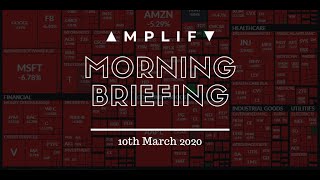
Ant breaks down a brutal March 2020 market crash: S&P 500 down 7.6%, oil plunging 30%, and shale producers underwater. Goldman's Jan Hatzius expects two Fed rate cuts totaling 100 basis points. Sam sees a bounce coming, targeting S&P 500 resistance at 2,850-2,900.
Chapters
Okay, very good morning, Tuesday, 10th of March. Let's get straight into the briefing, and I'm going to start with this shot you can see to the side of me, which is the kind of scoreboard, if you like, of the individual sectors and companies of the S&P 500. And as you can see an absolute bloodbath of a day. US stocks falling, uh, around the mid-7% region for the worst day since December 2008. I mean, if you're looking at the Dow, it was down just over 2,000 points. S&P itself down 7.6%. One thing I just quickly wanted to have a look at here was a couple of things. One is obviously quite broad-based selling, but there is a little bit of, uh, deviation between different stock sectors. And if you haven't seen it already, there was a really good video that my colleague Eddie released on our YouTube channel on the weekend. If you go down on the channel and go into the playlists, you can see there, there's one there called Top Sector Stocks to Keep an Eye On, and he explains a little bit more about this. But overall, to give you an overview, as a summary, what's particularly interesting here is Basic materials. Now, basic materials was almost— the oil price was the catalyst to feed into the coronavirus story, given the breakdown in the OPEC+ situation on Friday where prices were down 10%. They fell as much as 30% at one point yesterday. And that puts the question marks obviously on the longevity, if you like, of whether or not see smaller independent oil firms in America related to shale production can survive and weather these type of lower price points of crude oil. Now, what's quite interesting here was I was having a look at the basic materials. Here you can see the likes of Exxon, Chevron, those types of companies actually were trading down quite heavily, about 12-15% in the case of Chevron. However, if I just flip this over and go to independent oil and gas firms, look at the losses there comparatively. Um, so Chevron was the worst of the majors, down 15%. But if you look here, uh, Occidental Petroleum were down 53%. Uh, I've got EOG down 32%, ConocoPhillips down 25%. Um, you know, some of these names really getting hit hard. Marathon Oil down 50%. And I think that's particularly interesting, and I wanted to quickly just jump in, and obviously Sam's going to look up charts and have a quick talk about this particular sector first, because there's a couple of interesting graphics that we can have a look at. And this is about Shale's New Reality. We'll see a lot of people talking about this, and it's about this idea of if oil remains down at these suppressed levels, obviously there's a real tangible risk of companies going out of business. And a couple things I was looking at was wells drilled by the likes of Exxon, Occidental, Chevron, and a company called CrownQuest operating. They operate in the Permian Basin, which is the biggest of the kind of regions of where shale production is in North America, and they can turn profits at $31. So we're right on the kind of break-even, if you like. But the point here that Bloomberg are making in this article this morning is that over 100 producers cannot. So I named just 4. There's hundreds that, that basically can't. And when we start looking at this in a bit more detail, um, America's largest shale oil fields are unprofitable to drill at these, these current levels. And I was looking at, you know, these are the other major areas— the Permian, as I mentioned, is the largest, Bakken, and Eagle Ford. But just to give you a kind of a reference point of where oil needs to, to trade in order for the price needed for a 10% profit— in blue on the bar chart in the Permian. This is for all companies who operate within that area. And then the black bar for 30% profit. So remember, here is what we're talking about yesterday, this available free cash flow in order to deal with, uh, the kind of the debt risk associated to how leveraged these companies are, given the amount of money borrowed to make as much production as possible to take this North American value up to record territory that we see seen in recent times. Now this goes into it even further. I did tweet this out if you wanted to see, but it gives you a bit of an idea. Then if we were to look at the majority of US drilling locations are definitely unprofitable at these current levels. So you can see those 3 companies, or 4 companies I mentioned, they're the 3 right on the left-hand side here. But you can see scaling up going from left to right from this point onwards where my mouse is now going right, all of these areas, it's unprofitable at those levels. You know, some areas need to trade even as high as +60 at that point. So the reason why I'm, I'm kind of walking you through this is because I just wanted to explain here why these independents in the oil and gas space were down so significantly. You know, the losses at around 50% were not uncommon yesterday despite the market in itself, only being down from a broader index perspective about 7.5%. So tech firms in comparison, I mean, this— these are sizable, obviously, percentages, but nothing in comparison in that respect. The other thing then on the oil front before I move on was, well, what's the break-even point for countries? Uh, so the level of which oil— US oil producers break even on their own oil production is still though lower than that of which exporters balance their budgets. So if actually, if you're looking at countries as a whole, you know, this graphic kind of explains a little bit perhaps the strategy behind Russia not looking to play ball with Saudi Arabia, because Russia down here, their breakeven is at just around $42. So they're still offside by about $9. At the moment, oil's trading at $33 in WTI this morning. Saudi need it up at kind of north of 80 at that point, just given their hefty amount of government spend in order to diversify and fulfill that Vision 2020 plan that they have. And the other area, of course, where we look at this heat map from an individual equity sector basis is check out the financials down here in the bottom right. Bank of America, JP Morgan, Wells Fargo, Citi, ranging from losses of 14% to 16%. So that's double the, the kind of loss that was seen by the actual broader market. Now one thing here, obviously, this big shakeout in the market is doing is it's meaning that investors are having to reevaluate what type of course of action from a monetary policy perspective the Fed and other central banks are going to have to take. Now if you think about that and the practicalities of what that means for, say, the banking sector, the likes of, um, Jan Hatzius. If you've not heard of that name, he's the chief economist of Goldman Sachs, and he said yesterday he expects the Federal Reserve to reduce rates twice, both in March and April. So rather than just going for a 75 basis point direct cut at the next meeting, he's anticipating a cumulative 100 basis point cut to come to take rates basically back to zero. And it's going to be a 50 in March and 50 in April. Now the fears here are about the impact that lower rates has on bank profit margins combined with these credit worries, of course, as well, uh, with these types of loan obligations that they've made to these other areas of industry. And hence the reason why those particular main mainstream kind of Wall Street banks got hit as well so hard yesterday. So a couple of different things there just to explain because actually, when, you know, although this looks like a big border of red, when you actually start drilling it down, there are some nuances to it, and, and there are some good solid reasons behind why that has occurred and why it's important going forward if you're looking at these sector kind of plays. Moving on then, a few other things. Obviously yesterday, a lot of the fear on the coronavirus side was driven out of the idea of further quarantined areas in other major areas across the globe. And so the latest that we've seen in the overnight session is this coming out of Italy, where the population of 60 million people has been instructed to stay at home except for urgent health and work reasons. So the entire nation, rather than just that, that northern part of the country, now has gone into full quarantine. However, you know, this is what can be slightly frustrating about the media, is you look at that picture, there's a woman, woman with obviously a very strained face place, and they're going against police with their shields. And you would think that there's some sort of zombie movie or something. But, you know, I'm not trying to downplay this, but, you know, this kind of extreme imagery that the media are putting out obviously doesn't help the whole fear over the situation. That obviously has a large part to play in these kind of episodes of volatility that we're seeing. But to be clear, under these new rules, Italians will be able to travel to work, They will be able to go to shops for food still, and they can leave their house for medical treatment, meaning that businesses can and will continue to stay open. So yeah, I mean, this, I guess, also I think for me plays into a little bit of why I think China perhaps have, you know, if you actually look at the Chinese numbers at the moment, numbers are going down. And obviously they were a little bit ahead because that was where the apparent origination of the virus first came from several weeks ago. But, you know, the, the kind of the— well, I don't have the right word to say, but the, the application of the quarantine measures, I would imagine— and obviously I say this with, with no real credible evidence— but I would imagine they're a lot more stringent than what you're going to see in a lot of Western cities. And for me then, that does mean that there is a greater risk of further spread of the virus in a, in a potentially quicker way of which what we saw in terms of the containment process and this now tailing off of these new cases emerging in China. So this is what the markets are quite fearful of. I saw a good comment out of the chief economist of UBS actually this morning, and I'll read it to you. He said This is more a demand shock. People are told to stay at home. Italian services will be worst hit. Supply and demand shocks combine to damage company financials because of importance of cash flow. So small businesses are often said to have one— or often said to be one bad month away from closing. So a general rate cut then, what we've seen from various different central banks we're expecting from the ECB perhaps to come on Thursday. You know, that does— that's one mechanism to help support the economy. But what you need then is something more targeted to help actually small businesses then operate. And then that's when your man Donald comes in, because he's come out overnight. And there's a couple of things, because if you've seen markets this morning, we have somewhat stabilized. And the first point on that I would say is don't read too much into the short-term price activity. Remember last week we were up multiple percent, then we were down multiple percent, and then we were up multiple percent, and we fell another 1,000 in the Dow again. So I don't think you can— you should really get into this habit of curve fitting too much these kind of headlines around these kind of these, these pivot movements. Uh, I think you've got to trade what you see a little bit rather than kind of force your view and tie it to pin it on any of these individual stories. But importantly for Trump, and to follow on about that more surgical approach to trying to mitigate or offset the impending economic downturn on the virus spreading, Trump has come out and he's basically making more commitments about proposing a major economic relief package including a possible payroll tax cut and measures to help hourly wage workers. And, you know, we were only about 2 weeks ago talking about, you know, will there be any forthcoming kind of political will to implement these fiscal packages just given the individual agendas that these parties have. Whereas now I think the— where the episode of volatility being so continuous, they really don't have a choice. And, you know, the likes of Japan overnight talking about further economic stimulus as well to supplement what they had already put into place a couple of weeks ago. And this is the type of thing as well that's likely to come from the UK in the budget, which we've got tomorrow. And it's this kind of coordinated effort that markets are going to be looking for in order to, to put a floor on this recent downturn that we've seen in global financial markets. So this morning, I don't think it's too much surprise then to see after such a monumental down day, Treasuries have slumped. We're off about a point and 23 ticks at the moment. And the Japanese yen has weakened considerably as fiscal stimulus comes into focus, as what Bloomberg are talking about. But also, you know, putting to some respect just a natural movement of markets after you have such a big day, generally a little bit of a pullback and perhaps a period of consolidation before the next push in either way is normally the case. The other thing overnight then to help this general— if I switch over to the charts, I'm not going to call it risk-on, but I would say that this kind of pause for breath and a slight kind of relief, if you like, after yesterday. US index futures are up a decent amount. The DAX is up 87 at the moment. Oil prices have also seen a significant bounce of about $2.3, which is percentage-wise still though relatively small. If you put into context the near 40% collapse we had from Friday to yesterday's low. Continue to keep an eye on that as well. Overnight in Asia, the Chinese CSI 300 stock index was up about 2%, and actually President Xi Jinping made his first visit to Wuhan. And if you think about that from a symbolic political kind of point of view, This is totally done on purpose to kind of show that they've, you know, they're in control of the situation, things are returning to normal, so on and so forth. But is it a sign of confidence? Well, yes, perhaps in the mainland, but as I said, I still don't feel wholly confident about trying to call the bottom of this market. I've had a lot of people asking me that on social media. I mean, I was looking at the S&P here. You remember this target down here. I'll put a rectangle on the price movement. That was the level at which around that 2730, which was that— those, those lows you can see from March and May of 2019, was the level of which a number of big Wall Street banks were calling for as a level to buy the dip. But getting in at that point would have been incredibly nervewracking to try and manage a trade. I mean, the actual volatility, uh, it would have gone through in the S&P, uh, decent 32-odd points before the market actually did come back. But yeah, you know, we're up 100 ticks from that level now already. So that was a big level, we knew that already. I think a lot of people were eyeing that on the downturn yesterday when we were chasing the momentum on the sell-off, but Yeah, let's see if that's the bottom or not. Uh, to be quite frank, I don't really have a bias either way at this point, so I'm kind of just continue to monitor, continue to objectively reanalyze each day, and then make a decision accordingly on how to approach the short term, of which we are looking and trading at this point in time. Final few things on my side. This was some Chinese data you had overnight. Um, a quick look at what that looks like. So here you've got the white line is CPI, the blue line is core CPI, so ex-food and energy, and the PPI, so Producer Price Index, is into the deflation essentially, uh, whereas food CPI has rocketed higher once again. So continuation of really that divergence where obviously manufacturing activity being impeded in China, as we know, ever since the Lunar New Year holiday, as this outbreak began and the consequences that's had on their economy. Whereas food prices continue to remain incredibly elevated. They rose 21.9%, the most since April of 2008. Pork prices still the key element in the country's CPI basket. And obviously the mass culling of pigs causing pork prices to rise 135% is what's chiefly underlying that big pop that we've had in food price inflation. But here lies quite an interesting and tricky challenge for the central bank in China. You've got consumers under the pressure of rising food prices, whereas you've got then actual manufacturing activity suppressed still, in actually in deflation. And that's probably going to reverberate across the kind of global supply chain into other countries as well. So how do they deal with that is going to be an interesting thing to, to monitor going forward. Okay, I think that pretty much covers everything from my side. Let me just quickly have a look at the calendar and what's to come for the day ahead. Um, this morning relatively quiet. from a data perspective, that is, at least not too much. You got the GDP revised figures, but going back to Q4 for, for Europe, so not anticipating much out of that in terms of actual reaction. You get the API crude oil inventory numbers as well coming later. Do not forget, if you're based in the UK, then US time differential between London and New York is 4 hours, Chicago 5 hours, and that's going to be in place literally for the next 3 weeks until the end of the month when UK clocks change to British summertime. So all of your US sessions going to be a little bit earlier if you're based in the UK. Um, and that's pretty much it. So with that, I'm going to hand you over to Sam, see what he's got to say. Maybe perhaps he can be a little bit more definitive on the equity call because I know he has been trading some of the indices. So I'll hand you over to him. Thanks so much, guys.
Yeah, cheers, Ant. Um, I like a buy today, to be honest. I think, uh, I think we'll believe the Trump hype, at least until we get confirmation of that. It feels— if we look at the way things moved from the close, uh, well, what's the day today? Yeah, the close last night, last sort of hour or so of trading, and then into the beginning obviously now being an hour earlier, uh, just sort of reminds me of the, the buying we got before, uh, the rate cut on the, on the 3rd. You can see we pushed higher, so I think we, we can, we can drift on today. I think, uh, how far we do drift is obviously the question. Uh, some decent levels obviously hit yesterday on those lows, and, you know, we were talking yesterday, let's put this on the daily here. You know, just this, this whole area, 2750, was, was, you know, talked about a lot. And, you know, that failure to close below the level that we had back in, in June last year and March before that. Um, obviously what's going to be very important is almost where we reached actually an early trade this morning, 2853 for S&P. I think if you get above that, you'll get a bit of a relief rally through there as well. Of course, it's all about the closing. Uh, time. But yeah, the 4th of October low, which was also the original low that we had at the last day of February— so, well, second last day of February. Uh, but if we can get through that 2850, then we could well see a further push to the upside. So that's something I would be, be focusing on there. You can see we're sort of knocking on that door in, in early trade, uh, this morning. And then really, I think, uh, you know, another 50 points on top of that towards 2900 could be the opportunity, uh, to get in for that market on, on the S&P. Decent push higher, obviously, uh, you know, had a little breather not too long ago, but we're looking to at least have a go at trying to continue above that. Got some intraday resistance, 2834, but then the next above that with the highs of the day and 2853, that kind of point is, is what I'll be looking for. So the moment I'm favoring the bias to the upside, then You know, if I'm looking at oil, rather than maybe getting in right now to try to beat the market and get a better entry, I'd rather just wait for the price to get above its, its high from yesterday and then look at some of these levels from obviously a long time ago that could be decent profit targets to consider. You know, here looking, you've got— what's that— the low from April 2007, uh, 2016, before we then start getting back towards the the $40 area. So I prefer, you know, pushes higher. I think there's a couple resistance levels that need to go before maybe you want to pull the trigger, if not already long from yesterday. But yeah, that's how I'd be looking to play it. Um, having a look over gold, just wasn't interested yesterday. Uh, you know, this is what we were saying at midday, the fact that it's not higher just shows that it's not going to go right now. Uh, $1,700 though was obviously a big, big target for that. Um, so, you know, the way to, to look at this, I guess, if we just have a markup of that low that we made in early trade, that's your, your rough line in the sand. I'll probably have it more as a zone, to be honest. You can see it's the high of the 27th, and we failed to get above it in the first few trading days of March. Um, and obviously spiked lower on there on Friday, but again closed above before hitting 1650. Yes, uh, in early trade this morning. So As long as that holds up, then fine, we can start to drift on, and it'll be interesting to see what happens. Um, and then to the upside, I know it's— there's going to be opportunity in between here, but for me, really, unless we get above 1670, I'm not too interested in looking for a long. So those are my areas as such: 1650, 1670, um, for a cleaner trade, should we say, on a break above or a break below a those points. The dollar is up for the day at the moment, but just weakening a touch recently. Um, I'm just gonna bring on the old daily chart on the euro. As you can see, we are down, and I, I got in short last night. Um, so let's all, you know, say a prayer for Sam and hope it continues to go down. Um, reason being just that 38.2 fib failure to on the futures to close above it. You also got a bit of resistance around here from June last year. So, you know, my trade is as long as that holds, uh, the day below there, then I'm going to be happy. I know we're just retracing up a bit more, but that's fine. It's all about, for me, where it closes. And, you know, I would really actually be looking to hold this down towards, uh, the lows that we had of the year again. So for me, quite a nice little risk-reward trade if it comes in. Of course, of course, the way it's been pushing higher, there'll still be some appetite for buyers, as you'd expect. We haven't quite filled that gap, but we got to the lowest closing— well, lowest sort of price on that open on Sunday evening, and, and that's found a good support, good area for the buyers to come in. And then the pivot as well would be an area that if that was to break, well, hang on a minute, we're going to get back to that 38.2 fib and those highs from yesterday where there's going to be stops like mine. Um, so yeah, that would be something to look at there. The pound sort of following suit this morning and drifting lower off a bit of weakness, going to that lower price that we had on Monday before pushing higher. Uh, just really following the dollar. The dollar's being the driver here, I would say, rather than anything else this morning. It's, um, you know, all the other pairs— the Aussie dollar doing the same thing, really drifted lower this morning before recovering, uh, a bit. And the yen is the same. So yeah, a bit of dollar weakness right now, but we're across the board got some nice resistance levels here. You can see in the pound— let's just put this on a 15-minute just to show— and it's, uh, a good line you can have really. 1.3082, some decent price action in, in early trade this morning, was a half decent level yesterday as well to consider. Uh, quick look over at the DAX, which which actually did push a tiny bit lower this morning, but we're just coming back to its R1. I wouldn't necessarily say it's a great level to, to get too involved, but certainly if we can get above there again, you might help— it might help those US stocks have a go at trying to break through some of their resistance levels. For example, like the Dow, you can see it's just having a go at trying to close above this point, which is pretty key for me as well. So my bias today is looking for buyers for stocks until Trump comes out and either confirms or denies or whatever package we're sort of looking at. Euro, I'm positioning at the moment for a short, but that's not to say it can't continue in this trend. You know, I put that question on to Twitter and some people are looking still for this to continue higher. So I guess that's what makes a market. Oil, same, uh, sort of process as S&P and, and whatnot, trying to get longs but above those highs from yesterday because we're at a decent resistance level, uh, for now. As usual, any questions, guys, please, uh, do, do let me know. I'd be interested to hear your thoughts on, uh, stocks today, but also what you think about the, uh, the euro itself. But I hope you'll have a good trading day. And I catch you all later on.
More from Anthony


Inside the Biggest Banking Stories You Need to Know This Week (Anthropic, Diageo, Private Credit)


Inside the Biggest M&A Deals You Need to Know This Week (UniCredit, GameStop, eBay, Eli Lilly)







AI Breakthrough or Hype? Anthropic’s Claude Mythos, Tim Cook Steps Down & LIV Golf Collapse