MARKETS EXPLAINED: Why ARK Invests ETF & Stocks Have Tanked? (Tesla, Energy, GameStop, Bitcoin)
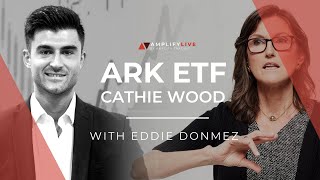
Tim and Eddy Donmez explain why ARK Invest's ETFs have crashed. Rising interest rates make distant cash flows riskier, and ARK's huge stakes in small, illiquid stocks amplify the damage when investors redeem shares and force the fund to sell at a loss.
Chapters
We are recording. So, uh, hey everyone, we are Tuesday the 2nd of March, uh, it's about midday, not too much going on in the markets really, and we have Eddy Donmez on and we are going to have a chat about a couple of things really. This all instigated by questions in the room this morning about the ARK ETFs and then Eddy's thankfully jumped on, and we then very quickly got into talking about the rotations between green energy and, you know, oil producers. And yeah, I mean, Eddie, the floor is yours.
Yeah, so we're talking EV and ARK, and ARK's obviously been the dream over the last kind of year or so. It's attracted billions in new flows. Cathie Wood kind of couldn't do any wrong, I think, as far as the market was concerned. I think fueled by tons of factors, right? I think discount rates being at zero, interest rates being at zero, the emergence of retail kind of involvement in markets, gamification of retail, and then Elon Musk, all these kind of, uh, the mood music and the sentiment was really everything going for Cathie Wood, right? She, you know, she sold some pretty, uh, interesting stories, you know, with genomics and, uh, you know, electric vehicles and these huge addressable markets. And, you know, I'm a huge fan of her. I, I really, uh, like her thinking. She's very transparent, both with ETFs but also her kind of like open-source research. So she, you know, she speaks on tons of podcasts about all her research analysts that are industry experts. You know, they're all over Twitter being challenged by professors and, you know, industry experts on their research, and all their research is published publicly, even their models and things like that. So you've got to admire her kind of, I guess, Ray Dalio's radical transparency and the transparency of what she's doing. She publishes all of her trades daily, all of the ARKK holdings. So that's ARKK, ARKG, all those different ETFs. She publishes all of those every day. But as we saw very recently with yields rising, um, you know, Piers and I have spoken about this, and Anthony and Piers have spoken about this. But, uh, if you want to check out a video of why yields rising is bad for stocks, just check out the Amplify Live video. Also talked about different forms of valuation and, you know, how that affects kind of stocks. But in short, more speculative, cash flows further in the future, lots of uncertainty. For example, we don't know what's going to go on here in the current day, 2 months from now with COVID and things like that. So basically, when companies are super speculative, they're betting on cash flows or being profitable in 2025, 2030, 2040. And, you know, the world's uncertain. Inflation can happen, COVID can happen, anything can happen. So those cash flows, depending on, you know, where they are in that kind of timeframe, The further are they out, the more risky they are. So less guarantee of the valuation today, and investors are paying a huge amount for future valuations.
So something we were talking about was, I mean, I agree completely. I think I showed ARK ETFs to some of my friends who work in tech, and they were instantly on it, like in it, on it, wanted more. Sure, when's a good time to get in? Well, it depends. As we were talking about, it depends on your time horizon. Similar to the mortgage story, if you're in a 30-year contract, what do you care what the underlying asset market does in 5 years' time, 10 years' time? You don't really. And these things are cyclical. But if you're buying these things on margin, that can essentially go to zero on you and go negative on your balance, well then that's a different story. But if you're buying these things outright, you're going to be doing fine over the term. But I mean, I suppose some questions, I mean, just to play devil's advocate to probably both of us there, I mean, you know, there's a lot of cool stocks in there, there's a lot of like really sort of, um, you know, millennial type of attractiveness to it, you know. But is there value right now? Is there value?
Yeah, so I— look, they're great sexy stories basically, um, and there's gonna be, you know, the— lots of cynics, right, that, you know, have seen Cathie Wood doing— being extremely successful and kind of selling the dream, just like we see late-stage SPACs and things like that, it's very difficult to determine who's going to be super valuable. If you're looking at all the holdings, are all the holdings going to be the Googles and Facebooks and Amazons of the world? Probably not. But that's survivorship. That's going to— she's going to pick her winners and pick her losers as time comes on. But the market will pick. The winners and losers as well as that. So it's difficult to determine, but I think what's great about her is she's so transparent and she makes lots of assumptions. And if this happens, if X happens, if Y happens, if it's policy, if it's markets, if it's monetary, fiscal, company execution, then this is going to be achieved. And she was dead right with Tesla. And, you know, will she have another call like this again? Who knows? Could be no, right? I think there was a lot of—
uh, does she need to have another— yeah, like this again is the question, you know?
Exactly. So she attracted so many flows into ETFs, and Tesla was a huge winner of that. Um, but from the cynical perspective, uh, and what we saw when yields rose very recently is we saw these kind of these funds, the favorites, tank pretty much. There was huge short interest, lots of selling volumes. And this is to do with essentially the liquidity of the ETFs. Right? So—
Buy when something stinks.
Yeah, exactly. And this is what Cathie Wood is saying. And this is what she did in March was she loves these opportunities. And you you know, this is her talking a book, of course, but she sells the Googles and Amazons and, you know, those large-cap names. She basically views them as cash. So she just puts it in, you know, that they'll trade sideways or up, you know, a couple of percent. But she sells those names on these dips to buy those small-cap names, you know. And that's— yeah, so she buys the gene editing, she buys the autonomous taxis, she buys the Teladocs and all of those names?
Well, they have a lot of growth and upside potential, whereas, you know, we're facing into 10 years here where, you know, all these Googles and top-tier blue-chip techs are just going to go sideways. I mean, I think Apple is going to continue to innovate out of its skin as it tends to do, but, you know, the rest of them, I think, are facing a lot of headwinds with, you know, policy changes in Eurozone, antitrust committees in the US. So if you're in social, it's not going to be such a smooth next 10 years for you.
Yeah. I mean, we could do a whole nother recording for hours about all of those names. But I think it's really interesting how she views them as cash, basically. And they're her treasuries almost. And then she sells those to enter opportunistic dips in the more speculative names. But I do want to kind of get to what happened really last week, why they sold off so dramatically. We talked about the cash flows and things like that, but let's get into it. Yeah, the concern from participants— and this can get really kind of quite technical, so I'll try and keep it as high level as possible just for all of us— but the concern is with these big ETFs, right, 43% according to some researchers ARK's total equity holdings are in stocks in which the firm owns at least 10% of all shares outstanding. Right? So that's a huge amount of ownership in very small companies, basically, with, with very low liquidity if we're talking about kind of overall volumes of some of the Teslas and things like that. So as Tim, you all know more than anyone, liquidity's always there when you don't need it and not there when you do need it. During these downturns where the market sells off or speculative names unravel, all these different types of things, these less liquid stocks get hit disproportionately to the rest of the market because the float is smaller. It's very similar to what we saw with—
The books are a little thinner, which actually is quite— it's basically like your spread can be huge because liquidity-wise, you might have a huge gap between where the volumes are essentially on the ladder. So if it takes out one level, it's going to just drop a huge amount to meet volume at the next level down. So thin markets can be vicious.
Yeah. And especially with those low-volume ones, like you said, it can drop dramatically and then you need to find the bid somewhere, but who knows where that market—
I think when you're observing that happening, it can give the impression that the move and the fundamental shift, that a much bigger fundamental shift is at play when actually it's just a lot of gapping around and finding volume and price discovery and things like that.
So yeah, so this is— so what happened last week was because these, you know, it's very transparent, right? What, um, similar to USO, right? They knew, investors knew in April when the oil price went negative, and you can talk a bit more about this later, that, you know, they were, they were buying the— they knew the contracts that the, the fund was buying, right? And so when the oil price tanked, they could almost front run that trade on USO. But what we saw was we saw a huge amount of redemptions from the ETF outflows, basically from the ARKK ETFs, where, you know, fund managers, you know, obviously it's been up, gone up 100% or 39% annually for the last, since its inception in 2014. And yields spiked and they kind of, you know, ran to the doors and pulled all of a lot of flows from that ETF. And when there's kind of redemptions, then this is where the problem is, is when there's a discount to the NAV, the net asset value of the underlying stocks, and they're super illiquid and it's very obvious what they own, right? Then there's going to be redemptions there, and then that's going to exacerbate the moves, particularly in those kind of lower volume stocks.
Um, to really try and keep keep it boiled down, simplicity, it's kind of like a self-fulfilling prophecy domino effect that can kind of self-eat itself. Similar, a good example is Volmageddon and the portfolio insurance, but from February 2018. I'll post that link in the room later.
Yeah. Do you want to talk about USO and how that kind of is kind of similar to what we saw with when the oil price tanked?
Yeah, I mean, so USO essentially was more, is more, the NAV, as in the net asset value of USO, is more constituted on the front month futures on M1, 2, 3 months, 1, 2, and 3 in front of cash. So the spot market is the price right now to exchange at. The And then you have the front month, which is 30 days forward delivery from today, theoretically, and then 60 days and 90 days. And so USO was pretty much— well, is always pretty much very heavy on months 1 and 2 in the front. And they would represent at points about 23% of the global futures on NYMEX in WTI. Essentially, that's what their net asset value is. When you had oil going below zero, you had people saying, "Oh, well, hold on a sec. USO is trading at like 20 and oil is now printing at -30. I don't think I want to own this anymore." So you have people exiting the USO ETF and therefore you have USO selling, then because you have people exiting the ETF, then it also means that USO are essentially then selling futures contracts in months 1 and 2 and 3 in front. So what you get is, it's similar when an underlying asset, in this case it's oil for USO, or say Tesla for ARKK, was ARKF or ARKK, then you get flight to the door and then the fund managers themselves have to then execute sales in the underlying. So it's like this self-feeding thing and it only really stops until the fund managers say, "All right, I'm done liquidating." we're now holding a core position. I'm not willing to let that core position go.
Um, I think that's a perfect explanation. I think what's also interesting about that was everyone knew USO's position, right? And more importantly, their limitations. So it was the CFTC's rules on those position limits on the futures contracts. So when the market saw that opportunity, they all piled in to push the fund to those limits, right? Because they knew that that was their position, and then that exacerbated the forces even more, and then that's what sent oil—
So essentially, people— Yeah, people— Yeah, yeah, that's it. It gets a bit tricky actually, because there was people exiting USO, and then it flipped once oil went negative. Actually, then it turned inverse to people piling in to USO, which essentially then saw USO buying a ton of June options. And of course, the— it was the— or sorry, it was the April contract that went negative. Um, and so then they just were like, we're not even entertaining buying May risk here because we don't know what the hell is going to happen. We're going to just jump straight to June, uh, for USO front month futures buying. And so then you see the turn occur. Then people go from net selling USO holdings to being massive net buyers because it's at zero. And the result of that— the FT had a great video up from one of their journalists near the time, but they've since offline it. I'm going to try and get them to put it back up. But she did a very in-depth example of how USO is constituted. And how they actually had to reorganize the pricing on how the USO is priced after that happens. So it was very interesting stuff. Yeah.
And I think we can— different to USO, but again, comparable to the ARKK stuff is GameStop as well, right? When people— so If you're short, like Melvin Capital were, in a very illiquid name, and everyone knows that you're short, and then investors can just pile in, and then it's a self-fulfilling prophecy when you get the short squeezes, and then the gamma squeezes, and then it really exacerbates. And this is— if we bring it all the way back to ARK, it says investors yanked $465 million from the ARK Innovation Fund, according to Refinitiv. And if there's more redemptions, then that's going to lead her to sell the liquid holdings like the Amazons, the, you know, whatever big large-cap tech they're holding. And then there's a squeeze, and then there's a self-fulfilling prophecy when that can actually affect the wider market. So that would also unwind the illiquid holdings.
So this makes sense as to why I saw a tweet yesterday about the WallStreetBets guys effectively going to try and target Amazon now because they know that Cathie Wood, if she gets pushed to the breakpoint on some of her more tech, like Tesla, for example, let's use Tesla. If you get downside selling on Tesla, she's going to have to unwind other positions to then buy other stuff and rebalance her funds. And so people are going to put a a short squeeze on Amazon.
Yeah, so that's insane. Yeah, I mean, look, we've got to draw the line somewhere, I think. Look, yeah, Amazon and GameStop, they're very different, right? So when you're trying to play a— do a play on GameStop, which is super liquid, they couldn't be more different. Yeah, so, you know, that's a bit more wild. I'd— I mean, would I say I'd love to see that? I think that would have been very impressive if they did, but that's a different story. I think they're just kind of fantasizing there, unlike GameStop where you can actually— that you saw because the volume's so low. But yeah, right, I think, I think that's probably more, more than we wanted to discuss, but it's so interesting. I think all of—
sure, um, just before we— yeah, I mean, let's, uh, let's, let's leave it there and then we'll go on and have our chat about, um, green energy and whatnot in a second. But yeah, brilliant. Thanks, Eddie. Cheers.
Thanks, Tim.
More from Anthony


Inside the Biggest Banking Stories You Need to Know This Week (Anthropic, Diageo, Private Credit)


Inside the Biggest M&A Deals You Need to Know This Week (UniCredit, GameStop, eBay, Eli Lilly)







AI Breakthrough or Hype? Anthropic’s Claude Mythos, Tim Cook Steps Down & LIV Golf Collapse