Markets in positive mood but can it last?
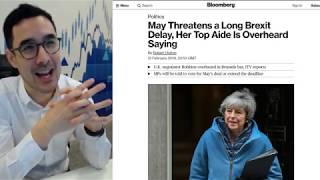
Anthony Cheung and Sam North break down February 13, 2019 markets: the S&P 500 reclaimed its 200-day moving average on optimism about US-China trade talks and a resolved government shutdown. Trump signaled flexibility on tariffs while Xi prepares for final negotiations. The rally looks solid on the charts but rests on fragile political developments in Europe and uncertain Fed policy.
Chapters
Okay, very good morning, Wednesday 13th of February. I hope you're doing well. The briefing this morning, I'm just going to give you an overview of some of the major headlines that have come out and how things are standing at the moment and what we're looking out for for the day ahead. And then I'll hand you over to Sam, as per usual, who will go through the charts with a bit more of a technical analysis spin. But first of all, well, before we get into these headlines about China and the US, let's just have a look at the charts overall. And as you can see in the center center-right. That's the NASDAQ and the S&P 500, and consequently the DAX following suit this morning, also trading on the front foot. This comes after a positive close on Wall Street last night, the major 3 indices closing up roughly around anything between 1 to 1.3%, predominantly coming on the back of then some positive feelings going into high-level trade negotiations between China and the US, which we know is happening at the end of the week. As a consequence then, fixed income futures have generally faded and traded lower. T-note pretty flat at the moment, bottom right here, but you can see a continuation of a downward trend that we've had just given some of the, the risk appetite. The other things of course are the government shutdown aversion, if you like. That kind of removes a tail risk that that could have again reared its head. That's not really been confirmed as yet, but it's given the comments that have been heard from Trump in the last 2 days, it's looking likely that he's going to make— basically accept the deal that's been tabled by the Democrats. So again, that also being removed. So a couple of positive things here that have been going on of late, and let's get into some of the detail around these issues. And obviously the key one at the pyramid, if you like, of the key pressing macro events is certainly the trade war. As China this week returning from holiday. And Trump has basically said he now feels flexible on China tariff deadline as he seeks a real deal. Long story short, really two things to take away from this is that one, Trump is hinting towards he could be happy given sufficient progress to basically delay the tariff hikes. So if you like, the temporary truce gets rolled over This for us has been our base case scenario that we've— Sam and I've been talking about in strategy for some weeks. The other things here are the fact that Xi Jinping, the Chinese president, now is believed to be joining the talks at the end of the week on Friday. If you remember before, it was the vice premier meeting the Treasury Secretary and also the Trade Secretary of the US. But the fact that the main man himself is going to be attending those final closing meetings also is being taken as a net positive, that even on the Chinese side, a kind of willingness to, to push things forward. So hence the, the read across that we've had across different assets. So that's the state of play at the moment. Obviously, as always the case when you're dealing with Donald Trump, every day is a new day, and he is feeling quite, um, positive on the situation at the moment. But obviously this is often been subject to change So I would just be keeping an ear out on the squawk, an eye on Twitter perhaps, as we go through the rest of the remaining part of the week. Just because at the moment things are going well, well, let's wait until the end of the week and where we stand by the close on Friday. One thing though that these kind of, let's say, not that these again are being resolved as issues, but worst case being averted, i.e., a shutdown and an all-out trade war, this has meant that the S&P 500 has got its head back above a very key technical point. Sam, I'm sure, will go into this in a lot more detail in a minute, but we've got back above the 200 daily moving average. And, uh, got to give a shout out to Sam North. He was right at the bottom of this move when things were looking, you know, the the dreaded R-word of recession was banding around to bring in the new year. And, you know, as soon as we had the Fed change, the Chinese commitment to do whatever it takes, and so on, you know, he's kind of been pretty bullish on things. And he was looking at a real key technical point that we broke a few weeks ago, and on that point then he's calling all-time highs. He's still got a little way to go on his call, but obviously a move above the 200 daily moving average. Certainly now, if the status quo remains fundamentally, and layering in that technical breach closing above that move or that point yesterday, you know, things are looking good in that regard on that call. So I'm sure he'll, he'll talk about that more. Otherwise, quick run through some of the other headlines. Brexit, um, I was just saying to some of the guys earlier this morning, he just literally Cannot make this stuff up. Uh, Ollie Robbins basically was in the pub last night having a couple of Stella Artois in Brussels, and he accidentally was overheard spilling the beans on what potentially the strategy could be. And I don't really think that that's, uh, for me a surprise. I've always been of the opinion that this is coming right down to the wire. I don't see any other way of which politicians are basically going to buckle and make a concession unless they are literally dangled off the cliff edge. Then you'll start seeing some deal-making be done. And for me, that's not going to happen until the European summit, literally days before Article 50. Now, what happened and what Olli Robbins has said then, in fitting with that, is basically he foresees Theresa May— basically her tactical approach is to delay this as much as possible so MPs literally have one of only two choices: no deal, or you swallow my deal. And in the end, I think it's the latter that's going to win out, because I do think that, you know, this isn't the British public, this is Parliament that don't forget. And I think there's definitely enough political will there when push comes to shove that they will force through, even if there is a lack of real amendment or concession on the legality on the backstop. They're gonna have to take it because I really feel like a no deal is a low prospect. It's priced by the market roughly about 10%. So yeah, that's the latest here. So Theresa May, if you remember, is not gonna hold a meaningful vote today. Which was a potentiality because she's just going to come back tomorrow to the MPs, which basically she's going to ask for an extension of 2 weeks to go back then towards end of the month, 27th, for example, of February. By then, hoping to have had a deal. I think that's probably not going to be the case. Do we then come back and then obviously the timeline reduces further? And one would think then that as we— as that diminishes over time, coming over the weeks into mid to late March, that has to increase the prospects at least of a no deal, although I think that won't be the outcome. And consequently, more political weight should start to feed into the pound. Now, on that point, from an economic impact, we've got UK CPI due in about an hour's time, and it should be the first time that UK headline year-on-year CPI has fallen below 2% since 2017. Now, if you remember, just looking at this chart here, you've got— this is, I guess, encapsulates the story of inflation as a byproduct then of that dramatic kind of 12% fall or so that we saw on the night of the EU referendum itself. That pushed up import prices and inflation to a 6-year high. Remember, we got up to a peak of 3.1% before we faded as the economic slowdown has taken hold and consumers have lost confidence and demand has kind of fallen away over time, uh, given the dramatic fall as well we've had in oil prices to boot. Well, we're expecting inflation to dip below that target for the first time, as I said, in about 2 years or so. One thing that this could do though is, as the headline suggests, a bit of relief for the squeezed British consumer. If you think about it, wages actually have been fairly decent. We've had a bit of a pickup in recent months in wage growth, given unemployment is very low in our country, and that typically leads to higher pay. But higher pay packet now with inflation falling— this is the complete reverse of 2017, where we had that divergence effectively making the cost of living more expensive and people poorer. We're now getting the opposite effect. So one little silver lining, I guess, from falling inflation in that respect. But look out for that. I mean, at 9:30, is it going to be a game changer? I think not. Is it going to create some very short-term market movement? Yes, possibly. But in the bigger context of things, outside of this release in the intraday environment, this doesn't detract from the bigger picture, which of course is Brexit. Other stories, we've had the Reserve Bank of New Zealand, the RBNZ, report overnight their interest rate decision. They haven't changed rates, that absolutely was not expected. However, they did alter some of the communication when the governor spoke, reintroduced the comment that the next move could be up or down, inflation not seen reaching midpoint until late 2020. The Here's one. I'll take a snippet of the comment, but basically disappointing investors who are looking for signs of policy easing later this year. And the fact that he said rates could go up or down, and as well as some of the other comments that came out, essentially disappointed the doves and saw the currency rise quite sharply to the upside. Another thing to be aware of, what are the big banks saying about crude oil? We trade it this morning slightly positive, up about 40 cents, trading around $53.50. Goldman's, you'll remember Goldman's have been pretty, pretty bullish overall in the commodity space. They've been talking up copper, talking up iron ore, now they're talking up oil prices, saying that OPEC shock and awe will drive oil higher. In terms of Brent, they're looking at the Q2 peak as $67.50. And what they're saying is, is that actually— let me just read a snip from their actual research report. They said that investors are worrying too much. The extent of the collapse in global growth expectations is unwarranted, and production losses in 2019 are already larger than predicted. So Um, again, as ever when we talk about these bank outlooks, does that mean that I'm instantly bullish oil? Well, no, but how do I derive how the market is positioned and how they might consequently react to news developments? Well, I've got to understand how these players in the markets are kind of thinking to understand that herd kind of view and mentality. So them being bullish like this, I think, just fits with their kind of sell-side agenda, which has been quite bullish commodities. But I thought I'd point it out nonetheless. Two more things that I'll cover before I hand you to Sam. One is this: if you think about it, we've had a quite visible economic slowdown in Germany. We've seen this in PMI data, factory orders last week, which has kind of drawn some focus towards the economic slowdown happening right in the heart of Europe as well as the broader kind of peripheral nations. So that's Germany. Italy, we know, is going through lots of political uncertainty at the moment, and that still remains, particularly catalyst being that budget proposal not fitting with European Commission rules of recent months. And then we got France, which exactly the same with Italy, if not even worse. And Macron continues to face severe political headwinds at the moment. No one's really talked about Spain for a while. But such is, you know, the current world of 2019. There's so many individual stories all firing off at once. This push for independence in the region of Catalonia has not disappeared, and all that's happened is it's just fallen down the agenda or hierarchy of importance. Influential forces. Well, guess what? Spain's about to make probably a pretty, pretty sharp return to the news headlines and consequently investors' focus, because the Spanish PM has come out this morning and said that may look to call a snap election in the coming hours, i.e., today. Now, this has all come because the socialist government plans to announce an early general election after its expected defeat in a budget vote. Now the reason for that is that the government has been relying on the backing of some of these regional parties of a smaller size to get them over the line. What's happening now is they're refusing to negotiate Catalan self-determination, which is basically they want more funding in short. And so this is going to be a real potential headache for, um, the existing government and could lead to another situation of political change in Spain. They've had a few months out of the spotlight. This could quite quickly bring them back to the forefront. And if you think about it, this is dropping in then just another element of political risk for Europe. And we're not talking about small countries, we're talking about France, Italy, Spain, Germany. So as much as the world is in a positive mood right now, I don't want to, uh, rain on its parade, but certainly I think this could be quite an interesting thing to look out for going forward. Final thing I wanted to share with you is this, because I have had a few people ask me over the last week or so about, you know, why I mean, if you look at the last day, the dollar's actually backed off, probably a bit of profit taking after that 8-day consecutive run, which was the best kind of move that we've had actually in a couple of years for the greenback. But a couple of the questions were, well, why after the dollar tanked when the Fed turned dovish did the dollar rally so, so strongly? Now, this is some quite interesting research that I saw. So let me make this bit bigger so you can see it. This is a graphic taken out of a research note by analysts at UBS. Now, what it looks at is UBS have quite a sophisticated algorithm, so this is not human interpretation but a computer system which basically scours through every Fed statement, layering over them every Fed member speech to basically ascertain a scoring system around the language that's being used, and when it be— when it's altered, how hawkish or dovish that alteration makes the overall outlook of the central bank. So rather than leaving it to human interpretation, it's using a mathematical calculation in a sense. Now, what they've suggested is, if you look at these lines, the— let's call it the pink line is the Federal Reserve's official statements. The minutes is the dark blue line, and what you've got here then is the UBS Fed Sentiment Index, which is up here, and that's kind of right in the middle of the two official, uh, communication lines— statements and minutes from the Fed. Now the green line is what one-year-ahead market implied Fed rate, i.e., this is short-term interest rate futures and what they're pricing in given their sensitivity to rate expectations. As you can see here, the market is incredibly dovish in comparison to actually the physical change of wording that has materialized from the Fed as yet. Let's not forget, the Fed official line still in the dot plots is 2 rate hikes next year, and we know now that that's been priced well out and probably likely subject to significant change in March. But at the moment has the market got a little ahead of itself? Because as you can see here, this is the biggest disconnect between market pricing and actual— by calculated on their measure, their algorithm punching out then the actual where we should be from the current lines of communication. So just quite an interesting take here. Has the market— and markets do tend to do this, they almost over-interpret situations and I mean, if you actually think about it, think about this China-US trade development and the positivity that has fed through into markets this week. Hold on a minute, nothing's actually happened yet. There's just a couple of guys turning up to a few meetings, and yet we're jumping to the domino effect of the conclusion. Obviously got to trade what you see, and this is part of my job to kind of pick through that intraday sentiment. But I think some valid points, none the— none the less on how these things might ultimately play out in the end. Could be very distinctly different from how markets are positioned right now. Final thing then, um, UK CPI, as I said, 9:30, so keep an eye out for that. Um, you then get the whole kind of full suite of inflation measures in the UK, so PPI, RPI, and so on. CPI, definitely the headline. Core year-on-year expected at 2.1%. Year-on-year in itself um, actually expected at 1.9%, taking in that energy price in particular. Then it's going to be a similar kind of repeat for the US. So we'll get US CPI data as well at 1:30, and we get the regular oil inventory numbers coming out a bit later on as well. So we'll rerun through the APIs ahead of that release. Speakers-wise, you've got a pretty busy calendar actually. You've got I mean, if there's any Dutch listeners out there, please comment below or in the chat because I'm pretty sure I always say his name wrong. But you've got Geert-Jan Vleeger of the Bank of England who's going to be speaking at 9:30. So that's around the time of release of the UK CPI. And then in the afternoon you've got Fed's Mester, Fed's Bostic, and Fed's Harker. So quite a few different speakers coming out. And then also from— if you're trading Bund futures, you've also got some Italian supply coming to market as well as a longer-dated €1.5 billion Bund auction. So again, for those who trade those products, probably worth keeping in mind in case you get any short setting into the actual auction process itself. Okay, that's it from me. I'll hand you over to Sam and he can review the charts. In more details. But otherwise, have a good day. Thanks, guys.
Morning, guys. Hope everyone is doing well. The best place, I think, to start will, will be that 200-day moving average on, on S&P. And you can see, as I mentioned, we did close above and significantly, uh, quite important for, for the bulls there. So Areas to look at should we continue to push on with the sentiment, you know, quite clearly to the upside. Uh, obviously you've got the trend line. We've had those free tests. What an opportunity that was on the 3rd of December. And you know, that was after we sort of gapped higher over the weekend. So that would be an obvious area to look at with 2800. I don't necessarily think we're going to get there today, but if we had a day like yesterday which, uh, you know, is not completely out of the question. We wouldn't be too far away from there. Just before that though, you've got a bit of support from that low that we had on the 3rd of December. So 2773 would be an area I'll keep an eye on. And then to the downside, uh, obviously the 200 moving average and the high that we had, uh, from the 5th of February, the previous high of the year. I'd say that's almost a, an area for a bit of a stop if you were to get long or are long on the break of this, this trade. I think if we were to come back and close below 2738, that sort of area, then really this move is sort of stalled for a bit. And having a look at the others, other equity markets in the US, NASDAQ actually this morning just touching the, the 200-day moving average as a resistance point As you can see, if we go back to February, April, uh, last year— and I'll just move the camera out the way, or should I put it up top left? As you can see, we didn't quite make it as a support level. And even, you know, when we came back to October, November, December, uh, last year, it wasn't amazing. So it's not a hugely significant tool, but we found resistance there this morning. So I would keep an eye on that as a point of interest for the NASDAQ. The Dow Jones, interestingly Uh, broke through the, the 200-day moving average a few days back, but similar to NASDAQ, hadn't really been respected too much except maybe April last year. What interests me more in the Dow Jones is this trend line from the 8th to the 3rd of December, and you can see where we're coming to sort of test it now. We're not far away. I mean, that trend line might not be the most accurate in the world But you can see we're not far from sort of testing that high. And the S&P, the third test of that trend line, we saw, you know, a big move to the downside. So Dow Jones, NASDAQ at resistance, S&P perhaps a bit of room to go, but one that I would have on the charts as a key point. And someone pointed out on Twitter just now that you have got one trend line to be aware of for the bottom there as well. So starting to get squeezed in, perhaps almost a bit of a decision time up or down for the Dow Jones, remains to be seen. Oil, yesterday we, we had that $53 area marked up, and initially the reaction was strong. We, you know, 30-tick push to the downside before breaking through, and once that break was confirmed, that resistance turned to support, and we've we pushed on since then. I think you've got to wait for, for DOE for to get a real confirmation whether we have broken through this trend from the high of the year, uh, as well. You can see roughly drawn there, get the confirmed break, bit of support on the, on the retest. Um, so short term, I think you've got to favor the upside, but yeah, we, as we know, can, can do, uh, one of two things, and we'll either be back below there or not. A bit of a trend line forming from the the high of— the low, sorry, of the, the sort of the evening on the 11th of Monday connects up quite nicely, and we're almost testing that now. So I would have that on for a possibility of a shorter-term area support or opportunity to get short should we break through. And if we lower that sort of time frame down, we are sort of trending lower as well this morning. So I'll be keeping an eye on that around sort of 53.40 on the futures. Uh, the pound yesterday, uh, morning, uh, we went through this in, in sort of the afternoon with the pivots, and in both the pound and euro were fantastic. And, and really that the push higher in, in currencies, it was a tricky one. I think currencies were tricky yesterday anyway, but with, uh, the Aussie and, and the Kiwi sort of going off the, the risk-on sentiment the positive trade talks, the delay or postponement of another government shutdown. This was sort of seen as a positive for, for risk assets. And the pound, if we put this maybe back onto 240 chart, that area which has just been so key in previous time, whether it be a support or resistance, again, just, it's just holding up. You can see the amount of times even, you know, the meaningful vote back on the 15th of Jan, we, we closed above it. You can see 1, 2, 3, 4, 5, 6, 7, 8, 9, 10 times it's just holding as a support. So really is a key level. If we drop it down to a 60-minute, to any further upside, it would have to get through this trend line, which is also on the R1 today. So you can see how well respected that has been from the 7th to the 8th, and then pretty much bang on today as well with that R1. So if you want to look for a potential opportunity to, to get long above the R1 for me, or this trend line should it come in, is not a bad opportunity for that. Um, interestingly, the pivot, uh, also falling on 129 futures today, and it's a bit of a zone really. So if you're, if you see the pivot break, just be aware that you do have quite a bit of support just below that from yesterday, around 1.2892 on the futures. But I imagine it will be similar sort of price action for those pivots and those lows to, to be aware of. EUR/USD followed suit in the afternoon but really did push on. And, and that's, uh, that euro strength that we've seen, uh, EUR/USD weakness, sorry, that we've seen, um, sort of broken there. Bit of the trend channel, I guess you could always have a rough trend channel on that, and you know, it is quite a rough one, but a bit of a break of that. So it'd be interesting to see whether this continues throughout today. Um, I think from a sentiment point of view, you're almost looking at that area just below the pivot where we had some resistance since, uh, yesterday at 2:30. I think below that, yes, okay, maybe we can get another test down to the S1 level. But if that holds, um, then maybe, you know, you're looking for this market to continue to push to the upside. I think it is a tricky one though. Aussie dollar, uh, we talked yesterday about a possible opportunity to, to get short on the continuation of this trendline break. So just to, you know, reiterate that trendline break from the flash crash low on the 3rd of Jan, uh, coming through to the 24th of Jan and 4th of February. That breakthrough, looking at an area where it would be good to, to get in, and it didn't quite make the 28th low. I don't mind that as an area. I've seen an ideal word, the 4th of February, the 7,200 would be an area I'd like a bit more but as a, as a point of interest, this would be quite interesting. Should we get back up there, you know, I think is a nice place to, to get in. To the downside, obviously R1 being tested as a level of, uh, support now. And you've also got quite an interesting area for any Aussie dollar traders where we've had resistance once, twice, well, 4 times before it being support early this morning. So if we can get back below there that might be where the bears start to come back in. And let's have a look if we can get a bit of a trend line perhaps on from those lows. I mean, it's going to match up at the same point. So here where I just draw this circle would be for me the key point of interest to the downside for AUDUSD, and the upside just above today's R2. USDJPY still got a bit of room to go perhaps to that key resistance point we, we talked about about. Um, let's take the pivots off here. Those highs that we had back on the 21st and, and Boxing Day last year, I don't really see a reason why we can't necessarily make that, especially with the way equities are moving as well, as sort of risk is, is more favorable. But to the downside, area of support hasn't really been tested back on that daily continuation that the high that we had on 4th of Feb. So a bit of a range to keep an eye on. Any questions, as usual, please do let me know. We've got the data at half 9 from the UK this morning, and with APIs yesterday, DOE back in its usual— or in its usual 3:30 slot. So we'll, we'll get on the microphone out there. But equities in the US look quite interesting and just coming off a touch this morning. But yeah, any questions, please do let me know, and hope you all have a great day.
More from Anthony


Inside the Biggest Banking Stories You Need to Know This Week (Anthropic, Diageo, Private Credit)


Inside the Biggest M&A Deals You Need to Know This Week (UniCredit, GameStop, eBay, Eli Lilly)







AI Breakthrough or Hype? Anthropic’s Claude Mythos, Tim Cook Steps Down & LIV Golf Collapse