Markets on high alert for US/China trade updates
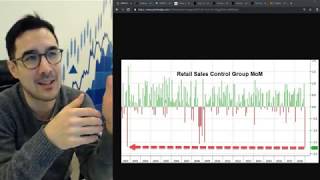
U.S. retail sales fell to their worst level since 9/11, dragging the Atlanta Fed's Q4 GDP forecast down to 1.5%. Contradictory headlines on U.S.-China trade talks sparked market swings, while the pound held steady despite Brexit uncertainty and rising no-deal odds.
Chapters
Good morning, Friday 15th of February. Getting straight into the briefing then and discussing the major news, so the fundamental events which have occurred from yesterday overnight and what we're looking out for this morning. And then hand you over to Sam as usual, and he'll look at the charts a bit more detail. But just to give you a flavor of the overall risk sentiment from the kind of different asset classes I've got visible at the moment, you can see equities in the US generally a little bit softer yesterday, and we'll recap for the reasons behind that. And we've drifted south during the Asia-Pacific session, uh, consequently then with that mild or moderate risk-off tone, fixed income futures higher. So you can see in the bottom right, we had that pretty explosive move higher in US T-notes yesterday at 1:30 on the back of the retail sales coming out of the States. Obviously, we'll get to that in a second, but particularly disappointing. And so the US 10-year has held on to those gains and still up about 2 ticks, having been relatively sideways overnight. Gold futures also trading on the front foot, up about $4 this morning, and if anything, have added on to those gains. So just to put it in a bit of context, pre-retail sales report yesterday, gold was trading at $1,308. It's now trading $10 above that price. So pretty decent move. Otherwise, the dollar is recovering and it's up about 0.2% in the, the Dixie. So both the major currency pairs a little softer, a bit of underperformance in the EUR/USD pair top left as we've just kind of broken out of that pretty sideways price action overnight in the Asia-Pacific region. As Europe stepped in, it's just drifted south. Cable fairly similar, finding some resistance overnight at the pivot on two occasions. Before kind of residing at its current price point just above the 128 handle. And we'll have a look at the Brexit vote that happened last night and where we go next from there. So straight into things, and let's just discuss— you know, we were talking on Trading Live at the time in quite great detail about the retail sales to put in a bit of context, but I just wanted to review that for anyone who wasn't around or who in fact is joining us bit later on, on YouTube. And that is something called the retail sales control group. Now, we know that across the measures, retail sales was disappointing. And if you think about that kind of, uh, the median expectation, and then you have a range of the most pessimistic to the most optimistic, and that forms your kind of framework, if you like, for what could be a very surprising positive or negative outcome. Now, what happened yesterday was retail sales in the US was so bad, it absolutely was well over the line of what was the most pessimistic expectation on Wall Street. And not only that, as a subset of that retail sales report, what you get is something called the retail control group. And in summary, this is basically a particular, um kind of cleaned up part of, of statistical data that's looking at specific parts in order to eradicate any fluctuations or volatility, and then trying to ascertain a clearer version of what is the underlying retail sale situation. And this retail group is the plugin that's one of the variables that's used for GDP calculations by the Federal Reserve. But also investment banks. So it's a very important number. And this retail sales control group, as you can see here, this was the chart we were looking at yesterday. The number it printed was -1.7%. Now, obviously, without knowing the statistical history of this data set, -1.7, uh, is just a number. But if you look at it on this chart, you can see that -1.7 is the worst that we've had, you'd have to go back to the immediate aftermath of 9/11. And obviously, if you think about that situation, think about the following months after that terror attack, retail sales spend in the United States of America when such a massive-scale incident has happened. It basically collapsed momentarily in time before then recovering. So as you can see here, that takes us all the way back to you know, we're looking at almost 20 years here. The last time it was this bad, we have— it's gone over that of which was the depths of the financial crisis. So obviously you got to take this as just one statistical piece of information. What I found quite personally hilarious yesterday was the economic advisor to Donald Trump, which is Larry Kudlow. He said yesterday 'Must have been a glitch. Must have been a glitch in the retail sales number. It was affected by the government shutdown.' I'm sorry, Larry, you've got the wrong month, I'm afraid. That would be the following month when the government was shut down. So obviously this is called— this is kind of the defense mechanism, if you like, of the administration to try and counteract people overinterpreting that this is the US economy slowing. This obviously is not the message of which Donald Trump wants the public to believe. And so these comments, I think, are neither here nor there. But one thing that I think was very interesting is, given these surprise or downside surprises of economic data in the US which have now started to come into play, this has led to this. Now, this is something maybe you've not looked at before. But this is called the GDPNow indicator, and it's run by the Federal Reserve Bank of Atlanta. Now, if you remember the composition of the way the Federal Reserve is structured nationally across the United States of America, it's broken into 12 subsections of regional reserve banks, and one of those is Atlanta. Now, Atlanta run this model which— let me just give you a brief Introduction. I'll put the link to this in the chat if you want to read about it in more detail, but what it is, is it mimics the process of what the Bureau of Economic Analysis, the BEA, do, who calculate the overall national GDP figure. And so this is a good forward-looking indicator as to what then GDP could officially be by the government when they release it. What this model does though, and this— the reason why it's looked at quite closely by market participants is because every time a piece of economic data in the US comes out, the model updates in real time. So unlike waiting for the advance, the prelim, the final, we don't really know the numbers until we actually get the definitive result. This basically generates then a moving goalpost of where that prediction of the quarter previous GDP should be. Now with that being said then, just check out this graph. It's quite unbelievable given that how weak that retail sales report was yesterday, um, and also the fact that you had retail inventories released yesterday. And basically the model is updated, and back on February 6th, 4th quarter 2018 US GDP was predicted to have been 2.7%. That now, following the data from yesterday, has been revised down to 1.5%. Uh, quite incredible. I mean, that green line drop-off is large, to put it, to put it lightly. So interesting for, for markets, because in the near-term reaction, this obviously creates this quite rapid move that we've had. So So flight to quality, uh, equity weakness, Treasuries rallying, gold, um, yen, so on and so forth. Now the other thing though that was very interesting about yesterday from a risk perspective, and that was around about the same exact same time that that came out, and it definitely further fueled the flame, was this. And this is that massive story that's that's really right at the heart of market sentiment right now, and that is the developments and outcome of the trade talks that have been going on in Beijing between the US and China throughout the entirety of this week. Now, this comment came out right when the retail sales come out, so, you know, it's— it all hits at exactly the same time. And the Wall Street Journal reported, and this is something to to be very aware of if you ever are trading intraday. And that is because one financial newswire reported that single comment only. They said China seeks to woo US with promises of big chip purchases. So on the back of that information and having only that one line to hand, you would think obviously that's a positive and this is a good thing, we're getting somewhere, and actually the market rallying in the equity space over the best part of the week is justified, justified, and actually we might even get another leg higher. The problem is, at pretty much exactly the same time, a competing rival news agency reported trade talks remain deadlocked as Beijing refuses to eliminate coerced technology transfers or government subsidies to Chinese companies. It was an absolute shambles on the behalf of the financial newswires, if I'm quite honest. Let me just explain though why it's not entirely their fault. What happens here is there's a lot of algorithms, so systems that are hooked into these newswire API feeds. Now depending on what these newswires release, A, what they release, and B, in what order they release that information. Of these systems just fire off immediately. You know, this is the downside of an algorithm. Unfortunately, it can't adapt to then maybe putting into context exactly what is happening because it's just pre-programmed in a certain binary fashion. So here you've got a positive and a negative. Now, as a human being seeing this story, you know, well, net-net, it's a neutral event. The headline's a bit misleading because underlying it's deadlocked. But when you're a machine and you're just getting input 1, well, that's a buy signal. Then the other one, input 2, that's a sell signal. And hence you get this big pickup in volatility. And yeah, it was a bit of a mess yesterday. The overriding thing here is that, um, talks are deadlocked. That seems to be the case. And I think this, once the market, I feel, gets over this initial knee-jerk reaction. I actually think, well, what else was it that we were expecting? And I think this still fits that conclusion, which we've been saying a week, that I think that these trade talks will just get rolled over. And actually what will happen, the trade truce will get extended by 60 days, as has been rumored by the press yesterday. The biggest thing here is that they've still got talks happening today, and So quite frankly, I don't think we've seen the end of this yet. Now remember, Lighthouser and Mnuchin, they're speaking with— well, they're meeting with Xi and the Vice Premier later today. Now those talks are happening in Beijing. Beijing is 8 hours ahead of London. So if you're just doing a bit more of an educated assessment of when potential comments could come at the wrap-up of their weekly discussions, I would say you need to be a little bit vigilant on what otherwise is a relatively quiet time in an intraday perspective between 10 AM and midday, that being 6 PM and 8 PM Beijing, because by then you would have thought they would have wrapped up talks. If there's any type of comments, whether official where they release a statement, or whether unofficial, you get rumors from the press, the ear of people as they come out of meetings, that's when you might see a potential another twist in the tail and a bit of a market reaction on the back of it. So something to just be aware of. Yeah, this is what Bloomberg is saying: US-China set to finish trade talks. Again, much of the noises here have been that it's been productive but still not definitive, and most of the deal-making really, according to those familiar with the talks, is being left to Trump, which hasn't define— he hasn't defined a date yet, but likelihood is it's going to be in March where he's going to meet again with Xi Jinping. And I think until that happens, despite a little bit of repricing, I think the market got a little bit ahead of itself thinking about the outcome of what could come out of these talks. And I think we're back to reality, but I don't think this is a worst-case scenario. It's not a breakdown. I just think they can just commit to continue talking And I think that should remain the case throughout the session, but one to watch. The other thing that's happened overnight is Donald Trump. Remember, Donald Trump was fighting Congress to get authorization for roughly $5 billion in order for him to build his, his border wall, which has been the kind of staple of his mandate ever since he came into the administration. Well, he's done something quite interesting overnight. Basically, he said, Democrats, I'll sign the bill, I will avert a government shutdown. So worst case averted, stock market supported, people still in work. So you manage that popularity issue you had before with people out of work and not getting paid. I'll take your $1.375 billion, and actually what I'll do I'll get my creative accountant and I'll get him to move around lots of different sub-departmental spending within the defense area. And actually, I'm going to create what already is signed off and sealed, and I'm going to move around some of the budget. And actually, I'm going to redirect nearly $7 billion that's already been approved for other uses into my border wall. How do you like those apples? So, gotta hand it to the guy, he's certainly creative in the way he tries to go about these things. Now let's be clear, absolutely I do not believe he's going to get anywhere near that $7 billion. Now thinking this through, all that's going to happen is the Democrats are going to go, Trump, this is ridiculous. 'This is not going to happen.' But he's going to go from $1.375 billion, and maybe it goes up to $2 billion, $2.5 billion. So we've gone from zero to five— 'I want five, you're gonna get nothing'— and now he's achieved $2.5 billion, let's say. So, you know, this is kind of becoming quite a distinct pattern for Trump, and he does get concessions. Um, so let's see. This, importantly, from a trading point of view though, is not a tradable event. What's happening here, these commitments, if anything, you would say this is a net positive short term because it averts a government shutdown as of today. That was a risk on Monday, and that's likely not to happen. He's going to sign that through today. The bigger picture is the narrative, the negotiation, the difficulties in Capitol Hill will continue for some time to come. So the threat of another government shutdown in time, I would say, is relatively high, but it's not really something that's going to move markets right now. Okay, final things, and I'll hand you over to Sam. We had some Chinese inflation data. If you remember, we've had a couple things out of China. We've had the export numbers, you know, really super strong yesterday, but that can be discounted to the front-loading for the new year. Now we've had the inflation data overnight. We had PPI and CPI. Now, producer price growth slowed for a 7th month to 0.1%. Now, a big problem there because there's a very high correlation between PPI readings in China and corporate profitability in the industrial sector. That meaning then that given the trend that's materializing there's most likely more pain to come for corporate China, particularly still to this present day, how tilted it is towards the industrial production side. So that's bad. But one thing that this could lead to is, if you think about it, if the situation is deemed to be worsening, well, what is the net reaction effect from the central bank? Now, we've already had the central bank, the PBOC, commit to doing various different things. Number one, a variety of different liquidity injections into the system of larger sizes to facilitate that kind of middle lending ground to keep lending rates low. We've also had the reserve requirement ratio, the RRR rate, cut already in order to release capital off banks' books to again add to liquidity situation. And then we've had the government talk about potential income tax cuts, new infrastructure spending. It's a full-on assault at the moment for China to stop this situation that's happening. Now, for me, all this does is, although it's bad on the surface, it just means then that the central bank has really no choice but to start upping the ante, and this means rate cuts. And interest rates still have room to move lower in China. This isn't a zero-bound situation like we've got in developed countries. And so actually, I'm not massively concerned that markets should absolutely, you know, fall over on the back of the fact that this inflation situation could add to deflationary risks, because I think then if there is a deflation risk, well, the central bank's got to do something, and that ultimately stabilizes if not, means it removes that risk altogether, as long as they've still got enough options available to hand, of which I think China still has plenty. So, you know, just making a bit of sense out of that. The charts— I mean, these charts here just talking about how falling prices bodes ill for corporate profits. As I just mentioned, that article I did send out to you guys this morning Anthony Cheung. Finally, Brexit. The reason why I'm leaving this till last is because it had almost zero impact on the pound last night. That's how priced in the event last night was. So just to remind you exactly what happened, well, let me just scroll down to here. Actually, it's not on this graphic, but I can talk you through it. So basically, MPs voted for 3 times last night. They defeated the amendments by the Labour Party, as expected. The Scottish National Party, which called for steps to revoke Brexit, defeated. Another amendment proposed by Conservative Salisbury and Chuka Umunna of Labour would have ordered the release of government's no-deal assessments, because obviously their thinking is that, you know, the more clarity that the government government puts forward of economic assessments of the risks of a no deal, the more unfavorable that becomes and the— you weaken the government stance. So this is that kind of centrist Labour opposition view, if you like. But that was withdrawn after the government pledged to release some information. So all three— or two were defeated, one was scrapped at the last minute. So what did happen then? The Prime Minister lost by 303 to 258 votes. It was largely a symbolic vote. What happened? A total of 67 Conservative MPs did not vote, so they abstained, while 5 voted against it. So, you know, you're kind of bricks or tears. I see the ERG making a lot of noise yesterday about how that could be the case. But what does this mean? We already know we're going to go forward. We've got another 2 weeks. Let's see what Theresa can do And then this leads us to this article this morning in, on Bloomberg, which is saying that Brexit Secretary Stephen Barclay is said to accept additions to backstop. The EU is looking at ways to assure the UK that the backstop is temporary. So everything still hinges on this same point, the legally binding issue about the backstop. Now what this article in short is suggesting is that the two main players, the Brexit Secretary Terry Barclay and chief negotiator Michel Barnier, have been talking about potentially inserting an annex clause to the overall agreement that talks about specifically the backstop and some assurances then around Europe to try and get the Brexiteers onside that actually it's not going to be a case that you'll be locked in and tied into the customs union forever. So this is actually is a watering down, is what some of the rumormongering is at the moment, in order to— EU will accept because they've basically stood their ground so far. Big problem here is that the Brexiteers are going to hate this. Now that's fine. I think it's February 15th, the Brexiteers can hate this. But when it comes to March 21st, 22nd, when it's the EU summit So I'm even going beyond the Feb 27th part when this will come back to Parliament for another discussion. I'm talking about if they really stick it out, I think that when push comes to shove, they will fall in line, uh, is my view. I think easier to play that card when you still have room to maneuver and leverage politically Big, big difference for me is that this is Parliament, this is not the British public. And I think for that reason, then, you know, this kind of idea of— and there's plenty of people I meet traveling around and I talk about Brexit who tell me that no deal is the only way Britain will be stronger in the end. I'm not here to try and change your mind on that, but these are politicians. And this is— there's a different kind of game going on here. And so I think in the end we do get this orderly Brexit. I still think that is the base case. And as you can see here, just to update you, Goldman Sachs, they're assigning a 50% probability of that happening. Now, 50% actually is still the same. They've always said 50%. The one thing that they have updated is they've said the probability of a no-deal exit at 15%, and the probability of a no Brexit is around 35%. So the one thing that has moved here is a no deal has got a little bit higher, albeit a low case probability. One thing from a trading point of view— let's step away from politics for a second— given the fact that what I'm saying is that I feel this is going to go right down to the 11th hour, well then markets have to price in the prospect of a no deal, even if the reality of it happening is incredibly small. They cannot afford not to start pricing in that as a risk. So as we go forward, if February 27th doesn't eliminate no deal altogether, then political uncertainty is going to grow, and that is going to away on the pound in the short term. All that will mean then is if we did get down to 1.2625 in the pound against the dollar, all the more potent the relief rally will be if and when Article 50 is extended, for wherever which option that we go down. So yeah, just a few thoughts there I thought I'd put out. Finally, calendar— what have we got on the docket today, retail sales from the UK. We've obviously had quite a few interesting things, uh, UK CPI dropping below 2% for the first time since, um, what, 2017? Uh, earlier this week, obviously got the Brexit situation. Now we're going to look to retail sales. What was the appetite for that, um, during the month of January? So we are looking for a bit of a bounce It was a particularly weak, if you remember, December retail sales report in the UK. Now, a lot of that can be explained by the behavioral change of the consumer, where actually if you mapped it year on year over the last 5 years, Black Friday, Cyber Monday has basically like a vacuum sucked up all of the retail spend into the Christmas period. If you think about the current context, household The margins are squeezed, so consumers generally look for deals, and so then they front-load their own purchases for Christmas about 6 weeks ahead of Christmas happening. So December therefore is deflated but can be explained to some extent. Today will be interesting because analysts are looking for a bounce. Question is, do we get that bounce, or were we wrong to assume that Black Friday indeed was the key reason for the December weakness, or Or is it more something more sinister there where consumers really are holding off on those purchases? So definitely will create some short-term noise in the pound, I'm sure, and something to look out for at 9:30, given the context that we're very close to yesterday's low at the moment. Other than that, US afternoon. So before, as we transition into the North American session, remember, keep an ear out for any updates on the trade talk situation. Given that they're in Beijing and a couple of hours ahead of us. In the afternoon, New York Fed manufacturing, import-export prices, industrial production. An interesting one possibly could be University of Michigan sentiment because it is the preliminary reading for February. So with these quite dramatic shifts and downside surprises and weakness in US economic data, how is general confidence holding up? And then you've got the Baker Hughes rig count for many of those looking at the, um, the oil situation as a kind of a lagging indicator for US production, which as we saw earlier this week still resides at 11.9 million, up close to record territory. Okay, that's it for me. I'm going to wish you a good weekend. Um, I'll catch you in the chat room later, and I'll hand you over to Sam now who's going to look at some of the charts. Thanks, guys.
Hi guys, hope everyone is doing well. Have a quick over the pound to begin with, just coming up to, uh, 9 o'clock. So obviously got that data in half hour or so, but just having a look at the, the longer term, uh, view here. We did break through that 1.2860 which we've talked about a couple of times yesterday. And in the futures. And you can just see there how many times we've tested that area and remains key today. I think if we do close or anywhere near where we are now but below that, I think we, we can drift down lower from a technical point of view, uh, you know, perhaps down to 127, which was the meaningful vote low. So 128.63 on, on the on the futures. Should we get back up there today, I still think it's quite a good area. You can see yesterday around 10 AM on the, the break of that, the retest was also the low of the day. Was a really nice trade, and that remains still an area I'd be keeping an eye on as, as very important for the pound. And perhaps going into next week, where we close today will be important to see whether that continues the recent trend to the downside or not. Also, longer term, the, the NASDAQ, the, the Dow, and the S&P all approaching interesting levels. And the NASDAQ— well, if I start on the NASDAQ, the, the trend line that we can place on this market from the 2019 low, you can see we're just coming up to sort of test that trend line now. A bit of support has, uh, has come in, but again, where we close the week will be important. The 200-day moving average on the, the NASDAQ was the high of the, the year. So again, if we do push up, want to be keeping an eye on that. And of course, where we, we close will be important. I think a break of this trend line and we can, you know, start to drift down to the, the low that we had back on the 8th of Feb and the high of the 18th of Jan. So quite a key one to have on the Dow Jones. That trend line from those highs, never could confirm a break above. You see a couple of times that we tried, we, we again started to drift down. And the S&P, similar yesterday evening, just coming under a bit of pressure, and now back below the 200-day moving average. So where we close the week will be obviously quite key for that. Looking more intraday, just the last sort of hour or so across the board, uh, US actually had a bit of a recovery from those lows of yesterday. So it'll be worth keeping an eye on, on how that sort of progresses. Having a quick look as well at oil, topsy-turvy day, and it was sort of showed really how the trading was yesterday. It was quite hard, I think, especially for the dollar following that, that data release in the afternoon. And, uh, you know, the market, especially gold as well, flipped higher, lower to finish higher as well. So oil, another market which was, was quite tricky there, but on course to have another week to the upside. So, um, I think probably worth having a look around the sort of just before the pivot. It looks quite interesting if I just put this on a 15-minute chart, just around 54.18 area on the futures. You got a bit of support from last night, would be one to have a look at. A bit of a trend line as well for those that prefer prefer the upside and want a bit more confirmation perhaps. We've had a couple of times where we've tried to break through. It's not the cleanest, but again, you can see no real close above. So one to bear in mind. We're just having a go at the low of the, well, yesterday evening. So we're currently on those lows of the days for oil. So starting to pick up a bit now. Obviously the morning or the early morning trade probably likely to be dominated by whether this retail sales number is in or out of line. And, and from that, so for the pound, obviously I wouldn't be wanting to get into anything too soon. I'll come on the mic later in the day to sort of have a look at how these levels pan out. I think the pound is obviously very key around that 1.2860 on the futures. And the S&P, the NASDAQ, and the Dow, any of those trend lines that either hold or do not hold will be key for next week. So any chatter into the back end of the day trade-wise, I think, will be the main driver there. European equities, uh, obviously most, most likely to lead the way in the afternoon— uh, in the morning, I should say. Just starting to pick up from those support levels in both the DAX that you see here and the Eurostoxx from the sort of double bottom of the low of the day. So perhaps looking to get a lead from the US from what happens in Europe today, uh, in the morning, to see whether that can sort of follow through or not. Uh, see, T-notes very range-bound, the Bund also. Uh, gold pushing higher. We had a bit of a break in gold, and it's, it's these little patterns are, you know, really useful to, to sort of have on the charts. You can see 1, 2, you've got your free test, and then it breaks through. Bit choppy But, and then you get that, that final break, and that's where we've sort of seen this extended push higher. And then you can see gold yesterday come down, went higher, came down again, and then pushed on. So quite, quite a tricky one. But we're starting to see a bit of dollar strength this morning come in and have a bit of a breather. So I wonder whether that's really going to influence that gold push higher or not.
Not.
Euro, you can see, having pushed down similar to the previous days where we've had a push down in the morning. I wouldn't be again chasing this too aggressively. Just having a look at yesterday's session, you can see when we were talking about not trying to get too aggressive on any of these breaks, the low, really trying to identify perhaps where the move started. And you can see if I just circle this area, you know, this break of a bit of support, we came back around, you know, 10 o'clock and that was, uh, the high for really the rest of the morning. So trying to identify where the move may have started can be quite key in this market, not trying to get too aggressively. So if I was looking at the euro, it might be just above the pivot area. While we've already retested it, that as a zone looks to me quite promising. Quite a lot of support below the low of the day for euro, but, uh, yeah, one to definitely keep an eye on. Any questions? As usual, please do get them in the chat, and I'll be going through some of the levels later on in the day. But if I don't speak to you, hope you'll have a great weekend and a good day ahead.
More from Anthony


Inside the Biggest Banking Stories You Need to Know This Week (Anthropic, Diageo, Private Credit)


Inside the Biggest M&A Deals You Need to Know This Week (UniCredit, GameStop, eBay, Eli Lilly)







AI Breakthrough or Hype? Anthropic’s Claude Mythos, Tim Cook Steps Down & LIV Golf Collapse