Markets quiet but risks remain
Anthony Cheung and Sam break down quiet markets with concrete risks: a Reuters poll shows sterling could rise 2-5% on a Brexit deal or fall 5-10% with no deal. German factory orders fell 1.6% year-over-year, the steepest drop since 2012, signaling Eurozone weakness. Sam provides technical levels for gold, oil, equities, and currencies.
Chapters
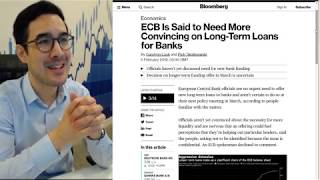
Good morning, it is Wednesday the 6th of February, so let's get straight into the briefing. You might have seen, if you do follow us on Instagram, we've started doing a new 60-second morning briefing early in the morning. So if you're sick and tired of hearing me and Sam ramble on for 20 minutes, you can use that as a short form to get up to speed with the news. Otherwise, the briefing is always going to be much more in-depth where we give some analysis and opinion. And as like today, I'm going to talk to you about the fundamentals and Sam's going to come on, look at the charts from a technical perspective. Kicking things off then, let's just have a look at the broader setup of the charts to give us an idea of general market sentiment. So again, I've got euro cable top left, gold futures top right. DAX center left, NASDAQ, S&P on the right. And then I've got WTI crude futures and US 10-year or T-notes in the bottom right. So just looking quite evident to see then that the dollar has kind of held on to some of its gradual gains that were seen yesterday under what was really a lack of news flow. The Dixie's trading up about 1/10, so both major currency pairs are slightly lower this morning. In terms of, well, EURUSD down about 20 pips. We'll talk about this in a second. We have had some weak German economic data this morning. Cable has found a bit of support around that test of the low in the futures, at least around the 2950 mark. Has recovered a little bit more recently, but around flat on the session. Otherwise, gold very range-bound. US equity indices I think it was the 5th day in a row that they've managed to just squeeze out some minor gains. But one thing that this chart reflects then is that, you know, if you think about where we were just several weeks ago around the Christmas period, everyone was panicking, talking of recession was kind of very much in focus. And now looking at the Nasdaq Composite, we're pretty much into bull market territory, you know, such as the volatility and size of swings that are happening in markets at the moment. So, you know, continuation of recovery from that dip. And as we know, at the heart of that has been the Federal Reserve changing to that more dovish kind of stance. Otherwise, in the other markets, oil pretty quiet overnight, not really too much that went on late in the US session. And so all of the markets here are broadly reflective of the fact of that predominant amount of the Asia-Pacific region is still closed. China will remain closed for the entirety of the week. There's some slight discrepancies between the different, different actual kind of financial hubs. So Hong Kong, Singapore mainly is where the bulk of the volume outside the mainland will come from. So with that in mind, very quiet overnight. And really as well, if you think about Monday, quite a quiet week in terms of scheduled events. So a couple of news headlines though that certainly you do need to be aware of. And one is, if I just quickly bring into shot the Aussie, because we were talking about the Australian dollar yesterday. I'll leave Sam to really go into the nuts and bolts of any key levels to be aware of in the Australian currency. But two main distinctive events that you can see derived from fundamental events, and this being yesterday. So this time yesterday, we were talking about the fact we had the RBA rate decision. They kept rates on hold. As expected at 1.5%. That was completely, uh, as was the plan and in fitting with market expectations. However, they did sound, um, not hawkish but less dovish than maybe some were suggesting. Still a bit of a focus on inflation, and actually the Australian dollar moved higher. However, as you can see, that move and more has been taken back, and this has come after The RBA chief, the Governor Lowe, has said the interest rate outlook more evenly balanced, said it's possible inflation accelerates and rates rise, but economy could be softer and lower rates may be appropriate. This is one of his main, uh, quote verbatim comments that he made overnight was there are scenarios where the next move in the cash rate is up and there's other scenarios where it's down. So he's being a little bit more explicit now about the idea as what markets have been pricing for Australia, just given as well, not just domestically, but the knock-on effects of their major trading partner China, where economically it's been, you know, significant weakness over the last 12 months. And so the first kind of real clear hints about a cut is potentially on the table. As well as other options, has meant that's a distinct move and reverse from what we've heard certainly yesterday and in recent times from the RBA. Um, from a central bank point of view, for any of those newer to markets, this is kind of classic, I would say, communication strategy from a, from a central bank official. And that is, I would imagine then that the move that happened, the appreciation of the Australian dollar yesterday, was basically overdone as far as the, the RBA probably wanted to communicate, i.e., a misinterpretation by market participants to think that, wow, this is actually not, not very dovish. And so this often happens. It's the same with the Fed, the ECB, the Bank of England. Typically, after an interest rate announcement, you have subsequent speakers in the following days thereafter and this is to manage market expectations should they deem that the markets or traders have misinterpreted what they wanted to say. And this is quite a clear case of that. You know, the governor himself comes out and says, well, hang about, makes some quite dovish stink noises, and you get a full retracement. And we're kind of back on cue in terms of the forward guidance of the central bank. So yeah, that's the trying to make sense of what's going on here. If anything, this is kind of a, almost a not very well-executed communication plan by the central bank, meaning that they've had to come out immediately the day after to kind of recalibrate markets' expectations of what we think. And so far, then, dovish reaction. We've moved back lower in the Aussie. So I'll let Sam go into that in a bit more for next levels to look out for going forward. Back to the news though, a few other things that I wanted to clear up, one of which is of course the State of the Union delayed address from the US President Donald Trump. I'm not sure how many of you actually stayed up at half past midnight last night to watch. I would imagine not many, but in summary, very much a political event. Lots of talk about, you know, the border wall, the immigration issue. It was almost like some sort of campaign speech for 2020 rather than it was anything particularly interesting and as a net result impactful for financial markets. So as you've seen overnight, it's been relatively quiet in asset class movement across the board. That's because really he didn't really say anything of importance from the market's perspective. So not going to spend any unwarranted time talking about this speech because in effect it was a non-market mover. Um, with that though, Trump— one thing that has come out, uh, in the Wall Street Journal and the Reuters Newswire talking about this morning, sources are indicating that senior US and Chinese officials are poised to start another round of trade talks in Beijing next week. This of course comes with that looming deadline on the 1st of March for the reset of those percentage trade tariffs on $200 billion worth of goods. So it's all fitting with the timeline we've been discussing, not expecting any headway to be made. Lunar New Year in the mainland in China is a real kind of the main market holiday or national holiday where really it's complete lockdown. So just looks to be in fitting with this. So to manage your expectations, from a risk point of view, it's probably unlikely you're gonna get too much much that could dent, let's say, market sentiment, it being still a major macro topic at the top of the kind of hierarchy, the trade war situation. More likely then, we're going to get more movement on that issue next week when these guys start meeting again. And this is the kind of precursor to the heads of state. So you get Donald Trump, Xi Jinping, and I believe this is when Kim Jong-un will also be involved. This is for the summit taking place at the end of the month, end of February is when those guys are going to be talking. So one would imagine they want to make some headway up for those guys to then kind of sign off the next part of what I believe at this point at least will be a little bit of a can-kicking exercise, a delay of the trade or the tariffs coming in, and the trade truce just kind of gets extended. And so crisis averted for the short term at least while they tackle key issues like intellectual property and so on. Otherwise, Brexit, again, really not a great deal for me to, uh, to update you on. Theresa in Northern Ireland at the moment. This is day 2 of her tour in that region. I'll get to it in a second, um, because one thing to be, I guess, from an intraday trader's point of view, to be mindful of is who is she meeting, when is she meeting, when potentially could there be comments from either her, Number 10, or leaks, rumors from various different Brexit-related journalists. So still nothing really new on the backstop. If anything, May has commented herself suggesting she's setting a low bar for renegotiation. She actually heads to Brussels on Thursday, which is currently where the Irish PM is at at the moment, discussing over kind of plans going forward. So yeah, not expecting too much. One thing then that you need to be aware of is the timings of meetings. So here's Theresa's schedule, these all being London time. So she's meeting, meeting with the Northern Ireland Conservatives first of all. I guess this is, let's get my own house in order. Then she meets with Sinn Féin, so members of the kind of main Republican party, and then the DUP, of course, the key kind of kingmakers, if you like, given the balance of powers for a working majority for the Tory party. And that's going to happen last. Statements from the leaders expected afterwards, which would be given PM's comments on backstop yesterday. So I guess if you're going to hear of anything definitive, I guess the DUP They've made some noises of potential being flexible yesterday. It was the kind of the rumors in Westminster. So I'll be looking around early afternoon for any updates on whether or not that's had any more progression on the back of Brexit. One thing to be aware of then, I think it's very important to just step back out then of the intraday and think about, well, what type of price movement could we see on a deal or a no-deal scenario, two options that we're looking at. And this is some of the latest polling which gets done on a monthly basis, where basically Reuters goes out on this occasion, they'll talk to all of the major economists at the big banks, and they will ask them explicitly, how much do you think cable, sterling-dollar, is going to depreciate if there is a no-deal, or appreciate if there is a deal? Now, if there is, and this is the expected outcome on balance at the moment is, albeit there's obviously quite a high risk to it, the most probable outcome still is an orderly Brexit, that Theresa May has this amended deal, whether or not now or in the near future, that does get— goes through, we move into transition. If that were to happen, every single economist surveyed by Reuters expects the pound to rally. Now, in terms of an actual— to quantify the size, they're looking at a move. So let's just get the cable chart up so we can have a look at what this actually translates to from a percentage, which was what they were asked, into actual price points. So let's put cable back on a daily continuation so we can see a bit more of the broader picture. So the average was a rise of 2 to 5% if there is an orderly Brexit. Uh, 2% would be here, you'd be looking at 132 handle. Obviously we're trading sub-130 at the moment. I'm looking at sterling futures. If we had a 5% appreciation, we'd be looking at 136. Uh, 136 would take us— well, that's 137 was that high here. 136 6 is probably a 5% move. On the flip side, the move would be much larger, of course, if the unexpected occurs. Now, one of the main reasons why the pound rallied so aggressively really was a function of two things since the beginning of the year. So let me just highlight this, what I'm talking about for you, which is this section here. And that is, one, we've had a complete U-turn almost from the Federal Reserve, which consequently weakened the dollar, and so as a net result helping assist and support the pair. And then also there's been this idea of cross-party willingness to avert the worst case economically, that being a no deal. Now, if there was a no deal, which is currently priced by the bookies at about roughly 10%, then obviously like what we saw at the EU referendum, when something is expected by such a a firm degree, let's say, when the tail risk does materialize, you get a very aggressive move in markets because it's so far removed from what's priced in. Now, in this case, those same economists believe that the pound would fall anything from 5%. So 5% would take us down to, uh, what, 124, 123.5? Down to 10%. 10% would put us down at 1.17 if you were looking at it. Um, so that's putting us down 1.17, of course, below a very important level. And you would think then, if we did break that psychological barrier of 1.20, which has been the definitive low of the whole Brexit saga, then absolutely, I think if you break that, then you're going to get a really clear extension of the selling. So 10%, I don't think it's, you know, out of the realms of possibility in that type of setup. So that's the kind of swing there you're looking at, just as I've got marked up. We either go 117 or 137, so you've got a 20-point range. So yeah, just thought it would be good to apply some numbers, if you like, so you're aware of the type of movement that could ensue under those different circumstances. Okay, final things, then I'll hand you over to Sam. This is something that came out yesterday, did cause a momentary move higher in the euro, but as you've seen this morning, the euro has completely removed that. And I'll explain why I think the markets brushed this off in a second, but this was an ECB source. And remember, when Bloomberg released an ECB source, this isn't Bloomberg journalists just hypothesizing, making hearsay themselves. This is absolutely the ECB communicating to the market under the cloak of being an anonymous source. This is kind of, uh, again, for those new to markets, uh, the indirect way of being unaccountable to drip feeding in a potential policy idea or change to markets to see how sensitive they are before actual official communication starts to change. It's very normal pattern or procedure for a central bank. Now, the bottom of this story was that European officials, ECB, see no urgent need to offer new long-term loans to banks and are not certain to do so at their next policy meeting in March, according to people familiar with the matter. So what this is referring to is something called targeted long-term refinancing operations. This is something that the ECB had been doing for a number of years. It's kind of outside of the realm of interest rates, quantitative easing. This was another method in order to liquidate the system, the interbank market, to lower lending rates essentially for us. Um, so as part of a staggered stepstone way of removing stimulus— remember, the ECB have now finished active quantitative easing— one thing that they could do to make that less, make markets more comfortable about policy normalization, is to reenact more Teltros. Essentially, that means the market is still kind of in some way not as potent as QE, but still has adequate support from the central bank. Now what the ECB are saying here is that actually, hang about, we're, you know, we're not— it's not a slam dunk that we're going to do this at our March meeting. So I think for them, I think this is a good idea. I think it's a clever strategy. I think if the Federal Reserve, as they have done, have made such a U-turn now, and we've had that being the major catalyst for the renewed now kind of stabilization. Won't go as far as renewed confidence about the market, but the equity market, as I said, is almost in a bull market in the US. And oil obviously has had a distinctive recovery as well. I don't think the ECB needs to start also exhausting their bullets or their options right now, better for them. Let the Fed carry the load, and then should it so be warranted in the future, you have that option going forward. So yeah, I think, I think that's why the market's really brushed this off. Um, I don't think this is a sign of the ECB being particularly hawkish. I just think this is sensible management of your toolbox if you're a central banker, if that makes sense. All right, last thing, German factory orders unexpectedly fall amid soft foreign demand. We had almost the, the latest service PMIs yesterday in Europe almost like a welcome relief because they, they weren't a disaster, which has been kind of building negative developments economically and kind of growing pessimism about forward growth in, in mainland Europe. But that again very short-lived because this morning Germany factory orders— German factory orders unexpectedly dropped for a second month in December, adding to these signs that Europe is kind of losing momentum. The actual number— orders fell 1.6%, the most in 6 months. Expectations were for a +0.3% reading. So if you look here German factory orders in fact have posted their biggest year-on-year drop since 2012. So obviously Germany being so critical, the kind of engine room if you like of European economic performance, uh, this is, you know, adds to the story. Hence the reason why I don't think you're getting crisis risk-off moves. This isn't a new situation, it's just showing that the downside is gaining that momentum. If you look here through the latter part, second half of 2018, the German economy has been slowing. There's no two ways about it. But now it's getting more severe at this point. So Bund futures a little higher, Bund's up about 13 ticks, the US 10-year up 6, and the European index futures just slightly negative this morning. Okay, final look at the calendar and then I'll get Sam on. I must give you one word of warning for any female watchers. Sam is wearing a suit today, so watch out. He's got his hair done, beard trimmed. I'm not sure what the occasion is, but hopefully he's got some magical levels maybe that he's got under his sleeve that he can share with us. I'm sure he's not going to let me off lightly for saying that, but here's the calendar for Uh, today pretty quiet, uh, not really a great deal going on this morning. Actually, if you look at the scheduled events, there's absolutely nothing happening on the docket for this morning. So as I was suggesting on Monday, and again, this is more aimed at those newer to markets, you've definitely got to approach this type of situation objectively and renew and reanalyze and, and trade alter your strategies to what the conditions are offering you. And certainly last week was so, you know, was so good for, you know, big fundamental catalysts which can change market sentiment and movement as a byproduct of that. This week, completely different. And it's almost exacerbating that fact that China is out of the market as well, and these big regional holidays in the Asia region. So looking at the calendar, it definitely is US-centric We've got oil inventory numbers, of course, coming out later. Don't forget this afternoon as well, we're looking out for any potential updates or rumors in regards to how Theresa May's talks with the various Irish, Northern Irish parties have gone, which are taking place throughout this morning as well. Fed's Powell, obviously key, does speak, but he's not speaking from a London time perspective till midnight. So we're not really going to know or cover what he's saying until tomorrow's briefing. All right, that's it. I'm going to let Sam come on. So I wish you guys a good day, and I'll see you in the chat room. Thanks very much.
Thank you, Salt Bae. Um, just having a quick look over the, the charts from a technical point of view. I think to bring in one that's actually quite interesting as we speak. You've— well, actually, before I go to gold, you've got the, the pound just coming up to that high of the day. Was also the, the low that we had initially yesterday, uh, double bottom before pushing through, uh, into the, uh, the back end of the afternoon session. So it's worth keeping an eye, I think, on the, on the pound here as the dollar just coming off better levels. But, uh, gold is, is one that I would keep an eye on. I'm just going to clear it up, um, just by taking a couple of the, the studies off here. Definitely I would have this trend line on from the, the low of, of the week. You can see it's marked up quite nicely. You've got your free test of that. And, you know, going back even just a few days and weeks, we've seen similar patterns where we've had a breakdown in gold from, uh, similar price action. You can see here you've got your, your free test, and then price goes, and even to an extent here as well. So definitely one to, to keep an eye on, uh, later on. I would of course still have the, the trend line from the top as well, which we haven't quite come to, to test. But the way gold moves and the extension that could happen, I would favor either way, uh, but definitely worth having this on and And the way you can see, even just if I put the pivots on to make it shown on a day-by-day, you can see just the extent of these, these gold moves when it does break out a technical pattern. So we're keeping an eye on that. And as well as a good indicator for, for the dollar as well. So with the, the fact that the dollar has weakened over the last few minutes, you're seeing— and this is the yen against the dollar rather than dollar-yen— you can see the yen's pushing to a high as well. Um, although worth, I think, here if you are long yen, a good profit target around this point. You've got potential trend line to come into play. You've got the lows that we had back on the 4th of this month, so Monday as well, that could come into a bit of resistance for, for the yen, for the gold. And this might be where potential dollar short, uh, or euro-dollar short, or pound could be quite a good market to have a look at. S&P yesterday, there was a bit of chat on, on Twitter. I was away lecturing in the afternoon but was checking the, um, the, the TweetDeck in, in between the lectures about the, the 200-day moving average. Just quickly get that on because we're not far away from it, uh, this morning, or of course last night when it was being talked about. So I still have that on one of the charts if you can, if you're trading US equities. And not too far away, you know, similar day to yesterday, we, we would get above it. So worth keeping an eye on, on how we trade around these levels. The obvious target we've talked about a few times before, if it was to go through that, we'd definitely be looking at this trend line, which still kind of matches up quite nicely with 2800. Oil, which, you know, saw you guys in, in the chat were talking about this trend line we have mentioned a couple of times, how it had broken Uh, you know, yesterday evening, just get it on quickly there. You can see this, I think, could be quite key in a sort of a short-term pause for oil. I know we've got the data out, uh, later today at 2:30, and you know, it will be interesting to see where we close the day and week. But significantly, we are now the other side of that trend line. And for those that do like the use of the Fibonacci, again, this was talked about in the, in the Twittersphere, if you like, the 38.2 Fibonacci level and the sort of 55 handle area where we had a bit of resistance on 21st November. You can see how well that's worked and is, you know, fantastic sort of use of technical analysis there. And now below the trend line, it might see a bit of an extension. Aussie dollar, and I mentioned we had quite a big move to the downside overnight and it's continuing continuing. And in the, in the strategy we talked about it, and I've seen people on, on Twitter talking about it as well. That trend line, once that goes, the opportunity to get short really to, to the low of the year. And this is definitely an opportunity I've been looking at. And I just hope it's not similar to last year where when on the break of a trend line, it just didn't come back to retest it. So I'll be looking patiently at that, and then the follow-through into the New Zealand dollar, which is still lagging a bit behind, and any trend line would be still a fair way away. But this is, you know, one that I do like the look of. Potentially this would be more a few weeks or months down the line of a break of this trend line to then get the low of October. Of course, this would depend on a bit more dollar strength coming into the market as well, I think. So one to bear in mind for the Aussie and the Kiwi as well. As we go through, uh, the, the day as well. Let's have a quick look European equities. Obviously the DAX had a really good, good day yesterday, pushed higher, didn't it, above the, the sort of the high of the week and yesterday's week's resistance. We're now literally right on those levels and the pivot, so I'll be keeping a close eye on what happens around here. Um, with oil underneath that trend line, with the 200-day moving average just above where we're trading, it wouldn't be surprising now to see a bit of a pullback, uh, across American stock markets. The DAX obviously would, would definitely do its own thing this morning anyway as the volume is at its highest. But keep an eye on that pivot, quite an interesting level as well. Pound just breaking through that high, the pivot 130, which was, uh, sort of line in the sand talked about yesterday on the spot market as we, we broke through that the first time in 2 weeks. So that would be a good area for the bulls and the bears to sort of battle against. But yeah, gold looks interesting. The yen also as well. I'll be keeping an eye on the euro, just retracing a bit. I probably would have a short-term trend line on the euro as well from the highs of recent days to see if that matches up with, with anything as well. Any questions, obviously please do. Myself or Anthony Cheung will be in the chat throughout the day. Um, but if not, I hope you have a good trading day and I'll catch you later.
More from Anthony


Inside the Biggest Banking Stories You Need to Know This Week (Anthropic, Diageo, Private Credit)


Inside the Biggest M&A Deals You Need to Know This Week (UniCredit, GameStop, eBay, Eli Lilly)







AI Breakthrough or Hype? Anthropic’s Claude Mythos, Tim Cook Steps Down & LIV Golf Collapse