Mildly positive trade war developments offset bad Chinese data
The S&P 500 had its best January since 1989, lifted by a dovish Fed and easing US-China trade tensions. But Chinese manufacturing PMI fell to a decade low near 48.5, signaling contraction that may force China into a full rate cut. Amazon posted record profit but stock fell 5% on weak guidance.
Chapters
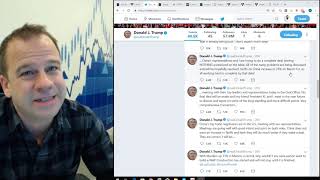
Okay guys, good morning. 1st of Feb. We have made it through month 1. There was forecast for lots of snow in London overnight. I don't know about you, but where I am, there was hardly any. So we've tracked into February a lot smoother than the weather forecasters were predicting, and it's certainly, well, I guess from a financial markets point of view, Things are, things are quiet, I would say, out there. Decent session yesterday to finish off the month. I'm looking at the S&P daily chart here, and yeah, first thing, you know, once we've closed out a month, always interesting to look back, see how markets performed over that calendar month period. And for the S&P 500, quite remarkably check out this chart. This is looking at January performance going back over the decades, and this is the best January for the S&P since 1989. As the market powers on, you know, 5, almost 6% to the good, and of course, you know, retracing well over 50%, indeed over 60% of the Q4 carnage. You know, when you think about it, we, you know, we've— it's about identifying key macro themes, isn't it? And we've certainly— it hasn't been too difficult to do that, I wouldn't say, in recent months. You've of course got your US-China trade war risk, you've got your Fed tightening risk. Closer to home, it's more, you know, Brexit. But wider than that, Europe slowdown. And, and then of course, you know, out in Asia, it's China being the most heavily impacted by the US trade war risk. And, you know, seeing a slowdown— we'll look at the Chinese data that was reported overnight. But, you know, these are the key risks. And two of the, you know, certainly two of those big risks, the, the US-China trade war risk and definitely the Fed risk, has reduced. And obviously that's one thing that's helped to drive this very sharp rebound. Look at this trend line we've got here. So actually yesterday's move was notable because, you know, breaking up above the sort of— let me get my, let me get my rectangle tool out here. So breaking above the little high we had 12th of December, which was such good strong resistance, on the 30th of January pretty decent resistance in here on the 18th as well. So yesterday was important technically, you know, further on the upside, breaking up through and closing above the 61.8 fib, breaking the downward trend line of, of Q4. So, you know, I'd say a lot of analysts perhaps were suggesting— if I just draw another rectangle on top of this, and now I've been drawing lots of rectangles and realizing I'm not showing you my chart. So that's pretty useful. Sorry, Friday. So let me show you that again. I'm going to delete these and start again here. So, well, let me, let me talk about it in a different way. A lot of analysts have been thinking, right, this, this kind of pause that we've had mid to, or let's say second half of January in this red box, you know, people have been thinking, right, we've rebounded We're up through the 50% fib. Yes, good reasons for the rebound. The Fed have certainly turned more dovish, and you know, at least tariffs didn't get hiked, and at least there is a dialogue between the US and China, and maybe some kind of deal might possibly get done, and that kind of protectionist trade war risk can reduce. So that was the reason for the banks, and then it was like, well, really, is there justification for moving even higher. And many were thinking, well, some of these earnings reports we're getting, Q4 earnings, you know, is really showing us what we were, what we thought. And that was that ultimately we're perhaps, earnings have peaked and that 2019 from a sort of profit growth point of view is going to be a downward trajectory. And Europe's, you know, slowing and all the rest of it. So really, yeah, 50% rebound, fine, but any more than that No, not really a reason for that. And yet that's what happened yesterday. So what's— technically, this is important. Whether it's going to be sustainable is a different matter, obviously. But let me talk about some of the things first that's been, that's been influencing things overnight. And firstly, negative news. But this is the Chinese manufacturing PMI. And this is released, you know, nice, nice gift before New Year, because do understand Chinese New Year is next week, so we're going to get China shut down. But just as we go into that annual week off, that Lunar New Year holiday, you know, really bad news delivered here. Not surprising, but this is the Chinese manufacturing PMI, and it slides below 48.5. You can see looking back over the last 12 months, easily the worst for 12 months. Look back over 5 years, well, it's the second— or well, it's the worst reading since that nosedive we had at the end of 2015. If you go back 10 years, you know, this is down, right down at the bottom end of the 10-year range. Let me just go back maximum, actually. How far can we go back here? I think that's not even 10 years, is it? Right, that's our maximum, back to 2011. So you can see it's definitely bottom end of the range. Yes, we've seen worse. 2015, as I said. But notably, you know how it works with these PMI readings, you know, below 50, that's contractionary territory and certainly very negative from an economic growth momentum point of view. But is this a good news is bad news? Because what's happened in response to this, and this is not surprising because we've seen negative Chinese data right the way through the last few months, so more negative data isn't a surprise, right? That's what people are expecting. Um, what we had expected— I mean, it is worse than expected, I know that's a contradiction, but we had expected 49.4, okay? And it comes in here, that's south of 48.5, so it's worse than expected. But negative surprises, um, are not particularly surprising. So it's following the same trend. And what I would say is the more negative this data gets, or the longer it stays negative, let's put it that way, well then the more likely the fiscal and monetary response will be from the Chinese government, especially whilst you've still got the ongoing trade war risk. You know, we haven't had a resolution there. So there is speculation out there in the marketplace this morning that China will, as a result of this quite notable slide on the PMI. This will be that catalyst for them to go ahead for a full-on rate cut because all the stimulus they've pumped in in recent months has not included an actual headline interest rate cut. It's been the much more milder stimulus of cuts to the reserve requirement ratios that banks have to uphold. That, that cut to the reserve requirement ratio really enables banks to lend more. So it's about a bit of a credit injection to the system, to the economic system via the banks. Okay, that, that, that RRR, as we call it, the reserve requirement ratio cut, it's not as powerful as a monetary stimulus as a full-on headline interest rate cut. And China haven't cut rates since 2014. So we've had a RRR, we've had a couple of RRR cuts. We've also had a notable fiscal stimulus, with 125 billion being rolled out to spend on further increasing the quite remarkable high-speed rail network that China have now built themselves. So fiscal stimulus, triple R cuts. Now this data perhaps is the final catalyst to push them towards that more significant monetary policy of a rate cut. Okay, so that's even so bad news here, but markets have been taking this, um, not in a negative way, let's just say. Let's check out one interesting market here is the Aussie dollar. So this is the Australian dollar versus the US dollar, and what's happened last night, we had a pump to the upside here, and we're kind of just about hanging on to those nice classic long here for those that were looking for this kind of setup off the, um, what was the January high, um, that got breached, um, not yesterday, sorry, it was the day before, wasn't it, off the Fed. Apologies. So that, that pump to the upside was off the dovish Fed breaking to a new high for Jan, and that's really been a nice sort of area of support this morning. Um, but you know, China, China stimulus is good, is stimulus for Australia. Um, we're also actually— we've got the Aussie Central Bank next week, um, reporting, and we're actually expecting a rate cut from them as well. But you're getting Aussie dollar strength despite, um, probably a rate cut next week as a result of bad data from China increasing the chances of more stimulus. So it's a pretty convoluted argument, but Essentially, in the end, Australia are fantastically dependent on China. And so this trade war risk is absolutely a negative factor for Australian asset prices. So the Aussie dollar, nice and positive this week. Yes, some of that's the dollar weakening, obviously, off the Fed meeting on Wednesday. But that, I guess, takes me back to that earlier point. You know, it's definitely one of the key things about this week that's enabled this market, the S&P 500 now, The, I think the key catalyst to pump this to another step higher was, yes, the Fed being dovish, but the key was being more dovish than expected in properly stopping their cycle. At least that's their guidance. And so I don't think many were expecting that. And that's what's enabled this market to go one more step higher. Okay. Whilst I drew that red box saying analysts were saying that's probably about enough on the upside here, given the developments. Until we get Trump and Xi Jinping signing on the dotted line, perhaps there's not reason for more upside. But, but Powell and the Fed have been more dovish than expected, and that's what's contributed to another step higher. So up above 2700. Now, on that China front, more, you know, key discussions in the US yesterday. This is what Donald has to say about it. 3 tweets here. So China's top trade negotiators, they're in the US meeting with our representatives, blah blah blah, going well with good intent and spirit on both sides. So China does not want an increase in tariffs, obviously, and feels they will do much better if they make a deal. He says, I will be— and this is perhaps the headlines overnight. I will be meeting their top leaders and representatives today in the Oval Office. No final deal will be made today, but now Trump's lining up the potential for a key presidential summit in China in February to try and just finally hammer out the deal and sign. Okay, so we're not expecting a deal today. Yes, positive noises from both sides this week about how the negotiations have gone. But plenty still to do, and we're expecting Lighthizer to go to China after the New Year. So remember, China a week off now, so this kind of means that negotiations pause. And then we expect the trade representative, probably Mnuchin, the Treasury Secretary, to go out to China mid-February, with then following that Donald himself making a trip with with Xi Jinping getting involved with the idea of trying to get the deal done by the deadline, which is the 1st of March, of course. Trump also perhaps said that, um, that, that 1st of March deadline, as long as there's positive momentum towards what it looks like is going to be a deal, if they run out of time, you can always push that date a little bit further into the future, but only if you know, that there's definitely light at the end of the tunnel on a deal. So this is, this is positive without, you know, ultimately getting the full deal done. So things are bubbling along, and this is what we're worried about with Trump, of course, is any moment, you know, things can break up and he can get on Twitter and start being incredibly antagonistic and incredibly provocative against his negotiating partners. And at the moment, he's being nice and cordial and positive. So whilst that's the case, then obviously that's a positive for markets as well. So, so despite the bad news from China in terms of the data last night, it increases chances of stimulus. But positive news on the, on the trade front has just meant that markets this morning have started off, you know, equities are trading around the highs from yesterday. Today's moves, you know, up around the highs of the week. The other thing about the trade war, China have again— well, this is the US saying this, by the way, not China, but they're again saying that China are going to buy 5 million tons of soya beans. This is definitely one key thing. This is exactly the kind of thing Trump's— Trump, Trump likes, you know, very specific action to help, in this case, obviously, US farmers. So that's the trade war. But it's not all good news because, yes, all right, from the US, good news this week, from good news from Powell, good news from Trump. But check out Italy. So this is what happened yesterday. Italy delivered their GDP figures, and we're worried about Europe. I said in my kind of list of broad global risks, we have Europe, you know, right up there as being a major concern. And it's not just Brexit, which is obviously just a contributing factor. It is definitely a European-wide slowdown. And here we have the third biggest economy in the eurozone, fourth biggest economy in the EU, hitting technical recession. So this is two— a technical recession is two quarters in a row of negative GDP prints. So -0.1 for Q3, -0.2 for Q4. Again, it's not a massive surprise, this. And actually, when you're looking at other countries, I mean, let me— I mean, Italy's one thing, but Italy's growth rates have always been very disappointing, let's just say. I mean, I mean, over the decades. But even when you look at Germany here, we've got a real genuine recession risk, technical recession, two quarters in a row of negative print. We'll see. We haven't had the German GDP figures. We're going to get those next week for quarter 4. Okay. But, you know, Europe generally is not in a good place from an economic growth perspective. And these figures are continuing to highlight that. So, yeah, there isn't good news from Europe whilst there may be good news from the US. Right, what else is happening? Let me just scan through. We've had news from Amazon overnight, so the earnings season rolls on. It's definitely been a week for the tech giants, and Amazon's numbers, well, whilst revenue gains were, were solid at 20% and profitability improved, so again another record ever quarterly profit for Amazon, that's the third in a row. I don't know if you know about Amazon, but generally speaking, they are not a company that does profits. Amazon are famous for very aggressively investing back in all of their— what would be profits— all of their income getting pumped back into, you know, buying up ever more warehousing facilities close to city centers in order to try and speed up that delivery process, buying Whole Foods in the US, investment into drones, investment into the more kind of higher margin stuff, which is the, the cloud stuff. So Amazon don't normally do profits, but they did in 2018. They decided, key massive investment 2016, 2017, right, let's just actually get a return on that investment in 2018. So they did well in terms of the figures, but their share price is down 5% for for two reasons. Number one, their forecasts for Q1 of this year have dropped. So they, they've cited a slowdown in revenue growth expected in Q1, so below analysts' expectations. So that's obviously not good looking forwards. Um, and secondly, um, they're going to get back to their spending. They said, yeah, 2018, yeah, we booked in some nice profit, excellent record ever profits, but you know what, 2019, we're going to get back to the reinvestment. Okay, and analysts didn't quite like that much either. So 5% down for Amazon share price overnight. We'll see, we'll get earnings season continue really next week. Today on the earnings front, we have the likes of Honeywell in the energy sector, ExxonMobil. So it's more of an energy sector thing. We've had some really good numbers from the energy sector generally, some great numbers from Royal Dutch Shell earlier in the week, for example. So we're expecting the energy sector to deliver in the US this afternoon. And then we're back to like Google would be the headline figure for next week. I just saw I got Deutsche Bank on the list. Deutsche Bank have already reported again really worse than expected. They turned a profit finally. But much lower than expected. So, you know, ongoing troubles for Germany's banking giant. So Amazon news overnight. What else is going on? Well, in terms of looking ahead, let's have a look at the data and then I'll look at the charts. So data calendar for today, we've got key European data coming at us right now, in fact, and Let me just check in. I mean, these are final PMI readings. So we just had the German figure announced at 49.7, just below the expected 49.9. France came in line at 51.2. Italy, not surprising I guess given those GDP figures, coming in at 47.8. And that's a key thing. I, I guess I'll just very quickly go back to that China comment because China's PMI dropped below 50, okay? But check out— I just want to show you Italy's PMI reading. Uh, one second. Business. This is Italy's PMI. Look, we've been below 50, um, really since September, okay? So what happens when PMIs drop below 50 and stay below 50? Well, generally it's a key recession risk, and that's what's happened in Italy. We now have a recession, 2 quarters of negative GDP prints in a row. So why are we worried about China? Because this is such a good, uh, sort of lead indicator towards future economic activity. So it just points towards that ever ongoing accelerated slowdown in China. But look, back to the data, we're about to get the European-wide figure at 9 o'clock. But look, these are all— look on them The— they have final on these because these PMI readings in Europe, we get the preliminary flash estimates, um, about two-thirds of the way through the month, and then the final reading is on the first of the following month. So it's the first of February today, so we get the final readings of January PMI, right? But we've already had the preliminary ones, and you don't tend to get too much difference between the preliminary and finals. There's actually the preliminary PMI figures that are reported two-thirds of the way through the month that are actually the, the important ones that tend to be market sensitive. These ones, the final readings, tend not to be. We do have inflation figures out of Europe though at 10 o'clock, which will be potentially more market sensitive. Of course, Draghi's been pretty negative about European growth and, you know, inflation pressures. And so we'll get some data. We're expecting inflation on the headline to drop from 1.6 down to 1.4. It might be worth just very quickly having a reminder look at this chart. This is the inflation chart for Europe, and it definitely tells an interesting story because 2018 generally was like, ah, finally back to 2%, finally back to target. Now a lot of this is because of the price of oil, of course, ramped higher middle part of last year, and now we've got inflation tumbling. We're expecting 1.4%, which will be the lowest reading since April last year. And of course a lot of this is because the oil prices dropped again, so there's a, there's a lot of energy-related influence here. But when you look under the bonnet, so to speak, and if you look at core inflation, core inflation, then it's just flat, dead as a pancake here. 1% locked in, um, middle of the range. And it's like, you know, there's just nothing here in terms of proper consumer-driven growth in Europe. And in the end, this is going to come back to haunt us, probably, because we may well see Europe slide into a, a recession with the ECB having interest rates already at zero and only just having finished their QE program. So we've got interesting times ahead. We're a bit worried about Europe, I'd say. They're slowly but surely going to become the biggest risk, I would say, if the US trade war risk gets done and removed. Almost certainly Europe, and obviously Brexit amongst that, coming into Q4— sorry, Q2. You're probably gonna have to look out for Europe to be the, the key number one risk. Let's look further into this afternoon. So it's the first of the month, so we have the US payrolls report. So non-farm payrolls, we're expecting 165,000 That— here's the chart. We had a monster reading, of course, for November. So, sorry, for December. So here we're going to get January figures. We're expecting a pullback, which wouldn't be a surprise given how powerful that December print was. We're not too bothered about this. In 2018, we obviously had 2018 figures completed here and there, and the non-farm payrolls average, the monthly The average was the highest it's been, um, for 4 or 5 years, I think it is. So we're not worried about payrolls. So when the numbers get announced later on today, it's not going to be about non-farm payrolls. I'm not particularly bothered about that. And you know what, we're not bothered about the unemployment rate either. That's expected to stay unchanged at 3.9%. I did tick up last month in December, but actually that was for a positive thing. I know that sounds a little bit contradictory, but the unemployment rate— unemployment rate— because of an increase in the labor force participation rate, which in the long run is a positive factor. And the unemployment rate's down at a 50-year low down here. So we're not bothered about unemployment either. It's very strong. So what we are bothered about— go back to the data calendar— is the average hourly earnings. And we're bothered about it because the Fed took a very surprisingly dovish turn this week. Now, have they been influenced by Trump? Are they panicked about the trade war risk? Is it to do with the government shutdown? You know, why have they taken such a dramatically dovish turn? Do they know something we don't with regards to underlying inflationary-related data like average hourly earnings? Because it's going to be pretty awkward for the Fed if the data today shows average hourly earnings coming in really strong again, because that's such a core part of that inflation drive higher, which is— it's the Fed's job to halt that. So go to the chart here for average hourly earnings. We had a really big number in December, +0.4%, and we're expecting +0.3%. For today. If it's +0.4, dare I say if it's +0.5%, the Fed are going to look a little bit silly, I would say. I think there's a real risk they've gone too dovish and they're going to have to flip-flop back to being a little bit more hawkish almost straight away. So the Fed are, fingers crossed, looking for weirdly a lowball average hourly earnings number today. Do understand that the dollar's been really weak, of course. So let's go, let's finish on the charts here. And obviously the dollar's definitely been weak as a result of the, the comments from the Fed. I mean, let's look at the EUR/USD. I mean, well, now I say it though, I guess we've retraced most of that, that Wednesday move. But I don't just mean Wednesday. If we we go to the continuation chart here, we're top end of the range for EURUSD, you know, well off those lows that we were seeing down at the end of last year where we snuck down below the 113 handle. You know, we're back up at 115 despite ongoing really bad data from Europe and despite, you know, Draghi being negative and a bit dovish. Despite that, we're still actually up at the 15 handle. So a lot of that's dollar weakness. If you look at cable and have a look at that on the daily, well, of course, this is more kind of insightful in that you've got a much clearer move to the upside, trading up at in the 131 handle area. Now, obviously, we've had some ups and downs Brexit-related on the pound side, but this is definitely a lot to do with dollar weakness as well. And, you know, flirting with those November highs. And that's kind of been the, the messy sort of top that we've seen put in place here at the end of January. So we've definitely had a bit of dollar weakness. So there's definitely scope for dollar strength off higher-than-expected average hourly earnings figures as people start to speculate the Fed are going to have to flip back to the hawkish side due to inflationary pressures building. So definitely keep an eye on dollar, um, as we get these figures this afternoon. Finally, let's, uh, let's look at the commodity space. Oil's had a pretty interesting week. I'll start on that daily chart first because it's similar, very similar to the S&P in one respect, in that January's been very powerful, you know, pretty much straight line to the upside for crude oil. I'm just going to delete all of this tech stuff. And I'm gonna— now, the key here was this kind of handle around the 55 area, um, and, and that, I mean, it was really important support here on the nosedive as we dropped mid-November. But you go back further and it— 55 was important when you go back to 2017 as well, um, so, you know, and you go back to the even 2016, the December 2016 high, the Feb 2017 high. We broke it and key support mid-November back in 2017, this is. And, and then when we return to this area back on the nosedive in Q4, support, then it breaks, then resistance. You know, $55 is huge, very pivotal price, and we've reached it finally this week, um, indeed Wednesday, and then yesterday we finally got up there. And I'd say 55 might well be enough here now. Obviously, it'll depend on data. I mean, one thing, the US production numbers released on Wednesday showed that production did not increase. So that's almost like a positive because we're used to US oil production just stepping up and up and up and up, and it did not go up. So if you like, that's a positive for price, and that's helped us see oil get up to test that 55 area. But first test and it's resistance, we pull back a little bit. So I just wanted to put this on your map, your radar. This 55 handle is very key. Um, now when you're looking at the Fibonacci here, it's interesting when you compare it to, let's say, stocks, because the S&P is above the 61.8 fib, whereas oil here is found resistance at the 38.2. So definitely underperformance if you're looking at that correlation. It's not as simple as to say, obviously, that— I mean, it's not always the fact that oil is positively correlated to stocks. There are, of course, there are some energy stocks in the S&P 500 which obviously benefit when oil prices go up, but don't forget that most aren't energy stocks and And if oil prices go up, well, you could argue it's bad news for the other companies because they've got energy costs. And so it's not a straightforward correlation, this. And then on the demand side, you know, one of the key reasons for the bounce in oil here is because the trade war risk has reduced because the Fed have been more dovish. And so, you know, this helps on that kind of demand side factor. But yeah, 55, really important price, as is $50. Anybody who likes their patterns, well, do we have— let me get my rectangle out here. What this— the shoulder would be around the $50 handle, thinking about a reverse head and shoulders here. So the shoulder here back November, $50. You got the head down here with the lows at 42.50, back up above the shoulder line at 50. Such an important psychological price, obviously. So in the coming days, next week, let's say, if we do get a drift lower, having found resistance at 55, 50 becomes that very key price point. And it might be that now we've bounced to 55, I, I would expect this to settle down a little bit now and maybe track a bit more sideways as we go through February. Having had a very positive January. So that would be my spin on the— I mean, there are obviously risks of that, Venezuelan supply and all the rest of it, but that's my view on oil. Right, I think I'll probably— I've gone on long enough here, 10 past 9. So it's been a while since I've done the briefing, so once I stop my once I start, it's hard to stop myself. So, but that's exactly what I'm going to do. So enjoy February. Just notice the Dow Jones bang on the 25,000 handle, but generally quite a quiet start. U.S. stocks hanging on to the gains from earlier in the week, and all eyes on those European inflation figures in 50 minutes, and then the, the average hourly earnings figures that are going to hit the wires at 1:30. All right, that's it from the desk for the briefing. Enjoy the session. Thanks a lot.
More from Anthony


Inside the Biggest Banking Stories You Need to Know This Week (Anthropic, Diageo, Private Credit)


Inside the Biggest M&A Deals You Need to Know This Week (UniCredit, GameStop, eBay, Eli Lilly)







AI Breakthrough or Hype? Anthropic’s Claude Mythos, Tim Cook Steps Down & LIV Golf Collapse