Millions By The Minute Trader: Ben Marsh
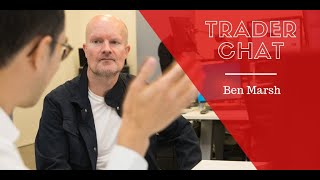
Ben Marsh, a futures trader from the BBC's Millions by the Minute, says the mechanics are simple but psychology is brutal. He trades liquid futures like oil and gold using swing techniques, avoids thin-volume periods, and relies on strict rules and limit orders. Success requires patience, discipline, and treating it as a probability game, not a quick paycheck.
Chapters
Okay, hello everyone, it's Anthony here at the desk at Amplify Trading. Slightly different session, so not specifically talking about something in markets that's going on right now, although the pound has just dropped quite dramatically on the back of some latest comments to do with Brexit, but we'll leave that for a different briefing. Purpose here is I'm catching up with a former trainee at Amplify that we had back in 2015. So you might remember Amplify Trading featured on a BBC documentary, as I'm showing on my screen to the side of me, called Millions by the Minute. This was back in 2015 when it was aired, and one of the main people that was featured on that program was a chap called Ben Marsh. And Ben trained with us, and this was a number of years ago now, and I I've been fortunate enough to have Ben make his way out from the countryside to come and join me, and what I thought I'd do is just record a catch-up, just a very informal conversation between me and Ben, just about what he's been up to, what he's been trading. I thought it might be very beneficial for those, A, interested in potentially looking to learn to trade, and for those who are more experienced and just learning from another guy of experience, in that essence. So we'll transition over. Ben, welcome.
Good morning. Good morning. It's good to be back. Yeah, yeah.
I mean, it's been— how many years was it when you were last in the office?
It was over 5 years ago, 5, 6 years. And I've got to the age where 5 years goes past in a heartbeat, which is a little bit scary. But I mean, it's— I suppose me being here will answer a question that anyone that watched the documentary would have, which is Is he still doing it? Yep. Because obviously this is a business where, you know, the failure rate is way over 90%. Yep. And for very good reason, that as I'm sure all the people training with you will discover, trading itself is not that difficult, but the psychological side is almost impossible. And even when you start to master it, you still you'll get the chattering voice telling you to do all sorts of bad stuff, prospect theory and all this sort of thing. And it's developing the discipline because for most people the fantasy of trading is one that I can live in a world of freedom, you know, boundaryless, endless possibility. The only way you can survive in it is to create a really, really strict set of parameters and rules. Right. And you never deviate from them. And certain things you never do. You never do an impulse trade, because again, at the beginning you imagine, well, if I do an impulse trade, it must have a 50-50% chance of success, right? Things either go up or down. No, they almost never work. And even if they do, you've actually still got to see it as a bad trade because you didn't follow your rules and it was luck and it was taking a punt.
I almost feel like I need to roll you out at the beginning of every time that we stand in front of a new group of traders, because, you know, certainly this is something we always communicate prior to them starting the course, but also the first day.
Yeah.
But then obviously, as you've probably experienced, whether yourself or other people you've seen, human nature is it almost takes getting burnt to have this realization.
Well, it's a bit like as a new dad, hence the fact I'm looking so tired, not trading. But when you suddenly realize, you know, your parents always tell you loads of stuff when you're a kid, you're like, yeah, yeah, whatever. You suddenly realize later in life, do you know what, actually they were right. And, you know, there are certain fundamental things in trading that you cannot avoid. Don't overtrade, don't make your stops too tight, don't impulse trade. You know, you've always got to have a very clear plan of what you're doing. If you break any of these rules, you will lose money. If you're trading to make your next mortgage payment, Don't do it because you will make a terrible series of decisions. As soon as you equate it with money, or if I do this, I can buy my girlfriend a new BMW, whatever it is, you will start doing things for the wrong reasons. And if you do it for the wrong reason, it will result in costing you an awful lot of money. And with leverage, cost you still more.
Yeah, of course. Of course.
And I mean, people say It's like gambling. It's actually infinitely worse because gambling, you know what you're going to lose. You know, trading, you can lose. And I've watched people, you know, you've got to be able to take the time. Amplify offers great training, but the only way to become good at it is to do it.
Yep.
And again, you've got to do it with real money. You can be the best sort of sim account trader in the universe.
Yeah, yeah.
It means nothing because when you're there and it's your cash on the line and you start to get those feelings in your stomach or whichever other organ you want to pick, you know, again, the impetus to do crazy stuff, you know, can become overwhelming until you've got the discipline. And you need the length of time to be able to see it as a You know, for example, if I'm trying a new setup, I'll set myself 25 attempts at it, and I'll look at a period of 25 attempts of that setup to see if it's worthwhile. Right. Now, clearly, if the first 18 don't work, you say, "Mierda, not looking so good." But you've got to remove yourself from the thing which, when you start trading, if it goes your way, "Hey, I'm a genius!" If it goes against you, "I'm useless." So I guess on that point then, from you having traded for now several years, Yeah.
What part of your development did that— did you manage to control that as an emotion, if you like, that kind of—
Well, it's an ongoing battle. You become better at it, but it's always there. And I suppose when you've lost a bit of money doing it, that's a fantastic way of teaching you not to do it again. You know, it's the Einstein definition of madness, to keep doing the same thing expecting a different result.
Right.
So I mean, if you keep on doing something stupid and it costs you money if you carry on doing it. That is madness. It's— but again, it's just part of that. You're seeing it as a long-term process. I never judge my daily results. I'll never look at less than weekly because I, you know, I said to you in our conversation earlier, I do a lot of meditation, and the more I do trading, the more it's the equivalent to my meditation. You've got You've got to have absolutely no opinion and you've got to have no ego. As soon as you invest ego in your belief, the market should do this basically because I say it should, then you're cooked. Because the thing is, you know, at university I was taught classical economics and it's lots of rational individuals making decisions in their own self-interest, which is complete bollocks. You know, and— oh, there you go, the economic police have come to take me away.
I think Oxford University must be on the—
yeah, yeah, yeah, I've got a lot of middle-aged dons are going to come and give me a kicking.
Okay, so just not to panic everyone, we're safe and sound.
But, you know, we all know that it's— I mean, for me, markets are looking at pulses of fear and greed, and you get all sorts of groupthink And you get the fact that a move will confirm itself. And then you get all— and the secret to doing this well— and first of all, you always enter a market when it's quiet and get out when it's noisy. You know, because I mean, all the suckers come in at the end of the move. You know, you get the FOMO thing and everyone goes, "Oh, I'm missing out." The great thing is, on my screens at home, I've got 38 markets. So I mean, there are constant moves I'm missing. So I couldn't care less.
I guess on that point, just so the audience is a bit more familiar with Well, I guess two things. What is it specifically that, that you trade now? And also, how do you trade? Right, in terms of— so Amplify, we obviously start the training process with a global macro overview, cross-asset class, using fundamentals and technicals. But how do you develop that? Okay, for yourself, individual thing.
When I left here, and I say, you know, that just to promote the brand, Amplify gave me a fantastic grounding, but I then spent, you a year deconstructing it and finding that it's something that suited my personality. It's essential that you find a style of trading that suits you, and a market that suits you is equally important. I mean, for example, personally, because I trade futures, I trade oil and gold very well. Well, he says modestly. I trade, you know, I make money doing it. Yep. I'm good with US indices. For the life of me, bonds I cannot trade at all. And as Clint Eastwood famously says in the Dirty Harry movie, a man's got to know his limitations. And could I learn to become a good bond trader? Maybe, maybe not. You know, I'm already a middle-aged guy. I mean, life's too short. If you find something that works for you, you know, I'm not here seeking as a thrill seeker. I'm here to earn some corn. Yeah, because you go through— everyone goes through this transition. We all do the same thing. Early in your trading career, you seek complexity. As someone who uses a lot of technicals, I'll just get that one more indicator, you know, that will reveal everything. You end up piling loads of stuff on your screen. As you become more experienced, you have to strip it all down. Because for technicals, you need volatility, volume, oscillator, and something showing a trending market. Because, I mean, at the end of the day, the first thing you've got to know is when you come in the morning is what's— what is the market? Is it trending? Is it choppy? Is it range-bound? If you don't know that, you've got no chance. Because, you know, as you know better than me, something that works brilliantly in a trending market is catastrophic in a reversion to the mean market.
And that's what we were talking about earlier, was this idea, I think, when you, when you come in to rationalize and put into context that day.
Yeah.
And that every day is unique. Yes, there is a, as I will teach people, there's a kind of a hierarchy of macro themes.
Yeah.
Like the ongoing trade war will be present and apparent for a number of months. But the point is, is that it goes through this ebbs and flows. We just had a Brexit comment come out. Yeah. If the pound drops 2-3%, all of a sudden that becomes a focal point for sentiment. And so every day like you're right saying, it's almost this, this evolution of being confident in the fact that actually I can adapt to the market conditions. But I guess this is experience.
And also it's a great thing. I mean, why, if you can get it right, trading is a great career, particularly in the environment we're in. I was saying earlier, I don't tend to trade August because it's very light volume. I mean, I, because I do a lot of swing trading, but there's August, I shorten my timeframes because obviously low volume, you'll get lots of random spikes, stuff chops around all over the place. If you catch a move, it will tend to be short-lived. As I say, you've got to know your markets, you've got to know your strengths, and don't try and do too many different sorts of trades. You've got to find a couple of things that work for you. There are guys that make— have extraordinary careers doing one thing, and that's great. You know, as I say, I have a wife, 2 kids, and an expensive lifestyle to support. You want something that you can feel confident at the start of the month, actually, I'm not going to end up having to give my house away.
And so then this leads on to the main point. It's like what you finish there, you want to be confident. Yes. And actually, that is the, you know, as long with, of course, discipline.
Yeah.
But having the confidence, this is what really will define performance.
It is.
Like with anything, like with the top elite athlete, you know, they're all very good.
Yes.
But the difference between the winner and the loser is a state of mind often rather than a technical performance.
But it's got to be reasoned confidence. It's not— yes, you know, I mean, a lot of people have an awful lot of confidence in themselves, which is not borne out by anything with the real— but I mean, at the end of the day, you're playing probabilities and you've got to set yourself up I mean, for example, one of the best lessons I learned here— because originally when I traded here, we were given full futures contracts, you had to start with one contract, and so on, the other— you had to focus on limiting risk, which meant my stops were far too tight. And the biggest way to— or one of the key ways of losing money is to have tight stops, which may sound counterintuitive, but You know, at the end of the day, when you're looking for a market to drop into a zone that you can enter, it's, it's a range, and you've got to be prepared to take some heat. You've got to be prepared for it to move against you a bit, and, you know, necessary scale in or whatever, but just so that you can enter a market with a high probability of it working in your favor, or a probability that works financially at the end of the month. Because, I mean, this is a game of probabilities. At the end of the day. And the part of— it's like another key lesson that's interesting is, and again, an advantage of being slightly older is, you know, Oscar Wilde said, experience is the name we give our mistakes. The only reason you have some wisdom later in life is not that you're any smarter, but you've made every mistake in the book and you've turned around and got— do you know what? Actually, that doesn't work. A key thing people can do— say you have a 10 grand account and you make 50% in 2 months. The natural thing people think is, if I put 100 grand in there, I'll also make 50%. Doesn't work that way. You'll almost certainly lose all your money because psychologically it just changes what you do. I mean, I was actually approached a few months ago by someone saying, would I trade some of their money, some of their clients' money? Was not remotely interested. Yeah, because first of all, you get far less return for equal risk. You feel all the extra pressure of looking after someone else's cash, and it's enough. The margins between success and failure are so fine in this that anything that shifts your, your personal outlook, even 5%, is enough to turn you from a winning trader into someone who literally creators. And unless you're on it— for example, you know, I've got two young kids. If I'm really tired, I mean, luckily, you know, I come to my place in London, can trade from there, so I can get away from it. But if I'm tired, I don't trade. The best decision you can make as a trader often is to do nothing. Yeah. Or if I'm in a swing trade, don't watch it once you're in, because you, you know, if you're in a good position and it comes massively against you, you know, for a time, the the natural thing is to go, oh, that's it, I'm gonna get out. You know, it's very important to retain a sense of detachment. I never make trade decisions in real time. I'll always use limit orders because unless there's— it meets my criteria for getting into a trade, then don't do it. And we all like to think, you know, we're smarter than the next guy. The fact is the market chews each of us up there's a guy I deal with in the States, he says it's an equal opportunity dream killer. And it's true. And you know, you've got to find the sort of trading that suits you, whether you're primarily a fundamentalist or technician. You've got to find the markets that suit you. Also down to little things— chat rooms, for example. I was saying to you earlier, I've, you know, I've got live feeds to the States and stuff, and people throw out chat ideas. I never— it's just not something that suits me. I like to make my own decisions. For some people, the collective part of that is incredibly important, the sense of community, people throwing out ideas. My cynical attitude is if there's a 97% failure rate, I make the assumption that 9 out of 10 things I'm listening to are not worth it. But there's— they're both equally valid views. It's whatever suits you. If you're someone that likes being being a lone wolf, you know, not— then you must follow that path. If you're someone that needs that group vibe, then follow that.
And I think it's like you said a moment ago about— I know it's a bit cliché, but it's understanding self and what your strengths and your weaknesses are and how you operate, what's your emotional cues and all these different things.
But it is a journey in itself. It's a bit like the Conrad novel Heart of Darkness that was then into Apocalypse Now, and it's about someone journeying down a river into— in the book, Darkest Africa— to find an evil General Kurtz. But it's actually a metaphor for a journey into your own soul, to look at your own heart of darkness. And in many ways, trading is that, because it's a study in your own fears. We all project an image. It's like when you're on a first date, you put on this pantomime of who you are. You know, you're not jealous, you're not angry, you're not grumpy, you're not tight with money.
I haven't done that in a long time.
You know, you're this wonderful person that you can't believe no one else has snapped up. Yeah. The great thing about the market is there's no hiding from it. You know, it either works or it doesn't. Now, there's a more nuanced aspect that you can do terrible trades that make money and very good trades that lose, but you— and you've got to develop that understanding. But the great thing about it, it's, it's very humbling. Yeah. You know, you can't escape from the fact that if you make a terrible mistake it is there on your bottom line at the end of the day, or whenever you want to look at it. Yeah, but that's a great way of learning.
Yeah, actually, I mean, that's— it's almost like that's, that's actually what I love about markets. It's like, even from my role, which is more, I guess, from an analysis point of view, it's the fact that, you know, you're accountable in terms of you have a view and I have to express my reasoning behind it. Yeah, then either works or it doesn't. I'm either right or I'm wrong in that sense. The same for a trader. It's that instant performance. Payoff is actually—
And it's actually intellectually really interesting, which I'll be honest, when I first started this, I married someone much younger and prettier than me. And as a middle-aged bald git, you think, well, I better impress her with something and thought, you know, I'll do it hopefully to earn some money because I, you know, I'd invested very successfully for quite a long time. And but actually it's a fascinating thing. Whatever your, your preference is, some people are very highly mathematical and will look at it as a series of algorithms or whatever. I'm not. I obviously use maths when you look at hourly price movement ranges or daily price movement ranges and factor that into your entry points and exit points. But for me, I find the psychology of it fascinating. As I say, it is pulses of fear and greed, and you're watching a mass conglomeration of human irrationality. And I find that really, really interesting.
Okay, well, well, look, to wrap things up— yeah, because we want to keep people engaged. Sorry, my fault, not your fault. But what— not to put you on the spot too much, but what would you— what would be then if someone was still either looking to learn to trade or in the infancy of their kind of development in in terms of their trading, what's your kind of one piece of advice that you'd give to people having now done this for several years?
If you're doing it to earn the next mortgage payment, do something else because you've got no chance. If you're doing something to find a fascinating way to survive in uncertain times and you've got the patience and the discipline, then it's a fantastic way to earn a living. Good.
Well, I'm not even going to add any more on that. That's a good way to close. So let me just quickly transition. So guys, I hope you found that interesting. Obviously, do check out even the original documentary. I'm sure we'll reshare that and you can see the journey of Ben, I guess, from where he started with us a couple of years back to where he's got to now. Do feel free to leave a comment as well on the video if there's any questions at all. We'd be more than happy to help. But hopefully you found that interesting. Thank you again to Ben for coming in. I'm sure we'll keep in touch and hear other updates soon. OK. Thank you very much, guys.
More from Anthony


Inside the Biggest Banking Stories You Need to Know This Week (Anthropic, Diageo, Private Credit)


Inside the Biggest M&A Deals You Need to Know This Week (UniCredit, GameStop, eBay, Eli Lilly)







AI Breakthrough or Hype? Anthropic’s Claude Mythos, Tim Cook Steps Down & LIV Golf Collapse