'Money Is Everything, Money Is Nothing' with Bilal Hafeez
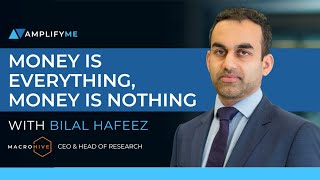
Bilal Hafeez, who spent 25 years at JPMorgan, Deutsche Bank, and Nomura before founding MacroHive, shares five lessons: money can corrupt your judgment, failure teaches faster than success, start with what scares you, prioritize impact over efficiency, and quit if you stop learning.
Chapters
Hello and welcome to this Career Insight episode. And in this conversation, I'm joined by Bilal Hafeez, who is the founder, CEO, and head of research at MacroHive. But he's also had a pretty phenomenal career. He's worked in global head positions at the likes of JPMorgan, Deutsche Bank, and Nomura. He joined me for a conversation about an article he's put out to mark his 25th year anniversary of working in finance entitled 25 Lessons Learned in Those 25 Years. And in this conversation, he joined me to talk over 5 key points that I think will really resonate with you. So in this conversation, we talk about a lot of different things, but I think you'll really enjoy it. He has such an open, honest approach. He's the mentor that we wish we always had personally. So without further ado, I hope you enjoy the session. Okay, hi Bilal. Perhaps before we kick off, you could cover two things for me. One is a brief summary of your kind of career history, because I'm just conscious of the fact that not everyone might know of you at this point. So that would be really good to, to kind of give some context. And then also the rationale. Obviously, you, you've put out this great piece about your 25 lessons from 25 years in finance and just really wanted to know that why do that, and why did you feel the need to share some of your insights?
Great. Yeah, just to start with in terms of my career, my career started as when I went to join JPMorgan as an intern back in 1997. So I was studying economics at university. I was at Cambridge. And in the penultimate year, you do internships. And so I applied for lots of different internships, and I ended up at JPMorgan. And so that was the beginning of my career in finance. And by the end of the internship, the way these things work is that you end up with a graduate job offer. And so I got the job offer. So when I graduated in '98, I started off at JPMorgan. Now, as it happens, at the time, there was this massive technology boom in markets that was going on. And mergers and acquisitions, M&A, was the hottest area to be in. So I actually asked to go into M&A, tech M&A, as the area. So I went off. Into that area, went on a training program in New York in, in late 1998, and that was the beginning of my career. Now what ended up happening is when I came back to London, started to actually work in M&A, I absolutely hated it. Within a few months I asked to transfer to the market side, so the side of the bank where you do sales, trading, and research. And I moved into research at JPMorgan in London, and this must have been in early 1999. Um, and then as it happened That team I joined was the foreign exchange research team. You know, I just got allocated to that team and they, they just said recently, or about to appoint a new head of FX research, this Argentinian chap called Alfonso Prat-Gay. He ended up becoming a massive mentor to me and he really sort of settled me down into that role. And I got this kind of sense of this is the role I want to be in. And so that began my long stretch as a researcher on the sell side. So I started off at JPMorgan. My real proper job was FX research. And I kind of started off there initially working on kind of the more modeling, more technical side. Now by 2002, Chase Manhattan took over JPMorgan. There was a big takeover, big merger, and there are lots of changes going on at JPMorgan. So I decided to leave. Lots of my colleagues were leaving at the time. And I went to join Deutsche Bank in 2002 in London. And Deutsche Bank back then was beginning to become a powerhouse in global markets. They were doing this massive build-out. They were hiring lots of talent from across the street. And, you know, within 5, 10 years, they became one of the biggest fixed income foreign exchange FX rates banks in the world. So I joined that division, FX. I ended up having a great career as an FX research analyst, ended up heading up the research team at a very young age, became managing director again at a very young age. Then the financial crisis hit in 2008, which was obviously a big shock to the system, and there was a lot to learn from that episode. And then soon after that, I thought it's better to be outside of Europe. And the West at that time, because the global financial crisis was quite depressing. So I moved out to Asia and I moved to Singapore where I headed up research out of Singapore at Deutsche Bank. And so I was there for a number of years, enjoyed it, learned a lot about China and the rise of China in Asia. But after a few years, I realized and my family realized we didn't actually like it that much in Singapore. We preferred London. So we moved back to London. And I ended up in London heading up a new research group, which Deutsche Bank had set up called the Multi-Asset or Cross-Market Research Group. Group. And then on top of that, I was also part of and ran a special research unit for the CEO of Deutsche Bank, you know, Anthony Cheung. So I did all of that for a few years, but then by the end of 2015, early 2016, I decided I had enough of working at Deutsche Bank. I was there for a long, long time, and it was my time to part ways. And then I moved to Nomura in London, the Japanese investment bank, and I ran research out of London there for 3 years. But by 2019, you know, I kind of felt like I'd spent so much time on the sell side that I— and I had so many ideas of how to do startups that I thought, let me do a startup in research. So in 2019, I set up MacroHive with a lot— along with a number of other people. And we've— I've been running, doing that for the last 3 years now. And we essentially provide research to some of the biggest investors in the world, some of the top hedge funds, asset managers. And then we also have a product for students and individual investors as well.
So I, I can definitely see where the rationale for this piece probably comes from. I mean, you've got such a broad background in a sense, going from M&A to different banks, US to European, to different geographic cultural locations, to setting up teams, to waking your way up to, you know, and then you mentioned having a great mentor. So is have that mentor impact to you? Is that partly why you feel like now at 25 years in, this is a good time to share some of the things you've learned?
Yes, absolutely. And I think one of the luckiest things I've had is I've had people with more experience mentor me early on in my career. So with my job at JPMorgan, Alfonso was a massive influence on me. He really helped me a lot at that time. So he was in some ways passing on his experience to me, whether explicitly or not. Through his actions and the way he was interacting with me, that's what he was doing. And even earlier when I was at school, you know, I grew up in a kind of a working-class area, you know, you know, it wasn't such a nice school, but my economics teacher was a real mentor to me and he really encouraged me to study economics and push myself. So again, that's an example of somebody who's more seasoned, more experienced, give it kind of passing on their experience. And so that's, that's part of the motivation for doing this, you know, you know, sort of sharing my 25 years. And another motivation is I get asked a lot from different people, you know, what's your advice, life advice, and so on. And I think about these things a lot, you know. I, I'm always thinking about how can I improve my life, about learning from the wisdom of elders, from, you know, older spiritual texts. And, you know, I'm really, uh, you know, like to, to try to improve myself and, and help others in that way.
Yeah, just, just given your— just before we go into some of the, the points I wanted to highlight from the article, just given your, your background, you mentioned it about school, and perhaps in a way, particularly when I think back to the '90s, quite, um, let's say a lot of people come from a traditional private schooling background, let's say, for example, that particularly go into investment banking side of, of the business. Did you ever feel, given that you also became quite senior quite quickly, as you said, becoming an MD at a young age, did you feel imposter syndrome at any point? Because the people around you perhaps are of— because ethnically they might have been different or from a class background they might have been different. Did you ever feel that early on in your career?
Yeah, there definitely was an element of that. I would say the biggest cultural sort of challenge I found was actually going to Cambridge University. So I grew up in this kind of, you know, like ethnic working class area. As it happened, it was in Oxford, but there's a side of Oxford that's not so nice. And I grew up around there. And so going to Cambridge, which is the epitome of privilege and history and all of those sorts of things, that for me was the biggest transition. Going to formal hall where you wear gowns, you have so many forks and knives. I mean, I literally was the guy you see in the movies not knowing which forks and knives to use. Because I grew up in a household where you tend to eat with your hands. My parents are originally from Pakistan. You eat with your hands generally. And so that was a big, big sort of cultural clash. And then working within banks, I, I did feel an element of not fitting in, but strangely banking tends to be quite a good place for people who are a bit different, uh, because there's lots of odd people in banks.
Okay.
And one thing I did find that was interesting was that JP Morgan was a very sort of American bank, uh, ethnically very white as well at the time I was there. But then I moved to Deutsche Bank, and Deutsche Bank was much more multicultural. Um, so there was lots of people from India that were there, there were lots of, uh, you know, like Lebanese people. I mean, it was actually surprisingly diverse. Diverse. And I did notice when I joined Deutsche Bank that I just felt more comfortable because I just saw lots more people that look like me in senior roles, whereas at JPMorgan, I didn't find that at that time. And so while I may not have been as aware of it at JPMorgan, I think I did have that element of imposter syndrome and just feeling like I'm not, you know, like, like everybody else. But at Deutsche, it was the opposite. I actually felt much more comfortable. And, um, the other thing I would also say is there's also just the difference I find between banking, like M&A, and trading. Banking, I tend to find, tends to have the, the vibe of being more elitist, you know. There seems to be a bit more of just the way people dress, the way they act. It's more about your title and your background and so on. Whereas trading, you tend to find people of diverse backgrounds. So often you have people from a very working-class background who go into spot trading. FX is famous for that. Um, you often find people who are quants, who these kind of, you know, Russian geeks, you know, like you have on the desk and so on. So, you know, because in some ways trading is, is much more, um, you know, your, your validation is day-to-day market prices, whereas M&A is more relationship-driven, you end up with a sort of a different sort of subculture there. So, you know, at Deutsche, I didn't find as much of that imposter syndrome. Cool.
Okay, well, let's, let's dive in then. And I know there's 25 lessons, but obviously we'd be here quite a while to go through and thrash out all 25, so What I've done is in advance of us talking, I've picked out 5 of which I think are going to kind of provide the most value for our community and would be great for you to kind of build up on them. So to quickly run through the 5 and then we'll kick off with the first one. So the 5 are: money is everything, money is nothing. Second one, failure is the best way to level up. 3, start with what you fear. 4, be effective, not efficient. And 5, learn every day or quit. And so let's start with the first one then. So, uh, money is everything and money is nothing. And I thought this is a great one to kick off with because we work with lots of young people who are about to make what they feel like is the most important decision of their life. And there's lots of influences that they see and receive, um, And money is obviously a quite big one. So your, your take then on what you mean by money is everything and money is, is nothing.
Yeah, I wanted to start off with this one because a lot of people don't want to talk about money. You know, it's one of those things that you try to avoid talking about, but everybody is thinking about this when you join, you know, finance. You want to get paid well. You hear about people with impressive bonuses. You hear about hedge fund managers who are billionaires, and in some ways you want to become like those or accumulate the wealth that they have. So I wanted to put this up front. But also, the other reason for talking about this was that the product of finance companies is money itself. That's the product that we're all involved in. Money is crossing borders. You're using money to buy other companies. You're trading money in different forms. So the product is money. And that's unusual because every other industry, the product is something else. It's a car, and then you use money to buy the car. But the company's focus is build a car. Or it could be law. Write contracts, you know, but in banking, the product is money. Yeah, that is the product. And so, and what that means is everywhere you turn, you'll be facing money in different forms. And so you can't escape it. And that's what I mean by money is everything. So for example, I started off in foreign exchange in, in the early days, and foreign exchange is the largest market in the world. Like today, about every day, it's $6 or $7 trillion is traded each day today. It's huge amounts of money. So when you're on a foreign exchange trading floor, somebody buying $100 million something or $500 million or something is not really a big deal. You know, that it just happens. So suddenly you start hearing these numbers, $100 million. Yeah. It's nothing. And then you think about your own salary. Oh, I'm on $20,000, $50,000, $100,000, even a million. It sounds like it's too small relative to that. And so the first thing you have to do is you have to become aware of how being surrounded by money starts to affect you. And one big thing that happens with money is it makes you very comparative. It, you know, as soon as people start to talk about money, you start to think, okay, what's my salary? How's it compared to other people? You start to judge other people in monetary terms as well. And of course you never compare yourself below, you compare yourself above. So I used to, you know, every year when I used to get my bonus, you know, you'd get your bonuses in banks, I'd always feel unhappy, you know, even though the numbers were amazing. When you think about it, you know, even getting a bonus is amazing, but you'd always hear about somebody else who you compare yourself to, who got more. And then another subtle thing is when you start to interact with people outside of finance, you start to think, okay, I wonder how much that person is worth or has. And, and so it has this kind of corrosive effect on you where you start to judge everybody through a monetary filter, which is, is not really a good thing because people and every— everything has a lot more value than that. And so that, that's one thing to understand, this corrupting influence of money that it can have on you. And the irony here is if you obsess about money, it doesn't necessarily make you better at your job in finance either. It can also lead to you to become self-destructive in different ways. At the same time, I'd also say that money is nothing in the sense that the true value of things is not linked to money. So the value of things is— it could be how good are you at your job, which is not necessarily to do with money directly. It could be to do with, OK, How good are you at discerning people's behavior in the market so that you can trade well? As a researcher, how good are you at modeling different types of behaviors? That's not necessarily to do with money per se. It's something else. It's a skill you need to accumulate. How good are you working with people, managing people? That's not money. That's something else. The other thing is that money is, at some level, a social construct. It's not real. You have a car. That's real. That's tangible. Money isn't. Money only exists as a source of value because we trust that whoever's creating that money isn't going to print an infinite amount of that. That's why you want to hold that piece of money. And so when you scratch away the surface of money, you realize the foundation of it is trust. And so if you stop trusting the person that's involved in money, then you'll stop engaging with, with that. And that's also one of the things we've learned with banking is that when people stop trusting banks, then the bank goes bankrupt, which we learned from the global financial crisis. So very quickly, this obsession with money, and money often makes you take shortcuts, it often makes you sort of lie to people. That also could lead to a massive unraveling of yourself and, and of the industry. And, you know, often people end up, you know, getting sacked because they sort of broke someone's trust as well. So, so money is everything on the one hand, but it's also nothing as well.
So just looking back in retrospect over your 25 years, do you think that there was a particular moment that saw you transition out of I guess, the chase and compare, uh, comparing yourself to then something a little bit more above that?
Yeah, I mean, for me it has to be the global financial crisis, you know. One, because before that I was, you know, I had lots of fire in my belly, I was rising up really quickly, and, and, you know, when you're in finance at that point, it really did feel like there was no limit to how far you could go or how much banks could do. But the global financial crisis has dramatically changed that. You know, within a week of Lehman's going down, I thought my, you know, the whole financial industry would vaporize, that, you know, there wouldn't be a banking industry left. And then I suddenly thought, what other job can I do? You know, could, you know, would I need to go into teaching or something? I mean, so suddenly you realize everything you thought was so valuable was not valuable at all. On top of that, the social status of banking changed as well. So when I told people I worked in finance, suddenly you were looked down upon. And so suddenly that everything about you sort of changed where you thought you were, you know, master of the universe, you know, using a term from Tom Wolfe in Bonfire of the Vanities. Suddenly that will change. So that for me was a big shock where at a very visceral level you felt like everything had gone. And so then you realize actually, what do I really value then? So you start to think about, you know, who do you care about relationship-wise? You then think about career-wise, what can you now do? You start to think about, you know, that the hopes you had around money, whether they were misplaced or not. And then there was all this kind of cultural revolution going on in banks to sort of change their cultures to make them, you know, less aggressive. And so suddenly everything changed after that.
And a lot of young people I talk to at the moment are coming to the end of their kind of education period, going into the workplace at a point where you're hearing the Bank of England saying we're gonna have the a deep, long, protracted recession. You know, we— they're seeing headlines, other industries, let's say Twitter, Facebook, slashing thousands of jobs. They can't help but feel apprehensive. Is there anything that you could say that from living through a period like the financial crisis to alleviate that tension, that actually there's lots of creativity and innovative solutions that come out of this, jobs perhaps that we haven't thought of, or situations that might materialize in the future, uh, just to kind of, uh, give some confidence to those who are just coming into the system, so to speak?
Yeah, I mean, one thing I would say is that having been through a number of crises now— so when I started off in banking, I was a summer intern during the Asia financial crisis. Then when I was a— then when I was on my graduate training program in '98, we had the LTCM hedge fund crisis. And fellow people at other banks were laid off because banks were making losses back then. And it really did feel like things were going to be ending, at least to the job prospects. So the one thing I would say is that nothing's permanent. So there is going to be a downturn, or there may be a recession, but it won't last forever. There'll be a big upturn. And so whatever negativity there is out there, there will be some positivity thereafter. So one is it's a cycle. Just remember that. It won't last forever. Secondly, I think that— that when there is a recession or crisis or those sorts of things, things go into flux and lots of things change. And that often can lead to lots of interesting opportunities. So sometimes what happens is that banks often would say, OK, we need to let go of the more senior people and we need to get more junior people to manage costs. So that's to the advantage of younger people. It could be that in the current environment, a lot of resources and lots of people were going to technology. Maybe they'll switch and go to finance instead. Often banks and financial— Entities do quite well during recessions. They, you know, certain, certain, you know, aspects of them, you know, macro does very well in that environment. So, so there's areas of finance that do very, very, very well. And then also there's geographical dispersion as well. So maybe the UK is doing poorly, but maybe the US will do better. You know, maybe China at some point will pick up again and Hong Kong will do better. So there's always this dispersion as well. So, so I think I think when things are in a state of flux, lots of opportunities can open up as well. And then also just remember things ultimately are quite temporary. Yeah.
Good advice. Secondly then, let's move on to the second point. Comes from a slightly different category that you've listed in the actual full article. But failure is the best way to level up. It kind of sounds a little bit Michael Jordan-esque. In that saying. But what's your take on, on failure and how we can learn from it?
Yeah, I mean, this, this comes, comes down to how do we change as people, you know. So the idea is we, we, you know, always want to improve and change and so on, but ultimately, can you really change as a person or not? You know, like, you have friends or you're in relationships and you think, will that person ever change or not? Um, so how do you change? And the irony is that I think the, the the possibility of changing is much, much higher when you're failing than when you're succeeding. Because when you're doing really, really well, there's no need for you to reflect on yourself or to do something different because you're doing well. And that's often, you know, people become quite arrogant when they're doing well. And you as a friend could tell them, Anthony Cheung, they'll say, no, why should I? I'm doing well. So it's really failure. So is the foundation of change and leveling up. So when you go through some kind of failure or setback, you know, for example, you may not get a job, you may not get promotion, you may get a pay cut rather than a pay rise. You may have had a, you know, some project you're working on doesn't go down well, or some trading book doesn't do well. That's really the time which you have a massive incentive and this internal impulse to look to how you can prevent that happening again. So that failure should become the sort of the fuel for you to look into yourself and say, what can I do to change? So you have a choice almost like when you, when you get hit by failure, you can either close in on yourself and become all sort of closed and depressed and unhappy and angry. You, you can go to a place of negativity or you could go to a place of positivity to say, oh, hang on, whatever I was doing before didn't work here. So what can I do differently now to make things work better? And so these setbacks, you know, while it's tough to say this, you should almost embrace because because that gives you some information that you didn't have before about how you can be different around a certain situation. And then you can learn what it is you need to do better. Now, it may be, for example, you might realize, OK, I need more technical skills. So just being good at Excel is not good enough. I need to learn Python because for whatever project I was working on. So then you go learn Python. And then you've improved your skill. It could be that you weren't able to trade a market really well. And so then you go and learn some new technique or learn something about that market that helps you improve. So I just think in the end, if you want to improve and change, it's really failure is really the only time that you as a person are open to that possibility.
It's almost like the how society placed failure. And I guess it's a byproduct of maybe our youth and education system whereby failure is deemed in an academic sense as not succeeding. But what's interesting because I'm very keen on sport. You look at professional sports and they'll review religiously as part of the post-match process. They'll watch videotapes of the good, the bad, and then they'll look to improve and tweak. It's funny how we don't have that inbuilt mechanism. We actually have to create it for ourselves where we can accept failure as a part of the process. We can learn from it and we can pick out these elements to improve and then try again and then work at it. To improve?
Yeah, I mean, you know, the educationalist Carol, uh, Carol Dweck, she's written a book called The Growth and Fixed Mindset where she talks about children's education. She talks just about this, where you can have this fixed mindset which is about outcomes, where you always want to score well. And what happens with a fixed mindset is that you end up just doing things you're very good at, because if you stretch yourself, then, uh, you, you could potentially fail. And unfortunately, most the education system we have is, is is built around this fixed mindset that you get rewarded for outcomes but not for the process. And so you get penalized for failing. The alternative to that is what she calls a growth mindset, which is that you should not focus on the outcome, you should focus on the process. So are you constantly stretching yourself? So the objective is not the result, it's the journey, so to speak. So are you doing something that's stretching yourself? If you are, that's— you should get the gold star for that. If you fail at that, it's fine. If you do well or not, that's, that's by the by. Each time you do fail, you learn though. So there's a learning, there's a feedback mechanism. But the idea is you should have this growth mindset, like are you growing or not? So, so that, you know, she touches on, on this and it's, she's written a book on this subject, which is very good and very helpful for people in all areas.
Do you think you as individuals started with a growth mindset? Or do you think you learned how to adapt the way that your mind kind of figures out failure in your own?
Yeah, I mean, I think, I think I changed over the years, you know, because I think I was definitely in the fixed mindset. Just do things I'm very good at and stick with that. Don't experiment so much. But as time goes on, as you get older, you get more mature, you, you know, you go through setbacks, you, you're able to switch your mindset now. Now, of course, these aren't stuck, all of these things. Sometimes I do have a fixed mindset, you know, sometimes I do have a growth mindset. So it's, it's not binary. Um, instead you're constantly sort of changing. But when you, when you do go through a sense of failure, one can then go back and say, okay, let me put my growth mindset hat on and, and see it differently.
Yeah. Did you ever need external, um, inputs to help you identify when you were like Uh, maybe you like being stubborn or resistant to that kind of critical analysis of oneself.
Did you—
is that part of the mentorship process almost, for them to flag stuff?
Yeah, yeah. I mean, there's been a number of different areas where I've had that outside help. One is, you know, having a good line manager is very helpful. So if they are genuinely a good manager, that helps a lot. But more than that, outside of work is very important as well. So outside of work, I got married at a very young age, you know, to, to my, uh I'm still married. And so being in a relationship is the biggest feedback that you can get because if you're, especially if you're living with your partner, 'cause when you start to live with your partner, that's when they really, you really can wind each other up. They know you really, really well. And that's a massive source of feedback that you get constantly, whether it's good or bad or whatever. So I think that's been really, really helpful to me. So I've kind of grown up with my partner who's, you know, my wife who's just kind of helped me grow as a person. Also, outside of that, I've also, you know, had sessions for multiple years with psychotherapists, psychologists, you know, where I'd go once a week to sit on a couch and talk about all my issues. And I did that proactively because I realized that I need to improve as a person. I need to understand myself and my biases. And so I just found a psychotherapist to work with them. And so, you know, you talk about your childhood and your family and this and that, and it really helps a lot to understand why you do things the way you do. And then also I've, you know, participated in lots of different spiritual traditions from different religions because I think that, you know, while religion can have a bit of a bad rap as being a bit sort of superstitious, a bit old-fashioned, for me, religion is a really amazing repository of how you can live a good and healthy life that's been, that's kind of worked over thousands of years. So it's kind of stood the test of time quite well. And so I've engaged in lots of different spiritual traditions in different faith traditions and learn a lot through that as well. Cool.
Well, the next one kind of is an extension, I guess, in some way of what we've just discussed, which is start with what you fear is one of your other points.
Yeah. I mean, this is, this, this, you can look at this at different levels, but at the very basic level, you know, if you think about your, when you start your day, uh, you know, at university or at work or whatever your context is, you always have this feeling deep down within you of something you want to avoid that day. You have this kind of thing in your gut that says, look, I don't want to talk to that person, or, or this project, I want to start that project. You know, there's something inside you that tells you like, you know, there's something bad about that, that you don't want to. And so you end up doing everything else that's easy. You know, you do the easy projects, you speak to the easy people. But that thing within you that is telling you, you know, to avoid doing something, it's, it's actually telling you something important, that that's the harder thing that you have to address early on. On, because it's something that's weighing on you somewhere. Um, you know, a classic one is an exam. You know, inside you, you know, in the run-up to an exam, you have this corrosive sort of pressure, and it's tempting to not revise because then you don't need to think about the exam. But in the end, you have to revise, you know, to pass the exam. In the same way, one should look at inside oneself to say, what am I scared of doing today? And do that first. Because at the start of the day, that's when you have your most energy and just do it. You know, it might be having a difficult conversation with somebody or what you perceive to be difficult conversation, you know, because there's some, some, something that happened, you know, days earlier. It could be a project that's particularly tough that you're just trying to avoid. Just do that first. And so the point here is that if you start to get in touch with your emotions in a, in a more effective way and you know, having done work with therapists and done all of this type of stuff and being married for a long time, you get a much richer sense of your emotions. And so it's tempting to kind of intellectualize everything and say, I'm very rational, everything's in my head. But no, you know, another sense that we have is our guts and our emotions. And that often is a better guide to what you should do because your mind can intellectualize and rationalize anything. Is very good at doing that, but your emotions are harder to manipulate, you know, they just come up within you. And so for me, every day I kind of think about what is the thing I'm really trying to avoid today, and I try to do that first. And you can apply it over different time horizons and different domains as well.
So talking of kind of productivity then, being effective, not efficient, is that then a kind of the next step of this is like Because I know for sure I'm definitely part of that camp. Those feelings are strong within me, as I'm sure within everyone. Put off that thing right to the last possible moment when it needs delivery. But I guess one of the things I've certainly found for myself as I've got older and I'm more responsible for managing more people or more tasks is that I need to be more effective with how I split my day and allocate my focus to different things. Um, what's your take on being effective then? And be effective, not, um, efficient.
Yeah, so the— it's a great point. And the distinction I'd make is being efficient at something is whatever you're doing, just doing it really, really well and really quickly. So that's being efficient. And that, that's great, but the problem is if that thing you're very efficient at is not the thing you should be doing right now, it's pointless. Being an example I give is let's say your objective your objective is to fly to New York. And what you end up doing is you find the most efficient way of flying to Hong Kong. You know, you find the fastest plane that goes there. What's the point of being in Hong Kong? You do it efficiently, you're supposed to be in New York, you know, and that you can apply that to anything and everything. And so I think what often happens in our work life, you know, in the academic sort of side as well, we become so focused on efficiency. I'm doing this thing really, really, really well that we don't sort of stand up and look, is this the right thing I should be doing? So for example, um, when you're doing, uh, preparing for an exam in an academic context, you could spend an age studying one particular topic, you know, inside out, but the paper will have— 1/20th of the paper will be on that topic. So why are you devoting so much time to that? It's much more effective to work out what's the range of topics you should know that's likely to be in the exam paper. So effectiveness is all about trying to work out what is the right thing to do, what should you prioritize, and people use different terms, the Pareto principle, the 80/20 principle, where often any business, your productivity, your career, all hinges on 20% of whatever you're doing generates all the revenue. Often the, the tail, the 80% doesn't do anything. So each day you need to work out what is the most important thing that I can do that will have the biggest impact on my life or my business or my career and, and focus on that. And that's being effective. So So it's not so much let me be really efficient at what I'm doing. It's actually before that, you need to work out what should I be efficient at? And too often we end up sort of sleepwalking in our day jobs where we confuse being busy doing stuff with being effective. So what you should almost do is like, you know, when you look back at your day, think about, okay, what did I do today that really moves the dial? Dial. And often it can be nothing, you know, sometimes you look back and think, I didn't actually do anything and move the dial. All I did was I answered some emails, I had one or two random conversations, I, I was busy, but nothing will really move the dial. And then you've got to reflect, why, why was that? So the next day you then think, okay, I'm going to do something today that will move the dial.
As I, like, um, I, I was going to say startup, but I think MacroHive is moving beyond that, that point nowadays. But, um, how often do you— because I know there's a sense of— so this is for the people who are maybe entrepreneurs, and they're— you, you can get quite easily caught down in the grass blades of just firefighting all of the days and day— the day's occurrences, so to speak. How often do you, do you have to sub— like, consciously step out of that and think, I'm going to allocate some time to just actually work out this priority list? Because it's almost like day-to-day tasks to be tackled, but then for much more strategic point of view for the direction of, say, Macrohive?
Yeah, yeah, I'm thinking about that all the time, even to this day, because, you know, at the end, what you need to do as a startup, any business, is you need to make sure you have a good product and you need to find clients that will pay for that product, you know, one way or the other. Now, what sometimes happens is that there's too much focus on the product and you forget about the selling side, or it could be you're focused too much on the marketing and, and the selling side and you have a terrible product. So it becomes too superficial. So there's always this kind of conflict between the two. And so we're— I'm and the team, we're constantly thinking about what's the right thing to do on both sides. And at the same time, we do waste our time on trivial things often. So for example, you know, when we look at our website, you know, we could end up spending ages and ages talking about, oh, there should be this font or that font, or this should be bigger or smaller. And everyone has an opinion on that, you know, because it's kind of a superficial, you know, visual thing. And then you think, we spent 5 hours on this. Was it really worth it? Does it really work that? So we're constantly taking stock of the things that we need to kind of focus on. But it's an important challenge and a balance. And then also, one shouldn't also neglect processes as well because if you don't have the right internal processes around when you— we're a research company, so it's about publishing at the right time, making sure the publishing process works.
Errors.
If you neglect that, then everything falls apart as well. And so you've got to work out what's the most important thing out of all of those things. And as a startup, because everything's so new, you're constantly trying to work out what the right thing to do is. And there's no easy answer to that.
Have you actually found that, given that you're a senior person in Macrohive, that you are now more involved in strategy and less in what you would do traditionally in the— on the research side? Have you had to like learn to delegate out responsibilities in a slightly different way than perhaps in a well-oiled structured business?
Yeah, that's a great question. Interesting, it's kind of gone the other way, to be honest. So like when we first started the startup, I was probably doing less research and more strategy and management. But as we've grown as a company, we can delegate and get people to specialize. So now I've had more time for research now than, than before, um, as we now have other people. There's an individual person that focuses on marketing, there's an individual person that focuses on publishing, whereas before I was doing a bit of everything. So, so you, you, you, you can do less of, of, of that type of thing as you grow as a company. Um, but one thing that probably remains is is, uh, this need to kind of look at things strategically. Um, but that doesn't necessarily require huge amounts of time necessarily. It just requires every now and then to you— for you to take time out, even 5-10 minutes, just think, okay, where are we going? And then go back into, into what you're doing.
Yeah. Okay, well, let's, let's dive into the last point: learn every day or quit.
Yeah, so this, this kind of goes back to, um, I I'm very curious, and I like to learn things. And I think that learning and growing your knowledge is one of the joys of life and gives you a sense of purpose. And you, you know, it just helps in so many different ways. And so, you know, if you're not learning over the course of your day, then that should tell you something. That should tell you either that you've reached the limit of whatever that role is. Is, and you should do something else where you can learn, or your attitude is wrong now. And I've seen this so many times in people in banks where they get comfortable into their comfort zone where they're really good at what they're doing. You know, they're cruising along, they've got their 9 to 5, they've got it all worked out, but they're not learning. They're not growing as a person. And the learn— by learning, it can be in different dimensions. It can be learning about things within your job, you know, the product you're working on or skills, like am I good at selling or not presenting, or it could be in your personal life, you know, am I improving as a person, you know, am I, you know, becoming a kinder person, you know, am I better in my relationships. So every day there's an opportunity to learn. And learning, underlying that is a sense of humility that you don't have all the answers. And none of us has all the answers. That's just the nature of things. So we always can learn. And so we always have to make that decision about learning. And so if you're not learning, then I think I say quit. Maybe you don't need to quit, you need to change your attitude within work. But even if you, if you change your attitude and you're still not learning, then I think you have to leave, you know, because there's, there's, there's a block that's happening there and you're not making use of this amazing capacity we have as humans to take on new information, learn new things. I mean, humans are amazing in that, in that way. And so you are somehow limiting your potential as a person if, if you stay in, in that role.
In your 25 years, when you were, you know, going through this process of learning with the other people around you, because it got to a point where, you know, you're reporting into the direct CEO of Deutsche Bank, like sat right there at the top table, if you like. Is there anything that you observed from those individuals that was like a recurring theme that connected all of these people that were successful at their job? I'm not going to say success because that can have different definitions, but were effective and good at their job.
Yeah, I mean, I think one thing I, I realized when you get to the senior levels of management is that there's people with very different approaches can end up at the top. You know, that's one thing. There's no set pattern, I found. I mean, there's a certain level of motivation, ambition that they all have, um, but they can reach it in different ways. I would also say that there's a big difference between entrepreneurs and people that, you know, move up within a company and become CEO as well. And often people in senior managements or banks think they're very entrepreneurial when they're not, you know, that they're working for an existing organization. You know, it's almost like being a bureaucrat in some ways. You know, you, you can work the machine really well and you can end up at the top, whereas an entrepreneur is a very different different skill set. And having been on the startup side, you realize actually it's very, very different. So there's different types of success. But one key thing when you do see people in senior management at the highest level is that half of the role seems to be around managing perceptions and relationships. It's kind of a lot more about that side of things, that you're projecting an image about yourself, about the bank, about the institution. More so than any sort of technical thing, you know, because you kind of grow up in a bank working on product and this and that. But when you go higher up, it becomes more— you're almost like a statesman or a politician in some ways.
Yeah.
And the other thing you realize with people at even the highest levels, they in some ways have less and less power than other people do. They're constrained massively because, you know, because the guy at the top they, you know, they delegated running divisions with the people, so they can't just come in and say you should stop trading like that. It's— they've got to like negotiate that sort of difference. They're affected by, you know, shareholders, what the press is doing. So you're— in some ways you're really constrained. And I think people don't quite appreciate how constrained people at the top really are. People seem to think that, okay, they're at the top, they can change everything, but it's, it's not that easy for them to do that.
And then like reverse engineering that to the, the kind of the other end of that kind of pyramid. So when you're just starting at, let's say, the bank, there's so much focus and kind of talk about the application process and securing the job, there's very little conversation about education around how to be effective when you actually start work. So at like a graduate level, it's almost like you've arrived, but then it's like, what now? So in, in In hindsight, would there be any advice you would give to people at that part of the journey?
Yeah, yeah. I mean, there's a couple of things I'd say. You know, one is don't get so obsessed with the particular product or division you're in. I'd focus a lot on who your line manager will be. And by line manager, one thing I look at would be to see what's their track record in managing graduates. You know, do they— because you can look at a manager, they could be a superstar, But then underneath them, there could be a high level of churn. They hire grads. They spit them out. And it's all about that guy at the top. And then you realize, actually, he's not a good manager. He's very good, but not a good manager. You want to be part of a team where there's examples of graduates who that manager has managed who've ended up doing well. So I'd focus a lot on that to start with. So number 1, find a good manager. Make sure you're always learning, especially the technical aspects of your job. It's the early part of your career that you really have an edge in doing that. And then the other thing is to just understand the politics of organizations, you know, where you're the, the propaganda of the company will always be that it's a meritocracy. If you are good, you'll be noticed. But the reality is that's not often true. You've gotta work out who the power players are everywhere. So, you know, like, um, you know, who, who are the, the alphas, you know, who are the most important people when it comes to trading, sales, research, banking, whichever area you are in. And, you know, or at the level that's appropriate to you and make sure they know how well you're doing. And that's the other part of what you're not taught is how to market yourself. And because nobody's gonna look out for you apart from yourself, you know, if you're lucky, your manager may do, but you've got to make sure that when you've done good work, all the right people know about that good work. So your manager for sure should know, but then let other people know as well about your good work. Work. Um, so it should be based on something real, you know. So when you've done good work, then you market that. Um, and never take credit for other people's work. That's just bad, you know, that's, that's a bad precedent you're setting, and it will come back to bite you later on if that becomes a habit that you have. Um, so, so, so it's, it's kind of more the organizational side. I think that's very important to know.
Okay, good stuff. Well, look, I think we've come to the, the end of our, our time, but where can people because I know we've— look, we've only delved into 5 of the 25. So if people want to read the 25, where do they need to go?
Yeah, so if you go to the MacroHive website, macrohive.com, um, it's on there. Um, in the particular section is— if you just go to the news section, there's the 25 lessons are there. So you'll be able to see it, uh, hopefully quite prominently.
Okay, cool. And then for any of our students out there, okay if they connect with you on LinkedIn?
Absolutely, feel free to connect to me on LinkedIn. You know, you can sign up for a free newsletter on MacroHive as well, you know, to keep in touch with what doing. Um, yeah, feel free to reach out and, uh, yeah, and continue to, to do your courses at Amplify to upgrade your skill set.
Cool. All right, Bilal, always a pleasure, and, um, congratulations on 25 years. Here's to the next 25.
Yeah, thanks a lot.
All right, take care.
Thank you.
More from Anthony


Inside the Biggest Banking Stories You Need to Know This Week (Anthropic, Diageo, Private Credit)


Inside the Biggest M&A Deals You Need to Know This Week (UniCredit, GameStop, eBay, Eli Lilly)







AI Breakthrough or Hype? Anthropic’s Claude Mythos, Tim Cook Steps Down & LIV Golf Collapse