Morning Briefing - 10th August 2018 **Turkey in Focus**
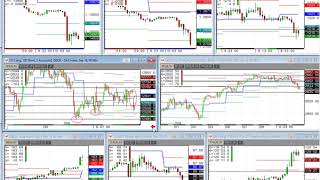
In this morning briefing Anthony Cheung opens with a risk‑off tone, focusing on the Turkish lira’s sharp 12%+ slide to a six‑per‑dollar low, its status as the worst‑performing currency YTD (‑37%), and the broader market fallout. He explains how the lira’s collapse has weakened the euro (EUR/USD at a 13‑month low) and pressured the pound, while also triggering a sell‑off in European equity indices (DAX, Euro Stoxx) and US markets (S&P 500). The core concern is contagion: several major Euro‑zone banks (BBVA, UniCredit, BNP Paribas) hold large foreign‑currency loan exposures to Turkey, amounting to roughly €150 bn across Spain, Italy and France, raising fears of defaults that could hit European banking balance sheets. Cheung provides technical chart analysis of key FX pairs and equity levels, highlighting resistance zones and potential downside targets. He outlines Turkey’s policy options—drastic rate hikes (10‑15 %), IMF assistance, or capital controls—while noting political constraints such as President Erdoğan’s opposition to high rates. The briefing concludes with a calendar preview (UK GDP, US CPI, Canadian data, Baker Hughes rig count) and a cautionary outlook for volatility across currencies, equities, bonds, and commodities.
Chapters
Okay, very good morning and happy Friday, 10th of August. Hope everyone is well. And getting straight into the thick of things, there's a bit of a risk-off tone to proceedings this morning to finish the week off. And we're going to talk predominantly about Turkey and the Turkish lira, where their currency has plunged more than 10%. And obviously Turkey has been a real focal point for the emerging market currencies. The only difference really about today is that no longer is this being a kind of an isolated domestic issue. The market now is starting to have a slight degree of panic about the potential exposure that some European banks might have in terms of foreign currency loans, and by default then, exposure to potential downturns in if they were to default the country on these loans. And so, as you can see from the charts, just quite broadly speaking, you've got dollar strength really prevailing overnight. I mean, if you look at the, the movements here, I mean, really it's led by, if anything, euro weakness because of this read-across effect of the impact it could have on European banks. And consequently then the functioning of the European economy and liquidity. And so with the Turkish lira plummeting, the euro also fell aggressively this morning. As soon as those early birds in, in Europe came in, interpreted the news, we saw a really quick drop in the EUR/USD pair. And just looking at this on a broader time frame, here we are, we're at the lowest point we've traded in the euro currency in about 13 months. So long time since we've been down at really these levels, and I've just kind of been looking back to see, you know, what a dramatic turnaround. Cable obviously mimicking this with some of the dollar movements since we peaked in April, and here we are all the way back down to trading a 114 handle now. And just looking to the downside, there are various points of resistance clustered around the 2015-16 highs, which I'd probably be inclined to be identifying to look for what levels of which this market could potentially run down to. So just having a look here, you've kind of got these— if I just can mark it up— this area kind of here where the level's already bounced to on a daily continuation, which is kind of these summer highs that we had in 2016. And then just scaling it down, obviously the 114 handle, 113.80, then the kind of July highs. Going all the way down towards what was quite a defined point of resistance through late summer, Q4 or so of 2016, and then resistance in early part, or kind of early summer of last year before the eventual quite aggressive break up higher that we saw. So certainly the currency markets looking, looking pretty lively, although we've bounced off the low in the euro. I'd be very interested to see how the US interpret this information when they come in, whether or not they're a little spooked by what they're seeing. Now, as a byproduct of the euro move, obviously the pound is coming under additional pressure as the euro kind of movement is fueling strength in the dollar, and consequently the pound remains under pressure. And here we are, you know, check out the pound on that key level that we were looking at. Yesterday, so obviously this encapsulates that EU referendum spike to the downside and what was that really key level. So here, here, and here, after we've broken that trend line— this was just yesterday, don't forget, you know, this is how quickly this market is currently moving. You can see the severity of the fall in the pound is really the sharpest this week that it's been really ever since this initiation of the sell-off that materialized from mid-April, that double top. And of course, this all began with Liam Fox, the Trade Secretary, heightening the prospects of a no-deal Brexit, i.e., 60/40 is what he said. And this is causing people to reprice. And actually, I was reading some pieces this morning talking about the options market reflective of Quite a few people as well are already starting to build up some positioning in the market for a potential Bank of England rate cut coming up in the future, just given what ramifications a no-deal Brexit could have. Some of those already looking to put in some speculative positioning to take advantage of that if it was to materialize. So here we are, we've broken that trend line to the downside, and that target— this was that big level I was talking about yesterday, and we are right on that this morning. So it's going to be really interesting to see how today plays out. This is this level here because of the significance it's had on previous occasions, really, in the post-EU referendum vote history. Any breach of this, then, you know, there's obviously a few points here going back to early February of 2017 that we could see in the interim period. But then the bigger probably area of significance, not til 1.2625. So, you know, all things considered, it could remain pretty heavy for the pound if this political uncertainty continues, and certainly if this dollar strength continues that we've seen here this morning, predominantly led by the sell-off in the euro. That is, don't forget, in terms of the dollar index composition, more than half of it is based upon performance of the euro currency. So if the euro starts to tumble, then that's going to fuel that dollar index higher considerably. Dixie now pushing up to a 96 mark this morning. So a little bit of comfort for the pound at the S2 technically on the daily pivots. And of course, from an economic calendar point of view, we had to have some economic data coming out later. Now let's just have a quick look at the DAX. So you can see here, this is the DAX future. We have had a gap down in the futures market and we've broken the subsequent range. That's the bottom of the range of the last two trading sessions. We're now threatening the bottom end of the weekly range, which would be down here on the Monday low print. We stabilized a little bit, but certainly if we breach that, does bring into prospect the lows from the end of last week, which I guess then if we broaden out this time horizon there's a fairly interesting level because just around this point you've got to go— it's kind of really the bottom end of the range of the last 2 weeks or so. So a break of that does bring about some interesting plays. It wouldn't be surprising to get down to these levels if the US come in and interpret this really as quite a negative development. My feelings are is that because this has now seeped through from the FX market into the equity market, it becomes a bit more of a broader market concern, and the Americans then might take interest. And if they decide to hit the sell button, and then certainly things do get much more interesting from a volume and momentum perspective. Looking at the S&P here, obviously there was quite a key level of kind of support which we were looking at yesterday, this kind of band here between initial point of resistance on Monday, the support points that were seen in yesterday's session. It wasn't really until the overnight session that we breached it. As soon as we got through that point, we've, we've weakened materially overnight, just given the tone and reaction of some of these developments on the Turkish situation and the potential contagion effects that could have. Now, on the upside, any recovery here, then obviously this will be an interesting point, this being that previous area as well of resistance back on the recommencement of trade right at the beginning of the week. So as you can see, we've come back up, found some resistance there on two occasions as far this morning. And then on the downside, we'd be targeting down here, which would be those lows as well from the Monday session. Obviously, as we were just looking in the European indices, any breach of the DAX on these levels certainly might see a bit of translation and read across in sympathy to those US indices. As a byproduct then, Treasury markets up, the US 10-year is up about 11.5 ticks, Bunds subsequently up about 50. The only thing though, gold not really buying into a risk-off kind of classic play and is down about $5. But this does come, as I said, amid some of the prevailing dollar strength. So commodity prices overall, oil obviously lower. Oil's had a pretty tumultuous time over the last couple of weeks. And a really big drop obviously that we saw on the back of the Department of Energy numbers. Not that they were particularly compelling to be overtly bullish, but the main thing that most people are looking at is now a lot of people factoring in what the trade war ongoing and threat of escalation will mean for global economic growth, and by default then demand for crude oil products. So oil definitely worth keeping an eye on as well this morning. We are very close proximity, of course, to that, that previous low print that we had right on that Wednesday session post those DOE numbers. So any breach of that obviously starts to bring in some other levels of note. So breach of that level here, just been looking at this kind of trend line coming up. So maybe around these areas here, depending on the timing of the 66 handle. Could again be something potentially quite interesting to keep an eye on for the crude market. All right, let me just have a quick run through then. I mean, that's really the charts and the overall perspective. I just really wanted to run through this Turkish situation to make sure we're all exactly on point. A couple of facts for you. Um, so Turkish lira having tumbled more than 12% against the dollar, and this isn't the first time, of course, given the political developments which have been unfolding in Turkey, that they've come into focus. Um, on Friday though, today the currency has fallen to an all-time low. So this is 6 Turkish lira per dollar after sinking more than 5% overnight. You know, check this figure out, it's the worst performing currency now globally for the year to date, uh, still down more than 37%. You year to date. That's 37%, you know, huge moves that we've seen. Um, this really summarizes it, and these are the bank stock names that you can absolutely expect to be underperforming and, and adding a headwind to the equity performance this morning. The fall comes amid increased concerns from the eurozone's chief financial watchdog about the exposure of some of the currency area's biggest lenders to Turkey chiefly BBVA, Unicredit, BNP Paribas. So again, all of the biggies. So talking about Spain, Italy, France, you know, the big respective banking names there. Now some really interesting statistics here that the FT have pulled out. Um, let me just quickly drag this down. So this is a picture of the Turkish lira to give you an idea of the ferocity of the fall, if you like, after we had broken through what technically overnight was around this level of just around 5 spot, I guess 5.72 or so. Breach of that, and really as Europe's come in, reaction effect, and the momentum really picks up with the volume. The key point here is again contagion for the emerging market currencies, because things like the Polish zloty this morning down about a percent, the South African rand also under pressure. You know, the latter being a country that has some economic equivalence given high levels of inflation, political disruptions. And so again, as soon as one currency really sees dramatic falls, it can act and spark off other currencies to follow suit. If we get a domino effect, this is when you get this more coordinated movement across assets globally. Now, this is the really interesting statistic here. Is the risk concerning the ECB is that Turkish borrowers may not be hedged against the lira's weakness and begin to default on foreign currency loans, of which make up 40% of Turkish banking sector assets. So the Turkish economy and its banking sector's assets are nearly half of it made up of foreign currency loans. So if they come under pressure and they start to default well then these big European banks who are issuing these loans are in big trouble on the back of that, and hence the panic that you've seen this morning. Now this is what we're looking at here, this is the ECB, so this is not, you know, this is the biggest player in the market, and if they start sounding concerned, and obviously this is a, this goes to show the depth and magnitude of the issue. So the ECB is concerned about banks' exposure to Turkey. So the amount owed to the Eurozone banks by Turkish borrowers, and you can see, check out Spain, obviously highly leveraged here, Italy to a lesser degree, and then France in the middle. But you can see how Spain really ramped up the exposure over the last several years. So could be something definitely for the IBEX today to, of consideration. From a numbers perspective, Spanish banks are owed about €83.3 billion Turkish borrowers. And in scaling it down, France about just shy of 40, Italian lenders just shy of 20 billion. All three of those banks this morning have declined to comment, which is normally the case. Moving on from this then, what option does Turkey have? Well, there's a couple of different ones. One is to raise interest rates. Now, one thing is, I'm not sure how well you guys follow Turkey, but the inflation rate in Turkey is more than 15%. So if you're talking about interest rate rises, I've been listening to a couple of the talking heads on Bloomberg this morning. We're not talking about a 0.25%, a 0.5% type of interest rate rise. You're talking about a potential intervention of the central bank of 10% interest rate hike, a 15% interest rate hike. You know, absolutely, uh, crisis measures, if you like. Now, this here is a story of the year-to-date for the Turkish lira, because this isn't a new story, as I said, for the country coming into focus for the EMs. And this is the Turkish lira per dollar. So you can see here, Turkey forced into an emergency rate rise. This was after their currency came under assault given the political uncertainty back in late April. Then you've had Erdoğan appoint his son-in-law as the Treasury and Finance Minister, obviously just locking it up with the family, and the market's not perceiving that very well, and it weakens again. Central bank announces tentative efforts to support the lira, but that's not enough as far as the market is concerned, and the currency just weakens again. Now, one of the problems here is that the recently re-elected President Erdoğan has rallied against high interest rates and an ill-defined interest rate lobby. And his victory in June's presidential election has essentially enhanced his powers. And last month, the central bank dashed market expectations by keeping rates on hold. You know, Erdoğan's a chap, you must understand, that has been quoted as saying that interest rates are the root of all evil. But interest rates are the the first most blunt instrument that could be used and it's probably the most likely option to quell this assault on the currency. The other options here that we have, as the FT are discussing, is turning to the IMF. Some analysts suggesting Turkey should seek support from the IMF as Argentina did in June, but this would require Turkey to agree to economic programs, kind of when you Whenever you take help from external third parties, much like the sovereign bailouts, you have to adhere to quite strict austerity. In that case of Ireland, Portugal, and Greece, and countries certainly under leadership in Turkey of Erdoğan is very unlikely to accept those terms, you would think. This is just a quick look at the inflation rate in Turkey, and you know, wow, it's amazing, up in excess of 15% here. Now, other options of course would be reach an agreement with the US. Capital controls, though, is another one which is particularly quite interesting. Ankara could try to halt the lira's slide by preventing capital outflows from the country. But remember the fact here that we've just discussed— most of Turkey's flows are by foreign lenders. Or investments into the country. So controls would prevent any new lending. So by default, although this could be a measure technically that could be used to address the situation unfolding, I'd say it's unlikely. So that's Turkey. Hope that makes a bit more sense of what the situation is. And just as I'm speaking, just want to quickly jump back to the DAX because look, we've just broken now that low. More pressure coming through. Turkish lira coming under some more pressure, it seems. BBVA also. Yeah, just looking at a stat here, BBVA, that bank that I said is probably one of the most leveraged to foreign loans in Turkey, holds a 49.85% stake of Turkish Garanti Bank, one of the larger banks there domestically. So the Spanish bank holds about 50, uh, percent ownership of that. So yeah, the DAX has just had a little threat of that weekly low. You can see it looks like it's just tripped a few stops, had a little pop lower. Interesting now is, do we get down to target? Next up would be those low points here from— you're going to go back to what, the 22nd, 23rd or in fact the 20th of July. Yeah, I don't think it's out of the realms if the US buy into this narrative to get down to this point of the low down on the 11th. And I'd be looking for the US indices maybe a little bit of steam taken out of their sails from this, this rise that we've had in the early part of the week in the S&P, particularly given the technical breach of those points that we were talking about earlier. Okay, quickly Just, I know markets are moving, so I want to wrap things up prompt or promptly. And looking at the calendar, as I mentioned, you've got UK GDP. This is what we're looking out for at 9:30. So for any sterling traders, obviously a disappointment here given the context of the currency moves. This could be particularly interesting as the day progresses. Yeah, one thing obviously Dara is just pointing out, given the DAX is one thing, but obviously if you're talking about the top 50 in Europe, you've got to look at the Euro Stoxx. So let's just quickly have a look at the Euro Stoxx, given the subsequent exposure to a lot of the large bank names in that region. And you can see here we've already smashed through the, the 2nd of August lows. That's a fairly supportive point of the price action, uh, that we've been looking at since late July. So if it remains under pressure, then you've got a target down at 34.23 from the current 46 that we print at the moment. Uh, yen strength also prevalent obviously in the FX market, and now you started to see a bit of a turn in gold, a bit of a flight to quality happening. Okay, that was the Euro Stoxx chart. Just transition my screen quickly. So again, underperformance here given that more broader European exposure to some of those aforementioned names having gone through those technical points here and now looking down at these levels here going back from the 17th and the 20th. Okay, back on the calendar, other than the UK GDP, uh, this afternoon of course it's probably the calendar highlight in terms of US economic data. You've got the US CPI numbers. We are expecting a minor uptick of 0.1 on both the year-on-year and month-to-month CPI readings. On the core, though, to remain unchanged. Importantly, uh, to give you an idea of what does the core readings look like, well, here it is. We've kind of incrementally been edging up in inflationary conditions in the US, to the point of which they have remained on track to increase interest rates. We're looking for this to remain on hold at around this 2.3% level. Got a range on the core year-on-year of 2.2% to 2.5%. So certainly this is probably the, the main piece of data we've been waiting for for the week ahead, or this week gone by I should say. Uh, other than that, some other things, uh, Canadian data for any FX traders, and you've got the Baker Hughes rig count for any of the commodity traders as well. All right, that's it. Obviously quite a fluid situation this morning, but good from an intraday point of view for some volatility to see things off. As I said, I would just be cautious of picking out some subsequent downside levels in the currency markets in terms of the euro, the lira, the European equities, particular relevance for the Spanish IBEX, Euro Stoxx And then as the US come in, I'll be very interested as well at that kind of North American crossover between 11:30, 12:00 when they start to filter into the market to see what their perception of this is. Because now this has kind of jumped up a notch in the importance now that people are looking at its ramifications on potential currency defaults and the ramification on the banking sector for some of these large-cap European banks stocks. Okay guys, that's it. I wish you a good trading day ahead and a fantastic weekend. I'll see you Monday. Thanks very much.
More from Anthony


Inside the Biggest Banking Stories You Need to Know This Week (Anthropic, Diageo, Private Credit)


Inside the Biggest M&A Deals You Need to Know This Week (UniCredit, GameStop, eBay, Eli Lilly)







AI Breakthrough or Hype? Anthropic’s Claude Mythos, Tim Cook Steps Down & LIV Golf Collapse