Morning Briefing - 10th July 2018 ** Brexit update **
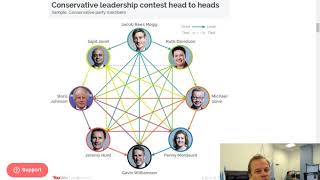
In this solo market briefing Anthony Cheung walks through the chaotic fallout from the UK’s Chequers meeting, highlighting a cascade of high‑profile resignations (David Davis, Boris Johnson, new Health, Culture, Foreign, Brexit and Attorney‑General secretaries) and the resulting uncertainty for Prime Minister Theresa May. He charts the GBP/USD (cable) price action, showing an initial rally on the soft‑Brexit proposal, a dip after the resignations, a brief recovery when a confidence vote was ruled out, and a return to pre‑Chequers levels. Cheung explains the split within the Conservative Party between centrist ‘remainer’ MPs and hard‑Brexit hardliners led by Jacob Rees‑Mogg, outlining the “impossible Brexit trinity” of soft‑Brexit, hard‑Brexit, and a muddle‑through approach. He assesses the likelihood of a leadership contest, noting the YouGov graphic of potential candidates and the odds market, and argues that May’s appointment of Dominic Raab (with Gove) weakens the hard‑Brexit bloc. The briefing then shifts to macro data: the UK will publish its first monthly GDP estimate (May), a key input before the Bank of England’s August rate decision, and the potential impact on sterling. Cheung adds a broader market view – hedge‑fund short bets on GBP, oil price resilience, US equity strength, and gold’s recent weakness – before ending with a data calendar covering UK, German and ECB releases. The overall tone is analytical with cautious optimism about a possible BoE rate hike offsetting political risk, while acknowledging the lingering uncertainty in UK politics.
Chapters
Okay, good morning guys. Tuesday, Chinese Commerce Minister, 10th of May, and I'm here to attempt to try and sift through the chaos and carnage that was UK politics yesterday and have a look at the fallout of the shenanigans going on and look ahead really and see what's next in this crisis for Theresa May and how it might have an effect on things like the pound. But yesterday, in one day, we had a new Health Secretary, we had a new Culture Secretary, we had a new Foreign Secretary, we had a new Brexit Secretary announced. We actually had a new Attorney General also put into place. We had about 80 Tory rebels gathering to plot on how they might shift Theresa May out of power, or actually whether it's in their best interest to not do. It was literally one of the most remarkable days for UK politics. I would say from the outside, let's say from the EU specifically, it just looks like chaos, it looks like carnage, it just looks like You know, it just doesn't look good. We can't govern ourselves at the moment, never mind anything else. So how has this played out? If we have a look in the— let's have a look at cable here. And we've marked up this chart just to kind of sift through all the various different outcomes and how the markets responded yesterday. So this is a chart of cable, 15-minute chart, and looking mostly through yesterday. And then you can see today so far here on the right-hand side. But You know, firstly, we gapped open. So this was the start of Monday's session, gap open high. That's off the back of the situation following the Chequers meeting on Friday. This is where seemingly, at least on the start of Monday's session, at that point, you know, the cabinet had rallied around Theresa May. Finally, Theresa May had got the cabinet fully onside and right, we've got this new softer Brexit proposal and, right, let's march to the EU and start negotiating. So the pound just ticked higher off the back of a soft Brexit situation. However, literally an hour after, or less, 50 minutes after the market opened for the week, David Davis then resigned. OK, so you had your first major casualty following that Chequers meeting where Theresa May basically said, look, hard Brexiteers, put up or shut up. You know, this is the plan. Finally, she showed a bit of leadership, I have to say. Why she didn't do this months ago, I don't know. It would have saved us a lot of time. But anyway, she said, look, this is the softer Brexit plan. Hard Brexiteers— David Davis, Boris Johnson— either you back it or get out. And David Davis decided, right, okay, fine, I'm out. So the pound weakened marginally, but not by much. And then we ticked through and ticked through because, of course, markets were waiting to see if anybody else was going to resign. Then we got strength and a phase of strength post sort of European Open here off the belief that David Davis' resignation would actually lead to a softer Brexit. This is because Boris Johnson had not resigned. So it looked like at that point that David Davis was the only one that was going to step down. And that would be fine given that there's a a few other hard Brexiteers in that cabinet. And as long as those ones are actually in support of this softer Brexit deal, well, actually, it looks like Theresa May's won the battle here. So the pound rallies off the idea that there's a greater chance of a softer Brexit. Then we tick along and into the afternoon, and then the chaos kind of ensues as Boris Johnson finally announces that he's going to resign. Now, the Cable was trading up just shy of 134. We just briefly ticked above 134 mid-morning. So we're trading around the 134 handle. Boris Johnson resigns and you get this wave lower that takes, well, 2, 3 hours actually. This is a 15-minute chart. So you've got 3 hours worth of downside. That initial phase lower. Then Laura Koonsberg, who's the BBC political editor, if you want to have your ear to the ground on all of this stuff as they develop, then you need to be following her on Twitter. So she tweets about the potential vote of no confidence, because this was the fear, right? If David Davis resigns, if Boris Johnson resigns, well then, aren't the hard Brexiteers gonna group together and force a vote of no confidence? For a vote of no confidence, this is where you need 48 Members of Parliament to sign a vote of no confidence. And this then triggers— forces Theresa May, well, out of her job and triggers a leadership race. So this is where, you know, you would assume that Theresa May would then have to go through a leadership contest with another candidate being a hard Brexit candidate put forward by this group of hard Brexit MPs. So this was the risk. And sterling dropped off the fear that actually this could be the end of Theresa May's government. Then Robert Peston, who's the ITV's equivalent of Laura Kuenssberg, comes out with a tweet saying, no vote of no confidence. I.e., meaning that actually these hard Brexiteers had perhaps decided strategically that whilst they could force a leadership battle with 48 Unfortunately, they probably didn't have the support to then actually win that leadership battle, which would require about support of about 126 members of Parliament. So they got enough support to trigger a leadership race, but not enough to win it. So it was kind of, well, what's the point then? So now they've decided, well, OK, let's not have a vote of confidence. And so here Sterling rallies back. Then Theresa May last night has a meeting with the infamous 1922 Committee of Conservative backbenchers, and apparently she arrived in the meeting and there was firstly a 5-minute standing ovation for Theresa May. Now, some people have interpreted this differently. One interpretation was this was a demonstration that the Conservative Party is gathering around in support of the Prime Minister 'Enough of this nonsense and internal fighting. Let's move forwards with this soft Brexit plan.' That was one interpretation. But another guy said, 'Actually, the fact the standing ovation lasted so long meant that it was actually an ironic applause, and that actually they were applauding the beginning of the end of the PM.' So obviously it depends who you talk to as to how you interpret it. But the pound rallied slightly. And here we are now today ticking along, you know, basically where we were following that little pop higher after that 1922 Committee meeting last night. Okay. So we're trading just shy of the 133 handle. So net-net, actually, if you look back, we're trading where we were on Friday. So after all of this chaos, we're actually back to kind of where we started before the Chequers meeting. Began. And I think there is a certain amount of— well, not a certain amount, there's a lot of kind of confusion and uncertainty, you know, what happens from here. So let's talk about this. Here's a graphic, you know, what is the, what is the problem? Because what we have is a Conservative Party that's massively divided, divided between Remainers. So that's Conservative Party members that were voting and campaigning for the UK to stay in the EU. These are your centrist Conservative Party members. You then have the right-wing hardcore Conservatives who want hard Brexit. They want no deal, in fact. So ultra-hard Brexit. Let's sever away from this European Union club and let's regain control of our legislation. Let's regain control of our immigration. Let's get out there into the wide world on our own two feet. This is the argument. Okay, so you've got this massive divide, and I mean quite literally, with Rees-Mogg at the helm of that hardcore Brexit faction, you could quite literally see the Conservative Party fracture and even break off into two pieces by the end of this year. We'll have to wait and see, but Look, this is the problem, the impossible Brexit trinity. So on the one hand, you have the soft Brexit idea. That's maintaining economic ties with the EU in some format. And Theresa May's current proposal, of course, is having a goods— so that the physical goods part of our economy remains within the customs union. The services side, well, we're a little bit unsure about that, but it looks like that won't be part of the Customs Union. It's complicated. But this is a softer Brexit designed to appease the concerns of the British businesses. You've heard, we've had Jaguar Land Rover being incredibly vocal about how negative a hard Brexit would be for their business. And so this is very pro-business, this softer Brexit plan of Theresa May's. It's good news if you're purely thinking economically, okay. So that's the soft Brexit proposal. But then you have the hard Brexit proposal, which is, look, forget about the economy short term. In the long term, let's regain control of legislation and immigration. And in the medium to long term, actually, our economy is going to be fine. Yeah, there's going to be a bit of pain in the meantime as we kind of get over this hump of leaving, um, the European Union, which, um, would result in 40% of our exports actually starting to be tariffed. So this is your hard Brexit faction. And the problem is neither are working because the Conservative Party themselves can't actually decide on which one's best. Theresa May stepped up and said, look, enough of this nonsense. Let's go with a softer Brexit. Hard Brexiteers, if you don't like it, get out. And that's what's happened. So David Davis and Boris Johnson have resigned. I have to say, I think this was predictable 6 to maybe even 12 months ago, and I do think Theresa May is guilty of not having the courage to actually step up and give this ultimatum sooner. I think we've lost a huge amount of time, but I guess in the end it was the only way forwards. Okay, so what happens now? Well, Do we muddle through? This is the third option, which is kind of what's been happening up until this point. So you've got this, these three options here. The problem is there isn't enough support for any one of these three in isolation, so we're kind of left in a little bit of limbo. Let's have a look. I know, I mean, let's have a look at this leadership battle idea first. Now firstly, let's repeat that this is most likely not going to happen now because the hard Brexiteers have realised that they don't have the support to actually win a leadership battle. But let's just, let's just go along with the idea that there might be one. This is a great graphic from YouGov trying to explain the fantastically complicated situation of a leadership battle and trying to put on the table here all of the candidates that might put their hat in the ring. And you've got Jacob Rees-Mogg here at the top. And look, this is, this graphic's trying to say, well, depending on who stands up and enters the leadership battle, who would beat who? And it's quite a complicated diagram to vote, to say the very least. But ultimately Gavin Williamson down here apparently would be beaten by everyone, and apparently Jacob Rees-Mogg would beat everyone else. There's a notable absentee from this graphic though, and that is Theresa May. And if there was a leadership battle, she would stand for leadership and she'd probably be the winner. And that's the whole reason why Jacob Rees-Mogg and his gang, Jacob Rees-Mogg and his mob, would not trigger a leadership battle. But you've got the likes of Ruth Davidson, Sajid Javid, of course, is new, fresh into the cabinet, and potential high flyer, but then you've got Boris Johnson who looks like now his leadership credentials, I mean, couldn't, they're at their lowest point for years. He's really not had a good 12 months. He should have resigned off the back of the Heathrow runway announcement. He's annoyed British businesses and here he is now resigning after he said he wasn't going to resign on Saturday, and now, hang on, he has resigned, and so he's lost credibility. So he's definitely down the pecking order. Ruth Davidson, not experienced enough yet, very popular. This is the Scottish Conservative Member of Parliament, of course. Probably not experienced enough yet. Jacob Rees-Mogg, I don't know, you could say too hard Brexit, you could say too posh, if you wanna say that. Sajid Javid is an interesting candidate. I don't know about that. Would the great British public rally behind that type of candidate? Maybe not. So this is quite an interesting graphic, but actually, you know what, it's not relevant because we're not going to have a leadership battle, at least not yet. Here are the odds. And this is the betting odds for who's going to be the next Prime Minister. And of course, in here, this brings in, of course, not just Conservative leaders, but members of Parliament. Now you've got Jeremy Corbyn in the mix. And here introduces this idea, because what's going to happen here? Basically, Theresa May's got this softer Brexit plan. She's writing the white paper with all the detail. That then needs to get voted through Parliament. Right, then if the Commons back it, right, we're off to Brussels. And will Brussels actually agree to this deal? So first and foremost, Theresa May needs to get this through the Commons. Now, you've got enough Tory Brexiteers who are going to vote against it such that if Labour and the Lib Dems choose to vote it down, well, actually, this could fail in Parliament. Okay, where does that then leave us? Because is that not a kind of vote of no confidence in itself? Well then, because the problem is if we carry on muddling through, well, we're going to end up with no deal. But actually, Parliament wouldn't vote through no deal either. So what, we're left with staying in the EU? What, are we left with Theresa May having to apply for an extension to Article 50? Would Theresa May need to call another general election. But what would happen in another general election? Because Theresa May, presuming she— if there is a leadership fight— stays in power, well, she's going to be campaigning on a soft Brexit mandate. So who's going to campaign on a hard Brexit mandate? Well, no one. Certainly not Labour, certainly not the Liberal Democrats. So nobody would— there would be no hard Brexit. Mandate unless, of course, you had the quite radical move of the Conservative Party fracturing and Jacob Rees-Mogg choosing to literally form a hard Brexit new party. Well, that would be uber-radical. So you're left then with, well, okay, is there a scenario where someone campaigns in a general election on the mandate of no Brexit at all? Let's just stay in the EU. Let's reverse all of this. And this falls to the conundrum for the Labour Party, because right now the Conservative Party are in chaos. They— it's, it's just unbelievable what's happening. And yet Labour are nowhere here. I mean, this is Labour's perfect opportunity. If they want to go in, if they want to be in power, now's their chance. But here's their big problem: they can't campaign to remain in the EU with Jeremy Corbyn as leader. And that's because Corbyn is to his root anti-EU. So for Labour to win a general election, they'd have to really force Corbyn to step down, uh, replace him with a pro-EU alternative, of which one I can't think of anyone credible. And then they campaign on a mandate to stay in the EU, and maybe then Labour would win and actually gain power. But with Corbyn in charge, that's very difficult because Corbyn has a lot of hardcore grassroots Labour support, and so to oust him, I don't know, would be quite challenging. So this is the kind of mess. I think what's going to happen really, well, Theresa May played this quite cleverly, I think, in one respect. And that is, there is one person left in the cabinet that didn't resign who is a Brexiteer, and that's Gove. Now she's added a Gove ally in the form of Dominic Raab to be the new Brexit Secretary. So here's Gove and Dominic Raab in the cabinet actually supporting Theresa May's soft Brexit. Now cleverly, I think, this has fractured the hard Brexit group, making it very difficult for the hard Brexiteers to unite and actually launch a proper leadership challenge against Theresa May. So she's kept two of the hard Brexiteers in the mix, in the cabinet, whilst the Boris Johnsons and the David Davises go off to whisper behind the sheds with Jacob Rees-Mogg. So I think she's actually divided the Brexiteers here, making it making perhaps her leadership that much safer. So right, we move forwards then. Well, she's got a plan, right? And this is going to get challenged in Parliament. And here's the plan: it's that soft Brexit, common rulebook, it's the facilitated customs arrangement. We talked about this, um, goods remaining inside the customs union. Now she's going to go and negotiate this with the EU, but it's almost certainly going to get rejected by the EU. They're going to accuse us of cherry-picking, wanting the best of both worlds. They're going to say that there's practical and political issues surrounding their customs plan, a lack of budget payments, and so on and so forth. So the EU are going to reject it, right? Then the UK are going to have to counter-propose something new. This is what Boris Johnson's worried about and David Davis, that Boris Johnson in his resignation letter said that Theresa May's existing plan is like riding into battle waving the white flags of surrender on your way, because the deal's never going to get accepted. And so you're going to have to go back to the drawing board and make more concessions. And in the end, where do we end up? Well, most likely we're saying the EU is still resistant to the further UK proposals of cherry-picking. And then either talks grind to a halt and there's no deal, or the UK inches closer towards a Norway option, which is fully staying within the single market and having the benefits economically, but actually being worse off than we were before. Having the benefits but having no say on EU laws and legislation. So it's all a bit of a mess. Now, what's going to happen, I would say, over the next few days is this white paper is going to be released, the negotiation is going to start in Brussels. I don't know, I can't— I now— I don't know, I can't see how this is going to work. I can't see how Theresa May's soft Brexit mess is going to now work because the EU will reject it. I can't see how the hard Brexiteers have got enough support and unity to launch a proper leadership campaign against Theresa May. So we're kind of left in a bit of limbo here. Let's go back to the chart. So where do we go? Honestly, I'm not quite sure. Here's the daily chart for cable. I would say that we're down the bottom end of what's been a strong move lower. If we just switch to the economic side of things, because this morning we are having something interesting, which is the UK are releasing their GDP figures. But actually, the UK are going to be the first lead economy to actually change the way that GDP is released. Given new technologies, given new processes, it's now more efficient in terms of gathering economic measurements to then sum up and be able to deliver a GDP growth statistic. You know, traditionally GDP is measured quarterly. And at the end of each quarter, they gather all together the info, the economic data from that quarter, and they release a figure. Well, the UK, starting today, will be the first country to start releasing GDP figures every month. And this is thought to be, um, the trailblazers and will most likely get other economies follow suit. So this is quite interesting. So this morning we're going to get UK GDP for the month of May. Now, if you think about June, And then if you think about so far in July, well, actually, we might have a period where, given the hot weather, given things like the World Cup and England's success so far, you know, this feeds through to actually, you know, probably positive things economically. So it may be that our economy and economic data over the next— so May, June, and July might actually be quite solid. The key about the data this morning is This is going to be a key update on GDP conditions, on economic conditions, and this is the last sort of general economic conditions update before the Bank of England's meeting in August, where right now it's over a 50% chance that the Bank of England are going to raise rates. So where is the pound going to go in the next month? Well, politically we're in limbo. Yes, Boris Johnson's resignation led to a sell-off yesterday, but we've stabilized because We don't think we're going to see a Theresa May leadership fight. And in the meantime, well, hang on, aren't we going to get a rate hike from the Bank of England in a few weeks' time? So it's so hard to judge here, but I wouldn't be surprised if this muddle-through approach from Theresa May continues. We might get a rate hike which might see cable actually, ironically, given all the political carnage, might see cable actually rise. We've got quite an interesting area in amongst this lot. Just shy of 135, which I think is the most important price point on the upside. This was the high at the start of June, key support middle of May. All right, 134.80 to 135 handle on the futures, very important. Don't forget about the economic data, don't forget about the Bank of England. It's easy to get sidetracked in amongst this political carnage. All right, that's enough about the UK. There is other things going on, on on the planet, despite our own ridiculous nonsense internally. What else then? Well, actually, sorry, I forgot to show you one graphic before we turn to other things. This is hedge funds boost net bearish bets on sterling to the most since September. So of course, this is because of the political fallout for the last few weeks. We've got now our biggest short sort of hedge fund positioning But as I just said, don't forget about the Bank of England. Um, if we do get a rate hike, this short positioning might actually begin to swing the other way. Um, uh, sorry, I did have one more graphic. Apologies. I am going to show you this. Um, this is because in amongst all of this lot, if there was a general election, if there was another EU referendum, if if, if— well, actually, what's happened in the last couple of years— this is a graphic. Look at the right-hand side, I guess that's the easiest one. This is the proportion of people who view immigration as one of their top 3 issues. And when we voted to leave the EU, more than 50% of people had immigration as in their top 3 issues. So that's why— one of the reasons why we voted to leave. Look what's happened since. This is down to 30% now. It looks like that generally people's opinion on immigration has softened. But I don't think this necessarily would lead to a new EU referendum leading to a Remain vote. And that's because I think, generally speaking, back in June of 2016, the nation was quite clued up on the immigration front. That's because the Brexit campaign was scaremongering about immigration. But I think in the last 2 years, we've become much more knowledgeable generally as a nation about the legislation side and about this idea of regaining control over our laws. And so I think whilst the immigration side might— stance might have softened, I think the legislation stance would have hardened. So I'm not quite sure you'd get a different result if we had a second referendum. Um, anyway, food for thought. What else is happening? China factory inflation accelerates as commodity prices edge higher. This was the data from overnight. So PPI figures ticking to the upside. That's the highest we've seen since the start of the year. CPI still very benign and flat. Of course, we've had action from the People's Bank of China as they cut the reserve requirement ratio a couple of weeks back. But that little pop, I mean, I know we were much higher than this back in 2017, but this is almost certainly just oil-related, so transitory. So I don't think anything to kind of look into in terms of having a major impact on PBOC policy. Right, I want to look at the data calendar. Um, well, let's have a look at the charts and then we'll finish with the data calendar for today because what else is happening? Oil is quite interesting. Um, I was talking about this yesterday, just about that longer-term issue with regards to long-term supply risk. And what we've seen, you know, we had those comments from Saudi Aramco's boss yesterday along those lines. And what we've seen yesterday is after a pop to the downside around 3 PM, every time we get any kind of weakness, it does seem like there's big-time resilience in this market as oil continues to fight back, you know, off the back of any kind of downside momentum. And this seems to be the case. It's kind of a bullish pattern, if you ask me. Um, so we're back up above the 74 handle. Let me just mark up some lines here. On the upside, your next resistance would be the 5th of July high, that's at 74.80. I'd say then you're looking back to the last week, the 3rd of July high, um, that's up at 75.27. Um, just to put you back in the medium-term picture, that July the 3rd high is the 4-year high at 75.27. So let's see where we trade. Today's high is the top that we had back on the 29th of June as well, by the way. So we're kind of fighting back up towards the top of the, the upper half of the range we've been in, this consolidation range since the big rally to the upside. So I'd say still some fighting spirit from oil buyers here and Maybe we're going to see any launch on a test of the 75 handle. We may see a break to a new 4-year high. Keep your eyes peeled. In the meantime, despite UK political carnage, global equities very solid. The S&P had a nice positive session yesterday, continuing to add to gains that we saw end of last week. We've gone again overnight. And so this is the S&P, and I was showing you this on a daily chart yesterday. You know, we're right up there now, almost testing that March top. So on the continuation chart, anything around 2,800 is key, really important. What's happened today, briefly, we popped up through the June high, but we kind of just drifted back a little bit lower. Okay, so US equities right up here. Obviously you got the May— sorry, the January high quite a bit further on. But I was speculating yesterday that maybe the, the March high might be far enough. We do have earnings season, of course, about to kick off. But this is certainly now looking pretty elevated, given still, you know, the ongoing trade war risk, which has not gone away. I know we've been obsessed with UK politics, but, you know, the global trade war risk rumbles on. So it needs to be remembered. And the NATO meeting tomorrow tomorrow may well bring that back to the fore. Otherwise, um, let's have a look at gold here, which has had a pretty interesting few days ramping higher off the softer inflationary result of the wage growth figures in the US, but then of course tipping back lower here yesterday, trending lower for the entire session. We've broken down below that low here this morning. So definitely gold on the back foot. The kind of low points that we had last week need to be factored in, and I'd say this 6th of July low down at $1,253, perhaps the most interesting. But on the medium term, don't forget that $1,235 area. which I go to a weekly chart, that $1,235 area is key, or $1,236, sorry, which we tested last week. And that's the, well, the second half of 2017 low. Okay, so bear it, keep your eye on that price. I know we're way off it today now at the moment, but if we do get any dollar strength and further downside, then be mindful of that critical longer-term level. Right, I'm gonna finish with the daily calendar. Um, just, uh, tick all the boxes here, and we've got a raft of UK data coming at 9:30, uh, including that inaugural monthly GDP estimate. This is for the month of May. Uh, bear in mind this will also be a monthly GDP estimate rolling 3 months to the month of May, so that would be March, April, and May, 3-monthly GDP P-Print. We've got services index stuff in here, we've got manufacturing output, industrial output data. So a lot of key data coming out of the UK at 9:30 AM. Then we move on to 10 AM where we've got key German economic sentiment data in the shape of the ZEW report, and we're expecting a slight, uh, well, deterioration from last month's where we're looking to a slide to -18.2. We'll talk about that just ahead of the figures. That's an important monthly data release for Germany. Um, then, so it's definitely more about European data today. This afternoon, less of interest. Of course, tonight we will have an update from the API on the weekly crude stock levels from the US. Um, so definitely more about Europe today in terms of data flow, especially with that UK data, especially, I guess, with more UK kind of political headline risk Um, we have got some ECB speakers, but not until after the European close. Um, so that is about it. So that's your lot, that's the wrap for the briefing. Uh, enjoy your day. Don't forget to be following the likes of Laura Koonsberg, Robert Peston on Twitter if you want to be all over the latest updates from, uh, the Houses of Commons. Okay, enjoy the session, guys. Thanks a lot.
More from Anthony


Inside the Biggest Banking Stories You Need to Know This Week (Anthropic, Diageo, Private Credit)


Inside the Biggest M&A Deals You Need to Know This Week (UniCredit, GameStop, eBay, Eli Lilly)







AI Breakthrough or Hype? Anthropic’s Claude Mythos, Tim Cook Steps Down & LIV Golf Collapse