Morning Briefing - 11th July 2018
Speaker A covers the $200 billion US-China tariff package and China's retaliation threat, then examines how the trade war hits Trump counties through soybean and auto producers. He also tracks NATO tensions, Brexit chaos, and today's economic calendar including US PPI and Bank of Canada's rate decision.
Chapters
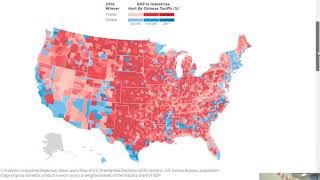
Okay, very good morning. It is Wednesday the 11th of July. As you can see behind me, we have not the flag of England, we have the flag of the United Kingdom, because we are a united country in this dark age of Brexit. We unite together behind the England football team this evening, so we can overlook the mishap by the operations team for their choice of flag, that's absolutely fine. But before we get down to the crux of the, the kind of briefing, let's just have a quick look at some stats I've got for you about the real market topic that everyone's talking about. That is, of course, the England football team. And just a quick look, the last time we played Croatia, which is a team obviously we're playing the semi-final. You got to go back, uh, to— well, this is the, the dates I've got here, uh, of the last games. So we've got, uh, September 9th, 2009, uh, England won 5-1. 2008, England won 4-1. And we lost in '07, '06, uh, and then we won 4-2 back in the Euros of 2004. So the last actual kind of, if you like, tournament victory that we had, you've got to go back to 2004. Wayne Rooney scored 2 goals, uh, Lampard, uh, and I think who the fourth member is, I'm sure Sam will remember. But yep, so let's see what happens. Let's see whether, um, we can face France in the final. So we'll get down to that later, I'm sure. But the topic of this morning going back to markets, is all about trade wars. And you've probably seen some of the market reaction the first thing when you came in. And what we've seen here is quite an aggressive move lower in US index futures. And so as a consequence, we've had a gap down in the DAX. And if I just look at the DAX this morning, just looking on a slightly longer time frame here, you can see a relative level of technical significance on the downside, an area that really has been in focus over the last couple of weeks from the resistance point from the latter part of June, the beginning of July, sent— acted as support back on the 6th, and then we've got close to that before the price is just steady a little bit this morning. So definitely worth keeping an eye on that level as the session progresses. I was just having a look at the S&P, and as you can see here, that was a drop seen overnight when this news started to circulate and the recommencing of electronic trade on Globex, and we dipped. However, likewise, the price has steadied, so it hasn't been a dramatic fall, about 20 points, so fairly large but nothing spectacular by any means. And I was just looking on a on a daily continuation chart on the SPOOs. And you know, that technical level just is getting all the more important on the upside, that being this kind of resistance point around this 97.98, uh, as in the S&P futures I'm looking at here. The question mark obviously being, is are we gonna break this? One would feel that just given how the market's responded to that level thus far, if we did I really don't see a lot to hold us back from retesting what would be the January high, which is then getting back up to this record territory. Now, reasons for and against this— again, I guess the obvious one against would be a material breakdown in the trade situation, a tit-for-tat response not just from China but globally against the US. And so this equates to then the kind of negative growth prospects globally, and then we start to move lower. However, even with that risk— and this is kind of something which almost seems to be the case with the equity rise that we saw since the, the back of payrolls, which, you know, if we look at equities here, this was payrolls here, and we've, you know, we've fallen, as I say, about 20 points overnight, but we have rallied about 60 since payrolls up till that point. So, you know, putting things into a bit of context. Now, the one thing that I think equity markets like is they do like a little bit of maybe external risk, just so that, you know, the Fed can't get overtly, let's say, hawkish. The fact that inflation as well, and the wage data and the payrolls was a little bit disappointing, it's almost going back to this Goldilocks scenario. We've got earnings season really kicking off with the big banks on Friday. That's expected to see year-on-year corporate profitability move up quite sharply once again. Obviously the tax cuts coming into, into effect as well, helping assist these numbers. But if we did break that, then, you know, questions I had this morning is what do I feel about a retest of the, the January high? And I think, yeah, I think definitely we could get to that point because at least for the moment I actually think that this trade war is more political than it is something of which Trump, I think, is really going to follow through. And I'm going to have a bit of a chat about why I think that. First off then, let's talk about what's actually happened from a news perspective from overnight. This is the headline: so China vows fight back against Trump's proposed $200 billion tariff threat. So let me give you the details. Trump administration pushed ahead with plans to impose tariffs on an additional $200 billion in Chinese goods by releasing a list of targeted products. So $200 billion is not a new number. This is a number which they circulated about a week and a half ago, but obviously this is the first time they've come out more formally or officially and are looking to release this targeted list of specific products. So it is kind of— the threat has now become a little bit more real in that sense, and hence you've had a bit of a market reaction. But because 200% has been tabled before, it's been digested to some degree. Hours later, China's Commerce Ministry has described the US move as totally unacceptable and that it will be forced to retaliate. The statement, though, didn't give any details as to what that retaliation might involve. We've also had the Chinese Foreign Ministry come out in the last 20 minutes and say they will retaliate to the US tariff measures, adding that China's position is very clear. They don't want to fight, but they will if they have to. The timings of what the US has proposed, the 10% tariffs could take effect after public consultations at the end of August 30th. So we are looking at about a 6-7 week period here, which again I think fits into the more political posturing than anything, is that, you know, we've got a long way to go. This is the first time Trump's usual aggressive behavior that he's making while he's on this Brussels NATO tour, specifically today. And so we've got time for this negotiation to take place. And if you think that every single pivot of every major topic of Trump. He always likes to start the narrative as the aggressor on the negotiation front. And every kind of point, whether it's the $50 billion initial tariffs with the $34 we saw implemented more recently, or it's this new one, I think he approaches this in the same kind of fashion. So I think the markets are getting a little bit used to that. You know, T-notes are up, equities a little softer. So there obviously is a little bit of a degree of risk-off. But I don't know. The other things here to be aware of is if the latest proposed tariffs go into effect, duties implemented by the administration aimed squarely at China will cover now nearly half of all US imports from the Asian nation. Now this is quite interesting because it is leading to a bit of a snapback from people like the Retail Industry Leaders Association, because these latest tariffs that the US have proposed do target goods like consumer items like clothing, for example. Now the Retail Industry Leaders Association, a lobbying, lobbying group, last night were talking about US businesses and consumers will lose from the administration's trade battle. Not only this, we know that given that $34 billion that we had implemented in Chinese imports just the other week, China immediately retaliated with duties on the same value of US goods, including soybeans, cars, obviously promising to retaliate further. Now, the reason why this is interesting is because this was a graphic we were looking at yesterday during the day. This is looking specifically on some analytical data on a breakdown of each individual counties by their own unique GDP and industry. And so with the Chinese tariffs hitting Trump counties harder, their retaliation would be felt by US soybean farmers, automakers, and oil producers predominantly. Now, as you can see here, some of these areas, certainly these kind of states in the center of America, you've got GDP impacts hurt by the tariffs. It can go up in some of these states as high— I've actually seen as 70%. The point being is the retaliatory tariffs will fall especially hard, affecting more than 25% of a county's economy in nearly 20% of the counties that voted for Trump. So this is about 8 million people. So this is when China have been, um, quite sensible in only being responsive, not being the aggressor, but they've been very surgical in the way of which they've specifically pinpointed certain goods to hurt the people that support Donald Trump. So those that would feel the pain And these counties that would have the most dramatic negative impact on their productivity, considering the type of products of which they're producing to support their local economies, are the ones which Trump needs the support of coming into, of course, what we have at the end of the year, which is the US midterms. So I just thought it's quite interesting to see. Other information that I have seen as well is that net-net over the last several months. Although there's been a little bit of a change, China is still a net buyer of US Treasuries, and so they're still, they're still purchasing at this point. So there's a lot of, I guess, in the media sensationalism, if you like, of the, the way of which it gets spun. Certainly this is a, a escalation of sorts, but I just I still think rational minds will prevail here, even though we are talking about the US president. You might question whether that is actually indeed rational or not. But I do think a lot of this for me is still a question of, of just politics playing out. And so although the market has reacted a little bit today, we might get a little bit more of a sell-off when the US come in. But point being is I don't think we're going to get a dramatic negative turn of events. An extreme risk-off. I just think this is just the next, next step in the journey with this, this negotiation. Okay, one of the things where Trump is today and what you're looking out for from the president— you've probably already caught him on the TV, he's already in Brussels, so he's at the NATO meeting. And this was a graphic again that we looked at yesterday. And this was looking at the fact that Trump is particularly unhappy about the current state of play and the fact that the US contributes so much more to the fund, um, of that of NATO. So as a share of GDP, 3.6%, whereas NATO Europe only equates to around 1.5%, irrespective of the fact that the European military personnel is in fact larger at 1.8 to 1.3 million of the US. The only countries of which are above the required threshold of what NATO membership should entail are, as you can see, Poland, Estonia, Greece, and ourselves, the United Kingdom. So yesterday you might have seen Trump— well, this was the first one that he said was here— many countries in NATO which are expected to defend are not sure of their current are not only short of their current commitment of 2%, but also delinquent for many years in payments that have not been made. Will they reimburse the US? Also, he's kind of wrapped this in to his overall stance on the trade front by also saying the European Union makes it impossible for our farmers and workers and companies to do business in Europe, and they want us to happily defend them through NATO. So he has already been quite vocal, as he always is, on these types of issues. One thing then to be aware of is— well, one thing is this. So Abir, when he came in, updated me that this is kind of the, the collective defense clause of the agreement of the treaty which forms the base kind of spirit of the NATO collective, and that is Article 5. So this could be something which you'll hear as we'll go through the session. This is— so let me just quickly adjust my screen, I think it's come off a little bit. There you go, should be better. So collective defense, Article 5, and this just talks about The collective defense means an attack against one ally is considered as an attack against all allies. But it's this idea of them all being— putting into the fund in both spirit and financially to then all come together in the situations in which requires a collective response, the one most notably being 9/11 as far as history goes in that respect. The thing here to be aware of though is there is a— let me see if I can just quickly bring it up— there was a NATO— I think we have tweeted it— there's a full press agenda. So always the case and best thing to do when it's a day like this and there's a NATO summit is go on to the actual NATO website, go to the media section, and then to supplement your calendar of economic data and speakers is to identify what is the exact timings of when— what exactly is happening. There's also live streams here, so whenever the President is talking, it can be a very good thing to just have this up and monitor. These times are 1 hour ahead of London, so in essence they're already underway at the moment, and as you can see, it goes on throughout the day. And indeed tomorrow. So just to be aware of that and add to your, to your calendars. The other thing is, moving away from the trade front, is Brexit. UK Tory rebels to weigh veto of May's Brexit deal. Now what has been quite interesting is, well, first of all, let's talk about what this article suggests, and it's that Eurosceptic Tories have failed to stop Prime Prime Minister May's plan for a soft Brexit and are considering a radical last-ditch move that could bring down her minority government. What's happening here is, according to undisclosed sources, senior Tories, Eurosceptics who want a more decisive split from the bloc, have only got one choice left: to vote down the final withdrawal agreement when it comes to Parliament for approval. Now, if the rebels succeed in blocking May's EU exit treaty in Parliament. And obviously this could add to further political difficulties and so on and so forth, just given the resignation of David Davis and Boris Johnson. So there is still some, some spirit of the Brexiteers alive at this point. Does this occur? Well, the one thing that Theresa May seems to have done, and I think is a bit of a positive, is by taking this kind of stance that she did at the Chequers on Friday where this is the deal, you either like it or leave. And certainly two of the most senior people have left, as well as two others actually left last night of a lower ranking within the Conservative Party. But I think she's actually done quite a good thing, and if anything, I think that In the short term at least, I think she's come out of this on the better side in terms of at least now she's got some degree of authority. How long that lasts is yet to be seen. One positive here is that the white paper that's been tabled from the end of last week has been kind of met fairly well by Angela Merkel in her commentary yesterday. The Irish Prime Minister was also seeing it as a positive step, and if the UK are making concessions, then we as Europe should do the same. So there's been some quite positive noises coming out of Europe, and I'm sure they'll be quite pleased to see the back of particularly someone like David Davis, where there was a complete lack of kind of communication and thus progression in the Brexit talks, because Europe have a lot at risk here as well. It's not just about the UK in that respect. So that's just to be aware of on the conservative side. Is this moving the pound right now? Well, no is the answer. Just having a quick look on the currency markets, we're pretty flat overall. Pivots really contain the euro with cable. It's a little bit mid-range of this broader move that's materialized throughout this last— or this week so far. I guess we're toward the upper bound of that, which is this kind of resistance level in the futures around 3324, which held some of the price action for the best part of yesterday, kind of removing out that initial blip in the morning. And then on a longer time frame, you know, Sterling has been on a bit of a recovery over the last 2 weeks. You had that brief momentary volatility on that quite extreme move lower on the back of when Boris Johnson resigned. But overall, there's been a trend kind of moving higher up until what would be then these levels of the, uh, I guess the 22nd of June high. Should we move back higher and break some of that more near-term range of this week, uh, to be having a look at on the upside. So if we did break that range, probably be looking at these levels here in the pound. So around that first port of call here, which was around those highs, and then you've got the high from the 22nd, and then the eventual highs, which was the 134 handle, of which we saw just the other day. So around here, if you were looking at the long, these would be levels of significance I'd probably want to keep a close eye on. A quick look at oil, because oil has been relatively quiet comparative to recent weeks. I think one of the main things here is if you put this on a daily continuation is we remain up at an elevated level having got to those multi-year highs. You know, I really think this is quite a strong floor of support now around if any pullback down through the 73 handle this 83, which was the, the kind of May high, and obviously dates back to, what was it, November of 2014. So be looking at that as a key level of support more broadly. But we remain elevated despite, you know, various different news items coming out and fluctuations short-term in the dollar. The kind of fundamentals, I think, would support the price remaining or consolidating at least around the upper bound of its recent weekly ranges. Some comments that we have had— this was in the FT this morning, and it's talking really about overnight where crude prices cool after Pompeo hints at Iran oil sanction waivers. So oil is down about 50 cents. It did take a bit of a dip last night amid some of the latest trade war commentary. So if we just quickly go back to the oil chart kind of referring to this price movement here. Now, this largely a byproduct then of short-term speculators looking at the destabilization to the global economy an escalating tit-for-tat trade war would have, given the aggressiveness of the, the new $200 billion announced by the US overnight. That has been relatively short-lived though in that respect, but a bit of a dip off the initial highs late yesterday afternoon. So what this latest article is talking about is the US Secretary of State saying that oil sanction waivers may be granted to countries seeking relief from tough White House measures against Iran, uh, set to start in November, was some of that news. Okay, quick look at the calendar. A few things for you to be aware of. And first of all, from an economic data point of view, it's very quiet this morning. Not a great deal going on, hence the main focus has been on the developments on the trade war situation. But this afternoon there are a couple things to be aware of. You've got the US PPI numbers, they'll be at 1:30, and you've got the Bank of Canada interest rate decision. And as you can see here, the median consensus is for an interest rate hike today from the BoC. And a couple of bank comments I've got here, and what's quite nice is you you've got a bit of a divergent view. I think the one thing which the market is very confident of today is overnight index swaps markets are pricing in about a 95% probability of an interest rate hike today for the Bank of Canada. So if you thought, you know, Fed hikes were priced in, Bank of England, so on, what we've seen previously back at the end of last year, The Bank of Canada is overwhelmingly expected, and the market sees it that way. Even though the Bank of Canada has had a bit of a history of surprising, it would be incredibly shocking if they didn't deliver a hike today. It would mean as a, as a central bank in their communication, they've done a spectacularly bad job if they don't deliver it today. So let's look beyond that. that say they hike interest rates, as is the broader expectation. Markets then are looking at the accompanying statement, which is the monetary policy report, and the following press conference. Credit Suisse, Credit Suisse analysts this morning have said they're inclined to think that there is scope for the Bank of Canada to deliver a mild hawkish surprise today. So this being a rate hike. But with some hawkish-sounding comments. They supplement that view with the fact that Q2 Bank of Canada business surveys have painted an unequivocally strong picture of the economy. They also note that crude prices have proven stable despite OPEC increasing supply targets. And we know that the CAD, uh, fairly correlated in that respect with the price of oil, and WTI trading at these 4-year highs most recently. And then they did say that the rhetoric on trade wars has eased. This though was written pre the announcement that did come last night. On the flip side, I was looking at Deutsche Bank and what they're saying this morning. They too think they're gonna hike, but they said that with market expectations only fully pricing in next hike in January 2019, we do not think the central bank will go out of its way to refashion expectations. Instead, they will refer to the considerable uncertainties that dominate the economic landscape, from the recent period of soft data to the politics of NAFTA and tariffs. So I think on the balance, I guess Deutsche have pretty valid points there. I think with the Bank of Canada, if you do look at the loonie, it's only the live guys, you do get incredibly volatile price movement. On the back of data, particularly interest rate announcements when they change policy with a statement, with a press conference. So definitely it will be quite a wild ride for the CAD, but I think overall with a lot of the risks at play and some of the recent softening of the data, that they will hike and they'll be fairly neutral, not to change the needle on long-term forward-looking rate expectations, would be my my kind of more educated guess. Other than that, you've then got the, uh, DOE all infantry numbers, uh, that'll be in the afternoon as per usual. So we'll run through the APIs in more detail later this afternoon. And then you've got a really busy, um, schedule of, of central bank speakers actually as we go throughout the day. So do be aware of that if you are, um, anticipating potential strategies in the euro and the pound, um, because you do have ECB speakers kind of littered throughout the morning speaking at an ECB statistics conference. Now overall, just given the nature of the conference in itself, not really expecting too much to come out of this in regards to the economy and monetary policy, not given we had the press conference and ECB sources just last week on the latter. But you've also got Mark Carney speaking this afternoon, speaks at a conference on the global financial crisis. Now that is one that I would be more interested in rather than the ECB ones. The ECB, we're kind of on point of where we are at the moment. It was more about them just managing this overall very dovish pricing of a, of a 2019 rate hike, which they readdressed with the ECB sources more recently. With Carney, we are right on the cusp, or are we, are we not gonna hike interest rates in August, and we know what the unreliable boyfriend is like. He does tend to flip-flop a little bit with his view. I'd be very interested to see that whether or not he lays any hints as to what he is thinking towards that specific meeting in question. And then later on this evening, if anyone's still in the market, you've got Fed's Williams much later on, 9:30 PM. All right, gonna leave it at that. And let you get on with things. Um, Sam can jump on the chart— on the charts in a second and talk through a couple of key levels for you guys. But otherwise, I'm going to wish you a good day, and come on England!
More from Anthony


Inside the Biggest Banking Stories You Need to Know This Week (Anthropic, Diageo, Private Credit)


Inside the Biggest M&A Deals You Need to Know This Week (UniCredit, GameStop, eBay, Eli Lilly)







AI Breakthrough or Hype? Anthropic’s Claude Mythos, Tim Cook Steps Down & LIV Golf Collapse