Morning Briefing - 11th September 2018
In this morning market briefing Anthony Cheung provides a rapid, data‑driven overview of global financial markets on 11 September 2018. He opens with a broad view of a weakening US dollar, noting the dollar index slipping below the 95‑point support and the consequent 40‑pip gains in EUR/USD and GBP/USD (the “Cable”). Technical analysis highlights key resistance levels for the euro (1.1663‑5, 1.17) and the pound (1.3050, 1.3290, 1.3391). Commodity markets are buoyed by the softer dollar: gold breaks above the $1,200 pivot and crude oil rebounds to the $67.80 pivot, though supply‑disruption headlines (Iraq protests, Libya unrest, NOC issues) are flagged. Fixed‑income markets see US 10‑year yields breach a prior support zone (≈119.16) and Bunds fall 22 ticks. A sector‑specific risk note covers Hurricane Florence’s impact on US insurers, with potential equity losses of 0.5‑5 % for insurers with Gulf‑coast exposure. The briefing then shifts to Brexit, summarising recent optimism from EU negotiator Michel Barnier (a realistic 6‑8‑week deal) and the market’s rapid GBP rally, while also detailing internal UK Conservative divisions (Eurosceptic ERG, Rees‑Mogg, Johnson, Davis) and the lingering Northern‑Ireland backstop issue. Labour unions’ campaign against any deal lacking a workers’ referendum is noted. Emerging‑market stress is outlined: Shanghai Composite testing 2016 lows, MSCI EM in bear territory (‑21 % YTD) with upcoming options expiry pressure, Brazilian real under election‑driven sell‑off, and Turkish rate decision. Finally, Cheung previews the day’s economic calendar – UK average weekly earnings (potential 0.3 % MoM boost from NHS pay rise), German ZEW sentiment, and US oil inventory data – advising caution on headline‑driven trades. The overall tone is analytical and measured, emphasizing technical levels, policy signals, and risk‑management.
Chapters
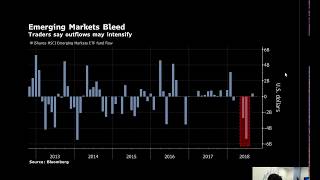
Okay, good morning, Tuesday, 11th of September. Let's get the briefing underway. Quite a few things I'd like to cover, predominant focus on emerging markets and Brexit. But looking at the charts first of all to get a general feel for what's going on, weaker dollar. So both major currency pairs in the top left are on the front foot. The dollar index sub a 95 handle, which was a kind of relative point of support in yesterday's session. and we've gone through that. So down 0.25% there, and, and consequently lifting both pairs equally up about 40 pips in EURUSD and Cable. But we're going to have a look at Cable in a bit more detail shortly. Actually, I was just having a look at the euro this morning. You can see where decent move above the high prints from yesterday's session on a slightly longer time frame. There's quite a clearly defined target here if we are to see persistent kind of dollar weakness. And if there are some positive noises that come out of people like the Brexit negotiator on the European side, Barnier, because European assets have some degree of relief on the back of any positive signs that the talks on Brexit is moving forward. So if we continue to move higher, kind of just put two X's here on the chart. And really the first one's quite a key one. I just circled up a couple of historical price points from going back over the last kind of 2 or 3 months for the importance of around that 1.1663.5 level in the futures. I think it's going to be the first kind of obstacle on the upside, a strong point of resistance. Be interested to see if we get up there today. We're only about 23, 24 pips shy of that at the moment. Above there, then technically a bit of clear space to the 1.17 handle, uh, and then above to the highs that were seen in late August, uh, from a slightly longer-term timeframe perspective for the week if it plays out, uh, in the right fashion. So bit of upward movement. As I say, cable we're going to look at in a second, but with the dollar weakness, you can see here on the top right, gold has moved higher. We've We've managed to get above pivot, which is basically the $1,200 handle. So we're up about $2.50 for the session. And WTI crude as well has moved up to pivot. We were kind of talking about this a little bit yesterday. I had a bit of a pullback during yesterday afternoon, but it has recovered back to the pivot level on the $67.80 mark. Just keeping an eye on at the moment, up about $0.27. So it's at session highs as we speak. So maybe some of this weaker dollar helping out things at the moment. There's obviously quite a lot of headlines that were circulating yesterday about protests and potential disruption that could have in Iraq and then of a more violent nature in the likes of Libya as well at the NOC, their national kind of state oil company having issues as well. So a couple of supply disruption risks potentially to just be aware of as we go through the rest of the session. But the weaker dollar maybe just lifting things at the moment as well. Otherwise, equity markets pretty flat overall, not too much to look at on the, the equity side this morning. In fixed income though, we have broken in the US 10-year what had been a fairly definitive range post the, the kind of pop in yields that we got on the back of the wage print from payrolls. So T-notes shot lower and then that level of support held in yesterday's session has now given way, and we've just had a bit of a breach down of the S1 on a push down to S2, uh, at the moment around 119.16. So a bit of pressure on fixed income futures. Bunds down about 22 ticks as well in sympathy with that move. On the equity side in the US, maybe something you wouldn't have been regularly monitoring, at least from an equity perspective, is a developing Hurricane Florence in the US, in the Atlantic. At the moment, it's quite far offshore but is set on the projection to hit North Carolina. Now, the important point to be aware of here is that— let me just transition my charts— important point to be aware of here is that this is not really a factor for oil prices. As we know, the main area of significance in that perspective is further west, looking into the Gulf Coast. This though does have an impact on a specific sector which, even though we are not looking at landfall until Friday, 5 days out— this is how quickly the market starts to reposition itself. So anyone new to the market looking at single sector breakdowns in the US equity space, this was the insurance firm firms in America, in the S&P 500. And so obviously we— they need to, um, position— at least the market participants will start selling these big insurers on the back of who has the most exposure to potentially catastrophic impact of the hurricane and the subsequent payouts that need to be made. So you can see here losses ranging from anything from about 0.5% all the way up to nearly 5%. One would imagine then that Torchmark and Everest probably have the most highest exposure to that specific geographic region. So you can see here how, you know, there's many ways and means to look at the impact of these weather systems. It's not always one-dimensional for the kind of supply disruption side on the oil market, particularly given recent activity we've had with Gordon, with the tropical storm of late. This more specific for the equity space. That was something that people were looking at yesterday. All right, well, let's jump straight into the Brexit saga. And here we are, this was the headline from yesterday, the one that caught the market attention and saw an aggressive spike higher in cable. That's because Barnier came out in an interview, quite casually threw out there that, you know what, Brexit deal it's realistic, 6 to 8 weeks. The response in the market was, was fast. We spiked higher immediately in the, in the price of cable, uh, in the value of the sterling currency, that is. And we have continued to march higher ever since. So, you know, looking at this cable performance from yesterday, here was around the GDP print. Now, you didn't really get much of a reaction out of the GDP number, even though it was better than expected. Now, let's not forget the period of which it's covering So if you're looking at it from a quarterly basis, there's obviously a lot of one-off factors to contemplate— record-breaking weather, royal weddings, a football World Cup, and so on— all helping elevate things. So I think the market's kind of looking beyond the kind of headline prints, uh, and, and further forward into the future where probably it's going to be under more pressure from a growth perspective. But then it was the comment that really captured attention. As we see, we can— we've shot higher. Now if I put this on a slightly longer-dated time frame. This is kind of the, the ebb and flow of the Brexit headlines as they stand at the moment. This is going all the way back to a special deal for Britain, positive reaction, the reversal of that and the gap lower after the weekend. And then we had the Bloomberg source counteracted by the Reuters one about Germany, UK said to kind of loosen their demands. And then this was the latest one, Barnier on a Brexit deal being realistic. Now technically, what's quite important here is that this last kind of shot into the arm of the British pound has managed to see cable elevate itself above the previous high that we had back on the 30th. You can see here how we, in the fast money move, we initially shot up there. This is quite traditional, I'd say, of the type of execution side of when people are hitting these fast money moves. A lot of the market coming out at that previous high that was seen a few days before on the Friday, and then exiting upon the final target on that previous high. And you can see the market then collapsed thereafter, pulled back a good kind of 50 pips. But then since we've come into today's session with a bit of dollar weakness as well, it's helped just find a bit of a platform And so on the intraday, any pullback towards those levels down around 1.3050 could be a quite interesting support point, all things being equal. Um, let's have a look then a few headlines before we look at the pound on a longer time frame, because this obviously is positive, this type of headline. And so the EU making these noises, and that obviously there was reports yesterday we were talking about, about the push that was coming from the collective European-wide on Barnier to kind of start making some potential concessions. Barnier now saying that, you know, the timeline— this is way a closer timeline than people may have first envisaged. Also, what's been happening is this: the Tory kind of Eurosceptics, if you like, have failed to agree on a Brexit Plan B. So what has happened here. Let me just quickly go through a couple of the details. Conservative Eurosceptics are on the back foot after the plan to publish a detailed blueprint for the UK's future relationship with the EU has basically fallen apart. Eurosceptics, last week they circulated what was their basically document, 140 pages of their vision of Brexit. But Jacob Rees-Mogg, the head of the pro-Brexit European Research Group— this is the one, ERG, you often hear referred to— has basically pulled it and said that the truth is they had to reconsider. Now, this is one of the key things then that's kind of played into the, the positivity for the pound and obviously for more favorable for the Prime Minister is the fact that not only have you got Europe sounding a little bit more friendly to getting a deal done, but this kind of noise coming from those pushing for a more harder Brexit. The point is, is that Although they're collective in agreement that the Chequers plan is not the right way forward, what they can't agree on is what to do going forward. While some MPs thought it was not such a bad idea for the UK to stay close to a relationship with the EU after Brexit by joining the European Economic Area, others are absolutely against it. The former minister John Redwood is totally relaxed about us leaving without a deal, but others think that he's absolutely mad. so even though they're supporters of this kind of movement against Theresa May, there's great division even within that kind of sect— section of the Tory Party. So again, a positive thing for Theresa May, and this is kind of seeing this no-deal idea that was generating some momentum after that Liam Fox comment a few weeks ago has started to dissipate slightly. And so as a consequence, we have started to see a little bit of movement on the upside here, uh, in the pound more recently. A few things though to be aware of: Boris Johnson and David Davis have kind of stayed away from any of this Jacob Rees-Mogg movement. Um, so another thing to be aware of, of course, is Boris Johnson potentially lining himself up for a run at the leadership at some point. So quite calculated in him not getting involved in these kind of shenanigans, at least at this point. Going back to, um, here though, a couple of other things then from a timeline point of view I think to be aware of. A spokesman for the UK government told reporters there's been positive engagement with EU leaders and the UK is working toward a deadline of a summit in mid-October. So you've got an EU summit in Salzburg, which is going to be quite key. Negotiations are set to continue in Brussels before then the EU 28 leaders discuss this summit in Austria on the 20th of September. As you can see, it will be the first such discussion since June, and then the leaders are expected to agree to hold an extraordinary meeting in November, probably on November 13th, to sign off on a deal on future relations. According to The Guardian, was reported yesterday. In the interim period, obviously, we also need to navigate the Conservative and Labour Party conference happening at the end and beginning of this and next month. Um, the big sticking point, of course, still though, uh, is of course the Northern Irish issue. Brexit backers are concerned an agreement on the Irish backstop will end up shackling the whole UK to EU rules indefinitely. According to those familiar with the discussions. The EU has demanded the backstop in the case the UK's proposed technological solutions to the border issue don't work, and Brexit supporters argue that any backstop will become a front stop. So what we're— the one thing I think to be very aware of is what happened with Barnier yesterday. I think absolutely we can do a deal, um, in 6 to 8 weeks, but I think you've just got to be clear on what exactly he means by when he says deal. This isn't a deal as in Brexit all wrapped up and done. This is basically, as per what we've seen previously, this is a deal to just keep talking and to move into the transition period so we can navigate this kind of, this next few months and then the lapse of Article 50. A deal in this sense is by nowhere near an actual Brexit deal as it would suggest that the way it's been coined in the press. But no doubt it's a positive, at least in the short term. But the issues still remain. Northern Ireland is a real contentious issue for the reasons as we've just, we just briefly mentioned. So next article though, I think is worth mentioning briefly, is this one: UK labor unions. This, this is going on quite quietly in the background. The UK labour unions have voted for a campaign against any Brexit deal reached by Theresa May that fails to address the needs of working people, with a referendum central to their strategy. The motion backed overwhelmingly by the TUC, the Trade Union Congress annual meeting in Manchester. And so what they've said here is that if you come back with a deal that doesn't put workers first, i.e. Talking directly to Theresa May, "And if you won't call a general election, then I'm warning you, we'll throw our full weight behind a campaign and demand that terms of a deal are put to a popular vote." So this obviously comes with this idea about a people's vote and so on. But, you know, this isn't just now the centrist movement of the Labour Party behind people like Chuka Umunna. Who we know is kind of of that New Labour vibe. This is coming now out of the Labour unions trying to put some pressure on Corbyn. So, you know, a lot could change still on the narrative, and I think certainly it does need to be monitored very, very closely. Um, this is one of the other key things here. UK Brexiteers are bracing for a new fight over EU laws, and this is where really Theresa May could come undone. She could quite easily push things forward, but then the whole point here is that she's then got to go back to Parliament and a UK Parliament for approval of her deal once reached, even if she does push it through a summit in mid-October. And lawmakers on both sides of the chamber could potentially sabotage the agreement. And so we remain in this kind of stalemate. So any positivity that's developed maybe now could well last for a couple of weeks. And if that were to be the case, well, let's just have a look at the pound and some, some levels on the upside if we were to get any sort of meaningful rise here. And I kind of marked out a couple of spots where this level which we managed to surmount around 1.3050, which I think could provide a decent platform at the moment if we were to move higher, as given these reasons here circled, it's been a, an area of previous resistance, of support, and has worked out quite well. Then really there's not too much. There's obviously a couple of points on the scaling back of some of the relative high or the lows we were printing at the time when we were declining through July, August. So, uh, 31.78, then 32.40. I think once you start getting up to 132.91, the 33 handle starts to get more interesting. So there's definitely some upside targets here, but I do feel though that a run could last but then could come apart again come October once she tries to force this through Parliament and it gets voted down. This is when it could start then getting messy down the lines of what needs to happen next to get Parliament on side, what type of concessions and deal-making needs to be made. So obviously a lot going on in the, in the pound at the moment. The one thing I'd say, and yesterday was quite clearly evident of that, and if this chart tells you one thing, then I think it's if you're trading the pound, you've got to be absolutely mindful of the headline risk. Now you can see here we've had 3 quite clear really sharp pops in the pound. However, we've had one quite clear reversal of that when it got denied basically from the German government. So, you know, there is some risk to holding on, sitting there in a, in a position in terms of the execution of a trade strategy. So I think you've just got to be quite careful to manage the trades and obviously just be mindful of the timing because there is a propensity at the moment for quite sharp movements as these leaks and comments do come out regarding the situation. All right, a few other things. Just wanted a quick chat on the, the emerging market space. I think there's certainly a few things to be aware of. This is because the Shanghai Composite is coming down, retesting a level of which we were trading just a few weeks ago, and this puts the Shanghai Composite close to approaching the 2016 low. You can see here, last time we were down at this point. If we did breach these technical levels, then this would put us back down to the lowest levels basically in about 4 years if we would start to push towards 2600 and below. And so continued concerns in China, this is kind of seeped through into Hong Kong as well, testing a bear market. So losses getting close to the 20% mark that would define that technically. And falling to the lowest level since mid-2017. What is this leading to? Well, this was quite interesting, and a few things I just wanted to cover because the MSCI Emerging Market Index is in bear territory. It's down about 21% from the beginning of the year. Traders predict more money will bleed out of funds that follow the MSCI EM Index around the 21st of September. So in about 10 days' time, because that's when options and futures tied to the gauge expire, then that tends to increase volume as global money managers who use those derivatives to hedge risks or bet on the direction of large basket of stocks opt to switch or defend their positions before the next quarter. Uh, firms with a primary listing in Hong Kong make up about 23% of the emerging market benchmark. So just given how hammered Hong Kong and China and the likes of Taiwan have been, which make up a large proportion of the, uh, the MSCI EM index, it's going to be quite interesting to see if we do see these type of outflows again. The rotation around the last index options expiring June, which is this red section here, was so aggressive that the largest exchange traded fund tracking the index, lost about $5.4 billion that month, which was the biggest outflow since 2014, as you can see going all the way back down to here. So could we see some kind of shifts on not the intraday participants but the larger portfolio managers shifting their cash? A lot of them have been opting to kind of stay in cash as the safest, even irrespective of the fact that valuations obviously in Asia are the cheapest they've been in many years. If you're talking about projected earnings in Hong Kong, uh, or about 10 times earnings at the moment, which is actually the lowest they've been in about 4 years. And irrespective of that, people are still cautious, uh, about investing, uh, at this point. Elsewhere, there's a lot of other things going on, but, you know, kind of reading the headlines, it hasn't gone away, this EM risk. I think the market has got a little bit more comfortable at least, but it still definitely warrants monitoring. The Brazilian real under fresh pressure, selling, fresh selling pressure on Monday, resuming months-long slide that you can see here that's been into play ahead of their elections happening in a few weeks' time. We've got a Turkish rate decision, I believe that is happening today, and that could be interesting to watch as well. So there's plenty of risk out there. And things to have a look at. So worth keeping an eye on. Looking at the calendar for today, what have we got on the docket? Well, more UK data, and the pound does tend to be fairly sensitive to the wage numbers. Now we are actually expecting average weekly earnings, both 3-month year-on-year and the ex-bonus, to be roughly same as previous, maybe a slight uptick of 0.1% on the average earnings basis. I did see a very interesting tweet though, which may mitigate the return if we saw an upside surprise. This is the chief economist of, uh, quite a notori— notable macroeconomics firm and chief UK economist Samuel Toombs, and he's saying that he's looking for a hefty 0.3% month-to-month gain in UK average weekly earnings in July data out this morning, and he's pinning that on the reason that around 1.3 million NHS workers finally received a pay rise in July, with nearly all seeing at least a 3% increase. So the kind of anomaly of a public sector pay change could well artificially lift this, um, not that this would be then a sustainable factor going forward. So with this being said, just be careful then. You might get an initial spike if we get a headline beat in the pound, but entering heavy and remaining long in that position might not be a good idea because you might get a quick reversal after people just execute the initial spike, not wanting to sit in the move, knowing full well that this is— it really is just a, a one-off item that's added to the strength of the reading on this particular, particular release. So Something just to be aware of when you're tackling that figure later this morning. Otherwise, German ZEW, this is kind of one of the higher-tiered releases we get out of Germany. This is though the analysts and economists rather than the companies— that would be IFO's forward-looking sentiment for the next 6 months. Worth monitoring that when it comes out at 10 o'clock. Can have historically an influence on European asset prices, but probably lesser extent more recently, but nonetheless definitely worth keeping an ear out for. Going into the afternoon, there's no major 1:30s, but we do have wholesale inventory revisions coming out this afternoon. So it is pretty quiet stateside. April inventories on the oil side coming out later on this evening. A few things that haven't yet got definitive time frames but definitely to be aware of— any oil traders, OPEC meeting on production strategy. If any times do come out with that, I'll keep you posted. Brexiteer Jacob Rees-Mogg is also due to speak at an event arguing for the economic benefits of a no-deal Brexit. So just given the type of headlines that have been flying around this morning, it'll be interesting to see what he has to say, whether he can maintain this view after really his recent plans have had a— have backfired slightly and he's lost some of the gusto behind the momentum for the ERG movement, given the indecision that they've not being able to come together, uh, as an anti-Chequers Agreement stance as to the best route possible going forward to Brexit. No time as yet. I think this is due though to take place sometime this afternoon, so again, something to monitor. Okay, I'm gonna leave it at that. So overall, a bit of dollar weakness apparent this morning. It's given a bit of a mild reprieve for commodity prices. Oil having a bit of retracement from yesterday, but very relatively flat overall. A couple of supply disruption risks to be aware of, to monitor elsewhere. Otherwise, the currencies are a bit of a standout. Euro-dollar, a bit of favorable moves behind some positive developments in Italy. You saw their local assets perform particularly well yesterday. Some BTP bund spread tightening on the back of more kind of realistic fiscal proposals coming out of their government. So that's a euro-friendly thing also as well that goes in step with the developments with Brexit. So a couple of favorable fundamentals here to lift euro and the pound as well. Okay, I'm gonna leave it at that. So have a good day, guys, and I'll see you in the chat room. Thank you.
More from Anthony


Inside the Biggest Banking Stories You Need to Know This Week (Anthropic, Diageo, Private Credit)


Inside the Biggest M&A Deals You Need to Know This Week (UniCredit, GameStop, eBay, Eli Lilly)







AI Breakthrough or Hype? Anthropic’s Claude Mythos, Tim Cook Steps Down & LIV Golf Collapse