Morning Briefing - 12th October 2018
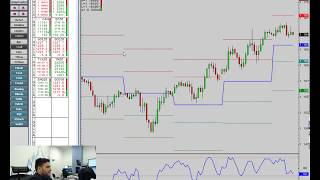
Sam North breaks down gold's surprise rally breaking a four-month downtrend, US Treasury yields crossing 3% for the first time in three decades, and the Fed's December rate hike combining into a "perfect storm" for higher yields and equity pressure.
Chapters
—look at yesterday's sort of price action. Most notably, we saw quite a big move here in gold, which if you've been following this market for the past 10 months or so, you know, the whole of this year basically has been a one-way sort of street for gold. It's been falling despite all risks posed by sort of Donald Trump and sanctions, etc., coming on China. Um, gold is at a one-way street lower, and as you can see, yesterday was quite a bullish move to the upside for gold, taking out a sort of longer-term trend which had been in place for about 4 months. Um, this was quite aggressive, it was almost relentless when we were watching this yesterday, but gold moving from its lows yesterday at about 1,194 to print a high of 1,230. So that's almost a $35 move in one single day. What was quite unique about this was we didn't really see this filter through into the broader market in terms of the dollar. So just look at this move technically. A couple of things driving this, obviously taking out the key handle at $1,200 here, also taking out a trend as we were just discussing. Let's draw this trend on properly. So this trend just coming into play, getting taken out— let me just redraw that— causing again the further acceleration sort of to the upside here. Um, initially providing some resistance, a breakthrough, then a classic, and then really driving higher. This morning we have started somewhat off on the back foot, just coming down, um, around that pivot level providing some support, but You know, this— if this move was to continue, really, this is going to be a really good entry point. Top of the range, quite nicely defined here by this pivot point. Um, and was there any one single move which was influencing gold? No, not really. We saw US inflation come in, um, slightly lower year on year, month on month, um, which caused some moderate dollar weakness, but nothing as much as this chart would sort of suggest. So I think this is sort of a bigger picture thing here. There's going to be a lot of commodity traders who are pretty tired of gold continuing its downtrend. Definitely, definitely people in the market thinking this is undervalued. I know Will, as an example, who is an avid gold bear— gold bull— was sort of screaming about gold price as a whole of last year or the year that just went by. And obviously with upside momentum, This is just traders using those technical breaks as a good point of entry to the upside. Now, this, I think, sort of reiterates what we saw in the US equity market just a couple of days ago where we saw the biggest sell-off since February. No one key event driving it, but, you know, this was sort of pent-up tension in the market. People have been calling this equity market bull run, the most unloved in history. It's the unloved bull run. Yeah, this is people buying simply because the market's moving higher, even though there are some, um, risks posed on the horizon. So people are buying, people are buying, people are buying. They're not feeling too confident in their position, but, you know, we're seeing 4.2% GDP growth in the United States, um, incredibly high consumer confidence, other soft and hard data metrics coming out positive. Despite sort of worsening trade tensions with major trading partners, allowing the market just to continue to grind higher. But again, like with gold, people were quite uncomfortable, I believe, with where the market was sort of printing. And then we had the yield story, and we'll discuss yields in just a moment. I don't think the story is over with regards to yields, but just as the market was getting nervous, we saw some key technical breakouts in the yield, and we'll turn to the chart in a moment. That just allowed some sort of aggressive downside selling. So people who are in this position feeling rather nervous given almost 50% of US exports to— Chinese exports to the US now being— now facing tariffs, just causing market participants to become a little bit conscientious of this. And then we see some technical breakouts. So we got the overbought nature of the US equity market. We have higher yields, um, which corporations then have to deal with, um, as well as just people, uh, some technical breaks levels allowing acceleration to the downside. Now yes, on one hand I do think that there is more room to the downside, but then what we're going to be looking at is sort of something in the horizon versus something which is immediate, and You know, buy the dip mentality definitely hasn't really left the market, I don't believe. Um, and now what I mean, what's on the horizon? Well, if we turn to our charts for US yields, we can see that they've broken this 3-decade downtrend, um, broken the 3% handle here. Um, and more importantly, I think we need to worry about this level here, which is 3.1. You can see that's where we had provided resistance, and actually we've now broken above that. I think this is now going to be a key point of support. As people trade prices, others trade yields as well. So I'm expecting now a continuation of this yield higher, um, I feel will be a point of concern for, uh, US equity investors. Do I mean the equity market is now going to tumble? No, but Dare I say it, on the 10th of October, yeah, we're really gonna be looking to push for all-time highs in the next 6 months or so. I really don't think so. If you look at US corporate debt, it's now highest— it's now higher than it was in 2007. $6.3 trillion of US debt. This isn't people just borrowing money for a one-off expense which they're planning to pay back. This is people borrowing money to finance their operations in hope that they can continue to borrow money to finance their operations. So $6.3 $1.5 trillion worth of debt. If we're seeing yields rise, well, their cost of borrowing for corporations as they trade at a spread to the Treasury is also going to go up. And this, this move higher, I don't think is coming to an end. Well, we have the Fed, um, hiking interest rates. We know that. And we're going to have our fourth hike in December, most likely. I still think that's going to happen despite this move lower in equities, because this move lower in equities I don't feel poses an economic risk. This is not People don't borrow money based on their equity portfolio. It would be different if housing market collapsed and people borrowed against the asset of their house, but nobody's borrowing against the equity market. So I think that the Fed is going to stay on track— 4 hikes this year, 3 hikes the year after— almost unquestionably. That's going to start pushing up yields. Um, on top of that, we have Donald Trump and his corporation tax and infrastructure spending also increasing the supply of debt, which is then going to drive down prices as well. Then we have The tapering of— sorry, the shrinking of the balance sheets of $50 billion as of October now being taken away from the market. So not being reinvested into the bond markets. That means demand side is going to be lower as well. It's almost a perfect storm for yields to continue to go higher. The only risk, the downside for US yields, is, is yield-deprived pension funds and fixed income funds may find this is a good opportunity to lock in some good yields. That would be the only downside, but I guess with all the factors driving it high, I don't really think that's going to be the case. Looking at this chart more technically, however, you know, let's just go to a daily continuation. The RSI very much in oversold territory. Um, not only is this sort of on traders' minds, but also investors, as Bloomberg is running a similar article which I'll share in just a moment. So With the RSI being in oversold territory, we can see the last time we were in oversold territory was sort of these two points here. So it's that February sell-off, the inflationary fears, then a retest of those levels when trade wars first initially escalated. And each time we have bounced since then. But, you know, almost to say that the market only bounced to make Sam North's prophecy of US equity markets trading at all-time highs a reality before coming in for a correction. So. Uh, that's @SamNorth on Twitter if you want to see the prophecies, uh, live as they come out. Um, okay, so that's my view on US equity markets. I think there is more volatility for sure, maybe not downside, but we cannot deny we saw lower inflation numbers, uh, so maybe that pressure not as great. Uh, you can see here US inflation having printed highs at 2.9%, very much is in the downwards trajectory. For this reason, I think Powell is getting ahead of himself. He's being a little bit too happy. He's like a kid in a candy store talking about how good the US economy is doing. Yes, some metrics are doing well, um, but you know, it's not like we haven't seen really high inflation in the near history in US— US. You can see, um, early 2017 we had inflation at 2.7% as well. Um, yeah, so we, so we saw a US inflation of 2.7%, then it came crashing all the way down to 1.6%. So almost like the same trend has been shown over here. Um, so I think Jerome Powell, good job, but I think he's getting ahead of himself. And this overt hawkishness that he's, um, going on about, about Fed funds rates not being at neutral rate just yet, I think he's getting ahead of himself. And on top of that, it's almost like no matter how educated you are, no matter how senior you are on the, on the political or economic circle. Things are always the best just before they crash. So we're seeing relatively high levels of inflation, we're seeing strong wage growth, we're seeing really good economic indicators coming out. So, you know, I'd be quite fearful about the fact that we're coming to the top of our economic cycle and then going to fall into a recession. And sort of evidence of that is your 10-2-year Treasury spread, which is continuing to flatten. Um, so yeah, I think the US equity market definitely facing some volatility in the forthcoming months. Um, so nice to meet you, Bear Safe. Yes, bear, I'm predicting a bit of volatility. Um, a couple other things in the headline. So Italian lawmakers approved deficit goal as the EU showdown nears. This is, um, Italian parliament voted in favor for the populist government and their fiscal budgets going forward. That's 2.4% in 2019, 2.1% in 2020, and 1.8% in 2021. Now I know Will and— sorry, Piers and Ant have covered this, but I think that we haven't heard the end of this just yet. The EU is saying this is gonna— this is gonna go against their rules, having a budget deficit of 2.4%. This is— let me just show you a chart here. Italian budget deficit. So, you know, this is going to break a 10-year downward trajectory for government budget here. So 2.3% last year, 2.4%. Why is this important? Well, if you look at the Italian government, Tommaso, it's been worth $2 trillion now for 10 years. It hasn't moved anywhere. In the same 10-year period, you've seen Italian government debt go from 100%, uh, sorry, Italian, um, debt to GDP go from 100 to 130%. So I think that the Italian story is not on traders' minds at the moment, but going forward, uh, any escalations in these sort of tensions may reignite, um, some of the fears. Uh, okay, also on the headlines, we have Um, so you have US Treasury staff finds, uh, US Treasury staff finds China isn't manipulating yuan. Um, sources state, uh, quite an interesting time for the US Treasury, um, staff to come out and say that China is manipulating the yuan. This is obviously on— this is sort of one of the key points that Donald Trump has been harking on about since he's been elected. And this is going on to say that China has been manipulating currency, not having fair trade practices in place. And one of the reasons that Donald Trump is— you guys are way too distracting— one reason that Donald Trump is imposing tariffs on China. Um, and now that we've seen the US equity market correct quite aggressively coming off you know, almost 4% all of a sudden we are seeing sort of positive headlines saying that the US does not believe China is a currency manipulator. This would alleviate the trade war tensions and therefore may very well pose a sort of a basis for the equity market to bounce. So this is some US politics definitely in place here. I wouldn't read too much into it. The one thing I've always wanted to say to Donald Trump is I think it's very obvious he's got a very limited understanding of how economics work. If you sanction a company, if you sanction or tariff a country, well, what do you expect is going to happen to their currency? Their currency is going to devalue as investors are worried about the future outlook. And then this ultimately then starts to take away at least some of the sting from his initial tariffs in the first place. So it's going to be an interesting, um, Interesting story to follow to see any developments in this US-China trade war front. Um, let me give you some of my opinions on this. I think that China has basically done the right thing by walking away from the negotiation table with the US, because whilst in negotiation with the US trying to resolve this outlying issue, Donald Trump has gone further to impose sanctions on China, which was an additional 10% on $200 billion $200 billion worth of goods. Now, unless we start to see a resolution soon, there's obviously the risk that Donald Trump will go for the 25% tariffs on $200 billion worth of goods. And I'll put my neck on the line and say that will be a market-moving event. If Donald Trump ups the ante and then goes another 15% tariffs on the $200 billion worth of goods that he imposed, then I think that will bring about some more volatility in the market. And then he is probably going to turn to Europe next, and that will bring some more volatility in European assets. Um, okay, let's now quickly flick through some of the earnings which are coming out today. So guys, we have 3 earnings coming out. So JP Morgan, Wells Fargo, and Citigroup— these are coming out pre-markets. They will be out between 12 to 1 o'clock UK time. Um, this again, I think the market, given where the equity market is trading at the moment, may use this as a sort sort of a platform to either continue to sell off or start to rally. The equity market most interesting to me following this release will be the Dow Jones Industrial Average, where you have some heavyweight financials in it, and the S&P. The NASDAQ, not too much, but you may see a sympathy move coming through it as well. So a few things are on the horizon. Watch those yields, watch these earning reports to see which way the equity market wants to move. Um, If those come out positive, well, of course that may lift sentiment, and that may also coincide with a perfect storm if the University of Michigan consumer sentiment for the US comes in stronger than expected. So at the moment, the consensus view is 100.4, um, so, you know, massive, massive numbers in these consumer confidence readings. So, you know, I actually, the So thinking about it, I can't really see this causing any downwards risk to the US equity market. So I'd almost go on to say that if we get good earnings report from your, your financial stocks and this comes anywhere near in line, that just might— as long as it doesn't come out a disaster, this may very well be a positive thing for the US equity market, just confirming once again that despite the tensions going on all over the world between US and its major trading partners. The underlying economy in the US is pretty, pretty strong. So let's have a look at the calendar. So we had German inflation come out this morning. Um, have a look at the euro currency in just a moment. Uh, US Michigan coming in at 3 o'clock, and then nothing really on on sort of the headlines at the moment. In terms of speakers, 10 o'clock, ECB's Lautenschlager speaking, the 50th anniversary of Central Bank of Malta, probably not going to be the most market-driving event. Fed's Evan, non-voter, speaking on current economic conditions and monetary policy. That's happening at 2:30. Definitely keep an eye on that and your ears peeled. There may be something interesting. Even though he's a non-voter, he is quite quite influential, but dovish speaking. So given where the equity market is trading right now, his opinion on the market will be quite interesting. Fed's Bostic also talking, participates in discussion of network of schools and public policy affairs administration. Sounds pretty boring. And ECB Draghi and IMF World Bank annual meeting in Indonesia. Okay, so yeah, we do have, we do have Christine Lagarde on, on sort of Bloomberg just earlier, so So keep an eye out for this World Bank annual meeting going on at the moment. Uh, okay guys, so best luck today in your trading. It's going to be relatively quiet on the data front. I would assume that the European market in particular is going to be quiet, um, just following on sort of the sentiment we've had for this week. The US market really going to be driving it, but keep an eye on yields, keep an eye on that gold. Can we see a sustained move higher? I think after a bit of a retracement, that pivot level we were talking about earlier, quite a key point. So probably a very good entry there. And make sure Squawk's turned on. And best of luck. If you need me, Sam, or Anthony Cheung, we will be in the chat room throughout the day. Thank you very much and have a good day.
More from Anthony


Inside the Biggest Banking Stories You Need to Know This Week (Anthropic, Diageo, Private Credit)


Inside the Biggest M&A Deals You Need to Know This Week (UniCredit, GameStop, eBay, Eli Lilly)







AI Breakthrough or Hype? Anthropic’s Claude Mythos, Tim Cook Steps Down & LIV Golf Collapse