Morning Briefing - 13th September 2018
In this morning briefing Anthony Cheung provides a rapid market overview across equities, currencies, fixed income and commodities, linking recent developments to broader macro‑political themes. He notes renewed US‑China trade‑talk proposals that have lifted European equities (DAX, MSCI Asia‑Pac) and US index futures, while highlighting President Trump’s tactical use of trade negotiations to support market sentiment ahead of the US mid‑term elections. The briefing covers the impact of the weakening Hurricane Florence on US energy markets, a detailed look at the UK’s Brexit‑related cabinet meeting, John Lewis profit decline, and the Bank of England’s upcoming rate decision with a focus on the Monetary Policy Committee composition and potential vote split. Cheung then shifts to corporate news, analysing Apple’s new iPhone XS Max pricing, iPhone sales cycles, rising average selling price, and the Apple Watch Series 4 features, noting the limits of a hardware‑only revenue model. He outlines the day’s key macro events: ECB rate decision and QE reduction, US CPI release, Turkey’s expected rate hike, and upcoming speeches by Draghi, Theresa May and other UK politicians, plus a note on Italian BTP supply. Throughout, the tone is analytical with a cautiously optimistic market outlook, tempered by critical observations of political risk and corporate pricing pressures.
Chapters
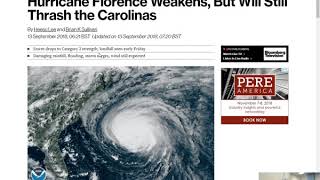
Okay, very good morning, Thursday 13th of September. Hope everyone is well. I'm just going straight into the briefing. A couple things to have a look at. Some mild optimism this morning. There's been some developments in some renewed proposals for roundtable talks between the US and China, and as Europe is coming to the market, we've seen this translate into some positive movement. Certainly in the equity space. And just was looking at the DAX here a short while ago, just managed to break above some of the range it had been holding for the last, well, really this week. And then we've consequently had a bit of a push up towards those previous points of support and resistance going back to really the 4th, 5th, 6th of the month. We've just found a bit of resistance there. Likewise, US index futures following suit. So all three majors just having a mild move to the upside, both the S&P and the NASDAQ above the pivot level, the Dow futures just testing it at the moment. So consequently, the US 10-year has just edged down a touch. We're down about 2.5 ticks at present. In the FX space, the dollar's pretty flat, and that's reflected really in the major pairs. Not too much in the way of of change. We're down about 13 to 14 pips respectively in both major pairs, with both EURUSD and cable hugging around the pivot. Obviously, this comes ahead of the respective interest rate decisions, which we'll have a look at in a second, which are coming out of course later on today. So news-wise, this is the headline that's kind of the main piece for the morning. The Trump administration is giving Beijing another chance to try to stave off new tariffs of $200 billion in Chinese exports, asking top officials for a fresh round of trade talks later this month. Of course, this isn't official. This is people briefed on the matter that have been saying this. So I was just saying to Piers this morning, gotta love Trump and his, his tactical approach to managing market valuations. And by that I mean keeping the equity market buoyant up and around its near record territory. Whilst unemployment, we know, is near record lows, all these other stats that we've had of late, like GDP above 4%, like ISM manufacturing are higher since 2004, all of these things are obviously very supportive of his presidency. And this, of course, has great importance going into next couple of weeks for the US midterms. And he wants to to use this kind of narrative to feed then the political view that his policies and his leadership, like it or not, has had some results. And so I just think it's quite, quite, I hate to say it, almost expertly managed at this point where he's kind of being, I'm getting told to rein it in here, I'll put my Trump hat away, but he's, appeasing his electorate whilst also kind of keeping China on edge. And so it's kind of, you know, being forceful and aggressive in order to secure potentially a better deal on the trade side, of course, but, you know, managing it in an appropriate way that he doesn't go too far with it. That was obviously quite a big risk only a few weeks ago. When the whole emerging markets seemingly looked like it was the beginning of the end and the Chinese economy was akin to tanking at the point, and it still is under pressure. So this is a little bit of a reprieve from that. And so consequently, the MSCI Asia-Pac Index, which had fallen for, I think it was 9 days in a row, it's the first turnaround we've had in kind of 10 days. And that has helped lift some of the sentiment in the short term. Not only this, you remember yesterday there was a couple of noises about potentially a Canadian deal being struck as well, and we saw the loonie respond and strengthen the currency there locally. And so again, although these deals are not being done and he's not backed off here— important point here, he's not changing the tariffs at this point. Going ahead. There's just reports according to undisclosed sources that he might be willing to talk, and that's been enough for the markets to buy into it and move back higher again. And so do I think he's going to budge? No, I just think that this is him doing what he does best and just trying to kind of play the game. It's, to some respect, a dangerous one, albeit, but so far so good as far as he is concerned, I'm sure. And you're going to hear tweets from him later on today. This was the yuan relief. So this is a graphic, this is actually looking at the dollar-yuan cross rate. So you can see here it has fallen yuan per dollar. So again, the, the Chinese markets in particular responding quite nicely to these types of more conciliatory noises coming out of Washington. Moving elsewhere, I mean, just going back to the charts, keeping on the DAX, it's just had another little push here on the upside. So still quite a lot of positivity coming out of this story. One of the other things, of course, that we were monitoring yesterday was crude oil prices because we had a big push 2 days ago to the upside. We then had the APIs come out, particularly bullish number. We pushed higher in the Asian session. We then awaited the data, and it wasn't so much the headline figure but an about-turn in some of the other components like Cushing gasoline and so on. And we shot higher again. We breached $71 briefly before just paring back slightly. What's been quite noticeable, though, from this morning, although we are still somewhat elevated from the last two days' price action, we have come off a decent amount from the previous highs, about 60, 70 cents or so. We're down 50 cents on the session. Back sub-70. Key thing we have been commenting on the last couple of days is this— is this Hurricane Florence. And what's happened here, Florence has weakened. So we were talking about the conversation— this point yesterday in the briefing was that potentially this could have been the most severe hurricane in this region, specifically in the last 3 decades. Well, it's now been downgraded 2 notches. Already on the forecast down to Category 2. We were talking about Category 4, potentially 5, only a short while ago. So these things do change and markets do need to then reprice in the, the kind of potential devastation that this could have had is to a much lesser degree in that sense. So Hurricane Florence weakened while it's still on its course to hit the US East Coast. This is still anticipated to occur on Friday. One thing to be aware of though, this is quite a— just a more detailed graphic for any of the energy traders encompassing quite a few different things. It's not as if this region still won't be impacted. If you actually look here, there's quite a few key nuclear power facilities that are situated right during the eye of the storm on its projected path at the at the moment. Now, don't worry, this isn't the John Cusack film 2012. I'm not saying the world's gonna end because a storm's gonna go over some nuclear facilities. What I'm saying is there definitely could be power disruptions. So for the local area, this can have knock-on effects for some of the production of the various— I believe there's quite a few chicken farms actually here, so very localized issues, let's say, on some ags that could be affected if you were trading those kind of other non-traditional assets. Otherwise, the other things that are quite key here is you've got gas pipeline expansions that are under development, you've got the Transco pipeline, refined product stations, LNG terminals. So the point here is that a worst case looks like it may now have been averted, and consequently we've come off a little bit because of the ferocity, if you like, of this is, is lesser than what we thought. But it's still something to be aware of in that respect. So that's your oil update on the news side of things. Otherwise, let's jump back on the pound and see where we are at the moment. And obviously we've been tracking this seesaw price movement through the Brexit negotiation, back and forth. Kind of finding a little bit of consolidation within this zone of 1.3032 to 1.3050 at the moment. So I'd say likelihood is the price is going to remain pretty locked in this area until 12 o'clock because of course we're going to see the release of the latest Bank of England interest rate decision. We'll get to that in a second, but before that, on the Brexit side We could potentially have more commentary on the matter, this time coming officially from the PM, as the Prime Minister is to hold a special 3-hour cabinet meeting in order to discuss preparations of a no-deal Brexit. The government also due to publish guidance on issues like mobile phone roaming charges, driving license, passports, so the kind of nitty-gritty side of things. The Brexit Secretary has said the UK will not pay its financial settlement to the EU in a no-deal scenario, but the government was stepping up its contingency planning. Now, that kind of last part, the wording about contingency planning, I think the markets will take more favorably because it's been only, what, 3 weeks ago when we were in panic mode about the prospects of a no-deal, which was ignited by those comments from Liam Fox, the trade secretary, when the odds were, as he coined, 60-40. So this idea that there's contingency planning is going to be probably market-friendly because it's something that really hasn't really happened this far, as, as mad as that might seem. So definitely keep an eye out on this. And this obviously comes in the context of other headlines circulating this morning about how basically the ERG have a matter of weeks to kind of club together to challenge the PM ahead of, of course, what is the Tory Party conference taking place at the beginning of October. So more of this to come, I'm sure. So look out for headlines and tweets from the usual suspects. So Laura Kuenssberg, the BBC, she's already been quite active this morning. All tweets, of course, are on Brexit at the moment, so just keep an ear out on that. Otherwise, another headline that's, you know, I don't think it's really something to contemplate that's going to move the pound right now, but it's certainly is a bit frightening, and that is John Lewis profits headline this morning. John Lewis profits are down 99%. So that's obviously quite eyebrow-raising in a sense that, you know, John Lewis has had a pretty good time actually, and irrespective of households being squeezed, their performance has been relatively robust. But there's quite a few interesting points here, and I do think that in the medium term, this is something economically that is going to be interesting for the UK to make an assessment on how well really is the economy, because retail sales have performed arguably quite well over the course of the last few months. But as we know, we've had pretty much a record-breaking summer in terms of temperatures Certainly, I know statistically, factually, May, the month of May, definitely was. But that consecutive run of extreme weather usually has a net positive read across in terms of retail sales generally. Then you layering in a royal wedding, a football World Cup, and all these things have been supportive factors in what otherwise has been a diminishing spending power for a UK consumer which have felt the brunt of a kind of disparity between wage growth, albeit that has now started to pick up a little bit. But 2017, it definitely was a big divergence between the cost of goods and the, the wage, and therefore as a consequence of the cost of living getting more expensive. So what's interesting here is the comments from John Lewis, because what they've said is OK, the reason really why these profits are down is because their margins are getting squeezed. Because what they've had to do is, because of this lack of confidence for the UK consumer and its willingness to spend, even with disposable incomes probably lower, is that they've done basically a discounting extravaganza. And the rate of discounting, he said, is twice as much as they did the previous year. And so they've been surviving by slashing prices and doing these big discount deals in order to keep the show on the road, which as we know is not really a sustainable strategy in the long term. So, you know, definitely the signs are that Brexit is having an impact. We've seen this economically on the growth perspective, you know, things are slowing down, and this has been replicated across various other readings. But, you know, the high street is quite critical, and the ability for the service sector on this side to definitely function, it is very important for the economy. So not an impact right now, but something I think, you know, that you have to take into consideration if you're looking at the market in a much longer time frame. Moving on then, you do have the Bank of England. Of course, today it's the Bank of England, and they're seen holding interest rates, uh, following the August move. Obviously, rates then at 0.75%. So all 60 economists surveyed by Bloomberg expect the Bank of England to hold interest rates. Now, that means then that the interest rate decision really is a non-event in regard to the announcement of a hold. What could be interesting, of course, is the vote split. Just wanted to quickly have a look at this because this was quite a nice summary of the current composition of the Monetary Policy Committee, and it breaks it up by title and then also term served and when they began and when they finish. Now, one of the nuances here with the Bank of England structure is that depending on your position, i.e., Governor, Deputy, Chief Economist, or external member, you serve basically and have ability to serve different time frames. Now, what's quite interesting, of course, is that this meeting there's a notable person missing. That's because Ian McCapati is no more. So arguably the most hawkish member of the MPC is now no no longer part of this group, and his replacement is the chap at the bottom. So this is Haskell. And Haskell, if you've been reading his pieces of late, certainly is kind of more center-hawkish than he is outright. And so one thing to keep in mind is whenever we've looked at vote splits in the past, it's typically been either 9-0 or 7-2 i.e. Saunders and McAfee descent, or 7-2 Cunliffe-Ramsden descent. What I'm saying now is that Saunders might be flying solo from here forward now his wingman has gone, uh, with McAfee, because I don't think Haskell fits quite the same mold. My expectations for the vote split today is 9-0. I don't really think it warrants Saunders deviating from that, and he's the most likely culprit break from the group. So if we did get that, if— I don't know, the most shocking would be if Haldane, who has flip-flopped between being hawkish-dovish, decides to then fill the gap and you have a Haldane-Saunders dissent. I think that would see then quite a powerful move, very short-term though, in the, in the pound. Because I say short-term let's not detract from the overall bigger picture here, which is the political uncertainties and inevitably the overall factor of the weakness in the economy. So I think trade execution in that scenario, as low a probability as I see, would be you'd want to be in and out quite quickly. I guess my, my view here could be that I don't think that they're going to sound dovish particularly I think if I was to have a guess, I think you might get a hold 9-0, but they want to keep the optionality of potentially tightening. But obviously there's downside risks emanating from the political situation in particular. So if, if anything, you might get this kind of— I think it will be a neutral hold, if not maybe slightly tilted to a hawkish side actually rather than a dovish side at this point. But let's see, that's coming out 12 o'clock. Moving on to other subjects, this is one of the stats of the day, figure of the day: £1,449. So Piers, be ready for your daughter to be knocking on your, your bedroom door this evening going "Can I have £1,500 please, Dad, because I want to buy a new iPhone?" That's the new cost of the XS Max, the most expensive iPhone of course to date. Apple obviously had their event last night, and a couple of interesting points that I want to look at. Apple shares actually fell last night. They didn't fall dramatically. This is absolutely 101 of price activity of Apple shares though. Heading into their keynote events. Typically, everything that got announced last night, we already knew on Monday. So if you go back to Monday morning's briefing and rewatch what I said, I'm not a forecaster of the future. This is just how Apple operate. They feed in the kind of information, the stock price starts rallying, and then on the day of the release, it pulls back a touch. Net-net, they're still up in that respect. So it's kind of quite crafted and well-managed. Couple of interesting charts though to look at Apple, and this is a look at iPhones sold by quarter. And so obviously Apple timed this in September purposefully for the lead-up then into Christmas, because when better than to, to kind of hit when people are going to make these bigger purchase decisions or gifts and so on. And as you can see here, this is the pattern that's distinctly familiar with Apple. If you look at Q1 sales, Q1 every year going back several is always the peak of activity, and then it basically drops Q2, Q3 because people now inherently are delaying their purchase decision, waiting for the next new model to come, and then bang, it jumps up again. One point I was looking at last night was this, and this was what something what people refer to as the ASP, the average selling price. And Apple's average revenue from each iPhone has jumped this year thanks to the higher-priced iPhone X. So what they've done is taken basically the, the iPhone X and they've developed a better, more advanced model, a larger model with a more high-powered screen, hence the higher price point. They've also taken the same model but also had a lower price point using using lower kind of technical products, which means then they've got the same product but 3 variations in that respect, rather than anything kind of as a new innovative change. The point here is that the average selling price over the last 5 years or so has continued to move up, and actually through the advent of the iPhone X, which many analysts were critical of and have been proved wrong because people it has still been by far the largest purchased phone. I think it was— strategy was solid in releasing no 9. I mean, I've not yet today met a single person who's got an iPhone 8. I'm not sure if you guys have. It's either a 10 or nothing. And so it's almost if they just shooed people into the 10 in that respect. Um, so the average selling price is now $758. This is quite— as you can see with these increments, this is the biggest jump that we've seen. The problem that I'd say my view is on the long term for Apple, and they know this, hence the push they're making for other service-based revenue systems, particularly the apps, the TV, and we're going to look at the Watch, is because this is not sustainable. There will come, for me, a sweet spot where you cannot, you cannot go to a $2,000, a $2,500, a $3,000 phone. There becomes a maximum threshold to that, and hence consequently they need to move away from a one-dimensional revenue stream, which is definitely occurring. A matter of time is can they balance this in the appropriate amount of time, because we know now that Apple's stronghold on the smartphone market is kind of lessening as the years go by, given the differentiation of their technology is getting less and less. So Apple definitely know this, hence the reason why, you know, the AirPods 2 and these sorts of things have been very successful products. That's quite critical, I think, for Apple's longevity going forward. This was the iWatch, so Series 4 has come out. And I was kind of looking at it, some pretty neat things. You can actually have an ECG on your wrist in real time, which can be set up to alert 999 services in case you have a heart anomaly. Interesting to see how the malfunctions will work out with the public services on the back of that. But one thing is here, just for Piers, because I know he had one of these back in the day. This is the, obviously, the Series 4. Very sleek, very nice looking. There's one thing though that this watch can't do that a watch that Piers at school had definitely could do, and he'll remember this quite fondly. Sitting in the classroom during the science lesson when we're watching a video and actually being able to change the TV channel off his watch. Series 4 can't do that. You know, you know, talk about innovation. Casio, I think this was 1970s, this originally came out. Um, yeah, Apple, Apple's got to up its game. It's, uh, Casio were many years ahead. Anyhow, let's push on. Looking at the calendar for today, we are looking at the interest rate decisions. This is really the key event for the morning. There's not a great deal happening here. Um, Bank of England at midday, ECB. Let's have a look at what to expect from the ECB. And this is that usual ING table of expectations. I think this is probably the neatest way to look at the event. I'd say arguably the ECB is a little bit more of a sustainable, potentially tradable event Um, that's because the, the Bank of England's quite quick one-and-done type action overall, even if it were mildly hawkish in any of the subsequent comments in the minutes, I don't think it's really going to be enough to detract from the bigger, broader picture, which is, which is more negative at this point. And so with the ECB, the press conference might offer a couple of potential opportunities With the ECB, obviously it's a two-part event. The 12:45 interest rate section is probably, uh, lesser important this time around because they've already outlined the fact of what they're going to do. It's more about the implementation of their predefined announcement of the QE drop from €30 to €15 billion. So it's the press conference, which is quite key. I'll share this in the chat room in a second. Um, no revision to the CPI forecast expected. This is ING's base case. Growth outlook risks remain broadly balanced. Keeping an eye on the forward guidance, of course, because this was the statement which really rocked the market previously, was when the euro dropped because they basically said that they were winding down QE, but they were pushing back a rate hike from what was priced at mid-June of 2019 to through the summer, which interpretation then is the autumn or the winter. But the base case is that there's no real change here expected either. So really it's going to be a bit of draggy just managing the current status quo. I'd say it's probably the best summary I can give you for the ECB today. This full research report though is in your inbox, breaks it down section by section, piece by piece. I do advise you to take a read of this ahead of time. Other than that, other things to look out for in the US afternoon, um, as the press conference begins, you do also get US CPI. We know this is a, an important component for the Federal Reserve's policy thinking, so definitely keep an eye out for that. But then it might be quite quick unless it's an outstanding number, i.e., high, breaking the 2.9% threshold on the upside or 2.6% on downside, market's attention might quickly turn back to the ECB. The other thing that's happening today, I think this is towards midday, if you're looking at the EMs, the emerging markets, no one's really talking about this morning because of the relief rally from the positive comments about potential new talks between the US and China. But Turkey has an interest rate decision, and interest rates in Turkey currently at 17.75%. I think the median consensus today is for a rate hike of 325 basis points to take it to 21%. There is though a wide, incredibly wide range of estimates going from no change all the way up to a hike of pretty much 7% at its most maximum, most aggressive call on, on the street. So This is going to move the, the lira for sure. Is it going to move the broader market? I don't particularly think so, but I do think this is worth just monitoring given some of the emphasis that market participants have placed on Turkey as one of the key catalysts for sparking off the, um, recent concerns. Finally, just to wrap things up, Draghi press conference is obviously the most important speaker event Um, but we do have Theresa May having that 3-hour meeting today. Separately, Jacob Rees-Mogg, George Freeman, to discuss how they feel Conservatives should respond to the current political landscape. So there's— he's due to speak at an unspecified time. Uh, one would think as well that's likely the afternoon if they're in discussions this morning. And then for any Bund traders, we do have some Italian BTP supply hitting the market this morning, just to be aware of. Okay, that's it. Have a good session. Good luck for the Bank of England, the ECB, and then US data CPI coming out this afternoon. Thank you very much.
More from Anthony


Inside the Biggest Banking Stories You Need to Know This Week (Anthropic, Diageo, Private Credit)


Inside the Biggest M&A Deals You Need to Know This Week (UniCredit, GameStop, eBay, Eli Lilly)







AI Breakthrough or Hype? Anthropic’s Claude Mythos, Tim Cook Steps Down & LIV Golf Collapse