Morning Briefing - 14th Aug 2018
Turkish lira weakness is straining corporate and bank balance sheets across the region. Banks hold $79 billion in foreign-currency liabilities, and non-performing loans could spike from 3.5% to 25% if the lira stays weak. European banks like BBVA face significant Turkish exposure as Italian yields rise and crude oil swings on Saudi production cuts.
Chapters
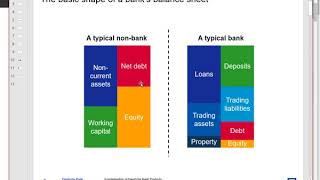
Okay, good morning guys, let's get the briefing started. Tuesday, 14th of August, so I mean already hitting the mid part of this month, and let's have a look at how markets have begun the session today after what's been a couple of days, if we include Friday and then yesterday, Monday's last two trading sessions. Well, of course, certainly some interesting volatility coming through markets when, you know, right at the point where volumes are at their kind of lowest as the Western world kind of takes their summer break. But actually what we've seen this morning, I'm going to start with the DAX. The DAX taking some heavy downside on Friday's session. If I just add that kind of rectangle to pick out Friday. So big downside, um, right at the get-go, breaking lower in the heart of the kind of, um, Turkish turmoil, let's call it. And then yesterday's session, we opened lower again, traded sideways, and actually in the end, quite a tight consolidation day, just about Friday's low, roughly creating the sort of resistance barrier on the upside. So not much rebound. However, this morning we have lifted up through that Friday's low point and made a stride higher, not quite making it to the pivot level. We'll come on to this a bit later. We've had some German GDP data this morning that has come in better than expected. So, you know, clearly that's definitely helping here on, on the upside. But Let's have a look at a couple of items here. Hang on, I've got a chart I want to show you because the other thing that's kind of helping on the upside this morning is the fact that the Turkish lira has managed to, to recover somewhat. And emphasis on the word somewhat there. It's a long way off recovering the huge downside that we've seen over the last few sessions. But we have seen a move away from the 7 handle this morning. So you can see that this y-axis here is flipped. So as we track up 6.8, 6.7, 6.6, heading for 6.5, this is the Turkish lira appreciating against the dollar, taking it away from that 7 handle that was briefly broken through. Of course, you've only got to go back to the start of last week and we're trading at 5, never mind 6.5. So despite the fact that we do have a little bit of respite here this morning, you know, clearly we aren't— haven't seen the end of this situation. So let me flick back to markets. Let's have another look at the charts because let's have a look. I want to look at the S&P 500 because that had an interesting kind of day yesterday. If you see, if I just draw a rectangle around yesterday's session here, opened lower as we did on the kind of German side of things. But actually the S&P made better work of recovering Friday's session than European equity indices did, and that's because Europe is more exposed to Turkey. But actually by the end of the session, the end of the European day that is, we had quite a sharp correction and made it all the way back to retest that that 5 AM low right the way back down at 2820. So having had a 25-point bounce, we then had a very short and sharp 25-point reversal back to the low. Then things stabilized into the close. This morning we've lifted a little bit. So good German data and a little bit of a recovery in that Turkish lira. But you know what I wanted to show you is, I mean, obviously for Turkey. Yeah, fine, that exchange rate is back to 6.5, but this doesn't make matters much easier. Obviously, people are worried about German foreign-denominated debt, and so this is where companies in Turkey have been taking advantage of, um, well, let's just say, I mean, if I showed you the interest rate in Turkey, which I think Ant showed you yesterday, so these are interest rates set by the Turkish Central Bank a huge lift higher here, um, earlier in the year, up to 18%. But even before that, for the last sort of 4 years, interest rates have been between 8 and 10%, okay? So the cost of funding for corporations in Turkey is pretty high. However, Turkey's companies have been able to take advantage of products being offered by European banks, which ultimately gives them access to funding that's cheaper than this. So you've had a lot of cheap funding offered by Europe, albeit in a foreign-denominated currency. So there's a lot of euro-denominated debt, there's a lot of US dollar-denominated debt. And whilst on the one hand they're getting lower interest rates, unfortunately, if the exchange rate swings against them, then ultimately they're going to be much worse off, which is of course now the case. I mean, if you take even before this big blowout on the exchange rate, The Turkish kind of state telecom company announced a billion lira loss in quarter 2 of this year, citing debt cost increases as the main reason as to why overall they, they wrote off such a big loss for the quarter. That was before the exchange rate wildly spiked, um, on Friday. So if they thought quarter 2 was bad because of exchange rate risk, well, unfortunately quarter 3 is going to be a disaster. And so the point is, as this exchange rate swings, of course this makes the corporate ability to pay back foreign-denominated debt, or to even pay the interest on foreign-denominated debt, it makes their ability to do that incredibly difficult. And so you've got, of course, bankruptcy risk is rife. And it's not just companies, it's not just like the telecom companies. It's, it's non-financial institutions have about $60 to $70 billion worth of foreign-denominated debt. But actually, it's the Turkish banks themselves, uh, that have more. They're up to, I think it's about $79 billion worth of foreign-denominated debt. And here's the big issue for Turkish banks. I've got an interesting graphic to show you about how a bank works. This is going to be a little bit of an education lesson into balance sheets. I want to first focus on the left-hand side. Has the company set itself up from a balance sheet point of view? Well, of course, on the left-hand side of this balance sheet we have assets, and that's split into non-current assets and then working capital. And then on the right-hand side of the balance sheet you have liabilities. And that's normally split between debt and equity. So basically, the liability side of the balance sheet is the company's funding for then operating. Okay, and how does a company fund itself? Well, it's either through equity— shareholders' money coming into the business— either that's at startup where company directors are injecting in some initial capital. It can then, of course, as the company grows. The company can issue shares and have an IPO and go public. They can then issue more shares thereafter, and this is an ability to basically sell part of the company to raise capital, to flick it onto the asset side of the balance sheet into that working capital section, which gives them— the company— money, cash to invest and grow the business. The other way to, of course, raise capital to run and grow your business is through debt. Okay, now this is the way a typical company is set up. At the moment, what we have with a non-financial corporation in Turkey, unfortunately, it's the liability side of the balance sheet that is getting worse, insomuch as it's now— they've got a higher percentage of their liabilities is made up of debt, that their liability side of their balance sheet is becoming ever more burdened by debt. But unfortunately for these companies, even though their debt is building and increasing, they're actually not getting more capital raised from that to grow and invest in their business. The debt is simply increasing because of the fact that the exchange rate is swinging against them. Now, some very large Turkish companies will have exchange rate hedging strategies. However, there's a huge amount that won't, and particularly the domestic-focused companies. I would say the smaller and the mid-cap companies are not going to have, um, exchange rate hedging, and so they are absolutely right in the firing line here, and we definitely got default risk as a result. Now, if you flick over to the right-hand side, well, a bank's balance sheet is very different to how a normal company sets itself up in terms of how a bank funds itself. Now, if we look at the liability side of the balance sheet, well, here actually a big part of the balance sheet is deposits. So this is actually where consumers and businesses deposit money at your bank. Well, this— these deposits is a source of capital for banks to then actually generate revenue from by lending. So actually, on the bank's balance sheet something that's not— doesn't exist on a normal company's balance sheet is huge entries with deposits on the liability side and then loans. That's where the bank's lending out that money, and of course the bank's generating interest from those loans. Now the problem the bank's got is that a lot of these loans are turning to be— turning into bad debt, toxic debt. That's where companies have now failed to pay the interest on these loans. We've got default situations. And we think at the moment that about 3.5% of Turkish bank loan books is bad debt, as default has happened. But actually, there's speculation if this exchange rate risk continues any further, and if you see that currency exchange rate sustain a move above 7, then actually that could escalate quickly to up to sort of 25% of the Turkish bank loan book turning toxic. Okay, so that means then they're not generating revenue from that portion of their loan book. Okay, um, the other thing on the deposit side, if people start to panic, if Turkish companies and Turkish consumers start to panic and think, hang on a minute, are these banks going to collapse? Well, then they start pulling their deposits. This is a run on the bank. This is a disaster for a bank. It's pretty much the beginning of the end. Because deposits— they're so reliant on deposits as a source of funding to run their business. So we're really nervous about, um, capital controls being implemented, which would see the government prevent people from pulling deposits out of the banking system. We haven't got to that point yet, but that's something you need to look for. If that does happen, then it will take this crisis into a new chapter. What you have seen in markets over the last couple of sessions is that foreign money is being pulled out of Turkey, which of course is exacerbating that drop in the lira. But the other part of the bank's balance sheet, if you move down to debt and equity, well, banks have debt and equity like normal companies do, but it makes up a much smaller portion of the liability side of the balance sheet. However, the problem for Turkish banks is a lot of their debt is also foreign-denominated debt. And therefore, what's happening is the proportion between debt and equity is swinging towards the debt side, meaning that the equity portion of the balance sheet is becoming ever smaller. And then this is a problem from a kind of Tier 1 core capital ratio point of view. And so actually the Spanish— are the— not Spanish or Italian, the Turkish banks are quite vulnerable here. And of course then we've got the European banks, um, and, and the Spanish banks. BBVA are thought to be the most exposed. That's the bank that is thought to have lent the most to Turkish banks and Turkish companies. Their share price has been under a lot of pressure, of course, in recent days. But then You've got to look at other countries in Europe. And here's an interesting chart looking at Italian bond yields. Because you've got some investors this morning— or not investors, some commentators, let's say— really starting to talk about this Turkish crisis really heralding the end of cheap money. This is where the globe has gotten used to the cost of borrowing at record-ever lows, this zero interest rate environment that we've had for a whole decade. Well, are we coming to the end of that? And really the answer is yes. I mean, the Fed are at the forefront of that where they're going through a rate hiking cycle. But what we're vulnerable to is how is the economic system going to be able to handle, uh, debt costs rising? Because we've got a lot of corporate particularly a lot of corporate debt out there, and we're worried that default risk is going to escalate quite sharply. But actually, this swings towards governments as well. And Italy, two things this week. Firstly, Italy's got a huge sort of government debt problem, and with their debt-to-GDP ratio way above 200%. And this means, plus then couple in the fact that we've got a new eurosceptic government in Italy that are about to deliver their their new budget, and we're worried that they're going to ramp up spending, which is going to result in their deficit widening and their debt levels just getting even worse. And so coupled also with the fact that some, like UniCredit for example, and other Italian banks are certainly exposed to the Italian— uh, the Turkish crisis. But this is looking at Italian 10-year yields and Italian 2-year yields. And both are rising, on the rise as a result of this Turkish crisis, on the rise as a result of investor nervousness surrounding this budget. And we've got to keep an eye on this because we had a kind of bit of a blowout on Italian yields back in June ahead of the election, or just after the election. And, um, what we're worried about is certainly on the 2-year yield side, you've only got to go back to May to find 2-year yields negative And, you know, we're climbing back towards 1.5% here. The 10-year is testing that, uh, summer or June double top just above 3% right now. So we need to keep an eye on Italian yields, um, and monitor that. Any movement up through kind of 3— any sustained move above 3.1% for Italian 10-year yields could start to prove to be you know, a little bit more painful for what is a country that's already over-indebted. So this Turkish crisis, I mean, let's not panic. I mean, just to offset some of those comments, you know, Turkey only makes up 1% of global GDP, so it's not a systemic risk from the global economy point of view. Yes, Europe are exposed, and particularly some banks within Europe, and Italy particularly because of the political risk as well. However, Turkey are not large. But as I said, you know, is this the first kind of signs of, uh, chink— a chink in the armor of the global system where vulnerabilities are being highlighted, where the cost of money has been so cheap for so long, and as the cost of money starts to normalize are we going to start to see other territories in this world, you know, go through a crisis like this? So I don't know is the answer to that, but I think this Turkish situation probably will die down in, you know, in a week or two's time. I would probably suggest that this Turkey crisis will be off the kind of front pages, but it might be that we get a higher frequency of these types of incidents involving emerging markets being driven by wild exchange rate volatility. And really, the main point that's underlying and driving all of it is a very strong US economy and a Federal Reserve that's hiking rates and ultimately a strengthening US dollar. So this crisis is gonna still create volatility as we go through this week. But, you know, looking back at that chart of the, the lira, this is, this is without it being updated for today's move back towards 6.5. So we were hovering in and around 7 all day yesterday, and we've bounced a little bit now, but really we need to see a move back above 6.5 and up to 6 for things to really calm down. Okay. All right, so that's the update on the Italian— uh, sorry, I keep saying Italian— Turkish situation. What else is going on? Let's have a look around the headlines. So, um, Asian trade mixed, dollar slips, um, not too much. I mean, we've had a little bit of, I guess, divergence in Asia where we've had Japanese markets higher, but then Chinese shares were on the downside. I've spoken about the European bond market situation. This is that graphic from Bloomberg trying to put a correlation to the Italian 10-year yield rising and the lira spot rate dropping. So you can see both have moved sharply higher in tandem here over the last few sessions. Let's talk about, um, Let's talk about OPEC. Actually, I want to go back to the oil chart. I'm going to flick over another story that was kind of doing the rounds yesterday, was talking about Saudi Arabia. We had quite a wild session on crude yesterday. In the end, I'm just going to delete these lines and start again. So if I just draw a box around this volatility episode we had towards the end of the European session yesterday, prior to that, the you know, oil was fairly stable, but then suddenly a really sharp sell-off around 4 PM, which took us all the way down. We broke through the low point that we'd had on Friday and ticked down below the $66 handle, and then the reversal came back in forcefully and we retraced the whole lot. And here we are this morning actually gunning to try and test yesterday's high. So a real volatility episode tracking between kind of $65.75 on the downside, yesterday's low, and $68. Okay, we were looking at this level yesterday, not $60. Let me go to a daily chart because $66— I'm going to go to a shorter time period actually. $66.30, around that area was quite a critical level that we were looking at yesterday. And that's because it was a bit of kind of double bottom. I'm going to move that line actually, one second. The double— I'm going to delete that line. So 6630, or 6629 to be exact, was the mid-July low, and then we retested that on Wednesday, yes, last week, and we retested it again on Friday. And so quite a big level that broke yesterday late afternoon, and that created a technical breakout. But as you can see, the reversal on the snapback's been pretty sharp. $68 is then the other interesting resistance level, which was yesterday's high, a bit of a low there back on the 3rd of August as well. The story perhaps underpinning what in the end turned to be a nice rebound was, was this news flow that Saudi Arabia seemingly in July actually reduced production. Remember, go back to June, OPEC agreed to increase production. If I go to a daily chart on crude oil, you can kind of see the sort of impact that had as we kind of tracked through May and into the start of June. We had a big sell-off on crude oil from up in the kind of $73 area right the way down to $64. And that was pricing in OPEC announcing a cut in production. Of course, then things have kind of reversed quite forcefully here, but, you know, we've had some volatility. But ultimately, OPEC and Saudi Arabia at the head of that were supposed to be increasing production, but actually it looks like— and indeed they did increase production in June, but in July it looks like they've reduced production by 200,000 barrels, seemingly violating their promises they made at the OPEC meeting. Saudi's response to this is, well, look, there's just not the demand. We've produced and supplied the amount that our refinery customers need. And that turned out to be 200,000 barrels a day less than in June. So actually, perhaps one of the reasons we may have rebounded yesterday quite strongly was this idea that, well, hang on a minute, maybe Saudi Arabia are doing a little bit of a U-turn here with regards to that production increase announcement from the OPEC meeting back in June. So a bit of upside. Assistance as a result. Keep an eye on Saudi news flow with regards to their production levels. Any more news flow about why they dropped production— some are saying that actually they're supporting price, some are saying that Saudi would like to see price confined within the range of $70 to $80. Clearly at the moment it's, it's in the 60s. And so there's some that think Saudi have changed policy and want to try and support price back up into the $70 area. So keep an eye on any news flow from Saudi. Of course, August production figures from Saudi Arabia won't come through until September. It'll be interesting to see those, to see whether we saw another drop in production in August or not. Okay, so that's the kind of oil story that you need to be mindful of. Let's have a look at the data then that's happened this morning. I mentioned that German GDP beat expectations. So here's a chart looking at that. So these numbers were announced at 7 AM, and this is looking at German GDP growth for Q2 clocking in at 0.5%. We had expected 0.3%. We were expecting the slowest growth since 2016, but actually it flipped and came in at 0.5%. So that actually is, is, well, It matches those prints from Q2 and Q4 of 2017. Of course, you've got a monster 1.1% print back here at the start of 2017. So of course, we're nowhere near the likes of that. But, you know, at least that's an indication that perhaps whilst despite the fact that generally speaking European economies slowed sorry, I've got a graphic I wanted to show you, I just need to try and find it. Yeah, here we go. Despite the fact that most European economies slowed in Q2 compared to Q1. So the euro area as a whole in Q1 grew at 0.4%, Q2 grew at 0.3%. France was flat, Italy saw a drop in growth, but actually Germany's bucked the trend here. That's interesting because ultimately we've been quite worried that growth momentum in Europe is now reversing. 2017 was such a good year for European growth. It's like Europe is back. But as we've tracked through 2018, it seems like the momentum has dropped. But here in Germany, they bucked the trend. Now, is that a one-off? And are we going to see generally the euro area as a whole continue to slow? Or actually, is Germany here going to be the lead indicator? I mean, it is the biggest economy in Europe. Is that going to drive a rebound in, in growth in other areas? So that's something to look out for when we start to think about quarter 3 GDP stats. But certainly this morning here, really good numbers from Germany, beating expectations. And certainly when you check out the DAX— let me just show you this— the DAX enjoying some upside as a result of that. But as I said, the key level perhaps for the DAX is the 2nd of August low. Key, key kind of resistance on the upside, 12,484. So something to look for should this bounce that we've seen so far today continue. And I can see on the right there, the S&P is making new highs as I speak, new highs for the session. You've got T-notes making new lows for the session as I speak. So that's what's happening. Let's take a look at currencies. Let's take a look at cable here. So cable's managed to— so as we've been getting this kind of respite on the lira side of things, equities in Europe beginning to bounce, helped along by German data. You're actually seeing a little bit of dollar weakness now across the spectrum. So cable's been able to break up above yesterday's high and move up through R1 and track higher. Cable right up on the high points of the session as I speak. If we look at the euro, a little bit of a laggard here in that the euro-dollar is not yet above yesterday's high. So cable certainly leading the charge compared to the two, but certainly broadly some dollar weakness, which of course is helping that commodity space. And now that I've said commodities, we do need to have a look at gold because we did have an important moment briefly yesterday. And yesterday afternoon, or yesterday evening I should say, gold actually dropped down below $1,200. And, you know, steep downside here yesterday and the day before, before of course dollar strength, but also then some downside on gold as Erdoğan called for Turkish consumers to sell gold. So I'm going to go to a daily chart Well, I'm gonna go to a weekly chart to start with because these moves are important, you know, thinking about the long-term situation. $1,200 is key. This was the July 2017 low. All right, March 2017, we went below it briefly and we went to $1,194. Okay, where did we touch down to yesterday? $1,191. So we actually broke that level from March 2017. So yesterday we saw the lowest prints for gold since January 2017. Okay, so this $1,200 area, very important from a kind of longer-term technical perspective. I mean, ultimately the 2016 lows down at $1,123, so a long way to go to see any, any action down there, obviously. But, you know, it's going to be interesting to see what gold does here now we've hit $1,200. It's been such a steep decline over the last few months. Do we get any kind of consolidation around this $1,200 area or not? I think the next couple of days are important. If, if the bears retain control and keep gold below $1,200, well, then that really could set up, you know, further moves to the downside. There's a lot of, there's a lot of ground to move into here without much kind of by way of longer-term technical support. So be mindful of gold, $1,200 in the mix. Before we look at today's calendar, a slight kind of aside, a point of note, check out Bitcoin. Bitcoin this morning below $6,000. And if I go to a daily chart, you'll know, you Bitcoin lovers will know that this is squeaky bum time. Uh, the low of the year is 5,805. That was set back in June, and having had a decent rebound in July where we got back to 8,500 and sighs of relief could be heard across the crypto world— well, actually, it's been really steep ever since on the downside, back to this critical level. Keep an eye for this. If you're looking on a, on a longer-term perspective, we've got a very, very pronounced sustained— I'm going to go to a weekly chart— downward trend here in place. I mean, ever since futures became tradable on the Chicago Mercantile Exchange, it's just been a disaster. $20,000 at the end of last year. This is a very, very pronounced downward trend, and as it stands, we keep getting lower highs on any of these rebounds. You can see the pattern here. Any technical analyst looking at this would be telling you that we're very vulnerable on the downside here. Uh, the frequency by which we're hitting $6,000 is increasing. Uh, the highs are getting lower. I would say we're going south. If I was to call this, I would say we're going to break $5,800, and then I don't know where we go, but we'll probably hit $4,000 bucks relatively— oh, sorry, $5,000. Apologies. Uh, $5,000 would be the next kind of key level on the downside. Keep an eye on this. Bitcoin's been out of the headlines for, for quite a while, but you may well see it creep back into news flow if we do get that break lower. All right, let's have a look at the, uh, calendar for today, because we've got some interesting news flow coming our way around 10 AM. It's actually still German focused. Let me just make this a bit bigger. We've had a lot of data overnight. I should just kind of report on that. I talked about the German data, but we had a lot of Chinese data, um, announced around about 3 AM this morning. Industrial output disappointed. So we were hoping for a print at 6.3%, but it actually came in at 6%, so in line with the previous month as well. So slightly disappointing. This perhaps is why Chinese equities were lower through the overnight session compared to, let's say, Japanese equities that were higher. The retail sales data also disappointed. We wanted to see retail sales figures— well, looking at the annualized readings, I think that previous on Ran's sheet here is wrong. Ignore that. The previous reading for retail sales was 9%. We were expecting 9.1% for July, but actually came in at 8.8%. Okay, so the two kind of big prints on Chinese economic data overnight disappointed. Um, then we move towards Germany that bucked the trend and came in with better than expected GDP data. And now as we scroll down this economic data calendar. We've got some UK data on the employment side coming at 9:30, but I'd say more interestingly that perhaps the big data left of the session will be at 10 o'clock, German ZEW economic sentiment. This is an important data. This has been shocking of late. This has been terrible. This has been one of the key lead indicators that investors have been using to really signal a loss of momentum in the European economy. However, the German GDP data has indicated maybe this is wrong. What we're expecting today for August is that this economic sentiment survey increases back to -20. But we've had a shocking run over the last 6 months that's taken this— if I show you on a 5-year time frame, this is the worst for 5 years. I show you on a 10-year time frame, this is the worst since basically 2011, this economic sentiment survey. All right, we want to see and kind of need to see a bounce here, and that's what we're expecting, a bounce. But still at -20 would be notably still bad. Anything worse than last month's reading, if it is worse than expected, anything below -24.7 would see this downward trend increase, and that would be taken badly by markets. Keep an eye out for this. That's 10 AM. And then actually this afternoon, less significant by way of US data, nothing, um, tier 1 here. And we get of course the API crude inventory data tonight at 9:30 PM. Okay, so that's it for the briefing. Uh, 9 AM— oh sorry, 9:30, so in, in 22 minutes we've got that UK data on the employment front, with then the ZEW print coming at 10 o'clock. All right, keep your eye on that lira, keep your eye on that Italian 2 and 10-year yield, uh, keep your eye on Bitcoin. All right guys, enjoy the session. Thanks a lot.
More from Anthony


Inside the Biggest Banking Stories You Need to Know This Week (Anthropic, Diageo, Private Credit)


Inside the Biggest M&A Deals You Need to Know This Week (UniCredit, GameStop, eBay, Eli Lilly)







AI Breakthrough or Hype? Anthropic’s Claude Mythos, Tim Cook Steps Down & LIV Golf Collapse